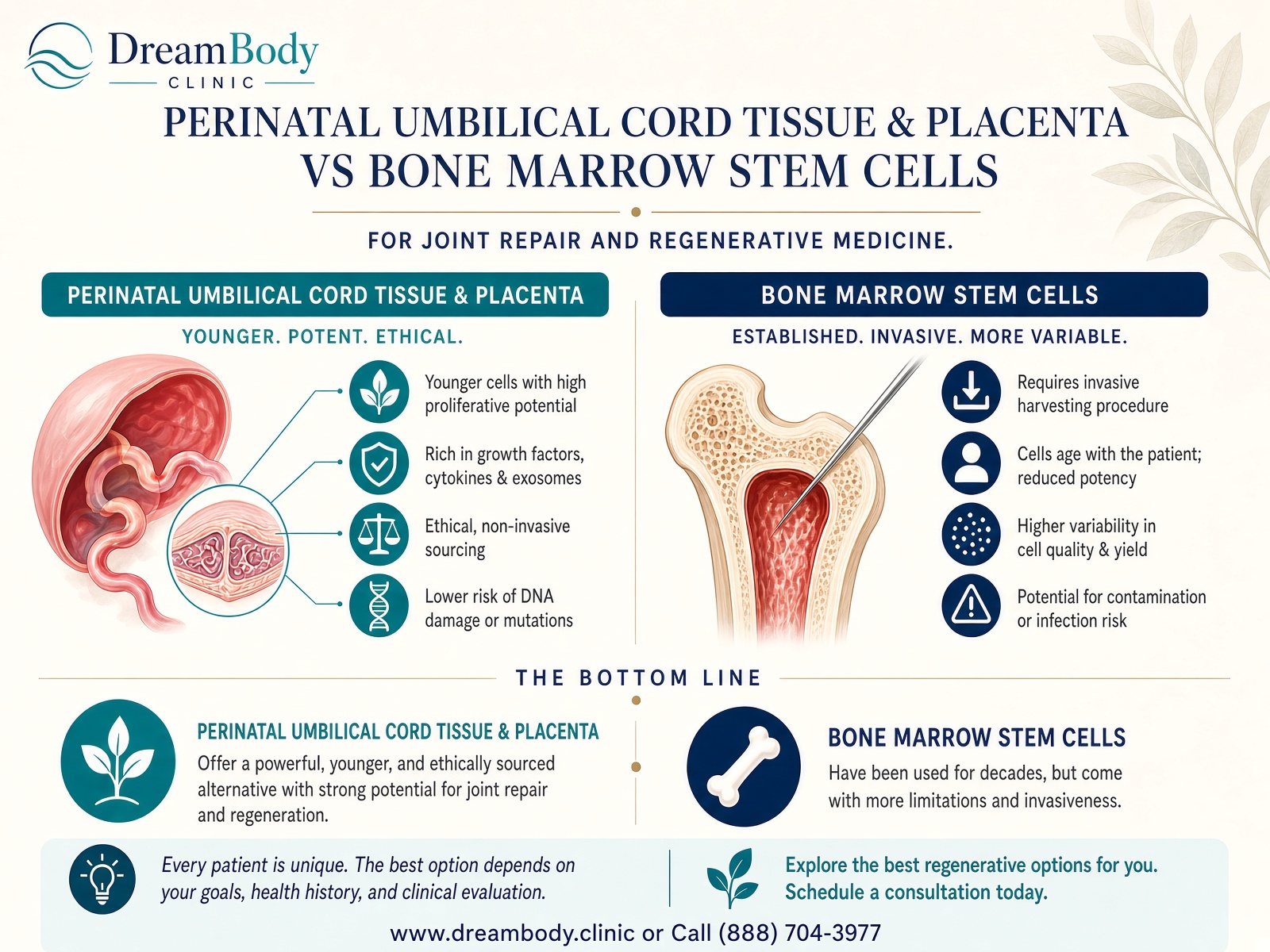
Perinatal (Umbilical Cord Tissue & Placenta) vs. Bone Marrow Stem Cells for Joint Repair
Why the Source of Your Stem Cells Matters More Than You Think
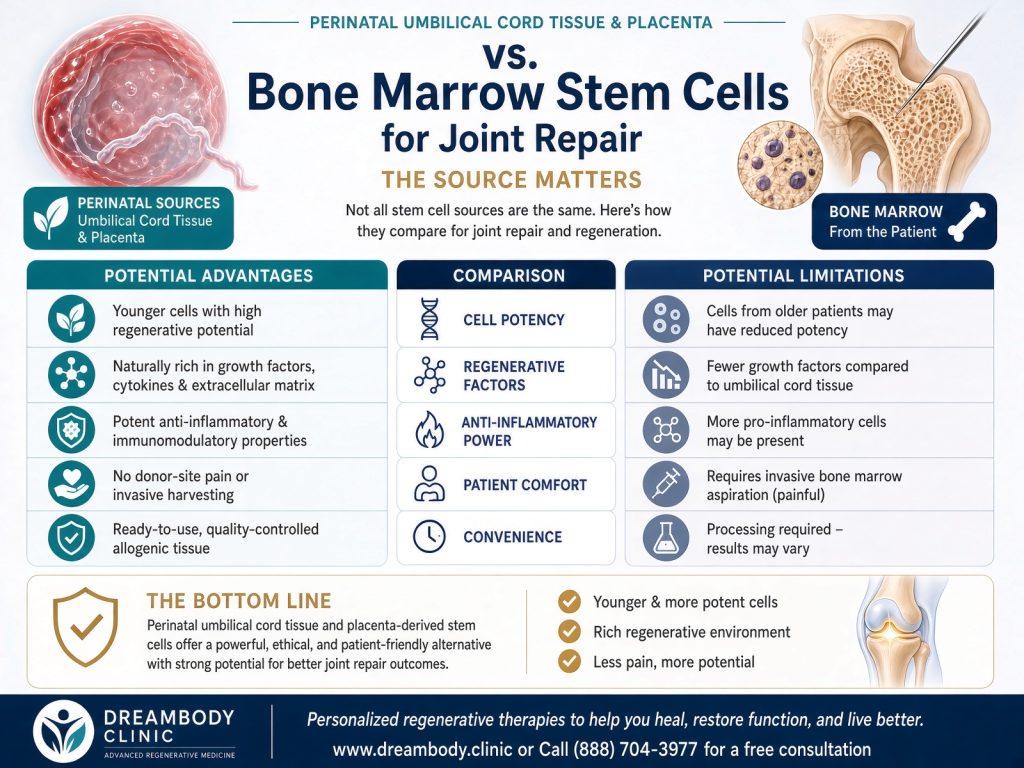
Perinatal (Umbilical Cord Tissue & Placenta) vs. Bone Marrow Stem Cells for Joint Repair explains that not all stem cell therapies are the same. The source of the cells, their age, and how they are prepared before treatment can make a significant difference in how well they work. If you are exploring stem cell therapy for joint repair, you have likely come across two main options: mesenchymal stem cells (MSCs) derived from umbilical cord tissue or placenta, and bone marrow aspirate concentrate (BMAC). Understanding the real differences between these two approaches can help you make a far more informed decision about your care.
At Dream Body Clinic in Puerto Vallarta, Mexico, we work exclusively with allogeneic MSCs sourced from Wharton’s Jelly (umbilical cord tissue) and placental tissue. There are clear clinical and biological reasons why we believe this approach produces better outcomes for joint repair, autoimmune conditions, and overall regenerative therapy. This article breaks all of that down in plain language.
What Is Bone Marrow Aspirate Concentrate (BMAC)?
BMAC is a procedure commonly performed in the United States where stem cells are harvested directly from the patient’s own body. The process involves inserting a needle into the hip bone to extract bone marrow. That bone marrow is then placed into a centrifuge along with an enzyme called collagenase to help separate the cells from the surrounding tissue.
The end result sounds promising in theory. In practice, however, the issue is significant. After this process, only about 1% of the final product is actually made up of mesenchymal stem cells. The remaining 99% consists of other cell types, including red blood cells, platelets, white blood cells, and other components that are not stem cells at all. This means that what is being injected into a patient’s joint is technically a mixed cell therapy, not a concentrated stem cell therapy.
This distinction matters because the therapeutic goal in regenerative joint treatment is to deliver a meaningful concentration of MSCs to the damaged tissue. When the vast majority of the product is not MSCs, the regenerative signal sent to the body is proportionally weaker. Patients and providers in the United States are essentially working with the tools available to them, given that strict FDA regulations do not permit the full isolation and laboratory expansion of stem cells.
Why the USA Uses BMAC Instead of Isolated MSCs
In the United States, the FDA classifies any significantly manipulated cell product as a drug. This means that clinics cannot take a patient’s bone marrow, isolate the MSCs, grow them in a laboratory to increase their concentration, and then re-administer them. Doing so would require the same extensive clinical trial and drug approval process that applies to pharmaceutical products.
As a result, most US-based clinics offering stem cell-adjacent therapies for joints default to BMAC. The bone marrow is extracted, centrifuged, and injected with minimal manipulation, keeping the procedure within regulatory boundaries. While this approach is safer from a compliance standpoint, it comes with the limitation described above: a very small percentage of actual stem cells in the final product.
In Mexico, regulatory guidelines allow licensed clinics like Dream Body Clinic to fully isolate MSCs from donor tissue and expand them in a controlled laboratory setting. This means patients receive a product that contains a significantly higher concentration of viable, functional mesenchymal stem cells. The difference in cell count alone makes a meaningful clinical case for choosing this approach over BMAC when seeking genuine stem cell therapy for joint repair.
The Problem with Using Your Own Cells
Even if it were possible to isolate and expand bone marrow-derived MSCs under current US regulations, there is still a fundamental biological argument against using your own cells for this type of therapy. If you are seeking treatment for a joint condition, you are likely dealing with inflammation, injury, or degeneration. That means your body and its cells are already operating in a compromised environment.
Bone marrow-derived MSCs from an adult patient carry the biological history of that patient. Over years and decades, cells accumulate damage from oxidative stress, inflammation, and general aging. Their ability to divide, differentiate, and send regenerative signals diminishes over time. You are essentially asking tired, older cells to do the job that fresher, more capable cells could handle far more effectively.
There is also an immune system consideration. Your own MSCs have spent years in contact with your immune system. If you have an autoimmune condition or chronic inflammation, your immune environment has likely already influenced or compromised the behavior of those cells. Using them as a therapy reintroduces cells that have already been shaped by the same dysfunctional immune landscape you are trying to treat.
Why Umbilical Cord and Placental MSCs Are Biologically Superior
Umbilical cord tissue and placental tissue are collected at the time of healthy, full-term births with full donor consent. The cells derived from this tissue are only nine months old. They have not been exposed to decades of environmental stress, chronic disease, inflammation, or immune system activity. This makes them biologically young, highly active, and far more capable of performing regenerative work in the body.
Younger cells divide more efficiently, produce stronger paracrine signals (the chemical messages cells send to surrounding tissue to promote healing), and are more adaptable to the environment they are placed in. When these cells are introduced to a damaged joint, they are better equipped to communicate with local tissue, reduce inflammation, and support repair compared to older, patient-derived cells.
The placenta is particularly rich in MSCs. It is one of the most concentrated natural sources of these cells, and the cells it contains are among the most immunologically tolerant in human biology. This tolerance is by design. The placenta exists to protect a genetically distinct fetus from being rejected by the mother’s immune system. The cells it produces carry this same low immunogenic profile, making them extremely well suited for allogeneic (donor to patient) therapy without triggering rejection.
Why Age of the Cells Changes Everything
The regenerative potential of a mesenchymal stem cell is closely tied to its age and its exposure history. A study published in Stem Cell Research and Therapy found that MSCs derived from neonatal sources such as Wharton’s Jelly show significantly higher proliferation rates and stronger anti-inflammatory activity compared to adult bone marrow-derived MSCs. This is not a marginal difference. It reflects the fundamental biology of cellular aging.
When you choose umbilical cord or placental MSCs, you are selecting cells at the peak of their regenerative capacity. When you receive BMAC, you are receiving a mostly non-stem cell product derived from cells that have already gone through decades of biological wear. The comparison is not even close from a cellular biology standpoint.
The Autoimmune Advantage of Allogeneic MSCs
For patients dealing with autoimmune conditions alongside joint damage, the source of stem cells becomes even more critical. Autoimmune diseases involve an immune system that is already misfiring, attacking the body’s own tissue. In this environment, using the patient’s own cells carries a real risk of reintroducing cells that have already been influenced, damaged, or dysregulated by that same immune environment.
Umbilical cord and placental MSCs have not had enough time or immune exposure to develop these problems. They arrive immunologically neutral, meaning they are unlikely to trigger immune rejection and are not carrying the baggage of a compromised immune history. This makes them a far safer and more effective option for patients with autoimmune arthritis, lupus-related joint damage, or any condition where immune dysfunction plays a role.
Research in this area continues to grow. Multiple peer-reviewed studies have shown that allogeneic MSCs from neonatal sources actively modulate immune responses rather than trigger them. They can calm overactive immune cells, reduce inflammatory cytokines, and create a tissue environment that supports healing rather than continued damage.
What This Means for Joint Repair Specifically
In the context of joint repair, the combination of anti-inflammatory action and regenerative signaling is exactly what damaged cartilage and connective tissue need. Standard BMAC injections deliver platelet growth factors and a small number of cells. Isolated, expanded umbilical cord MSCs deliver a concentrated therapeutic dose of cells that actively work to remodel and repair the joint environment.
Patients treated with allogeneic MSC therapy at Dream Body Clinic have reported reduced pain, improved range of motion, and better overall function after treatment. This is consistent with broader clinical data showing that high-concentration MSC therapy outperforms low-concentration mixed cell approaches for orthopedic indications.
How Dream Body Clinic Prepares MSCs for Treatment
At Dream Body Clinic, we source our MSCs from carefully screened, healthy donors at the time of birth. Both umbilical cord tissue (Wharton’s Jelly) and placental tissue are used, as each offers a slightly different cell profile that together can provide a broader regenerative effect. All donor tissue goes through rigorous testing for infectious disease, genetic abnormalities, and cell viability before being approved for clinical use.
Once sourced, the MSCs are isolated and expanded in our laboratory to reach a therapeutic concentration. This expansion process maintains cell quality and confirms that what is being administered to the patient is genuinely MSC-rich. Unlike BMAC, where the cell composition is largely out of the provider’s control, our process allows us to know exactly what is in the product before it reaches the patient.
This level of preparation is only possible because Mexico’s regulatory environment allows for the full processing cycle that the FDA does not currently permit in the United States. It gives our patients access to a category of treatment that is simply not available at the same quality standard across the border.
Comparing BMAC and Allogeneic MSC Therapy
| Feature | BMAC (Bone Marrow Aspirate) | Allogeneic MSCs (Umbilical Cord / Placenta) |
|---|---|---|
| Cell source | Patient’s own bone marrow | Healthy donor tissue (birth-derived) |
| MSC concentration | Approximately 1% of total product | Highly concentrated, laboratory expanded |
| Cell age | Patient’s chronological age | 9 months old |
| Immune system exposure | Full lifetime exposure | Minimal, immunologically naive |
| Suitability for autoimmune conditions | Lower, due to compromised cell environment | High, due to immune tolerance and neutrality |
| Availability in USA | Yes, with limitations | Limited due to FDA regulations |
| Available at Dream Body Clinic | No | Yes |
What to Expect When Choosing MSC Therapy at Dream Body Clinic
Patients who come to Dream Body Clinic for joint repair receive a thorough consultation before any treatment begins. We review your medical history, imaging, and overall health to determine the best protocol for your specific condition. Treatment typically involves a targeted injection of allogeneic MSCs into the affected joint, sometimes combined with supportive therapies to improve outcomes.
Because the MSCs we use are allogeneic, there is no need for a bone marrow extraction procedure. There is no hip drilling, no collagenase centrifugation, and no recovery from an additional invasive procedure just to obtain the cells. Patients generally find the process considerably more straightforward than BMAC, with less procedural discomfort overall.
After treatment, our team provides a structured follow-up plan to monitor your progress and support your recovery. We are committed to being with you through the full process, not just the day of your procedure.
Frequently Asked Questions
What is the difference between BMAC and mesenchymal stem cell therapy?
BMAC is a procedure that extracts bone marrow from the patient, centrifuges it, and injects the resulting concentrate back into the body. Only about 1% of that concentrate is actually MSCs. Mesenchymal stem cell therapy, as offered at Dream Body Clinic, uses fully isolated and expanded MSCs from umbilical cord or placental tissue, delivering a far higher concentration of true stem cells.
Are allogeneic stem cells safe to receive from a donor?
Yes. Allogeneic MSCs from umbilical cord and placental tissue are immunologically tolerant, meaning the body is very unlikely to reject them. All donor tissue is screened and tested before use. Clinical evidence supports their safety profile for joint and autoimmune conditions.
Why can’t clinics in the USA offer the same MSC therapy as in Mexico?
The FDA classifies significantly manipulated cell products as drugs, which means full isolation and laboratory expansion of stem cells requires pharmaceutical-level approval. This regulatory limitation leads most US clinics to use BMAC instead. In Mexico, licensed clinics are permitted to fully process and expand MSCs for therapeutic use.
Is bone marrow stem cell therapy effective at all?
BMAC has shown some benefit in clinical settings, largely due to the growth factors and platelets in the concentrate. However, because so few actual MSCs are present in the final product, it is more accurately described as a cell therapy than a true stem cell therapy. For joint repair, a higher concentration of MSCs is generally associated with stronger outcomes.
Can umbilical cord MSCs help with autoimmune joint conditions?
Yes. Umbilical cord and placental MSCs have a naturally high level of immune tolerance and can actively reduce inflammatory activity in the body. This makes them particularly well suited for conditions where the immune system contributes to joint damage, such as rheumatoid arthritis.
How do I get started with MSC therapy at Dream Body Clinic?
You can contact our team directly through our website to schedule a consultation. We work with international patients and can walk you through the full process, from initial review to post-treatment follow-up, before you travel to Puerto Vallarta.
The Case Is Clear
When comparing mesenchymal stem cells from umbilical cord and placental tissue against BMAC for joint repair, the evidence points consistently in one direction. BMAC delivers a product that is overwhelmingly not stem cells, drawn from tissue that has aged alongside the patient and carries all the immune and biological history that comes with that. Allogeneic MSCs from birth-derived tissue are biologically younger, more concentrated, more immunologically neutral, and better positioned to do real regenerative work.
At Dream Body Clinic, we have built our practice around this understanding. We believe patients deserve access to the most effective form of mesenchymal stem cell therapy available, and that means using the right source, the right preparation method, and the right clinical approach every time.
If you are ready to explore what allogeneic MSC therapy could do for your joints, our team in Puerto Vallarta is here to help you take that next step.
Learn More about Stem Cell Therapy and Treatment options with info and prices at https://dreambody.clinic/2026-stem-cell-therapy-cost-and-treatments/
Call (888) 704-3977 For a free consultation or WhatsApp +52 322 232 1055