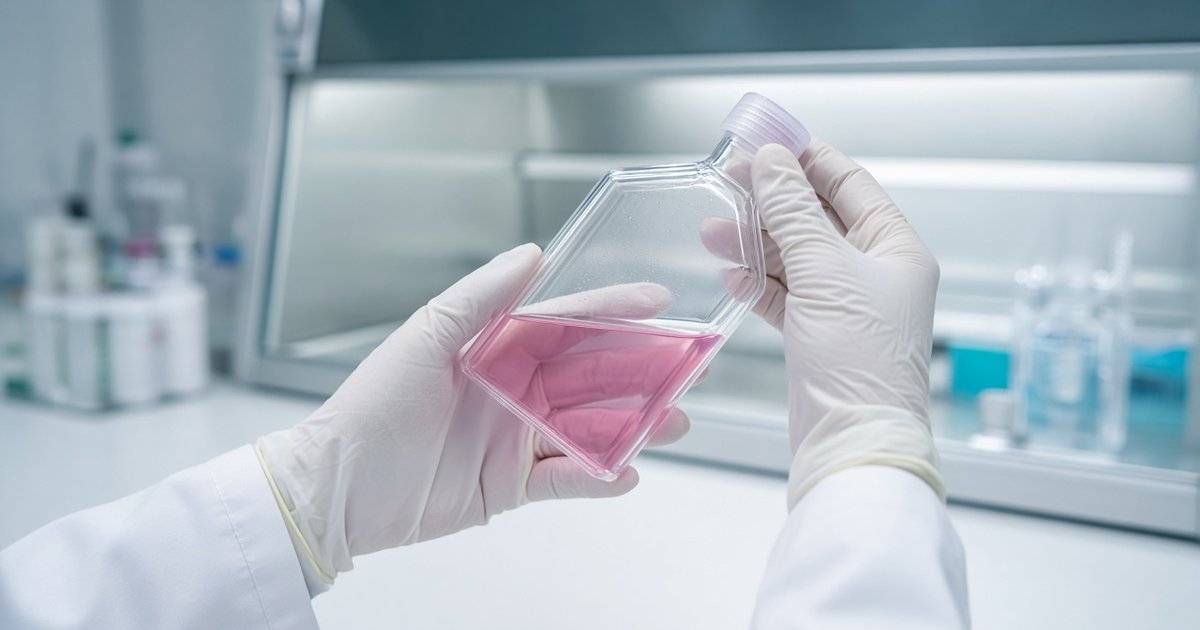
When you consider stem cell therapy, one of the most important questions is also one of the most often overlooked: where do the cells come from, and how are they made and tested? Quality varies enormously between providers. Dream Body Clinic produces its own cells in its own laboratory, so we can explain every step.
This article covers our cell sources, donor screening, how cells are grown, how they are tested, why we use fresh cells, and the licenses that govern our lab. It ends with a checklist you can use to evaluate any clinic.
What Are Mesenchymal Stem Cells?
Mesenchymal stem cells (MSCs), also called mesenchymal stromal cells, are cells found in tissues such as bone marrow, fat, umbilical cord and placenta. In the lab they can be grown (expanded) in large numbers.
Researchers are interested in MSCs mainly because of their paracrine activity: they release signaling molecules, including growth factors and exosomes, that may influence inflammation, immune responses and the body’s own repair processes. That signaling is thought to be more important than the cells turning into new tissue. MSCs are not embryonic stem cells.
Our Cell Sources: Wharton's Jelly and Placenta
Dream Body Clinic uses allogeneic (donor) MSCs derived from:
- Wharton’s jelly: the gel-like connective tissue inside the umbilical cord, and
- placenta,
both donated after live, healthy births.
Why Perinatal Tissue?
Perinatal (birth-related) tissues are a widely studied source of MSCs. Collecting them is non-invasive for the donor, because the tissue would otherwise be discarded after birth. Using donor cells also means patients do not need a procedure, such as a bone marrow or fat harvest, to collect their own cells. Some researchers suggest perinatal MSCs have favorable growth characteristics compared with some adult sources. That comparison is still being studied.
Donor Screening
Donors are selected through rigorous medical screening, which includes:
- a complete clinical history, and
- serologic testing for HIV, hepatitis B, hepatitis C, syphilis and Chagas disease.
Strict inclusion criteria determine who can donate.
How Our Cells Are Grown
After collection, the cells are isolated and expanded in our laboratory:
- GMP, xeno-free culture medium: the cells are expanded using a Good Manufacturing Practice (GMP), xeno-free medium, meaning it contains no animal-derived components.
- ISO 7 cleanroom: our lab qualifies as an ISO 7 cleanroom, the air-cleanliness classification required for preparing injectable products.
- Specialized equipment: Esco Life Sciences incubators and laminar flow hoods help maintain a controlled, sterile environment.
- Professional standards: our lab follows standards recommended by the International Society for Cell Therapy and the Latin American Mesenchymal Stem Cell Society. We are members of both.
Third-Party Testing
Once a sample is obtained, studies are performed by third-party laboratories authorized by COFEPRIS, including:
- flow cytometry, to characterize the cells by their surface markers,
- mycoplasma testing, to check for a common lab contaminant, and
- endotoxin testing, to check for bacterial toxins.
Cells are also tested for viability, purity and freedom from pathogens.
Fresh, Never-Frozen Cells
Many providers ship and store cells frozen. At Dream Body Clinic, the cells used in treatment are never frozen. We take them out of culture the day before your treatment and administer them within 24 hours.
We keep a cryobank of frozen cells for research only, never for patient treatment.
Why Fresh?
Freezing and thawing can affect cell viability and function, and keeping cells fresh avoids those steps. Our physicians prefer fresh cells for this reason. The research comparing fresh and cryopreserved MSCs is still evolving, and we’ll keep you informed as it develops.
Our Licenses
Our laboratory and clinic hold three licenses from COFEPRIS, Mexico’s federal health regulator:
- a license to produce stem cells,
- a license to store stem cells as a cryobank, and
- a license to practice regenerative medicine.
The licenses are published on our Certified Stem Cells page.
What a License Does and Doesn’t Mean
COFEPRIS licensing means our facility and laboratory are authorized and subject to regulatory oversight. It does not mean that COFEPRIS, or any regulator, has approved MSC therapy as effective for a particular condition. In the United States, MSC products such as these are not FDA-approved.
Safety in the Published Research
Systematic reviews of clinical trials generally report that MSC therapy is well tolerated. The most commonly reported side effects are transient fever and reactions at the administration site. Researchers also note that cell processing and culture conditions can affect safety, and that long-term data are still limited. Careful lab practice matters because of this.
How to Vet Any Clinic's Cells: A Checklist
Whether you choose us or another provider, ask:
- Where do the cells come from, and what tissue?
- Does the clinic produce its own cells, or buy them from a third party?
- Which regulator licenses the lab, and can you see the licenses?
- How are donors screened?
- What culture medium is used? Is it xeno-free?
- Is the cell product tested by an independent lab? For what?
- How are cells counted, and is viability measured?
- Are the cells fresh or frozen? How are they handled?
- Who administers the treatment, and what are their credentials?
- What is the plan if there is an adverse reaction?
Meet the Team Behind the Cells
Our medical team is led by Dr. Arick Francisco Barba Lopez, Head Physician. He is a graduate of the Universidad Autónoma de Guadalajara, holds a graduate certificate in regenerative medicine, and has about 10 years of experience administering MSC therapies. He received an honorary doctorate (Honoris Causa) from UNCEMA in 2021. He works alongside Dr. Liz and Dr. Vega.
Frequently Asked Questions
Are your cells embryonic? No. They are mesenchymal cells from umbilical cord tissue and placenta donated after healthy births.
Will my body reject donor cells? MSCs are generally considered to have low immunogenicity, and reactions are uncommon in published studies. Your physician will discuss the risks with you.
Why don’t you freeze cells for treatment? Our physicians prefer fresh cells to avoid freeze-thaw steps. Research comparing fresh and frozen cells is still evolving.
Can I see your licenses? Yes. They are published on our Certified Stem Cells page.
Questions About Our Cells?
Our medical team is happy to walk you through the science. Book a free consultation. Call (888) 704-3977, WhatsApp +52 322 232 1055, or email info@dreambodyclinic.net.
Disclaimer: Results vary from person to person. Stem cell therapies described here are not FDA-approved and are provided in Mexico under COFEPRIS licensing. This content is educational and is not medical advice. Consult your physician before making treatment decisions.