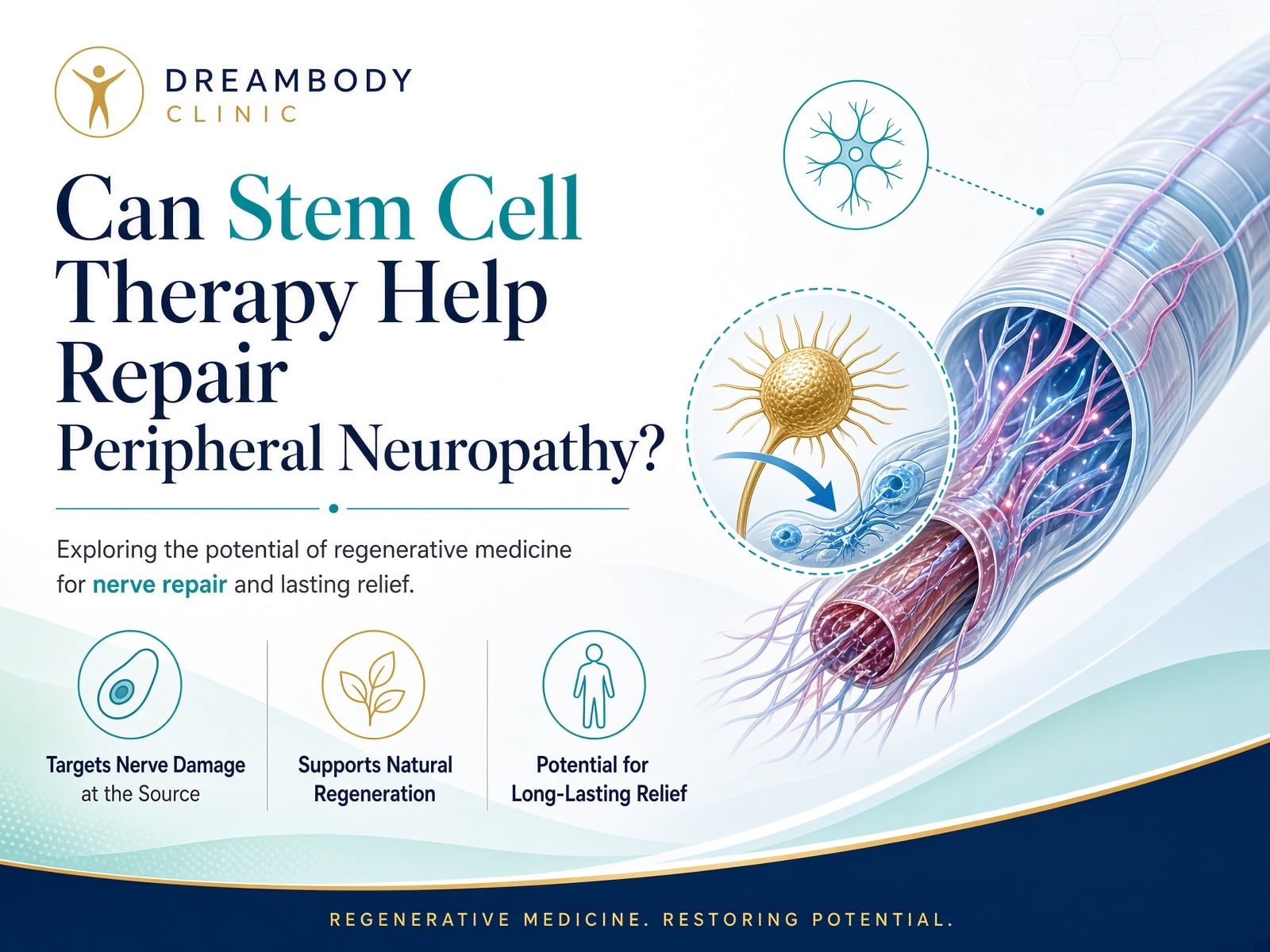
Can Stem Cell Therapy Help Repair Peripheral Neuropathy?
Peripheral neuropathy affects millions of people every year, and for most of them, the search for real relief feels endless. Burning feet, numbness in the hands, stabbing pain that wakes you up at night — these are not small problems. Yet most conventional treatments only manage the symptoms without doing anything to address the nerve damage itself. Stem cell therapy for peripheral neuropathy is changing that conversation. At Dream Body Clinic in Puerto Vallarta, Mexico, patients are exploring a regenerative approach that goes beyond symptom control and targets the root of the problem: damaged nerves.
What Is Peripheral Neuropathy and Why Is It So Difficult to Treat?
Peripheral neuropathy is a condition that results from damage to the peripheral nervous system — the network of nerves that carries signals between the brain, spinal cord, and the rest of the body. When those nerves are damaged, the signals get disrupted. That disruption shows up as pain, numbness, tingling, muscle weakness, or a loss of coordination, depending on which nerves are affected.
The causes are wide-ranging. Diabetes is the most common trigger, but autoimmune disorders, chemotherapy, physical trauma, infections like Lyme disease, and even nutritional deficiencies can all lead to peripheral nerve damage. According to the National Institute of Neurological Disorders and Stroke, more than 20 million people in the United States are estimated to have some form of peripheral neuropathy. That number likely underrepresents the true scale because many cases go undiagnosed for years.
What makes this condition particularly difficult to treat is the nature of nerve tissue itself. Nerves in the peripheral system do have some capacity to regenerate, but that process is slow, incomplete, and easily blocked by ongoing inflammation or an underlying condition that has not been controlled. Medications like gabapentin, pregabalin, or antidepressants can reduce pain signals, but they do not repair the nerves. Physical therapy helps maintain function but cannot reverse the damage. This gap between symptom management and actual healing is exactly where regenerative medicine for nerve pain enters the picture.
How Does Stem Cell Therapy Target Nerve Damage?
Stem cell therapy works differently from conventional treatments because it does not just block pain signals — it introduces biological tools that can support the body’s own repair process. The cells most commonly used for peripheral neuropathy are mesenchymal stem cells, or MSCs. These are adult stem cells with a remarkable ability to sense damaged tissue, migrate toward it, and release a range of molecules that trigger repair.
The process happens largely through what researchers call paracrine signaling. Rather than turning directly into nerve cells, MSCs release growth factors, cytokines, and anti-inflammatory proteins that change the environment around damaged nerves. This creates better conditions for the nerve to rebuild its protective myelin sheath, form new connections, and restore function over time. The therapy also encourages local blood vessel growth, which improves oxygen and nutrient delivery to areas where nerves are trying to heal.
What Types of Stem Cells Are Used for Peripheral Neuropathy?
The stem cells used at Dream Body Clinic come from umbilical cord tissue, specifically from a part of the cord called Wharton’s jelly. These umbilical cord-derived mesenchymal stem cells are considered particularly effective in regenerative medicine because they are young, highly active, and have not yet developed the markers that can trigger immune rejection in a recipient.
Because they are sourced from donated umbilical cords after healthy births, there are no ethical concerns and no need to harvest cells from the patient. Dream Body Clinic uses certified, ethically sourced stem cells that go through strict screening and quality control before being used in any treatment. This sourcing method ensures a high level of cellular potency and consistency across treatments. We cultivate them in our ISO certified lab – https://dreambody.clinic/certified-stem-cells/
How Do Stem Cells Reduce Inflammation in Damaged Nerves?
Chronic inflammation is one of the main reasons peripheral nerves struggle to heal. Even after the original injury or trigger, the immune system can stay in a state of low-grade attack on nerve tissue, which prevents regeneration and worsens symptoms over time. MSCs are well studied for their immunomodulatory properties, meaning they can signal the immune system to shift from an inflammatory state to a more balanced, repair-friendly one.
They do this by suppressing overactive immune cells, promoting regulatory T-cells, and reducing levels of pro-inflammatory molecules in the surrounding tissue. For patients dealing with autoimmune conditions and stem cell therapy, this dual role of calming the immune system while supporting tissue repair is one of the most important mechanisms in the treatment.
What Conditions Causing Peripheral Neuropathy Can Stem Cell Therapy Address?
Not all peripheral neuropathy comes from the same place, but the regenerative mechanisms of stem cell therapy are broad enough to be relevant across several different causes. Dream Body Clinic has worked with patients experiencing neuropathy from a variety of underlying conditions.
Diabetic Neuropathy
Diabetic neuropathy is the most common form of peripheral nerve damage in the world. Long-term high blood sugar damages the small blood vessels that supply nerves, causing them to slowly deteriorate. The result is often progressive numbness and pain in the feet and legs, though any peripheral nerve can be affected.
Stem cell therapy for diabetic nerve damage works by improving circulation to damaged tissue, reducing inflammation driven by metabolic stress, and providing growth signals that support nerve fiber regeneration. Some patients also report improvements in blood sugar regulation as a secondary benefit, though this is not the primary goal of the treatment. For a deeper look at this application, the page on regenerative medicine for diabetic neuropathy provides more detail on the mechanisms involved.
Chemotherapy-Induced Neuropathy
Chemotherapy-induced peripheral neuropathy, often called CIPN, affects a large portion of cancer patients who receive certain drug regimens. Drugs like taxanes, platinum compounds, and vinca alkaloids are known to damage peripheral nerve fibers, causing numbness, tingling, and pain that can persist long after treatment ends. For many patients, CIPN becomes a long-term quality-of-life issue with no effective conventional solution.
Regenerative therapy may support recovery in CIPN by reducing neuroinflammation, encouraging the regrowth of small nerve fibers, and improving the overall environment in which damaged nerves are trying to heal. While research is still growing in this specific area, the mechanisms behind stem cell nerve regeneration apply equally well to chemotherapy-related damage as to other causes. The only set back here is that our doctors want patients to be cancer free for 5 years before administering stem cells.
Autoimmune-Related Neuropathy
Conditions like lupus, rheumatoid arthritis, Sjögren’s syndrome, and Lyme disease can all trigger peripheral neuropathy by directing the immune system to attack nerve tissue. In these cases, treating the inflammation is just as important as addressing the nerve damage itself.
MSCs are particularly well suited for autoimmune-driven neuropathy because of their ability to calm immune activity while simultaneously supporting tissue repair. Patients dealing with Lyme-related nerve damage, for example, often present with complex neurological symptoms that require both immune regulation and nerve support. The page on stem cell treatment for Lyme disease outlines how this approach is applied in practice.
What Can Patients Expect During Treatment at Dream Body Clinic?
From the first consultation to post-treatment follow-up, Dream Body Clinic walks every patient through a structured journey designed to ensure they understand their options, feel supported, and get the most out of their treatment. The clinic is located in Puerto Vallarta, Mexico, a city that is both medically accessible and genuinely pleasant to recover in.
Before treatment begins, patients receive a thorough evaluation so the medical team can understand the type and severity of their neuropathy, any underlying conditions, and what combination of therapies would be most appropriate. The clinic treats international patients regularly and provides guidance on travel, accommodation, and logistics so that the focus can stay on the treatment itself.
How Is the Treatment Administered for Neuropathy Patients?
For peripheral neuropathy, stem cells are typically delivered using one of three methods, or a combination of both. Intravenous delivery involves administering stem cells directly into the bloodstream, where they circulate and home in on areas of inflammation and damage throughout the body. This is a good option when the neuropathy is widespread or affects multiple areas.
Localized injections target specific nerve pathways or affected regions more directly, which can be appropriate when the damage is more concentrated. This could mean injections into the feet or other areas where the nerve pain is severe – https://dreambody.clinic/stem-cell-foot-neuropathy-treatment/
The third way is intrathecal injection. This places the stem cells in the spinal cord fluid where they can help regenerate damage to the root of the nerves in the spinal cord. https://dreambody.clinic/intrathecal-stem-cell-injection-treatment-for-brain-optimization/
The peripheral neuropathy stem cell treatment protocol at Dream Body Clinic is set as a 200 million mesenchymal stem cell IV plus 50 million MSC intrathecal injection. This is just the listed protocol and we assess each patient to tailor a protocol based on their clinical picture, ensuring that the delivery method aligns with where the nerve damage is most significant.
How Long Does It Take to See Results?
Patient experiences vary, but most people begin to notice changes within four to twelve weeks of treatment. Early improvements often include reduced pain intensity, better sleep, and a decrease in the burning or tingling sensations that come with nerve damage. Motor function improvements, such as improved balance or grip strength, can take longer to develop as the regenerative process builds over time.
Dream Body Clinic maintains post-treatment follow-up protocols to track progress and address any questions that come up after patients return home. This ongoing communication is part of the clinic’s commitment to real outcomes, not just a single appointment.
How Does Combining Stem Cell Therapy with HGH Enhance Nerve Recovery?
Human Growth Hormone plays a natural role in tissue repair, cellular renewal, and neurological health. As people age, HGH levels decline, which can slow the body’s ability to repair damaged tissue — including nerve tissue. When used alongside stem cell therapy, HGH can create a more supportive biological environment for the stem cells to work in.
The combination works because HGH promotes the growth of nerve fibers, supports the production of myelin, and increases the responsiveness of tissue to the growth signals that MSCs release. For patients with long-standing or severe neuropathy, this synergistic approach may lead to faster and more complete improvements than stem cell therapy alone. You can read more about the long-term benefits of combining stem cell therapy with HGH and how this protocol is structured at Dream Body Clinic.
Is Stem Cell Therapy for Peripheral Neuropathy Safe?
Safety is one of the most common concerns patients have when exploring regenerative medicine, and it is a fair question to ask. Dream Body Clinic operates with a strong emphasis on transparency, using only certified stem cells that have been rigorously screened for quality, viability, and sterility before use in any patient.
The certified stem cells used at Dream Body Clinic come from ethically sourced donors and go through a thorough quality verification process. Because the cells are allogeneic, meaning they come from a donor rather than the patient, there is no surgical harvesting procedure involved. The risk of immune rejection is also very low with umbilical cord-derived MSCs due to their unique immunological profile.
The clinic follows international patient safety standards and provides detailed patient education throughout the entire process — before the consultation, during treatment, and in the post-treatment phase. Patients are never left without answers, and the team is accessible for follow-up support long after the patient has returned home.
Why Choose Dream Body Clinic in Puerto Vallarta for Neuropathy Treatment?
Dream Body Clinic has built its reputation on combining advanced science with genuine patient care. The clinic specializes in neurological, orthopedic, and autoimmune conditions — and peripheral neuropathy sits squarely within that expertise. The medical team brings experience in both the science of regenerative medicine and the practical realities of working with international patients who have often tried many other options before arriving at the clinic.
Puerto Vallarta is one of the most accessible cities in Mexico for international travelers, with direct flights from dozens of North American cities and a well-developed infrastructure for medical tourism. The city itself makes recovery a comfortable experience. For anyone considering stem cell therapy in Puerto Vallarta, the combination of clinical quality and accessibility is a major part of what makes Dream Body Clinic stand out.
Patient outcomes speak loudly here. Real people dealing with real nerve pain have gone through treatment at Dream Body Clinic and shared their stories. Reading patient testimonials gives prospective patients a grounded, honest sense of what the experience is actually like and what kinds of results are possible.
Watch these patient experience videos to hear directly from people who have undergone treatment:
- https://youtu.be/cFb5M2gl39U?si=pv6640HthjEqI1i7
- https://youtu.be/4Nr8-eVfkiY?si=2FwdrFDTkp2RAW8i
- https://youtu.be/06N7Emv7-N0?si=_1pE8FzXIcZNjnlA
What Do Patients Say About Stem Cell Therapy for Nerve Pain?
Patient-reported outcomes for peripheral neuropathy treatment at Dream Body Clinic are consistently positive in terms of pain reduction and improved quality of life. Many patients describe a meaningful decrease in burning and tingling sensations within the first few months, along with improvements in sleep, mobility, and day-to-day function. Some report partial return of sensation in areas that had gone numb for years.
It is worth noting that results differ from person to person depending on the severity and duration of the neuropathy, the underlying cause, and individual health factors. Dream Body Clinic encourages prospective patients to explore stem cell therapy testimonials to get a realistic picture of the range of experiences. These stories, shared by real patients, offer something no clinical description can fully provide — a human perspective on what living with neuropathy looks like and what changes when treatment works.
If you are living with the daily burden of peripheral neuropathy and conventional treatments have not given you the relief you are looking for, stem cell therapy for peripheral neuropathy may be worth a serious conversation with the team at Dream Body Clinic.
Frequently Asked Questions
What is peripheral neuropathy and can it be reversed with stem cell therapy?
Peripheral neuropathy is damage to the nerves outside of the brain and spinal cord, causing symptoms like pain, numbness, and weakness. Stem cell therapy cannot guarantee a full reversal, but it can support nerve regeneration, reduce inflammation, and improve symptoms significantly in many patients. The degree of improvement depends on the severity of the damage and how long it has been present.
How many stem cell treatments are needed to see improvement in neuropathy symptoms?
Many patients at Dream Body Clinic see meaningful improvement after a single treatment course. However, some cases — particularly those involving long-standing or severe damage — may benefit from a follow-up session. The medical team will assess your individual situation and recommend a treatment plan based on clinical findings, not a fixed formula.
Is stem cell therapy for peripheral neuropathy available to international patients in Puerto Vallarta?
Yes. Dream Body Clinic regularly treats international patients from the United States, UK, Australia, Europe, Canada, and other countries. The clinic provides support for travel planning, accommodation recommendations, and logistical coordination so that the focus of the visit stays on treatment and recovery.
How does Dream Body Clinic source and certify the stem cells used in neuropathy treatments?
The clinic uses umbilical cord-derived mesenchymal stem cells from ethically screened donors. Each batch of cells goes through strict quality and safety testing before use. This certification process ensures that only high-viability, contaminant-free cells are used in patient treatments.
Can stem cell therapy help with neuropathy caused by diabetes specifically?
Yes. Diabetic neuropathy is one of the most common conditions treated with stem cell therapy at Dream Body Clinic. The treatment targets the inflammation and poor circulation that drive diabetic nerve damage, and many patients report reductions in pain and improved sensation following treatment.
What is the recovery process like after receiving stem cell therapy for nerve damage?
Recovery is generally straightforward. There is no surgical wound to heal and most patients resume normal activity within a day or two. The regenerative process itself continues over weeks and months, with gradual improvements appearing as the body responds to the stem cells. The clinic provides follow-up support throughout this period.
How does stem cell therapy for peripheral neuropathy compare to traditional treatments like medication or physical therapy?
Traditional treatments focus on managing symptoms — they reduce pain signals or maintain physical function but do not repair the nerves themselves. Stem cell therapy takes a different approach by targeting the biological processes that drive nerve damage and repair. It is not a replacement for all conventional care, but it offers something that medications and physical therapy currently cannot: the potential to actually improve the condition of the damaged nerve tissue itself.
Call us for a Free Consultation at (888) 704-3977 or on WhatsApp at +523222321055