Congestive Heart Failure Stem Cell Treatment: 300 Million MSC IV
Short answer: The Congestive Heart Failure Stem Cell Treatment at Dream Body Clinic is a protocol of a 300 million MSC IV infusion, offered in Bucerias, Nayarit (Puerto Vallarta area) for $11,800 USD. Results are modest and vary from person to person, and a physician reviews your history before treatment.
- Price: $11,800 USD; flights and hotels are not included
- Protocol: A 300 million MSC IV infusion
- Stay: plan on about 6 days in Bucerias, Nayarit (Puerto Vallarta area)
- Cells: donor mesenchymal stem cells (MSCs) from Wharton’s jelly (umbilical cord tissue) and placenta, grown in our own ISO 7 cleanroom lab (tested to ISO 14644-1) on site and never frozen
- Licensing: COFEPRIS licence 23-TR-18-020-0001 (Regenerative Medicine); clinic open since 2012
- Hours: Monday to Friday 8 AM to 4 PM, Saturday 8 AM to 2 PM
- Reviews: rated 4.9 from 766 Google reviews (see our Google Maps listing)
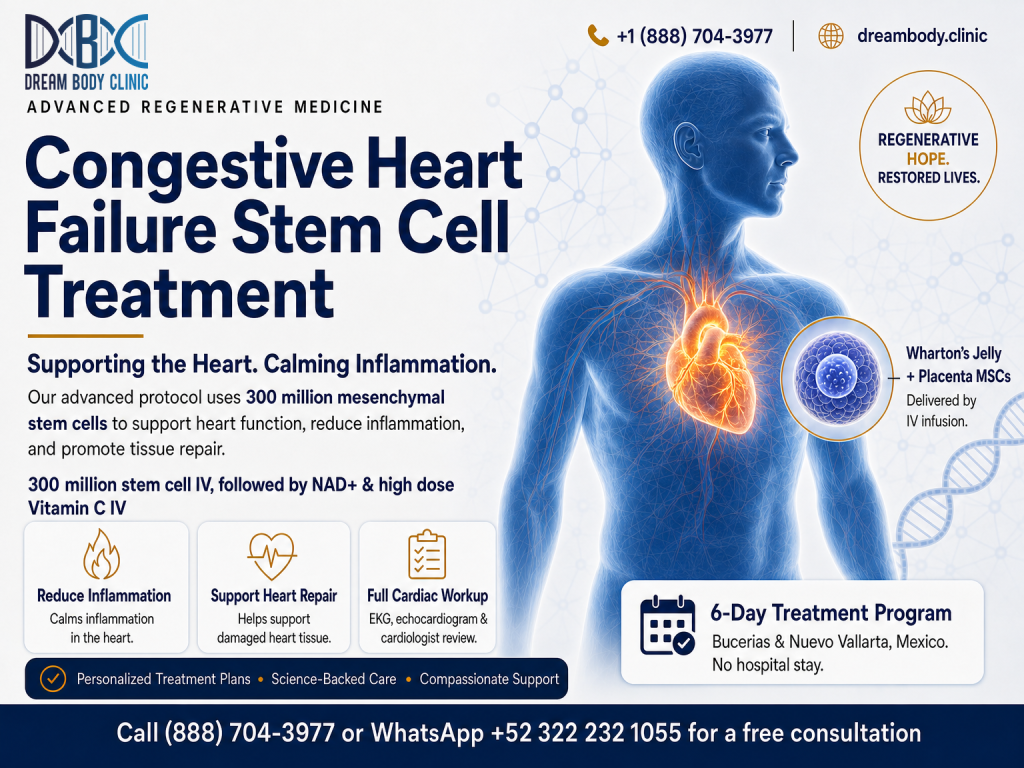
Congestive heart failure stem cell treatment at Dream Body Clinic is a protocol that delivers a 300 million mesenchymal stem cell (MSC) intravenous infusion to support reduced cardiac inflammation, improved circulation, and tissue repair signaling. The package is $11,800 USD and includes EKG, echocardiogram, chest X-ray, bloodwork, NAD+ and high-dose vitamin C IV, and physician review.
The cells are allogeneic MSCs derived from Wharton’s jelly and placenta, expanded on site in the clinic’s ISO 7 cleanroom lab (tested to ISO 14644-1). Patients plan a minimum six-day stay in the Bucerías / Puerto Vallarta area. Treatment is administered only after cardiac imaging and laboratory clearance by the clinic’s internist and cardiologist. Results vary, and the clinic does not treat patients with cancer in the past five years.
A free consultation is available to review candidacy and current availability. Call (888) 704-3977 or email info@dreambodyclinic.net.
HEART FAILURE RESEARCH · IMMUNE MODULATION · DREAM BODY CLINIC
Congestive Heart Failure Stem Cell Treatment
Minimum Stay
MSC IV

What’s included in your protocol
Typical Treatment Schedule
The Congestive Heart Failure Stem Cell Treatment at Dream Body Clinic
At DreamBody Clinic, we understand how devastating congestive heart failure (CHF) can be to your quality of life. That’s why we’ve developed an effective treatment option utilizing advanced stem cell therapy to help improve your heart function and overall quality of life.
This treatment involves the use of mesenchymal stem cells, which have been shown to improve heart function by reducing inflammation, promoting tissue repair, and modulating the immune response.
Our team of expert medical professionals has extensive experience in administering this stem cell therapy. We use Wharton Jelly (umbilical cord tissue) and placenta to derive our pure, isolated MSCs. Then we cultivate them to get the hundreds of millions necessary for this advanced treatment. The MSCs are then safely infused into your body to support the body’s own repair processes.
Our Congestive Heart Failure Stem Cell Treatment offers several benefits, including:
- Improved heart function and reduced symptoms of CHF
- Reduced inflammation and improved circulation in the heart
- Heart failure research
- Minimal recovery time and no hospital stay
- Safe and effective treatment with few side effects
If you’re seeking an innovative, non-invasive treatment for your CHF, our Congestive Heart Failure Stem Cell Treatment is an excellent option. At Dream Body Clinic, we’re dedicated to providing personalized and effective regenerative medicine therapies that help you achieve optimal health and wellness.
Call (888) 704-3977 For a Free Consultation
You can also email us at info@dreambodyclinic.net
Congestive Heart Failure Stem Cell Treatment at Dream Body Clinic
Call (888) 704-3977 or email info@dreambodyclinic.net
How do Mesenchymal Stem Cells Work for Congestive Heart Failure?
Mesenchymal stem cells (MSCs) have been shown to have beneficial effects in the treatment of congestive heart failure (CHF) through multiple mechanisms:
- Anti-inflammatory effects: MSCs have immunomodulatory properties and can reduce inflammation in the heart, which is a key contributor to CHF. They can also reduce oxidative stress and prevent cell death.
- Promotion of tissue repair: MSCs can guide various types of cardiovascular cells to promote angiogenesis and guide the formation of new blood vessels.
- Improvement of cardiac function: MSCs can increase cardiac output and improve left ventricular function in patients with CHF.
- Reduction of fibrosis: MSCs can reduce fibrosis or scarring in the heart, which is a common consequence of CHF.
Overall, MSCs have the potential to address multiple aspects of CHF and are probably the best treatment option available.
How do Mesenchymal Stem Cells Reduce Heart Inflammation for CHF?
Mesenchymal stem cells (MSCs) have been shown to reduce inflammation in the heart in cases of congestive heart failure (CHF) through several mechanisms:
- Secretion of anti-inflammatory molecules: MSCs can secrete various anti-inflammatory molecules, such as interleukin-10 (IL-10), transforming growth factor-beta (TGF-β), and prostaglandin E2 (PGE2). These molecules inhibit the activity of immune cells and reduce inflammation.
- Suppression of immune cell activity: MSCs can inhibit the activity of immune cells, such as T cells and B cells, that contribute to inflammation in the heart.
- Modulation of macrophage polarization: MSCs can regulate macrophage polarization, which is important for inflammatory responses. They can induce macrophages to adopt a pro-resolving (anti-inflammatory) phenotype, which further reduces inflammation.
- Reduce oxidative stress: MSCs can also reduce oxidative stress, which is a key contributor to inflammation in the heart. They can scavenge free radicals and promote antioxidant defense mechanisms, reducing the inflammatory response.
Overall, MSCs have demonstrated their ability to reduce inflammation in the heart in CHF through complex mechanisms that target various aspects of the inflammatory response. Without this precision delivery service the exosomes would just be free floating and have little therapeutic effect.
How does Interleukin-10 Reduce Heart Inflammation?
Mesenchymal Stem Cells will seek out inflammation of the heart and then release exosomes that carry Interleukin-10 to the damaged area. Interleukin-10 (IL-10) is an anti-inflammatory cytokine that plays a crucial role in reducing heart inflammation. IL-10 is secreted by various immune cells, including T cells, B cells, and macrophages.
IL-10 works by suppressing the activity of pro-inflammatory immune cells and promoting the activities of anti-inflammatory cells. It can inhibit the production of pro-inflammatory cytokines, such as interleukin-1 beta (IL-1β), tumor necrosis factor-alpha (TNF-α), and interferon-gamma (IFN-γ).
In the context of congestive heart failure (CHF), IL-10 can reduce inflammation of the heart by:
- Suppressing the activity of immune cells: IL-10 can inhibit the activity of pro-inflammatory immune cells, such as macrophages and T cells, that promote inflammation in the heart.
- Downregulating Toll-like receptor (TLR) signaling: IL-10 can inhibit TLR signaling, which is important for the activation of immune cells that trigger inflammation.
- Inducing anti-inflammatory immune cells: IL-10 can promote the activity of anti-inflammatory immune cells, such as regulatory T cells (Tregs), that can suppress inflammation.
- Reducing oxidative stress: IL-10 can also reduce oxidative stress, which can contribute to inflammation in the heart. It can promote antioxidant defense mechanisms and scavenge free radicals.
Overall, IL-10’s anti-inflammatory effects make it an amazing therapeutic target for CHF and other cardiovascular diseases.
How does Transforming Growth Factor-Beta Reduce Heart Inflammation?
Mesenchymal Stem Cells will seek out inflammation of the heart and then release exosomes that carry Transforming growth factor-beta (TGF-β) to the damaged area. Transforming growth factor-beta (TGF-β) is a cytokine that plays a crucial role in reducing heart inflammation. In the context of congestive heart failure (CHF), TGF-β reduces inflammation of the heart by:
- Inhibiting pro-inflammatory cytokine production: TGF-β can inhibit the production of pro-inflammatory cytokines, such as interleukin-1 beta (IL-1β), interleukin-6 (IL-6), and tumor necrosis factor-alpha (TNF-α), that contribute to heart inflammation.
- Promoting anti-inflammatory cytokine production: In addition to inhibiting pro-inflammatory cytokines, TGF-β can also promote the production of anti-inflammatory cytokines, such as interleukin-10 (IL-10), that can help to reduce inflammation in the heart.
- Inducing immune tolerance: TGF-β can induce immune tolerance, which can help to prevent the immune system from overreacting and causing damage to the heart. This is achieved through the suppression of effector immune cell function and promotion of regulatory T cell (Treg) function.
- Modulating extracellular matrix (ECM) deposition: TGF-β plays a role in the deposition of the ECM, which provides structural support to the heart. Inflammation in the heart can lead to excessive ECM deposition and fibrosis, which can impair heart function. TGF-β can modulate this process, helping to prevent excessive ECM deposition and fibrosis.
Overall, TGF-β plays a significant role in regulating inflammation in the heart and can have beneficial effects in reducing heart inflammation in cases of CHF.
How does Prostaglandin E2 Reduce Heart Inflammation?
Mesenchymal Stem Cells will seek out inflammation of the heart and then release exosomes that carry Prostaglandin E2 (PGE2) to the damaged area. Prostaglandin E2 (PGE2) is an important lipid mediator that plays a key role in reducing inflammation in the heart. In the context of congestive heart failure (CHF), PGE2 can reduce inflammation of the heart by:
- Suppressing pro-inflammatory cytokines: PGE2 can inhibit the production of pro-inflammatory cytokines, such as interleukin-1 beta (IL-1β) and tumor necrosis factor-alpha (TNF-α), that contribute to inflammation in the heart.
- Promoting anti-inflammatory cytokines: PGE2 can stimulate the production of anti-inflammatory cytokines, such as interleukin-10 (IL-10), which can help to reduce inflammation.
- Modulating immune cell activity: PGE2 can modulate the activity of immune cells, including macrophages, dendritic cells, and T cells, to reduce inflammation. PGE2 can promote the activity of anti-inflammatory immune cells while inhibiting pro-inflammatory immune cells.
- Reducing oxidative stress: PGE2 can also reduce oxidative stress in the heart, which can contribute to inflammation. It can promote antioxidant defense mechanisms and scavenge free radicals.
Overall, PGE2’s anti-inflammatory effects make it an effective therapeutic target for CHF and other cardiovascular diseases. In fact, some studies have shown that treatment with PGE2 can improve heart function and reduce inflammation from CHF.
How Might Mesenchymal Stem Cells Affect Damaged Heart Tissue in CHF?
It takes a combination of several mechanisms to support repair of damaged heart tissue. The following are the mechanisms used to do it:
- Paracrine signaling: MSCs can secrete various factors that promote tissue repair, such as growth factors, cytokines, and extracellular vesicles.
- Promotion of angiogenesis: MSCs can also promote angiogenesis or the formation of new blood vessels in damaged heart tissue. This is important for bringing oxygen and nutrients to the site of injury and supporting tissue repair.
- Modulation of the immune response: MSCs may modulate the immune response to the damage, reducing inflammation and promoting an environment that supports repair.
- Repair of Contractile Cells: MSCs have the potential to guide various types of cardiovascular cells, including cardiomyocytes which are contractile cells that compose the heart muscle. It was later established in further studies that they simply guide the cardiomyocytes in combination with the other mechanisms listed here to support repair of the damaged heart.
- ECM remodeling: MSCs can also contribute to the remodeling of the extracellular matrix (ECM) in damaged heart tissue, which is important for creating an environment that supports tissue repair.
Overall, the ability of MSCs to guide tissue repair in the heart is the most effective therapeutic strategy for CHF and other cardiovascular diseases.
Mesenchymal Stem Cells Heart Disease Studies
- Mesenchymal Stem Cells in Cardiovascular Research
- Mesenchymal Stem Cell Therapy for Cardiac Inflammation
- Mesenchymal stem cells stimulate protective genetic reprogramming of injured cardiac ventricular myocytes
- Multimodality Noninvasive Imaging Demonstrates In Vivo Cardiac Regeneration After MSC Therapy
- Human Umbilical Cord Mesenchymal Stem Cells: A New Era for Stem Cell Therapy
- Mesenchymal stem cell-released paracrine factor mediating myocardial survival and repair
- Exosome secreted by MSC reduces myocardial ischemia/reperfusion injury
- Use of Mesenchymal Stem Cells for Therapy of Cardiac Disease
- Therapeutic Application of Mesenchymal Stem Cells Derived Extracellular Vesicles for Immunomodulation
- Double blind, placebo controlled study of MSCs application post Heart Attack
- Safety and Efficacy of the Intravenous Infusion of Umbilical Cord Mesenchymal Stem Cells in Patients With Heart Failure: A Phase 1/2 Randomized Controlled Trial
- Mesenchymal stem cell therapy for heart failure: a meta-analysis
- Safety and Efficacy of Adult Stem Cell Therapy for Acute Myocardial Infarction and Ischemic Heart Failure
- Mesenchymal Stem Cells in Fibrotic Disease
- Immunomodulatory effects of human umbilical cord Wharton’s jelly-derived mesenchymal stem cells on differentiation maturation and endocytosis of monocyte-derived dendritic cells
- The immunosuppressive potential of mesenchymal stem cells
What Does the Research Say About Congestive Heart Failure Stem Cell Treatment?
Researchers have studied mesenchymal stem cells (MSCs) in people with heart failure. Some early clinical studies have been encouraging, while larger trials have had mixed results, and work in this field is ongoing. The science is still developing, so outcomes vary from person to person.
Read the full summary with citations: Stem Cell Therapy for Heart Failure: What the Research Shows.
At Dream Body Clinic, many of our heart patients tell us they have more energy and feel better overall after treatment, and we’re proud to support them. Every patient gets a personal medical review first, so we only recommend treatment when we believe it’s a good fit. Your care with us works alongside your own doctor’s care, never in place of it.
Licensed by COFEPRIS, Mexico’s equivalent of the FDA. Dream Body Clinic holds three sanitary licenses from COFEPRIS, Mexico’s federal health regulator: one for regenerative medicine practice, one for our stem cell bank and one for our stem cell collection center. Our cells are grown in our own Bucerias, Nayarit lab under strict cleanroom conditions and are tested by independent, COFEPRIS-authorized laboratories before every treatment.
Is Congestive Heart Failure Stem Cell Treatment in Mexico Safe?
Any injection or infusion carries risk, and the quality of the clinic and its lab matters most. In May 2024 the CDC reported three U.S. patients who developed Mycobacterium abscessus infections in 2022 after donor embryonic stem cell injections at clinics in Baja California and Guadalajara. Investigators suspected a common contaminated product. Dream Body Clinic is in Bucerias, Nayarit, and was not one of those clinics. Source: CDC Morbidity and Mortality Weekly Report, May 2024.
Here is how we reduce those risks, so you can check them yourself:
- COFEPRIS licences: the clinic operates under COFEPRIS licence 23-TR-18-020-0001 (Regenerative Medicine), with 23-TR-18-020-0002 (Stem Cell Bank) and 23-TR-18-020-0003 (Stem Cell Collection Center). Ask to see them during your consultation.
- Batch testing before release: each lot is tested by third-party, COFEPRIS-authorized laboratories for cell identity, sterility, mycoplasma, endotoxin and viability, and you receive a copy of the analysis for your lot.
- Donor screening: donors are screened for HIV, hepatitis B and C, syphilis and Chagas disease.
- Lab and handling: cells are grown in our own ISO 7 cleanroom lab (tested to ISO 14644-1) on the clinic property, never frozen, and given within 24 hours. See our lab licences and testing details.
A physician reviews your history and test results first and will tell you if you are not a good candidate. For the side effects reported after MSC treatment and what to watch for, read Stem Cell Therapy: Safety, Side Effects and Results.
Frequently Asked Questions About Congestive Heart Failure Stem Cell Treatment
How much does congestive heart failure stem cell treatment cost?
$11,800 USD for a 300 million MSC IV infusion. Flights and hotels are not included.
Is this treatment FDA-approved?
No. These treatments have not been approved by the U.S. Food and Drug Administration (FDA). Dream Body Clinic’s regenerative medicine treatments are provided under COFEPRIS licensing (license 23-TR-18-020-0001). COFEPRIS is Mexico’s equivalent of the FDA, and Mexico is where we operate.
Is it safe to get stem cell treatment in Mexico?
Any injection or infusion carries risk. A 2024 CDC report linked serious infections to donor stem cell injections at other clinics in Baja California and Guadalajara; Dream Body Clinic, in Bucerias, Nayarit, was not one of them. The clinic operates under COFEPRIS licence 23-TR-18-020-0001, grows cells in its own ISO 7 cleanroom lab (tested to ISO 14644-1), and releases each lot only after third-party testing.
How long do I need to stay?
Plan on about 6 days in Bucerias, Nayarit (Puerto Vallarta area).
What does the research show?
Mixed. A small IV trial reported a modest EF gain, but the largest heart failure trial missed its main goal and other well-run trials found no EF improvement over placebo. Read the full summary: Stem Cell Therapy for Heart Failure: What the Research Shows.
Side Effects or Risks
The only side effects that have been documented are the following:
- 1 in 100 people will experience a slight fever and/or headache for a few hours after treatment or the next day. We have found that 500mg of Tylenol easily resolves this issue.
- Any treatment involving an injection such as an IV runs a risk of infection. We have never had a patient experience an infection due to our sterility protocols.
- We do not treat patients that have had cancer within the past 5 years. There is still no conclusive evidence linking stem cells to make cancer worse, but we prefer to stay on the side of safety until more information is available.
- The heart tends to have more fluid around it for patients with congestive heart failure so we must be sure that the patient is fit for treatment. A patient could experience increased blood pressure from treatment so we take care to run EKG, echocardiogram and chest x-rays before treatment then have that reviewed by our cardiologist and internist.
- We do not recommend traveling to Dream Body Clinic via airplane if your ejection fraction is below 30% because the increased elevation while flying can cause heart issue and blood pressure issues.
- In all patients who receive an intravenous treatment of any sort, there is a risk of releasing a thrombus or plaque from the veins, even more so if the patient has mainly high cholesterol levels. If a thrombosis or phlebitis were to occur, it would occur immediately. This has not been an issue with our patients, but any sort of IV has this risk. This is why we do bloodwork for all patients to make sure that treatment is as safe as possible for them. Our lab has over 9 years of experience cultivating mesenchymal stem cells. See our stem cell certifications
How long do the Congestive Heart Failure Stem Cell Treatment Results Last?
The mesenchymal stem cells that are administered via IV will stay in the system for 8 months to a year. During that time they may interact with immune cells and seek out inflammation where they may send signals to nearby cells. After 8 to 12 months any MSCs that are free bound in your system will differentiate into an osteoblast (bone cell), adipocyte (fat cell) or chondrocyte (cartilage cell). They will then contain the donors HLA markers and your immune system will destroy and remove them. This is an easy process for your immune system and there is no negative reaction in your body from it. Some of the MSCs that were free bound from the IV will find capillaries to call home. They will attach and be considered a pericyte.
How to get the Congestive Heart Failure Stem Cell Treatment
In conclusion, congestive heart failure stem cell treatment could be a promising solution for individuals who are facing this condition. The Dream Body Clinic provides personalized treatment plans using stem cells to support repair of damaged tissues of the heart, which may lead to improved increased ejection fraction and overall heart function. While this treatment is not yet widely available, ongoing research suggests that it could be a viable alternative to traditional CHF management methods. If you are interested in learning more about this treatment, we recommend calling us for a free consultation at (888) 704-3977. If you are ready to get the Congestive Heart Failure Stem Cell Treatment then click the image below for details on how to book.
Related treatments: post heart attack stem cell treatment, high blood pressure stem cell treatment and hypertension stem cell treatment.
Further reading: 9 Things to Know Before Getting Stem Cell Congestive Heart Failure Treatment in Mexico.

Call (888) 704-3977 For a Free Consultation
9 Things to Know Before Getting Stem Cell Congestive Heart Failure Treatment in Mexico
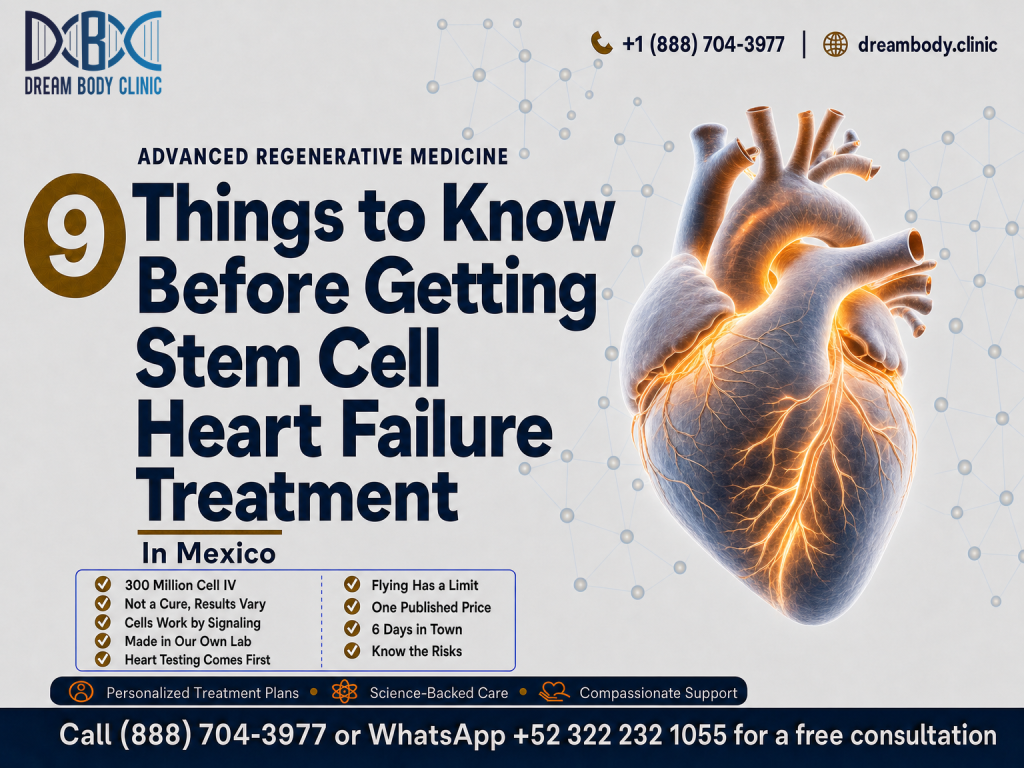
Congestive heart failure (CHF) is a serious condition, and any decision about treatment should be made with your own cardiologist. If you are exploring stem cell therapy as an added option, here are nine things to know before you book treatment at Dream Body Clinic in Bucerías, near Puerto Vallarta.
1. The protocol is a 300 million cell IV
Treatment is an intravenous infusion of 300 million mesenchymal stem cells (MSCs), followed by a NAD+ and high-dose vitamin C IV drip. The clinic describes the aim as supporting reduced cardiac inflammation, improved circulation and tissue repair signaling. It is offered as an addition to your regular cardiac care, not a replacement for it.
2. It is not a cure, and results vary
The clinic states that stem cell therapy offers no guarantees and is not promoted as a cure. Research on MSCs for heart disease is ongoing, and this is a clinic protocol. Keep taking your prescribed heart medications unless your own cardiologist tells you otherwise.
3. The cells work mainly by signaling
The clinic explains that MSCs are thought to work through signaling rather than simply replacing heart tissue. They are described as seeking out inflammation and releasing signaling molecules (such as IL-10, TGF-beta and PGE2) that help calm inflammation, support new blood vessel growth and influence scarring. These are the mechanisms the clinic is targeting, not a promised outcome for every patient.
4. The cells are made in the clinic’s own lab
The cells are allogeneic MSCs from Wharton’s jelly (umbilical cord tissue) and placenta, expanded in the clinic’s on-site, ISO-rated lab. The clinic says its lab has more than 9 years of experience cultivating MSCs.
5. Heart testing comes first
Before any treatment you have an EKG, an echocardiogram, a chest X-ray and bloodwork, reviewed by the clinic’s cardiologist and internist. They reserve the right to decline treatment if they believe your heart can’t handle it. Patients with CHF can have extra fluid around the heart, and blood pressure can rise after treatment, which is why these checks are required.
6. Flying has a limit
The clinic does not recommend traveling by airplane to the clinic if your ejection fraction is below 30%, because the altitude change in flight can cause heart and blood pressure problems. Ask your cardiologist whether air travel is safe for you before you book anything.
7. One published price
The package is $11,800 USD. It covers the EKG, echocardiogram, chest X-ray and analysis with a cardiologist and internist, the 300 million cell IV, the NAD+ and vitamin C drip, and physician review.
8. Plan for at least six days in town
Day 1 arrive and rest, Day 2 bloodwork, EKG, echocardiogram and chest X-ray, Day 3 scan review by the internist, clearance and payment, Day 4 cell preparation, Day 5 treatment (the 300M IV plus NAD+ and vitamin C), Day 6 fly home. The clinic recommends staying one more day to rest. If you stay longer, the days don’t need to be consecutive.
9. Know the risks and who isn’t treated
About 1 in 100 people have a slight fever or headache for a few hours afterward. Any IV carries a small risk of infection and, rarely, of releasing a clot from the veins, especially with high cholesterol. Some patients don’t respond. The clinic does not treat anyone who has had cancer in the past 5 years. Call emergency services for chest pain, severe shortness of breath, fainting or sudden swelling, and do not wait for a clinic appointment.
Ready to find out if you’re a candidate? Call (888) 704-3977, WhatsApp +52 322 232 1055, or email info@dreambodyclinic.net for a free consultation.
Results vary. This content is for education and is not medical advice. Stem cell therapy offers no guarantees and is not promoted as a cure. Always talk with your own cardiologist before changing any heart treatment.
Suggested SEO extras
- Title tag: 9 Things to Know Before Stem Cell Heart Failure Treatment in Mexico
- Meta description: Considering stem cell treatment for congestive heart failure in Mexico? Learn about the 300M MSC IV protocol, required heart testing, flight limits, price and the 6-day stay.
Stem cell therapy and congestive heart failure, explained
Patient stories describe individual experiences. Results vary and are not guaranteed. Watch more patient videos on our YouTube channel.