Hereditary Spastic Paraplegia Stem Cell Treatment
The intrathecal treatment cannot be done if the patient is on blood thinners. Our anesthesiologist recommends being off of blood thinners starting at least 2 weeks before treatment and he wants patients to stay off of them for 2 weeks post treatment. This is because blood thinners will make the blood slow to coagulate and we want it to coagulate fast after we puncture the thecal sac with the needle. This prevents any bacteria or other bad things from gettiing into the spinal cord fluid. Aspirin is ok to stop at least 3 days before intrathecal treatment and stay off of it for 2 weeks post treatment, but all other blood thinners need that 2 weeks before an after. This is why we advise patients to talk to the doctor that prescribed the blood thinners to make sure it is safe to be off of them for that long.
What’s included in your protocol
Typical Treatment Schedule
Watch & Learn
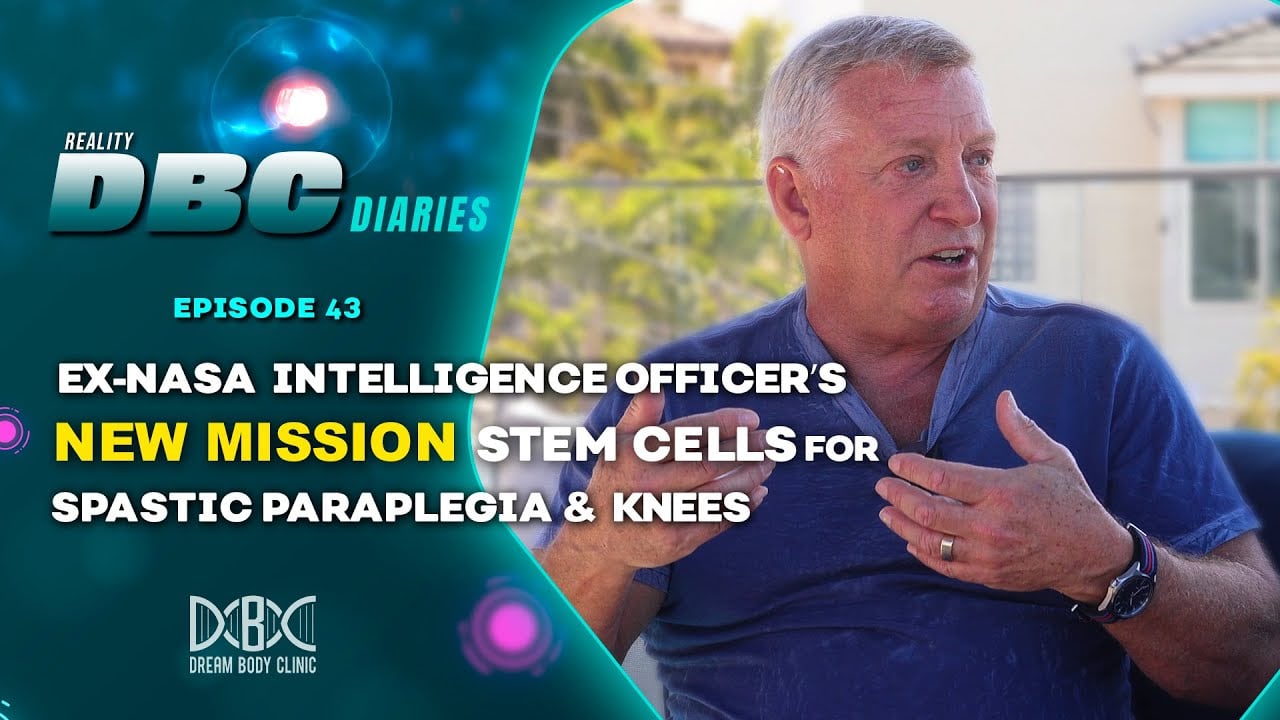
Rediscover Mobility with Stem Cell Treatment for Hereditary Spastic Paraplegia at Dream Body Clinic
- Neuroprotection and Regeneration: MSCs have the potential to protect and regenerate damaged neurons, offering a chance to slow the progression of HSP and improve motor function.
- Anti-Inflammatory Properties: Our therapy helps reduce inflammation, protecting your neurons from further damage and alleviating pain and stiffness.
- Enhanced Mobility: Experience improved muscle strength and coordination, allowing you to regain independence and enjoy life to the fullest.
Expertise and Innovation: Our team of experienced medical professionals specializes in stem cell therapy, employing the latest techniques and research to provide you with the best possible care.
Customized Treatment Plans: We understand that each patient is unique. Our personalized treatment plans are tailored to your specific needs, ensuring the most effective and targeted approach to managing your HSP symptoms. The listed protocol is the most common protocol, but we will do a free consultation and then decide on the proper dosing.
State-of-the-Art Facilities: Dream Body Clinic boasts modern, fully-equipped facilities designed for comfort and care. Our advanced medical technology ensures that you receive the highest standard of treatment in a safe and welcoming environment.
Holistic Approach: Beyond stem cell therapy, we offer a comprehensive approach to health and wellness. Our team provides guidance on lifestyle changes, physical therapy, and nutritional support to maximize the benefits of your treatment.
How do Mesenchymal Stem Cells Help with Hereditary Spastic Paraplegia?
Neuroprotection: MSCs can secrete various neurotrophic factors that support neuron survival and function, potentially slowing the progression of neurodegeneration in HSP.
Anti-inflammatory Effects: MSCs can modulate the immune system and reduce inflammation, which is often a component of neurodegenerative diseases. Reducing inflammation can help protect neurons from further damage.
Tissue Repair and Regeneration: MSCs can guide cells to differentiate into neural cells. MSCs can contribute to tissue repair and promote the regeneration of damaged neural tissues.
Improvement of Motor Function: By protecting neurons and reducing inflammation, MSCs can potentially improve motor function and reduce spasticity in individuals with HSP.
Releasing trophic factors: MSCs release various trophic factors, such as nerve growth factor (NGF), brain-derived neurotrophic factor (BDNF), and glial-derived neurotrophic factor (GDNF), that promote nerve regeneration, survival, and growth.
Immune modulation: MSCs have immunomodulatory properties that can dampen the inflammatory response and promote tissue regeneration and repair.
Guide Cell Differentiation and Regeneration: MSCs have the ability to guide differentiation and regeneration of multiple cell types, including neurons, which can help improve nerve function and repair.
Extracellular matrix (ECM) remodeling: MSCs can also promote tissue remodeling by secreting ECM-degrading enzymes, which help promote the growth of new blood vessels and improve tissue repair.
What Neurotrophic Factors do MSCs Release to Help Nerve Regeneration?
How do the Mesenchymal Stem Cells Work With Nerve Growth Factor to Heal Hereditary Spastic Paraplegia Symptoms?
How do Mesenchymal Stem Cells Work with Brain-Derived Neurotrophic Factor to Help Hereditary Spastic Paraplegia Symptoms?
Promoting neuronal differentiation: MSCs guide differentiation of neural cells, including neurons. BDNF can stimulate the differentiation of neurons, which can aid in neural repair and regeneration.
Enhancing synaptogenesis and neurite outgrowth: BDNF plays a vital role in the formation of synapses and the growth of neurites. MSCs, in combination with BDNF, can enhance synaptogenesis, neurite outgrowth, and neuronal connectivity.
Improving cognitive function: BDNF has been shown to improve cognitive function, particularly learning and memory, by promoting synaptic plasticity and neuronal survival. MSCs can help improve cognitive function by releasing BDNF and promoting the growth and repair of new neurons.
Hereditary Spastic Paraplegia Stem Cell Treatment and Chemotaxis
How do Mesenchymal Stem Cells Regenerate Myelin Sheath?
How do Mesenchymal Stem Cells Regenerate Neural Tissues?
How do Mesenchymal Stem Cells Protect the Nervous System?
Anti-inflammatory action: Inflammatory responses can cause damage to the nervous system, especially in chronic conditions such as Hereditary Spastic Paraplegia. MSCs have been shown to reduce inflammation by suppressing the activity of immune cells that contribute to inflammation and promoting the activity of anti-inflammatory immune cells. By decreasing inflammation, MSCs can help to protect the nervous system from damage.
Anti-apoptotic action: Apoptosis, or programmed cell death, can occur due to a wide variety of causes, such as chronic inflammation, oxidative stress, or injury. Apoptosis of nervous system cells can lead to widespread damage and symptoms. MSCs have been shown to reduce apoptosis by increasing the production of molecules that support cell survival.
Promotion of angiogenesis: Angiogenesis is the process by which new blood vessels are formed. Blood vessels are essential for supplying oxygen and nutrients to nervous system cells. MSCs can promote angiogenesis, which helps to maintain the health and functioning of nervous system cells.
Immunomodulatory activity: Along with their anti-inflammatory activity, MSCs can also modulate immune responses. This immunomodulatory activity can help to protect the nervous system by reducing the activity of immune cells that can cause damage and increasing the activity of cells that support healing and regeneration.
How long do the Hereditary Spastic Paraplegia Stem Cell Treatment Results Last?
How to get the Hereditary Spastic Paraplegia Stem Cell Treatment
Call (888) 704-3977 For a Free Consultation
Side Effects or Risks
- 1 in 100 people will experience a slight fever and/or headache for a few hours after treatment or the next day. We have found that 500mg of Tylenol easily resolves this issue.
- Any treatment involving an injection such as an IV runs a risk of infection. We have never had a patient experience an infection due to our sterility protocols,.
- 1 in about 30 patients will experience some lower back pain near the intrathecal injection site. It typically lasts a few hours to a few days before fully dissipating. We provide tramacet to all patients as a way to deal with this if it occurs.
- 1 in about 30 patients will experience a migraine like headache and sometimes nausea with it from the intrathecal treatment. In most cases taking 1 tramacet will relieve these side effects. In some cases the headache can last a few hours to a few days. We provide tramacet to all patients just in case to deal with this.
- A very small percentage of patients for this treatment will be non-responders. As with any medication or treatment there is always a chance of no change. Tylenol does not always fix a headache as an example.
- We do not treat patients that have had cancer within the past 5 years. There is still no conclusive evidence linking stem cells to make cancer worse, but we prefer to stay on the side of safety until more information is available.
- As with any medical treatment there is no guarantee of results, but our outcomes have been great for the vast majority of patients.
- In all patients who receive an intravenous treatment of any sort, there is a risk of releasing a thrombus or plaque from the veins, even more so if the patient has mainly high cholesterol levels. If a thrombosis or phlebitis were to occur, it would occur immediately. This has not been an issue with our patients, but any sort of IV has this risk. This is why we do bloodwork for all patients to make sure that treatment is as safe as possible for them.
The only side effects that have been documented are the following:
Our lab has over 8 years of experience cultivating mesenchymal stem cells with perfect safety and efficacy. See Stem Cell Certification by Clicking Here
Hereditary Spastic Paraplegia Stem Cell Treatment Studies
Selected peer-reviewed publications supporting this treatment.
Call (888) 704-3977
For a Free Consultation
Or email us at info@dreambodyclinic.net