If nobody else in your family has kidney disease, could yours still be hereditary, and would a negative genetic test settle the question? Neither family history nor a laboratory report always gives a simple yes-or-no answer.
If you're asking, “Is kidney disease hereditary?”, the answer is that some forms are directly inherited, while others involve genetic susceptibility or acquired conditions. Understanding that distinction helps you choose useful tests, protect relatives, and judge what treatment can realistically change.
Table of Contents
- Inherited Kidney Diseases at a Glance
- How Kidney Genes Pass From Parent to Child
- Signs That Point to a Hereditary Cause
- How Hereditary Kidney Disease Progresses Over Time
- How Genetic Testing Works Step by Step
- What Your Genetic Test Result Really Means
- Protecting Relatives Through Family Screening
- Treatment Options and Where Stem Cell Therapy Fits
Inherited Kidney Diseases at a Glance
| Condition | Gene(s) | Inheritance | First sign to watch for |
|---|---|---|---|
| Autosomal dominant polycystic kidney disease (ADPKD) | PKD1, PKD2 | Autosomal dominant | Enlarged cystic kidneys and high blood pressure, often in adults |
| Alport syndrome | COL4A5; COL4A3 and COL4A4 | X-linked or autosomal | Blood and protein in urine, sometimes with hearing or eye changes |
| Autosomal recessive polycystic kidney disease (ARPKD) | PKHD1 | Autosomal recessive | Enlarged kidneys often noticed in infancy |
| Fabry disease | GLA | X-linked | Protein in urine, pain in hands and feet, heart involvement |
| Primary hyperoxaluria type 1 | AGXT | Autosomal recessive | Recurrent kidney stones from childhood |
| Congenital nephrotic syndrome | NPHS1 | Autosomal recessive | Heavy protein loss in early infancy |
| APOL1-associated kidney disease | APOL1 | Risk variants, predominantly recessive susceptibility | Focal segmental glomerulosclerosis or other kidney disease; risk, not certainty |
Hereditary kidney disease is a broad group, not a single diagnosis. The National Kidney Foundation's genetics guide identifies polycystic kidney disease, Alport syndrome, Fabry disease, primary distal renal tubular acidosis, and primary hyperoxaluria among inherited causes. These conditions affect different kidney structures and processes, so similar blood or urine findings don't necessarily mean the same disease.
The underlying mechanism matters. Cysts can disrupt kidney structure, filtration-barrier abnormalities can let protein escape into urine, and metabolic defects can cause substances to accumulate. The National Kidney Foundation's family kidney-health guide describes congenital nephrotic syndrome associated with recessive NPHS1 variants as potentially beginning within the first 90 days of life, while primary hyperoxaluria causes excessive oxalate production and recurrent stones.
Use the table to organize questions, not diagnose yourself. Match the age at onset, kidney findings, symptoms elsewhere in the body, and family pattern. A relative's diagnosis may provide a useful clue, but relatives can also share diabetes, blood-pressure risks, or environmental exposures without sharing a single disease-causing variant.
How Kidney Genes Pass From Parent to Child
Individuals carry two copies of each autosomal gene, like two copies of the same recipe. A pathogenic variant is an instruction change that disrupts how the body makes or uses a protein. Whether it causes kidney disease depends partly on which copies are affected.
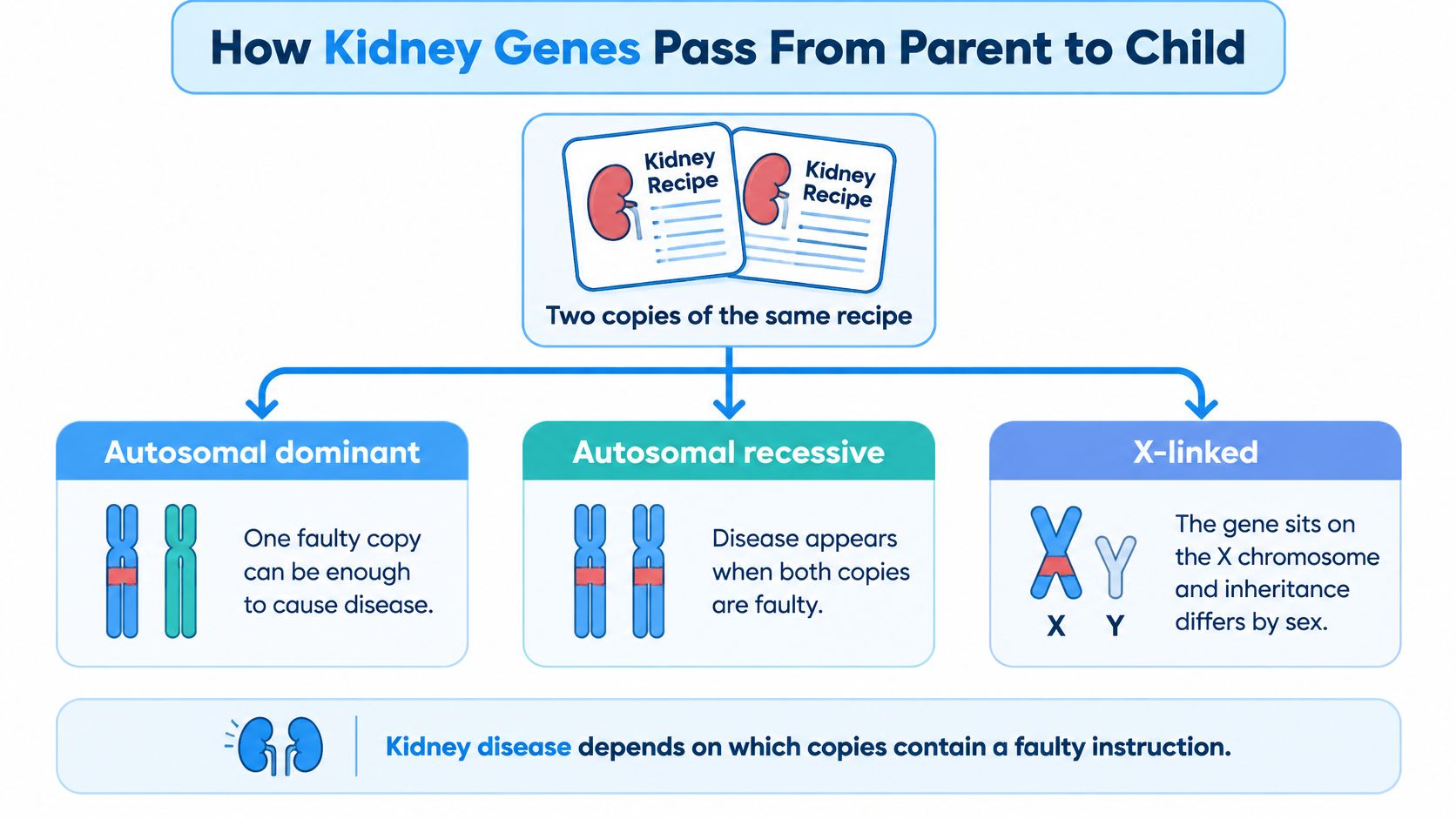
With autosomal dominant inheritance, a pathogenic change in one copy can be enough. With autosomal recessive inheritance, disease generally requires pathogenic changes in both copies. X-linked conditions involve a gene on the X chromosome, so transmission differs according to which parent carries the variant.
| Pattern | Chance per child | Example conditions | Key point |
|---|---|---|---|
| Autosomal dominant | Half inherit the variant when a parent has one affected copy | ADPKD, some Alport forms | The condition may appear in successive generations |
| Autosomal recessive | With two carrier parents, one-quarter affected, half carriers, one-quarter noncarriers | ARPKD, primary hyperoxaluria type 1, NPHS1-related disease | Parents often have no symptoms |
| X-linked | A mother with one variant has an equal chance of passing either X chromosome to each child | Fabry disease, COL4A5-related Alport syndrome | A father passes his X-linked variant to all daughters and no sons |
| Risk variant | The risk assessment uses the inherited combination and clinical context | APOL1-associated disease | Inheriting risk doesn't guarantee kidney failure |
These are inheritance calculations for the stated parental combinations, not predictions of disease severity. For recessive conditions, each pregnancy has the same probabilities, regardless of earlier children's results. Women with X-linked Fabry disease or Alport syndrome can develop clinically important disease and shouldn't automatically be considered unaffected carriers.
Susceptibility isn't the same as certainty
An APOL1 kidney-disease review reports that approximately 10%–15% of African Americans carry two APOL1 kidney-risk alleles, while NIH-reported research estimated about a 4% lifetime risk of focal segmental glomerulosclerosis among African Americans with two variants. That estimate concerns a particular diagnosis, not all kidney disease.
A child can inherit a variant from a parent who never developed recognizable disease. Alternatively, a new variant can arise without being present in either parent's tested DNA, leaving no obvious family history.
Signs That Point to a Hereditary Cause
No known family history doesn't mean no genetic cause. Relatives may have mild disease, incomplete medical records, or a diagnosis that never identified the underlying disorder.
A review of genetic kidney disease estimates that monogenic conditions account for approximately 10%–20% of adult chronic kidney disease cases, with the contribution differing by population and testing practices. That makes genetic evaluation relevant beyond families with an already named inherited condition.
Look for these clues:
- Early onset: Kidney disease beginning in childhood or young adulthood.
- Affected relatives: Multiple family members with kidney failure, dialysis, or unexplained kidney impairment.
- Cystic kidneys: Multiple or bilateral cysts, especially with enlarged kidneys.
- Other organ findings: Hearing loss or eye abnormalities alongside kidney disease.
- Familial urine findings: Blood in urine across generations.
- Treatment resistance: Nephrotic syndrome that doesn't respond to steroids.
- Unexplained CKD: Kidney impairment without a convincing acquired explanation.
For example, a hypothetical young adult with kidney failure, no diabetes, and an uncle who needed dialysis unusually early warrants a detailed family review. The family connection doesn't establish a diagnosis, but it changes which questions a nephrologist should ask.
Don't mistake a clue for a diagnosis
Heavy urinary protein loss can lower blood albumin, but low albumin has other explanations. Vital iQ Health's explanation of why low albumin isn't a diagnosis helps put that finding in context rather than treating it as proof of inherited kidney disease.
A hereditary diagnosis can clarify previously unexplained kidney failure and identify relatives who need evaluation. Write down the clues that apply, including relatives' ages at diagnosis, and bring the list to your nephrology appointment.
How Hereditary Kidney Disease Progresses Over Time
Say someone learns they have ADPKD after a scan for another problem. They feel well, but the clinician finds high blood pressure. Another person with an inherited disorder may first present with urinary blood, recurrent stones, or substantial protein loss.
Those starting points lead to different monitoring plans. ADPKD can involve gradual cyst enlargement over many years, whereas ARPKD may require specialist care from infancy or childhood. A general timeline can't predict either person's course.
Different diseases need different warning signs
In Alport syndrome, urinary blood and protein may precede more noticeable kidney impairment. Hearing and eye assessments can add information that a kidney blood test alone won't provide.
With Fabry disease, clinicians also assess pain, cardiac involvement, and other organ manifestations. Stable filtration doesn't necessarily mean the whole condition is stable. In primary hyperoxaluria type 1, recurrent stones and oxalate-related injury require disease-specific attention, while congenital nephrotic syndrome needs urgent pediatric specialist care.
Across inherited disorders, clinicians watch for:
- Blood-pressure changes: These can require treatment before symptoms appear.
- Protein leakage: Urine albumin-to-creatinine ratio helps quantify kidney injury.
- Falling filtration: Serial estimated glomerular filtration rate, or eGFR, helps establish the direction of change.
- CKD complications: Anemia, fluid retention, and bone or mineral abnormalities may need separate management.
Track the trend: Bring previous laboratory reports, not just the latest result. A sequence helps your clinician distinguish a sustained change from an isolated fluctuation.
Acute kidney injury is different from inherited disease progressing over time. Material on mesenchymal stem cells and acute renal failure shouldn't be interpreted as evidence that an inherited condition will follow the same course or respond similarly.
“How fast will this progress?” is a reasonable question. A useful answer combines the gene, specific variant, imaging, urine findings, blood pressure, and your own trajectory rather than relying on a generic age prediction.
How Genetic Testing Works Step by Step
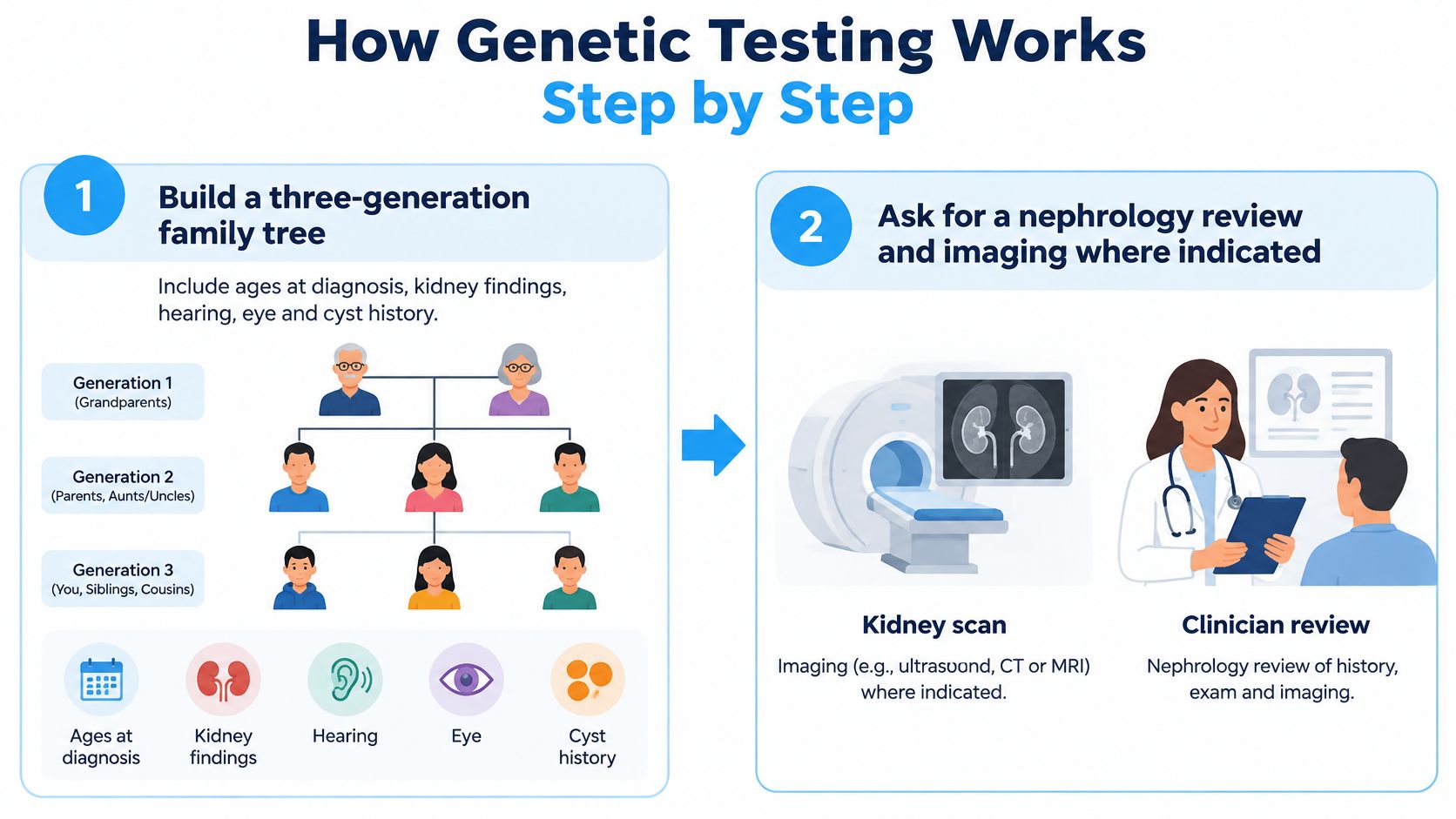
A useful genetic test starts with a clinical question. Testing without a review of symptoms, imaging, and family history can produce a result that's difficult to interpret.
Prepare before providing a sample
Build a three-generation family tree. Include parents, siblings, children, grandparents, aunts, and uncles where information is available. Record ages at diagnosis and kidney, hearing, eye, and cyst findings, distinguishing confirmed diagnoses from family recollections.
Arrange nephrology review and appropriate imaging. Your clinician compares blood and urine tests with ultrasound or other findings to define the likely disease pattern. This helps the laboratory choose and interpret relevant genes rather than treating every possible finding as equally meaningful.
Have genetic counseling before testing. Discuss potential results, whether unrelated findings may be reported, and how information could affect relatives or reproductive decisions. Ask about privacy and insurance implications in the country where you live, because arrangements differ.
Choose the test that answers the question. A phenotype-directed multigene panel examines genes associated with your clinical findings; exome or genome sequencing may be appropriate when a panel is uninformative or the presentation is broader. The KDIGO genetics conference report supports this approach and identifies clinically relevant genes including PKD1, PKD2, COL4A3, COL4A4, COL4A5, NPHS1, UMOD, HNF1B, and APOL1.
Match the test to the family situation
When a family already has a confirmed pathogenic variant, relatives often need a targeted test for that variant, not an entirely new broad panel. Confirm that the laboratory has the original report, including the precise variant description.
For suspected ADPKD, the KDIGO ADPKD guideline describes a role for accredited targeted sequencing when the familial variant is unknown or imaging is uncertain. A typical clinical and imaging presentation may not require immediate genetic testing, while atypical findings or evaluation of a related potential kidney donor make molecular clarification particularly useful.
Provide the requested sample. Blood or saliva may be used, depending on the laboratory. Ask for the expected turnaround, whether another sample might be needed, and who will contact you with results.
Expect clinical variant classification. Finding a DNA change doesn't automatically establish disease. The laboratory and clinical team evaluate the evidence using recognized classification standards and check whether the finding fits your symptoms and inheritance pattern.
Attend a results appointment. Review what changes in your kidney care, which relatives should be offered testing, and whether other organs need surveillance. Leave with the report and a written plan, not just a verbal statement that the result was positive or negative.
What Your Genetic Test Result Really Means
A negative test doesn't rule out inherited kidney disease. It means the test didn't identify a causal variant within its scope and current interpretation.
An Annual Review of Medicine review of genetic kidney disease explains why unresolved cases may need expert review, expanded testing, or later reinterpretation. A relevant gene may not have been included, a type of variant may be difficult for the method to detect, or scientific understanding may still be incomplete.
| Result | What it means | Next step |
|---|---|---|
| Pathogenic or likely pathogenic variant | A likely cause is identified when the variant, inheritance, and clinical findings fit | Confirm interpretation; plan monitoring and relative testing |
| Variant of uncertain significance | A change was found, but its disease relevance isn't established | Don't treat it as a diagnosis; arrange re-review |
| Negative | No causal variant was identified within the test's scope | Continue clinical review; consider broader testing or reanalysis |
| Incidental finding | A potentially important finding unrelated to the kidney question | Review reporting, confirmation, and family implications with a counselor |
| Carrier result | One pathogenic copy for a recessive condition | Discuss partner testing and reproductive counseling |
Read the result in clinical context
A pathogenic result can establish a useful explanation, but the team must still check that the inheritance fits. One recessive variant alone generally doesn't explain a condition that requires affected copies from both parents.
A variant of uncertain significance, or VUS, isn't permission to diagnose relatives or select treatment on that finding alone. Family testing sometimes helps interpretation, but it should be coordinated by the genetics team.
An incidental finding may involve a non-kidney risk, such as a cancer-predisposition gene. A carrier finding usually has greater relevance to reproductive planning than to explaining the person's kidney symptoms, although gene-specific exceptions require review.
Keep unresolved cases open
Missing family history has a separate explanation from a negative laboratory result. Relatives may never have been diagnosed, may have died without an explanation, or may have had mild disease.
Hereditary disease, familial clustering, and genetic susceptibility aren't interchangeable. Before leaving the clinic, ask which genes and variant types were assessed, whether later reanalysis is available, and what kidney monitoring should continue despite an unrevealing result.
Protecting Relatives Through Family Screening
Start with the family tree and the confirmed diagnosis, if one is available. Cascade screening means offering appropriate evaluation to close relatives, then extending it through the affected family branch as results clarify who else may be at risk.
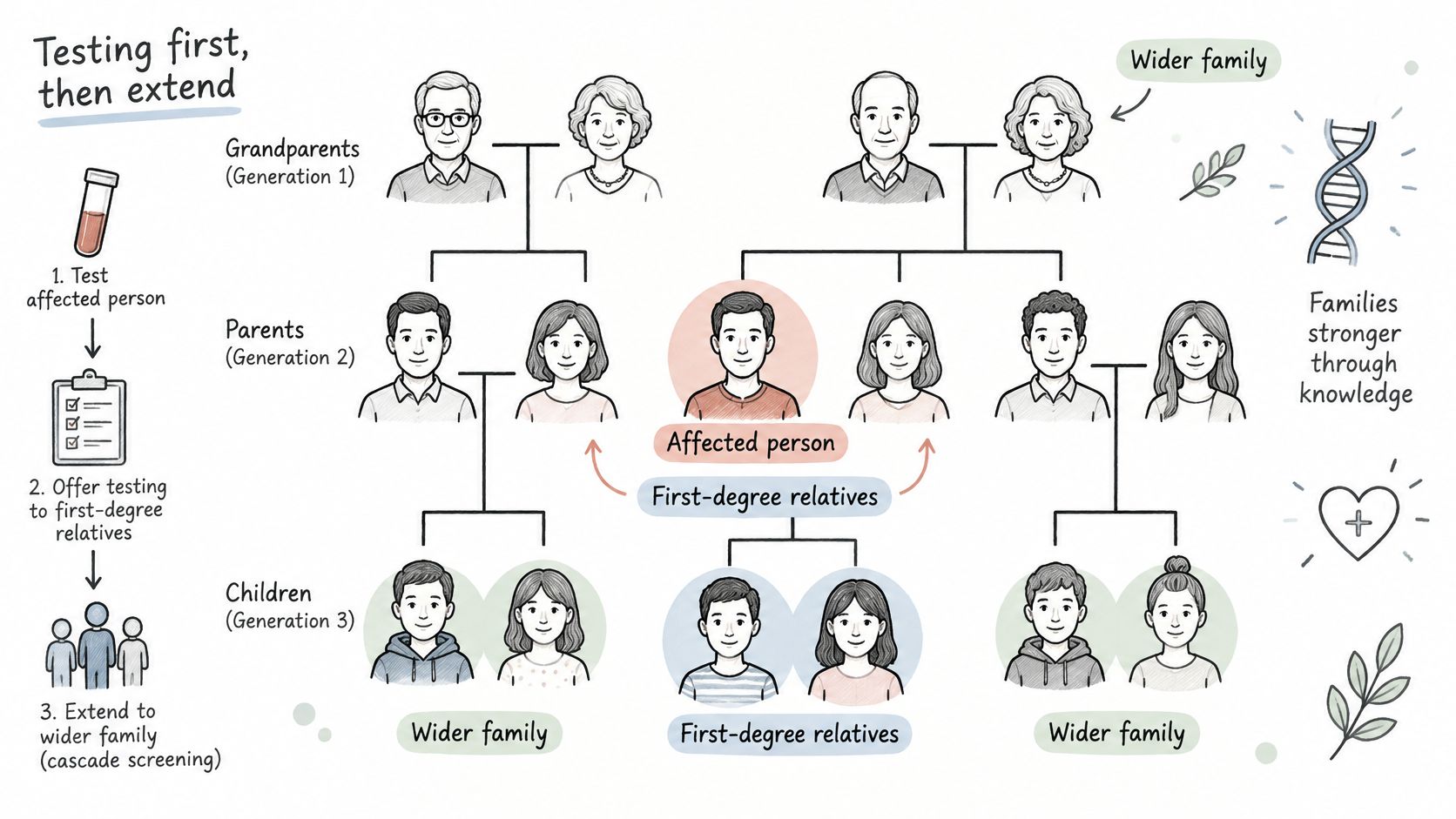
Genetic testing isn't the only useful action. A clinician can assess relatives using available tests while arranging specialist input:
- Urine testing: Check for protein and, when appropriate, blood.
- Kidney blood tests: Assess creatinine and estimated filtration.
- Blood-pressure measurement: Identify a treatable problem that may have no symptoms.
- Condition-specific imaging: Use ultrasound or other imaging when cystic disease is suspected.
- Hearing and eye assessment: Arrange these when the family findings suggest Alport syndrome.
The Medscape kidney-disease guideline overview describes practical barriers including cost, test selection, interpretation, counseling availability, privacy, and insurance concerns. These barriers matter particularly when relatives live in different countries.
Make the family information usable
Share a copy of the clinical genetic report through a counselor or secure medical channel, with the affected person's consent. An informal message that a relative has a kidney gene isn't enough for a laboratory to choose the correct targeted test.
Ask each relative's local nephrologist to review the family tree and clinical findings. A genetic counselor can help coordinate interpretation across health systems, while screening intervals should reflect the condition, age, and previous results rather than a universal schedule.
A normal screening result today may describe the present, not eliminate a lifelong inherited risk.
Families can also discuss reproductive options without pressure to make a particular choice. Relatives shouldn't stop medicines, assume they're suitable kidney donors, or pursue unvalidated regenerative treatments solely because of a family result.
Treatment Options and Where Stem Cell Therapy Fits
Confirm the diagnosis before choosing a treatment. Bring your nephrologist and genetic counselor recent eGFR and urine protein results, imaging, the complete genetic report, your family tree, and a medicine list. The diagnosis determines whether care should target cyst growth, abnormal protein handling, metabolic accumulation, blood pressure, or another mechanism.
Preserve kidney function with established care
Standard management is individualized. An ACE inhibitor or ARB may help control blood pressure and protein leakage when suitable, and an SGLT2 inhibitor may be considered when eligibility and the clinical situation support it.
Selected adults with rapidly progressing ADPKD may be candidates for tolvaptan. Fabry disease may require enzyme replacement or another disease-specific approach. These treatments address particular disease processes rather than treating every inherited condition as generic CKD.
Practical care also includes reducing excess salt, avoiding NSAIDs unless specifically advised, and reviewing supplements and nonprescription medicines. Monitoring frequency should match disease severity and treatment changes, with more frequent review when kidney function is unstable. Advanced disease also warrants timely dialysis and transplant education.
What mesenchymal stem cells actually do
In kidney-treatment discussions, mesenchymal stem cells aren't replacement kidney cells and shouldn't be described as differentiating into new kidney tissue. Their proposed therapeutic action is chiefly the paracrine effect, meaning they release specialized signals that influence the healing environment.
A Stem Cells review of paracrine mechanisms describes soluble mediators and extracellular vesicles involved in immune regulation, blood-vessel responses, fibrosis, and the body's own repair pathways. This is signaling-based support, not reconstruction of an organ from administered cells.
A review of MSC therapy in kidney disease describes favorable findings, including a reported IgA nephropathy follow-up in which eGFR remained stable or improved over 8–10 years after treatment that included methylprednisolone followed by autologous cell-based therapy. Such observations support further investigation, but they don't establish that MSCs caused the improvement, predict an individual response, or demonstrate benefit for inherited kidney disease.
Treatment boundary: Improving inflammation or filtration isn't the same as correcting a pathogenic DNA variant.
Evaluate the protocol and its limits
Our kidney stem cell treatment information describes our renal-care offering. For someone with an inherited condition, the essential question is whether any proposed intervention could address a secondary injury process, not whether it can remove the genetic cause.
We operate within Mexico's COFEPRIS-regulated framework. Regulatory oversight should not be confused with proof of effectiveness for a particular inherited disorder, and the information available here doesn't independently establish indication-specific approval.
Our donor screening includes a complete clinical history and serologic testing for HIV, hepatitis B and C, syphilis, and Chagas. Screening is an important safety measure, but it doesn't eliminate procedural risks or establish treatment benefit.
Advanced kidney failure makes meaningful recovery harder to achieve. Kidney shrinkage can accompany longstanding disease, but dialysis itself shouldn't be presented as the cause, and nobody should delay or stop prescribed dialysis to pursue cell therapy. Our lead doctors review medical histories and records to assess suitability and tailor any proposed protocol, with realistic limits for genetic disease.
Dream Body Clinic offers physician-led review of kidney records and individualized assessment of whether its MSC approach is appropriate for your situation. Visit Dream Body Clinic to submit blood work, scans, and genetic reports for review by our lead doctors, including a clear discussion of what treatment cannot correct when kidney disease is hereditary.