

The first time a knee pops after ACL surgery, it usually happens at a very ordinary moment. You step off the rehab table, plant your foot on the floor, bend into a squat, or climb a stair, and suddenly there’s a crack, click, clunk, or snap deep in the joint. The sound can feel loud enough to mean disaster, even when the knee itself doesn’t collapse.
That reaction makes sense. After ACL reconstruction, your brain is on high alert for graft failure, so any new noise feels personal and urgent. In real clinic visits, though, the sound itself is only one part of the story. The more important questions are whether the pop is painful, whether swelling is building, whether the knee locks, and whether you’re losing extension.
Table of Contents
- What That First Pop After ACL Surgery Actually Feels Like
- The Main Reasons a Reconstructed Knee Clicks and Pops
- When Knee Popping Is Normal and When It Lingers
- Red Flags That Mean the Pop Is Not Just Noise
- Rehab Strategies That Quiet Down Knee Popping
- Imaging and Revision Decisions for a Noisy ACL Knee
- Quick Reference for Knee Pop After ACL Surgery
What That First Pop After ACL Surgery Actually Feels Like
A lot of patients describe the same scene in different words. One person hears a soft click deep inside the knee during a bend. Another feels a sharper clunk on stairs. Someone else gets a rubber-band snap while loading into a squat, then freezes because the mind jumps straight to the graft.
Why the sound can feel so alarming
The knee after ACL surgery isn’t moving in the same way it did before injury. Swelling, early scar formation, weak quadriceps, and a graft that’s learning to accept load can all change how the joint glides. That makes a new sound more noticeable, especially when you’ve been guarding the leg for weeks.
The timing matters too. Knee pop after ACL surgery is often noticed in the early loading phase, when swelling is easing and rehab starts asking the joint to do more. That doesn’t automatically mean damage. It usually means something inside the knee is moving differently than it did during the quiet, protected first days after surgery.
A pop is a symptom, not a diagnosis. The context around it, pain, swelling, motion, and stability, tells the real story.
I won’t diagnose your knee over the internet, and no article should pretend to. What does help is sorting the common mechanical sources of postoperative noise from the signs that deserve a closer look in clinic. That’s the difference between ordinary rehab noise and a problem that needs imaging or a surgical review.
The Main Reasons a Reconstructed Knee Clicks and Pops
Graft and hardware related noise
Some sounds come from the reconstruction itself. A graft can feel tight or shift slightly under load, and fixation hardware can sometimes create a sensation of catching when the knee moves through a certain arc. These noises are often felt deep in the front or center of the knee, and patients notice them most during squats, stairs, or controlled pivots.
That said, a pain-free click in this category is often more annoying than dangerous. The sound alone doesn’t tell you whether the graft is failing. What changes the equation is pain, instability, swelling, or motion loss.
Scar tissue and extension block
Scar tissue is another common source. Early fibrin movement, maturing adhesions, and the cyclops lesion can all create a pop, clunk, or hard stop near terminal extension. A cyclops lesion is a localized arthrofibrotic nodule in the front of the knee that can physically block straightening, which is why it tends to create an audible or palpable clunk when the knee tries to finish extension.
If you want a deeper look at meniscal symptoms that can overlap with postoperative catching, the repair and healing discussion at how stem cells are discussed in meniscus care is useful context. The key clinical point here is simple. Scar-tissue noise is more concerning when it comes with a progressive loss of extension, not just a single harmless crack.
Tracking and soft-tissue causes
The kneecap can also be the noise source. Quadriceps inhibition, quadriceps weakness, altered patellar tracking, retinacular tightness, iliotibial band friction, and meniscal tissue that is healing or displaced can all produce clicking or grinding. These sounds are often most obvious during repeated bends, step-downs, or loaded knee motion.
Practical rule: if the knee sounds noisy but still moves smoothly, tracking and soft-tissue irritation are more likely than graft failure.
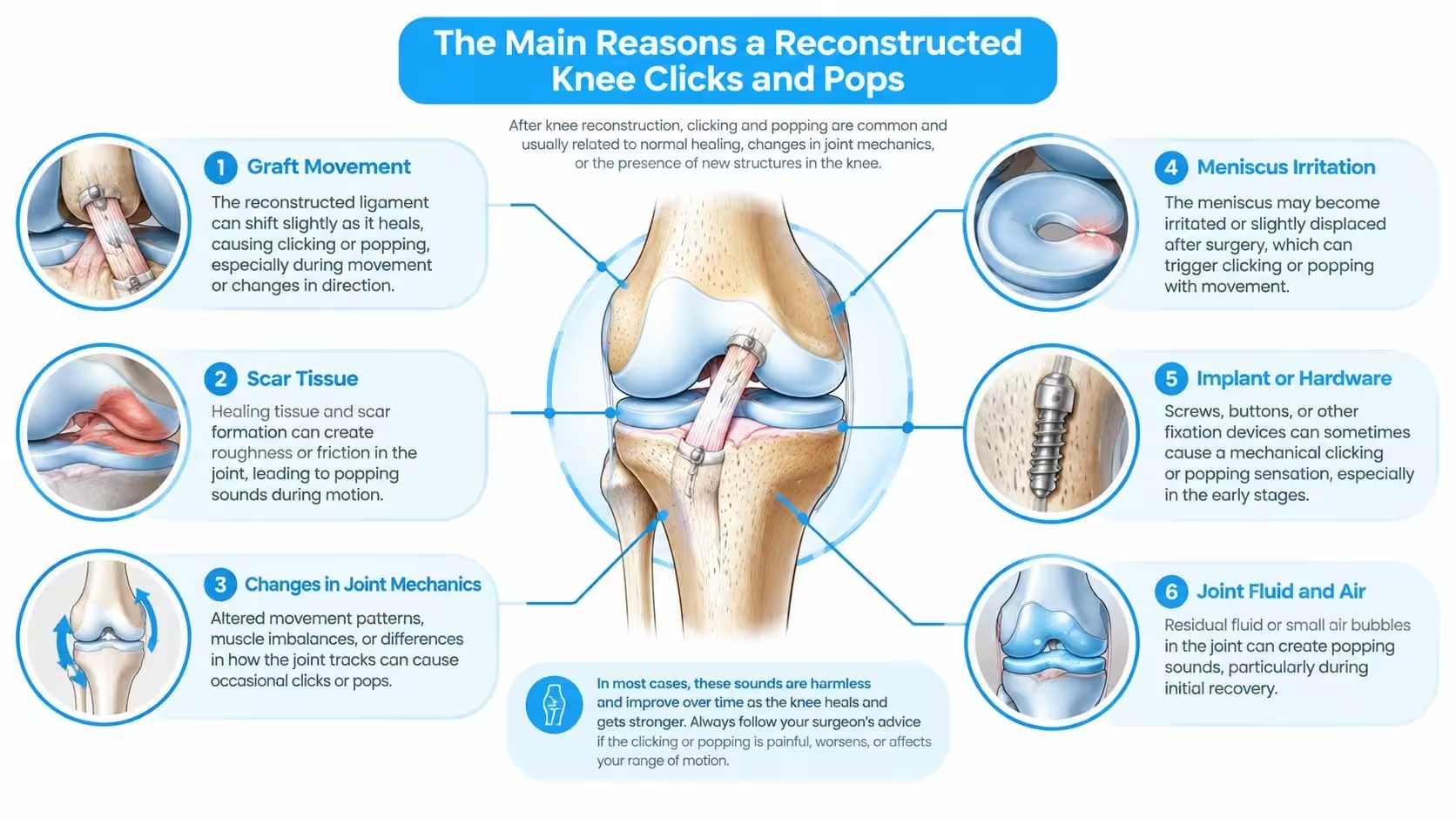
The pattern matters more than the noise alone. A deep painless click during motion points you one way. A loud clunk with loss of extension points you another. A sharp pop with instability points you somewhere else entirely.
When Knee Popping Is Normal and When It Lingers
The usual recovery pattern
Early noise is common because the knee is still irritated, swollen, and weak. As motion returns and the quadriceps wake up, the joint often becomes quieter. In the classic ACL literature, postoperative patellofemoral crepitus was recognized as a real issue after surgery, and changing from older open surgery with casting to arthroscopic surgery with early motion reduced patellofemoral problems from 40% to 21% in acute injuries (PubMed report). A later study of 112 young adults found that self-reported crepitus one year after reconstruction was associated with full-thickness patellofemoral cartilage defects, with an adjusted prevalence ratio of 2.77 (PubMed study).
That doesn’t mean every knee with noise is headed toward arthritis. The same 2026 study found no significant link between crepitus and worsening structural osteoarthritis features over the next 5 years, which is an important distinction. Early sound can reflect current cartilage changes without predicting long-term degeneration.
You can speed up recovery and avoid arthritis with this protocol – Knee Stem Cell Treatment – 50 Million Mesenchymal Stem Cells & and MRI
What “normal” usually sounds like
A knee that is noisy but not troubled usually does a few things well. It bends and straightens fully, the pop is not painful, swelling keeps trending down, and the leg feels stable during walking. Crepitus can be especially noticeable while strength is still catching up, then fade as the knee tolerates load better.
If the knee is getting quieter and stronger over time, that trend matters more than any single noise.
Normal versus lingering noise
| Time After Surgery | Typical Noise | Lingers If… |
|---|---|---|
| 2 weeks | Swelling-related clicking, vague rubbing, motion noise | Motion is shrinking, swelling keeps building, or pain is sharp |
| 6 weeks | Noisy squats, stairs, or extension work as loading increases | The click becomes louder, more frequent, or tied to catching |
| 3 months | Intermittent crepitus during strength work or step-downs | Extension is still limited, or the knee feels blocked |
| 6 months | Some knees still creak, especially with patellofemoral loading | Noise is worsening rather than fading |
| 1 year | Most postoperative noise should be settled or clearly improving | Popping is paired with swelling, locking, or instability |
Red Flags That Mean the Pop Is Not Just Noise
A lot of people hear a pop and assume the graft tore. That's not a safe assumption, but the opposite mistake is just as unhelpful. A painless click during flexion is not the same thing as a loud pop with swelling, locking, and giving way.
Symptom clusters that deserve attention
A cyclops lesion usually shows up as extension loss, anterior knee pain, and an audible or palpable clunk during straightening. A meniscal problem is more likely to bring catching, locking, or a sense that the knee won't move cleanly through the motion arc. Graft laxity is the one that makes people describe the knee as unstable or giving way, especially during stance or pivot.
The practical threshold is plain. New swelling that doesn't settle, painful popping, repeated buckling, or loss of terminal extension after rehab has been moving forward are all reasons to call the surgical team. If the knee won't bear weight normally or seems mechanically stuck, that's not something to wait out.
Clinical shortcut: painless noise can often be watched. Painful noise plus blockage or instability needs reassessment.
| Symptom | Usually Benign | Call the Clinic |
|---|---|---|
| Soft click during a squat | Yes, if it's painless and motion stays full | No, unless it starts worsening |
| Loud clunk with extension loss | Unlikely | Yes |
| Pop with swelling within hours | Unlikely | Yes |
| Catching or locking | No | Yes |
| Single click, no pain, no swelling | Often normal | Not usually |
| Repeated giving way | No | Yes |
Rehab Strategies That Quiet Down Knee Popping
Restore quad control first
Quadriceps inhibition changes patellar tracking, and that can make the knee noisy. The first job is getting the quad to fire reliably again with quad sets, terminal knee extensions, and, if available, neuromuscular electrical stimulation. When the front of the thigh starts doing its job, the kneecap often glides more cleanly.
Build around the knee, not just on it
Hip and glute strength matter because the knee does not work alone. Banded side steps, single-leg bridges, and step-downs help control how the leg loads from the hip down. That can ease stress on the patellofemoral joint and reduce the grind or click that shows up during repeated movement.
Free motion and then load it gradually
Patellar mobility work can help when scar tissue is part of the problem. Superior and medial glides are common ways therapists address stiffness under the tendon. Load should then increase in a measured way, because tissues that are still remodeling often get noisy when they are asked to do too much too soon.
A helpful benchmark is strength, not silence. If the knee is moving well and the noise is not painful, rehab can keep progressing even if it is not perfectly quiet yet.
For a broader look at post-surgical knee recovery options, physical therapy for knee pain is a practical resource. For patients exploring non-surgical options alongside rehab, stem cell knee treatment guidance outlines how regenerative injections may complement standard recovery.
Use the pattern to choose the next step
| What You’re Experiencing | Self-Manage | Call the Clinic |
|---|---|---|
| Recent noise, no swelling, full motion | Continue rehab, ice after exercise, monitor | Not usually needed |
| Mild crepitus during strengthening | Keep loading gradually, focus on quad control | If it worsens or changes character |
| Stiffness after a harder session | Reduce load for a few days, work mobility | If extension drops or pain rises |
| New locking or effusion | Stop stressing the joint, rest, ice | Yes |
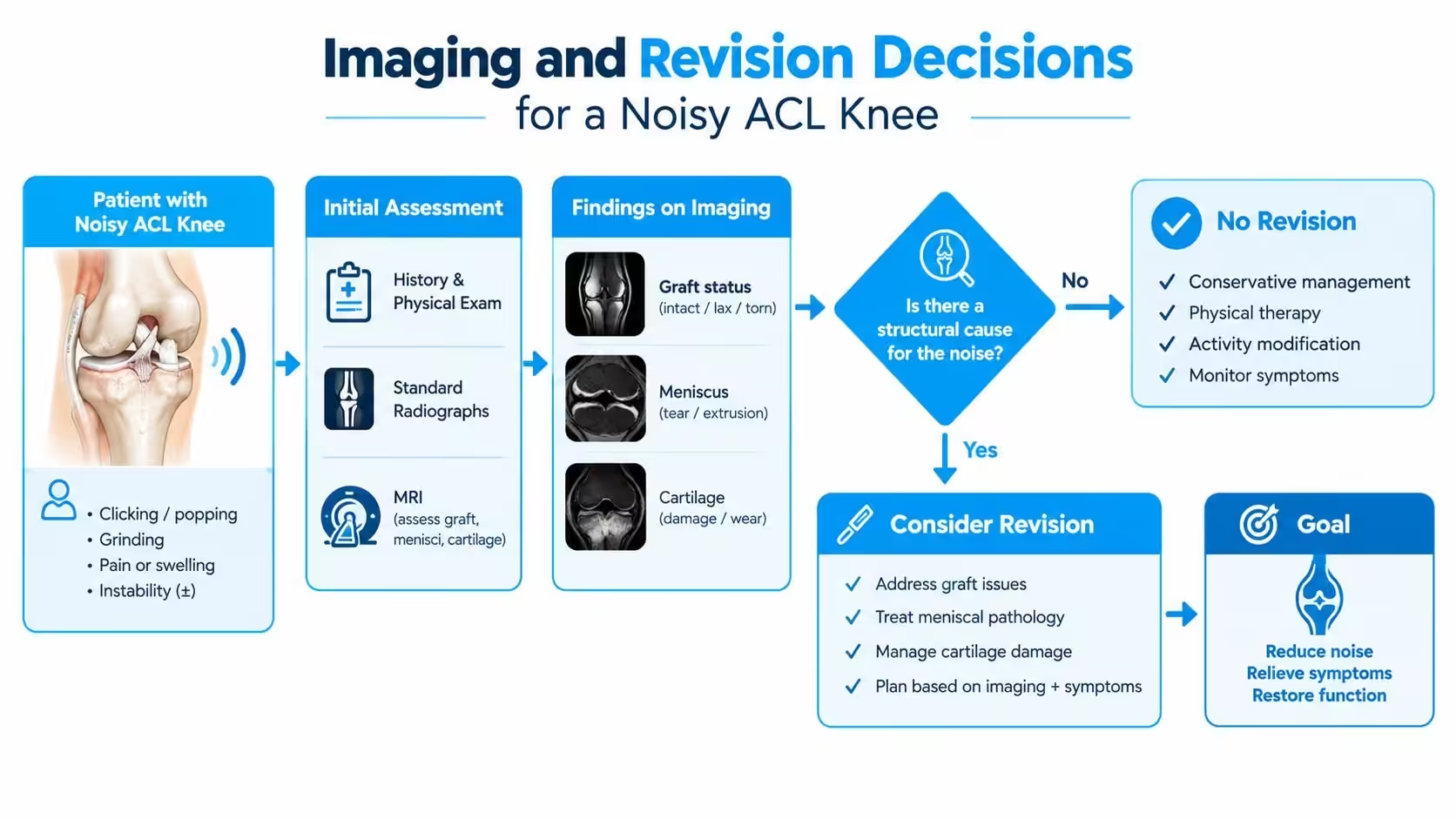
Imaging and Revision Decisions for a Noisy ACL Knee
A noisy ACL knee does not need every scan available. It needs the right one for the symptom pattern. Ultrasound can show reactive fluid or soft-tissue changes around the quadriceps tendon. Weight-bearing X-rays help a clinician judge tunnel position, tunnel widening, and hardware placement. MRI, especially with thin-slice sequences, is the better test for a cyclops lesion, a meniscal re-tear, or partial graft laxity.
The pattern matters more than the sound itself. A knee that clicks but still moves freely is handled differently from one that loses extension and gives a hard clunk, the kind of change that suggests a mechanical block rather than simple postoperative crepitus.
Revision ACL reconstruction is usually reserved for objective instability, not noise alone. Arthroscopic debridement can treat a cyclops lesion or scar-tissue problem without replacing the graft. Surgeons are more likely to act when extension loss is more than five degrees, when a symptomatic cyclops lesion is larger than a centimeter, or when MRI shows a new meniscal tear in a stable compartment.
A second opinion makes sense when the story and the exam do not line up. If one clinician is reassured by sound alone, but the knee still will not fully straighten or feels unstable, the next step should be a closer look.
For patients weighing regenerative alternatives to revision surgery, see how knee extracellular matrix and stem cells support healing.
Quick Reference for Knee Pop After ACL Surgery
A simple way to think about a knee pop after ACL surgery is to ask what else the knee is doing. Noise with good motion is one category. Noise with pain, swelling, locking, or instability is another.
| Noise Type | Likely Cause | Self-Management Step | Call the Clinic If… |
|---|---|---|---|
| Soft crepitus during squats | Patellofemoral tracking or scar-tissue remodeling | Ice after sessions, keep quad work going | It becomes painful or keeps worsening |
| Sharp click at extension | Scar tissue or cyclops lesion | Back off aggressive extension work | Extension is getting worse or feels blocked |
| Clunk with pivot | Mechanical catch, meniscus, or graft concern | Stop pivot drills until assessed | It repeats or comes with giving way |
| Locking that won’t unlock | Mechanical block | Stop loading the joint | Same day or urgent review |
| Painless single pop | Often benign postoperative noise | Monitor and continue rehab | New swelling, pain, or instability appears |
| Grinding that fades with warm-up | Tracking and muscle control issue | Strengthen quads and hips, modulate load | It persists despite rehab or motion loss develops |
Persistent mechanical locking or any new instability overrides every checklist. That needs an urgent clinic visit.
If your knee is still noisy, stiff, or hard to trust, Dream Body Clinic can help you sort out whether the problem looks like rehab-related irritation, scar tissue, or a structural issue that needs imaging. Visit Dream Body Clinic to review your case and talk through the next step with a team that works with complex knee recovery.
Made with Outrank app