You've been at your desk since eight this morning, and somewhere around hour six a dull ache settled between your shoulder blades. It hasn't left. You roll your shoulders, it eases for a minute, then it creeps back.
By evening you're doing what many do: searching for a cause and, underneath that, for a way to know whether this is ordinary or something to worry about. The second question is harder, and it's the one that usually gets the vaguest answers.
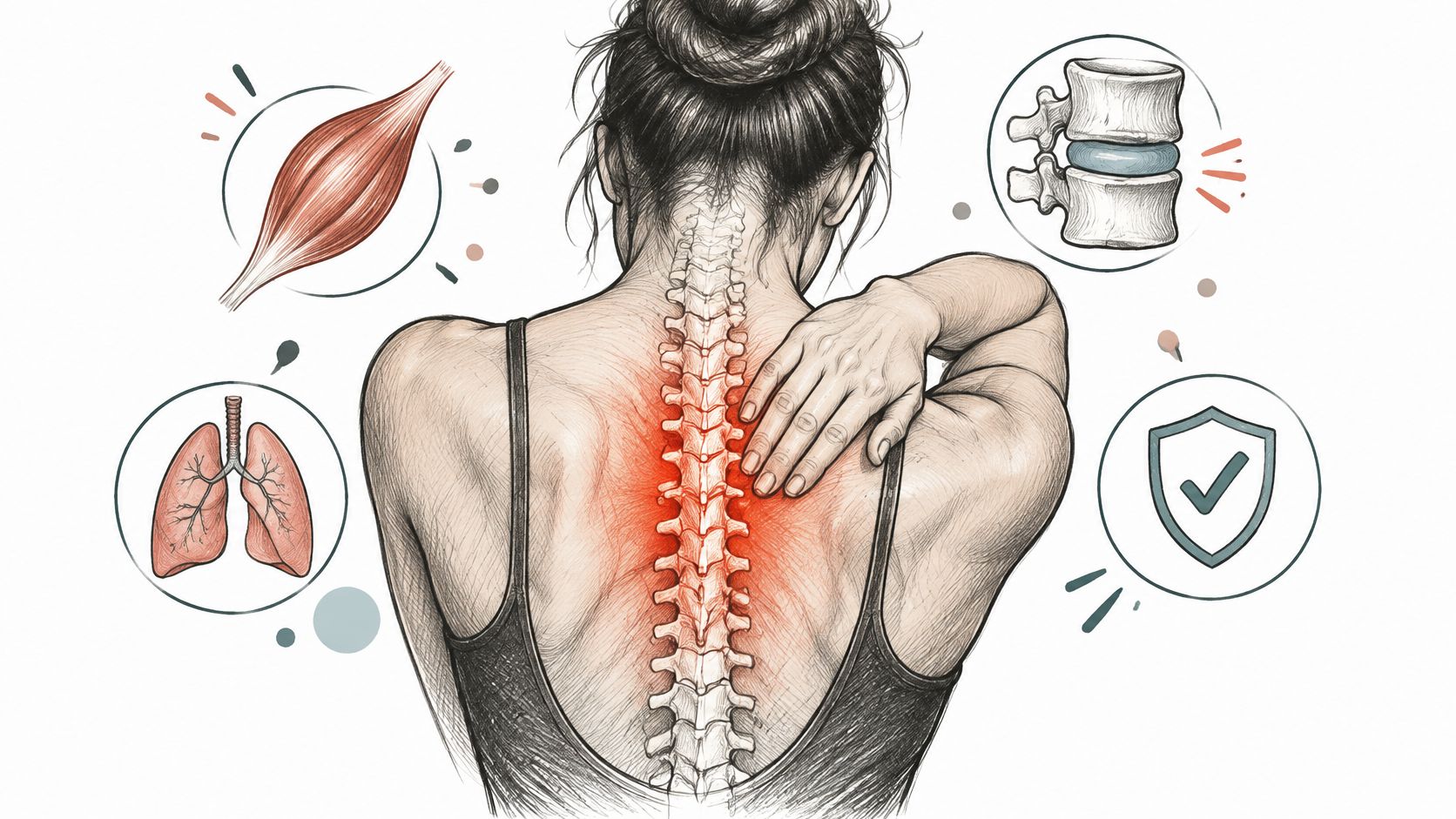
Thoracic spine pain lives in the middle of your back, between the neck and the lower back, and it behaves unlike familiar low-back pain. The ribs lock those twelve segments into a stiff cage, and the organs sitting directly in front of them share the same nerve supply. That arrangement makes the pattern of your symptoms far more informative than the number you'd give the pain. A mild ache that arrives with a band of numbness around the ribs means something different from a sharper ache that eases when you stretch.
So the useful way through this is by symptom combination and urgency first, treatment second. Get that order right and the rest follows.
Table of Contents
- Causes of Thoracic Spine Pain at a Glance
- Red Flags That Need Urgent Medical Care
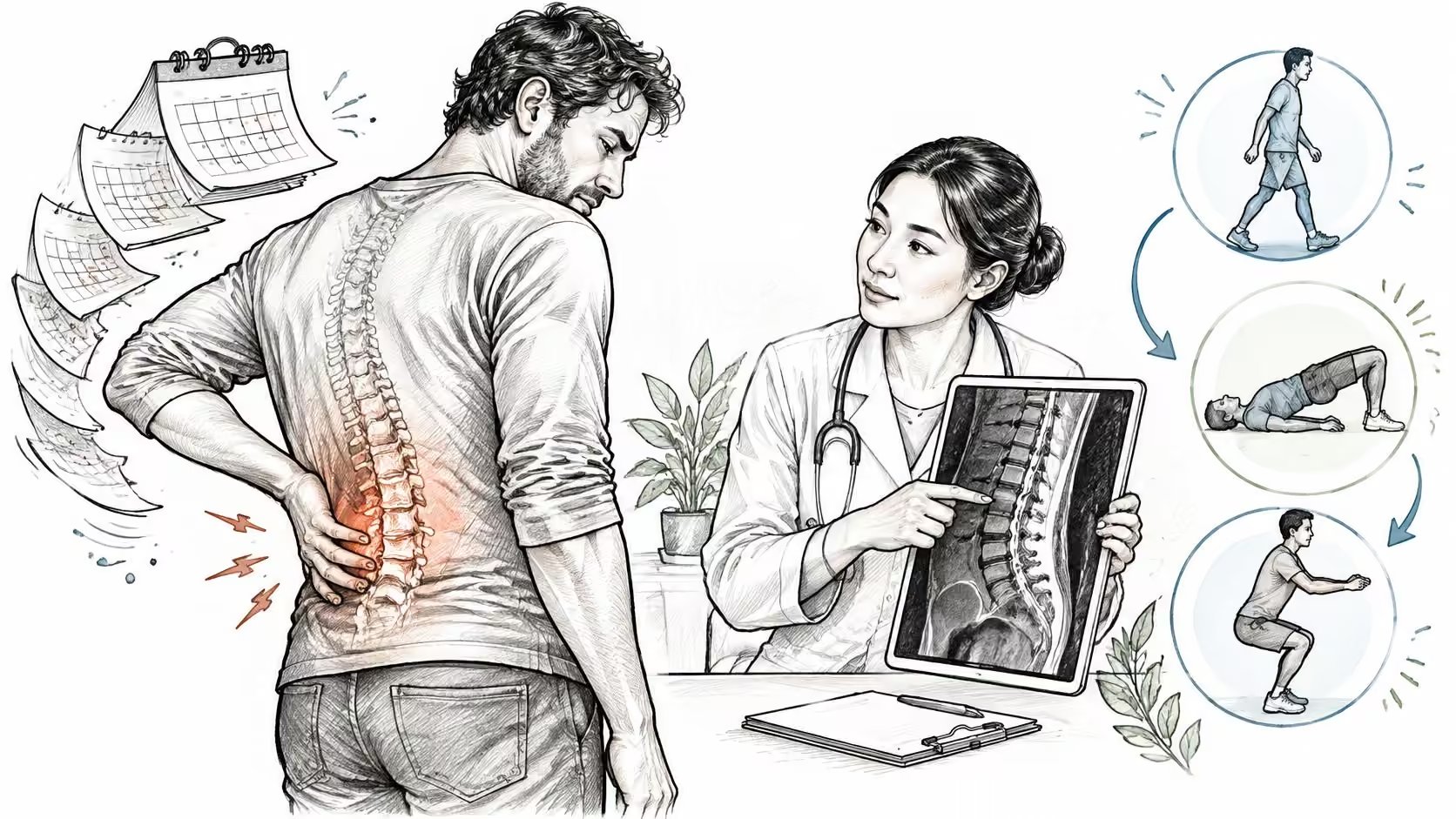
- How Clinicians Diagnose Thoracic Pain and When to Image
- Conservative Care for Thoracic Pain in the First Six Weeks
- Injections and Surgery Options Compared
- How Regenerative Stem Cell Therapy Works for Thoracic Pain
- Choosing Your Next Step for Thoracic Spine Pain
Causes of Thoracic Spine Pain at a Glance
That ache between your shoulder blades has several possible authors: the muscles that hold your shoulder blades down, the facet joints that guide twisting, a disc that has lost height, or occasionally something that isn't the spine at all.
How common thoracic pain really is
Middle-back pain is neither rare nor fringe. A systematic review that screened 1,389 studies and included 33 of them reported point prevalence ranging from 4.0% to 72.0%, one-year prevalence from 3.5% to 34.8%, and lifetime prevalence from 15.6% to 19.5%, as recorded in the review indexed by the Directory of Open Access Journals. When studies widened the definition to "any pain" in that region, lifetime figures ran from 12.0% to 31.2%.
Why such an enormous spread? The question was asked differently each time: the recall window, the age of the group, whether the questionnaire demanded a minimum pain intensity, and whether reduced activity or a doctor's visit was required to count as a case. A survey asking "did your back hurt last week?" catches far more people than one asking "did pain stop you working this year?" In the same review, adolescents aged 13 to 20 showed point prevalence from 4.0% to 41.0%, so the middle back troubles young spines too.
Duration matters as much as frequency. A multicountry observational study of 5,397 participants put mean lifetime prevalence at 23.6%, with a 95% confidence interval of 22.4% to 24.7%, and a mean reported duration of 11.8 years, according to the multicountry study published in Pain Physician. In that same sample, low-back pain reached 54.0% and neck pain 29.1%, placing the middle back between the two better-known regions. An average duration measured in years means a thoracic ache that lingers is the norm the data describes, which is worth remembering before you assume yours will fade on its own.
The cause map
| Cause | How it typically feels | Clue that points to it |
|---|---|---|
| Muscle and ligament strain | Dull ache, tender muscles beside the spine | Recent overload or poor posture, no neurological symptoms |
| Facet joint irritation | Localised ache near the spine, stiffness | Pain on twisting, side-bending or arching backward, stiff in the morning |
| Discogenic pain (degenerated or herniated disc) | Deep ache that may wrap around the chest | Pain worse with sitting or bending forward |
| Thoracic radiculopathy | Band-like pain around the chest or abdomen with numbness | Sensory change in a band-shaped area, abnormal abdominal reflexes |
| Visceral referred pain (heart, lung, gallbladder, aorta) | Pain between the shoulder blades that does not change with movement | Breathlessness, chest pressure, nausea, sweating or fever |
| Fracture, infection or tumour | Constant pain, often worse at night | Trauma, cancer history, fever, unexplained weight loss |
Most middle-back pain is mechanical, meaning it comes from muscle, joint or disc tissue and behaves predictably with movement. Read the table the way a clinician does: the third column acts as a filter, sorting the same ache into very different categories of urgency. A strained muscle and a problem in front of the spine can produce a similar sensation in the same spot. What separates them is the company the pain keeps.
Red Flags That Need Urgent Medical Care
A common assumption is that the number you attach to your pain tells you how urgent it is. It doesn't. Thoracic myelopathy, which is compression of the spinal cord in the middle back, can produce neurological deterioration while the pain itself stays mild or fades entirely, as clinical guidance on thoracic radiculopathy points out. Symptom severity alone should never set the urgency.
The thoracic spinal canal is relatively narrow, and the cord inside it is vulnerable to compression. That's why this region gets a different diagnostic threshold from uncomplicated low-back pain.
| Symptom pattern | Action |
|---|---|
| Leg or arm weakness, gait change, or bladder or bowel dysfunction | Emergency neurological assessment now |
| Fever with spinal pain, or pain after major trauma | Emergency or same-day medical assessment |
| Chest pressure, breathlessness, or pain with sweating | Emergency care to rule out cardiac or aortic cause |
| Cancer history, unexplained weight loss, immunosuppression, or steroid use with new pain | Prompt medical evaluation within days |
| Pain persisting beyond 4 to 6 weeks despite conservative care | Clinical review and consideration of MRI |
| Mechanical pain with no red flags and improving | Conservative care and monitoring at home |
When the nervous system is the problem
Progressive gait disturbance, leg weakness, hyperreflexia or spasticity, sensory loss at a level, and bowel or bladder dysfunction all call for urgent neurological assessment and imaging rather than a longer course of painkillers. Radicular pain can announce itself with a band-like distribution around the chest or abdomen, sensory change, paraspinal tenderness, asymmetric superficial abdominal reflexes, or a pseudohernia caused by denervation of the abdominal wall muscles.
Those signs are easy to dismiss because they don't hurt much. A patient notices their belt line feels numb on one side and assumes they slept oddly.
When the cause may sit outside the spine
The differential here is wider than many expect. Fracture, infection, tumour, inflammatory disease, visceral pain and progressive neurological disorders all present in the middle back, according to the ACOEM guideline on cervical and thoracic spine disorders. Fever, major trauma, suspected fracture, infection and cancer-related features sit at the top of the warning list.
Visceral patterns deserve their own line. Chest pressure, breathlessness, sweating, or pain that shifts with breathing or eating points away from the spine and toward the heart, lungs, aorta or abdomen. Those need that system evaluated, not your back massaged.
Write down the exact combination of symptoms, when each one started, and what makes it better or worse. Hand that note to the clinician. A precise pattern moves the conversation forward faster than any description of pain intensity.
How Clinicians Diagnose Thoracic Pain and When to Image
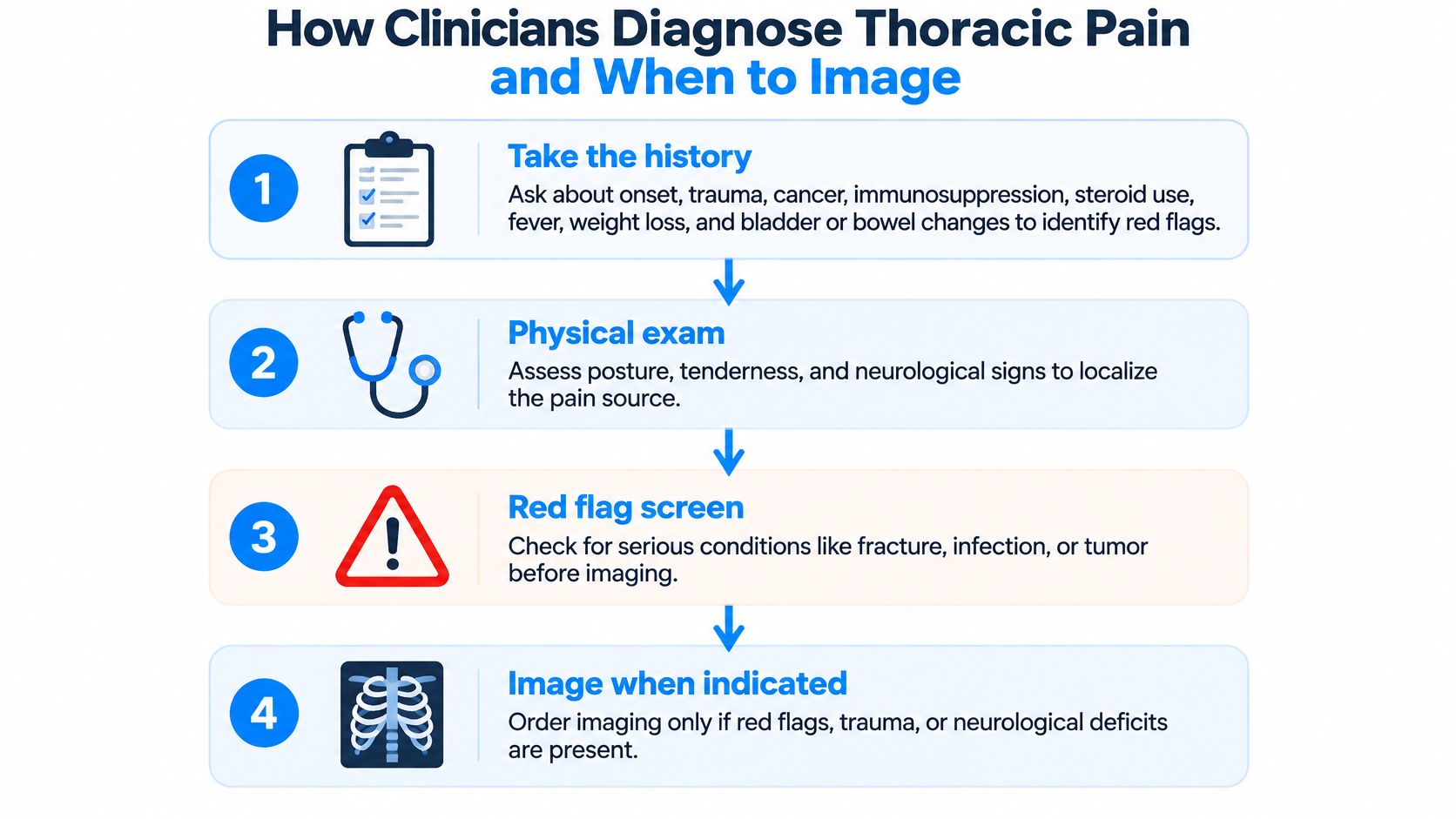
A good assessment answers one question before anything else: is this mechanical pain, or is something else driving it? Every step below exists to answer that.
- Take the history. Onset, trauma, cancer, immunosuppression, steroid use, fever, weight loss, and bladder or bowel changes decide whether the pain is urgent before a single test is ordered.
- Examine the nervous system. Strength, reflexes, gait and the sensory level around the chest and abdomen tell you whether the cord or a nerve root is involved.
- Check paraspinal tenderness and superficial abdominal reflexes. Asymmetry between the two sides of the abdomen is a quiet but meaningful finding in radiculopathy.
- Screen for visceral causes. When pain doesn't behave like a mechanical problem, cardiac, respiratory, aortic and abdominal disease need ruling out.
- Choose the pathway. A red flag means urgent imaging and specialist input. No red flags means a conservative block of roughly four to six weeks.
- Order MRI when it changes management. That means persistent pain after conservative care, or any red flag appearing, including in someone with a prior thoracic fusion.
Why routine imaging waits
For new, uncomplicated thoracic pain without trauma, systemic risk factors or objective neurological deficits, routine advanced imaging isn't recommended at the first visit, according to Kaiser Permanente's thoracic MRI criteria. Early scanning in that group mostly surfaces incidental changes that don't alter what you do next. Early imaging is a different matter when there's suspected fracture, malignancy, infection, immunosuppression, significant trauma, prior thoracic fusion or progressive neurological dysfunction.
Where imaging does help, it shows disc and foraminal compression, nerve-root signal change, and combined cord and root disease. What it can't do is resolve every ambiguity: clinical criteria for thoracic radiculopathy remain incompletely standardised, so the scan supports a diagnosis rather than making it alone.
Practical rule: ask any clinic which imaging rule it follows and why. A clinic that can name its trigger for scanning, and its trigger for waiting, is thinking about your case rather than its schedule.
If imaging does confirm degenerative disc disease and spondylosis across the thoracic segments, the conversation shifts from "what is causing this" to what can be done about that disc and that joint surface, which is a treatment question rather than a diagnostic one and sits within the full picture of degenerative disc disease and spondylosis.
In our own practice, nerve-type pain in the back or neck starts with an MRI, and our lower back process begins the same way. The imaging comes before any injection plan, because the route and the target depend on what the scan shows.
Conservative Care for Thoracic Pain in the First Six Weeks
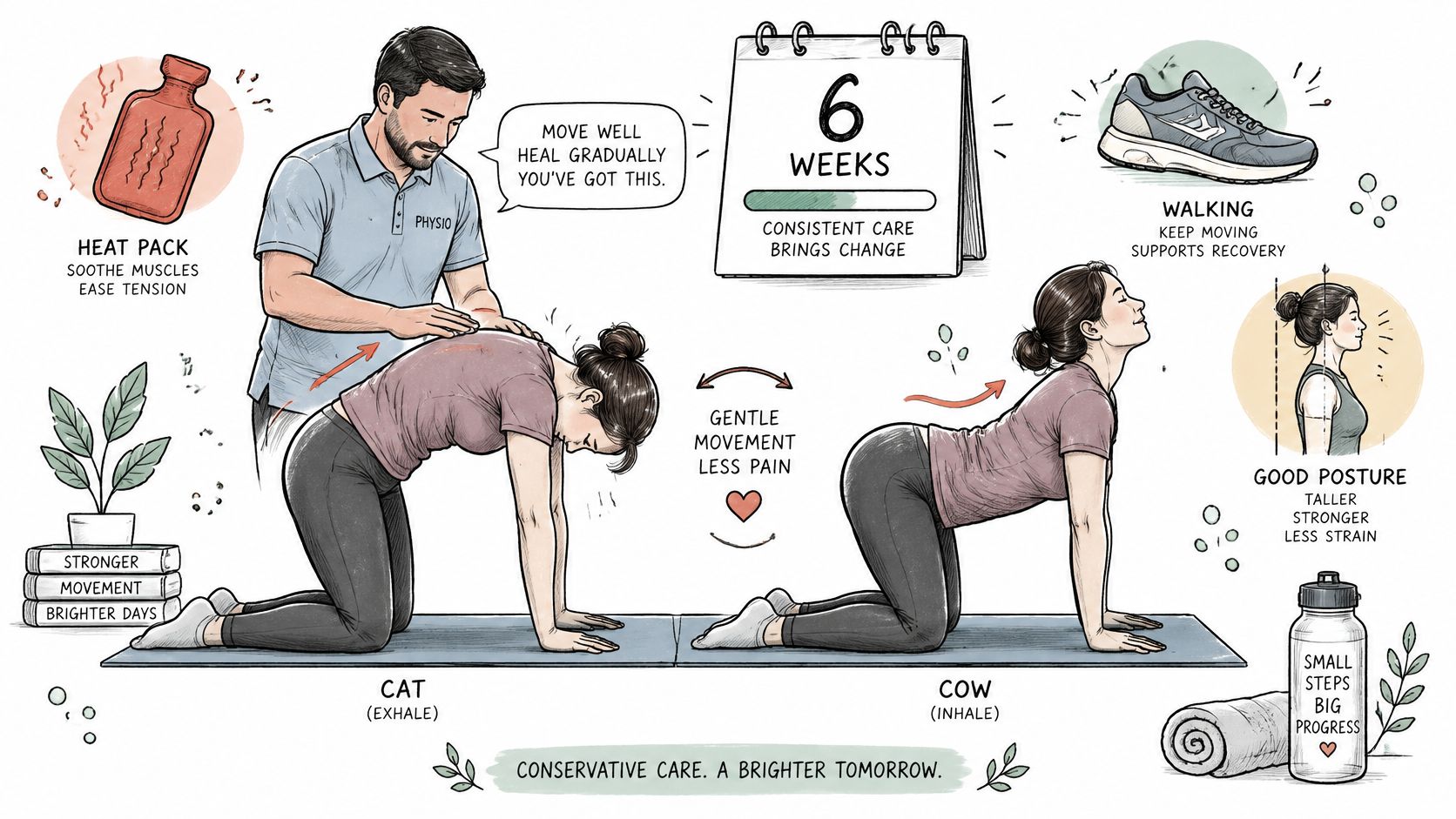
When no red flag is present and the pain behaves mechanically, many people improve steadily with a simple, consistent block of self-directed care. The thoracic spine is built to move in extension and rotation, and modern life pushes it in the opposite direction all day.
Start with the frame around your day:
- Stay active. Short walks beat bed rest. Complete rest stiffens the rib joints and slows recovery.
- Break up sitting. Change position every 30 to 45 minutes; even standing for a minute resets the load.
- Use heat for comfort. It relaxes guarding muscles before you move, which makes the movement itself easier.
Then add the movements that restore extension and rotation:
- Thoracic extension over a rolled towel or the back of a chair, held for 20 to 30 seconds.
- Seated trunk rotation, hands across the chest, rotating slowly side to side.
- Open books, lying on your side with the top arm sweeping across the body while your eyes follow the hand.
- Cat-cow, moving one vertebra at a time with the breath.
- Diaphragmatic breathing that pushes the lower ribs outward rather than lifting the shoulders.
Load management earns its own paragraph. Return to lifting gradually, keep the load close to the body, and avoid long stretches of sustained slouched work. Over-the-counter anti-inflammatories can cover a short rough patch, taken as the label directs or as a clinician advises. Physiotherapy adds manual therapy and graded exercise matched to your specific pattern, which matters when the pain is one-sided or driven by a stiff segment.

A four-week plan you can start today
Week one is about frequency, not intensity: three short movement sessions a day, plus a walk. Week two adds the open books and rotation work and extends walking. Week three introduces light loading, such as rows with a band. Week four is a review point where you compare today against the first day.
Exit the plan and get reassessed if any of these happen: no meaningful improvement by the end of that block, pain that wakes you at night, new numbness or weakness, or any red flag from the triage table.
The honest expectation: most mechanical thoracic pain settles with this kind of work, but it settles over weeks, not days. Judging a plan after four days tells you nothing.
Injections and Surgery Options Compared
Four questions decide between the options below. Does the option target a confirmed pain source, or is it a broad attempt? Is it diagnostic or therapeutic? How long does relief usually last? And what must be ruled out before anyone proceeds?
| Option | What it targets | Typical use | Main consideration |
|---|---|---|---|
| Epidural steroid injection | Inflamed nerve root | Radicular pain that matches imaging findings | Temporary relief; repeat dosing has limits |
| Facet joint injection or medial branch block | Facet joint and its nerve supply | Confirming facet-driven pain | Diagnostic value and short-term relief |
| Radiofrequency ablation | Pain-transmitting medial branch nerves | Facet pain with a positive diagnostic block | Relief can last months; not suited to disc or root pain |
| Decompression surgery | Cord or nerve compression | Progressive neurological deficit or refractory radiculopathy | Reserved for compression with neurological findings |
| Regenerative MSC injection | Disc or joint tissue environment | Discogenic pain or degenerative disc disease after specialist review | Strongest evidence is for lumbar disc disease; plan is individualised |
The order of those rows carries information. A medial branch block usually comes before radiofrequency ablation, because burning a nerve is only worth doing if the block proves that nerve is the source. Skip the test and you can spend months treating the wrong target.
Injections also have a ceiling. Steroid delivers real relief for inflamed nerve roots, but it quiets inflammation rather than removing the mechanical cause, and repeated dosing is limited for good reason. Anyone being offered a fourth or fifth injection in the same spot deserves a fresh conversation about what's being managed.
Surgery has a narrow, well-defined job: compression with neurological findings, or radiculopathy that won't settle. It isn't a treatment for uncomplicated mechanical pain, and it doesn't fix a disc that's merely worn. If you're weighing a disc-related option, the range of herniated disc treatment approaches is where the conservative-to-interventional sequence makes most sense.
Sequence matters more than the menu: confirm the source, treat the source, then reassess. An option chosen before the source is confirmed is a guess with a needle attached.
No single option suits every cause. Go back to the cause table for which row is yours, and the triage table for whether you should be choosing anything at all yet.
How Regenerative Stem Cell Therapy Works for Thoracic Pain
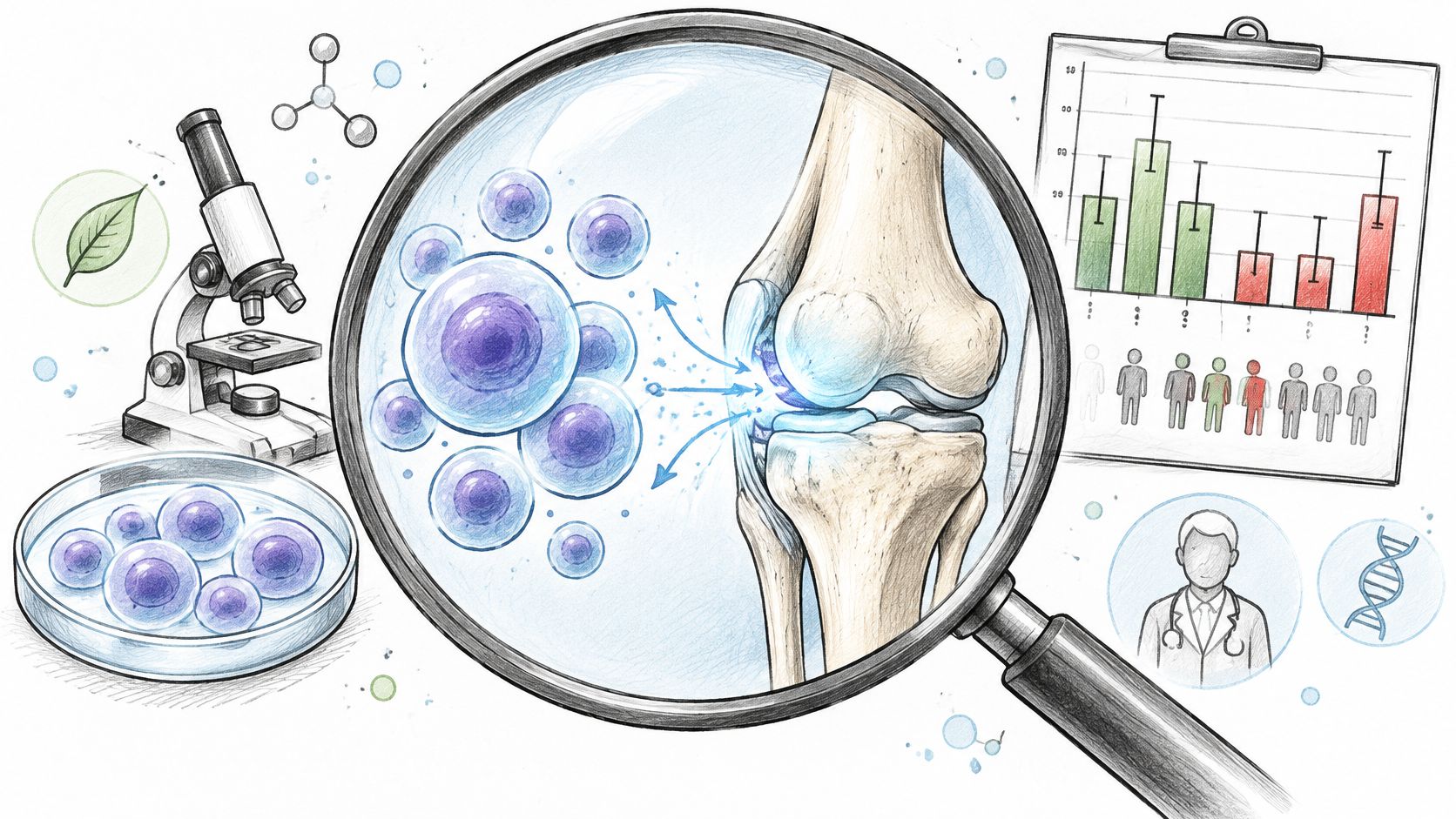
Here's the assumption worth correcting first: mesenchymal stem cells don't have to turn into disc, nerve, bone or cartilage cells to be useful. Their main contribution is paracrine signalling, which means they release soluble bioactive molecules, extracellular vesicles and other specialised signals into the local tissue environment, as described in the spinal fusion study published in Stem Cells Translational Medicine.
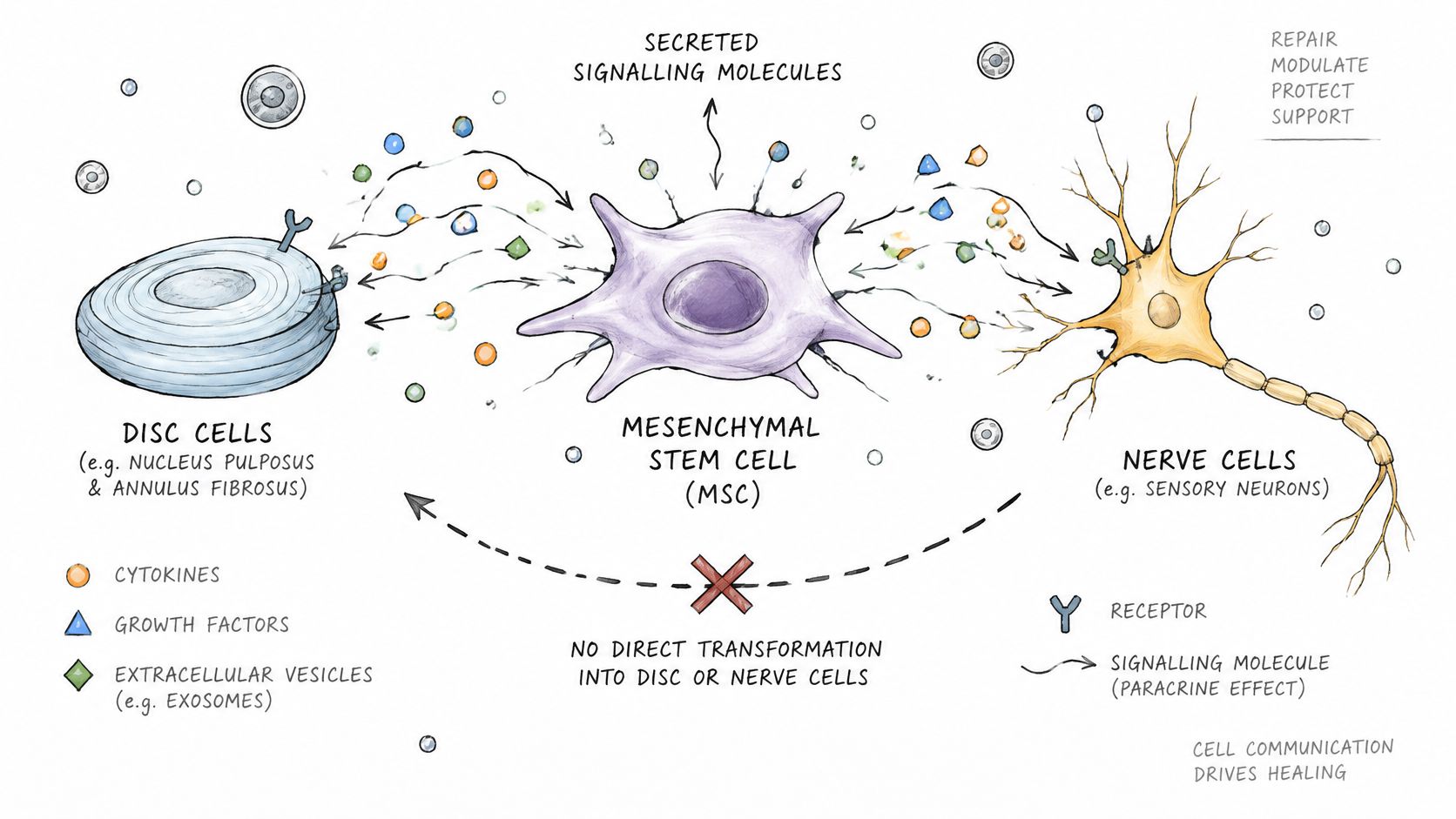
Those signals modulate immune activity, reduce inflammatory signalling, support blood-vessel formation, and nudge the body's own repair processes. The regenerative and immunomodulatory effects can continue even after the injected cells are no longer detectable. That's why the better mental model is a temporary biological coordinator, not a replacement part.
What the strongest evidence actually shows
The best-documented results come from disc disease. A multicentre randomised controlled trial across 49 clinical sites enrolled 404 patients with chronic low-back pain and moderate, single-level degenerative disc disease from L1 to S1. Participants received intradiscal allogeneic mesenchymal precursor cells at 6 million or 18 million cells, with or without a hyaluronic-acid carrier, and were followed for 36 months against saline or carrier controls. The cell-plus-hyaluronic-acid group showed significant reductions in chronic low-back pain and greater quality-of-life improvement, as summarised in the systematic review of MSC therapy for degenerative disc disease.
Two limits belong in the same breath. That evidence concerns lumbar disease, so it isn't proof that every thoracic condition responds. And thoracic use requires individual imaging, an accurate diagnosis and a chosen delivery route, not a template.
Regulation, and where treatment actually happens
Stem cell therapy is not FDA-approved for this use in the United States. Dream Body Clinic's stem cell treatments are carried out under COFEPRIS oversight, Mexico's regulator and the FDA equivalent there, which licenses and monitors establishments handling human cells under Article 315 of the General Health Law, as documented in the NIH ClinRegs country summary for Mexico.
What that means practically: clinic-specific claims should be checked against the facility's own documentation rather than assumed from the country's general rules.
What to expect from the timeline
Patients aren't pain-free the day after treatment, and anyone promising that hasn't understood the mechanism. Results from the middle back treatment typically appear over 3 to 6 months, and chronic pain treatments at the clinic have produced an 81% reduction in pain scores within 3 to 6 months after treatment. Our middle back approach treats herniated discs without surgery. If you want the mechanics of how stem cell injections actually work, that's covered in detail. Outcomes vary, benefit isn't guaranteed, and your clinician should give you a specific expected timeline.
Choosing Your Next Step for Thoracic Spine Pain
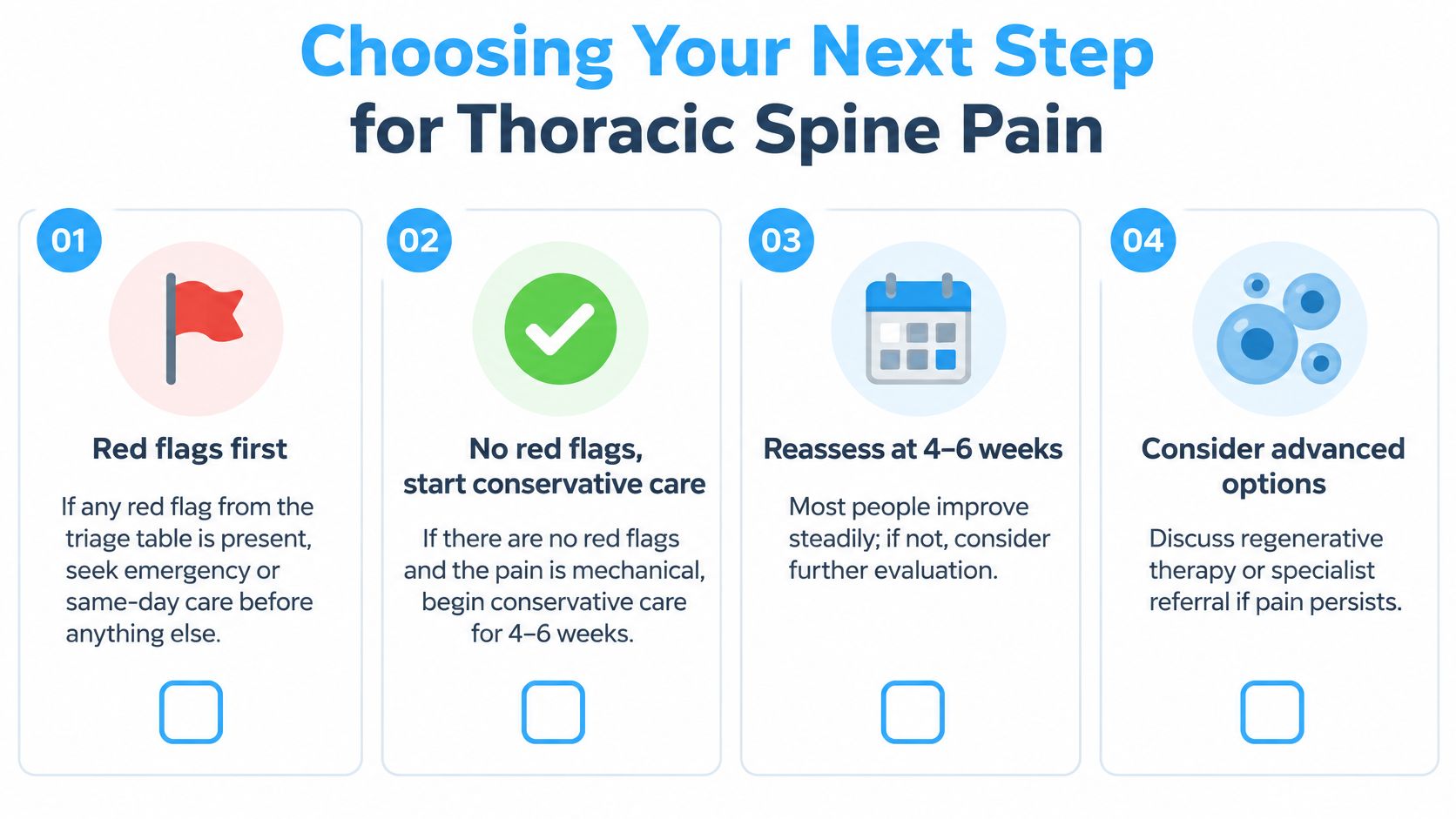
Work through these four in order, because the order is the point.
- Red flags first. If any pattern from the triage table is present, get emergency or same-day care before anything else, including before any scan you've already booked.
- No red flags, pain mechanical and improving. Run the conservative block and track the trend week by week rather than day by day.
- Pain unchanged after the block, or nerve symptoms appearing. Arrange a clinical review and MRI, and ask for a spine specialist referral if the picture is unclear.
- A disc-related cause confirmed and conservative care exhausted. Discuss the full range of options with a clinician, including regenerative treatment where it fits your imaging and diagnosis.
Bring specific questions to that conversation: which imaging supports the diagnosis, which route and cell dose are proposed, what results are realistic and over what timeline, which evidence applies to thoracic rather than lumbar disease, and how the clinic confirms its own regulatory standing.
At Dream Body Clinic we review records before recommending any treatment, so a candidate gets assessed before a plan is set rather than after. We offer a free consultation for middle back pain that you can book by phone or WhatsApp. Anyone with unrelenting nerve pain can call the clinic or visit the website and get a straight answer about whether this is the right path.
No single option suits every cause, and the right choice for you depends on which row of the cause table you're standing on.
Thoracic pain that has been grumbling for months deserves a proper look rather than another round of guesswork, and Dream Body Clinic reviews your imaging and history before recommending a middle back stem cell protocol built around your discs and facet joints. If your MRI shows disc degeneration, a herniated disc or facet arthritis and conservative care hasn't held, the team at Dream Body Clinic can walk you through what treatment involves, what timeline to expect and whether you're a candidate. Book a free consultation by phone or WhatsApp and get your records reviewed first.