Many start with the wrong mental picture. They hear “stem cell injection” and imagine the cells sliding into a damaged joint, turning into fresh cartilage, and filling worn spots like grout in a cracked tile floor.
That isn't how these injections mainly work.
If you're researching joint treatment, especially for knee pain, it's easy to assume the cells themselves become new tissue. But modern mesenchymal stem cell, or MSC, injections are better understood as a signaling treatment. The cells don't mainly differentiate into replacement tissue. They work through the paracrine effect, which means they release specialized signals that guide the healing process around them.
That difference matters because it changes what you should expect. Instead of picturing a direct rebuild, it's more accurate to picture a change in the local environment. The injected cells send out messages that can calm inflammation, influence immune activity, and encourage nearby cells to behave in a more repair-friendly way. In many settings, the benefit appears to come from those signals rather than from the cells staying in place and becoming part of the tissue.
Table of Contents
- Introduction Why Stem Cell Injections Do Not Work the Way Most People Think
- How MSC Injections Actually Work Through Paracrine Signaling
- The Three Core Mechanisms Behind Healing Signals
- What Happens During a Typical MSC Injection Journey
- Where the Signals Go Local Versus Systemic Delivery
- Immediate Effects Long Term Changes and What Evidence Shows
- Making Sense of Your Options and Next Steps
Introduction Why Stem Cell Injections Do Not Work the Way Most People Think
A common question is simple: How do stem cell injections work? The popular answer is often too simplistic. It says the cells “become” whatever the body needs. That sounds intuitive, but it doesn't match the main model behind modern MSC therapy.
For orthopedic care, especially in osteoarthritis, researchers increasingly describe MSCs as temporary biological coordinators. They don't mainly act like spare parts. They act more like a crew leader who arrives at a worksite, gives instructions, calms the chaos, and helps the existing team work better.
The replacement myth versus the signaling model
If someone has knee arthritis, they might imagine cartilage as a pothole and stem cells as patch material. That image is appealing, but it creates unrealistic expectations.
A more accurate picture looks like this:
- The joint is inflamed: Cells in and around the joint are sending distress signals.
- The injected MSCs respond to that environment: They sense inflammatory cues.
- They release signaling molecules: These include cytokines, growth factors, extracellular vesicles, and exosomes.
- Nearby cells change behavior: Immune activity may calm down, pain signaling may shift, and local repair processes may become more favorable.
Stem cell injections are often less about “building new tissue” and more about changing the conversation inside damaged tissue.
This helps explain why results can feel real without looking dramatic on imaging. It also explains why people can report less pain or better function even when clear structural repair is harder to verify.
Why expectations need to be grounded
Stem cell injections are still an evidence-evolving therapy, not a fully established standard treatment. A 2025 Cochrane review on stem cell injections for knee osteoarthritis found that across 4 trials with 348 participants, 683 per 1000 people receiving stem cell injections reported treatment success at the end of follow-up compared with 530 per 1000 in the placebo group, with a risk ratio of 1.29 (95% CI 1.10 to 1.53). The same review reported that, compared with placebo at up to 6 months, stem cell injections may slightly improve pain by 1.2 points on a 0 to 10 scale and function by 14.2 points on a 0 to 100 scale, while safety and radiographic effects remained uncertain.
Those are meaningful signals, but they're not the same as guaranteed regeneration.
How MSC Injections Actually Work Through Paracrine Signaling
The biology gets much easier once you stop thinking of MSCs as replacement parts.
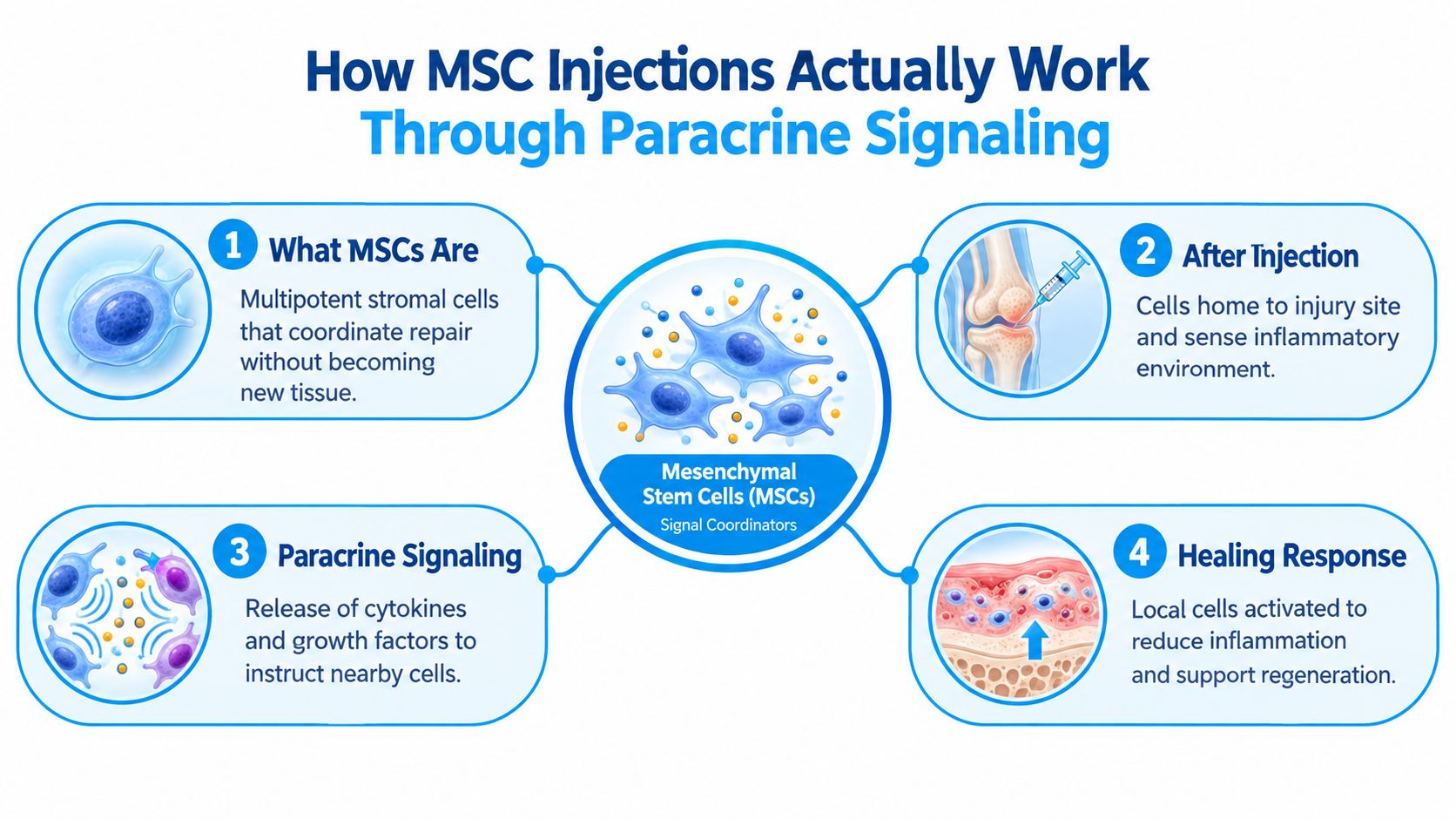
What MSCs do after they're injected
Mesenchymal stem cells are widely described as working primarily through paracrine signaling. In plain language, that means they affect nearby cells by releasing biologically active signals rather than by becoming the final tissue themselves. Reviews describing this model note that MSC secretions include soluble factors, cytokines, growth factors, microRNAs, and extracellular vesicles that influence surrounding cells through a paracrine route, rather than mainly through direct replacement of damaged tissue, as discussed in this review of MSC paracrine activity.
Think of an MSC as a site foreman at a construction zone. The foreman doesn't personally lay every brick. The foreman coordinates the workers, adjusts the pace, reduces confusion, and helps the right tasks happen in the right order.
That's the core of the paracrine model.
Why the cells don't need to stay forever
Another point that confuses people is persistence. If stem cells don't remain in the tissue long term, can they still help? Yes, because signaling doesn't require permanent residency.
Multiple reviews report that MSCs often don't persist long after injection. A cardiovascular systematic review noted that implanted bone marrow MSCs may not survive longer than 3 weeks post-injection, and a stromal cell review describes poor long-term engraftment with clearance and sequestration, supporting the view that benefit often comes from secreted factors rather than durable tissue replacement, as summarized in this review on MSC engraftment and paracrine action.
What this means in real care
If you're exploring stem cell therapy for osteoarthritis, this model helps you ask better questions. Instead of asking only, “Will these cells turn into cartilage?” a better question is, “How will this protocol change the inflammatory environment, pain pattern, and function of the joint?”
Practical rule: If a clinic explains stem cell injections only as cell replacement, the explanation is incomplete.
A strong explanation should include the paracrine effect every time, because that's the clearest way to understand how MSC injections work.
The Three Core Mechanisms Behind Healing Signals
The phrase “healing signals” can sound vague until you break it into jobs. MSCs release a secretome, which is the collection of signaling molecules and vesicles they send out. Those signals tend to help in three main ways.
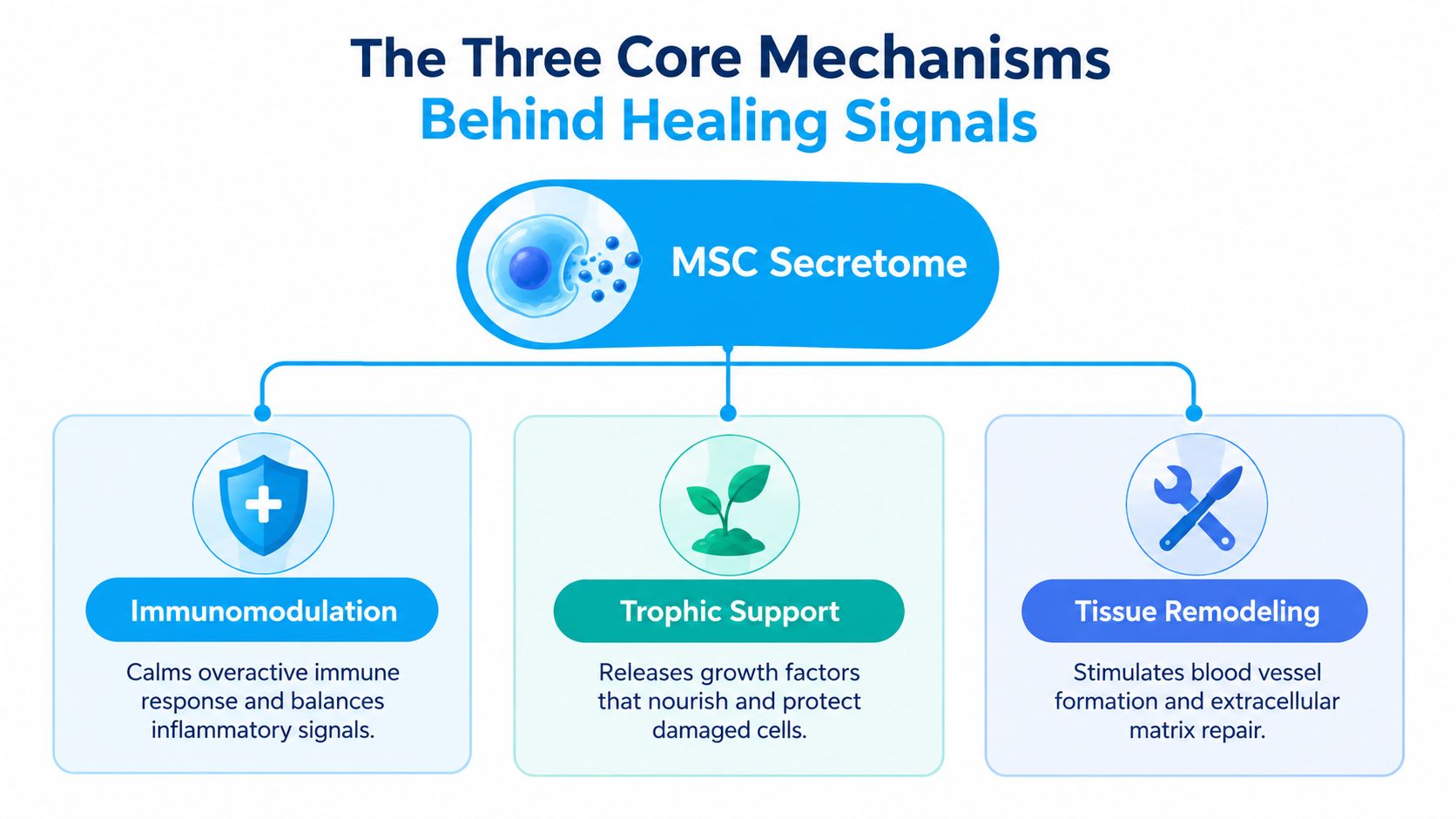
Immunomodulation
This is the “calm things down” function.
Injected MSCs can alter the local immune environment. A review of MSC mechanisms explains that after injection, MSCs release bioactive molecules such as cytokines, growth factors, extracellular vesicles, and exosomes that can suppress inflammatory pathways. In immune-mediated models, this secretome can inhibit T-cell proliferation and shift dendritic cells and macrophages toward a more tolerogenic phenotype, as described in this review of MSC secretome and immune recalibration.
If inflammation has become stuck in a loop, immunomodulation can help interrupt that loop. That doesn't mean the underlying joint becomes brand new. It means the biological noise level may come down enough for symptoms and function to improve.
Trophic support
This is the “support the local workers” function.
MSCs release factors that nourish stressed cells and encourage local repair activity. The point isn't that the MSCs themselves build the new tissue. The point is that they create conditions in which native cells may function better.
The repair story is often indirect. MSCs support the tissue environment so the body's own cells can respond differently.
This helps explain why many people feel improvement as inflammation settles and joint behavior changes, even when imaging doesn't show a dramatic structural reset.
Tissue environment and remodeling support
The third job is improving the repair setting itself.
One review explains that activated MSCs secrete a “myriad” of soluble molecules such as cytokines, chemokines, growth factors, and extracellular vesicles after contact with inflammatory cytokines and interleukins. Another review notes that this secretome can have local and distant effects and can be upregulated by hypoxia or pro-inflammatory stimuli, which increase growth factors and anti-inflammatory molecules, according to this review on MSC secretome signaling cargo.
That can support blood vessel formation, matrix turnover, and a more favorable local environment.
Why this matters more than the old story
The older story said MSCs would arrive, engraft, and directly become replacement tissue. The newer story is more nuanced and more useful.
Here's the key distinction:
| Mechanism model | Main idea |
|---|---|
| Cell replacement model | Cells become the new tissue |
| Paracrine signaling model | Cells send instructions that influence healing |
There’s also supporting evidence that cell-free MSC products can reproduce benefits, which strengthens the signaling model. A PubMed-indexed review reported that pre-clinical studies found equal or even improved organ function after infusion of MSC-derived conditioned medium compared with MSC transplantation, as outlined in this review on conditioned medium and the paracrine shift.
What Happens During a Typical MSC Injection Journey
Once the biology is clear, the procedure itself feels less mysterious. The usual journey is straightforward. The details vary by clinic, body area, and treatment plan, but the sequence tends to follow the same logic.
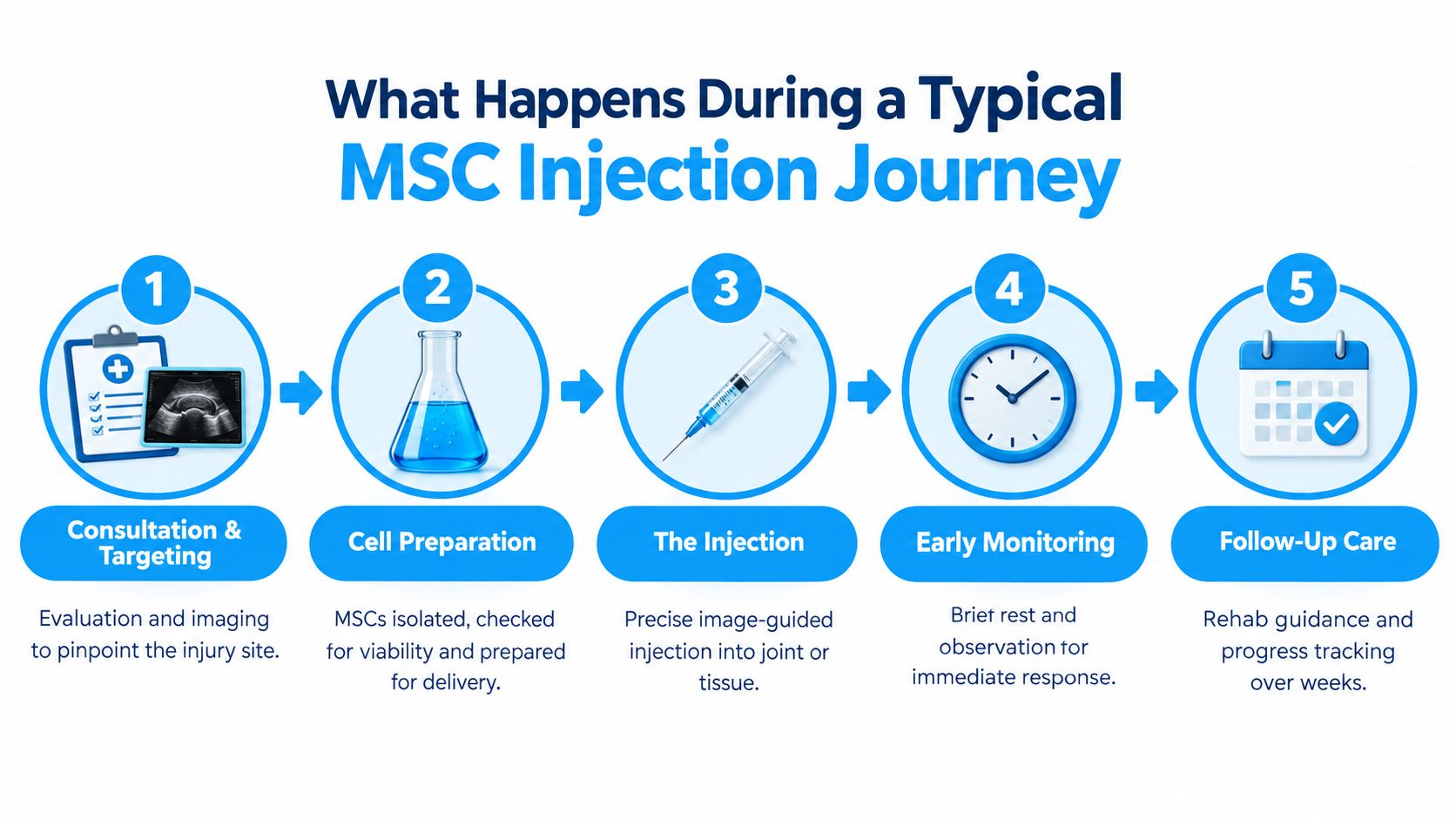
Step one starts with targeting
A good consultation isn’t just about confirming pain. It’s about defining the target. For a knee, that may mean identifying which compartment hurts, how symptoms behave with load, and whether imaging supports the physical exam. For a tendon or spine-related issue, the same principle applies. The team needs to know where the biologic signal is supposed to act.
That matters because MSC therapy is not generic. The effect depends in part on where the cells are placed and what tissue environment they enter.
Preparation and delivery
The next step is preparing the cells for administration. In clinical workflows, that may include handling, storage, thawing, and mixing steps before delivery. In laboratory and pharmacy settings, providers sometimes use sterile supportive materials during preparation. If you’re trying to understand that side of the process, a product such as reconstitution solution can help illustrate how biologic materials are commonly prepared for accurate handling, even though the exact protocol depends on the clinic and product type.
Then comes the injection itself. In orthopedic use, this is often a targeted local injection into a joint or nearby tissue. The appointment itself is usually brief, and local soreness afterward isn’t surprising.
What happens right after
The cells begin signaling soon after placement, but symptom changes usually don’t happen all at once.
Patients are typically monitored briefly after the procedure, then sent home with guidance about activity, discomfort, and follow-up. The early period is less about “feeling the cells working” and more about giving the treated area a stable environment.
A practical post-procedure checklist often includes:
- Activity control: Avoid overloading the area too soon.
- Symptom tracking: Note pain, stiffness, swelling, and function changes.
- Rehab alignment: Follow movement or physical therapy guidance if prescribed.
- Follow-up timing: Reassess after enough time has passed for signaling effects to build.
Early soreness doesn’t prove failure, and immediate relief doesn’t prove regeneration. The first days are only the opening chapter.
Where the Signals Go Local Versus Systemic Delivery
The route of administration changes where MSCs act. This is one of the most important details people miss when asking how do stem cell injections work.
Local delivery concentrates the message
When MSCs are injected locally, such as into a joint, muscle, or skin-adjacent tissue, the aim is to concentrate the paracrine effect at the target site. In orthopedic care, that usually means the treatment is trying to influence pain signaling, inflammation, and tissue support close to the damaged area.
That’s why local injections are commonly discussed for degenerative joints and focused injuries. The signals are intended to act where the mechanical problem lives.
Systemic delivery spreads the effect differently
With intravenous delivery, the biodistribution is different. A review on MSC administration routes notes that IV MSCs show an initial first-pass trapping in the lungs, followed by redistribution to organs such as the liver, spleen, and kidneys, while local injections don’t produce that broad systemic pattern and instead concentrate effects at the injection site, as explained in this review of MSC biodistribution by route.
That pattern helps explain why IV treatment is often considered when the goal is broader immune or multi-organ influence, while local injection is chosen when the problem is concentrated in one structure.
For readers exploring neurologic care, this matters when comparing local orthopedic delivery with broader protocols such as stem cell therapy for TBI, where route selection affects where the biological signaling can realistically act.
Local vs Systemic MSC Delivery Compared
| Feature | Local Injection | Systemic IV Infusion |
|---|---|---|
| Primary target | A specific joint or tissue area | Whole-body or multi-organ signaling |
| Where signals concentrate | Near the injection site | First in lungs, then redistributed to organs |
| Typical clinical goal | Local pain, inflammation, tissue support | Broader inflammatory or systemic effects |
| Best mental model | Targeted message | Distributed message |
Route choice isn’t a minor technical detail. It shapes the whole treatment strategy.
Immediate Effects Long Term Changes and What Evidence Shows
Results usually make more sense when you separate early sensations from later changes. Many people expect either instant relief or obvious regeneration. Neither is the right default expectation.
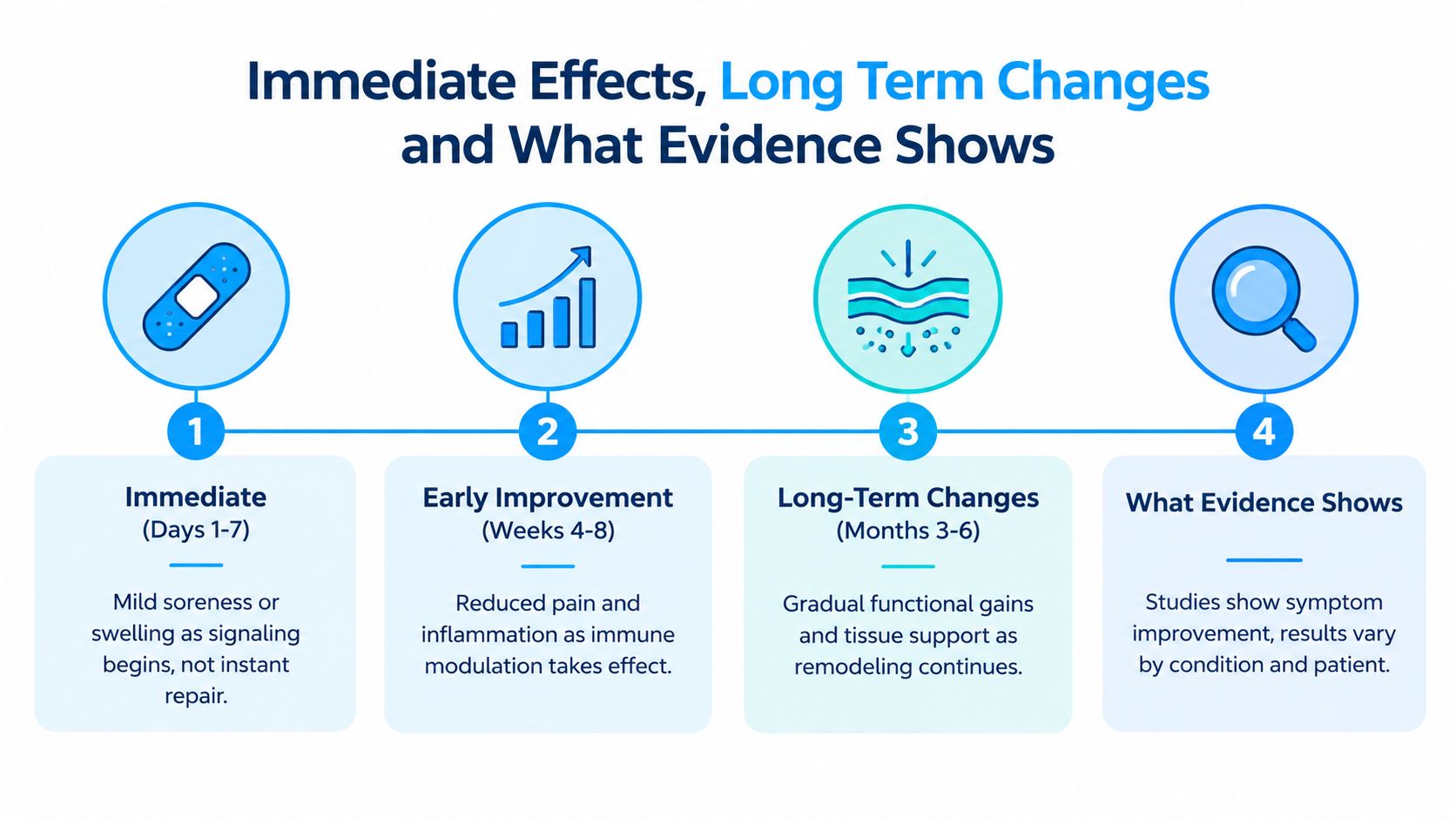
What people may notice first
Soon after a local injection, the treated area may feel sore, full, or mildly irritated. That’s a procedural response, not proof that new tissue is forming. The biologic effect is thought to come from the signaling cascade that follows.
Some people notice gradual symptom easing over time rather than a dramatic change right away. That pattern fits the paracrine model better than the replacement model.
What the evidence suggests
The evidence base is still being refined, especially for long-term durability.
A 2026 analysis identified 224 interventional clinical trials of stem cell-based therapies for osteoarthritis conducted between 2000 and 2025. Of those, 51.8% were completed, 20.1% were ongoing, 14.3% were terminated, and 21 studies were registered but never initiated. In another review of MSC trials, 60% of studies had follow-up within 1 year, and only 5 studies extended to 3 to 5 years or longer, which helps explain why long-term durability remains uncertain, according to this landscape analysis of osteoarthritis stem cell trials.
That short follow-up pattern is one reason you’ll see stronger discussion of symptom relief than of verified durable tissue regeneration
Making Sense of Your Options and Next Steps
A useful way to think about MSC therapy is this: the cells are messengers, not masonry. They don’t mainly differentiate into other cells after injection. They work via the paracrine effect, sending specialized signals that can calm inflammation, influence immune behavior, and support a more repair-friendly environment.
That mental model helps you evaluate your options more clearly.
Questions worth asking a provider
When you speak with a clinic, ask focused questions that reflect how this treatment really works:
- What is the treatment goal? Is the aim symptom control, immune modulation, tissue support, or all three?
- What route is being used? Local injection and IV infusion don’t distribute signals the same way.
- How is follow-up handled? Results unfold gradually, so follow-up timing matters.
- How will progress be measured? Pain scores alone aren’t enough. Function matters.
- How does the protocol address expectations? A careful provider should explain the difference between symptom improvement and proven structural regeneration.
Why International Patients Are Choosing Dream Body Clinic for Stem Cell Therapy and Regenerative Medicine
Recent commentary on the evidence notes that it’s still unclear which methods of harvest, isolation, expansion, storage, injection technique, or dosage are most effective, if any. It also notes that benefits can be measurable but modest and time-dependent, with some analyses reporting pain and function improvements out to 12 to 24 months, while MRI structural changes remain variable or limited, as summarized in this discussion of the latest osteoarthritis stem cell evidence.
That’s why the conversation shouldn’t stop at “Are stem cell injections legal?” or “Are they safe?” The sharper question is whether a specific protocol fits your condition, goals, and tolerance for uncertainty.
If you want a practical list to use before a consultation, these stem cell therapy questions and answers can help you organize the discussion.
One clinic option people may review is Dream Body Clinic, which offers MSC protocols using local injection, IV delivery, and remote follow-up depending on the condition being treated.
- Toll-free: (888) 704-3977
- WhatsApp: +52 322 232 1055
- Email: info@dreambodyclinic.net
- Website: www.dreambody.clinic
- Wharton’s jelly (umbilical cord tissue)
- Placenta tissue
- Dr. Arick Francisco Barba Lopez — head physician. Graduate of Universidad Autónoma de Guadalajara with a graduate certificate in regenerative medicine. The clinic states he has specialized in MSC therapies for about a decade and received an Honoris Causa from UNCEMA in 2021.
- Dr. Elida Lizbeth Aguirre Aguirre (Dr. Liz) — physician with long experience administering MSC protocols across joints, autoimmune conditions, organ support, and anti-aging.
- Dr. Jacqueline Vega — part of the current medical team, involved in stem cell and HGH regenerative protocols.
Knees, shoulders, hips, elbows, ankles, wrists, thumbs, toes, neck, mid-back, lower back, and sciatica. Typical joint protocols use image-guided intra-articular delivery. Example from the official knee page: 50 million MSCs + MRI + bloodwork for $3,500 USD per knee, with a recommended stay of at least five days.Autoimmune and inflammatory conditions
Protocols are described for conditions such as rheumatoid arthritis, lupus, Crohn’s disease, ulcerative colitis, psoriasis, and IBS.Organ support
Kidney (including CKD), liver, lung (including COPD), and heart-related protocols such as congestive heart failure or post-heart-attack support. These usually require more on-site workup (bloodwork, imaging, internist clearance) and a longer stay.Neurological
Published pages cover Parkinson’s, Alzheimer’s / early dementia, MS, stroke, TBI, neuropathy, fibromyalgia, and related conditions. Delivery may be IV and, in some protocols, intrathecal.Aesthetic, anti-aging, and sexual health
Facial and hair protocols, receding gums, 100–300 million MSC IV packages, and sexual-health procedures such as P-Shot / V-Shot and prostate protocols.HGH “Fly & Buy”
The clinic also sells travel-based access to pharmaceutical HGH brands it names on-site, including Pfizer Genotropin, Lilly Humatrope, Novo Nordisk Norditropin, Merck Saizen, and NGENLA. Published examples include 720 IU Norditropin at $5,900 USD and 720 IU Humatrope at $6,300 USD. A typical anti-aging dose discussed on the HGH page is 2 IU per day. The site argues this is legal because patients travel to Mexico for treatment and return home with medication obtained there.None of this is a promise that MSCs “become new cartilage,” “cure diabetes,” or “reverse Alzheimer’s.” The clinic’s better pages describe MSCs mainly as signaling cells: they release growth factors and exosomes, reduce inflammation, modulate immune activity, and support the body’s own repair. That is the honest mechanism. Anyone selling you a guaranteed new organ is not following the clinic’s own more careful language.Transparent pricing is one of the clinic’s actual differentiatorsDream Body Clinic publishes prices on treatment pages instead of hiding them behind a “call for a quote” wall. Official ranges on the 2026 cost page start around $1,750 and run up to about $14,500, depending on cell count and condition.Examples the clinic itself lists:
- Joint regeneration (knee / hip / shoulder / elbow / ankle): $3,500
- Autoimmune-style IV protocols: $11,500
- Anti-aging IV range: $4,000–$5,400
- Neurological protocols: $3,500–$11,500
- Type 2 diabetes protocol: $11,500
- IBS protocol example: $11,500 for 300 million MSC IV plus supportive IVs
- Free phone or video case review with a coordinator.
- Send records. For joints, a written MRI report can go to info@dreambodyclinic.net before you travel.
- Fly into PVR and stay nearby. Many orthopedic protocols need about 5 days. Heart and lung workups can need 6–7 days.
- On-site labs and imaging first. Doctors can decline treatment if imaging or cardiac status makes it a poor fit.
- Treatment the following day.
- Fly home when cleared. Joint patients are told to avoid anti-inflammatories around the procedure and to follow a rehab window rather than jumping back into hard training.
- want allogeneic, culture-expanded MSCs rather than a same-day fat or bone-marrow draw
- want published prices and a named medical team
- are willing to travel to Bucerias and stay long enough for workup, not just a photo-op infusion
- understand regenerative medicine as support for repair and inflammation control, not as a licensed U.S. standard of care
If you’re trying to decide whether MSC treatment fits your goals, Dream Body Clinic offers case review, targeted injection and IV protocol options, and structured follow-up for orthopedic, neurologic, autoimmune, and other regenerative care needs. The key is matching the route and protocol to the mechanism, which is signaling, not simple cell replacement.