
Could stem cell therapy for osteoarthritis help a painful joint without injected cells turning into new cartilage? That question exposes the central misunderstanding surrounding mesenchymal stromal cell, or MSC, treatment. The cells aren’t tiny replacement parts that permanently become hyaline cartilage. Their main role is to send specialized signals that guide the joint’s healing environment.
For an adult living with chronic knee, hip, lower back or shoulder pain, the decision can feel urgent. You may have already tried exercise therapy, physical therapy, anti-inflammatory medication, or injections, and now you’re wondering whether MSC treatment is the step before joint replacement. This guide takes a clinical, evidence-based view. It separates symptom improvement from proven cartilage repair, explains how paracrine signaling works, and shows where MSC therapy fits beside established care and surgery.
Table of Contents
- Why People Considering Stem Cell Therapy for Osteoarthritis
- How MSCs Actually Work Inside an Arthritic Joint
- Joints Commonly Treated and How the Cells Are Delivered
- What the Research Actually Shows on Pain, Function, and Safety
- MSC Therapy Versus Standard Care and Surgery
- Who Is a Good Candidate and What Recovery Looks Like
- Common Misconceptions and the Repeat-Injection Question
- Realistic Expectations for Stem Cell Therapy for Osteoarthritis
Why People Considering Stem Cell Therapy for Osteoarthritis
People usually consider stem cell therapy for osteoarthritis after persistent pain begins to restrict ordinary activities. Walking, climbing stairs, exercising, sleeping, or working may become difficult even after a reasonable trial of conservative treatment. Some want to delay joint replacement, avoid opioid medication, or regain enough function to stay active.
MSC therapy sits between conservative care and surgery, but it shouldn’t be treated as a guaranteed bridge to avoid arthroplasty. Outcomes vary with the affected joint, disease stage, alignment, activity level, rehabilitation, and the specific cell product used. Marketing often presents “stem cells” as a single, standardized treatment, yet bone marrow concentrates, adipose-derived preparations, and culture-expanded allogeneic MSC products differ substantially.
The term usually refers to adult mesenchymal stromal cells obtained from sources such as bone marrow or adipose tissue and delivered to an arthritic joint. The clinical question isn’t whether cells are present in a vial. It’s whether the preparation has appropriate viability, characterization, dose, sterility, and a delivery plan suited to the patient’s joint.
Practical rule: Treat an MSC consultation as a medical decision, not a product purchase. Ask what the cells are, how they were prepared, what evidence supports that exact protocol, and what happens if the response is incomplete.
The evidence is promising but mixed. Recent reviews report improvements in pain and function, while long-term safety, durable benefit, and true structural modification remain unresolved. The sections that follow focus on the mechanism first, then delivery, research outcomes, treatment comparisons, candidacy, repeat dosing, and realistic expectations. This is why at dreambody.clinic we provide patient testimonials and evidence that our Wharton Jelly and Placenta derived mesenchymal stem cells work.
How MSCs Actually Work Inside an Arthritic Joint
The common picture is simple: inject stem cells, watch them turn into cartilage, and restore the joint. That isn’t how current human evidence supports the treatment. Injected MSCs don’t simply differentiate into new hyaline cartilage. Their proposed therapeutic effect is mainly paracrine signaling, meaning the cells release specialized signals that guide nearby tissues and immune cells.
A useful analogy is to think of MSCs less like construction workers laying down a new cartilage surface and more like project managers coordinating a difficult repair site. They release exosomes, cytokines, growth factors, and extracellular vesicles that can influence inflammation, synovial activity, immune behavior, and the performance of surviving host chondrocytes. A 2024 review of MSC mechanisms in osteoarthritis describes this immunoregulatory and inflammatory role as central to how MSCs act in the joint.
The paracrine signal is the intervention
Important mediators discussed in MSC biology include TGF-β, IGF-1, HGF, and IL-1Ra. These signals may help counter catabolic activity driven by inflammatory mediators such as IL-1β, reduce synovial irritation, and support matrix production by host cells that remain in the joint. The cells aren’t replacing every damaged chondrocyte. They’re attempting to change the conditions in which those cells operate.
The same concept appears in a Nature Reviews Rheumatology discussion of MSC repair responses, which emphasizes that paracrine activity may matter more than direct differentiation. A separate review of MSC paracrine effects groups these effects as trophic, immunomodulatory, and chemoattractant. In plain language, MSCs may support local cell survival, calm excessive immune signaling, and help recruit or influence repair-related activity.
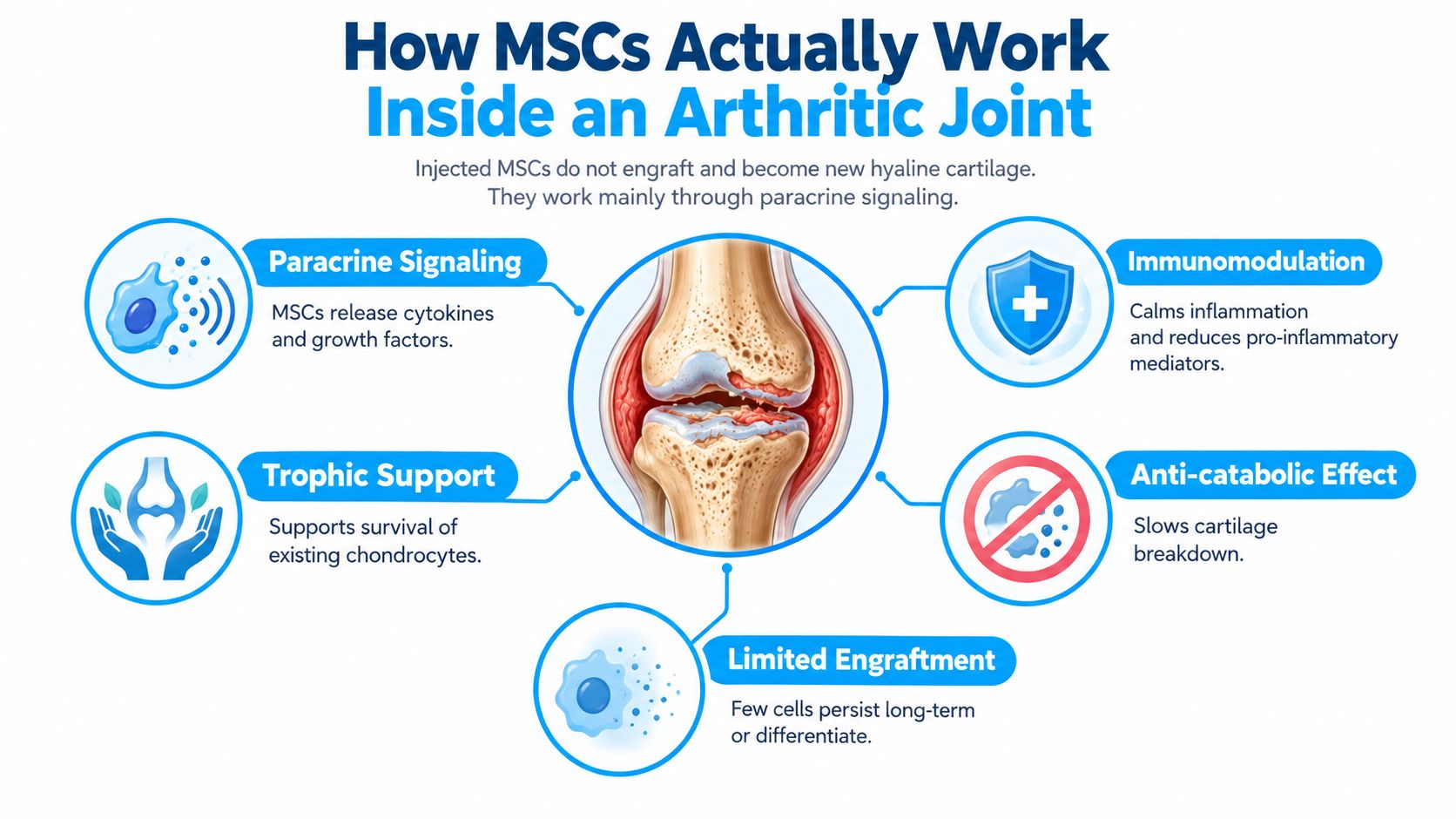
Cell survival after injection is limited, and long-term engraftment isn’t the main expectation. That makes the secretome, not permanent cell replacement, the central therapeutic idea. Joint inflammation, cell viability, preparation quality, dose, and mechanical loading can all affect the biological response.
Joints Commonly Treated and How the Cells Are Delivered
The knee has the deepest clinical research base, particularly for focal osteoarthritis in the medial compartment and patellofemoral joint. Most protocols use an intra-articular injection, at dream body clinic with the newest deep field ultrasound guidance. Disease stage matters because signaling may be less able to overcome severe cartilage loss, major malalignment, instability, or advanced mechanical degeneration.
Clinicians also treat the hip, also with deep field ultrasound guidance because the joint lies deeper. The shoulder may involve the glenohumeral joint, although rotator cuff disease requires a different assessment. The ankle, including the talocrural and subtalar joints, and the hand, especially the thumb carpometacarpal or trapeziometacarpal joint, can be treated too.
Delivery and cell source change the treatment
Intra-articular delivery places the preparation directly into the symptomatic joint and is the standard route for focal osteoarthritis. Intravenous delivery has been explored for systemic inflammatory patterns or multiple-joint disease, but the knee remains the dominant setting for controlled clinical research and the most common treatment at Dream Body Clinic.
Common cell sources include:
- Bone marrow aspirate concentrate: BMAC commonly contains approximately 5 to 50 million cells, with MSCs representing roughly 0.1% to 1% of that population. This means you only get tens or hundreds of thousands of Stem Cells. This is a big problem with BMAC, it is the source with the fewest MSCs as there are no capillaries in the bone marrow and MSCs live on the outside of the capillaries as Pericytes. The preparation is also painful as it requires penetrating the hip bone to take out bone marrow.
- Adipose-derived stromal vascular fraction: Adipose-derived stromal vascular fraction (SVF) typically yields 100,000 to 1,000,000 cells per mL (or gram) of processed lipoaspirate and only about 1% are mesenchymal stem cells. The other 99% of the cells are a mix of nucleated cells. So it is not truly a stem cell therapy, but a cell therapy. Marketing allows them to call it a stem cell treatment, but it is no different than Coca-cola selling you an apple juice that says all natural then you turn it over and read the label that says 99% sugar and water with 1% juice. Preparation is also painful as it requires a liposuction with local anesthetic.
- Culture-expanded allogeneic MSCs: At dreambody.clinic we derive our MSCs from Wharton Jelly (umbilical cord tissue) and placenta. These come from live, healthy births from women that are heavily screened with blood panels and health markers. We only need a new umbilical cord and placenta every few months. These Allogeneic MSCs are considered immune priveleged. They lack human leukocyte antigen (HLA) which is like the finger print of your cells and is unique to each person. So when they are administered your body doesn’t reject them and they think they are their own cells. The biggest advantage is that we can fully isolate these MSCs and then culture (replicate) them. This makes these stem cells the best on every level. These are cultured in our ISO certified Lab for maximum efficacy.
| Joint | Delivery Route | Cell Source | Typical Cell Count |
|---|---|---|---|
| Knee | Deep Field Ultrasound-guided intra-articular injection | Expanded allogeneic MSCs | 50 Million MSCs |
| Hip | Deep Field Ultrasound-guided intra-articular injection | Expanded allogeneic MSCs | 50 Million MSCs |
| Shoulder | Deep Field Ultrasound-guided intra-articular injection | Expanded allogeneic MSCs | 50 Million MSCs |
| Ankle | Deep Field Ultrasound-guided intra-articular injection | Expanded allogeneic MSCs | 50 Million MSCs |
| Hand | Targeted intra-articular injection | Expanded allogeneic MSCs | 50 Million MSCs |
| Multiple joints or systemic inflammatory patterns | Targeted intra-articular injection | Expanded MSCs or related cell-derived products | Protocol-dependent |
Patients evaluating a knee protocol can review this clinical guide to stem cell knee treatment while asking the treating clinician to explain the exact product, route, dose, and follow-up plan.
What the Research Actually Shows on Pain, Function, and Safety
The strongest human evidence concerns knee osteoarthritis, not every arthritic joint equally. A 2025 Cochrane review synthesized 4 randomized trials involving 348 participants. At 12 months, 683 per 1,000 patients receiving stem cell injections reported treatment success, compared with 530 per 1,000 receiving placebo, a difference of 153 more successes per 1,000. The review also reported serious adverse events in 16 per 1,000 treated patients versus 23 per 1,000 placebo-treated patients, as detailed in the Cochrane evidence summary.
A broader Cochrane analysis of 25 knee osteoarthritis trials involving 1,341 participants found low-certainty evidence of approximately 1.2 points of pain improvement on a 0 to 10 scale at 6 months and 14.2 points of functional improvement on a 0 to 100 scale. The authors cautioned that the pain difference may have uncertain clinical importance and that variations in products and protocols prevent strong conclusions about durable cartilage repair or cost-effectiveness. The full review record provides the relevant limitations.
Why results differ between studies
A 2025 meta-analysis of 11 randomized controlled trials reported statistically significant and clinically meaningful improvements in pain, function, and activity, with benefits appearing to strengthen over time and persist up to 2 years. At the same time, the analysis emphasized major heterogeneity in cell source, preparation, and dosing, which makes it difficult to apply one study's result to every clinic's protocol. Its findings are available in the Frontiers analysis of intra-articular MSC therapy.
| Study or review | Year | Joints covered | Pain outcome | Follow-up | Serious adverse event rate |
|---|---|---|---|---|---|
| Cochrane randomized-trial review | 2025 | Knee | Treatment success, 683 per 1,000 versus 530 per 1,000 with placebo at 12 months | 12 months | 16 per 1,000 versus 23 per 1,000 with placebo |
| Cochrane review | Not specified in the verified evidence | Knee | About 1.2 points on a 0 to 10 scale at 6 months, low-certainty evidence | 6 months | Infrequently observed over follow-up |
| Meta-analysis of randomized trials | 2025 | Osteoarthritis studies, mainly intra-articular MSC therapy | Significant improvement in pain, function, and activity | Up to 2 years | Heterogeneous reporting |
| Earlier knee MSC meta-analysis | Not specified in the verified evidence | Knee | SMD −1.45 for pain | Variable | Variable |
| Earlier knee MSC meta-analysis | Not specified in the verified evidence | Knee | SMD 1.50 for self-reported physical function | Variable | Variable |
| Earlier knee MSC meta-analysis | Not specified in the verified evidence | Knee | SMD −1.99 for cartilage quality | Variable | Variable |
The earlier meta-analysis signals for cartilage quality are encouraging, but they don’t prove that injected cells have rebuilt a normal cartilage surface. MRI changes, symptom scores, and functional performance measure different things. Researchers also use different imaging sequences, follow-up intervals, cell products, and rehabilitation programs.
For readers who want to understand why storage, handling, and viability can affect cellular research, this Dream Body Clinic Lab Page provides useful technical context. A clinical discussion of MSC reparative pathways, safety, and efficacy can add another perspective, but no review eliminates the need to evaluate the exact product and protocol.
MSC Therapy Versus Standard Care and Surgery
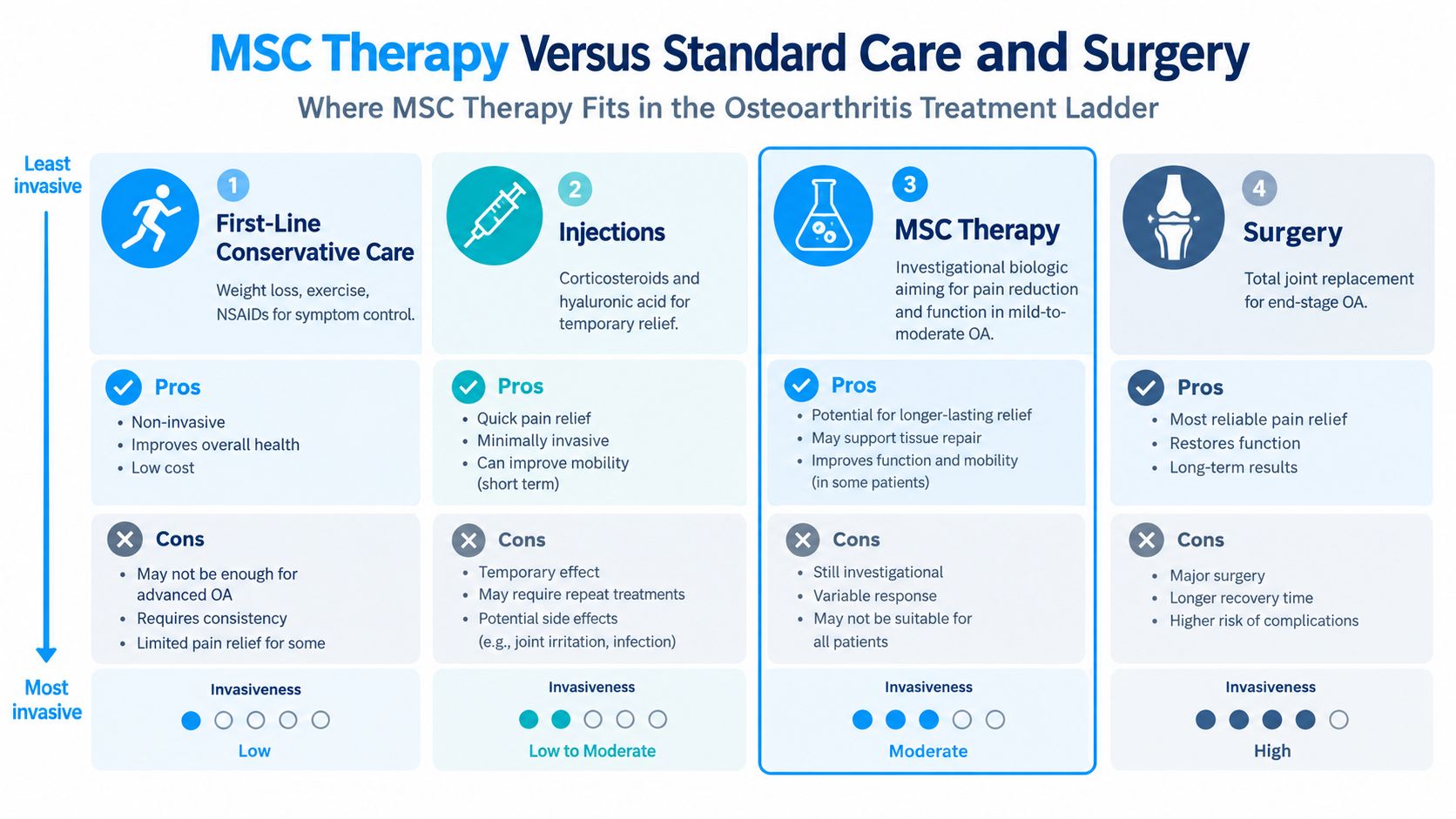
MSC therapy belongs on the osteoarthritis treatment ladder, not outside it. Exercise, strength training, physical therapy, weight management when relevant, medication, bracing, and activity modification remain the foundation because they address load, muscle support, mobility, and daily symptom control.
Conservative care usually requires consistent participation over time. Injections such as corticosteroids or hyaluronic acid may provide temporary relief for selected patients, but they don’t establish a cartilage-restoration effect. MSC therapy is generally considered when symptoms persist despite appropriate nonsurgical care, while the patient still has enough joint structure and function to make a biologic approach reasonable.
Where the options differ
| Approach | Main purpose | Typical time course | Important limitation |
|---|---|---|---|
| Exercise and rehabilitation | Improve strength, mobility, and load tolerance | Progresses over weeks and continues long term | Requires sustained participation and doesn’t restore lost cartilage |
| Medication and supportive care | Reduce pain or inflammation enough to maintain activity | Often short term or intermittent | Side effects and incomplete relief can limit use |
| Corticosteroid or hyaluronic acid injection | Provide symptom relief in selected cases | Variable and often temporary | Doesn’t reliably change disease structure |
| MSC therapy | Modulate the joint environment and potentially improve pain and function | Benefits, when present, develop over months. Peak results usually seen 3 to 6 months post treatment. | Full Tears of ligaments, tendons or other tissues cannot be healed with MSCs. Osteophytes cannot be resolved with MSCs. |
| Joint replacement | Replace severely damaged joint surfaces | Requires surgery followed by rehabilitation over months | Invasive, with surgical risks and recovery demands |
Joint replacement remains the established option for severe disease when pain and loss of function substantially impair quality of life despite nonsurgical care. MSC therapy doesn’t prevent future surgery if the joint continues to deteriorate, and choosing an injection doesn’t remove the possibility of arthroplasty later.
The more useful comparison isn’t “cells or surgery.” It’s whether the patient has a reasonable opportunity to improve function while continuing evidence-based rehabilitation, or whether mechanical damage has progressed beyond what biologic signaling can realistically address.
Who Is a Good Candidate and What Recovery Looks Like
A typical candidate has mild to moderate radiographic osteoarthritis, persistent symptoms despite optimized conservative care, and enough remaining joint structure for a biologic intervention to have a plausible target. Clinicians also assess alignment, instability, body composition, activity demands, metabolic health, inflammatory disease, medications, and whether another condition is causing the pain.
Uncontrolled metabolic or inflammatory disease can complicate recovery and symptom interpretation. A careful evaluation should match the imaging findings to the physical examination, because an abnormal scan alone doesn’t prove that MSC therapy is appropriate.
What happens on treatment day
At Dream Body Clinic a normal schedule looks like this:
Day 1 – Arrive and rest
Day 2 – Blood work and MRI
Day 3 – Consultation with Doctor to Review Blood Work and MRI
Day 4- Treatment
Day 5 – Fly Home
Treatment day can be nerve racking for some people, but it is usually the most anti-climactic event a person can have. The doctor starts by answering any last questions then he and the nurses get to work. The patient is taken into the treatment room and then the area of injection is prepped. We use the same sterilizing techniques used in operating rooms to maintain maximum sterility. Once the area is disinfected the nurse prepares the ultrasound so the doctor can view the injection site. He then lines up the shot and injects. Most treatments only require a single injection that is over within seconds. Then the area is disinfected again and the patient is done. All of our orthopedic stem cell treatment pages have all the information and prices listed – Orthopedic
Recovery requires load management
After injection, many clinicians recommend relative rest followed by gradual loading. NSAID use is restricted post treatment as MSCs are attracted to inflammation and NSAIDS like ibuprofen and aspirin work by confusing where inflammation is by interfering with inflammatory signaling. We recommend 2 weeks of no major activity for the joint then 4 weeks of light rehab exercises. A structured rehabilitation program then progresses from range of motion and low-load movement toward strength, balance, and functional activity.
A realistic timeline should be measured in months rather than days. Patients may notice early changes during the first several weeks, with more meaningful improvement often assessed later as the joint environment and rehabilitation response evolve. No clinician can guarantee a particular recovery curve, and a flare after injection doesn’t automatically predict treatment failure.
Common Misconceptions and the Repeat-Injection Question
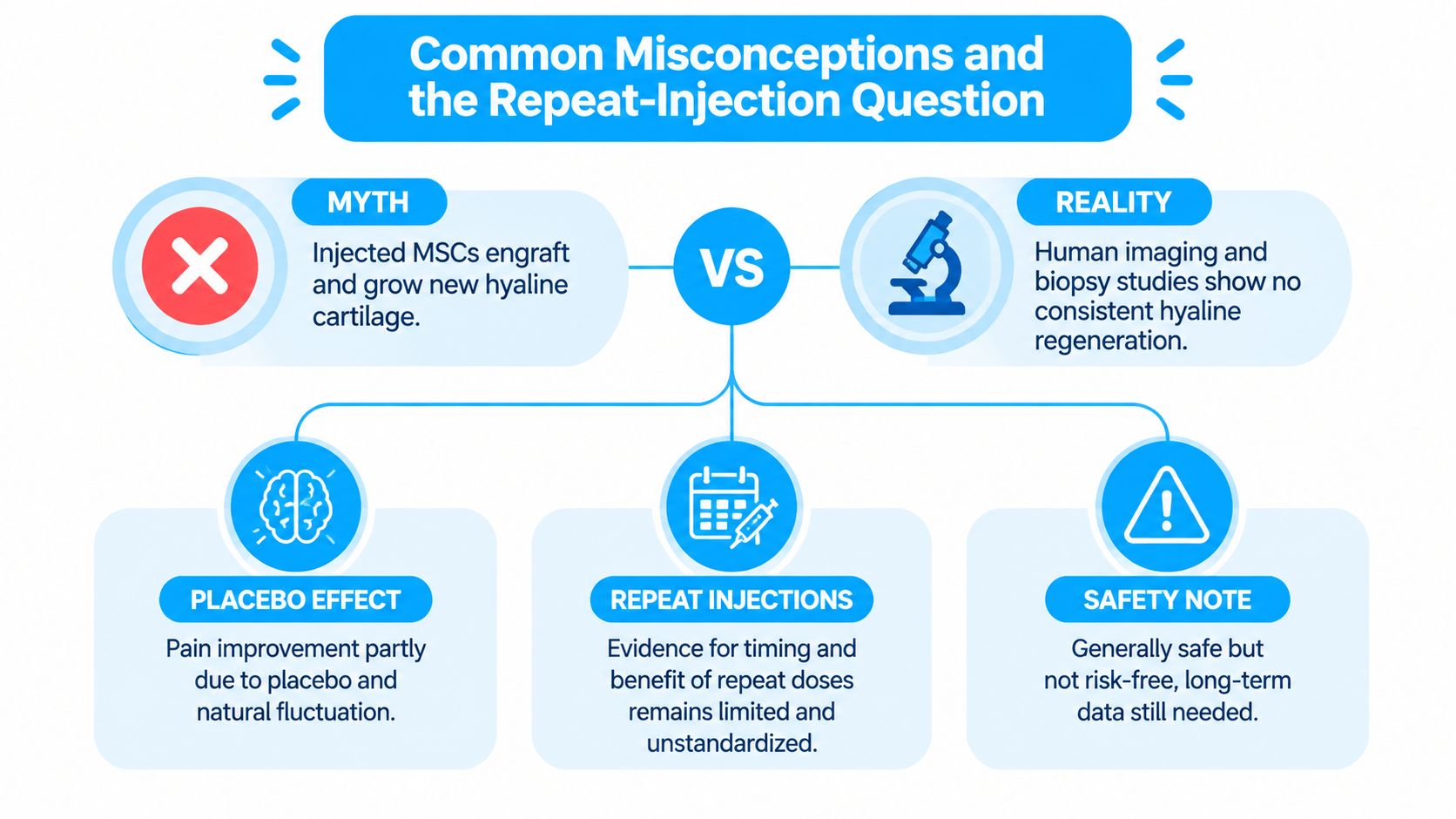
The most persistent myth is that injected MSCs engraft, differentiate, and grow a new layer of hyaline cartilage. Human evidence hasn’t demonstrated consistent, reliable cartilage replacement through that simple process. The more defensible model is that MSCs act through paracrine signaling, influencing inflammation, immune cells, synovial tissue, and surviving chondrocytes.
That distinction changes the promise. Current evidence supports potential improvement in pain and function, but it doesn’t prove that MSC therapy reliably halts osteoarthritis progression or restores a mechanically normal joint. A patient may feel better without showing major structural regeneration on imaging.
Should a patient repeat the injection?
Repeat dosing is an active research question, not a settled standard. A 2026 network meta-analysis of 16 randomized trials involving 622 patients found that repeated MSC injections produced greater pain and function improvements at 6 and 12 months than single injections, but repeated treatment also had a higher incidence of adverse events. The findings are summarized in the network meta-analysis record.
That trade-off matters. A partial response that fades may lead a clinician to discuss another dose, but repetition increases exposure to procedure-related and product-related risk. The best interval, number of treatments, and patient profile for repeat dosing remain unsettled. We have found that a single injection with the most MSCs possible for the joint provides the best results with about 80% of people seeing full recovery 3 to 6 months post treatment. About 15% of patients seeing improvement, but requiring a follow up treatment anytime after 6 months to get to full recovery and about 5% of patients are non-responders. Being a non-responder is very rare, but worth noting as this is medicine, not magic.
Patients should also be cautious with clinics that use “exosome” language without clearly stating whether the product contains living MSCs, cell-derived vesicles, or another preparation. Ask for product characterization, source tissue, sterility testing, viability data where relevant, and a clear explanation of regulatory status.
The honest framing: MSC therapy is a biologic tool for modulating a joint environment. It isn’t a cartilage-growing procedure with a guaranteed structural endpoint.
Realistic Expectations for Stem Cell Therapy for Osteoarthritis
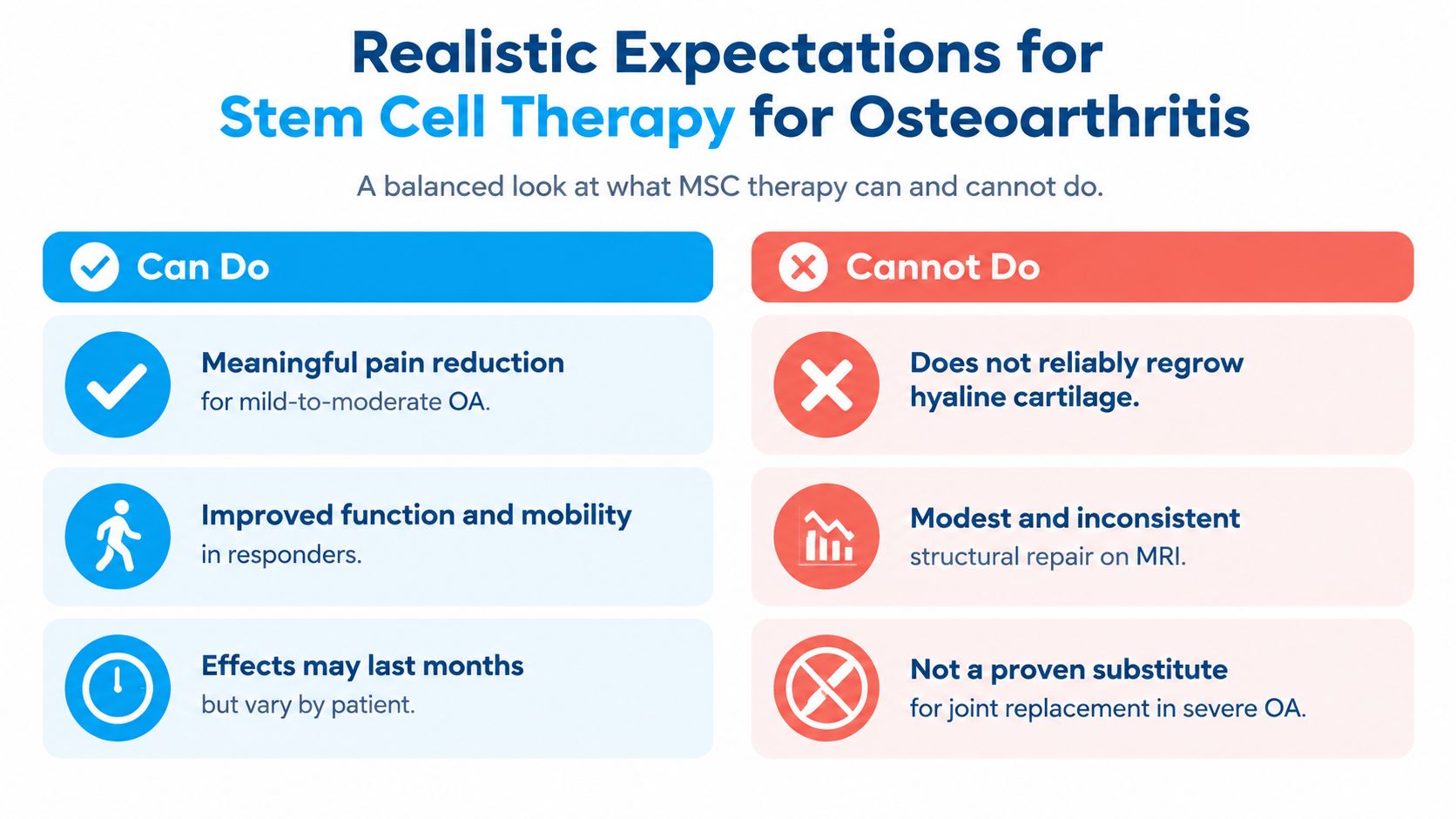
A balanced expectation has three parts. MSC treatment may provide meaningful pain reduction and functional improvement for some people with mild to moderate osteoarthritis. Serious adverse events appear infrequent in controlled research, but treatment isn’t risk-free. Structural repair remains modest, inconsistent, and uncertain, and no evidence guarantees that a patient will avoid eventual joint replacement.
The most useful outcome is often practical rather than cosmetic. Can you walk farther, sleep better, exercise, work, or reduce reliance on symptom medication? Those measures should be tracked alongside imaging because MRI changes don’t always correspond to objective knee function or daily quality of life.
Questions to ask before treatment
- Cell identity: Are the cells from bone marrow, adipose tissue, or an allogeneic source?
- Cell dose: How many cells are delivered, and how was that number selected?
- Quality control: What viability, sterility, identity, and characterization information is available?
- Delivery method: Will the injection be ultrasound guided?
- Evidence match: Do published studies evaluate the same source, dose, route, and joint?
- Follow-up: Will the clinic track pain, function, medication use, and imaging over time?
- Contingency plan: What happens if symptoms don’t improve, and how will future surgery remain available?
A 2026 global review identified 224 interventional trials of stem cell-based osteoarthritis therapies conducted between 2000 and 2025. Of those trials, 51.8% were completed, 20.1% were ongoing, 14.3% were terminated, and 4.5% were discontinued prematurely, according to the global trial landscape review. The scale of research shows a substantial field, but it doesn’t make every commercial protocol validated.
For an individual patient, the sensible plan still includes strength training, appropriate weight control, load management, and carefully selected analgesics. MSC therapy may be one option within that plan. It shouldn’t replace the fundamentals or be presented as a guaranteed substitute for surgery in advanced disease.
Dream Body Clinic offers physician-led regenerative evaluations and orthopedic MSC protocols for joints including the knee, hip, and shoulder, with treatment planning that can include image-guided delivery, PRP, and follow-up assessment. If you’re considering stem cell therapy for osteoarthritis, visit Dream Body Clinic to request a case review and discuss whether the proposed cells, dose, route, and rehabilitation plan fit your condition.
Drafted with Outrank