Stem Cell Ankle Treatment in Mexico | 50M MSC Intra-Articular Injection
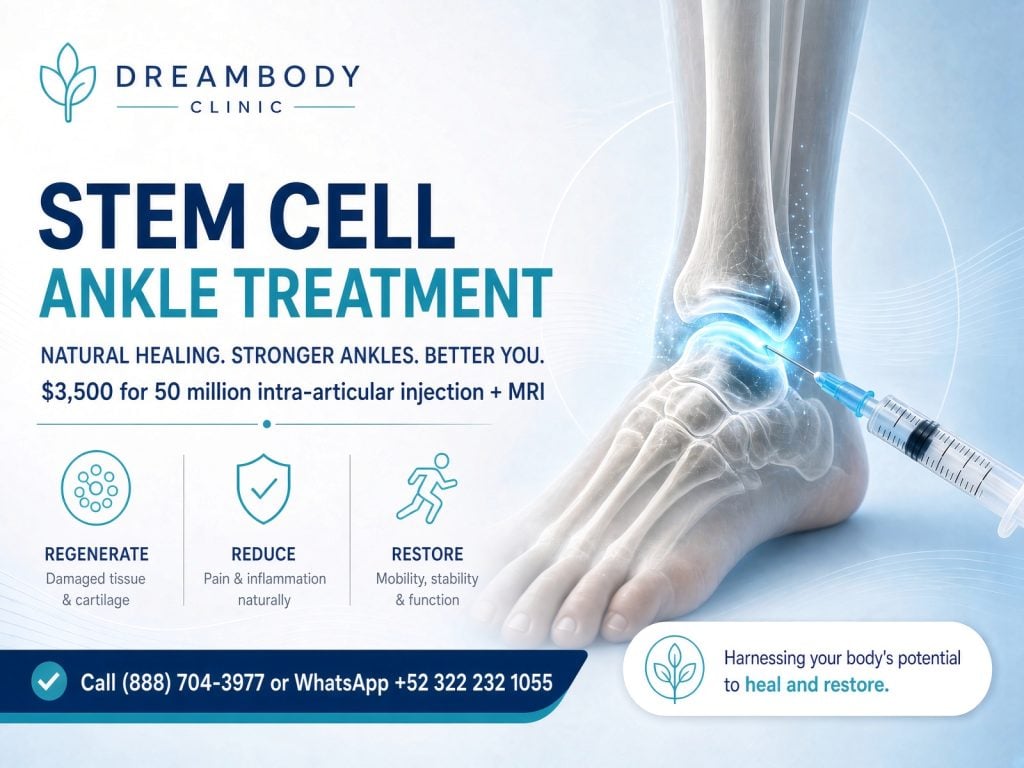
Dream Body Clinic’s Stem Cell Ankle Treatment uses a targeted intra-articular injection of mesenchymal stem cells (MSCs) to address arthritis, tendon and ligament damage, and other joint issues in the ankle.
The protocol delivers 50 million MSCs directly into the ankle joint. These cells may help calm inflammation. The injection is minimally invasive, but it is not a proven replacement for surgery. The treatment includes an on-site MRI and full blood panel to confirm candidacy and guide the procedure.
Patients typically stay in Bucerias, Nayarit (Puerto Vallarta area) for a minimum of five days. The all-inclusive package is $3,500 USD per ankle and is administered by experienced medical professionals in a certified facility. Most patients resume normal activities within a few weeks, with progressive improvements commonly reported over the following months.
This approach is suited for people with chronic ankle pain, osteoarthritis, partial tendon or ligament injuries (including Achilles-related issues), or other soft-tissue damage who want to avoid or delay surgical options. Results vary based on the severity and duration of the condition. An MRI is required; if prior imaging shows contraindications such as advanced osteophytes or a complete tear, the treatment may not proceed.
Our MSCs are derived from Wharton Jelly & placenta from live, healthy births in our COFEPRIS certified and ISO rated lab on site.
Call (888) 704-3977 or email info@dreambodyclinic.net for a free consultation to discuss your case.
Please note: MSC therapy for ankle arthritis is investigational, and results in studies have been modest and variable. Many patients report changes over 3 to 6 months, but results vary and some see little or no benefit. A physician decides whether you may be a candidate after reviewing your records. Read the research: Stem Cell Therapy for Ankle Arthritis
Stem Cell Ankle Treatment
We require patients to be in town for at least 5 days. Below is what a typical schedule looks like, but exact details are subject to change depending on availability and schedule:
What’s included in your protocol
(Each Ankle)
Watch & Learn

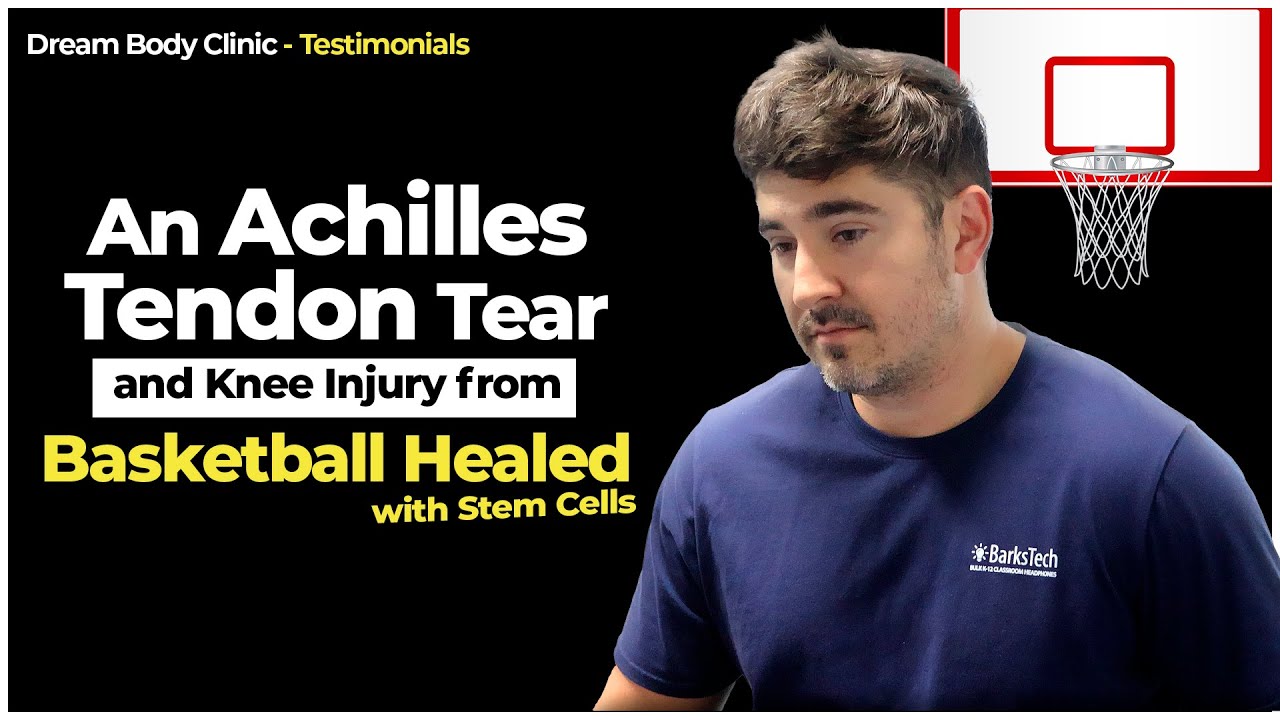
Stem Cell Ankle Treatment
The stem cell ankle treatment is an investigational approach for ankle injuries. Our treatment uses mesenchymal stem cells, which are thought to work mainly by calming inflammation and signaling to nearby tissue. Mesenchymal stem cells are thought to work mainly by calming inflammation and signaling to nearby tissue. When injected into damaged tissue, they are thought to work mainly by calming inflammation and signaling to nearby tissue.Our treatment is minimally invasive and has little to no downtime. You’ll be able to return to your normal activities within a few weeks, and you’ll start to feel the benefits of the treatment within a few months. Many patients who respond notice changes over the first few months, with the most change often reported around three to six months. Results vary, and some patients see little or no benefit. Our team of experienced medical professionals will work with you to develop a personalized treatment plan tailored to your unique needs and goals. Contact us today to schedule a consultation and find out whether you may be a candidate.
About our Stem Cell Ankle Treatment
What Is the Stem Cell Ankle Treatment Used For?
Arthritis (Cartilage Damage): Cartilage is the tissue that cushions the joints, allowing for smooth and pain-free movement. In arthritis, the cartilage becomes damaged or worn down, resulting in pain and stiffness. Chondrocytes are the cells that make up cartilage. MSCs signal to these cells in laboratory studies, but the evidence that injections regrow cartilage in people is weak. When MSCs are injected into the joint, they are thought to work mainly by calming inflammation and signaling to nearby tissue. Studies generally report modest, variable improvements in pain and function, and the evidence that injections regrow cartilage is weak.
Ligament Damage: Ligaments are the tough bands of tissue that connect bones to each other and help to stabilize joints. Injuries to ligaments can cause pain, inflammation, and instability. MSCs may help calm inflammation in damaged ligaments; evidence in people is still limited. When injected into the injured area, MSCs can guide fibroblasts, the cells that make up ligament tissue, and promote the production of collagen, the substance that gives ligaments their strength and flexibility.
Tendon Damage: Tendons are the tough bands of tissue that connect muscles to bones. Tendon injuries can cause pain, swelling, and weakness in the affected area. MSCs may help calm inflammation around damaged tendons; evidence in people is still limited. When injected into the injured area, MSCs can guide tenocytes, the cells that make up tendon tissue, and promote the production of collagen, the substance that gives tendons their strength.
Muscle Damage: Muscles can become damaged due to injury, overuse, or age-related changes. Muscle damage can cause pain, weakness, and limited mobility. MSCs may help calm inflammation in damaged muscle; evidence in people is still limited. When injected into the injured area, MSCs can guide myoblasts, the cells that make up muscle tissue, and promote the production of myosin and actin, the proteins that enable muscle contraction.
How Might Mesenchymal Stem Cells Help With Arthritis?
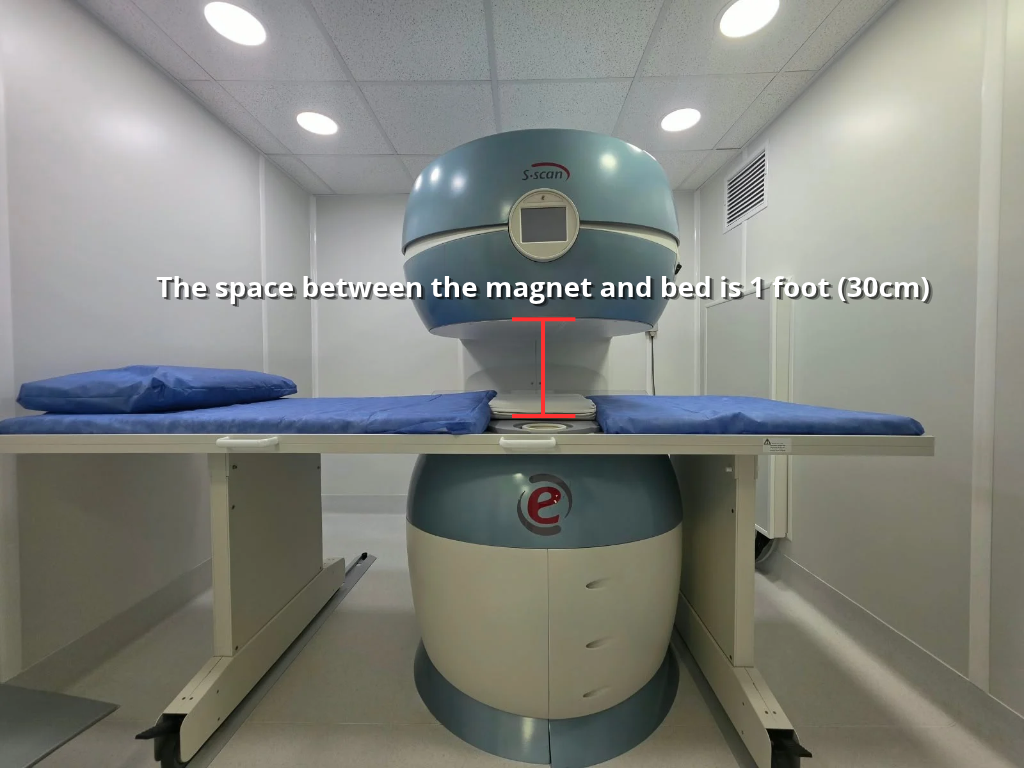
- Our MRI machine is an open MRI so it is not claustrophobic
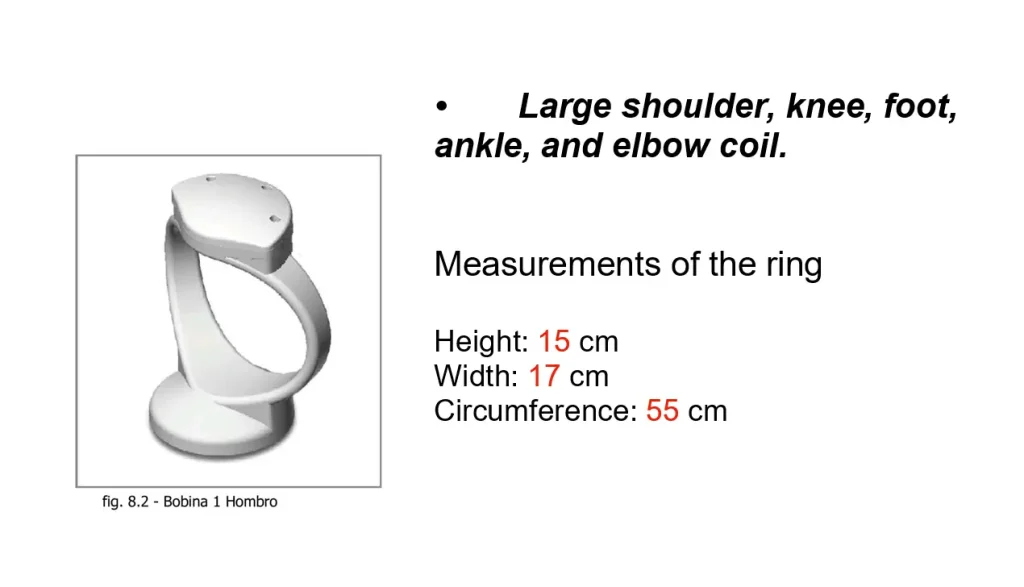
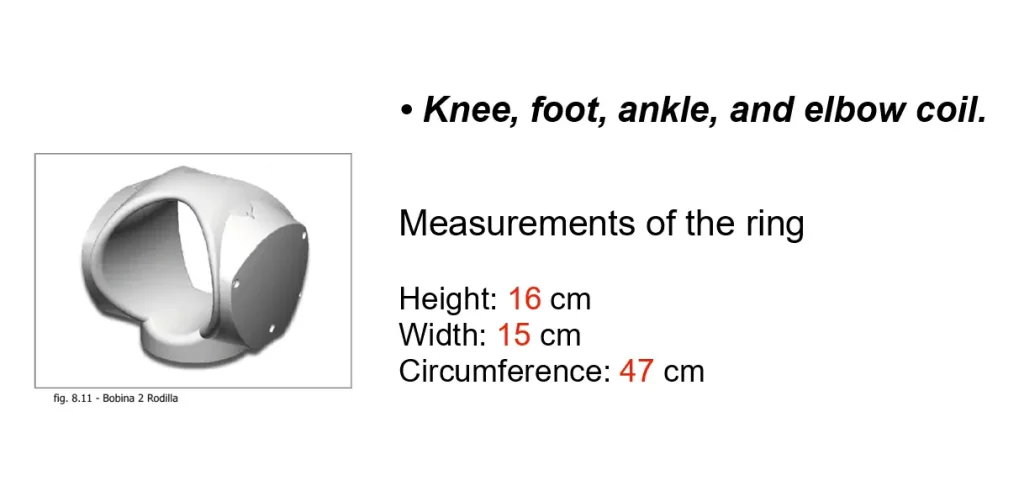
- Please reference the MRI Coil image show here to be sure that your ankle will fit in it.
- If your ankle will not fit in it then we need to know so that we can schedule your MRI with a different machine.
- Some patients will not be candidates for treatment based on MRI results and in those cases we only charge for the MRI and blood panel. The MRI costs $500 usd and the blood panel is $300 usd.
How do Mesenchymal Stem Cells Guide the Removal of Scar Tissue in an Injured Ankle?
Production of enzymes and cytokines: MSCs produce enzymes and cytokines that can help to break down scar tissue and promote its removal. Matrix metalloproteinases (MMPs) are a family of enzymes that can degrade extracellular matrix, the substance that makes up scar tissue. MSCs can produce MMPs, which can break down scar tissue and promote the growth of new tissue.
Guiding specific cell types: MSCs can guide many different cell types, depending on the microenvironment in which they are located. In the case of ankle injuries, MSCs can guide fibroblasts and chondrocytes, which are the cells that make up ligament and cartilage tissue, respectively.
Modulation of the immune system: MSCs can modulate the immune system, which plays a key role in inflammation and tissue repair. When tissue is injured, the immune system responds by triggering an inflammatory response. However, if the inflammatory response is too severe or prolonged, it can lead to the formation of scar tissue. MSCs can help to modulate the immune response by reducing inflammation and promoting the growth of new tissue.
Promotion of angiogenesis: Angiogenesis is the process by which new blood vessels are formed. Injured tissue requires a robust blood supply to promote healing and removal of scar tissue. MSCs can promote angiogenesis by secreting growth factors that stimulate the growth of new blood vessels. In laboratory studies, MSCs release signals that may support new blood vessel formation; it has not been shown that this removes scar tissue in patients.
How Long Do Results Last With The Stem Cell Ankle Treatment?
Ankle MRI Included with Stem Cell Treatment
Pre Treatment Care Protocol
We recommend that patients stop taking any non-steroidal anti-inflammatory drugs (NSAIDS) at least 1 week before treatment and staying off of them for at least 2 weeks post treatment. NSAIDs work by confusing where inflammation is and MSCs work by seeking out inflammation so they don’t work together.
We do not recommend doing treatment if you have had a cortisone or corticoid steroid injection within 3 months of treatment. Corticoid steroids work by confusing where inflammation is and MSCs work by seeking out inflammation so they don’t work together.
We recommend stopping the use of prednisone at least 1 week before treatment and staying off of them for at least 2 weeks post treatment. prednisone work by confusing where inflammation is and MSCs work by seeking out inflammation so they don’t work together.
Post Treatment Care Protocol
After treatment we advise patients to take 2 weeks off from exercise or sports. Then we recommend they follow the 4 week physical rehab protocol that we provide during treatment. This is a protocol of physiotherapy exercises developed by our orthopedic surgeon to help with a fast recovery. After the 6 weeks of rest and rehab we then recommend getting back to your favorite activities or exercise routine, but to take it light and listen to your body. If you go to the gym and you feel pain in your ankle during treatment or the next day then it is best to take at least a week or more off of that exercise. It is best to listen to your body and follow your aftercare plan. Most patients see peak results from treatment 3 to 6 months post treatment.
We recommend that patients don’t start using any non-steroidal anti-inflammatory drugs (NSAIDS), Prednisone, or anti-inflammatory supplements such as gingko biloba or turmeric for at least 2 weeks post treatment and preferably for 6 weeks post treatment.
We recommend that patients don’t have any corticoid steroid injections such as a cortisone shot for at least 3 months post treatment and preferably for at least 6 months as MSC Treatments typically see peak results 3 to 6 months post treatment.
Supplements for a Faster Recovery
How to Book a Stem Cell Ankle Treatment at Dream Body Clinic
Side Effects or Risks
- A small number of patients have experienced tightness and soreness in the joint the night after treatment or the following day. This is easily treated with the tramacet we provide every patient.
- A very small percentage of patients for this treatment will be non-responders. As with any medication or treatment there is always a chance of no change. Tylenol does not always fix a headache as an example.
- This treatment consists of an injection and as with any injections there is a very small risk of infection. We use iodine and microdacyn to minimize the chance of infection.
- We do not treat patients that have had cancer within the past 5 years. There is still no conclusive evidence linking stem cells to make cancer worse, but we prefer to stay on the side of safety until more information is available.
Fortunately the stem cell ankle treatment is extremely safe. The only documented side effects are the following:
Our lab has over 9 years of experience cultivating mesenchymal stem cells. See Stem Cell Certification by Clicking Here.
The mesenchymal stem cells that are administered via intra-articular injection will stay in the system for 8 months to a year. During that time they are thought to interact with immune cells, mainly by releasing signals that may calm inflammation. After 8 to 12 months any MSCs that are free bound in your system will differentiate into an osteoblast (bone cell), adipocyte (fat cell) or chondrocyte (cartilage cell). They will then contain the donor’s HLA markers and your immune system will destroy and remove them. This is an easy process for your immune system and there is no negative reaction in your body from it.
Stem Cell Ankle Treatment Studies
Selected peer-reviewed publications supporting this treatment.
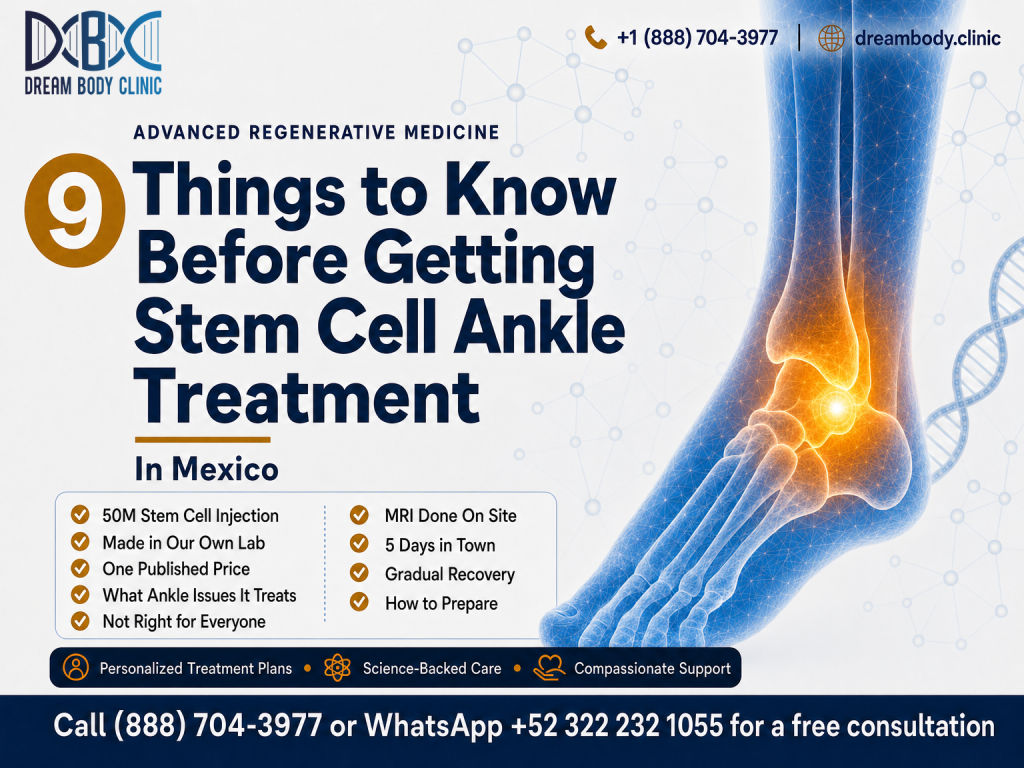
9 Things to Know Before Getting Stem Cell Ankle Treatment in Mexico
Chronic ankle pain from arthritis, tendon or ligament damage can make every step a negotiation. If you are considering an investigational, non-surgical option, here are nine things to know before you book stem cell ankle treatment at Dream Body Clinic in Bucerías, near Puerto Vallarta.
1. The protocol is 50 million stem cells injected into the ankle joint
The treatment is a single targeted intra-articular injection of 50 million mesenchymal stem cells (MSCs) directly into the ankle joint. The aim is to help calm inflammation; it is not a proven replacement for surgery. The clinic uses ultrasound guidance to place the injection precisely.
2. The cells are made in the clinic’s own lab
The MSCs come from Wharton’s jelly and placenta from live, healthy births. They are processed in Dream Body Clinic’s on-site, COFEPRIS-certified and ISO-rated laboratory, which the clinic says has more than 9 years of experience cultivating MSCs.
3. There is one published price, and the MRI is included
The all-inclusive package is $3,500 USD per ankle. It includes the 50 million cell injection, a full blood panel, and an ankle MRI, all administered in a certified facility. Both ankles, or other joints, can be done on the same trip.
4. It is used for common ankle problems
The page describes it for chronic ankle pain, osteoarthritis, partial tendon or ligament injuries (including Achilles-related issues), and other soft-tissue damage, especially for people who want to explore a non-surgical option first. Results vary with the severity and duration of the condition.
5. It is not right for everyone
An MRI decides candidacy. The most common reasons for disqualification are advanced osteophytes (bone spurs) or a complete tear. The clinic also does not treat anyone who has had cancer in the past 5 years, as a precaution. A small percentage of patients are non-responders, and the clinic says this can happen with any treatment.
6. You need an MRI, and you get it on site
An MRI is required, even if you already have a recent one. If you have a report from the past year, email the written radiology report (not the images) to info@dreambodyclinic.net for a first read. The on-site MRI is an open design, so it isn’t claustrophobic, but space is limited. Send your height, weight and waist size, and check the coil size on the page. If you won’t fit, the clinic schedules your MRI at a partner lab. If the MRI shows you aren’t a candidate, you pay only $500 for the MRI and $300 for the blood panel.
7. Plan for at least five days in town
A typical schedule: Day 1 arrive and rest, Day 2 MRI and bloodwork, Day 3 MRI review then payment, Day 4 treatment, Day 5 fly home. If you stay longer, the days don’t need to be consecutive.
8. Recovery is gradual
Some tightness or soreness the night after treatment or the next day is the most commonly reported side effect. The clinic advises two weeks off exercise or sports, then a 4-week physical rehab protocol it provides. After about 6 weeks, patients can return to activities lightly. Peak results are typically seen 3 to 6 months after treatment, and results vary. As with any injection, there is a very small risk of infection, and the clinic uses iodine and microdacyn to reduce it.
9. Preparation matters
- Stop NSAIDs at least 1 week before treatment and for at least 2 weeks after (preferably 6 weeks).
- Avoid cortisone or corticosteroid injections for 3 months before treatment, and for at least 3 months after (preferably 6).
- Stop prednisone at least 1 week before and 2 weeks after.
- Avoid anti-inflammatory supplements such as ginkgo biloba or turmeric for at least 2 weeks after.
The clinic says these drugs interfere with how MSCs respond to inflammation. Always check with your own doctor before stopping any prescribed medication.
Ready to find out if you’re a candidate? Call (888) 704-3977, WhatsApp +52 322 232 1055, or email info@dreambodyclinic.net for a free consultation.
Results vary. This content is for education and is not medical advice.
Call (888) 704-3977
For a Free Consultation
Or email us at info@dreambodyclinic.net
Reviewed by the treating physician
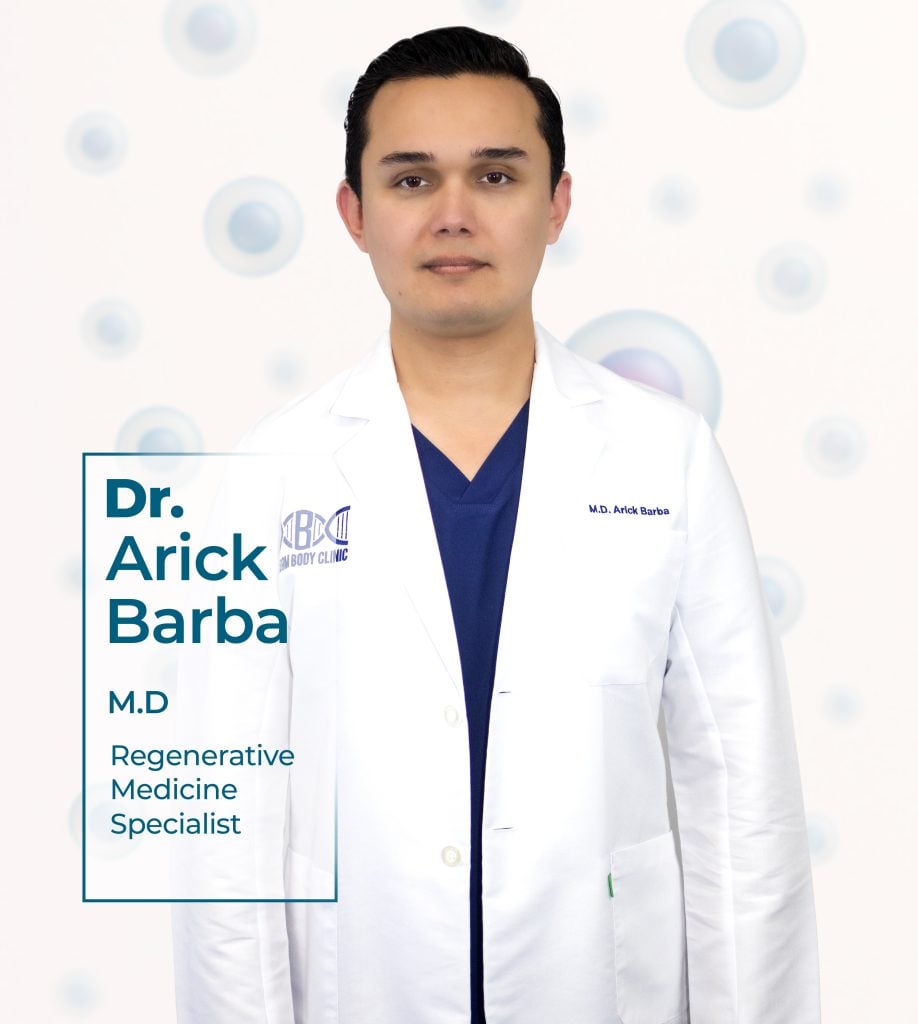
Dr. Arick Francisco Barba Lopez
Head Physician
Dream Body Clinic, Bucerias, Mexico
- Graduate, Universidad Autónoma de Guadalajara
- Graduate certificate in regenerative medicine
- About 9 years administering mesenchymal stem cell therapies
- Honoris Causa, UNCEMA, 2021
- Reviews this page for protocol, dose, and candidacy accuracy
Content last reviewed September 26, 2026 · Next scheduled review March 2027
This page describes a clinic protocol, not an FDA-approved U.S. indication.