The most popular advice about neuropathy stem cell therapy is also the most misleading: many pages imply that injected stem cells become new nerve cells and replace the nerves damaged by diabetes, chemotherapy, inflammation, or compression. That explanation sounds intuitive, but it doesn’t accurately describe the main mechanism being studied in human peripheral nerve treatment.
Mesenchymal stem cells, or MSCs, primarily act through paracrine signaling. They release specialized biological signals that help guide the body’s own repair response. That distinction matters because reduced pain, improved nerve conduction, and true regrowth of lost nerve fibers are different outcomes, and current clinical evidence shows that it can do all this and more.
Table of Contents
- The Hidden Mechanism Behind Neuropathy Stem Cell Therapy
- How Paracrine Signaling Drives Nerve Repair
- Delivery Routes and Treatment Approaches
- What Clinical Evidence Actually Shows
- Neuropathy Types and Treatment Candidacy
- Setting Realistic Treatment Expectations
- Making an Informed Treatment Decision
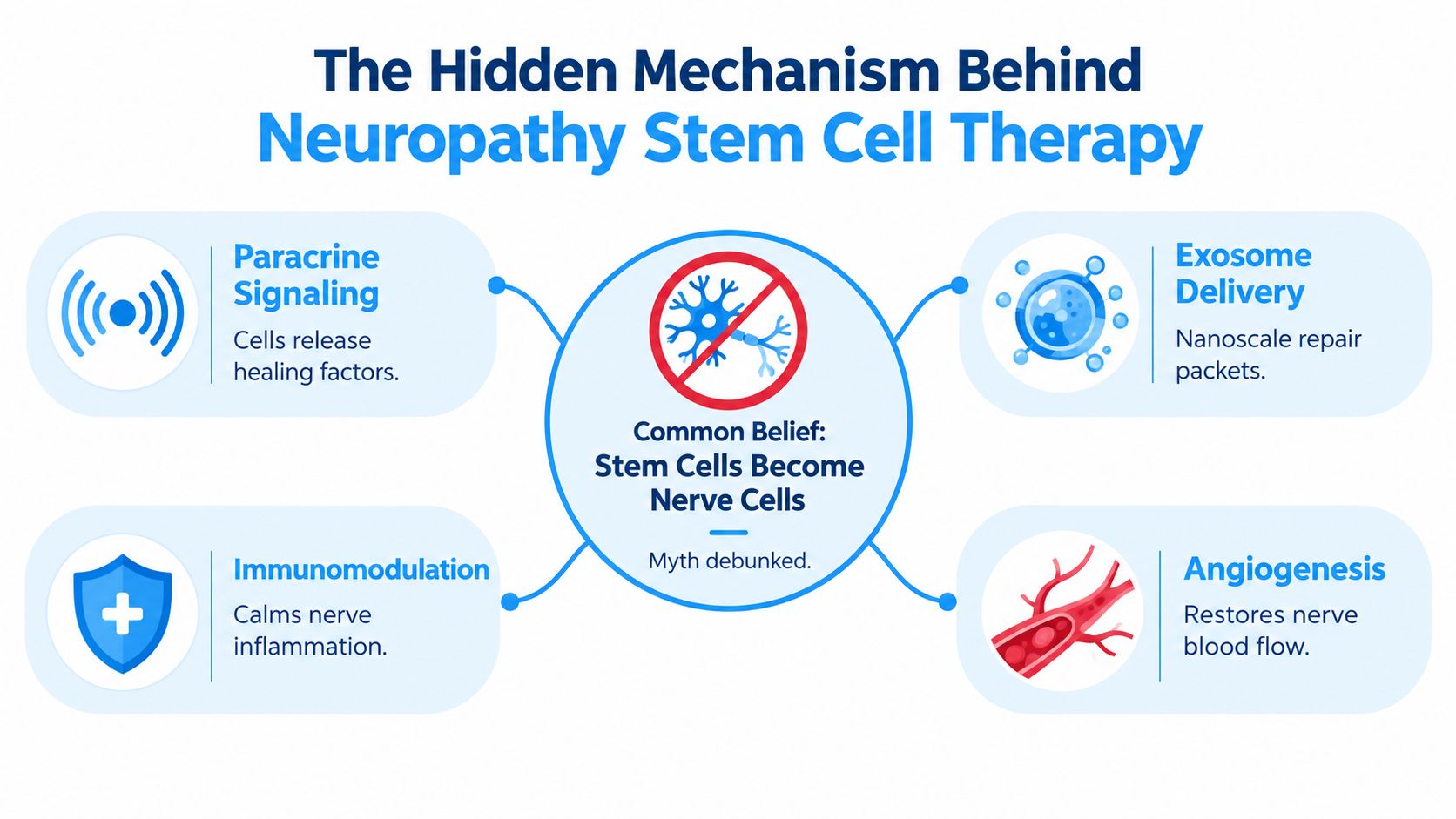
The Hidden Mechanism Behind Neuropathy Stem Cell Therapy
A patient may arrive at a consultation expecting a simple exchange: damaged nerve cells are removed from the biological equation, and new stem cells take their place. The more accurate picture is less dramatic but more useful. MSCs generally don’t differentiate into replacement nerve tissue in this setting. Instead, they function more like temporary biological signal factories.
Consider a hospital triage team arriving after an accident. Paramedics don’t rebuild a damaged organ at the roadside. They stabilize the environment, control harmful processes, deliver resources, and help the patient’s own repair systems work under better conditions. MSCs are being studied in a comparable role. They release signals that can influence inflammation, blood supply, nerve survival, and the behavior of supporting cells to regenerate nerves.
What the paracrine effect means
Paracrine signaling occurs when cells release molecules that affect nearby cells and tissues. In peripheral nerve repair, MSCs can release neurotrophins, cytokines, growth factors, and extracellular vesicles. These substances don’t turn an MSC into a neuron. They alter the local instructions surrounding injured nerves.
A review of MSC biology describes their strong paracrine potential, including the release of nerve-related factors such as NGF, BDNF, GDNF, CNTF, and neuregulin-1. This review of MSC paracrine signaling in nerve regeneration explains why researchers focus on the cells’ secretome, meaning the collection of substances they release, rather than assuming the cells permanently become nerve tissue.
The practical sequence looks like this:
- The cells encounter an injured environment.
- They release signals that influence local immune, vascular, and neural cells.
- Those signals may help protect surviving nerve fibers and support repair activity.
- The patient may experience changes in symptoms or nerve function, but that doesn’t automatically prove structural nerve replacement.
Clinical interpretation: A treatment can improve the environment around a damaged nerve without creating an entirely new nerve.
That is why a responsible neuropathy stem cell discussion should avoid saying that injections “grow new nerves.” The more defensible claim is that MSCs may send specialized signals that guide healing. Though at the end of the day if the nerve is healed, that is all that matters and it is what MSCs can accomplish.
How Paracrine Signaling Drives Nerve Repair
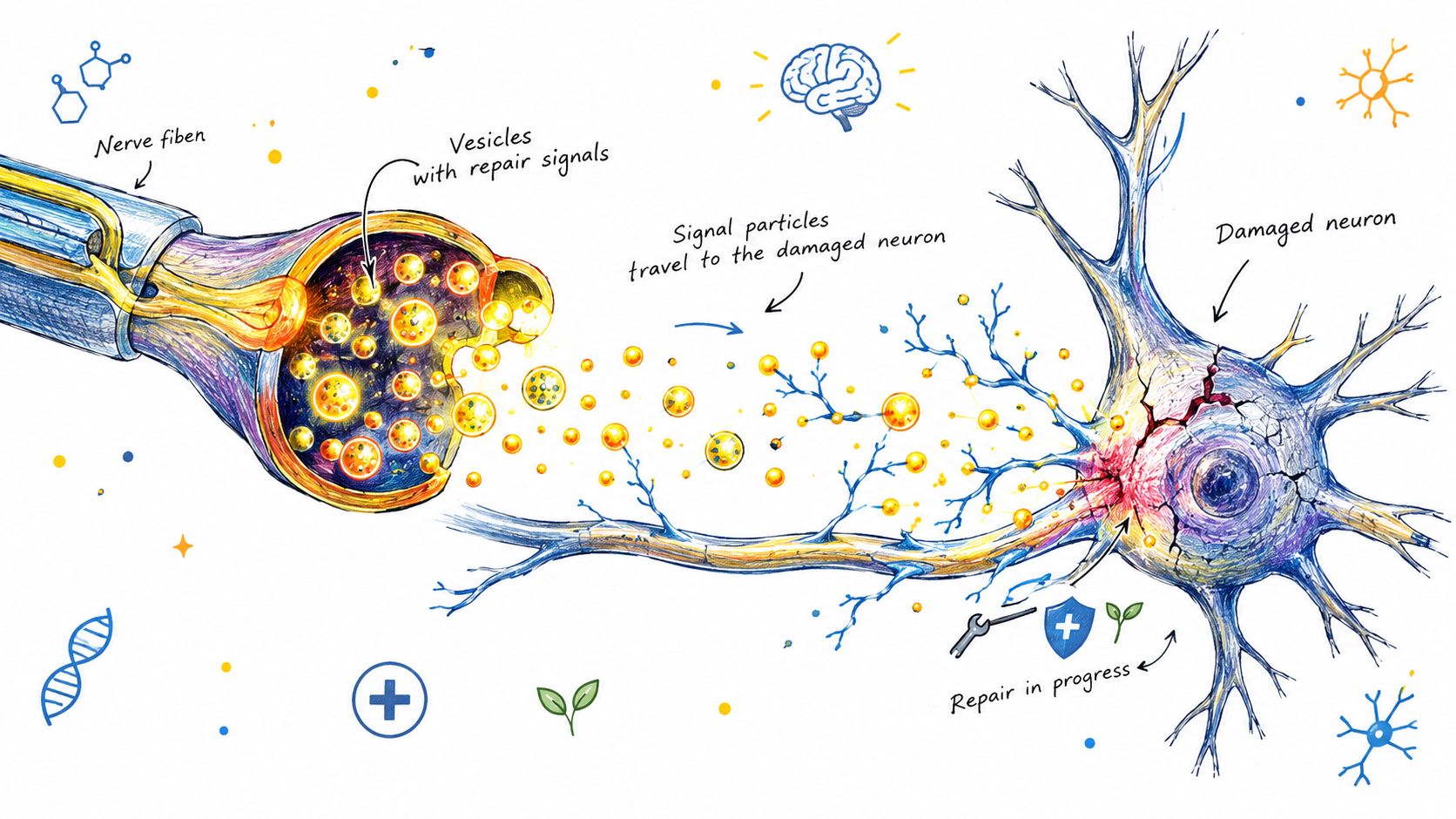
Paracrine signaling is not one action. It’s a network of local biological effects. MSCs release growth factors, cytokines, and extracellular vesicles that can support nerve survival, influence immune activity, encourage blood-vessel formation, and affect the cells that already participate in nerve repair.
Four overlapping signals
Neuroprotection means helping surviving nerve fibers tolerate an unhealthy environment. Neurotrophins such as nerve growth factor, or NGF, and brain-derived neurotrophic factor, or BDNF, are part of the signaling vocabulary involved in neuronal maintenance and repair. MSCs can also release GDNF, CNTF, and neuregulin-1, which may support interactions between neurons and glial cells.
Anti-inflammatory signaling addresses a second problem. Chronic inflammation can keep tissue in a state that favors pain and cellular stress rather than repair. MSC-derived signals may influence inflammatory activity, though that doesn’t mean every inflammatory neuropathy will respond in the same way.
Angiogenesis refers to the formation or support of blood vessels. A damaged nerve needs an adequate local environment, and vascular signaling may help improve the conditions around injured tissue. This is supportive biology, not proof that a lost axon has regrown.
Immune modulation extends beyond suppressing immunity. The intended effect is to shift local immune behavior away from destructive inflammation and toward a state that is more compatible with repair. A neurological disorders review describes stem-cell effects that include neuroprotection, anti-inflammatory activity, immune regulation, angiogenesis, and support for endogenous neural cells. This explanation of stem-cell mechanisms in neurological disease places paracrine communication at the center of the process.
A diabetes-focused review similarly describes MSCs as releasing neurotrophic and angiogenic factors, cytokines, and immunomodulatory substances. The review of MSC paracrine action in diabetic neuropathy supports the distinction between signaling-based support and direct cell replacement.
For patients, the important question is not merely whether stem cells are present after an injection. The useful questions are: Which signals are expected to matter for this neuropathy? Which tissue receives them? How will improvement be measured?
Read a practical overview of how stem cell injections work in regenerative medicine before evaluating a proposed protocol. The key is to understand what the clinic believes the cells will signal, not to assume they will transform into nerves.
The following video provides a patient at Dream Body Clinic who healed his nerves with MSCs after stem cell therapy in the USA didn’t work well enough:
Paracrine effects also help explain why results can be fast and effective. The cells may influence a damaged environment and if applied in an IV can resolve Type 2 diabetes issues that often lead to neuropathy. reverse severe axonal loss, or correct a compressed nerve. The mechanism is plausible, but a plausible mechanism isn’t the same as a guaranteed clinical outcome.
Delivery Routes and Treatment Approaches
The delivery route determines where MSCs are placed and how directly the treatment reaches the tissue of interest. There isn’t one universally correct route for every neuropathy, because a person with diffuse diabetic nerve injury has a different treatment problem from someone with a focal nerve injury. At Dream Body Clinic we assess the patient then attack it via direct peripheral injections, intravenous injections, Intrathecal injection or a combo of those modalities.
Intravenous administration
An intravenous infusion introduces cells into the circulation. This approach is systemic and may be considered when the intended biological target involves widespread inflammation or multiple affected areas. Its limitation is that the cells aren’t placed directly beside one particular peripheral nerve, so the treatment rationale should be clearly explained rather than assumed.
Intrathecal administration
An intrathecal injection delivers cells into cerebrospinal fluid. Clinicians may consider this route when the therapeutic plan involves the central nervous system, spinal cord, or nerve roots. It is more invasive than an IV infusion and requires careful medical assessment, appropriate facilities, and a clear explanation of why proximity to the cerebrospinal fluid is relevant to the patient’s diagnosis.
Local peripheral delivery
A local injection near an affected nerve or region aims to place the cells closer to the tissue producing symptoms. A targeted direct injection would be like when a patient has foot neuropathy and we inject to the top of the foot where the root of the nerves are or a trigeminal neuralgia treatment where we inject into the cheek where the root of the nerves are or a lower back treatment where we do 4 intramuscular shots around the most affected disc to heal sciatic nerve pain.
Ask before treatment: “Why is this route appropriate for my cause and distribution of neuropathy?”
A responsible clinical pathway usually begins with diagnostic confirmation, review of diabetes or other underlying disease, medication assessment, and a baseline record of symptoms and nerve function. The team should then explain the cell source, preparation, route, expected short-term effects, possible risks, and follow-up schedule.
Patients shouldn’t judge a protocol only by the number of cells advertised. Cell identity, preparation, delivery precision, patient selection, and outcome measurement all influence how meaningful a treatment proposal is. A clinic that offers the same route and rationale to every neuropathy subtype may be overlooking the most important variable, the cause of the nerve injury. At Dream Body Clinic we assess each situation individually and come up with a game plan.
What Clinical Evidence Actually Shows
The strongest clinical signal does not show stem cells turning into a new set of nerves, but guiding their regeneration and repair. It shows that MSCs release paracrine signals that influence blood flow, inflammation, and the local repair environment. Symptom relief or better nerve conduction can therefore occur so that lost nerve fibers can structurally regenerate.
Human evidence is concentrated in diabetic peripheral neuropathy, rather than neuropathy as one interchangeable condition. Results from a selected diabetic group cannot automatically be applied to chemotherapy-induced, autoimmune, compressive, or idiopathic neuropathy. For a focused overview, read about how stem cell therapy may help repair peripheral neuropathy.
A phase 2 randomized, placebo-controlled trial studied PDA-002 in 26 patients. Participants received three intramuscular injection rounds at doses of 3×10^6 or 30×10^6 cells. The treatment was well tolerated, yet it did not significantly change intraepidermal nerve fiber density or neuropathy symptom scales. The published PDA-002 trial report illustrates the distinction clearly: acceptable short-term tolerability
Other findings are more encouraging for large-fiber physiology. A 2024 review reported significant improvements in motor nerve conduction velocity, with a weighted mean difference of 2.2 and a 95% confidence interval of 1.6 to 2.8, and sensory nerve conduction velocity, with a weighted mean difference of 1.9 and a 95% confidence interval of 1.1 to 2.6. The review of clinical stem-cell studies in diabetic peripheral neuropathy notes that the studies mainly used bone marrow-derived mononuclear cells and umbilical cord-derived MSCs delivered intramuscularly.
Improved conduction means that some large nerve fibers may transmit electrical signals more effectively.
How to read the outcomes
| Outcome Measure | Evidence Strength | Typical Finding | Limitations |
|---|---|---|---|
| Nerve conduction velocity | Promising in diabetic peripheral neuropathy | Some human studies report improved motor and sensory conduction | Evidence remains limited, but clinics like Dream Body Clinic are seeing conduction improvement plus complete structural regeneration |
| Neuropathy symptoms | Mixed | Dream Body Clinic Protocols are producing great results and many testimonials | Symptoms can change independently of nerve repair |
| Intraepidermal nerve fiber density | Not established | The phase 2 PDA-002 trial found no significant change | One negative trial limits claims of small-fiber restoration. |
| Long-term durability | Solid | Dream Body Clinic has 9 years of patient success and Selected studies have reported shorter-term improvements | Large definitive trials and strong long-term safety data are lacking, but Dream Body Clinic has over 9 years with patients remaining nerve pain free from 9 years ago |
A broader analysis identified 492 stem-cell clinical trials across major neurological indication groups, but only about 33 trials had reported results. Outcomes were often described as promising yet transient. Brain, spinal cord, and peripheral nerve injuries represented 14% of trials, while diabetic neuropathy accounted for only 1% to 3% of indications. The neurological stem-cell trial review places peripheral neuropathy in context: clinical interest is substantial, while the evidence base remains relatively small.
Dream Body Clinic has over 9 years of success with nerve related ailments while treating patients. We have seen tremendous success with nerve repair and regeneration over that time and have posted many success stories. MSC therapy is seeing success at clinics like Dream Body Clinic, but clinical research is lacking behind since the full isolation and cultivation for treatments of MSCs is not allowed in the USA where most studies are performed.
Neuropathy Types and Treatment Candidacy
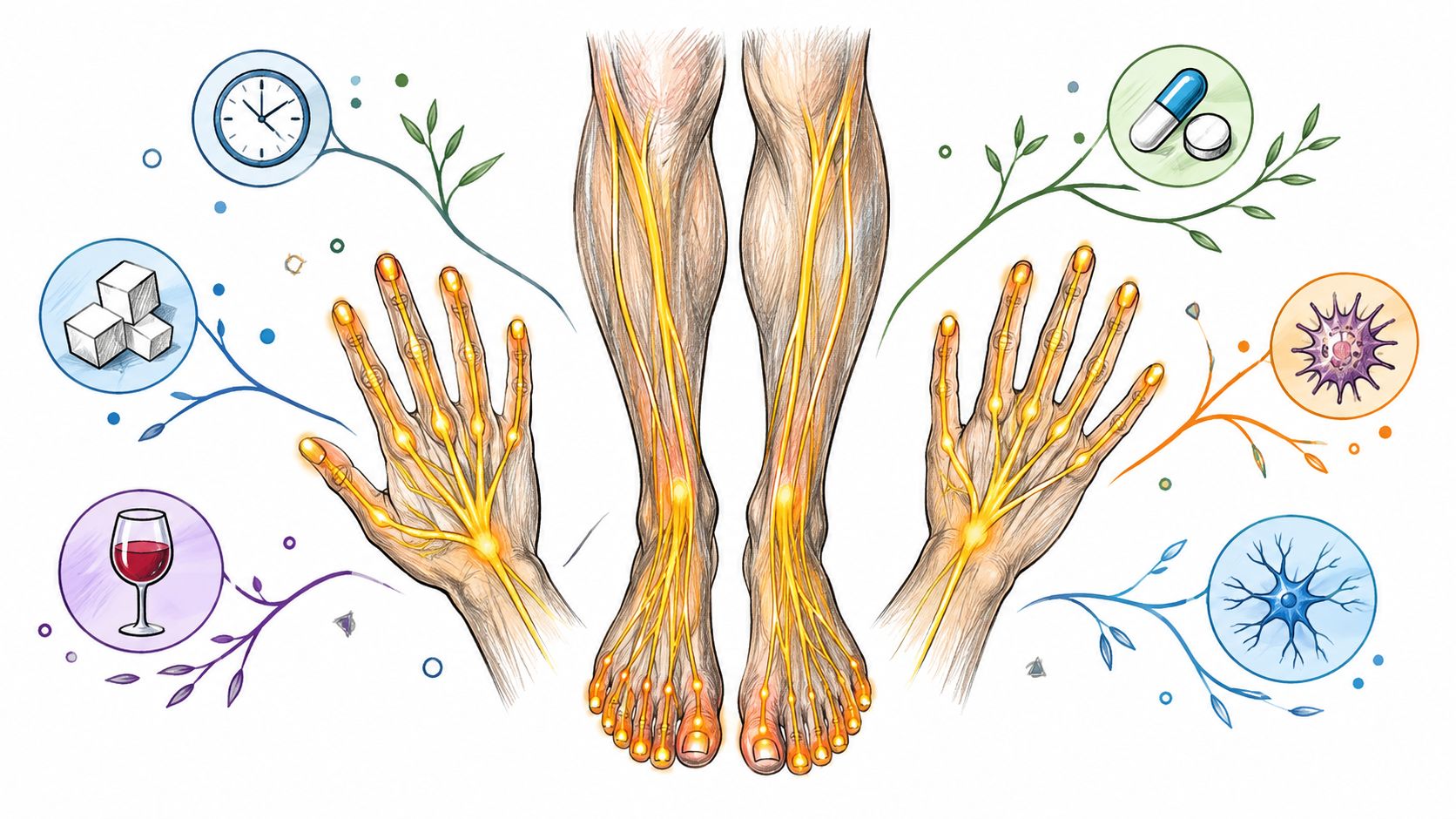
The diagnosis behind the word “neuropathy” should determine the conversation. Diabetic peripheral neuropathy has the clearest human research signal, partly because diabetes can create microvascular injury, inflammation, and Schwann-cell stress, all of which fit the proposed paracrine mechanisms.
The overall burden is substantial. A large review estimates general-population peripheral neuropathy prevalence at about 1% to 3%, rising to roughly 7% to 8% in older adults, while another neurology review cites about 2.4% overall and more than 8% among people aged 55 and older. In diabetes, estimates range from around 5% to more than 50%, depending on the cohort and diagnostic method, and one review states that diabetic peripheral neuropathy can affect up to 50% of patients over the course of diabetes. The review of neuropathy burden and stem-cell trial priorities explains why diabetes-related neuropathy attracts clinical attention.
At Dream Body Clinic we have seen the best results for neuropathy with the following treatments:
- Intrathecal for spinal cord and brain nerve regeneration
- Multiple Sclerosis for Spinal Cord and brain repair
- Trigeminal Neuralgia
- Type 2 Diabetes Neuropathy
- Sciatica
- Foot Neuropathy
- Peripheral Neuropathy
Comparing causes and candidates
- Diabetic neuropathy: The most defensible indication for discussion, particularly when metabolic management continues alongside any regenerative approach.
- Chemotherapy-induced neuropathy: A distinct toxic injury pattern with thinner stem-cell evidence. A clinic shouldn’t transfer diabetic results to this group without condition-specific support.
- Autoimmune neuropathy: Immune modulation may sound relevant, but the underlying disease, medications, and level of active inflammation require specialist review.
- Compressive neuropathy: A trapped nerve may need decompression or correction of the mechanical cause. Signals from MSCs can’t be assumed to remove physical pressure.
- Idiopathic neuropathy: When the cause remains unknown, mechanism-based matching is difficult, so broad claims are especially weak.
- Vitamin-related neuropathy: Correcting a deficiency may be more fundamental than pursuing a cell procedure. Patients can review symptom patterns and diagnostic context in this guide to signs of vitamin B12 deficiency, then discuss testing with a qualified clinician.
Earlier disease may be biologically more approachable because some nerve structures remain damaged but viable. Advanced axonal degeneration presents a harder problem, since signaling support can’t be expected to recreate tissue that has been completely lost.
A 2025 preclinical study found that human umbilical cord MSCs improved diabetic neuropathic pain through TRPV1-[Ca2+]i-AMPK signaling and mitochondrial restoration in Schwann cells. The study of this mechanism in diabetic neuropathic pain is useful for understanding the direction of research.
For a condition-specific discussion of diabetes-related nerve damage, patients can also review how regenerative medicine is being evaluated for diabetic neuropathy. The central question remains whether the proposed mechanism matches the patient’s actual cause and stage.
Setting Realistic Treatment Expectations
Start by separating three outcomes that marketing often blends together.
Symptom improvement means less burning, shooting pain, tingling, or discomfort. Physiologic improvement means a measurable change in tests such as nerve conduction studies. Structural regeneration means evidence that damaged nerve fibers have regrown or that lost tissue has been restored. A patient may experience the first without the second, the second without complete structural repair, or changes in symptoms that don’t prove either.
What a credible promise sounds like
A credible clinician should explain what the treatment is designed to influence and how the team will measure it. The explanation might include symptom questionnaires, neurological examination, functional testing, or electrophysiological studies. It should also state what the procedure cannot reasonably reverse.
Be cautious when a proposal includes:
- Guaranteed reversal: Established nerve loss has biological limits, so a guaranteed cure is not consistent with the current evidence.
- One protocol for every diagnosis: Diabetic, chemotherapy-induced, compressive, autoimmune, and idiopathic neuropathies don’t share identical causes.
- Unqualified nerve-regeneration language: Ask whether “regeneration” means less pain, better conduction, increased nerve-fiber density, or a documented structural change.
The available evidence supports cautious optimism, not certainty. A review of peripheral nerve regeneration notes that clinical studies remain limited, with only a few showing partial recovery and minimal adverse effects. Another evidence summary found that only seven controlled human trials in diabetic peripheral neuropathy were analyzable after screening more than 5,000 studies, with improvements in nerve conduction but no strong long-term safety or durability data. This review of the clinical role of stem cells in peripheral nerve regeneration highlights the gap between early signals and dependable long-term answers.
Timing also deserves honesty. The biological effects of signaling, symptom changes, and measurable nerve-function changes may not occur on the same schedule, and the available evidence doesn’t justify a universal timeline or guarantee that multiple sessions will be necessary. Ask what follow-up measurements will be used, what would count as no response, and when the team would recommend stopping rather than repeating treatment.
Making an Informed Treatment Decision
A sound decision begins with diagnosis, disease stage, remaining nerve function, and control of the underlying cause.
Ask about cell source, route, safety monitoring, outcome measures, evidence for your specific neuropathy, total cost, travel logistics, and remote follow-up. Mechanism-based matching is more important than a one-size-fits-all claim, and a transparent clinic should explain both the potential benefit and the limits of its protocol.
Dream Body Clinic lists all info and prices on treatment pages and shows all licenses and certification here – Our Lab
Dream Body Clinic offers MSC-based regenerative medicine assessments for peripheral neuropathy, with treatment planning that may consider IV, intrathecal, or local approaches when clinically indicated. Visit Dream Body Clinic to request a case review and discuss whether your neuropathy type, stage, and goals fit a transparent, mechanism-based evaluation.
Call (888) 704-3977 for a free consultation