
Stem Cell Hair Treatment in Mexico | 30M MSC + PRP Scalp Injections
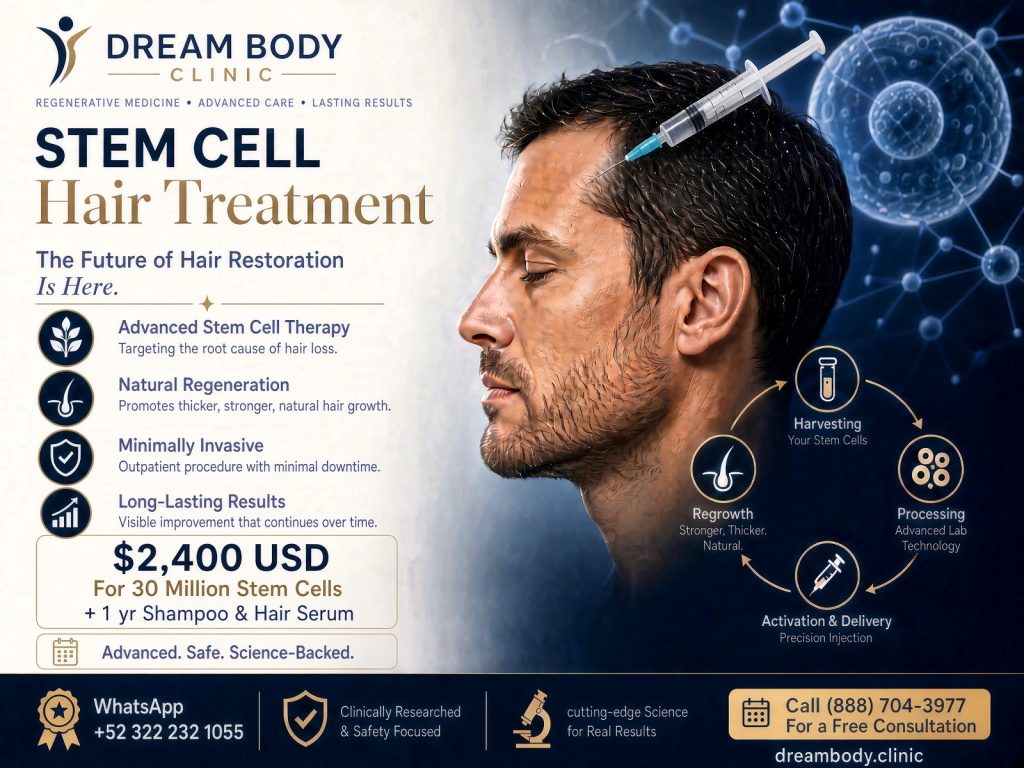
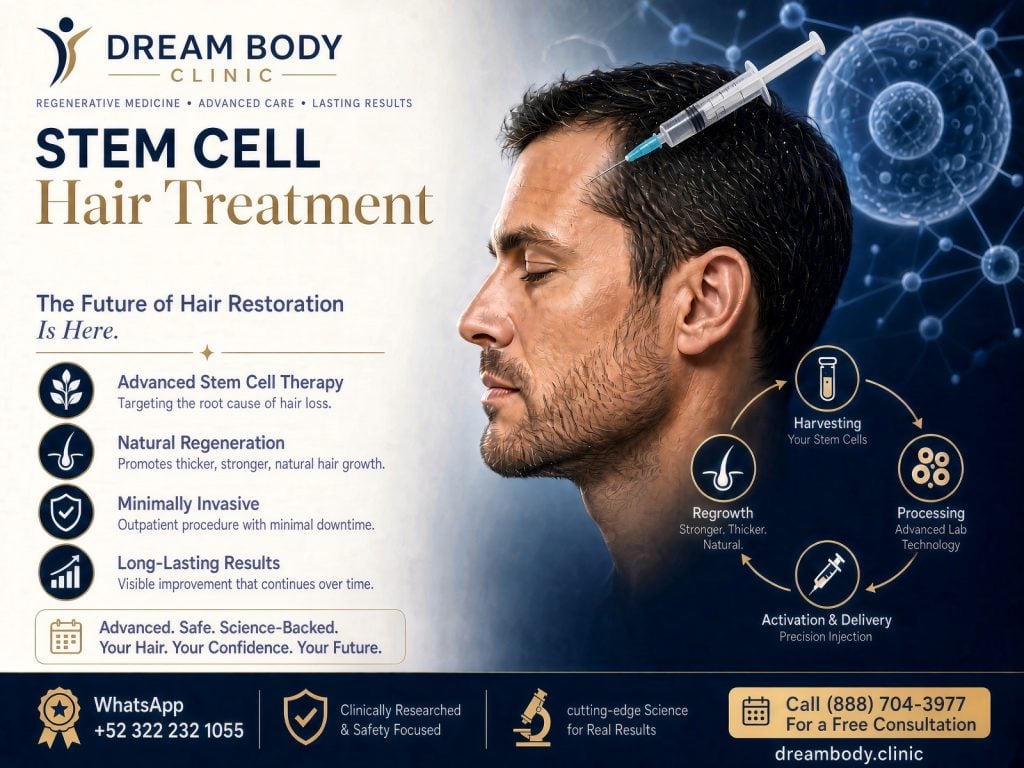
Dream Body Clinic’s Stem Cell Hair Treatment uses mesenchymal stem cells (MSCs) combined with PRP to support hair follicle health in early thinning and androgenetic alopecia.
The protocol delivers 30 million MSCs mixed with PRP via subcutaneous injections to the scalp. These cells help reduce local inflammation, promote a more favorable environment for follicle activity, and support blood flow and growth-factor signaling. The package also includes a one-year supply of DBC Shampoo and Scalp Serum made with stem cell culture medium, growth factors, and exosomes. This treatment is best suited for people with early hair loss or thinning; it cannot reopen fully closed follicles (shiny scalp areas).
Patients typically stay in the Puerto Vallarta area (Bucerias, Nayarit, Mexico) for a minimum of four days. The all-inclusive package is $2,400 USD and is administered by experienced medical professionals in a certified facility. Most people can resume normal activities the next day.
Results vary based on the stage of hair loss, genetics, and other individual factors.
Our MSCs are derived from Wharton Jelly & placenta from live, healthy births in our COFEPRIS certified and ISO rated lab on site.
Call (888) 704-3977 or email info@dreambodyclinic.net for a free consultation to discuss whether this treatment may be appropriate for you.
Stem Cell Hair Treatment 2026
The Stem Cell Hair Treatment: Unlock Your Hair’s Full Potential!

What’s included in your protocol
Typical Treatment Schedule


The Stem Cell Hair Treatment at Dream Body Clinic
Includes 1 Year Supply of DBC Shampoo and Scalp Serum
How do Mesenchymal Stem Cells Help Treat Androgenetic Alopecia?
Promoting hair follicle growth: MSCs have the ability to guide differentiation and regeneration of various cell types, including those found in hair follicles. When MSCs are applied or injected into the scalp, they can guide cells to differentiate into hair follicle cells, promoting the growth of new hair.
Inducing paracrine signaling: MSCs release a range of bioactive molecules that can stimulate hair follicle growth. These molecules include growth factors, cytokines, and exosomes, which promote hair cell survival, proliferation, and differentiation.
Reducing inflammation: AGA is associated with chronic inflammation of the scalp and hair follicles. MSCs have anti-inflammatory properties and can reduce inflammation in the affected area. By doing so, they create a favorable environment for hair follicle regeneration and growth.
Enhancing blood flow: MSCs can stimulate angiogenesis, the formation of new blood vessels, in the scalp. This improved blood flow helps deliver essential nutrients, oxygen, and growth factors to the hair follicles, promoting their health and stimulating new hair growth.
The Stem Cell Hair Treatment Utilizes Many Growth Factors in the Hair Restoration Process
Vascular Endothelial Growth Factor (VEGF): VEGF promotes angiogenesis, the formation of new blood vessels. By stimulating the growth of blood vessels in the scalp, VEGF enhances blood flow to the hair follicles, providing them with the necessary nutrients and oxygen for hair regrowth.
Insulin-like Growth Factors (IGFs): IGFs play a crucial role in regulating cell growth, proliferation, and differentiation. They are involved in promoting the survival and proliferation of hair follicle cells, which are essential for hair regrowth.
Fibroblast Growth Factors (FGFs): FGFs are involved in cell proliferation, tissue repair, and wound healing. In the context of hair regeneration, FGFs stimulate the proliferation of hair follicle cells and promote the regeneration of damaged or inactive hair follicles.
Platelet-Derived Growth Factors (PDGFs): PDGFs are involved in cell growth, proliferation, and wound healing. They can stimulate the activity of hair follicle cells and promote the formation of new hair follicles, thereby aiding in hair regrowth.
Transforming Growth Factor-beta (TGF-β): TGF-β plays a role in regulating the hair growth cycle and maintaining the balance between hair growth and rest phases. It modulates the proliferation and differentiation of hair follicle cells, helping to stimulate hair regrowth.
Epidermal Growth Factor (EGF): EGF is involved in cell growth, proliferation, and wound healing. It stimulates the growth and division of hair follicle cells, contributing to hair regrowth.
How do MSCs Work for Autoimmune Diseases Causing Hair Loss?
How to Book a Stem Cell Hair Treatment at Dream Body Clinic
Side Effects or Risks
- The Patients face will be red for 2 to 3 days post treatment
- As with any treatment involving injections there is a small chance of infection. We use sterile techniques to prevent infection and have never had an infection.
- We do not treat patients that have had cancer within the past 5 years. There is still no conclusive evidence linking stem cells to make cancer worse, but we prefer to stay on the side of safety until more research has been done on cancer effects from stem cells. So far research points towards stem cells having a positive effect on many cancers, but we are not focused on cancer treatments.
The only side effects that have been documented are the following:
Our lab has over 8 years specializing in Mesenchymal Stem Cell research. See Stem Cell Certification by Clicking Here.
As with any medical treatment, there is no guarantee of success.
Stem Cell Hair Treatment Studies
Selected peer-reviewed publications supporting this treatment.
Call (888) 704-3977
For a Free Consultation
Or email us at info@dreambodyclinic.net
Reviewed by the treating physician
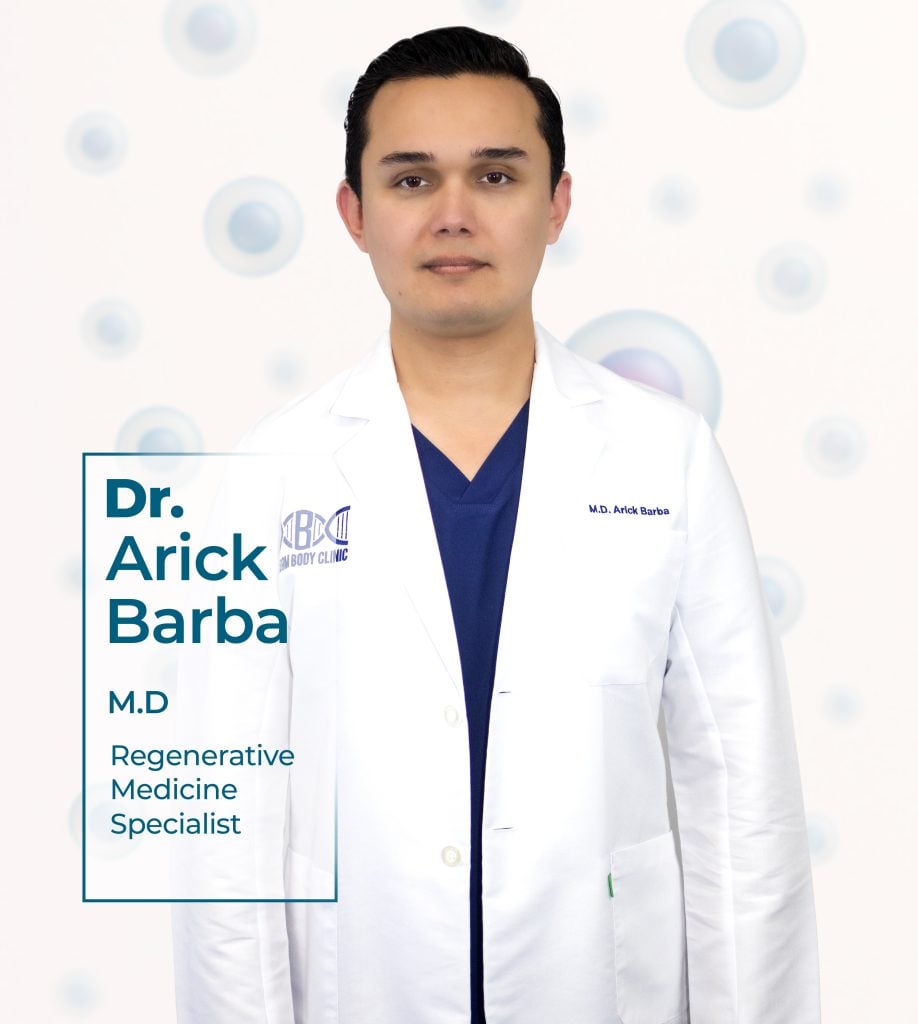
Dr. Arick Francisco Barba Lopez
Head Physician
Dream Body Clinic, Bucerias, Mexico
- Graduate, Universidad Autónoma de Guadalajara
- Graduate certificate in regenerative medicine
- About 10 years administering mesenchymal stem cell therapies
- Honoris Causa, UNCEMA, 2021
- Reviews this page for protocol, dose, and candidacy accuracy
Content last reviewed September 26, 2026 · Next scheduled review March 2027
This page describes a clinic protocol, not an FDA-approved U.S. indication.