You know the moment. You swing your feet out of bed, stand up, and the first step feels like stepping on a nail under your heel. It eases after a few minutes, then comes back after a long day on your feet. You’ve bought better shoes, rolled a frozen water bottle under your arch, stretched your calves, worn a night splint, maybe had a cortisone shot or two. And a year or more later, it’s still there.
If that’s where you are, you’ve probably come across stem cell injections. This guide explains what’s going on in your heel, what the published research on cell-based injections for plantar fasciitis actually shows, how it compares with the other options, exactly what our protocol involves and costs, and who may be a reasonable candidate. We’ll say it up front: the evidence is early and limited, and nobody can promise you a result.
What Is Plantar Fasciitis, Really?
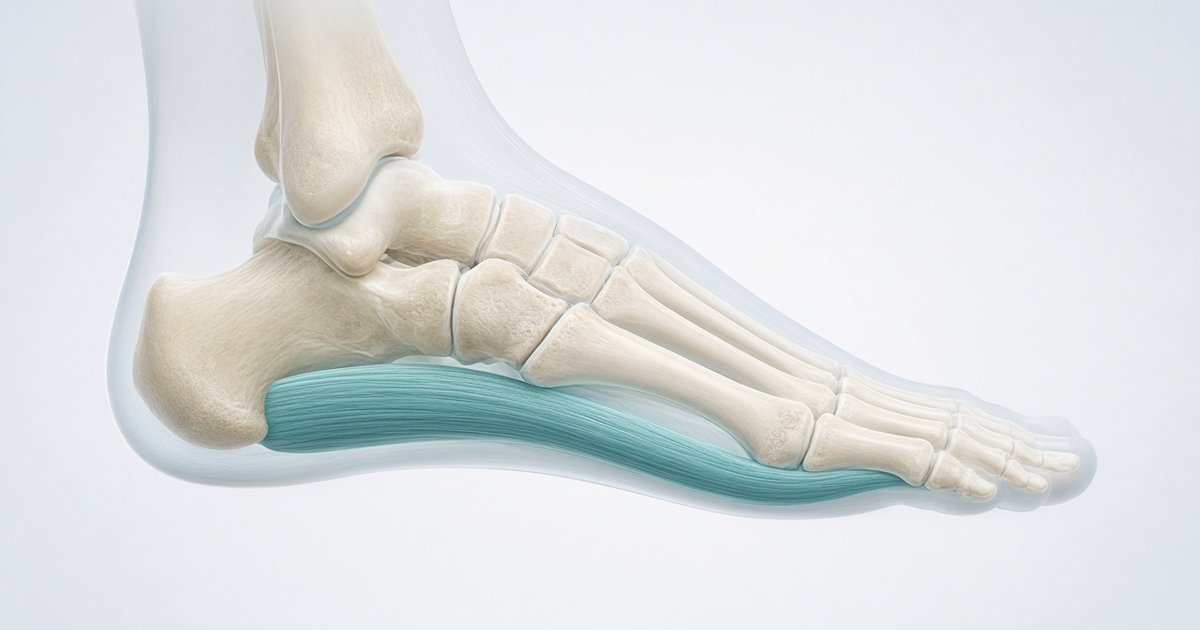
The plantar fascia is a thick band of tissue that runs from your heel bone to the base of your toes and helps support your arch. Plantar fasciitis is pain where that band attaches to the heel, usually worst with the first steps in the morning or after sitting.
The name suggests inflammation, but in long-standing cases the tissue often shows wear-type (degenerative) changes as well, which is why some doctors prefer the term “plantar fasciopathy.” Common contributors include tight calves and limited ankle movement, higher body weight, standing for long periods at work, and sudden jumps in walking or running.
Here’s the good news that rarely makes it into clinic marketing: most people get better without surgery or injections. A review in American Family Physician (2019) reports that about 80% of people improve within 12 months with nonsurgical care such as stretching, strengthening, footwear changes and activity adjustments. The 2023 physical therapy clinical practice guideline from the Journal of Orthopaedic & Sports Physical Therapy (JOSPT) recommends exactly that kind of structured care first.
So if your heel pain started a few months ago, a cell injection probably isn’t where you should start. This article is mainly for people whose pain has lasted a year or longer despite doing the basics well.
Why the Usual Next Steps Can Fall Short
When stretching and inserts don’t settle it, people are often offered one of these:
- Cortisone (steroid) injections. They can ease pain quickly, but the relief is often short-lived. Steroid injections into the plantar fascia have been linked to rupture of the fascia and thinning of the heel’s fat pad, and the risk appears higher with repeated injections. Reported rupture rates after injection range from about 2% to 7% in retrospective studies.
- Platelet-rich plasma (PRP). PRP uses a concentrate of your own blood. A 2020 meta-analysis of 15 studies in the American Journal of Sports Medicine found PRP gave better pain and function scores than steroid shots at 6 and 12 months, with no difference at 1 month. The authors cautioned that many of the studies had a high risk of bias.
- Shockwave therapy (ESWT). Widely used for stubborn heel pain, with mixed results across trials.
- Surgery. A partial release of the fascia is an option when everything else fails, but it changes how the arch is supported and comes with its own recovery and risks.
None of these is a sure thing, which is why people keep looking.
How Stem Cells Are Thought to Work
Mesenchymal stem cells (MSCs) are best understood as signaling cells. Most of what they appear to do happens through paracrine signaling: they release proteins and tiny particles that influence the cells already in your tissue, especially immune cells involved in inflammation and the cells that maintain connective tissue. They can turn into cartilage or bone cells in a lab dish, but there’s little evidence that injected cells become new plantar fascia.
In a chronically irritated fascia, the idea is that these signals may calm inflammation and support the body’s own repair processes. That’s a biological rationale from lab and animal research. It isn’t proof that the injection will help your heel.
What Does the Research Show?
The honest summary is short: there are no published randomized controlled trials of MSC injections for plantar fasciitis. Here’s what does exist.
- A 19-patient case series of bone marrow concentrate (de Cesar Netto et al., International Orthopaedics, 2026). Surgeons reviewed the charts of 19 people with plantar fasciitis that had lasted about 2.5 years on average despite conservative care. Each received one injection of concentrated bone marrow from their own hip bone into the most tender part of the fascia. Average pain fell from 7.5 out of 10 before treatment to 2.3 at six weeks and 1.1 at 48 weeks, and no complications were seen at the injection or harvest sites. That’s an encouraging signal, but there was no comparison group, the study looked back at records rather than following a planned trial, and bone marrow concentrate is a different product from ours: it’s your own cells, unexpanded, and contains only a small fraction of actual stem cells.
- A small fat-grafting pilot study (Gusenoff et al.). Fourteen people with a thickened fascia who had failed standard care received small injections of their own fat. Pain and function scores on one questionnaire improved, but scores on another measure didn’t change. Fat grafts aren’t purified stem cells either.
- Reviews of biologic injections. Reviews published in 2023 and 2025 describe MSC-based treatments for the plantar fascia as promising in principle but note that clinical evidence is scarce and mostly low quality. A head-to-head trial comparing bone marrow aspirate with a platelet product is still recruiting.
We’re not aware of any published study of donor MSCs from umbilical cord tissue (Wharton’s jelly) or placenta, the cells we use, for plantar fasciitis. Our protocol is based on our physicians’ experience with these cells in other joints and soft tissues, not on a plantar fasciitis trial.
One more thing to keep in mind when you read any results, including ours: because most heel pain improves with time, any study without a comparison group will tend to look good. That’s why controlled trials matter.
What Stem Cell Therapy Can and Can't Do
- It is not shown to rebuild or regrow the plantar fascia, and it isn’t a cure.
- It is not proven to work better than PRP, shockwave or a well-run rehab program, because those comparisons haven’t been made in trials.
- It may reduce pain and improve function in some people with long-standing symptoms. Some people notice little or no change.
- It doesn’t replace the basics. Calf flexibility, footwear, body weight and how much load your foot takes all still matter after an injection.
Our Plantar Fasciitis Protocol
Here’s what our plantar fasciitis treatment includes:
| Injection | 50 million culture-expanded MSCs into the affected area of the plantar fascia |
| Also included | An MRI of the foot on our on-site open MRI and a full blood panel |
| Cells | Donor MSCs from Wharton’s jelly (umbilical cord tissue) and placenta from healthy, live births |
| Price | $3,500 USD per foot |
| Minimum stay | 5 days in Bucerías, near Puerto Vallarta |
If our physicians review your MRI and decide you aren’t a good candidate, you pay only for the MRI ($500) and the blood panel ($300), and treatment doesn’t go ahead. If you already have an MRI from the past year, you can email us the written radiology report so a physician can give you an early opinion, but a new MRI is still part of the protocol.
Our cells are grown in our own lab in Bucerías, which holds three COFEPRIS licenses (Mexico’s federal health regulator) covering stem cell production, cryobank storage and regenerative medicine practice. Cells are expanded in a GMP-grade, xeno-free medium in a cleanroom, tested by COFEPRIS-authorized third-party labs for identity (flow cytometry), mycoplasma and endotoxins, and given within 24 hours of leaving culture. You can see the licenses on our certified stem cells page, and our article on how our cells are made and tested explains more.
COFEPRIS licenses our facility and lab. That isn’t the same as approving stem cell therapy for plantar fasciitis, and these treatments are not FDA-approved in the United States.
Your 5-Day Trip
| Day | What happens |
|---|---|
| Day 1 | Arrive in Puerto Vallarta and rest |
| Day 2 | MRI and bloodwork |
| Day 3 | Physician reviews your MRI, then payment |
| Day 4 | Treatment |
| Day 5 | Fly home |
Exact days can shift with scheduling, and if you stay longer they may not be consecutive. Both feet can be treated on the same trip (priced per foot). Our open MRI isn’t fully enclosed, but space is limited, so we’ll ask for your height, weight and waist size ahead of time. Our travel guide and hotel options can help you plan.
Risks and Side Effects
We’d rather you hear about risks from us before you book:
- Soreness or tightness in the heel the night of the injection or the next day is the most common effect we see. Plantar injections can be uncomfortable in their own right.
- Infection is a small risk with any injection. We clean the skin with antiseptic before treatment, and you should call us or a local doctor if you notice spreading redness, warmth, swelling or fever.
- No response. Some patients notice no change. We can’t predict who will respond.
- Unknown long-term effects. Long-term safety data for donor MSCs injected into the foot are limited. The U.S. FDA has warned consumers about unapproved stem cell products and reported serious harms from some of them elsewhere. That’s part of why we publish our protocol, licenses and testing, and why a physician reviews every case before booking.
We’ll also give you guidance about pain relievers, anti-inflammatory drugs and recent steroid injections around the time of treatment. Please don’t stop or change any prescribed medication without talking to your own doctor.
Recovery and What to Expect
Our standard advice after a foot injection is two weeks off exercise and sports, then a four-week rehabilitation program we give you, followed by a gradual, light return to your usual activity. Normal walking is fine unless your physician tells you otherwise.
Changes, if they come, tend to be gradual. Many patients tell us they notice the most difference somewhere between 3 and 6 months, but results vary and some people notice little or no change. We follow up remotely at 3, 6 and 12 months. Keep up the calf stretching, strengthening and footwear changes that your physical therapist recommends, because the injection can’t undo the load that contributed to the problem in the first place. Our guide to recovery after a stem cell injection goes into more detail.
Who May Be a Candidate?
A physician reviews every case before you book. In general, people who may be reasonable candidates:
- Have heel pain diagnosed as plantar fasciitis that has lasted roughly a year or more
- Have already given a structured program of stretching, strengthening, footwear changes and activity adjustments a real try
- Are considering surgery or repeated steroid shots and want to discuss other options first
- Understand the treatment is investigational and may not help
You may not be a good candidate if:
- Your heel pain may come from something else, such as a pinched nerve, a stress fracture of the heel bone, a thinning heel fat pad or a problem in your lower back. That’s one reason the MRI matters.
- The MRI shows a complete tear of the fascia or another finding our physicians consider a reason not to treat
- You’ve had cancer in the past five years (we don’t treat these patients)
- You have an active infection or a skin problem at the injection site
If we don’t think treatment is likely to be worthwhile for you, we’ll tell you.
Questions to Ask Any Clinic
Whether you choose us or someone else, ask:
- What confirms that my plantar fascia is the source of the pain?
- What cell product and dose will I get, and what study supports that product for plantar fasciitis?
- Is the injection guided by ultrasound or another imaging method?
- Why this rather than PRP, shockwave or more rehab in my case?
- What does the price include, and what happens if the MRI shows I’m not a candidate?
Our guides on how to choose a stem cell clinic and what stem cell therapy costs in Mexico go deeper.
Frequently Asked Questions
Can stem cells cure plantar fasciitis? No. Stem cell therapy for plantar fasciitis is investigational. Some patients report less pain and better function over the following months, but there are no controlled trials, and it isn’t a cure.
Is it better than PRP? Nobody knows yet. PRP has more published research for plantar fasciitis, including comparisons with steroid shots. Stem cell injections haven’t been compared directly with PRP in trials.
Will it help if a cortisone shot didn’t? It might or might not. People in the published bone marrow study had already tried other treatments, but that study was small and had no comparison group. Tell us about any recent steroid injections, because timing matters.
How many injections will I need? Our protocol is one injection per foot. If you notice no change by six months, tell us honestly so we can talk through what that means.
Can both feet be treated on the same trip? Yes. Each foot is priced separately at $3,500 and includes its own MRI.
Will insurance cover it? Insurance generally doesn’t cover stem cell therapy for plantar fasciitis, and many U.S. insurers classify it as experimental.
Thinking About Your Options?
If your heel pain has outlasted the stretching, the inserts and the shots, a free consultation is a good place to start. It’s a conversation, not a commitment. A physician will look at your history and any imaging you have, explain what the evidence does and doesn’t show for your situation, and tell you honestly whether we think treatment is a reasonable option.
Schedule your free consultation, call (888) 704-3977, WhatsApp +52 322 232 1055, or email info@dreambodyclinic.net.
Disclaimer: This article is for educational purposes and is not medical advice. Mesenchymal stem cell therapy for plantar fasciitis is investigational and is not approved by the U.S. FDA. Published evidence is limited, results vary, and some patients see little or no benefit. Treatment is provided in Mexico at a COFEPRIS-licensed facility. Do not stop or change any medication without your own doctor. Please consult your physician before making treatment decisions.