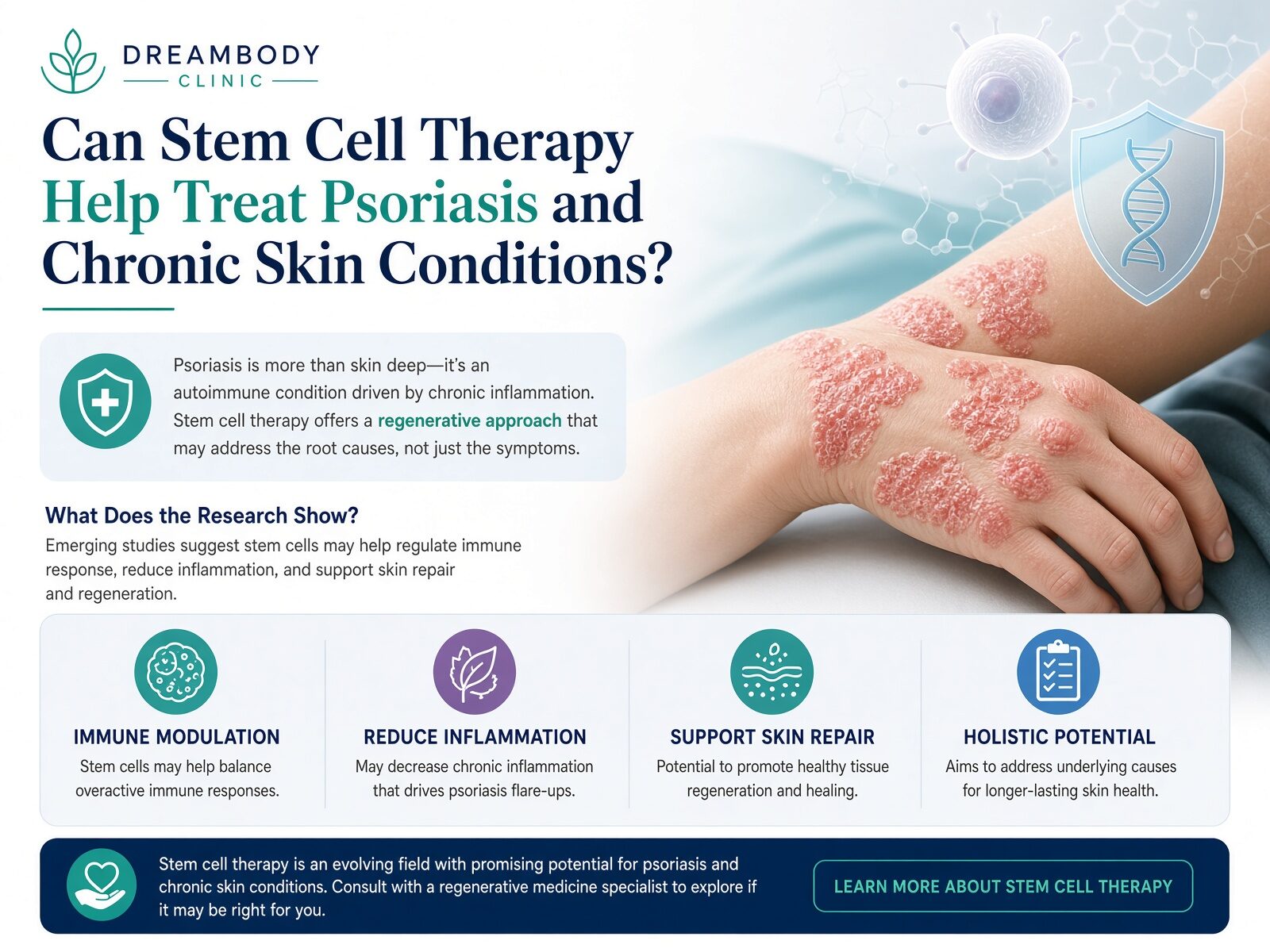
Can Stem Cell Therapy Help Treat Psoriasis and Chronic Skin Conditions?
Psoriasis is one of the most persistent and frustrating skin conditions a person can live with. It is not just a surface issue. It is a chronic autoimmune disease that affects how your immune system behaves, and for millions of people, standard treatments only go so far. Stem cell therapy for psoriasis is now drawing serious attention as a regenerative approach that works with the immune system rather than just suppressing symptoms. At Dream Body Clinic in Puerto Vallarta, Mexico, this type of care is at the center of what we do.
What Is Psoriasis and Why Is It So Difficult to Treat?
Psoriasis affects approximately 125 million people worldwide, according to the World Psoriasis Day Consortium. It causes the immune system to mistakenly attack healthy skin cells, triggering an overproduction cycle that results in thick, scaly, inflamed patches of skin. For most patients, flare-ups come and go throughout their lifetime, and the condition rarely resolves on its own.
What makes psoriasis so hard to manage is its root cause. It is not a skin problem that started on the skin. It begins with a misfiring immune response, and that is where conventional treatments often fall short. Topical creams and corticosteroids can calm a flare temporarily, but they do not address the underlying immune dysfunction. Many patients cycle through multiple treatments before finding anything that provides meaningful relief.
Biologic drugs have offered more targeted options in recent years, but they come with significant costs, potential side effects, and the need for ongoing use. The immune system, when disrupted for years, does not simply reset on its own. This is exactly the gap that regenerative medicine is beginning to fill, by targeting the immune imbalance directly rather than managing what shows up on the skin.
How Does Stem Cell Therapy Work for Skin Conditions?
Stem cell therapy works differently from most standard treatments because it does not just block a symptom. Mesenchymal stem cells (MSCs) are known for their ability to regulate immune responses and reduce chronic inflammation throughout the body. When introduced into the body, they communicate with immune cells and help calm the overactive signals that trigger conditions like psoriasis.
MSCs also support tissue regeneration. They can encourage the repair of damaged skin cells and reduce the inflammatory environment that feeds ongoing skin cell overproduction. This makes them uniquely suited for autoimmune skin conditions where inflammation and immune dysfunction are both part of the problem. The goal is not to suppress the immune system entirely but to help it function more accurately.
The anti-inflammatory properties of MSCs are particularly well-documented. Studies have shown that MSCs can release cytokines and growth factors that shift the immune response from a pro-inflammatory to a more balanced state. For people with psoriasis, this kind of reset has real potential to reduce the frequency and severity of flare-ups over time.
At Dream Body Clinic, our approach to treating autoimmune skin conditions is built around this regenerative mechanism. If you want to learn more about our specific protocols, visit our psoriasis stem cell treatment page.
What Types of Stem Cells Are Used in Skin Regeneration?
The most widely used stem cells in skin regeneration are MSCs derived from umbilical cord tissue (Wharton’s Jelly), Placenta and adipose (fat) tissue. Both sources provide a rich supply of therapeutic cells, but they have slightly different profiles.
Umbilical cord-derived MSCs are considered particularly potent because they come from young, healthy tissue that has not been exposed to aging or environmental stress. They tend to have strong immunomodulatory properties, making them a preferred choice for autoimmune conditions. Adipose-derived MSCs, on the other hand, are harvested from the patient’s own body, which tend not to work as well because the patients MSCs are already compromised by the immune system. Both types have shown the ability to reduce inflammation, promote tissue repair, and support the body’s natural healing processes in clinical settings. Only MSCs from Wharton Jelly and Placenta have the best immunomodulatory effects because of their young age and limited exposure to an immune system. This allows them to help you heal like when you were a kid.
Can Stem Cell Therapy Reduce Psoriasis Flare-Ups?
The short answer is that emerging research suggests it can, though results depend on individual factors like disease severity and treatment timing. Several clinical studies have explored how MSCs affect the immune pathways involved in psoriasis, particularly the T-cell activity and cytokine signaling that drive flare-ups. The findings have been encouraging, with patients in some studies reporting fewer and less severe flare-ups following regenerative treatment.
A 2023 review published in the journal Frontiers in Immunology highlighted MSC therapy as a promising direction for autoimmune skin conditions, noting its dual ability to suppress excessive immune activity while supporting skin tissue repair. This is meaningful because most current treatments target only one of those two problems.
That said, it is important to set realistic expectations. Stem cell therapy is not a guaranteed cure, and results can vary based on how long a patient has had psoriasis, their overall health, and how well their body responds to treatment. Some patients see noticeable improvement within weeks, while others may require follow-up sessions to maintain or build on their initial results. At Dream Body Clinic, every patient undergoes a thorough evaluation before treatment so that expectations are grounded and plans are personalized.
What Other Chronic Skin Conditions May Benefit from Regenerative Therapy?
Psoriasis is not the only chronic skin condition with roots in immune system dysfunction. Eczema, vitiligo, and scleroderma all share similar inflammatory and autoimmune origins, which means the same regenerative mechanisms that show promise for psoriasis may also apply to these conditions.
Eczema, or atopic dermatitis, involves a disrupted skin barrier and an overactive immune response that results in chronic itching and inflammation. Vitiligo is driven by the immune system attacking melanocytes, the cells responsible for skin pigment. Scleroderma involves abnormal immune activity that leads to hardening and tightening of the skin and connective tissue. In each case, the immune system is either attacking the body or driving a harmful inflammatory response, and MSC therapy is designed to address that imbalance at the source.
What sets Dream Body Clinic apart is our focus on treating the root cause rather than just managing what appears on the surface. Rather than prescribing a lifetime of creams or immunosuppressants, we look at what is driving the immune system to behave this way and use regenerative tools to address it. This approach tends to resonate with patients who have tried multiple conventional treatments without lasting success.
Is Stem Cell Therapy a Long-Term Solution for Eczema?
For eczema patients, one of the biggest frustrations is that topical treatments stop working over time, or they require increasing dosages to stay effective. Stem cell therapy offers a different pathway because it is not about masking inflammation. It is about helping the immune system regulate itself more effectively.
MSCs can target the specific inflammatory pathways involved in atopic dermatitis, particularly those driven by Th2 immune cells. By modulating these signals, stem cell therapy may reduce the frequency and intensity of eczema flare-ups over a longer period than most topical options. Early-stage research and patient case reports suggest that some individuals see sustained improvements in skin condition and reduced reliance on steroid creams following MSC treatment. More long-term studies are underway, but the initial evidence is promising for those looking beyond short-term symptom management.
What Does the Treatment Journey Look Like at Dream Body Clinic?
Every patient who comes to Dream Body Clinic starts with a free consultation. This is where our team reviews your medical history, current symptoms, and treatment goals to determine whether stem cell therapy is appropriate for your situation. We do not offer a one-size-fits-all program. Every plan is built around the individual.
Once a patient is accepted, the treatment itself is delivered in our clinic in Puerto Vallarta, Mexico, which is easily accessible for patients traveling from the United States and Canada. The procedure is non-surgical and typically takes place over one to two days. During treatment, MSCs are administered intravenously or through targeted delivery depending on the condition being treated. Our staff monitors patients throughout the process, and our safety protocols meet international medical standards.
After treatment, patients receive guidance on post-care practices and are followed up with by our clinical team to track progress. We believe that care does not end when the treatment session does. For many patients, lifestyle adjustments and follow-up consultations are a meaningful part of the long-term outcome. Puerto Vallarta also offers a calming, coastal environment that supports recovery, which many of our international patients find genuinely helpful during the healing process.
To get started or ask specific questions, call us at (888) 704-3977 or reach us on WhatsApp at +523222321055 for a free consultation.
How Does Combining Stem Cell Therapy with HGH Support Skin Health?
One of the distinctive features of Dream Body Clinic’s approach is combining stem cell therapy with Human Growth Hormone (HGH) to support deeper and more sustained results. HGH plays a natural role in cellular repair and regeneration throughout the body, and as people age, levels decline significantly. This reduction is one reason why the skin’s ability to heal and renew itself slows down over time.
When HGH is introduced alongside stem cell therapy, it creates a more supportive environment for the regenerative work those cells are doing. HGH has been shown to improve skin elasticity, accelerate the healing of damaged tissue, and support collagen production. For patients dealing with chronic skin conditions, this means the body may be better equipped to complete the repair process that MSCs initiate.
The combination also tends to improve overall skin quality, not just in areas affected by psoriasis or eczema but across the body. Patients often report smoother, healthier-looking skin and improved resilience to future environmental or inflammatory stress. This pairing is part of what makes Dream Body Clinic’s treatment model genuinely different from clinics that offer standalone stem cell injections without a broader regenerative strategy.
Why Choose Dream Body Clinic for Stem Cell Therapy for Skin Conditions?
Dream Body Clinic was built on a specific mission: to offer advanced regenerative medicine to people who have run out of options with conventional care. Our specialization in autoimmune and inflammatory conditions means that patients with psoriasis, eczema, vitiligo, and related conditions are not being seen as edge cases. They are exactly who we are here to help.
Our clinic is located in Puerto Vallarta, a city that offers both excellent medical infrastructure and a welcoming environment for international patients. We have worked extensively with patients from the United States and Canada, and we understand what it takes to make the process accessible, safe, and transparent from start to finish.
We are also deeply committed to patient education. The owners of Dream Body Clinic wrote The Ultimate Guide to Stem Cell Therapy, a comprehensive resource for anyone wanting to understand how this type of medicine works, what to expect, and how to evaluate whether it is right for their condition. We believe informed patients make better decisions and have better outcomes.
Safety is non-negotiable at our clinic. We follow strict clinical protocols, work with verified stem cell sources, and ensure every patient receives a personalized treatment plan rather than a generic procedure. If you are living with a chronic skin condition and want to explore what regenerative medicine can do, we encourage you to visit our psoriasis stem cell treatment page to learn more or reach out directly for a free consultation.
Frequently Asked Questions
Can stem cell therapy permanently treat psoriasis?
Stem cell therapy is not currently positioned as a permanent cure for psoriasis, but it may significantly reduce the frequency and severity of flare-ups by addressing the underlying immune dysfunction. Some patients experience long-lasting improvements, while others benefit from periodic follow-up sessions. Results depend on individual health factors and disease severity. We have patients from over 8 years ago that are still in full remission so results can last a very long time.
How many stem cell treatment sessions are needed for chronic skin conditions?
Most patients at Dream Body Clinic begin with a single treatment course, which typically spans one to two days. Depending on the severity of the condition and the patient’s response, additional sessions may be recommended over time. Your treatment plan will be tailored to your specific situation following an initial consultation.
Is stem cell therapy for psoriasis safe?
Yes, when performed by a qualified clinical team using verified stem cell sources. At Dream Body Clinic, we follow strict safety protocols and use high-quality MSCs derived from screened donor tissue. Side effects are generally mild, such as temporary fatigue or minor soreness at the injection site. All patients are monitored throughout their treatment.
What is the recovery process like after stem cell therapy for skin conditions?
Recovery is typically straightforward. Most patients resume light activities the same day or the day after treatment. You may experience mild fatigue in the first few days as the body responds to the therapy. The clinical team provides detailed post-care instructions and follows up with you to track your progress and skin response over the weeks following treatment.
How does stem cell therapy differ from biologics for treating psoriasis?
Biologics work by blocking specific immune proteins involved in inflammation. They are effective for many patients but require ongoing use and carry potential long-term risks. Stem cell therapy takes a different approach. Rather than blocking a protein, MSCs work to rebalance the immune system itself. The goal is not indefinite suppression but a more lasting recalibration of how the immune system responds.
Can international patients travel to Puerto Vallarta specifically for skin condition treatment?
Absolutely. Dream Body Clinic is set up to welcome international patients, especially from the United States and Canada. Puerto Vallarta is well-connected by direct flights from many North American cities. Our team supports patients through the planning process, from initial consultation to travel guidance, to make the experience as smooth as possible.
How long does it take to see results from stem cell therapy for psoriasis?
Some patients notice improvements in skin inflammation and texture within two to four weeks of treatment. Others may experience a more gradual response over two to three months as the immune system continues to recalibrate. The timeline varies based on the individual’s condition, overall health, and whether the treatment is combined with complementary therapies like HGH.
Ready to Explore Stem Cell Therapy for Your Skin Condition?
If you have been living with psoriasis or another chronic skin condition and are looking for an approach that goes beyond symptom management, stem cell therapy for psoriasis may be worth exploring seriously. Dream Body Clinic offers a personalized, evidence-informed path toward lasting skin health through regenerative medicine.
Visit our psoriasis stem cell treatment page to learn more about the treatment, or call us at (888) 704-3977 and WhatsApp +523222321055 to schedule your free consultation today.