
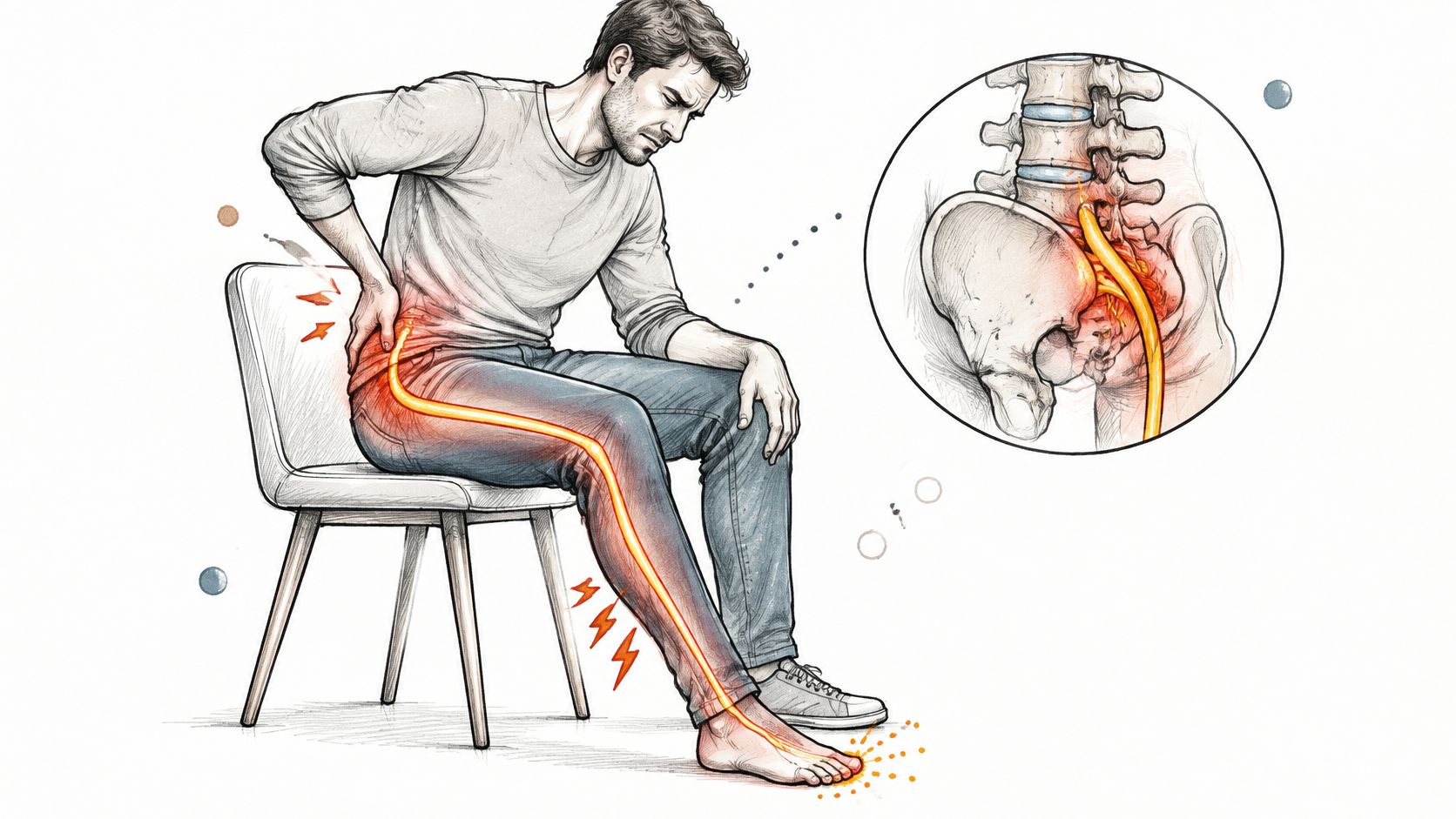
You stand up from your chair and feel a sharp line of pain through your buttock and calf. You wonder whether you pulled a muscle, especially because your lower back barely hurts. Then your toes start tingling, and the question changes: could this be a nerve problem?
The signs of sciatic nerve pain are easier to recognize when you consider where symptoms travel, what they feel like, and whether your leg's strength or sensation has changed. Those details also help you decide whether to arrange a routine appointment or seek emergency care.
Table of Contents
- Recognize the Classic Signs of Sciatic Nerve Pain
- Sciatica Compared With Neuropathy and Back Strain
- Red Flags That Need Emergency Care
- How Clinicians Confirm Which Nerve Root Is Affected
- Common Causes Behind Sciatic Pain
- Treatment Options From Conservative Care to Regenerative Therapy
- Book an MRI-Based Review Before Choosing Treatment
Recognize the Classic Signs of Sciatic Nerve Pain
Say your calf hurts after an ordinary day, without an obvious injury. A calf strain might seem like the explanation, but pain that connects with your buttock and comes with tingling in your foot deserves a closer look.
The core sciatic pattern is pain traveling from the lower back or buttock down one leg, often below the knee. The NHS sciatica guide describes sharp or burning pain, pins and needles, numbness, and weakness affecting the buttock and back of the leg, sometimes reaching the foot and toes.
Sciatic nerve pain signs and what they suggest
| Sign | Where You Feel It | What It Suggests |
|---|---|---|
| Pain from the buttock down the back of one leg | Buttock, back of thigh, calf | Nerve root irritation, the core sciatic pattern |
| Shooting, burning or electric pain | Leg, often below the knee | Possible nerve irritation rather than muscle strain alone |
| Pins and needles or numbness | Foot and toes | Sensory involvement along one nerve root |
| Leg weakness or a heavy feeling | Leg and foot | Possible motor involvement that needs assessment |
| Leg pain worse than back ache | Leg more than lower back | Radiating pattern, not nonspecific back soreness |
| Trouble sitting, standing or sleeping | Daily activities | Symptoms interfering with function |
Why the symptoms reach your foot
A nerve root is a bundle of nerve fibers leaving the spine. When a lower-back root becomes irritated or compressed, you can feel symptoms farther along the area it supplies, not just where the irritation begins.
Sensory fibers carry information about touch and other sensations. Irritation can produce tingling, burning, or reduced feeling. Motor fibers help control muscles, so involvement can also affect how confidently you lift or push through your foot.
Leg pain can be stronger than back pain, and some people have little or no back pain. That's why the absence of a sore lower back doesn't rule out sciatica.
Make a useful symptom record
Count how many table rows match your experience, but don't treat the total as a diagnostic score. Instead, note whether everything stays on the same side and sketch the route on a simple outline of a leg.
Record which activities interfere with comfort and whether your foot feels numb, weak, or painful. These differences help a clinician separate altered nerve function from movement limited by pain.
A combination of traveling leg pain and changed sensation or strength needs assessment rather than an assumption that you've strained a muscle. The pattern suggests nerve involvement, but it doesn't establish the precise cause.
Sciatica Compared With Neuropathy and Back Strain
One leg following a route from the back is different from both feet becoming numb. That distinction is useful, although it isn't enough to make a diagnosis.
Sciatica usually involves a spinal nerve root. Peripheral neuropathy affects nerves outside the brain and spinal cord and isn't limited to a single spinal root's territory. Back strain involves muscles or other soft tissues rather than the same nerve-root pattern.
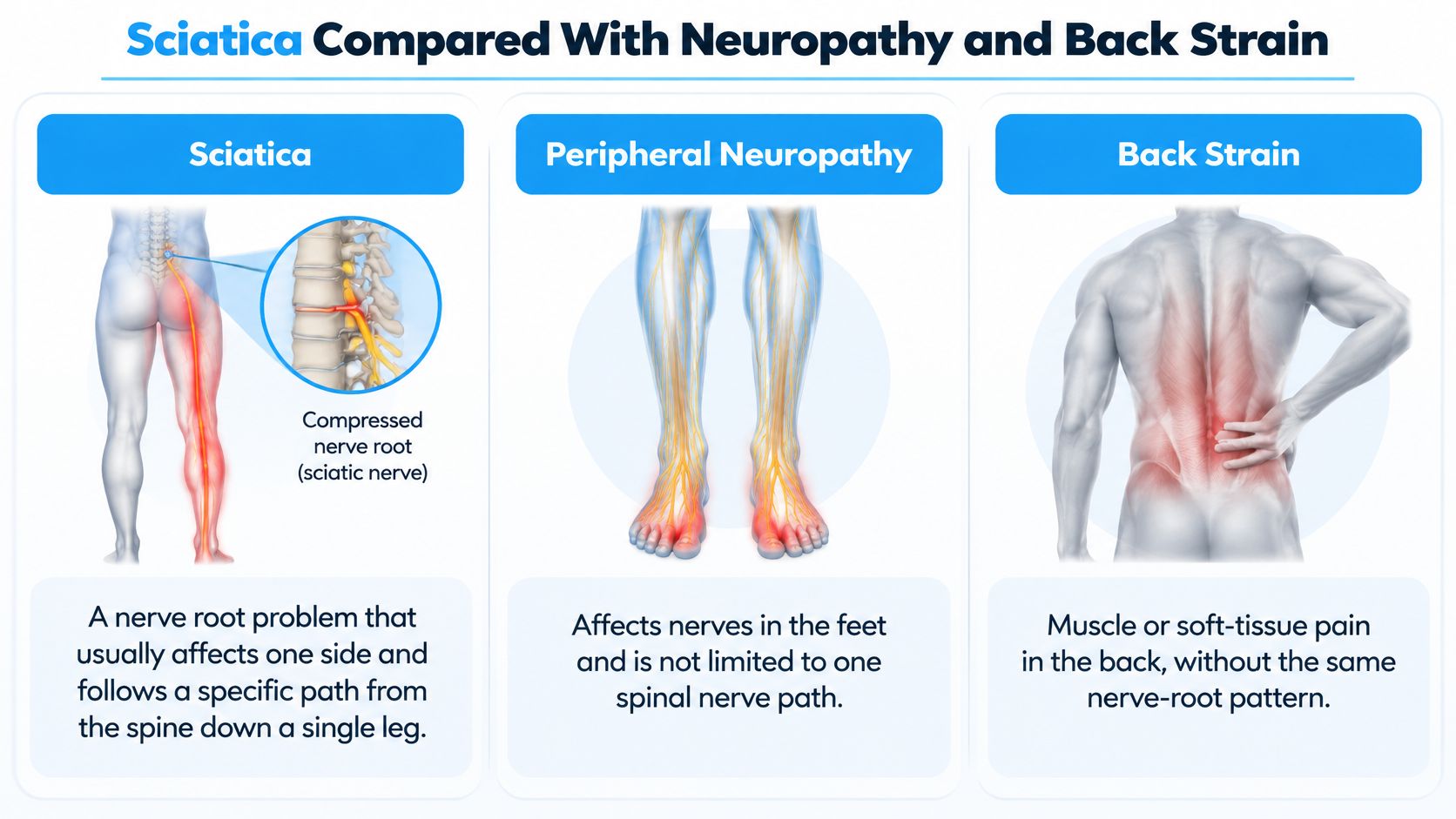
Sciatica, peripheral neuropathy and back strain compared
| Feature | Sciatica (Nerve Root) | Peripheral Neuropathy | Ordinary Back Strain |
|---|---|---|---|
| Where it starts | Lower back or buttock | Feet, often spreading upward | Lower back muscles |
| Pattern in the legs | Usually one leg, along one nerve root | Both feet, often symmetric in generalized neuropathy | Usually no neurological leg symptoms |
| Typical sensation | Shooting, burning, pins and needles | Numbness, tingling or burning in the feet | Aching or stiffness |
| Weakness | Possible on the same side | Possible in feet and ankles | True neurological weakness isn't typical |
| Usual trigger | Disc disease or changes narrowing space around a root | Diabetes, alcohol-related damage or other systemic causes | Overuse or strain |
Generalized peripheral neuropathy can begin in the toes and spread upward in a stocking-like distribution. Some forms also affect the hands, while others affect an individual nerve, so not every neuropathy is symmetric.
Read the pattern, not just the sensation
Burning doesn't automatically mean sciatica because peripheral neuropathy can burn too. Likewise, a heavy leg may reflect weakness, pain-limited movement, or another problem that requires examination.
The StatPearls clinical review of sciatica identifies radiating leg pain, symptoms reaching the foot or toes, altered sensation in the same nerve-root distribution, and increased leg pain during straight-leg raising as useful distinguishing features. Leg pain that outweighs back pain adds another clue.
For readers comparing these conditions, our peripheral neuropathy information addresses a different nerve problem from spinal-root sciatica. A treatment discussion should follow that distinction, not replace it.
Practical rule: A single leg following a nerve pathway suggests sciatica; symmetric foot numbness suggests generalized neuropathy; back-only aching suggests a muscular or joint source. These are starting points for assessment, not diagnoses.
Red Flags That Need Emergency Care
Most sciatica isn't an emergency. However, new loss of bladder, bowel, genital sensation, or substantial leg function must not be dismissed as a routine flare-up.
The NHS Inform sciatica guidance identifies warning signs requiring emergency assessment, including symptoms in both legs and changes in bladder, bowel, or saddle-area function. These can indicate cauda equina syndrome, in which pressure affects multiple nerve roots in the lower spine.
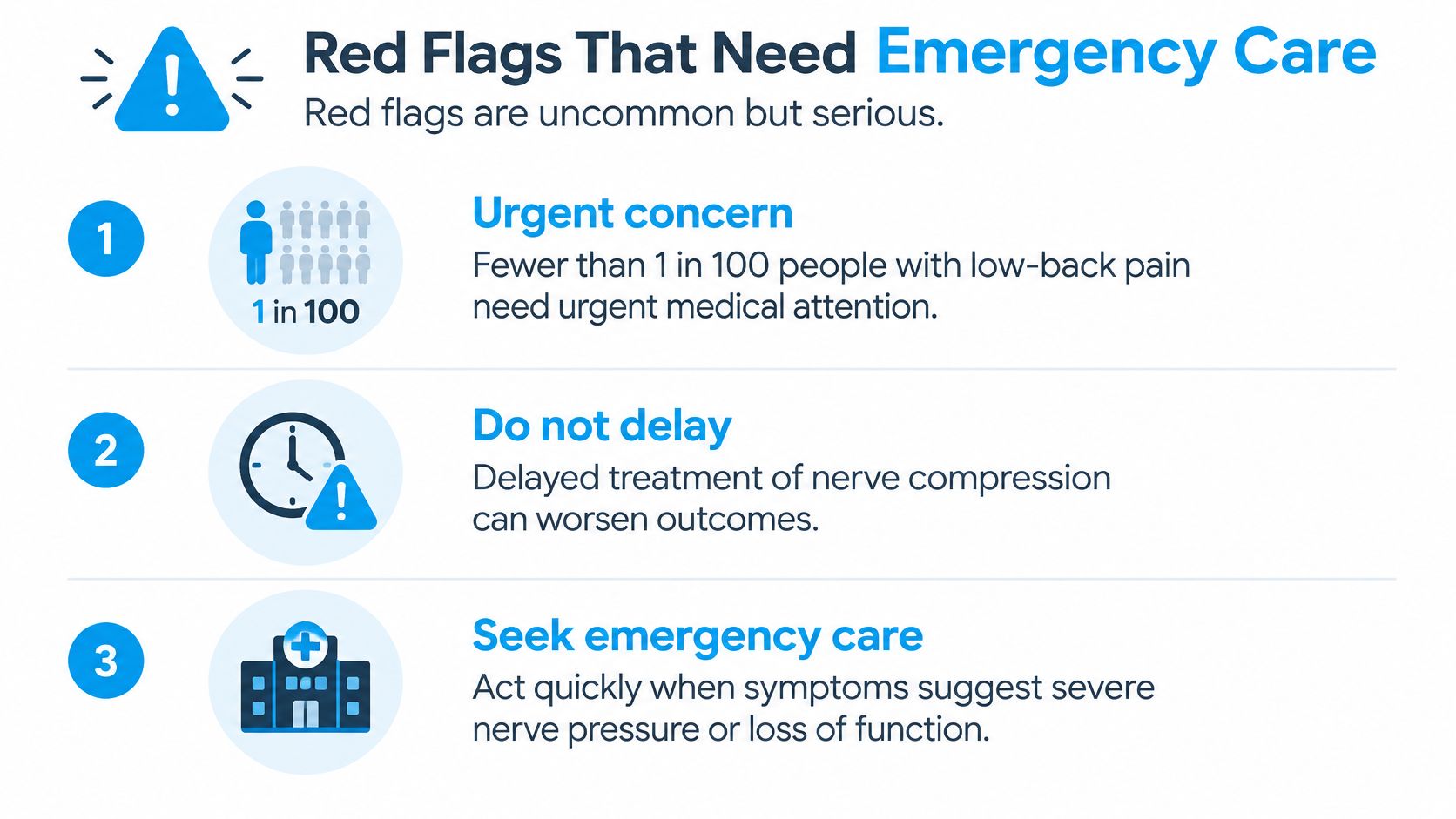
Check for emergency warning signs
Seek emergency care for these symptoms, particularly when they're new or worsening:
- Sciatica affecting both legs. Don't assume a new bilateral pattern is ordinary one-sided sciatica.
- Severe or worsening weakness or numbness in both legs. A change in function matters even if pain isn't extreme.
- Numbness around the genitals or anus. This saddle area includes the region that would touch a bicycle saddle.
- Difficulty starting urination or being unable to urinate. Trouble emptying your bladder can be a warning even without leakage.
- Loss of bladder or bowel control. Don't wait to see whether control returns.
These roots help supply the bladder, bowel, perineum, and legs. Compression can therefore affect several functions together, and delayed treatment can result in permanent impairment.
You don't need every symptom on the checklist before seeking help. A new bladder change with back or leg symptoms warrants emergency assessment, even if you can still walk.
Weakness also changes the urgency
A noticeable foot drop, such as difficulty lifting the front of your foot, needs prompt medical evaluation. So do tripping, falling, or difficulty walking because your legs feel weak, stiff, or uncoordinated.
The Cardiff and Vale cauda equina clinical guideline emphasizes urgent assessment for progressive motor deficits and symptoms suggesting compression of multiple nerve roots. Elective injections or routine pain treatment must not delay that assessment.
Stable one-sided pain without these warnings can usually be assessed through a routine clinical appointment. For emergency signs, call emergency services or go to an emergency department now, rather than waiting for a scheduled consultation or a treatment trip.
How Clinicians Confirm Which Nerve Root Is Affected
A clinician compares both legs, because pain location alone can't reliably identify the affected root. The examination checks whether the symptom pattern agrees with measurable changes in sensation, muscle strength, and reflexes.
Sensation testing looks for areas that feel different to touch. Strength testing separates actual loss of muscle power from reluctance to move because something hurts, while knee and ankle reflexes provide further clues.
What the examination looks for
Nerve root levels and the findings that point to them
| Nerve Root | Weakness to Check | Reflex Affected | Simple Test |
|---|---|---|---|
| L4 | Knee extension, quadriceps | Patellar (knee) reflex, reduced | Knee extension against resistance |
| L5 | Hip abduction and great-toe extension | No reliable routine reflex change | Walking on heels |
| S1 | Plantar flexion, pushing the foot downward | Achilles (ankle) reflex, reduced | Walking on toes |
These movements help a clinician build a pattern rather than identify a root from a single finding. Heel and toe walking are functional checks, not stand-alone diagnostic tests, and they shouldn't be attempted unsupported if you're unsteady.
For example, difficulty extending the great toe gives different information from pain when bending your knee. The clinician combines that finding with the sensory examination and other movements before drawing a conclusion.
What a straight-leg raise means
During a straight-leg raise, you lie on your back while the examiner lifts your leg with the knee straight. The clinical review in BMJ describes reproduction of radiating pain at approximately 30° to 70° of hip flexion as a characteristic finding supporting nerve-root irritation.
The important response is familiar traveling leg pain, particularly below the knee, rather than just a hamstring stretch. This test isn't definitive because its accuracy changes with the condition being assessed.
Ask for a documented neurological examination, including which side was tested and whether strength, sensation, or reflexes were abnormal.
Keep a copy of those findings. If your symptoms change, a later clinician can compare examinations instead of relying only on your memory of how the leg felt.
Common Causes Behind Sciatic Pain
Sciatic pain can develop when a structure near a spinal nerve root presses on it or contributes to inflammation. The sensation in your calf may therefore originate in your lower back rather than in the calf itself.
A pinched garden hose offers a rough picture of compression, but nerves aren't water pipes. Pressure and inflammation can alter nerve signaling, which explains why the result may include pain, tingling, or weakness rather than a local ache.
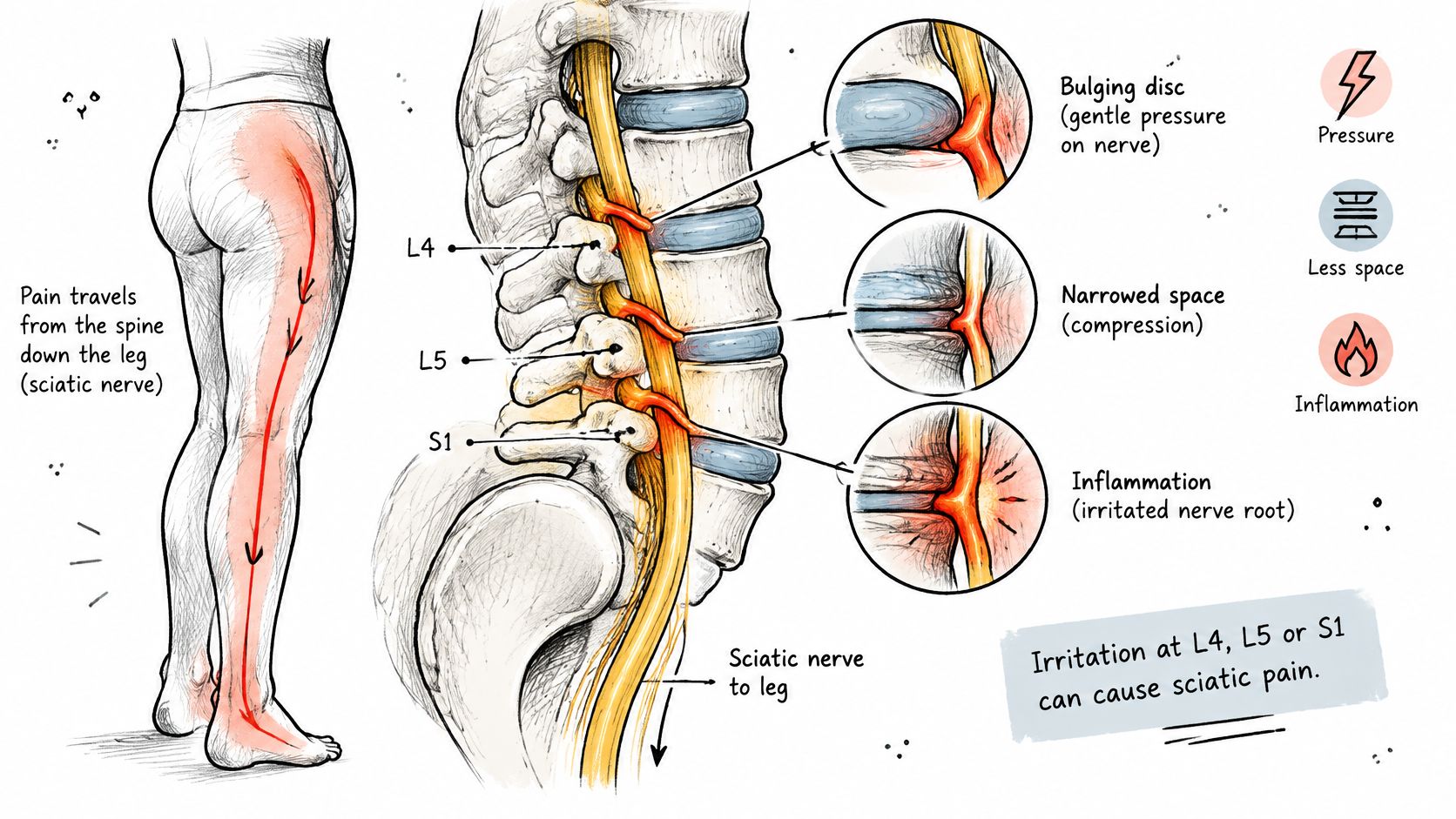
Structures that can irritate a root
- Lumbar disc herniation. Inner disc material pushes through its outer covering and may irritate a nearby root. A typical presentation is sharp, one-sided leg pain, sometimes with a relatively sudden onset.
- Degenerative disc disease. A disc can lose height and develop changes that reduce space around nearby nerves. Symptoms may develop gradually, and sitting can be uncomfortable.
- Facet joint arthritis. Changes in the small joints at the back of the spine can contribute to narrowing around a nerve. Back and leg symptoms may become more noticeable during standing or backward bending.
- Spinal stenosis. Narrowing of the spinal canal or nerve openings can affect nerve roots. Some people develop leg discomfort while walking that eases when sitting or leaning forward.
These pictures overlap. Pain with sitting doesn't prove disc disease, and relief when leaning forward doesn't establish spinal stenosis.
Use imaging to answer a clinical question
An MRI can show discs, nerve spaces, and other soft tissues, but the findings must match the examination. A visible disc change isn't automatically the reason your leg hurts, and not everyone needs immediate imaging.
At Dream Body Clinic, our lower-back process starts with an MRI. Our guide to degenerative disc disease and sciatica provides further context for discussing those findings.
Before your appointment, write down which movements provoke symptoms and which relieve them. Then ask: Which structure fits my examination? Would imaging change the plan? What improvement should we look for, and when should we reassess? Use symptom matching to prepare questions, not to select your own diagnosis.
Treatment Options From Conservative Care to Regenerative Therapy
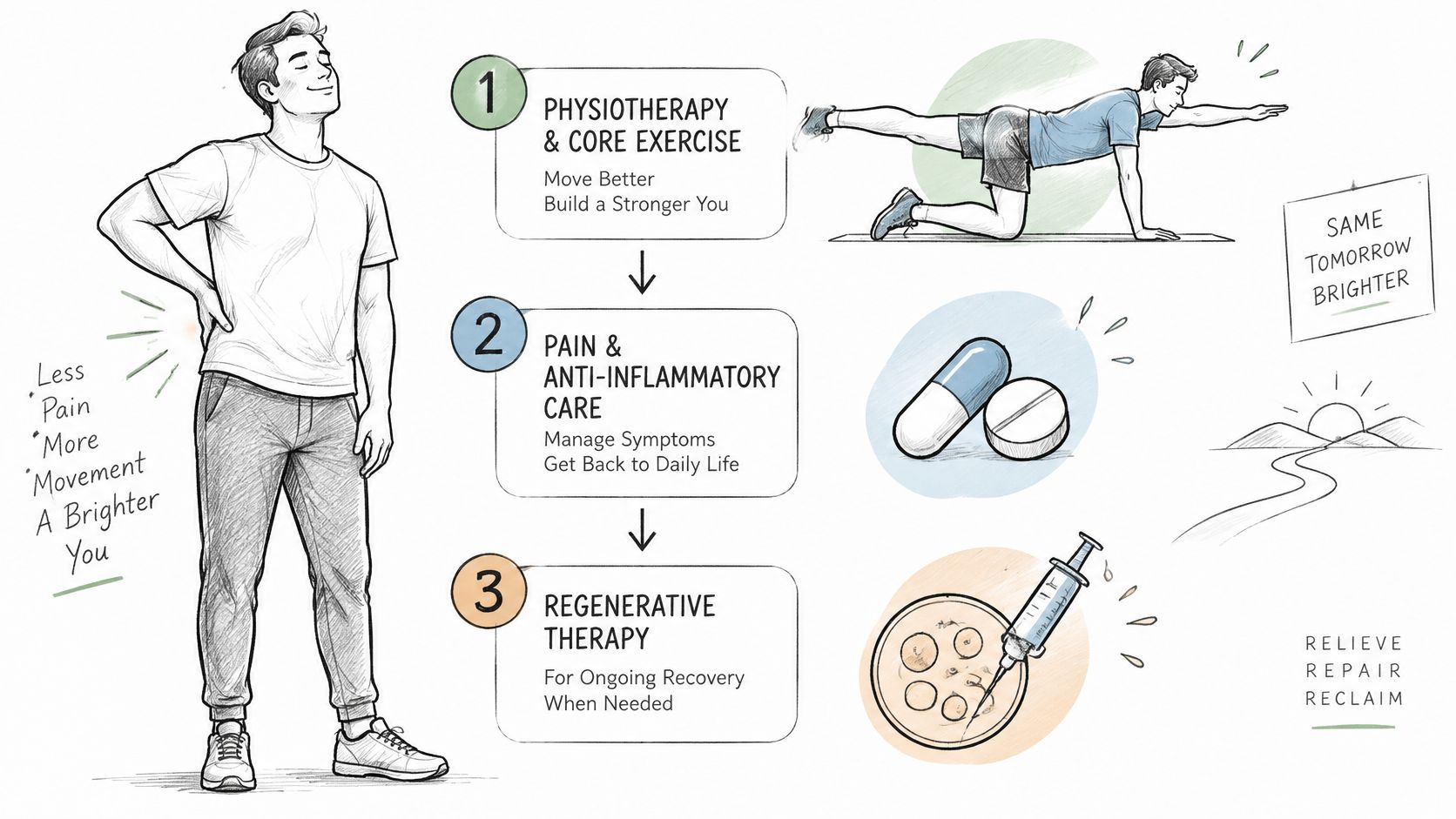
Treatment should address both the symptoms and their cause. For someone without emergency warning signs or progressive weakness, clinicians commonly begin with movement-based care and appropriate short-term symptom relief.
The next step depends on function, examination findings, and response to treatment. An injection isn't automatically better than rehabilitation, and surgery isn't automatically necessary because an MRI shows a herniated disc.
Sciatica treatment options and when each is considered
| Option | How It Works | Typically Considered When |
|---|---|---|
| Physiotherapy and core exercise | Improves mobility and load tolerance | Early care, for most people first |
| Pain and anti-inflammatory medication | Eases pain; anti-inflammatory medicines also reduce inflammation | Short-term symptom control when medically appropriate |
| Epidural steroid injection | Reduces inflammation around the nerve root | Pain persists after initial care |
| Surgical discectomy | Removes disc material pressing on a root | Disc-related progressive weakness or severe compression |
| Regenerative MSC therapy | Releases signals that influence inflammation and repair processes | Discussed as a non-surgical option after assessment and conservative care |
Medication selection needs consideration of your medical history and other medicines. Exercise should be adjusted to your tolerance rather than involve repeatedly pushing through worsening radiating pain.
How MSC signaling differs from cell replacement
Mesenchymal stem cells, or MSCs, shouldn't be described as turning into replacement nerve cells. Much of their proposed therapeutic activity involves the paracrine effect: they release specialized signals that influence inflammation, immune activity, blood-vessel support, cell survival, and tissue-repair behavior.
The review of MSC therapeutic mechanisms describes beneficial biological effects associated with secreted factors, including cardiac work in which injected bone-marrow MSCs didn't become heart muscle cells under normal physiological conditions. It also discusses osteoarthritis evidence emphasizing inflammatory and immune regulation rather than direct cartilage-cell replacement.
Those findings help explain a mechanism. They don't establish that an MSC protocol will heal a compressed spinal nerve or correct a herniated disc.
Where a clinic consultation fits
Our sciatica treatment information describes an MSC protocol involving lower-back injections plus intravenous administration. Individual results vary, and no outcome figures are given here; a consultation should address the evidence for your diagnosis, alternatives, and potential risks.
Some patients experience temporary fatigue, mild injection-site soreness, or brief flu-like symptoms as the immune system responds. These possible reactions aren't a complete risk list or proof that treatment is working.
Our herniated-disc treatment options guide can help you prepare for that comparison. Regenerative therapy shouldn't postpone surgical assessment for progressive deficits; decompression remains the standard consideration when significant nerve compression threatens function.
Book an MRI-Based Review Before Choosing Treatment
Use the coming week to organize an assessment, not to delay care if function is changing. A treatment decision is more useful when a clinician can connect your symptoms, neurological examination, and imaging.
Prepare for a case review
- Record the pattern. Mark the painful and numb areas, the affected side, and any changes in walking or foot control.
- Check for urgent changes. If emergency warning signs apply, seek emergency care now rather than completing this checklist.
- Arrange an examination. Ask a clinician whether persistent nerve symptoms or examination findings warrant MRI.
- Gather your records. Bring imaging, reports, medication details, symptom notes, and neurological findings.
- Request a case review. Contact our team by phone or WhatsApp to discuss what information is needed. For back or neck nerve symptoms, we recommend starting with MRI.
Verify authorization before consenting
Before choosing stem cell therapy, distinguish facility licensing from authorization of a specific treatment. The AABB overview of Mexico's cellular-therapy framework describes COFEPRIS oversight and establishment authorization requirements, while noting gaps in application-specific norms.
That framework alone doesn't verify approval of a particular sciatica protocol or establish equivalence to United States FDA approval. Request treatment-specific authorization documentation alongside the consent form and clinical evidence.
Decision rule: Without red flags, and with imaging that matches the clinical findings, you can compare options with your clinician rather than choosing from symptoms alone.
Dream Body Clinic offers MRI-based lower-back case review and consultations about regenerative treatment for people with sciatic symptoms. Visit Dream Body Clinic to arrange a review of your imaging and discuss suitability, alternatives, and treatment-specific documentation before making a decision.