Mesenchymal Stem Cells – MSC vs PRP for Joint Pain: Key Differences
What Makes These Two Treatments So Different?
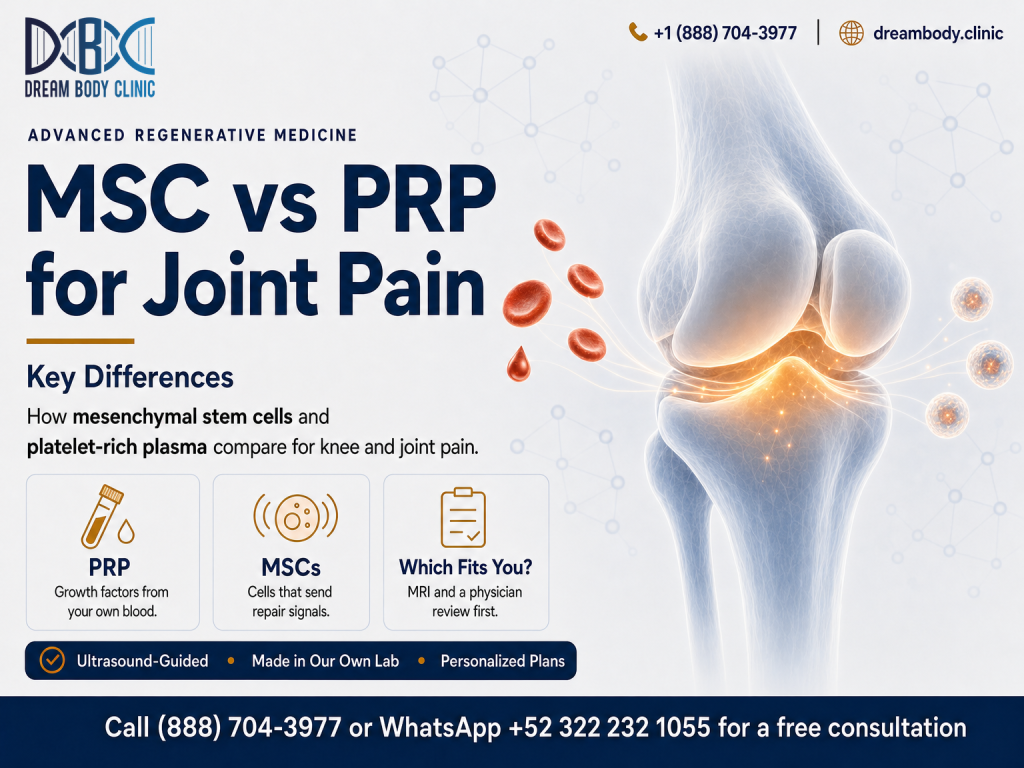
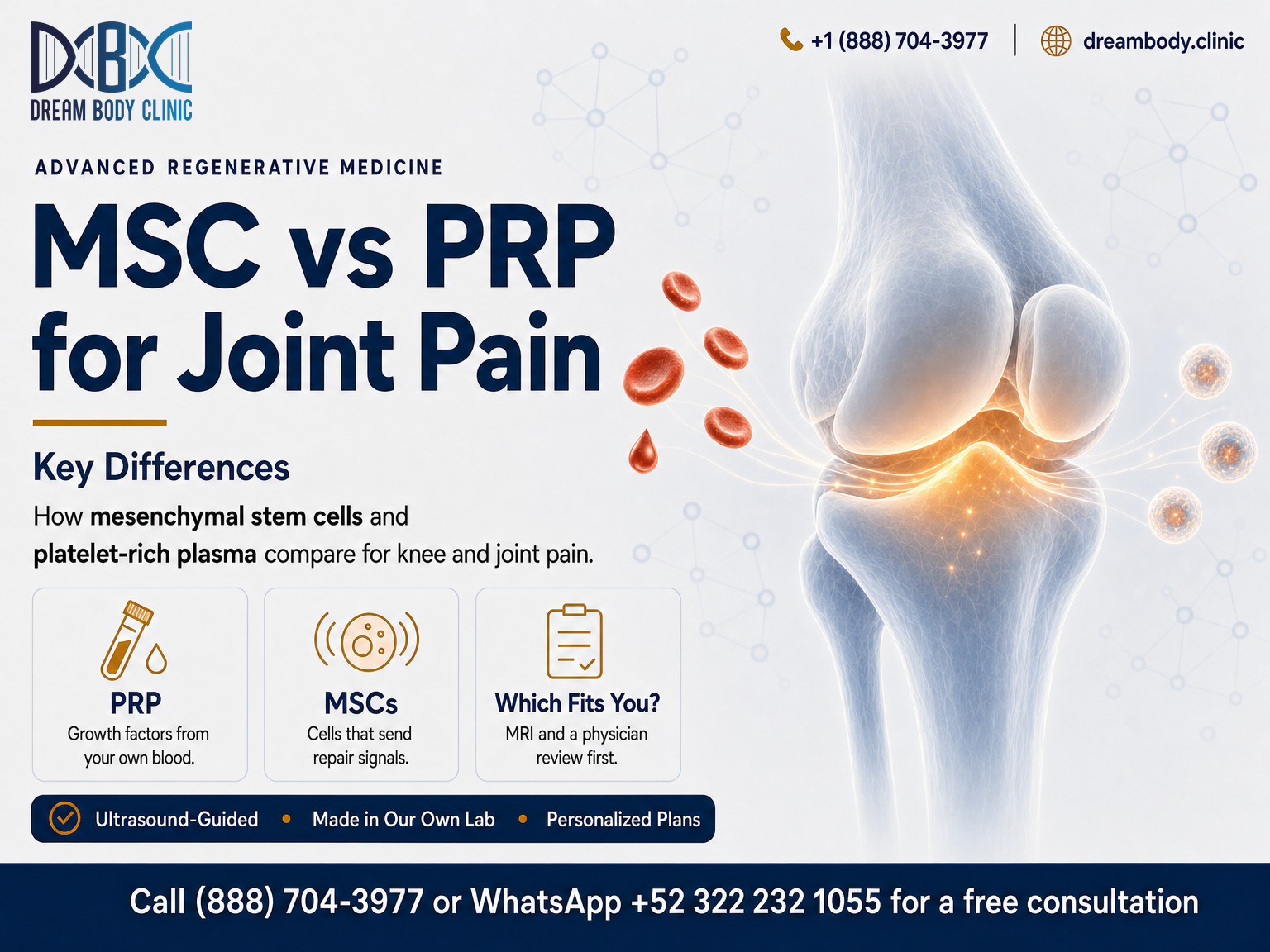
When you’re dealing with joint pain, especially in the knees, you want real answers. Two treatments come up often in regenerative medicine: Mesenchymal Stem Cells (MSCs) and Platelet-Rich Plasma (PRP). Both are injectable, both are promoted as alternatives to surgery, and both sound promising. But they work in very different ways, and for many patients, that difference determines whether they actually heal or just feel temporary relief.
PRP has been around longer and is more widely available. MSC therapy is newer, more complex, and far more powerful in what it can do inside a damaged joint. Understanding how each one works, and where each one falls short, helps you make a smarter decision about your care.
How PRP Injections Work
PRP stands for Platelet-Rich Plasma. It’s made from your own blood. A technician draws a small sample, spins it in a centrifuge to concentrate the platelets, and then injects that concentrated plasma into the affected joint. Platelets carry growth factors that signal the body to start a healing response.
In theory, this makes sense. Your body already uses platelets to heal wounds. By concentrating them and delivering them directly to a damaged joint, you’re amplifying a process the body already knows how to do. PRP works reasonably well for mild inflammation, minor tendon injuries, and early-stage joint degeneration. Many patients report reduced pain for a few months after treatment.
The problem is that PRP is entirely dependent on what’s already present in the joint environment. If the tissue is healthy enough to respond to growth factor signals, PRP can help. But if the joint has undergone structural changes, particularly the buildup of scar tissue called fibrosis, PRP hits a wall.
Why PRP Can’t Get Past Scar Tissue
This is the part most clinics don’t explain clearly enough. Fibrosis is not just inflammation. It’s a physical barrier. When a joint experiences chronic injury or long-term degeneration, the body lays down dense collagen-based scar tissue as a protective measure. Over time, this fibrotic tissue covers the underlying cartilage and bone structures, essentially sealing them off.
PRP growth factors are signaling molecules. They communicate with cells. But when the target tissue is buried beneath a thick layer of fibrotic scarring, those signals never reach the cells that need them. The growth factors in PRP have no mechanism to break down or reorganize scar tissue. They can stimulate repair, but only in tissue that’s accessible. Fibrosis makes the underlying cartilage and bone largely inaccessible.
This is why many patients with moderate to severe joint degeneration see limited results from PRP. The injections might reduce surface-level inflammation temporarily, but they cannot address the structural barrier that’s blocking recovery. For those patients, PRP is a bit like painting over a cracked wall without fixing what’s underneath.
What Mesenchymal Stem Cells Can Do That PRP Cannot
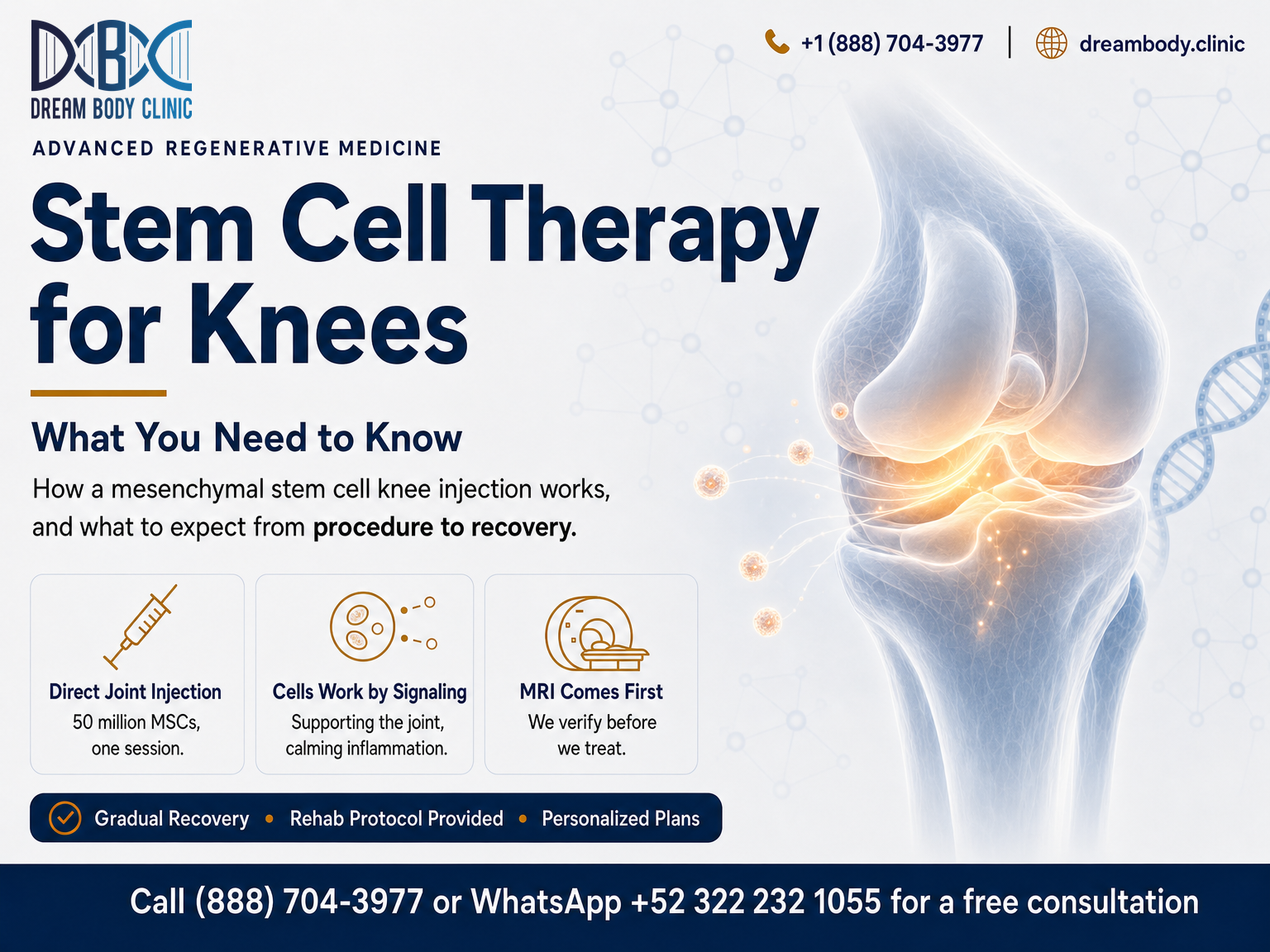
Mesenchymal stem cells are a completely different category of treatment. MSCs are living cells with the ability to sense their environment, communicate with surrounding tissue, and actively direct biological processes. When injected into a damaged joint, they don’t just deliver growth factors and wait. They assess the local environment and begin coordinating a much more complex response.
One of the most important things MSCs can do is guide the breakdown of fibrosis. They produce enzymes and anti-fibrotic signaling molecules that begin to reorganize and reduce scar tissue. This is not a passive process. MSCs actively work to soften and clear the fibrotic barrier that’s been blocking healing. As the scar tissue is reduced, the underlying cartilage and subchondral bone are gradually exposed.
Once that underlying tissue is accessible, MSCs shift their role. They begin directing the repair and regeneration of the damaged structures beneath. They can differentiate into chondrocytes, the cells that make up cartilage, and they stimulate the production of new extracellular matrix. This means actual structural repair, not just symptom management. For someone with chronic knee degeneration, that’s a fundamentally different outcome than what PRP can offer.
MSCs Work in Two Phases
The reason MSC therapy is more effective for advanced joint damage is that it operates in two distinct phases that PRP simply cannot replicate.
In the first phase, MSCs identify and begin dissolving the fibrotic tissue that’s blocking access to the damaged joint. This creates a biological pathway to the structures that actually need repair. In the second phase, MSCs use that cleared pathway to deliver regenerative signals directly to the damaged cartilage and bone, guiding new tissue growth and structural recovery.
PRP skips phase one entirely because it has no tools to address fibrosis. It enters the joint, encounters the same barrier, and does its best work within those limits. MSCs, by contrast, create the conditions for healing before they begin the healing itself.
Comparing MSCs and PRP Side by Side
| Feature | PRP | Mesenchymal Stem Cells |
|---|---|---|
| Source | Patient’s own blood | Donated Wharton Jelly & Placenta |
| Active components | Growth factors from platelets | Living, adaptive cells |
| Can address fibrosis | No | Yes |
| Can regenerate cartilage | Limited | Yes |
| Works in advanced degeneration | Rarely effective | More effective |
| Duration of effect | Weeks to months | Long-term potential |
| Number of sessions typically needed | Multiple | Often fewer |
Who Benefits Most from MSC Therapy
Not every joint pain patient has significant fibrosis, and not every case requires MSC therapy. For early-stage inflammation or mild tendon irritation, PRP may be perfectly adequate. But there is a clear patient profile where MSC therapy makes a meaningful difference.
If you’ve had chronic knee pain for more than a year, if imaging shows cartilage loss or structural damage, or if you’ve already tried PRP without lasting results, fibrosis is very likely part of your problem. In these cases, PRP is not going to reach the tissue that needs attention. MSC therapy, with its ability to break down scar tissue and guide regeneration from the inside out, becomes the more logical and more effective option.
Patients with osteoarthritis, post-surgical scar buildup, or repetitive joint injury are especially likely to benefit from MSCs over PRP. The more advanced the degeneration, the more important it becomes to have a treatment that can actually navigate and repair the full scope of the damage.
How Dream Body Clinic Approaches Stem Cell Knee Treatment
At Dream Body Clinic in Puerto Vallarta, Mexico, the stem cell knee treatment is built around this exact understanding. The clinic uses high-quality mesenchymal stem cells as part of a comprehensive regenerative protocol designed specifically for patients with moderate to severe knee degeneration, including those with significant fibrosis.
The approach at Dream Body Clinic goes beyond a single injection. The patient journey is structured to support the full two-phase process that MSC therapy requires, with careful preparation, precise delivery, and follow-up monitoring to track how the tissue is responding. For patients who have found limited success with conventional treatments or earlier rounds of PRP, this kind of protocol offers a more complete path toward recovery.
The clinic also integrates Human Growth Hormone where appropriate to support the body’s overall regenerative capacity during treatment, creating better conditions for the MSCs to do their work. This combination approach reflects the clinic’s commitment to not just treating a joint, but creating the internal environment in which real healing can occur. You can learn more about the full protocol at the stem cell knee treatment page.
What the Research Says About MSCs and Fibrosis
The science behind MSCs and their anti-fibrotic activity is well-established in regenerative medicine literature. Studies have shown that MSCs secrete a range of paracrine factors, including hepatocyte growth factor (HGF) and prostaglandin E2, which actively suppress fibroblast activity and reduce collagen overproduction in scar tissue. Research published by institutions studying musculoskeletal regeneration confirms that this anti-fibrotic capability is one of the defining advantages MSCs have over simpler growth factor therapies like PRP.
A 2024 review in the Journal of Orthopaedic Research noted that patients with advanced knee osteoarthritis and significant synovial fibrosis showed measurably better outcomes with MSC-based therapies compared to PRP, particularly in long-term cartilage preservation scores. This aligns with the clinical reasoning that PRP is limited by its inability to address the fibrotic barrier, while MSCs are uniquely positioned to resolve it.
Common Questions About MSC vs PRP Treatment
Can PRP and MSC therapy be combined?
In some protocols, a course of MSC therapy is used first to address fibrosis and prepare the tissue, followed by PRP to support ongoing healing. However, combining them at the same time is generally not more effective than MSCs alone, since MSCs already produce the growth factors that PRP delivers.
Is MSC therapy painful?
The injection process is similar to other joint injections. Most patients report mild discomfort during the procedure and some temporary soreness afterward. The process is typically outpatient, with no surgical recovery required.
How long before MSC therapy shows results?
Because MSCs work in phases, including the initial work of addressing fibrosis, results take longer to appear than PRP. Most patients begin noticing meaningful improvement between 8 and 16 weeks after treatment, with continued progress over 6 to 12 months.
Is MSC therapy safe?
When performed with properly screened and tested cells in a controlled clinical setting, MSC therapy has a strong safety record. Dream Body Clinic follows rigorous protocols for cell sourcing, screening, and administration to protect patient safety at every stage.
Why doesn’t PRP work for everyone?
The most common reason PRP fails in patients with moderate to severe joint damage is fibrosis. If scar tissue is blocking the growth factors from reaching the damaged cartilage, those growth factors cannot do their job. PRP has no mechanism to clear that obstacle, which is why results can be inconsistent in more advanced cases.
Can MSC therapy replace knee surgery?
For some patients, yes. Many people who are told they need a knee replacement have seen significant improvement through MSC therapy, avoiding surgery entirely. Results vary based on the degree of degeneration, patient age, and overall health, but regenerative medicine has made surgery avoidance a realistic goal for a growing number of patients.
Is MSC Therapy the Right Choice for Your Knees?
Mesenchymal stem cells and PRP are not competing versions of the same thing. They are fundamentally different tools with different capabilities. PRP delivers growth factors and works well when the tissue is accessible. MSCs deliver living, adaptive cells that can break down the scar tissue blocking your recovery and then guide the repair of what’s underneath.
For patients with mild joint issues, PRP remains a reasonable option. But for anyone dealing with chronic knee pain, confirmed cartilage loss, or a history of failed conservative treatments, MSC therapy addresses problems that PRP simply cannot reach. The ability to clear fibrosis and regenerate from the inside out is not a small difference. It is the entire reason why so many patients find lasting relief through MSC treatment when everything else has fallen short.
If you’re ready to explore what mesenchymal stem cell therapy could do for your knees, the team at Dream Body Clinic offers a patient-centered approach built on real science and practical results.
Call (888) 704-3977 or WhatsApp +52 322 232 1055 for a free consultation