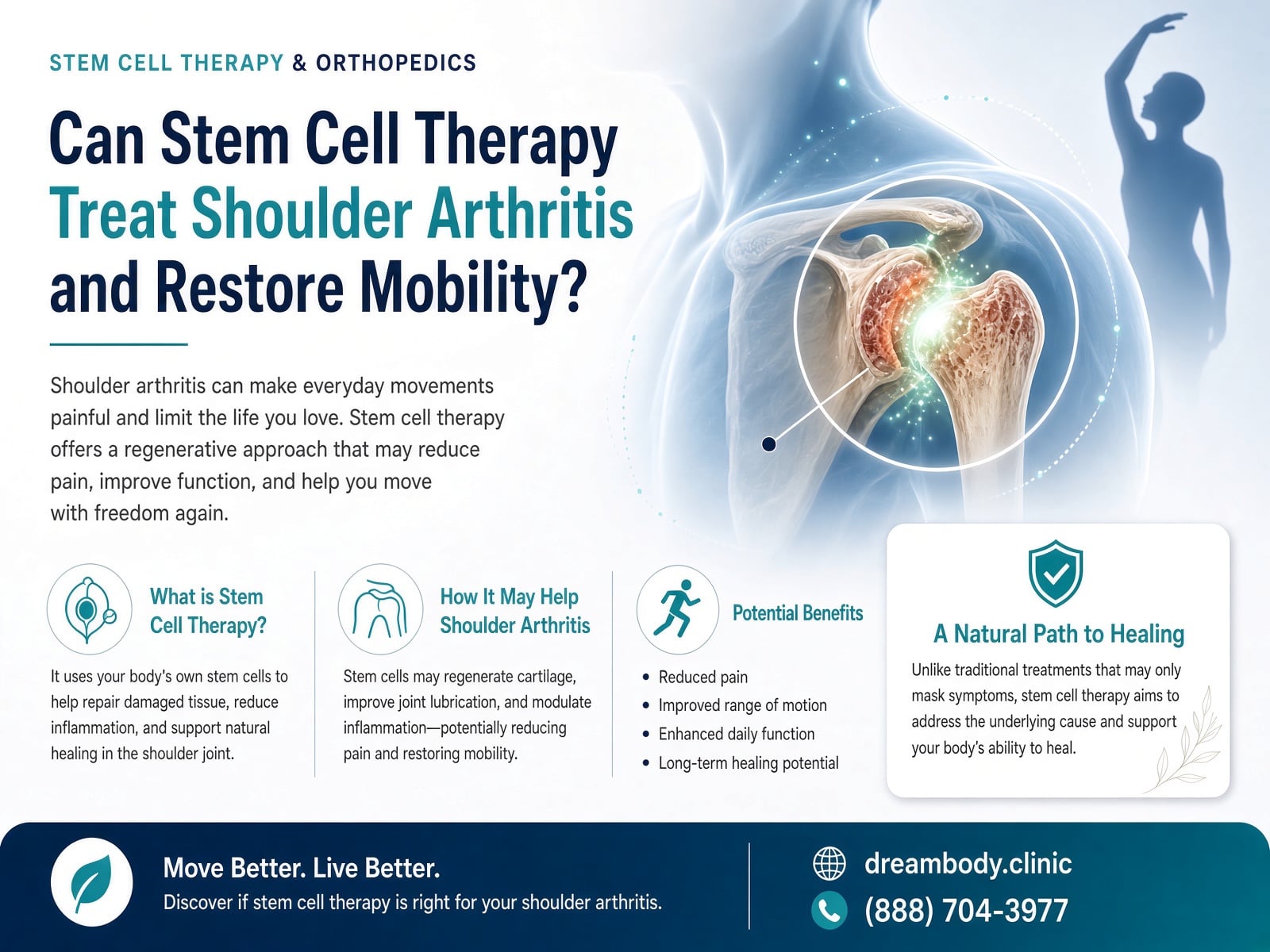
Can Stem Cell Therapy Treat Shoulder Arthritis and Restore Mobility?
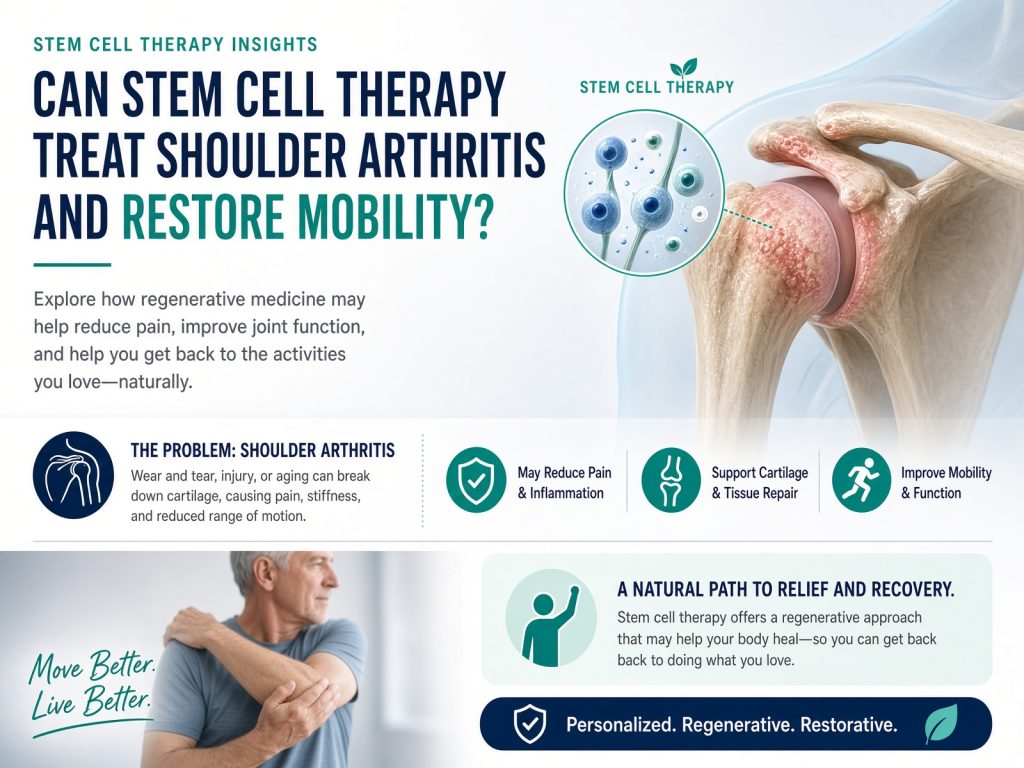
Shoulder arthritis is one of the more stubborn joint conditions to manage. Unlike knee or hip arthritis, where treatment options are more established, the shoulder presents its own set of challenges, and for many patients, the standard options only go so far. Stem cell therapy for shoulder arthritis is gaining serious attention as a non-surgical path that targets the root of the problem rather than just easing the discomfort temporarily.
Stem cell therapy works by introducing regenerative cells directly into the affected joint, where they may reduce inflammation, support cartilage repair, and help slow the progression of joint degeneration. For patients caught between ongoing pain and the prospect of shoulder replacement surgery, this approach offers a meaningful middle ground worth exploring carefully.
What Is Shoulder Arthritis and Why Is It Hard to Treat?
Shoulder arthritis is not a single condition. It typically presents in one of two forms: glenohumeral arthritis, which affects the main ball-and-socket joint of the shoulder, or acromioclavicular joint degeneration, which involves the smaller joint where the collarbone meets the shoulder blade. Both can cause significant pain, stiffness, and loss of function, but they affect the joint in different ways and often require different management strategies.
What makes the shoulder particularly complex is that it is not a weight-bearing joint in the traditional sense. While joints like the knee and hip carry body weight with every step, the shoulder relies on an intricate balance of soft tissue, tendons, and muscles to maintain stability and allow an exceptional range of motion. This complexity means that damage in the shoulder ripples outward quickly, affecting far more than just the bone surfaces.
Cartilage loss is at the core of how arthritis becomes progressively disabling. When the smooth cartilage lining the joint wears away, bone begins to rub against bone. The result is chronic inflammation, sharp pain with movement, grinding sensations, and a steadily shrinking range of motion that makes everyday tasks like reaching overhead or rotating the arm increasingly difficult.
Conventional treatments often fall short of providing lasting relief. Corticosteroid injections can quiet inflammation for a period, but they do not address the underlying tissue damage and can actually weaken cartilage over time with repeated use. Physical therapy helps maintain strength and mobility but cannot reverse structural degeneration. For patients who are not yet ready for surgery, this leaves a significant gap in care, and that gap is exactly where regenerative medicine for shoulder arthritis is starting to make a real difference.
How Does Stem Cell Therapy Work for Shoulder Arthritis?
Mesenchymal stem cells are the primary agents used in shoulder arthritis regenerative treatment. These cells have a natural ability to seek out areas of tissue damage and respond to the inflammatory signals present in a degenerated joint. Once introduced into the affected area, they begin releasing bioactive molecules that reduce inflammation, communicate with surrounding cells, and create conditions more favorable for tissue repair.
What sets this approach apart from standard pain management is that it does not simply mask symptoms. Regenerative signals from stem cells can prompt the body’s own repair mechanisms to become more active. Rather than dulling pain while degeneration continues underneath, the therapy works to interrupt the degenerative cycle itself, potentially slowing or stabilizing the progression of joint damage over time.
Stem cells do not rebuild cartilage overnight, and they do not work the same way for every patient. However, the clinical observation from patients who have gone through regenerative protocols is that many experience meaningful reductions in pain and measurable improvements in mobility. The approach is most effective when treatment begins before damage reaches an advanced stage.
At Dream Body Clinic, stem cell therapy for shoulder arthritis is often combined with Human Growth Hormone therapy as part of a broader regenerative protocol. HGH plays a supporting role by promoting tissue repair, strengthening the surrounding musculature, and improving the overall biological environment in which stem cells operate. This combination approach reflects the clinic’s philosophy of treating the whole patient rather than isolating a single symptom.
You can learn more about the specific shoulder protocol at the Dream Body Clinic Shoulder Stem Cell Treatment page.
What Types of Stem Cells Are Used in Shoulder Arthritis Treatment?
The stem cells most commonly used for joint and cartilage-related conditions are mesenchymal stem cells, or MSCs. These cells can be sourced from umbilical cord tissue or from the patient’s own bone marrow, with umbilical cord-derived MSCs often preferred for their high potency and consistent quality.
MSCs are especially well suited for joint applications because of how they interact with the immune system and inflammatory environment. They do not provoke an immune response the way some other cell types might, and they have demonstrated an ability in research settings to support chondrogenic differentiation, meaning they can contribute to the development of cartilage-like tissue in damaged joints.
The quality and concentration of the cells administered matters significantly. A treatment delivering a higher count of viable, potent MSCs is more likely to produce a meaningful clinical response. At Dream Body Clinic, the shoulder stem cell treatment uses 50 million MSCs, a concentration designed to give the joint a robust regenerative signal. More details on the specific cell preparation are available on the Dream Body Clinic Shoulder Stem Cell Treatment page.
What Does the Treatment Process Look Like at Dream Body Clinic?
The patient journey at Dream Body Clinic is structured, transparent, and designed with international patients in mind. It begins with a thorough consultation, either in advance remotely or upon arrival in Puerto Vallarta. During this stage, the clinical team reviews the patient’s imaging, medical history, and treatment goals to determine whether stem cell therapy is appropriate and to build an individualized protocol.
Preparation ahead of treatment may include specific health assessments and any adjustments to existing medications that could interfere with the regenerative process. On the day of treatment, administration typically involves both intravenous delivery and localized injection directly into the shoulder joint. The IV component allows stem cells to circulate systemically, addressing broader inflammation, while the joint injection delivers a concentrated dose precisely where cartilage damage is most significant.
Safety protocols at Dream Body Clinic are built around internationally recognized standards. Cell sourcing is ethically managed, preparation is handled in controlled conditions, and every protocol is personalized rather than standardized. Patients receive clear guidance on what to expect during treatment and in the recovery period that follows, along with scheduled follow-up communication to track progress and address any questions.
Puerto Vallarta is an ideal destination for this kind of care. The city is easily accessible from major North American airports, offers a comfortable and welcoming environment for recovery, and provides the kind of attentive clinical experience that patients from the United States, Canada, and Europe often find difficult to access at home. The combination of high-quality treatment and accessible travel makes Dream Body Clinic a practical choice for patients who want genuine regenerative care without the logistical complexity of seeking treatment in more remote locations.
What Results Can Patients Realistically Expect?
The most commonly reported outcomes from stem cell therapy for shoulder arthritis are a reduction in chronic pain, improved range of motion, and a decrease in the inflammatory flare-ups that make daily life difficult. Patients often describe being able to sleep through the night again, reach overhead with less restriction, and reduce or eliminate their reliance on anti-inflammatory medications.
Timing varies from person to person. Some patients begin noticing changes within four to six weeks of treatment. For others, the improvements build more gradually over three to six months as the regenerative process continues to unfold. This is not unusual given how biological repair works. The stem cells do not produce an instant structural change, but they set processes in motion that continue to develop after the treatment itself is complete.
Outcomes are influenced by several factors, including the severity of joint degeneration at the time of treatment, the patient’s age, overall health, and how consistently they engage with any recommended follow-up care or supportive therapy. Patients with earlier-stage arthritis and good overall health tend to see the most significant responses. That said, even patients with more advanced degeneration frequently report meaningful quality-of-life improvements, even if full structural restoration is not achievable.
Patient testimonials and clinical observations from the team at Dream Body Clinic consistently reflect these trends. While no responsible provider can guarantee specific outcomes, the pattern of feedback is encouraging and aligns with a growing body of research supporting regenerative medicine for shoulder arthritis.
How Does Stem Cell Therapy Compare to Shoulder Replacement Surgery?
This is one of the most practical questions patients face when dealing with advanced shoulder arthritis, and it deserves a direct answer.
| Factor | Stem Cell Therapy | Shoulder Replacement Surgery |
|---|---|---|
| Invasiveness | Minimally invasive injections | Major surgical procedure |
| Recovery time | Days to weeks | Several months |
| Risk level | Low, minimal side effects | Surgical and anesthetic risks |
| Anesthesia required | No | Yes |
| Hospital stay | None or minimal | Required |
| Repeat treatments | Possible if needed | Revision surgery is complex |
| Best for | Mild to severe arthritis | Severe end-stage joint destruction |
| Long-term joint preservation | Yes, supports natural tissue | Removes and replaces the joint |
Shoulder replacement surgery is a well-established procedure with strong outcomes for the right patients, particularly those with severe end-stage joint destruction where no cartilage remains and pain is constant and unmanageable. However, it comes with a significant recovery commitment, carries surgical risks, and involves a permanent change to the joint structure.
Many patients prefer to pursue regenerative options first precisely because stem cell therapy is not a bridge-burning decision. If it works well, they may avoid surgery entirely or delay it by years. If the condition eventually requires surgical intervention, having pursued non-surgical options first does not close that door. For patients who are in the moderate stage of joint degeneration, are not ideal surgical candidates due to age or health factors, or simply want to avoid the risks associated with major surgery, stem cell therapy represents a logical and evidence-supported first step.
Is Stem Cell Therapy for Shoulder Arthritis Safe?
Safety is a fair and important concern, and it deserves a straightforward answer. Stem cell therapy using mesenchymal stem cells has a strong safety record in clinical literature. Because MSCs are typically well tolerated by the immune system, the risk of rejection or serious adverse reactions is low compared to other therapeutic interventions.
At Dream Body Clinic, safety is embedded into every stage of the treatment process. The stem cells used are ethically sourced, rigorously screened, and prepared under strict quality control conditions. The clinic follows international standards for regenerative medicine and maintains transparent protocols for cell sourcing and patient care.
As with any medical treatment, there are potential side effects. Temporary soreness or mild swelling at the injection site is the most commonly reported experience. More significant complications are rare when treatment is delivered by a qualified clinical team following proper protocols. Dream Body Clinic monitors patients throughout the treatment process and maintains follow-up contact to track progress and respond to any concerns that arise after the patient returns home.
One point that cannot be overstated is the importance of a full medical evaluation before beginning any regenerative protocol. Not every patient is appropriate for stem cell therapy, and identifying any contraindications in advance is a core part of responsible clinical practice. The team at Dream Body Clinic takes this seriously and will not proceed with treatment if the evaluation raises concerns about patient safety.
Who Is a Good Candidate for Stem Cell Therapy for Shoulder Arthritis?
Good candidates for stem cell shoulder injection therapy are typically patients who have been diagnosed with mild to moderate shoulder arthritis and have already tried conservative treatments without achieving satisfactory relief. This includes patients who have gone through physical therapy, used anti-inflammatory medications, or received corticosteroid injections but continue to experience significant pain or limited mobility.
Age plays a role but is not a disqualifying factor on its own. Younger patients with early-stage degeneration often see excellent responses, and older patients with otherwise good health can also benefit meaningfully. The key consideration is whether the joint still has enough viable tissue to respond to regenerative signals, which is why treatment tends to be more effective before degeneration reaches its most severe stages.
Shoulder arthritis that has an autoimmune component, such as rheumatoid arthritis affecting the shoulder joint, may also be a strong case for stem cell therapy. MSCs have demonstrated immune-modulatory properties that can be particularly beneficial in conditions where chronic inflammation is driven by an overactive immune response rather than mechanical wear alone.
Dream Body Clinic conducts thorough individual assessments for every prospective patient. The clinical team reviews imaging results, evaluates current symptoms, considers prior treatment history, and discusses the patient’s goals before recommending a protocol. This process exists to protect the patient and to make sure that anyone who moves forward with treatment has a genuine basis for expecting a positive response.
If you are living with shoulder arthritis and want to understand whether stem cell therapy could be right for your situation, reaching out to Dream Body Clinic for a personalized consultation is the most practical next step. The team is experienced in working with international patients and can guide you through the evaluation process before you ever need to book a flight.
It is also worth knowing that the owners of Dream Body Clinic are the best-selling authors of The Ultimate Guide to Stem Cell Therapy, which reflects the depth of expertise and commitment to patient education that underpins everything the clinic does.
Frequently Asked Questions
What is shoulder arthritis and how does it differ from other joint conditions?
Shoulder arthritis refers to the degeneration of cartilage within the shoulder joint, most commonly affecting either the glenohumeral joint or the acromioclavicular joint. Unlike knee or hip arthritis, shoulder arthritis develops in a non-weight-bearing joint with an unusually wide range of motion, which makes it both harder to protect during daily activity and more noticeable when movement becomes restricted.
Can stem cell therapy fully regenerate lost cartilage in the shoulder joint?
Stem cell therapy can support cartilage repair and create conditions that encourage the body’s own regenerative processes, but it is not a guaranteed pathway to full cartilage restoration. The degree of repair that occurs depends on how much viable tissue remains, the patient’s age and overall health, and the concentration of cells used. Most patients experience meaningful improvements in pain and mobility, though complete structural regeneration is not a predictable outcome in every case.
How many stem cell therapy sessions are typically needed for shoulder arthritis?
Many patients see meaningful results from a single treatment course. In some cases, a follow-up session may be recommended after several months, particularly if the initial response was positive but the patient wants to build on that progress. Dream Body Clinic assesses each patient individually and will discuss whether a single session or a series of treatments is more appropriate based on the severity of the condition and the response to initial therapy.
Is stem cell therapy for shoulder arthritis painful or invasive?
The procedure itself is minimally invasive. Localized injections into the shoulder joint are typically well tolerated with the use of local anesthetic to reduce discomfort at the injection site. There is no general anesthesia required and no surgical incision. Most patients describe the experience as manageable, and any soreness following the injection generally resolves within a few days.
How long does recovery take after receiving stem cell treatment for shoulder arthritis?
Recovery from the procedure itself is short. Most patients resume normal daily activity within a day or two of treatment. The regenerative process that follows, however, continues over a longer period. Noticeable improvements often begin within four to six weeks, with more significant changes developing over three to six months. Patients are encouraged to follow any specific post-treatment guidance provided by the clinical team to support the best possible outcome.
Does Dream Body Clinic offer stem cell therapy combined with HGH for shoulder conditions?
Yes. Dream Body Clinic offers a combination protocol that pairs stem cell therapy with Human Growth Hormone to support the regenerative process. HGH contributes to tissue repair, helps maintain muscle strength around the joint, and improves the overall biological environment in which stem cells work. This combined approach reflects the clinic’s broader philosophy of comprehensive regenerative care.
How do I know if I am a good candidate for stem cell therapy for shoulder arthritis?
The best way to find out is through a direct consultation with the Dream Body Clinic team. In general, good candidates are those with mild to moderate shoulder arthritis who have not found lasting relief through conventional treatments and are looking for a non-surgical option. Patients with autoimmune-related shoulder conditions may also benefit. The clinic conducts a full medical evaluation before recommending any treatment to make sure the approach is appropriate for each individual.
Conclusion
Stem cell therapy will not restore every shoulder, but when it is a good fit the results can be amazing. If arthritis is still mild to severe, conservative care has fallen short, and you want a non-surgical option that may reduce pain and improve motion, the next step is a case review—not a booking. Call Dream Body Clinic at (888) 704-3977 for a free consultation. The team will look at your imaging and history, tell you honestly whether you are a candidate, and only then discuss a protocol. There is no obligation, and you do not need to travel until you know whether this approach is appropriate for your shoulder.