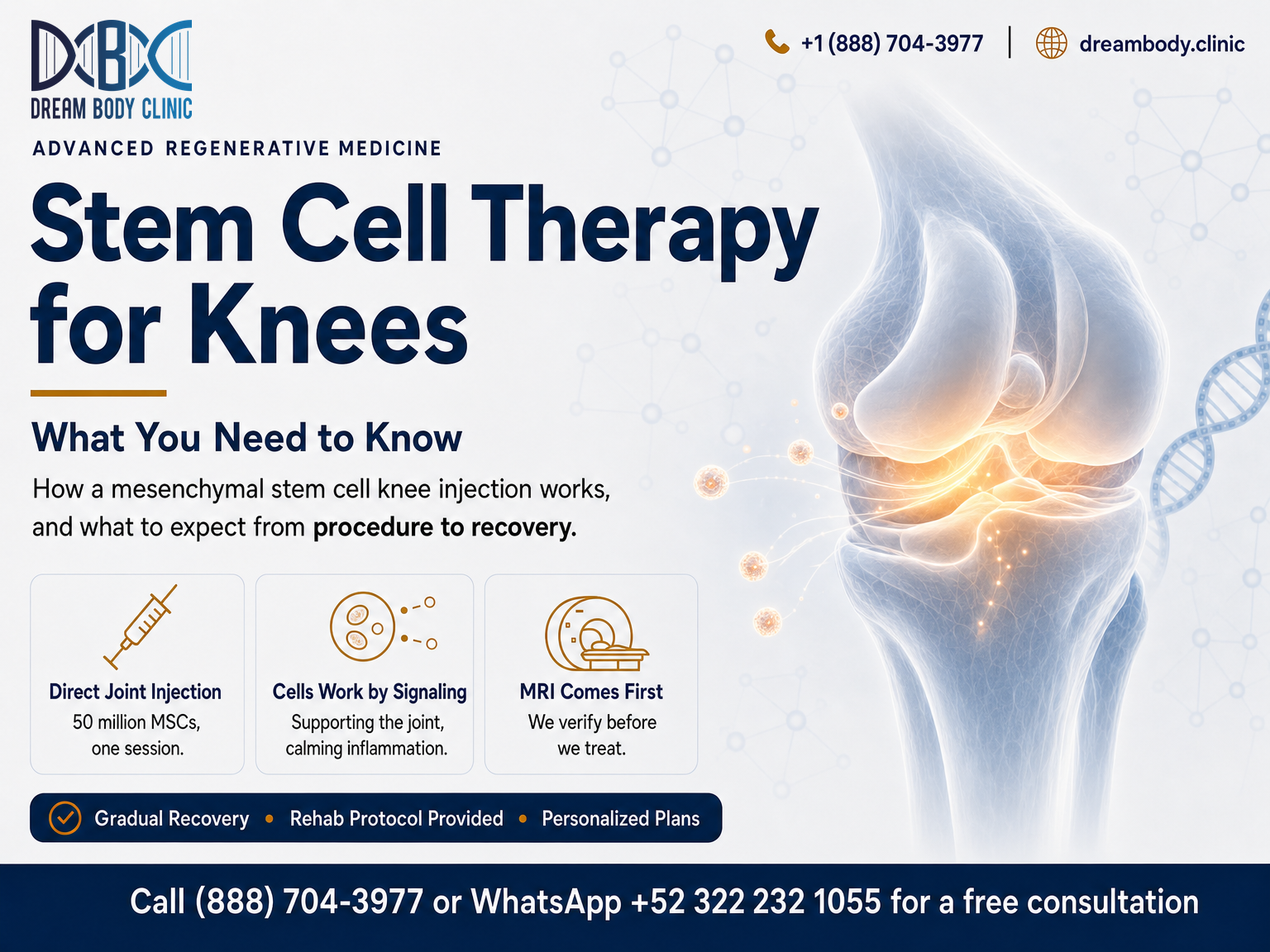
Stem Cell Therapy for Knees: What You Need to Know
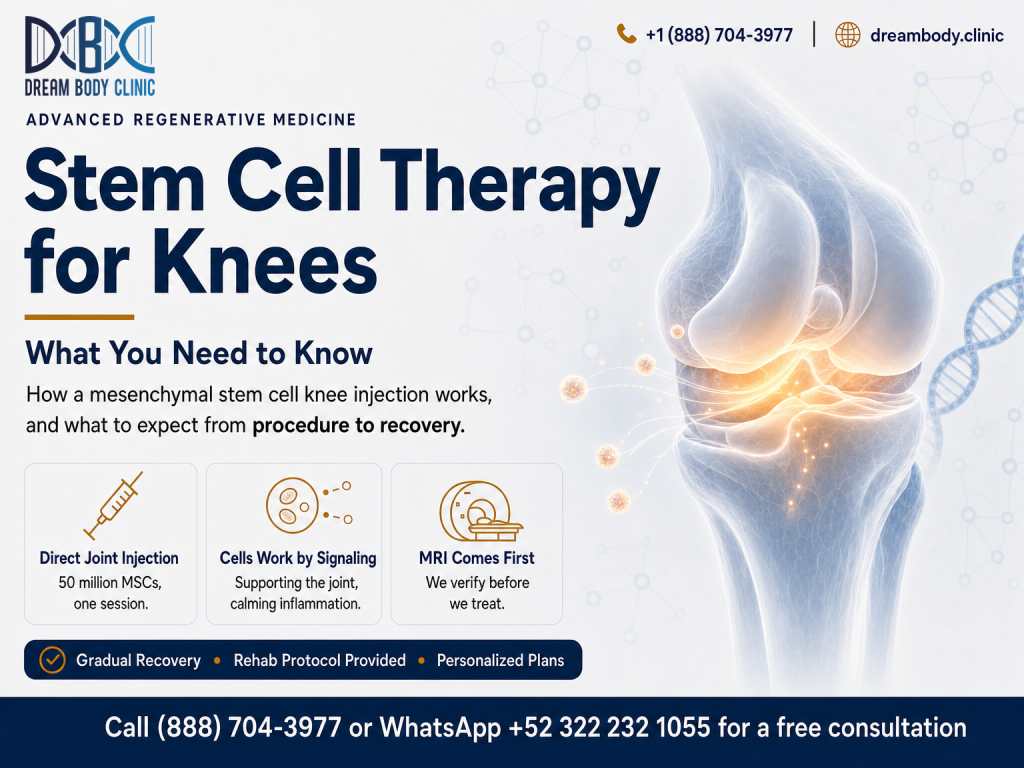
Stem cell therapy for knees is an injection-based procedure that delivers concentrated stem cells directly into a damaged knee joint. The goal is to reduce pain, slow cartilage loss, and improve joint function. It is most commonly used for osteoarthritis but is also offered for meniscus tears, ligament tears, tendon tears and other issues. The procedure typically costs $5,000 to $10,000 per knee, but at Dream Body Clinic it is $3,500 usd The Stem Cell Knee Treatment for 50 million MSCs derived from Wharton Jelly (umbilical cord tissue) and placenta in our ISO Rated lab on site.
How Do Stem Cells Work Inside the Knee?
The stem cells used in knee injections are called mesenchymal stem cells. They are found in bone marrow, fat tissue, and umbilical cord blood. Once injected into the joint, they appear to work through two main routes. First, they work via the paracrine effect which means it is the signals they send out that guide the healing process. Second, and possibly more important, they release tiny signaling packages called exosomes that communicate with the cells already present in your knee.
These exosomes act like chemical messengers. They encourage existing cartilage cells to multiply, call other repair cells to the area, and help reduce inflammation. In lab and animal studies, they have been shown to protect cartilage by slowing the breakdown of collagen and other structural proteins that give cartilage its cushioning ability. They also appear to restore damaged energy-producing structures inside cartilage cells, which helps those cells survive longer.
We don’t offer exosomes individually because MSCs work by releasing exosomes. So you are better to get more stem cells than to add exosomes. MSCs are smart and know what exosomes to release at the correct place. Exosomes are not smart and you have to hope that you are delivering the correct exosomes to the correct place at the correct time. This is impossible to do because there are over 1,000 different types of exosomes and they are so small that we don’t even know what each one does yet. The filtration process is so rudimentary that the biologists compare it to taking a pile of dirt and using a screen to sift out the big rocks. They have to do this because when they were first used they found that a lot of patients were getting inflamed at the area of injection. This is because each exosome has a single payload of a cytokine, chemokine, trophic factor or growth factor. Some of these cause inflammation to force the body to react. If you don’t know what exosomes you are delivering to the area then you can cause issues instead of fixing them. I was at a conference a few years ago where Dr. Arnold Caplan explained this. In 10 years at the earliest we may be able to isolate exact exosomes for specific issues, but until then they are just hype. They offer what seems like huge amounts, “80 billion exosomes!”, but you will get far more than that from a solid dose of MSCs like we offer.
This video explains further –https://rumble.com/v1hz410-exosomes-vs-mesenchymal-stem-cells.html
Where Do the Stem Cells Come From?
All Mesenchymal Stem Cells at Dream Body Clinic are ethically sourced. We use donated Wharton Jelly (umbilical cord tissue) and Placenta from live, healthy births. No children orparent are harmed in this process. The tissue is donated. Our Lab is licensed by the Mexican health board COFEPRIS (Mexico’s FDA) to produce stem cells, to store stem cells as a cryo-bank (We only store frozen cells for research and always administer never frozen MSCs for treatments) and licensed to practice regenerative medicine.
We screen our umbilical cord donors. All donors must be between the ages of 18 and 25. They must be 1st time mothers and they must be married. We ask if they have received any COVID vaccines then we verify with their CURP number in the federal database. We don’t accept tissue from anyone that has received a COVID vaccine.
We cultivate (replicate the cells) to the 5th passage. The first 3 passages of cultivation are to isolate pure mesenchymal stem cells as there are still other cell types at this point. We then cultivate to a maximum of 2 passages past this with the pure, isolated mesenchymal stem cells.
All Patients receive a 3rd party analysis of their stem cells and all that information is here on the page about our ISO Rated lab on site.
What Happens During the Stem Cell Knee Procedure?
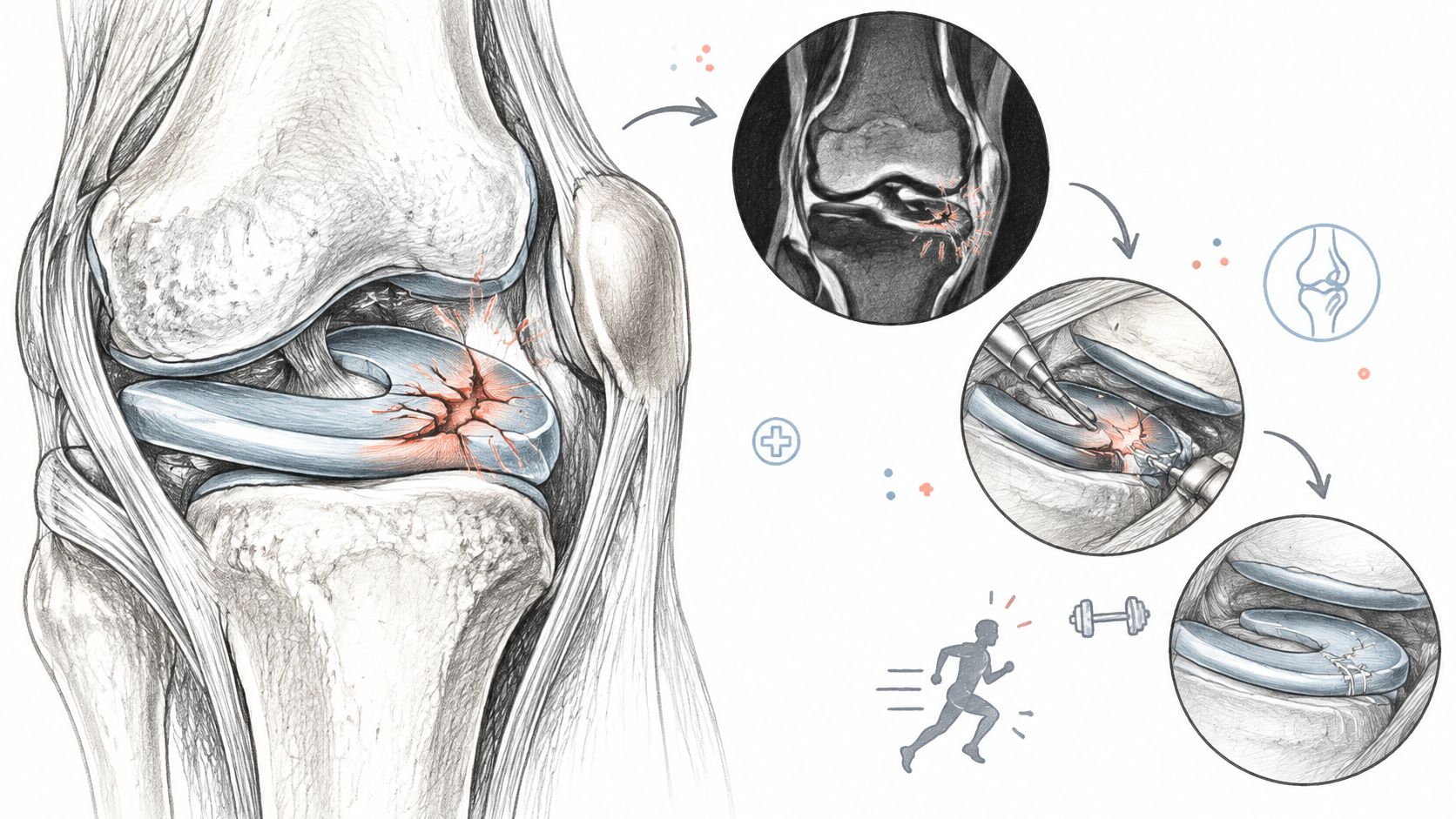
The entire process usually takes place in a single office visit, though some protocols culture and expand the cells over days or weeks before reinjection. After harvesting from the hip bone or fat tissue, the sample goes through lab processing to separate stem cells from red blood cells, fat cells, and debris. The cells are tested for viability and then concentrated into the final injection volume.
The injection itself is guided by ultrasound imaging so the needle reaches the correct spot inside the joint capsule. This imaging guidance is great and makes patients feel better, but a trained doctor like we have on staff can easily do this procedure with or without ultrasound guidance. At Dream Body Clinic our process takes 5 days:
Day 1 – arrive and rest
Day 2 – Bloodwork and MRI
Day 3 – Consultation to Review MRI then payment
Day 4 – Treatment
Day 5 – Fly Home
How Much Pain Relief Can You Expect From Stem Cell Knee Therapy?
A meta-analysis of clinical trials found that patients receiving stem cell injections had significantly better pain scores than control groups at 3, 6, 12, and 24 months after treatment. Pain, measured on a visual analog scale, improved at each follow-up point. However, when researchers looked at more detailed measures of stiffness, physical function, and pain using the WOMAC questionnaire, the differences between stem cell and control groups were not statistically significant. Studies are not always the best indicator of how well a treatment works. They are typically looking for a specific result and frame the study around getting that results. At Dream Body Clinic we have over 9 years administering mesenchymal stem cells for knee treatments. We have countless testimonials and before and after MRIs to show that our treatments are healing osteoarthritis, partial ligament tears, partial tendon tears and partial meniscus tears or damage.
We typically see peak results 3 to 6 months post treatment, but many patients feel better much sooner.
What Are the Risks and Side Effects of Stem Cell Knee Injections?
A systematic review of nearly 2,000 patients found an overall 12.3% rate of temporary side effects, almost entirely limited to swelling and pain at the injection site. The vast majority of these resolved within four weeks. A small number of cases, particularly with fat-derived and bone marrow approaches, had swelling lasting longer than a month. There were also occasional reports of soreness at the harvest site, either the hip or abdomen. This is why we use umbilical cord and placenta derived MSCs. Fat and bone marrow derived stem cell treatments in the USA are not allowed to fully isolate the stem cells. This means about 1% MSCs and 99% other types of cells. Those other types of cells can lead to inflammation, pain or even infection.
What Is the Recovery Process After Stem Cell Knee Treatment?
Recovery follows a gradual progression over about six weeks. For the first 24 to 48 hours, rest is recommended, but complete inactivity is not ideal. Physical therapy starts 2 weeks post treatment and we provide a rehab protocol.
During weeks one and two, activity is limited to light daily tasks. Stairs should be minimized, lifting kept under 10 pounds, and running or weight training should be avoided. Gentle stretching and range-of-motion exercises are fine. By weeks 4 to 6, you can add a stationary bike, elliptical, swimming, pool walking, yoga, or easy walking, but all workouts should stay under 50% of your pre-injection capacity for a few weeks. Anti-inflammatory medications like ibuprofen should be avoided for at least four weeks, and ideally six, because they can interfere with the inflammatory signaling the stem cells rely on to do their work.
After week 6 you can allow a gradual return to resistance training, though high-impact and heavy compressive exercises such as squats, leg press, box jumps, and deadlifts are still off-limits. Hiking on uneven terrain should also wait. Most patients are back to normal activity by around the two-month mark, with continued improvement in symptoms over the following months.
How Much Does Stem Cell Therapy for Knees Cost?
Stem cell therapy for knees typically runs $5,000 to $10,000 per knee, but at Dream Body Clinic it is $3,500 usd The Stem Cell Knee Treatment , making it one of the lower-cost stem cell procedures. Insurance does not cover it. Medicare covers established bone marrow transplant therapies for conditions like blood cancers but does not cover stem cell treatments for joints. This is why we keep it as affordable as possible to help as many people as possible.
Is Stem Cell Therapy for Knees FDA-Approved?
No stem cell injection product is currently FDA-approved for treating knee osteoarthritis. The FDA regulates human cells, tissues, and cellular products on a tiered system, and the default position is that stem cell preparations require the same premarket approval process as drugs, including clinical trial data proving both safety and effectiveness.
This has been tested in court. In a case involving clinics that removed patients’ fat tissue, processed it to isolate stem cells, and reinjected the mixture into knees, the FDA argued the product was an unapproved drug. In September 2024, the Ninth Circuit Court of Appeals agreed, ruling that the stem cell mixture did not qualify for the “same surgical procedure” exception that some clinics had relied on. Despite this ruling, hundreds of clinics across the country continue to offer these treatments, and regulators have been criticized for not doing enough to curb unapproved offerings. If you are considering this treatment, it is worth knowing that you are opting into a procedure that has promising early evidence but has not yet cleared the standard regulatory bar for proven medical treatments.
In the USA they have a rule called minimal manipulation. This means they can’t fully isolate and culture stem cells for treatments. So patients can get minimally manipulated stem cells from fat, bone marrow or umbilical cord tissue, but only a small percentage of what they are calling stem cells is actually stem cells. It is mostly other types of cells due to the minimal manipulation.
There are a lot of studies on MSCs for knee repair, but even with all the evidence the hesitate to state that it really works. This is because even with over 100,000 studies done on mesenchymal stem cells (you can verify on google scholar), the FDA system gets in the way of approval. To get mesenchymal stem cells approved for knee repair each type of treatment requires a $2.5 million USD application feel. So knee osteoarthritis would be $2.5 million then meniscus repair would be $2.5 million and so on. That application fee just gets the clinic into the 4 phase FDA trials. Those typically take over 7 years and cost hundreds of millions of dollars to complete. Then at the end you can’t patent a mesenchymal stem cell so you would just be opening the market to your competition. You would spend hundreds of millions of dollars for each different type of treatment and would not be able to recover your costs. It is a flawed system designed to protect big pharmaceutical companies and keep people hooked on pills or resort to surgery.
Fortunately in Mexico where www.dreambody.clinic is located mesenchymal stem cells are an approved and regulated treatment. We comply with all rules and regulations here and our licenses are listed here on the page about our ISO Rated lab on site.
Frequently Asked Questions About Stem Cell Therapy for Knees
Is stem cell therapy for knees worth it?
For patients with moderate osteoarthritis who still have some cartilage remaining, stem cell therapy has shown real, measurable pain relief in clinical studies. Results are less impressive for those with severe, bone-on-bone arthritis. Whether it is worth the cost depends on your specific condition, how much your knee pain affects your daily life, and whether other treatments have already failed. Speaking with an experienced specialist is the best way to assess whether you are a good candidate.
How long does it take to see results from stem cell knee injections?
Most patients begin to notice improvements within one to three months after the procedure. Studies show pain scores continue to improve at 6, 12, and 24 months post-treatment. The healing process is gradual because the stem cells work by supporting tissue repair and reducing inflammation over time, not by providing immediate relief like a painkiller would.
How many stem cell injections will I need for my knee?
Our protocol involves a single injection session. We use as many MSCs as we can in hopes that this is a one and done procedure, though some patients will need a follow-up injection depending on the severity of the condition and how well the patient responds.
Can stem cell therapy for knees replace knee replacement surgery?
Stem cell therapy is a proven replacement for total knee replacement surgery in many cases. It all depends on the condition of the patients knee which is why we require an MRI to be done with us before treatment. We don’t guess we verify and then tell the patient truthfully if we believe treatment can help or if surgery is the best option.
Are there any activities I should permanently avoid after stem cell knee therapy?
There are no permanent restrictions for most patients. The activity limitations are mainly during the six-week recovery window. High-impact activities such as running, jumping, and heavy lifting are restricted during this period to protect the healing joint. After full recovery, most patients return to normal daily activities and exercise. Your treating physician will give you specific guidance based on your individual recovery progress.
Is stem cell therapy for knee pain available outside the United States?
Yes. Many patients travel internationally for stem cell knee therapy, often because treatment costs are lower and access to procedures is broader in countries like Mexico. Clinics such as Dream Body Clinic in Puerto Vallarta, Mexico offer regenerative medicine treatments for orthopedic conditions including knee pain and osteoarthritis. The Stem Cell Knee Treatment
What is the difference between PRP and stem cell therapy for knees?
Platelet-rich plasma (PRP) and stem cell therapy are both injection-based regenerative treatments, but they work differently. PRP uses concentrated growth factors from your own blood to support healing and reduce inflammation. PRP is already part of your blood stream and if it was going to fix the issue then it would have already done it. Stem cell therapy uses actual mesenchymal stem cells that can signal tissue repair at a deeper level. Stem cell therapy is a more advanced approach.
To learn more call us for a free consultation at (888) 704-3977 or WhatsApp +52 322 232 1055