
If you’ve tried physical therapy, anti-inflammatory medication, and an epidural injection only to have neck, mid-back, or lower-back pain return, it’s understandable to look for another option. Mesenchymal stem cell (MSC) therapy is being used to influence the environment around an injured or degenerated disc. The central idea isn’t that the injected cells reliably turn into new disc tissue. It’s that they send signals that can affect inflammation and the activity of local cells.
Dream Body Clinic offers region-specific protocols designed for this approach:
Each uses high-dose allogeneic MSCs from Wharton’s jelly and placenta, expanded on site, with peri-spinal placement around the affected levels plus systemic support.
If leg symptoms are the main concern, this guide to stem cell therapy for sciatica may help clarify why nerve symptoms need careful assessment.
Table of Contents
- When a Herniated Disc Stops Responding to Rest and Therapy
- How MSCs Actually Work Inside a Damaged Disc
- Who Is a Realistic Candidate and Who Needs a Surgeon First
- Comparing the Delivery Routes for Disc Injection Therapy
- What a Transparent MSC Protocol Should Specify
- What the Clinical Evidence Actually Shows So Far
- Recovery Timeline and What Improvement Really Looks Like
- What International Patients Should Ask Before They Book
When a Herniated Disc Stops Responding to Rest and Therapy
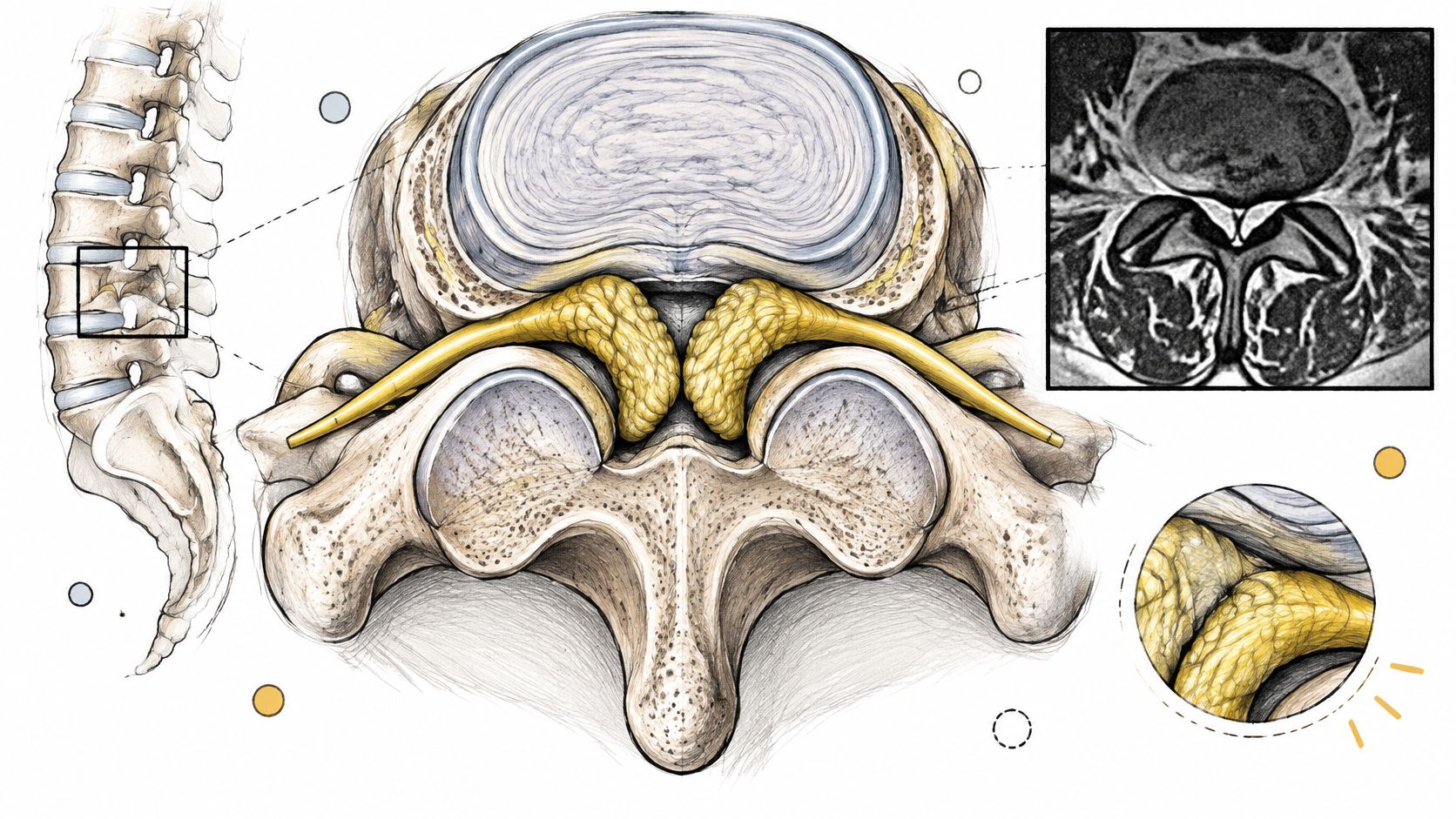
Consider someone whose pain travels into an arm or leg after physical therapy, medication, and an epidural. Each helped for a while, but the pain returned. A herniated disc can cause symptoms through disc-related pain, inflammation near a nerve, or mechanical pressure from displaced material. Those problems can overlap, but an approach aimed at changing the local biological environment is not the same as physically removing a compressive fragment.
The three Dream Body Clinic spine protocols are built for patients whose main issue is chronic disc-related pain and surrounding inflammation rather than acute severe compression that requires urgent surgical decompression. An on-site MRI is included in each package so candidacy can be confirmed before treatment.
How MSCs Actually Work Inside a Damaged Disc
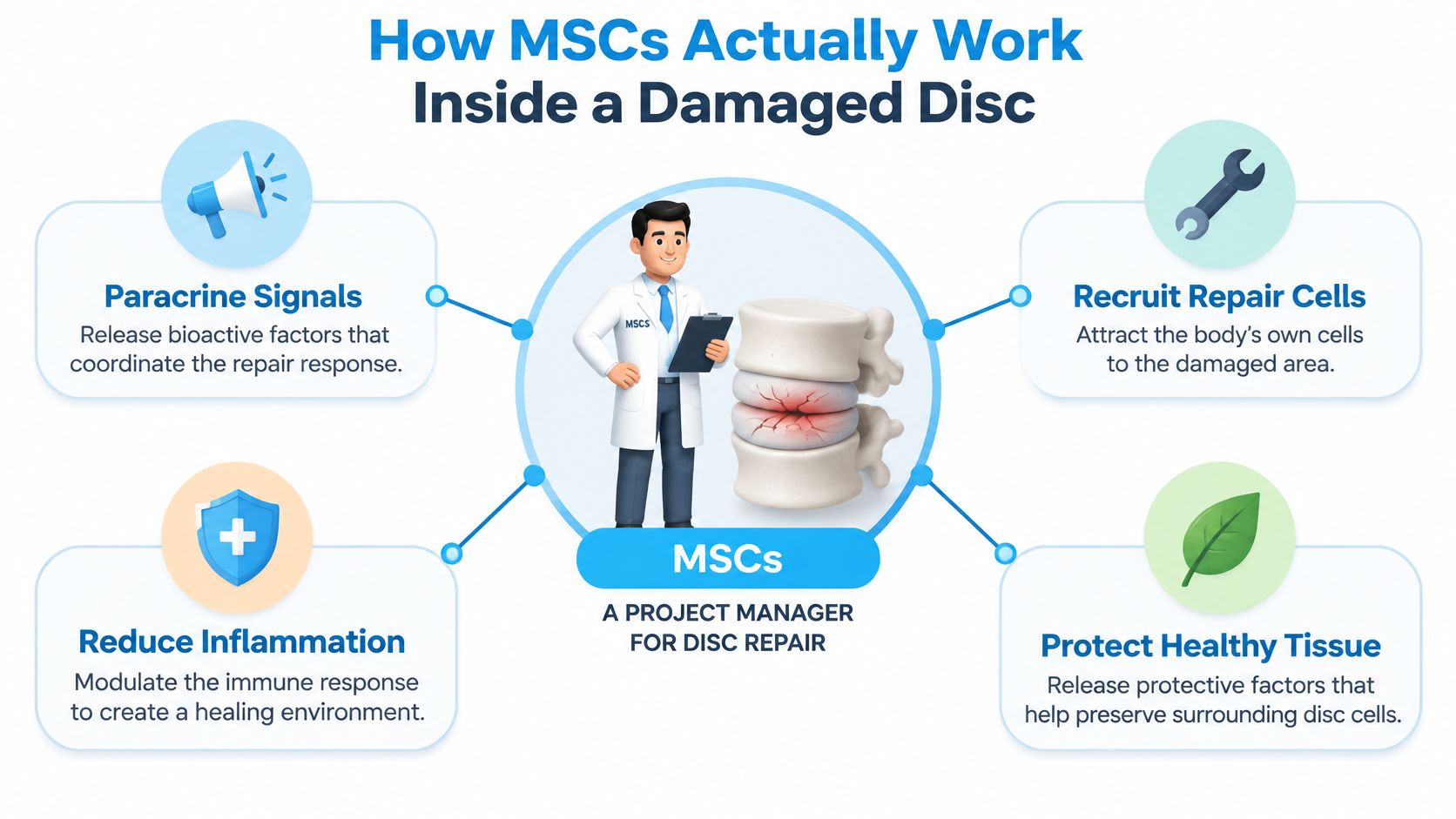
MSCs work primarily through the paracrine effect. They release cytokines, growth factors, and extracellular vesicles that influence nearby nucleus pulposus and annulus fibrosus cells. The goal is to help modulate inflammation, support cell survival, and influence the balance of extracellular matrix rather than to become replacement disc tissue themselves.
In the neck, middle-back, and lower-back protocols, cells are placed peri-spinally (around the affected levels) under image guidance, typically with PRP. This positioning allows the signals to reach the disc and surrounding structures without the cells becoming trapped inside the nucleus. A separate MSC intravenous infusion adds systemic support.
Signals, not replacement parts
Stem cells don’t differentiate into other cells as the treatment’s expected repair mechanism. The proposed effect is that they send specialized signals to guide the healing process, influencing the body’s own cells rather than becoming replacement cartilage or rebuilding the disc themselves. A review of MSC-derived exosomes describes the cells’ effects in disc disease as primarily related to paracrine signaling, not differentiation according to the review of MSC-derived exosomes.
Laboratory research also supports a cautious distinction between signaling and structural rebuilding. In an ex-vivo model, MSC exposure reduced the expression of inflammatory genes in stimulated disc tissue, but researchers didn’t measure an increase in type-II collagen or aggrecan under the tested conditions in the study of MSCs in inflammatory disc tissue. These findings help explain the proposed biology. They don’t prove that an injection heals a patient’s herniation.
The analogy has limits: a disc is living tissue in a mechanically demanding part of the body, not a building site. And signals that produce changes in laboratory or animal models don’t guarantee symptom relief or disc regeneration in people. A review of MSC secretome research describes laboratory findings involving nucleus pulposus cell activity and matrix-related processes.
Who Is a Realistic Candidate and Who Needs a Surgeon First
A realistic candidate is usually an adult with chronic neck, mid-back, or lower-back pain linked to disc degeneration or herniation after conservative care, and whose MRI shows treatable soft-tissue damage. Progressive weakness, bowel or bladder changes, or other red-flag neurological signs require urgent surgical evaluation first.
The clinic requires an MRI (included in the package) and does not treat patients with cancer in the past five years. Large osteophytes or complete structural tears that the protocol is unlikely to help are common reasons treatment is not recommended.
Red flags change the decision
Progressive weakness or signs of cauda equina syndrome call for urgent medical evaluation, not a delay while arranging a regenerative injection. Cauda equina warning signs can include new difficulty controlling the bladder or bowel, or numbness around the saddle area. A clinician should assess these symptoms urgently.
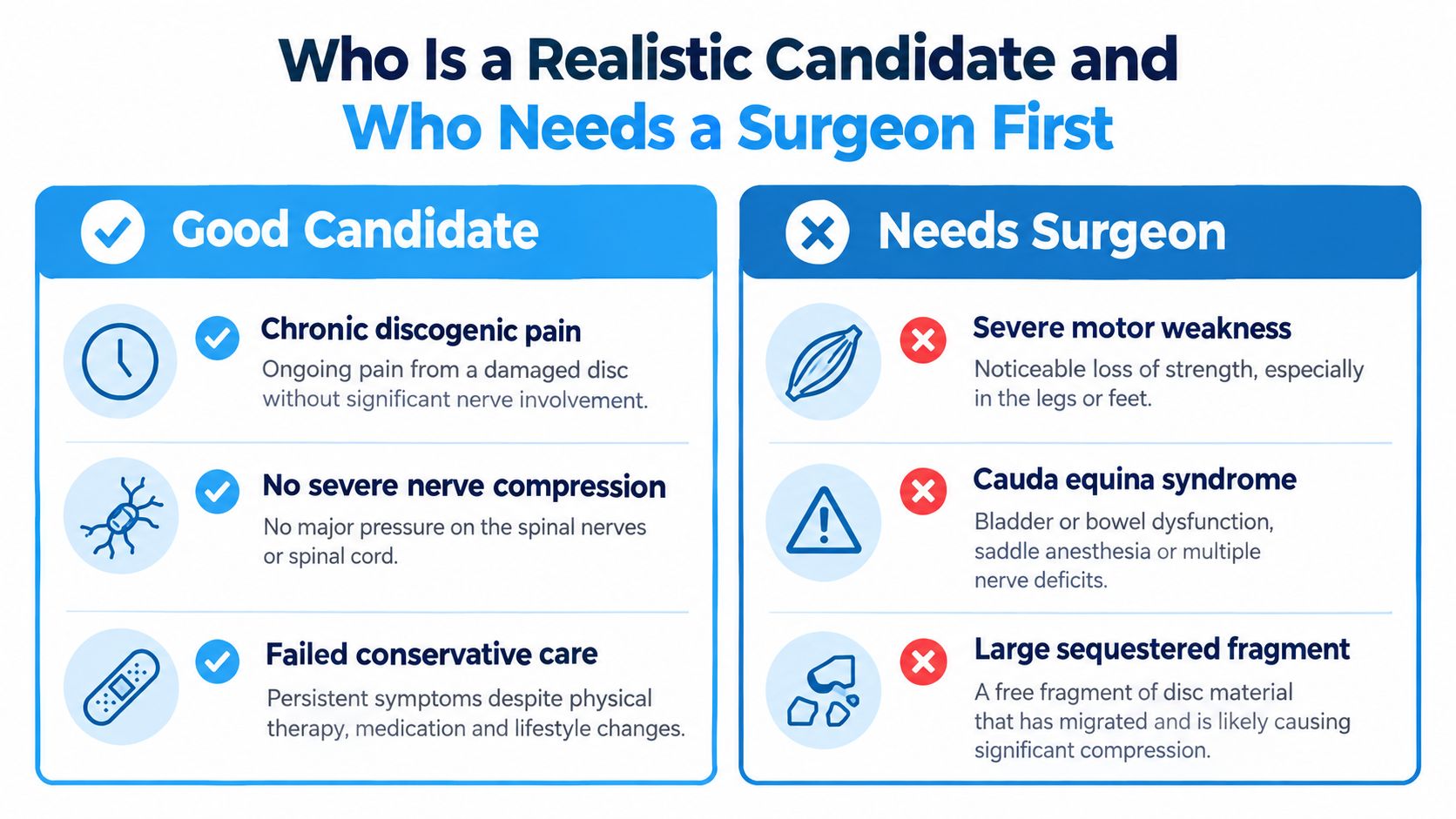
A practical way to frame the consultation is to ask whether the proposed treatment is directed at chronic disc-related pain or at nerve compression. If a clinic’s explanation treats those as the same problem, ask for clarification. A biologic injection shouldn’t be presented as a substitute for urgent evaluation when severe neurological symptoms are present.
Comparing the Delivery Routes for Disc Injection Therapy
| Route | How Dream Body Clinic Uses It | Typical Role |
|---|---|---|
| Peri-spinal / intramuscular | Standard for neck, middle-back, and lower-back protocols | Places cells around affected levels to support disc and surrounding tissues |
| Intravenous | Included in the spine packages | Provides systemic support alongside local delivery |
| Intradiscal | Not the current standard | Previously used; peri-spinal placement preferred for better signaling |
These are descriptions of location and intended target, not proof of comparative effectiveness. A route that sounds closer to the disc isn’t automatically better for every patient, particularly if symptoms stem from mechanical nerve compression. The clinician should explain how the route relates to your MRI and examination, and whether the goal is to address discogenic pain, surrounding inflammation, or another concern.
If you’re discussing a procedure, ask who performs it, how the needle or delivery device is guided, and what measures are used to reduce infection risk. You can also ask how the clinician will judge the outcome and what the next step would be if symptoms don’t improve. This overview of how stem cell injections work can help you prepare questions about the procedure, but your own clinician should explain the specific protocol being offered.
What a Transparent MSC Protocol Should Specify
A clear protocol should describe cell source, dose, placement, and what is included. Dream Body Clinic’s spine protocols use allogeneic MSCs from Wharton’s jelly and placenta, expanded in the clinic’s own ISO-rated lab on site (never frozen or shipped). Doses and exact placement are stated on the individual treatment pages. Each package includes an on-site MRI and blood panel, and the clinic provides remote follow-up.
Questions to put on your checklist
- Cell source and identity: Is the material autologous, meaning it comes from you, or allogeneic, meaning it comes from a donor? What testing is used to describe the cells?
- Dose and rationale: Ask for the number of cells planned for each treated disc and why that dose was chosen. A published randomized study used 25 million allogeneic bone-marrow MSCs per treated disc segment, but that trial’s protocol isn’t a universal dosing standard as reported in the study of allogeneic MSC disc repair.
- Quality and infection control: Ask about viability, identity, and sterility testing, along with the clinic’s infection-control procedures.
- Placement and guidance: Find out whether imaging guides the injection and which anatomical target the clinician intends to reach.
- Additional treatments: If the plan includes platelet-rich plasma, or PRP, ask what role it’s intended to play and whether it’s optional.
- Outcome tracking: Ask whether the clinic will compare symptoms and function before and after treatment, and how imaging will be used.

MRI can help clinicians assess the disc, but an imaging change doesn’t automatically mean a person feels better or functions better. Ask when baseline and follow-up imaging would be considered, and what clinical measures will be reviewed alongside it. Dream Body Clinic, based in Bucerias, Mexico, describes spine protocols that include cell counts, PRP, and pre- and post-treatment MRI; those details are useful to verify directly and compare with any other provider’s written plan.
What the Clinical Evidence Actually Shows So Far
The research record has expanded, but it doesn’t establish MSC injections as a proven way to rebuild every herniated disc. A 2014 systematic review found 24 animal studies involving 862 discs injected with MSCs and 1,603 control discs, but found no qualifying randomized human clinical trials at that time in its review of MSC injections for lumbar disc degeneration. Animal studies can help researchers investigate biological effects. They can’t establish that patients will experience the same results.
A 2023 systematic review included 9 clinical studies involving 245 patients, of whom 193 received intradiscal MSC injections. It reported a mean improvement of 41.62 points in Visual Analogue Scale pain scores, with a 95% confidence interval of 24.32 to 58.93, and statistically significant improvement in Oswestry Disability Index scores. However, pain outcomes had very high statistical heterogeneity, I² = 98%, meaning results varied substantially across studies. Different cells, protocols, patients, and follow-up periods make a single average difficult to apply to an individual.
Published studies show variable improvements in pain and disability with cell therapies for discogenic pain, but results are heterogeneous and consistent structural regeneration is not guaranteed. Pain relief and functional improvement are different from proven disc regeneration or guaranteed avoidance of surgery. At Dream Body Clinic, many patients report reduced pain and improved function, with results typically developing over 3–6 months. Individual outcomes vary and are assessed with imaging and clinical follow-up.
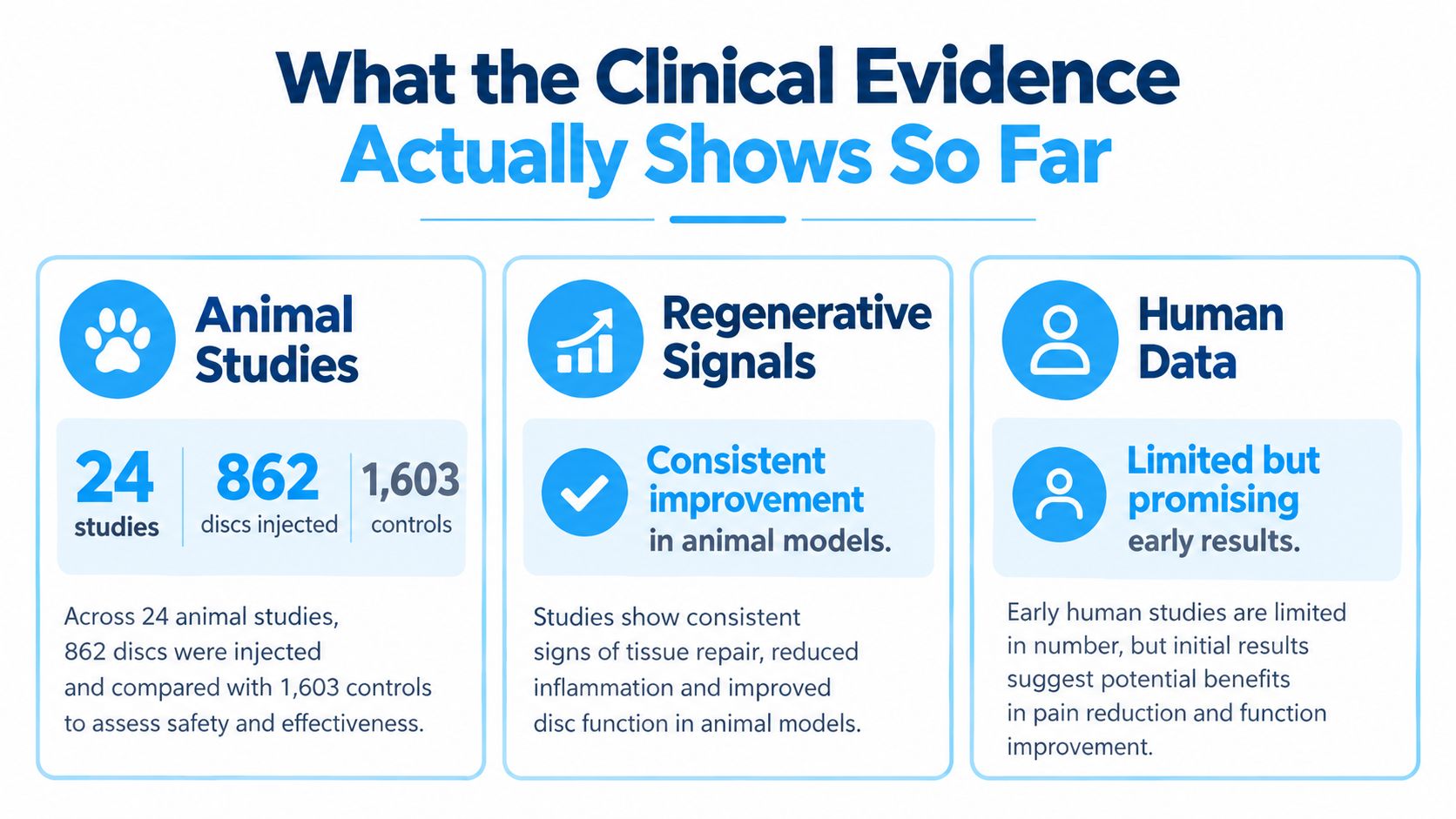
A 2025 systematic review reported 13 clinical studies from 2011 to 2025, including 5 randomized controlled trials, with a combined 1,299 patients. It found modest but statistically significant improvements in pain and disability, but no compelling imaging evidence that injections consistently restore disc structure in the review of clinical MSC studies for disc degeneration. A randomized study of autologous bone-marrow MSCs also reported that MRI structural signals didn’t translate into a statistically significant clinical advantage over sham treatment during its follow-up in the randomized study of MSC injection for disc degeneration.
Pain relief, functional improvement, disc regeneration, and nerve decompression are different outcomes. An improvement in pain scores doesn’t show that a herniated fragment has been removed, that a compressed nerve has been decompressed, or that surgery will be avoided. An MRI post treatment can show the results.
Recovery Timeline and What Improvement Really Looks Like
There is no single recovery calendar. Because the effect is signaling-based rather than an instant mechanical fix, progress is usually gradual. Many patients notice early changes within weeks, with fuller results by 3–6 months. Follow-up includes clinical measures and, when appropriate, imaging. If symptoms worsen or new neurological deficits appear, prompt medical evaluation is needed rather than waiting for a scheduled check-in.
What International Patients Should Ask Before They Book
Ask for the proposed protocol in writing, including cell source, dose, delivery route, what is included in the price, and how candidacy is determined. Dream Body Clinic operates under COFEPRIS oversight in Mexico and publishes pricing and inclusions for the neck, middle-back, and lower-back packages. Patients typically plan a five-day stay in the Puerto Vallarta area. Remote follow-up is available after return home.
Review the specific protocols:
Call (888) 704-3977 or email info@dreambodyclinic.net for a free MRI review.
7 Reasons Patients Choose Dream Body Clinic’s Spine Protocols for Herniated Discs
- Region-specific protocols for neck, middle back, and lower back with published details.
- High-dose peri-spinal MSC placement plus systemic IV support.
- No harvest procedure — allogeneic cells from Wharton’s jelly and placenta.
- Fresh cells expanded on site in an ISO-rated lab (never frozen or shipped).
- All-inclusive packages that include MRI and blood panel.
- Image-guided delivery matched to the affected levels.
- Short stay and remote follow-up for international patients traveling to the Puerto Vallarta area.
If you’re considering treatment, ask Dream Body Clinic for a written explanation of its lower-back protocol, including cell source, delivery route, testing, follow-up, and how the plan relates to your MRI and symptoms. Visit Dream Body Clinic to learn about its services and arrange a discussion before making travel or treatment decisions.