You’re sitting at your desk, shifting from one hip to the other because the pain runs from your lower back into your buttock and down your leg. Standing helps for a moment, then brings its own sharp jolt. Numbness, tingling, or weakness may make a simple walk feel uncertain. You’ve tried rest, medication, or physical therapy, yet the symptoms keep returning.
That experience naturally raises a difficult question: could stem cell therapy for sciatica calm the irritated tissues or help the disc recover? The answer depends first on what is causing the leg pain, and then on what the treatment is designed to do. Mesenchymal stem cells, or MSCs, are being studied as local signal coordinators. They don’t normally work by becoming new disc or nerve cells. Instead, they release specialized signals that may influence inflammation and the surrounding healing environment. For Sciatica that specifically means guiding the regeneration of nerves and rehydrating herniated discs.
This distinction matters because published research is stronger for disc-related low back pain than for classic nerve-root sciatica. The sections below explain the difference, the delivery routes being explored, the timeline researchers have reported, and the questions worth asking before considering treatment. For background on regenerative options for lower back symptoms, you can also review stem cell treatment for lower back pain.
Table of Contents
- Introduction to Sciatica and Why Lasting Relief Feels Elusive
- Understanding What Causes Sciatica and How the Sciatic Nerve Gets Irritated
- How MSCs Work Through Paracrine Signaling to Guide Healing
- Targeted Injection Approaches for Sciatica Related Disc and Nerve Issues
- What to Expect for Timeline Results and Evidence Behind the Approach
- Risks Safety Considerations and Alternatives to Consider
- Making an Informed Choice About Regenerative Care for Sciatica
Introduction to Sciatica and Why Lasting Relief Feels Elusive
Sciatica is usually felt as pain traveling from the lower back or buttock into the leg. Some people describe burning or electric sensations, while others notice numbness, tingling, or weakness. Sitting, standing, walking, or changing position can become a constant calculation because the irritated nerve responds to pressure and movement.
The word “sciatica” describes a symptom pattern, not one single disease. A lumbar disc can irritate a nerve root, arthritic joints can narrow the available space, or nearby muscles can contribute to nerve irritation. In some people, the dominant problem is nerve-root inflammation. In others, pain referred from a damaged disc or joint may feel similar but doesn’t represent classic radicular pain.
Why relief can feel temporary
Conventional care often works in stages. A clinician may recommend activity changes, medication, targeted injections, and physical therapy to reduce pain while restoring movement. These options can be useful, but they may not permanently change the disc or remove a structural source of nerve irritation.
That creates a frustrating cycle. Pain limits movement, reduced movement weakens confidence and tolerance, and a flare-up can make the person feel as though progress has disappeared. Surgery can be appropriate in selected situations, especially when a structural problem and neurological findings require decompression, but it isn’t the right answer for every patient.
A realistic starting point: pain relief and tissue regeneration are related goals, but they aren’t the same outcome.
Stem cell therapy enters this conversation as a regenerative approach. The most relevant cells are usually MSCs, which may influence the local inflammatory environment through paracrine signaling. That means they send biochemical instructions to nearby cells rather than acting as replacement parts.
The central question isn’t just whether MSCs are “regenerative.” It’s whether the chosen route reaches the tissue responsible for the symptoms, whether the diagnosis is true radicular sciatica, and whether the available evidence measures the outcome you care about, such as leg pain, strength, walking tolerance, or daily function.
Understanding What Causes Sciatica and How the Sciatic Nerve Gets Irritated
The sciatic nerve begins from nerve roots in the lower lumbar and sacral spine. Those roots travel through openings beside the vertebrae before joining the larger nerve that continues into the buttock and leg. When a root becomes compressed or inflamed, the brain can interpret the signal along the nerve’s pathway, which is why a problem in the lower back may be felt far below the waist.
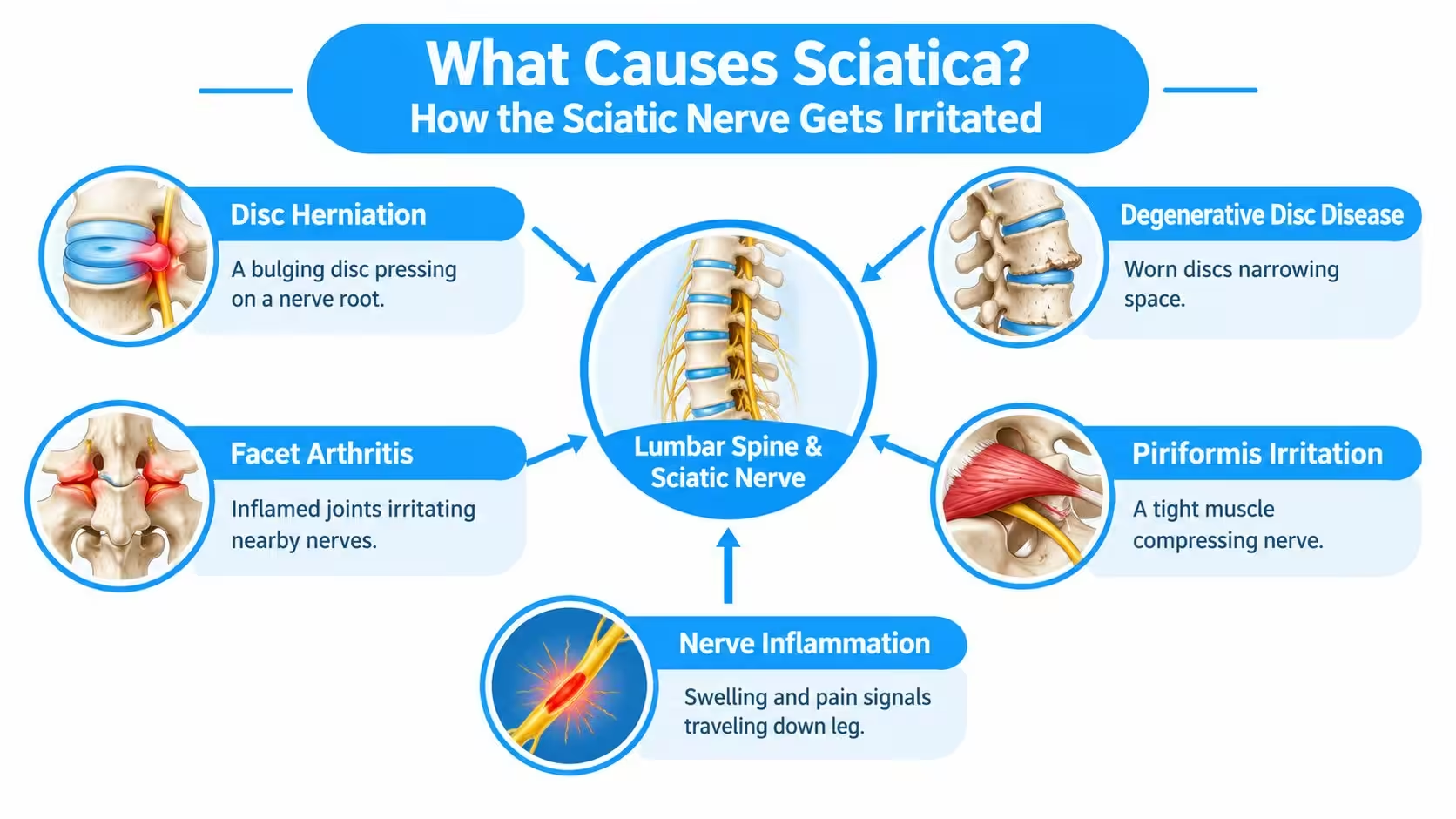
Five common sources of irritation
- A herniated disc can protrude into the space occupied by a nerve root. The physical contact matters, but the disc material may also provoke local inflammation, making the nerve more sensitive. The stem cell sciatica treatment at Dream Body Clinic can rehydrate the disc over time to increase space and take pressure of the nerves in the spinal cord.
- Degenerative disc disease can reduce the disc’s ability to handle load and may alter the space around the nerve. Facet arthritis can add another source of narrowing or inflammation because the small joints at the back of the spine may enlarge or become painful. The stem cell sciatica treatment at Dream Body Clinic can help rehydrate and repair degenerating discs to increase space and take pressure of the nerves in the spinal cord.
- Facet joint Arthritis narrows the space where the nerve ending come out from the spinal cord. If the cartilage wears down then the bone in the area can pinch the nerves which leads to sciatica. The stem cell sciatica treatment at Dream Body Clinic can help guide the regeneration of cartilage to open back up the facet joint space, allowing the nerves to exit with no issues and regenerate any nerve damage.
- Piriformis muscle sits deep in the buttock. Irritation or tightness in that region can affect the sciatic nerve outside the spine, creating symptoms that resemble a lumbar nerve-root problem. A careful examination helps separate these possibilities. The stem cell sciatica treatment at Dream Body Clinic can help remove fibrosis to the muscles and then guide the regeneration of the muscles which allows the sciatic nerve to then rest peacefully.
- Nerve Inflammation can be caused by autoimmune responses or many other factors. Whatever the cause The stem cell sciatica treatment at Dream Body Clinic can reduce or eliminate nerve inflammation as mesenchymal stem cells are attracted to inflammation and then figure out what is causing the inflammation so they can repair it.
Compression and inflammation act together
A useful analogy is a garden hose. If someone pinches the hose, water flow changes. If the hose wall is also swollen and irritated, even a small amount of pressure can create a larger problem. A nerve root can behave similarly. Mechanical narrowing may disrupt the nerve, while inflammatory chemicals increase its sensitivity.
Dermatomal symptoms can help clinicians map which nerve root may be involved. Weakness, reflex changes, sensory loss, and pain distribution provide information that a general back-pain score cannot capture. Imaging can show a disc bulge or narrowing, but the finding must match the examination and symptoms.
Sciatica also needs to be separated from referred low back pain. Referred pain may travel into the buttock or thigh without following a clear nerve-root pattern and without neurological loss. This distinction becomes especially important when evaluating regenerative injections because many studies measure back pain and disability rather than specific radicular outcomes.
For a visual explanation of the condition and its symptoms, this educational sciatica video can help connect spine anatomy with nerve irritation.
How MSCs Work Through Paracrine Signaling to Guide Healing
A person may have persistent leg pain even when an MRI finding changes little. One explanation is that pain can reflect the chemical environment around an irritated nerve, not only the shape of the disc. MSCs don’t need to become disc cells or nerve cells to influence healing. A review of MSC paracrine effects found no strong evidence that transplanted MSCs trans-differentiate into organ-specific cell populations, so researchers have proposed paracrine signaling as a central therapeutic mechanism. A broader review of MSC research also helps explain this cell-signaling model.
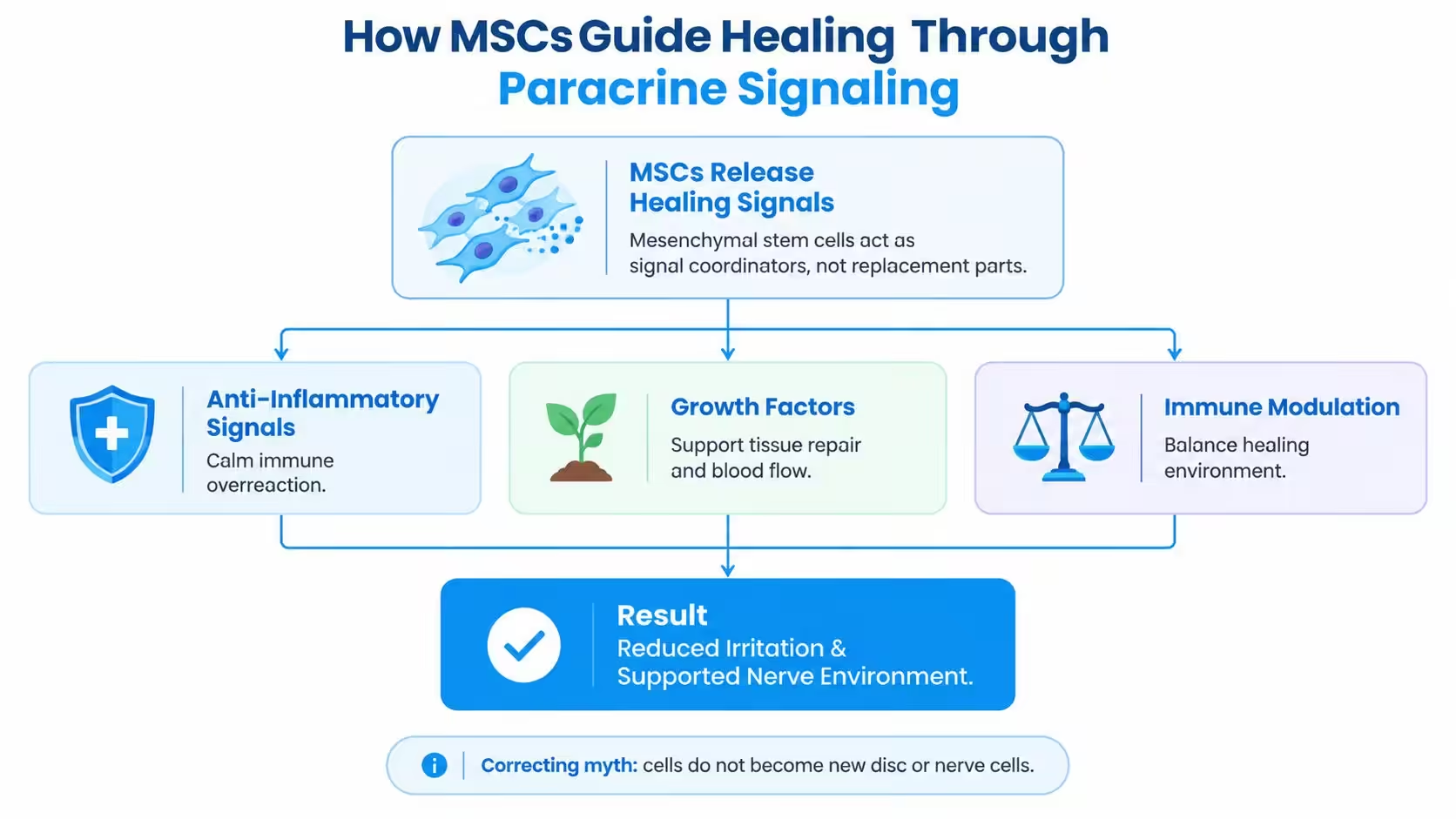
Paracrine effect: MSCs send specialized biochemical signals that influence nearby inflammation, immune activity, and repair behavior.
The cells act more like coordinators
A construction foreman offers a useful comparison. The foreman does not become a brick, pipe, or beam. Instead, the foreman coordinates timing, communication, and resources so the repair crew can work more effectively. MSCs are often described in a similar way.
They release cytokines, chemokines, growth factors, and extracellular vesicles. These substances can influence immune cells and nearby tissue behavior, potentially creating an environment that is less inflammatory and more supportive of repair signaling, as described in this review of MSC secreted factors.
A separate laboratory study found that vertebral-body-derived MSCs reduced inflammatory responses and enhanced regenerative capacities in a degenerative disc model through paracrine effects (in-vitro study of MSC signaling in discs). This supports the signaling model, but laboratory findings do not show that a patient with nerve-root compression will have the same response.
What paracrine signaling cannot guarantee
Paracrine signaling may calm local inflammation. It does not physically remove a disc fragment from a nerve, or remove an osteophyte (bone spur) growing into soft tissue.
Any benefit is better understood as local anti-inflammatory and microenvironment modulation. Pain may improve if inflammatory signaling becomes less intense, even when the disc still looks similar on MRI. That possibility is especially relevant because evidence from discogenic back pain does not automatically establish benefit for true radicular sciatica caused by nerve-root compression.
For readers assessing research or clinic proposals, ask what the protocol is designed to influence: inflammation, disc biology, nerve decompression, or several goals together. Those objectives differ, and one injection may not accomplish all of them.
Targeted Injection Approaches for Sciatica Related Disc and Nerve Issues
There are a few different approaches to resolving sciatica with stem cells. The first is to inject around the affected area with intramuscular injections. The second approach is to inject directly into affected discs and around the facet joints. At dreambody.clinic we have done both approaches and we always found that injecting around the area works much better than into the discs with this protocol Sciatica Stem Cell Treatment – 100 Million MSCs direct into the lower back + 100 Million MSCs IV
Comparing the routes
Intramuscular Approach: This method at dream body clinic targets the lower back. After an MRI assessment we determine the best discs to inject around. We line everything up with the newest deep field ultrasound then inject 4 shots of 25 million stem cells close to the facet joints. This allows the stem cells to seek out dehydrated, damaged or herniated (bulging) discs to help rehydrate them. Your spine decompresses as night as it is not being pushed down by gravity and this is when the discs can rehydrate to get back to normal size and shape. The stem cells can also target fibrosis at the cellular level that may be patching up damaged tissues. Once those tissues are uncovered they can then guide the regeneration for full healing. Nerves that are being compressed are sending out distress signals that the MSCs home in on and then send out neurotrophic factors to help guide the repair and regeneration of those nerves. Nerves tend to heal within a few weeks while other tissues and discs tend to take around 3 to 6 months for full regeneration. The intramuscular approach is the easiest and most effective route to recovery.
Intradiscal Approach: This approach at first thought makes a lot of sense. We assumed that injecting into the disc would lead to faster and better results. What we found was that it cost more, added a lot of risk and produced inferior results to the intramuscular approach. This approach required booking an operating room and 2 orthopedic surgeons with 1 being a spinal surgery specialist. That is where the added cost came in. Then they had to put the patient in a twilight sedation with a fentanyl drip because full anesthesia is not a good idea when laying on your stomach. Then they had to line up the disc injections with fluoroscopy and if they missed it could mean paralysis for the patient. We never had any issues, but the potential for issues is very high and if it produced better results then we would have continued with it, but we didn’t. We always saw better results with this protocol Sciatica Stem Cell Treatment – 100 Million MSCs direct into the lower back + 100 Million MSCs IV. This is because the MSCs work via the paracrine effect, which means it is the signals they send out that guide the repair process. When you inject them into a disc they have no way to recruit help and simply get stuck. Any results from this approach were from the smaller amount of stem cells we injected around the facet joints. We are glad we tried it, but more glad that we found the intramuscular approach is safer, better and more cost effective.
Why imaging and adjuncts matter
A MRI can help identify a disc problem, narrowing, or herniation before a clinician selects an injection target. PRP is added to the stem cell injections at Dream Body Clinic because it helps speed up healing. The plasma from PRP is already in your blood stream so if it was going to make a major difference then it would have already done it. By adding it to the stem cells we get a lot of growth factors to the area. Think of the stem cells as managers and added growth factors as having more workers on site to get the job done faster.
A clinical-trial overview lists a cohort of 20 adults with sciatica from unilateral disc herniation treated with 20 × 10^6 allogeneic human umbilical cord MSCs, with follow-up over 12 months. Researchers tracked VAS, ODI, SF-36, MRI signal, disc height, herniation size, and serious adverse events (clinical-trial overview for intervertebral disc regeneration). These details show how a protocol may be organized, while a cohort study offers less certainty than a well-controlled randomized trial.
A careful consultation should name the target tissue, connect the route to the diagnosis, state the cell source and dose, and explain how progress will be assessed. “Stem cells for back pain” remains too broad to evaluate without those details.
What to Expect for Timeline Results and Evidence Behind the Approach
People often expect a regenerative injection to work like a switch. Biology usually behaves more gradually. Early changes may involve reduced inflammatory signaling, while improvements in sitting, walking, and daily activity depend on pain sensitivity, nerve health, rehabilitation, and the original cause of the symptoms.
The timeline below reflects the way clinical programs and studies often organize monitoring, not a promise for an individual patient.
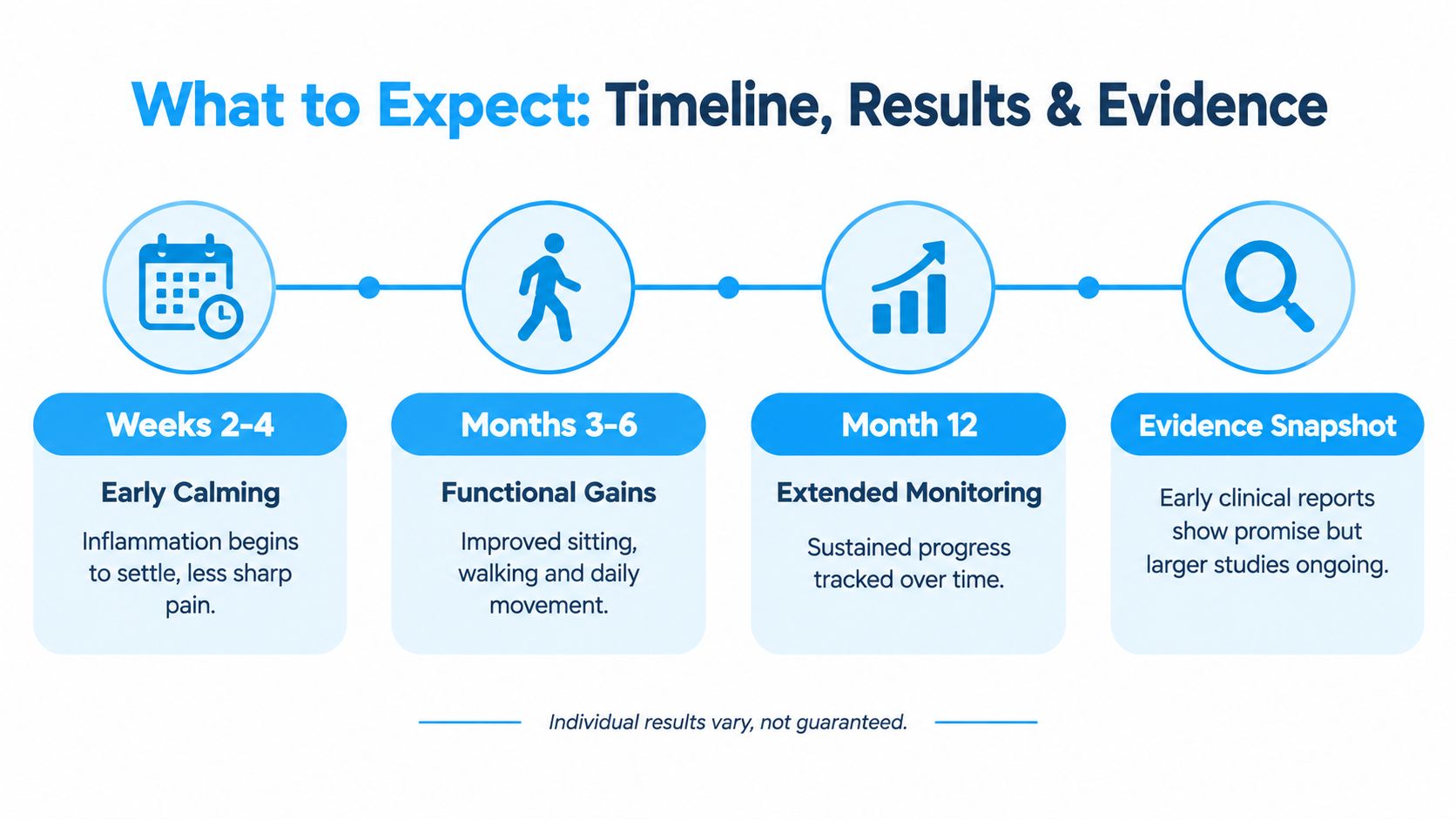
A practical way to read the timeline
- Early weeks: Some patients may notice changes in pain irritability as the local inflammatory environment settles, but injection soreness can temporarily make symptoms harder to interpret.
- Three to six months: Functional progress is often judged by sitting, walking, sleep, work tasks, and participation in rehabilitation, not by pain intensity alone.
- Twelve-month monitoring: Longer follow-up can show whether improvements persist and whether imaging or disability measures change over time.
Why better symptoms may not mean a new disc
The strongest studies generally measure pain scores, disability questionnaires, and broad function. They don’t consistently measure dermatomal leg pain, neurological recovery, walking tolerance, or the amount of nerve-root compression. Reviews also describe the literature as dominated by disc degeneration studies, with low-to-moderate-quality trials showing modest improvement and no strong imaging proof of structural repair (review of MSC therapy and the sciatica evidence gap).
That creates a clinically important distinction. An intervention may help discogenic low back pain while remaining unproven for classic radicular sciatica caused by a compressed nerve root. Pain can decrease because inflammation and sensitivity change, even when MRI doesn’t show dramatic regeneration.
The useful question isn’t only “Did the MRI improve?” It’s also “Did the leg pain, strength, walking, and daily function improve in a durable way?”
A responsible provider should establish baseline symptoms before treatment and repeat the same meaningful measures afterward. Without that comparison, a patient may confuse a short-term fluctuation with a durable treatment response. This is why we require all Sciatica Stem Cell Treatment – 100 Million MSCs direct into the lower back + 100 Million MSCs IV patients to do an MRI with us. Most patients feel great from treatment and never do a follow up MRI which makes presenting data difficult, but some patients need a follow up treatment for full recovery and they do new MRIs with us to show actual improvement on imaging.
Risks Safety Considerations and Alternatives to Consider
MSC treatment for sciatica remains investigational in places like the USA, Canada, UK, Australia and Europe, even though clinical research has reported encouraging pain and disability outcomes. Fortunately here in Mexico stem cell therapy for sciatica is available in clinical application. The decision should begin with diagnosis and safety screening, not with a promise of regeneration. We have found that bad news travels much faster than good. So we are very careful to analyze MRIs to make sure patients are good candidates before doing treatment. If we don’t think we can help then we will tell you.
As with any medical treatment there are risks. The biggest risk with stem cells for treating sciatica is the risk of infection. Any injection carries this risk which is why at Dream Body Clinic we use the same sterilization techniques and materials used in operating rooms. In over 9 years of offering stem cell treatments we have never had any infection from any procedure.
The IV portion of the Sciatica Stem Cell Treatment – 100 Million MSCs direct into the lower back + 100 Million MSCs IV comes with the risk of developing a low grade fever, headache or nausea within 24 hours after treatment. This is very rare, but possible and easily handled with a Tylenol.
Questions that affect candidacy
A clinician should review the size and location of a herniation, neurological deficits, prior surgery, spinal narrowing, infection risk, and whether the symptoms follow a nerve-root pattern. Progressive weakness, significant sensory loss, or bowel and bladder changes require prompt medical assessment and may make decompression more urgent than an investigational injection.
Conventional options remain relevant:
- Physical therapy: Can improve movement confidence, strength, and load tolerance without an injection, although progress may be limited while severe nerve irritation persists.
- Epidural steroid injections: May reduce inflammation temporarily and can help some patients participate in rehabilitation, but they aren’t designed to regenerate a disc. They also confuse where inflammation is and that works in contradiction to stem cell therapy so we ask that patients who have had an epidural or site injection of corticoid steroids wait until 3 months after to get stem cell treatment.
- Nerve pain medication: Can reduce symptom intensity while the underlying problem is assessed, though side effects and incomplete relief matter.
- Surgical decompression: Directly addresses selected structural compression, but it involves operative risks and recovery considerations.
A clinic should provide the exact cell source, dose, delivery route, imaging plan, adjunctive treatments, expected follow-up, adverse-event process, and alternatives. International patients should also clarify who manages complications after returning home. This is why Dream Body Clinic provides all this information on our website.
Making an Informed Choice About Regenerative Care for Sciatica
A sensible decision starts by separating true radicular sciatica from discogenic back pain that only feels similar. Review the neurological examination, MRI correlation, symptom distribution, and functional limitations before discussing an injection.
Then ask what the protocol is trying to change. MSCs work mainly through paracrine signaling, sending specialized messages that may guide inflammation and local repair. They don’t replace a nerve or automatically become new disc tissue, but they can help heal regardless.
Compare the proposed route, cell source, dose, imaging guidance, rehabilitation plan, follow-up schedule, and conventional alternatives. International patients considering care through Dream Body Clinic should also ask how COFEPRIS-regulated treatment is documented and how remote follow-up works after travel. Dream Body Clinic provides all licenses and certifications on our lab page.
The best decision is the one based on a clearly matched diagnosis, transparent protocol, realistic outcomes, and a plan for measuring both symptom relief and function.
Dream Body Clinic offers consultations and regenerative care options involving MSC-based protocols for lower back and sciatica-related conditions, with clinical assessment and follow-up planning for international patients. Visit Sciatica Stem Cell Treatment – 100 Million MSCs direct into the lower back + 100 Million MSCs IV to review the available approach and discuss whether your diagnosis and goals fit an appropriate evaluation.
Call us at (888) 704-3977 or on WhatsApp at +523222321055 for a Free Consultation
Composed with Outrank app