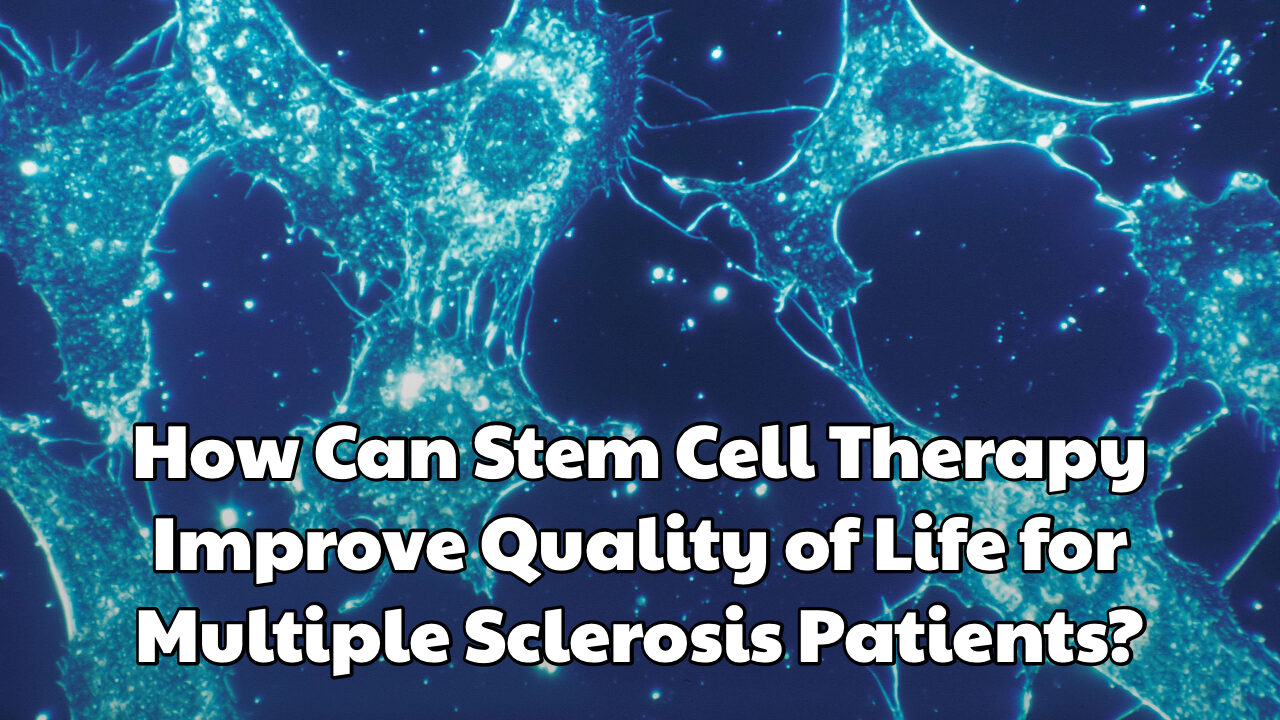
How Can Stem Cell Therapy Improve Quality of Life for Multiple Sclerosis Patients?
Living with multiple sclerosis is not just about managing symptoms. It is about navigating a condition that can quietly reshape every part of your daily life, from how you move and think to how you work and connect with the people you love. For many MS patients, conventional treatments help slow things down but rarely offer meaningful recovery. Stem cell therapy for multiple sclerosis is changing that conversation, offering a regenerative path that goes beyond symptom management and targets the underlying damage driving the disease.
At Dream Body Clinic in Puerto Vallarta, mesenchymal stem cell therapy has helped patients with MS experience real, measurable improvements in mobility, cognition, fatigue, and overall quality of life. This guide walks through what you can expect, what the science supports, and what you need to know before taking the next step.
What Is Multiple Sclerosis and How Does It Affect Daily Life?
Multiple sclerosis is an autoimmune condition in which the immune system mistakenly attacks the myelin sheath, the protective coating that surrounds nerve fibers in the central nervous system. When myelin is damaged, nerve signals slow down or stop altogether, leading to a wide range of neurological symptoms. Over time, the nerves themselves can also become damaged, which makes recovery progressively harder.
The symptoms of MS vary widely from person to person, but the most common include muscle weakness and spasticity, chronic fatigue, vision disturbances, balance problems, cognitive changes, and numbness or tingling in the limbs. For many patients, these symptoms come and go in the early stages of the disease. As it progresses, they often become more persistent and severe.
The impact of MS extends well beyond physical symptoms. Many patients struggle to maintain employment due to fatigue and cognitive difficulties. Relationships become strained when independence is lost or when partners take on caregiving roles. Simple activities like driving, cooking, or spending time with children can become genuinely challenging. The emotional toll, including anxiety, depression, and grief over lost function, is often just as heavy as the physical burden.
Conventional MS treatments, such as disease-modifying therapies like interferons, glatiramer acetate, and newer monoclonal antibodies, are designed primarily to reduce the frequency of relapses and slow progression. They work by suppressing immune activity, which can be effective but does not repair existing nerve damage. This is where regenerative medicine for multiple sclerosis enters the picture in a meaningful way.
How Do Mesenchymal Stem Cells Address MS Symptoms?
Messenchymal stem cells (MSCs) are adult stem cells found naturally in the body. They are particularly well suited to treating autoimmune and neurological conditions because of two core abilities: immunomodulation and neuroprotection. If you want to understand the full scope of what this treatment offers, you can learn more about multiple sclerosis stem cell treatment at Dream Body Clinic.
Immunmomodulation means that MSCs can calm and re-regulate an overactive immune response. In MS, the immune system is attacking the body’s own nervous tissue. When MSCs are introduced, they interact with immune cells and release signaling molecules that shift the immune environment from inflammatory to tolerant. This does not suppress the immune system wholesale the way conventional drugs do. Instead, it re-educates it, reducing the autoimmune attack without leaving the patient vulnerable to infections.
Neuroprotection refers to the ability of MSCs to create an environment that supports nerve survival and function. They release growth factors that protect neurons from further damage and promote the survival of existing myelin-producing cells called oligodendrocytes. Some research also points to the potential for MSCs to promote remyelination, which means the regrowth of the protective myelin coating around damaged nerves.
The key difference between stem cell therapy and conventional MS treatment is this: drugs manage the disease process, while regenerative therapy targets the tissue damage itself. For patients who have lost function over years of disease activity, this distinction matters enormously. Symptom suppression keeps things from getting worse. Regenerative healing offers the possibility of getting better.
What Improvements Can MS Patients Expect from Stem Cell Therapy?
The improvements MS patients experience after stem cell therapy vary depending on disease type, duration, and severity. That said, there are consistent patterns in what patients report, and these are supported by both clinical research and real-world patient outcomes at clinics like Dream Body Clinic. The majority of our patients see massive improvement in their immune function and healing of spinal cord and/or brain lesions within 3 to 6 months post treatment. Many are even in full remission within this time frame. That being said patients that have struggled with MS for decades and have lost significant mobility tend to have lesser results than patients that treat it sooner.
Enhanced Mobility and Physical Function
One of the most commonly reported benefits of MS stem cell treatment is improved physical function. Many patients notice a meaningful reduction in muscle spasticity, the tightness and involuntary muscle contractions that make movement painful and difficult. With reduced spasticity comes better motor control, which translates into smoother, more confident movement.
Balance and coordination often improve as well. Patients who previously relied on mobility aids have reported being able to walk more steadily and with greater confidence. For those who have experienced drop foot or difficulty with fine motor tasks, gradual improvements in these areas are also possible as nerve signal transmission becomes more efficient.
Physical fatigue is one of the most debilitating aspects of MS, and it is also one of the most underrecognized. Many patients describe not just tiredness, but a bone-deep exhaustion that disconnects effort from energy. After stem cell therapy, a significant number of MS patients report increased stamina and a more sustainable energy level throughout the day, which opens the door to re-engaging with physical activity and daily routines.
Cognitive and Mental Health Benefits
MS affects the brain, not just the body, and cognitive symptoms are often just as disabling as physical ones. Problems with memory, mental processing speed, focus, and word retrieval are common in MS and can make professional and personal life genuinely difficult. You can also explore how stem cells support brain optimization for a broader understanding of cognitive regenerative therapy.
After mesenchymal stem cell therapy, many patients describe a lifting of what is commonly called brain fog. Mental clarity improves, tasks that required significant effort feel more manageable, and processing speed often becomes noticeably faster. These changes are likely connected to reduced neuroinflammation and better nerve signal efficiency in the brain.
Mood and emotional health also tend to improve following treatment. MS-related depression is partly a psychological response to living with a progressive condition, but it also has a neurological component tied to inflammation and nerve damage in areas of the brain that regulate emotion. By reducing inflammation and supporting neural function, stem cell therapy can contribute to greater mood stability and a measurable reduction in depression symptoms.
Vision and Sensory Improvements
Optic neuritis, an inflammation of the optic nerve, is one of the earliest and most common symptoms of MS. It can cause blurred vision, reduced color perception, and in some cases significant visual loss. Stem cell therapy’s anti-inflammatory properties can help stabilize optic nerve function and, in some patients, support partial recovery of visual acuity and color perception. This video shows how Jack healed his optic nerve damage from MS with our stem cell treatment and eliminated chronic migraines from sunlight exposure – https://rumble.com/v1nrrd1-jacks-multiple-sclerosis-stem-cell-treatment-update.html
Sensory symptoms like numbness, tingling, and burning sensations in the limbs are also frequently affected. As inflammation subsides and nerve conduction improves, many patients report a gradual reduction in these sensations. While not every patient experiences complete resolution, the change in sensory comfort can meaningfully improve daily quality of life.
How Does Dream Body Clinic’s Approach Differ for MS Treatment?
Not all stem cell clinics approach MS with the same level of protocol specificity. Dream Body Clinic uses high-dose mesenchymal stem cell protocols that are specifically designed for neurological conditions, recognizing that MS requires a different approach than orthopedic or metabolic applications. To understand how this fits within a broader autoimmune treatment framework, you can review the autoimmune disease stem cell treatment approach at Dream Body Clinic.
The clinic’s protocols combine stem cell infusions and intrathecal stem cell application to enhance the therapeutic environment and help the stem cells integrate more effectively. This combination approach reflects an understanding that MS is a complex, multifactorial condition that benefits from more than a single intervention.
Treatment plans at Dream Body Clinic are personalized if needed, but the overall approach is the same for every MS patient. We do an IV of at least 1.4 million per pound of body weight plus an intrathecal injection of 50 million MSCs. The IV targets the immune system to reprogram it to protect instead of attack the body. The intrathecal treatment allows the stem cells to repair and regenerate lesions in the spinal cord and brain.
Post-treatment follow-up is also a structured part of the program. The team monitors patient progress after treatment and provides guidance on what to watch for in terms of improvements, what symptoms might shift during the recovery window, and when a follow-up treatment might be beneficial. This ongoing relationship is part of what distinguishes Dream Body Clinic’s approach from more transactional treatment models.
What Does the Treatment Process Look Like at Dream Body Clinic?
The experience begins with an initial consultation, during which the clinical team reviews your medical history, current medications, imaging results, and symptom profile. This step is essential because it determines the structure of your personalized treatment protocol and ensures you arrive at the clinic fully prepared.
Once a protocol is established, patients typically receive treatment through two primary methods: intravenous infusion and intrathecal injection. IV infusion delivers stem cells directly into the bloodstream, where they can travel to sites of inflammation throughout the body. Intrathecal injection delivers cells directly into the cerebrospinal fluid, allowing for more direct access to the central nervous system. The combination of both methods is often used for neurological cases like MS to maximize coverage and effectiveness.
Most MS patients undergoing treatment at Dream Body Clinic stay in Puerto Vallarta for approximately one week.. The treatment itself is administered on one day. Puerto Vallarta is a genuinely welcoming and beautiful destination, which makes the experience feel less clinical and more restorative for many patients and their travel companions.
Safety monitoring is ongoing throughout the treatment period. The clinical team tracks vital signs, lab values, and patient-reported responses to ensure the process is progressing safely. Real patient experiences, including stories from individuals who have gone through similar treatment journeys, are available through Dream Body Clinic’s patient testimonials.
What Should MS Patients Consider Before Pursuing Stem Cell Therapy?
Stem cell therapy is not the right choice for every MS patient at every stage, and approaching it with clear expectations and honest self-assessment will lead to better decisions and better outcomes. Several important factors deserve careful thought before committing to treatment.
Your current disease stage matters significantly. Patients with relapsing-remitting MS who still have active inflammation and some preserved neurological function typically respond better than those with long-standing progressive MS and significant permanent nerve loss. This does not mean advanced-stage patients see no benefit, but the ceiling of improvement is generally higher when there is more intact neural tissue to support.
Financial planning is a practical reality. Stem cell therapy is an out-of-pocket investment, and MS treatment protocols at a specialized clinic represent a meaningful cost. That said, many patients consider it within the context of long-term disease management costs, lost income from disability, and the personal value of functional recovery. It is worth having a clear-eyed conversation about what you can invest and what outcomes you are hoping for.
Travel planning requires some additional thought for MS patients, particularly those with mobility challenges. Dream Body Clinic works with international patients regularly and can advise on accessibility considerations. For patients traveling to Puerto Vallarta, practical guidance on accommodations and activity recommendations near the clinic is available to help you plan a comfortable and manageable stay.
It is also important to maintain any disease-modifying therapies your neurologist has recommended unless advised otherwise. Stem cell therapy is not a replacement for your existing care team. Ideally, it works alongside your overall MS management plan.
How Do You Prepare for MS Stem Cell Treatment?
Good preparation genuinely affects outcomes. The more organized and informed you are going into treatment, the smoother the process will be and the better positioned your body will be to respond.
You will need to gather recent medical records, including MRI or CT imaging of the brain and spine, a list of current medications, and any relevant lab work from the past six to twelve months. The clinical team will use this information to finalize your treatment protocol and identify any adjustments that might be needed before you arrive.
Medication adjustments may be necessary in some cases, particularly if you are on immunosuppressive treatments that could interfere with stem cell activity. The clinic’s medical team will advise you specifically on what to continue, pause, or adjust leading up to treatment.
Physically, focusing on hydration, balanced nutrition, and gentle movement in the weeks before treatment helps create a more favorable internal environment for stem cell therapy. Arriving well-rested and nutritionally supported gives your body the best chance to respond positively.
For patients with significant mobility challenges, it helps to communicate your needs in advance so that airport transfers, accommodation, and clinic access can be arranged with your comfort in mind. Many patients travel with a companion, which both supports logistics and makes the experience more emotionally comfortable.
What Research Supports Stem Cell Therapy for Multiple Sclerosis?
The research base supporting stem cell therapy for MS has grown steadily over the past decade. For a detailed look at the immunological mechanisms involved, the immunosuppressive potential of mesenchymal stem cells is well documented in peer-reviewed literature and offers a strong foundation for understanding why this approach works.
Clinical studies have consistently shown that mesenchymal stem cell therapy can reduce relapse rates in patients with relapsing-remitting MS. A 2022 review published in the journal Frontiers in Immunology found that MSC treatment was associated with a meaningful decrease in annualized relapse rates across multiple patient cohorts. These results suggest the therapy’s immunomodulatory effects are real and measurable in clinical settings.
Evidence also supports the role of MSCs in slowing disease progression. While halting MS entirely remains a long-term goal, studies show that MSC-treated patients often experience slower accumulation of neurological disability over time compared to untreated controls. This is particularly significant for patients who have not responded well to conventional disease-modifying therapies.
Research into myelin repair and neuroprotection continues to build the case for stem cell therapy as a neurorestorative treatment. Animal models have shown that MSC-derived exosomes and growth factors promote oligodendrocyte differentiation, which is a key step in myelin regeneration. Human trials are ongoing, and the patient-reported outcomes in quality of life measures consistently show improvements in fatigue, mobility, and emotional well-being following treatment.
Frequently Asked Questions About Stem Cell Therapy for MS
How quickly can MS patients see improvements after stem cell therapy?
Some patients notice early changes within four to six weeks of treatment, particularly in energy levels and inflammation-related symptoms. More substantial functional improvements in mobility and cognition often develop over three to six months as the stem cells continue working and the nervous system responds. Individual timelines vary based on disease stage and overall health.
Is stem cell therapy a cure for multiple sclerosis or a symptom management approach?
Stem cell therapy is not a cure for MS in the current state of medicine. It is a regenerative intervention that works to reduce the autoimmune attack, protect existing nerve tissue, and support myelin repair. Many patients experience significant functional gains and improved quality of life, but results vary and ongoing disease monitoring remains important. We have patients from 9 years ago that are still in remission, but we can’t call this a cure as autoimmune conditions always have the possibility of flaring back up. Fortunately if a flare up ever occurs the stem cell treatment can be done again to get things back in order.
Can stem cell therapy prevent future MS relapses and disease progression?
Research and clinical experience suggest that mesenchymal stem cell therapy can reduce relapse frequency and slow disease progression, particularly in relapsing-remitting MS. This is achieved through immunomodulation that re-regulates the immune response. However, results are not guaranteed, and treatment effects vary between individuals.
What is the success rate of stem cell therapy for different types of MS?
Patients with relapsing-remitting MS generally respond most favorably because there is still active inflammation that stem cells can directly address. Those with secondary progressive MS often see stabilization and some improvement in quality of life measures. Primary progressive MS patients can also benefit, though the degree of improvement tends to be more modest due to the nature of the disease’s progression.
How often do MS patients need to repeat stem cell treatments for sustained benefits?
Many patients find meaningful benefit from a single treatment course, while others benefit from a follow-up treatment within twelve to eighteen months to reinforce the initial results. The clinical team at Dream Body Clinic will assess your post-treatment response and advise on timing for any additional treatments based on your individual progress.
Are there any MS patients who should not pursue stem cell therapy?
Patients with active serious infections, certain cancers, or very advanced disease with minimal remaining neurological function may not be ideal candidates. A thorough medical review during the initial consultation will identify any contraindications and ensure the protocol is appropriate for your specific situation.
How does stem cell therapy interact with existing MS medications like interferons or glatiramer acetate?
Most conventional MS medications can be continued alongside stem cell therapy, though timing and dosage may need to be coordinated with the clinical team. Some immunosuppressive drugs may need to be temporarily adjusted before treatment to avoid interfering with stem cell activity. Your full medication list should be disclosed during the initial consultation so the team can advise accordingly.
For anyone living with multiple sclerosis and looking for options beyond conventional treatment, stem cell therapy for multiple sclerosis offers a path grounded in regenerative science and supported by a growing body of clinical evidence. Dream Body Clinic’s personalized, high-dose MSC protocols are specifically designed to address the neurological and autoimmune dimensions of MS, giving patients a real opportunity to recover function and improve their quality of life.
If you are ready to explore what this treatment could mean for you, visit our multiple sclerosis stem cell treatment page to learn more, or book a consultation with the Dream Body Clinic team. You can also find answers to additional questions on our stem cells FAQ page or begin the process through the autoimmune stem cell IV treatment booking page.
Call us anytime for a free consultation at (888) 704-3977 or on WhatsApp at +523222321055