Dream Body Clinic | Certified Regenerative Medicine | Bucerias, Nayarit, Mexico
Call for Free Consultation: (888) 704-3977 | info@dreambodyclinic.net
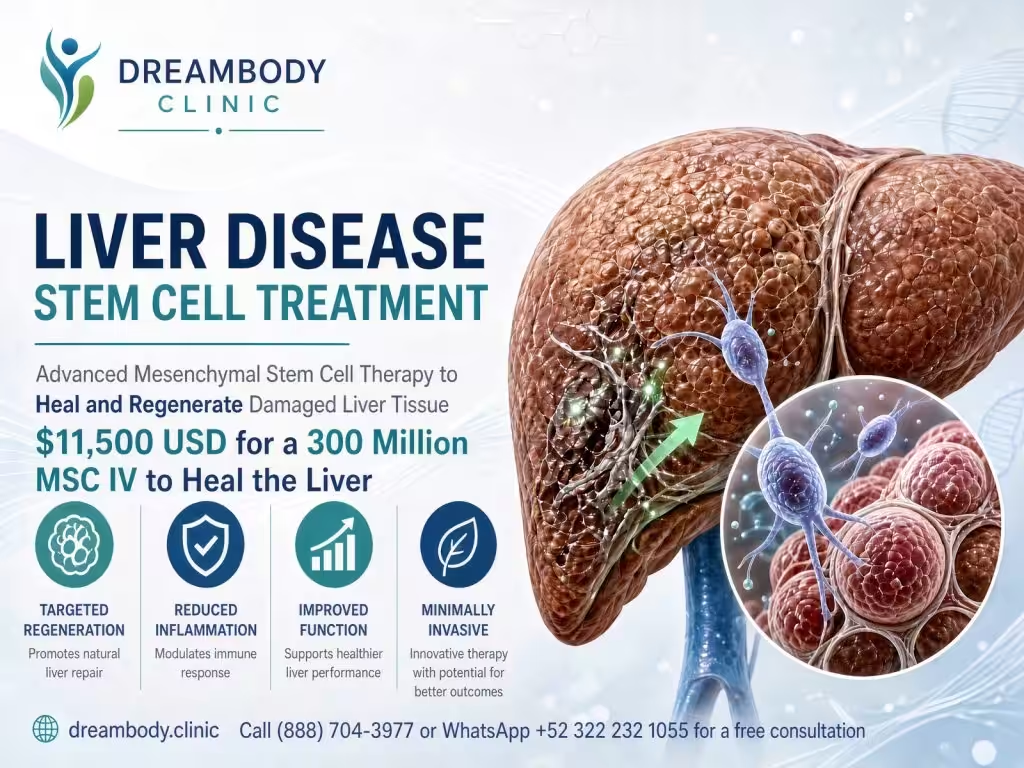
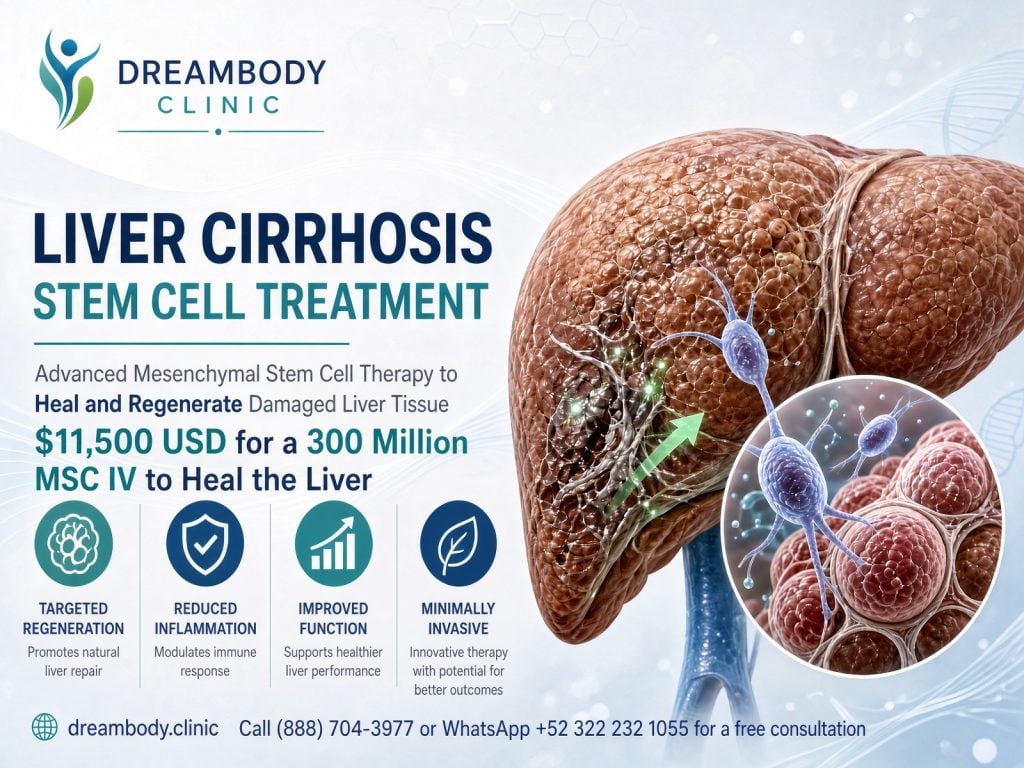
Liver Cirrhosis Stem Cell Treatment: Advanced Mesenchymal Stem Cell Therapy to Heal and Regenerate Damaged Liver Tissue
Stem Cell Therapy for Liver Cirrhosis at Dream Body Clinic
Liver cirrhosis stem cell therapy offers a regenerative approach for patients seeking to improve liver function, reduce fibrosis, and support natural healing when conventional options are limited. At Dream Body Clinic we use high-dose, culture-expanded mesenchymal stem cells (MSCs) specifically to address the chronic inflammation, scarring, and functional decline of cirrhosis.
Our cirrhosis stem cells protocol delivers 300 million MSCs intravenously, followed by supportive NAD+ and high-dose Vitamin C. The treatment is designed to create a pro-regenerative microenvironment in the liver.
How Mesenchymal Stem Cells Target Liver Cirrhosis
Research and clinical data show MSCs act through multiple mechanisms relevant to cirrhosis:
- Anti-fibrotic effects — MSCs inhibit activation of hepatic stellate cells, reduce collagen deposition, and promote matrix remodeling.
- Immunomodulation and anti-inflammation — They shift the immune balance, lower pro-inflammatory cytokines, and reduce ongoing liver damage.
- Support for hepatocytes — Paracrine factors (including HGF, VEGF, and others) encourage survival and proliferation of existing liver cells and help create conditions for tissue repair.
- Improved functional markers — Multiple clinical studies and meta-analyses report improvements in MELD scores, serum albumin, and other liver function parameters after MSC therapy, with a favorable safety profile.
These mechanisms make liver cirrhosis stem cell therapy a focused option for patients with established cirrhosis who want to support regeneration beyond symptom management.
Your Liver Cirrhosis Stem Cell Treatment Package
What’s Included
- 300 Million Mesenchymal Stem Cells delivered by IV
- NAD+ and High-Dose Vitamin C IV drip after the stem cells
- All-inclusive protocol administered by experienced medical professionals in our certified facility
- Pre-treatment bloodwork and medical oversight
Investment: $11,500 USD
Typical 4-Day Treatment Schedule
- Day 1 — Arrive and rest
- Day 2 — Bloodwork & payment
- Day 3 — Stem cell treatment
- Day 4 — Fly home
Patients must be in town for at least 4 days. Exact timing can be adjusted based on availability. If you stay longer, days may not be consecutive.
Expected Outcomes and Duration of Results
Improvements in liver function markers and reduced inflammation are reported in clinical literature following MSC therapy. Because the goal is real cellular support and tissue remodeling rather than temporary symptom masking, benefits can persist for years. MSCs remain active in the system for many months, interacting with immune cells and supporting repair. Some cells integrate as supportive pericytes and can continue providing benefit long-term.
Individual results vary. There is no guarantee of outcome, and this treatment is not a substitute for ongoing medical care or management of underlying causes.
Safety and Important Considerations
- Mild temporary fever or headache occurs in a small percentage of patients and usually resolves with over-the-counter medication.
- Standard IV-related risks exist (infection, rare clot mobilization); we perform bloodwork and use strict sterility protocols. We have not had infections in our patients.
- We do not treat patients with a cancer history within the past 5 years as a precaution.
- Our laboratory has extensive experience with mesenchymal stem cell culture and follows certification standards.
Frequently Asked Questions About Cirrhosis Stem Cells
Is stem cell therapy for liver cirrhosis safe?
Published clinical trials and meta-analyses generally report a favorable safety profile with no severe adverse events attributed to the MSCs in the studied populations. We screen patients carefully and follow strict protocols.
How does this differ from standard liver disease care?
Conventional care focuses on managing complications and slowing progression. Liver cirrhosis stem cell therapy aims to actively support regeneration, reduce fibrotic activity, and improve the local environment for healing.
Who is a candidate?
Patients with cirrhosis (various etiologies) who are medically stable enough for travel and IV therapy. A free consultation determines suitability.
Ready to Learn If Liver Cirrhosis Stem Cell Therapy Is Right for You?
Call Dream Body Clinic today for a free consultation: (888) 704-3977
Pioneering regenerative medicine — safe, certified, and focused on real cellular support.
Location: DBC Medical Center, Carmen Serdan 22, Bucerias, Nayarit 63732, Mexico
Liver Disease Stem Cell Treatment
We require patients to be in town for at least 4 days. Below is what a typical schedule looks like, but exact details are subject to change depending on availability and schedule
What’s included in your protocol
Typical Treatment Schedule
Watch & Learn
what Effect do MSCs have on Hepatocytes?
- Promote hepatocyte proliferation: MSCs can promote the proliferation of hepatocytes, encouraging the growth of new liver cells that can replace damaged or diseased cells. This is critical when this process is interrupted by a liver disease or other liver condition.
- Support liver function: MSCs can secrete growth factors and cytokines that support liver function, enhancing the ability of hepatocytes to carry out their metabolic and excretory functions.
- Stimulate regeneration: MSCs can stimulate the regeneration of liver tissue by recruiting other stem cells and promoting the formation of new blood vessels.
- Reduce inflammation: MSCs can reduce inflammation in the liver, which can help protect hepatocytes from further damage.
- Protect against oxidative stress: MSCs can protect hepatocytes against oxidative stress, a common feature of liver disease that can lead to cell damage and inflammation.
How do Mesenchymal Stem Cells Regenerate a Damaged Liver?
Promote regeneration of liver cells: Mesenchymal stem cells have the potential to differentiate into various types of liver cells, such as hepatocytes, cholangiocytes, and bile duct cells. They can promote the regeneration and repair of damaged liver tissue, restoring liver function.
Reduce inflammation: Mesenchymal stem cells have immunomodulatory effects that can suppress harmful immune responses and reduce inflammation caused by liver disease.
Inhibit liver fibrosis: Mesenchymal stem cells can inhibit the activation of liver stellate cells, which are responsible for liver fibrosis. By doing so, they can prevent the progression of liver fibrosis and improve liver function.
Modulate the immune response: Mesenchymal stem cells can modulate the function of immune cells involved in the immune response against liver disease. This can help regulate the immune response, prevent further damage to the liver, and promote liver regeneration and repair.
Increase survival of liver cells: Mesenchymal stem cells can increase the survival of liver cells by releasing growth factors, cytokines, and extracellular matrix proteins, creating a microenvironment that supports liver cell survival and regeneration.
Enhance the efficacy of liver cell transplantation: Mesenchymal stem cells can be used in conjunction with liver cell transplantation to enhance the efficacy of transplantation and improve outcomes.
Reduce oxidative stress: Mesenchymal stem cells can reduce oxidative stress in the liver, which is a common feature of liver disease that can lead to cell damage and inflammation.
Inhibit the activation of liver stellate cells: These are the cells responsible for liver fibrosis
How do MSCs Inhibit Liver Fibrosis?
Modulate immune responses: MSCs can modulate the function of immune cells, such as T-cells, B-cells, and natural killer (NK) cells, which are involved in the immune response against liver fibrosis. By modulating the function of these immune cells, MSCs can regulate the immune response and prevent further damage to the liver.
Reduce inflammation: MSCs have anti-inflammatory properties, which can help reduce the level of inflammation in the liver. Inflammation is a key factor in the development of fibrosis, so reducing inflammation can help prevent further fibrosis.
Induce matrix remodeling: MSCs can induce the remodeling of extracellular matrix proteins, promoting the degradation of fibrotic tissue and the formation of new, healthy tissue.
Secrete growth factors: MSCs secrete a range of growth factors that can stimulate the regeneration of liver cells and inhibit the development of fibrosis. Examples of growth factors produced by MSCs include hepatocyte growth factor (HGF), transforming growth factor-beta (TGF-β), and insulin-like growth factor-1 (IGF-1).
What Effect do MSCs have on Cholangiocytes?
Secreting bicarbonate: Cholangiocytes secrete bicarbonate, which neutralizes the acidic bile from the liver, helping to prevent damage to the pancreatic ducts and intestine.
Producing and modifying bile: Cholangiocytes can produce components of bile and also modify the composition of bile, which is important for proper digestion and absorption of fats and fat-soluble vitamins.
Regulating bile flow: Cholangiocytes help regulate bile flow by responding to hormonal and neural signals, facilitating the proper transport of bile from the liver to the intestine.
Repairing bile ducts: Cholangiocytes can regenerate and repair bile ducts after injury or damage.
How long do the Liver Disease Stem Cell Treatment Results Last?
Side Effects or Risks
- 1 in 100 people will experience a slight fever and/or headache for a few hours after treatment or the next day. We have found that 500mg of Tylenol easily resolves this issue.
- Any treatment involving an injection such as an IV runs a risk of infection. We have never had a patient experience an infection due to our sterility protocols,.
- We do not treat patients that have had cancer within the past 5 years. There is still no conclusive evidence linking stem cells to make cancer worse, but we prefer to stay on the side of safety until more information is available.
- As with any medical treatment there is no guarantee of results, but our outcomes have been great for the vast majority of patients.
- In all patients who receive an intravenous treatment of any sort, there is a risk of releasing a thrombus or plaque from the veins, even more so if the patient has mainly high cholesterol levels. If a thrombosis or phlebitis were to occur, it would occur immediately. This has not been an issue with our patients, but any sort of IV has this risk. This is why we do bloodwork for all patients to make sure that treatment is as safe as possible for them.
The only side effects that have been documented are the following:
Our lab has over 8 years of experience cultivating mesenchymal stem cells with perfect safety and efficacy. See Stem Cell Certification by Clicking Here
Liver Failure Stem Cell Studies
Selected peer-reviewed publications supporting this treatment.
Call (888) 704-3977
For a Free Consultation
Or email us at info@dreambodyclinic.net