MSC therapy for cirrhosis remains investigational: a pooled MELD improvement of about 1.22 points illustrates its modest, mainly short-term effects on MELD, Child-Pugh, platelets and albumin. These changes don't prove reversal of liver scarring, and treatment doesn't replace standard hepatology care.
The important question isn't whether a blood test improves after treatment. It's whether patients experience fewer complications, avoid hospitalization, live longer, or maintain better function without unacceptable risks. For anyone considering stem cell therapy for liver cirrhosis, separating those outcomes from encouraging laboratory results is essential.
Table of Contents
- What the Evidence Shows and How Much It Matters
- How MSCs Guide Healing Without Becoming Liver Cells
- Who Qualifies Based on Liver Disease Stage and Cause
- Protocol Differences That Decide Whether Results Compare
- Safety Monitoring and Mexico's Regulatory Framework
- Confirm the Protocol Before You Book a Treatment
What the Evidence Shows and How Much It Matters
Statistical significance and clinical importance answer different questions. Statistical significance concerns how compatible an observed difference is with chance under a study's assumptions. Clinical importance concerns whether that difference is large enough to matter to the patient.
That distinction is especially important when investigators combine small trials. A pooled result may favor treatment even when the average improvement is too small, too brief, or too uncertain to justify changing care.
Reported outcomes and how certain they are
The following findings concern different study populations and, in some cases, different stem-cell products. They shouldn't be read as a single, standardized treatment's expected results.
| Outcome | What the studies reported | Certainty and caveat |
|---|---|---|
| MELD score | A meta-analysis of cirrhosis trials reported reductions at about 1 month; the evidence summary includes a pooled improvement of about 1.22 points | Below the commonly cited 4-point minimally important difference |
| Child-Pugh score | Lower at 3 months versus conventional treatment | Short-term; durability uncertain |
| Platelet count | Higher at 3 months versus conventional treatment | Surrogate marker, not a survival endpoint |
| Albumin | Higher after 1 month versus conventional treatment | Heterogeneous trial populations and cell products |
| Mortality, 2025 Cochrane | The Cochrane review of human stem cells for advanced liver disease reported 41 of 308 treated participants versus 78 of 269 controls died during follow-up of 3 to 75 months | Low certainty; follow-up varied widely |
| Mortality, 2026 GRADE | A GRADE assessment of randomized trials reported a pooled risk ratio of 0.63 across 15 trials involving 925 participants | Very low certainty; inconsistency, imprecision, high risk of bias and limited long-term safety information |
| Durability of MELD change | Significant within 3 months, not beyond 6 months, in a separate analysis of nine studies involving 424 patients | Uncertain after 6 months |
| Liver histology | A review in Stem Cell Research & Therapy reported improvement in 6 of 11 evaluable patients with alcohol-related cirrhosis | Small, uncontrolled finding; not an established treatment effect |
The biochemical findings above include a meta-analysis of 10 randomized trials, with treatment compared against conventional care. They indicate a possible biological effect, but they don't establish that every measured change represents meaningful recovery.
MELD, the Model for End-Stage Liver Disease, estimates short-term mortality risk using bilirubin, INR and creatinine in its original formulation. Bilirubin reflects the handling of a waste product, INR measures an aspect of blood clotting, and creatinine helps assess kidney function. MELD-Na also incorporates sodium.
Child-Pugh combines bilirubin, albumin, INR, ascites and encephalopathy to grade disease severity. Albumin provides information about protein synthesis, while platelet counts can offer clues about portal hypertension. None of these measures directly maps the liver's entire scar architecture.
Why better scores aren't enough
A small average score reduction can conceal very different patient experiences. Some participants may improve, others remain unchanged, and others deteriorate. A pooled average doesn't identify which of those paths an individual patient will follow.
The mortality findings deserve particular restraint. The Cochrane counts came from studies with substantially different follow-up periods, so dividing deaths by participants doesn't produce a reliable personal survival estimate. The GRADE assessment's very low certainty means its apparently favorable relative effect remains highly uncertain.
Practical rule: Ask whether treatment changed an outcome patients experience, not only an outcome a laboratory measures.
Histology is closer to tissue structure than a blood test, but a small uncontrolled observation still can't establish causation. Without a credible comparison group, improvements can't confidently be separated from concurrent care, changes in the cause of injury, or sampling differences.
A useful treatment assessment therefore needs baseline and serial measurements, not a favorable result selected after treatment. Clinicians should record MELD-Na, Child-Pugh, albumin, bilirubin, INR, creatinine, platelets, ascites, encephalopathy, renal function and hospitalizations, while documenting concurrent treatment.
The defensible conclusion is narrow but useful: MSC therapy is a research-stage option to discuss with a hepatologist, not a default response to cirrhosis and not evidence that transplantation or established treatment can be set aside.
How MSCs Guide Healing Without Becoming Liver Cells
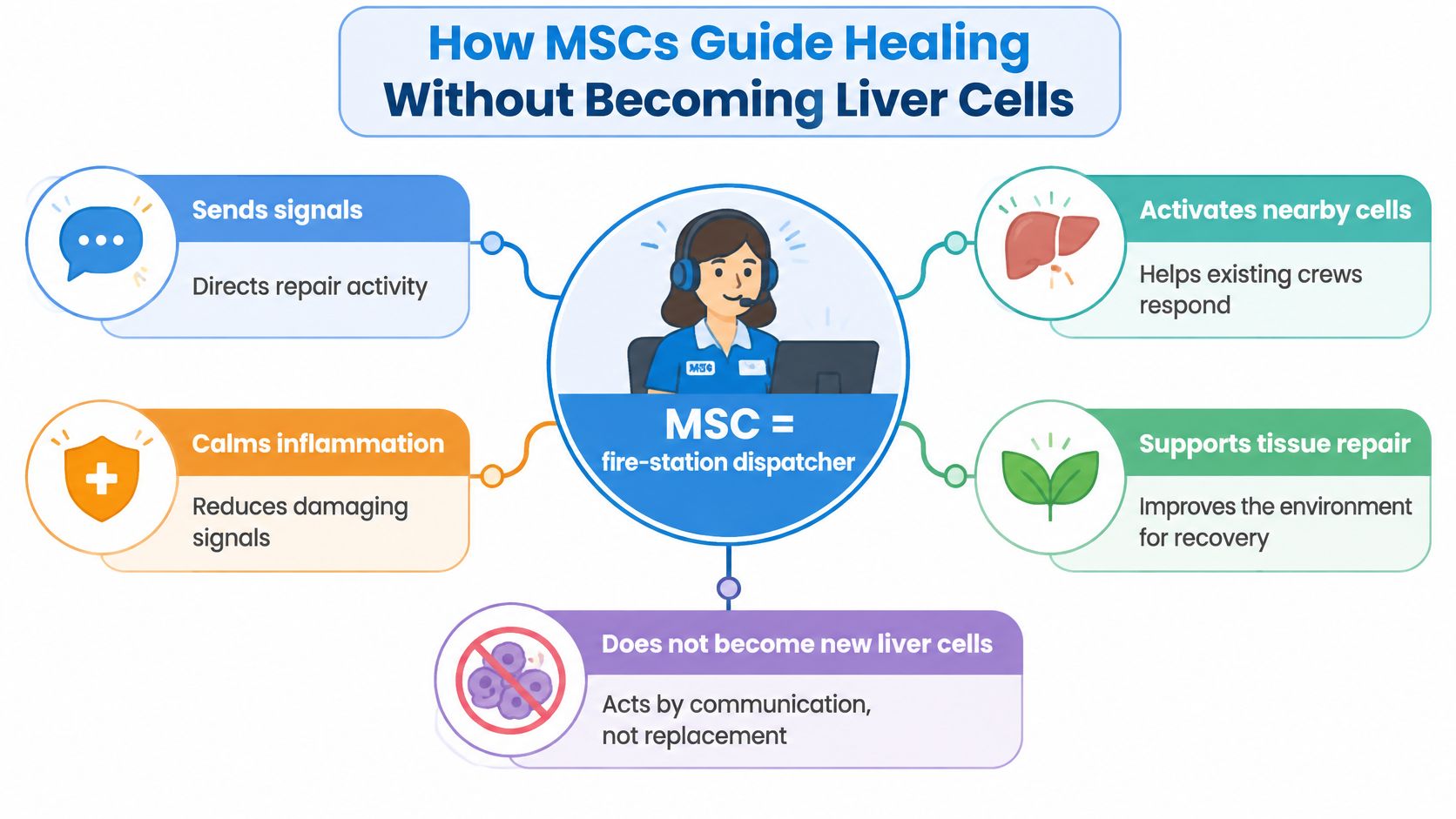
An MSC behaves more like a fire-station dispatcher than a replacement crew. It sends specialized messages to cells already present, rather than becoming the functioning liver cells needed to rebuild damaged tissue.
The administered stem cells don't differentiate into replacement liver cells as the treatment mechanism. The clinically relevant concept is the paracrine effect, meaning that cells release signals that influence neighboring or distant cells and may guide the healing response, as explained in this review of MSC-mediated liver repair.
The communication model helps distinguish the therapeutic rationale from the claim that infused cells grow a new liver.
From released signals to a cellular response
First, MSCs release soluble growth factors and extracellular vesicles, small membrane-bound packages containing proteins and genetic instructions. One relevant growth factor is hepatocyte growth factor, or HGF, which can influence the growth and survival of liver cells.
Next, those messages reach surviving hepatocytes, liver progenitor cells, immune cells such as macrophages, and hepatic stellate cells. The intended effect is to change how existing cells respond to injury, including their inflammatory activity, survival and repair behavior. Reviews of MSC-derived vesicles in liver disease describe this molecular communication, while emphasizing that much of the pathway evidence remains preclinical.
Finally, the receiving cells may alter their behavior. That could mean supporting surviving liver cells, reducing damaging inflammatory signals, or decreasing the activity of scar-producing cells.
Why stellate cells matter
Hepatic stellate cells become important drivers of scarring when activated. They produce collagen and other extracellular-matrix components, the material surrounding cells that accumulates during fibrosis.
Experimental work summarized in a review of MSCs and liver fibrosis describes reduced stellate-cell proliferation and dampening of pathways including TGF-beta/SMAD and Wnt/beta-catenin. These are intracellular signaling systems involved in how cells respond to injury and produce fibrotic tissue, not clinical tests that prove treatment has worked.
A plausible repair signal isn't the same thing as demonstrated reversal of an established scarred organ.
For a plain-language companion explanation, our guide to how stem cell injections work describes the signaling concept. The boundary remains important: cell and animal findings can explain why laboratory changes might occur, but they can't guarantee architectural recovery in a person with cirrhosis.
Who Qualifies Based on Liver Disease Stage and Cause
There isn't an established universal eligibility rule that makes someone a suitable MSC candidate just because they have cirrhosis. Cause, disease stage, current complications and background treatment all affect how relevant a trial is to that person.
For hepatitis C-related disease, a multicenter randomized trial published in 2024 enrolled 14 patients with decompensated cirrhosis, assigning 10 to hepatic-arterial autologous CD34+ cells and 4 to standard care. CD34+ cells aren't MSCs: this small trial tests a different cell product and can't validate a clinic's MSC infusion.
Alcohol-related cirrhosis presents another problem of interpretation. A tissue improvement observed during treatment doesn't remove the need to account for abstinence, nutrition and other care. Metabolic fatty-liver cirrhosis brings different ongoing drivers, so results from alcohol-related or viral disease can't be transferred to it.
Candidate profile by disease stage and cause
| Patient profile | Evidence status | Standard step to keep |
|---|---|---|
| Compensated cirrhosis, no major complications | Limited evidence; no established routine MSC indication | Routine hepatology follow-up and surveillance |
| Decompensated cirrhosis with ascites or encephalopathy | Represented in advanced-liver-disease trials, but benefit remains uncertain | Hepatology review and transplant evaluation check |
| Alcohol-related cirrhosis | Small exploratory histology findings, not definitive proof | Abstinence and nutrition support |
| Hepatitis C-related cirrhosis | Small randomized study of a distinct CD34+ product | Antiviral treatment when indicated |
| Metabolic fatty-liver cirrhosis | Insufficient subgroup-specific evidence to predict benefit | Weight, glucose and lipid management |
| Active infection or untreated liver cancer | Not a routine investigational-treatment candidate without specialist assessment | Treat or stabilize first |
What the hepatologist needs before judging eligibility
Compensated patients haven't developed the major complications that define decompensation. Patients with ascites or encephalopathy need a different risk assessment because those complications change immediate priorities and the importance of transplant planning.
Bring a record that includes:
- Disease severity: Current MELD-Na and Child-Pugh assessment, with the underlying laboratory results.
- Complication history: Ascites treatment, encephalopathy episodes, hospitalizations and kidney problems.
- Current safety status: Infection assessment, medication list and hepatocellular-carcinoma surveillance.
- Care pathway: Whether transplant evaluation is underway and who coordinates continuing hepatology care.
For organizing serial results, OneTwenty's explanation of tracking albumin over time is a useful companion resource. A trend belongs alongside the clinical history, not in place of it.
Active infection, unstable kidney function or untreated cancer should prompt specialist management before an elective cell intervention is considered. Eligibility for an investigational protocol doesn't mean established care can stop.
Protocol Differences That Decide Whether Results Compare
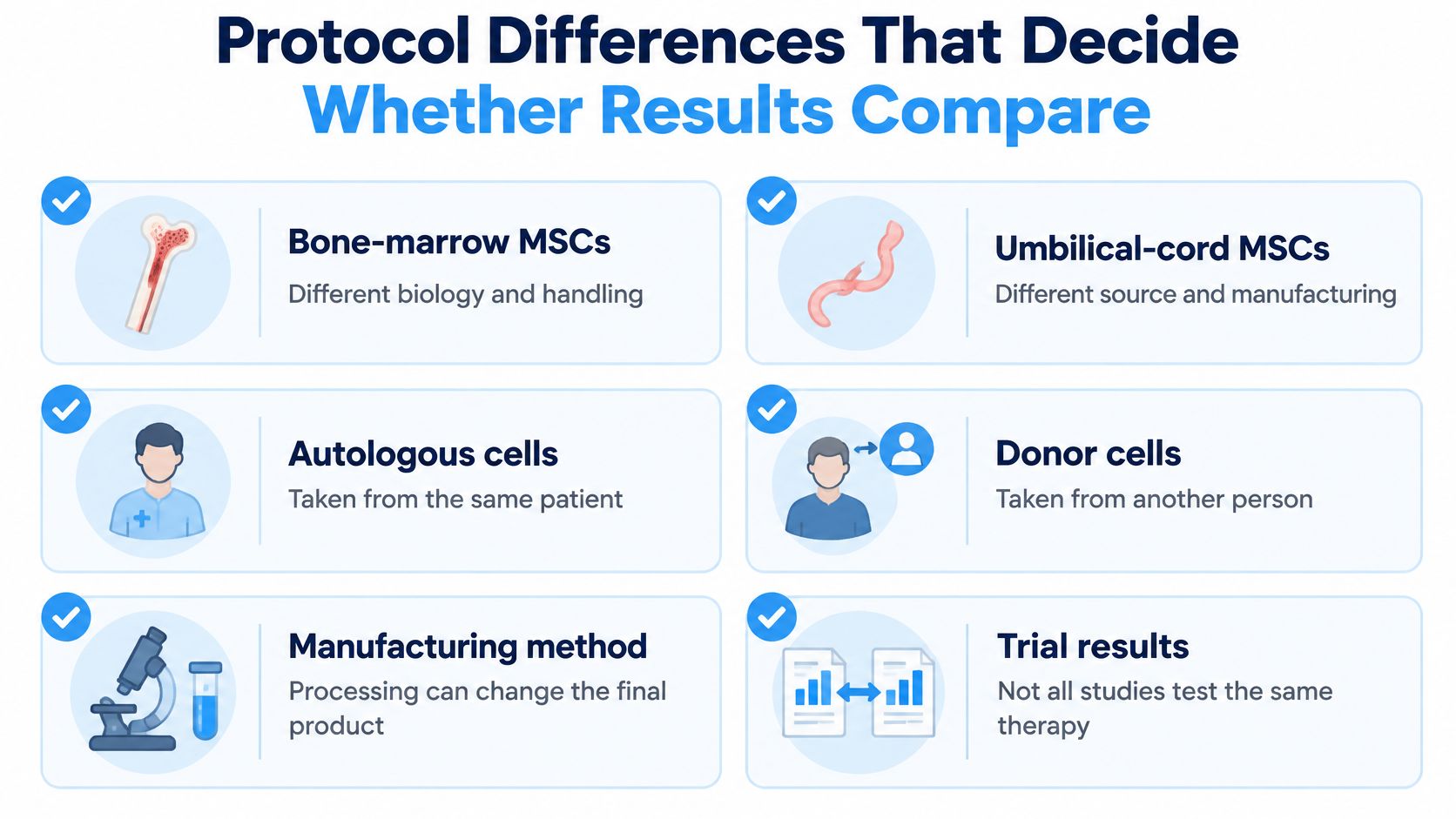
“Stem cell therapy” isn't one standardized product. Bone-marrow MSCs and umbilical-cord MSCs differ in source and preparation, while autologous cells come from the patient and donor-derived cells come from someone else.
Manufacturing, cryopreservation, thawing, dose and delivery route can change the final intervention. A review of 95 registered clinical trials, including 73 focused on MSCs, described generally consistent safety profiles but highly variable efficacy influenced by these protocol differences and patient heterogeneity.
The practical consequence is that a stated cell count alone doesn't predict benefit. Nor does a favorable study automatically support a different cell source, preparation or route.
Protocol checklist for comparing any stem cell offer
| Element | Question to ask | Why it changes results |
|---|---|---|
| Cell source | Bone marrow, umbilical cord or placenta; autologous or donor? | Different biology and manufacturing |
| Preparation and release testing | Which identity, viability, sterility, endotoxin and mycoplasma results are documented? | Contamination risk and batch consistency |
| Dose | How many cells per kg, and what is the rationale? | Trials used different doses |
| Route | Intravenous, hepatic-arterial or intrahepatic? | Route changes exposure to the liver |
| Eligibility | Which Child-Pugh and MELD-Na ranges are included? | Disease stage changes risk and applicability |
| Outcomes | Which endpoints were predefined, and how long was follow-up? | Short follow-up cannot establish durable survival benefit |
At our clinic, the MSCs are allogeneic, meaning donor-derived, and come from Wharton's jelly in umbilical cord tissue and placenta donated after healthy births. That identifies the source; it doesn't by itself establish comparability with a published cirrhosis trial.
Compare the whole intervention, not its headline
Consider a study using bone-marrow cells delivered through a hepatic artery. A clinic offering donor-derived cells by intravenous infusion hasn't reproduced that intervention, even if both descriptions contain the words stem cells. The delivery procedure, product and patient population all require separate comparison.
Release testing also needs to refer to the actual product intended for administration. A general laboratory certificate isn't interchangeable with documented identity, viability and contamination testing for the relevant batch.
Comparison test: If the product, patient group or delivery method changes, the expected benefit needs its own justification.
Request a written protocol with exclusion criteria, adverse-event monitoring and predefined follow-up outcomes. Mark every undocumented item rather than filling the gap with an assumption, and have the hepatologist judge whether any differences undermine the comparison.
Safety Monitoring and Mexico's Regulatory Framework
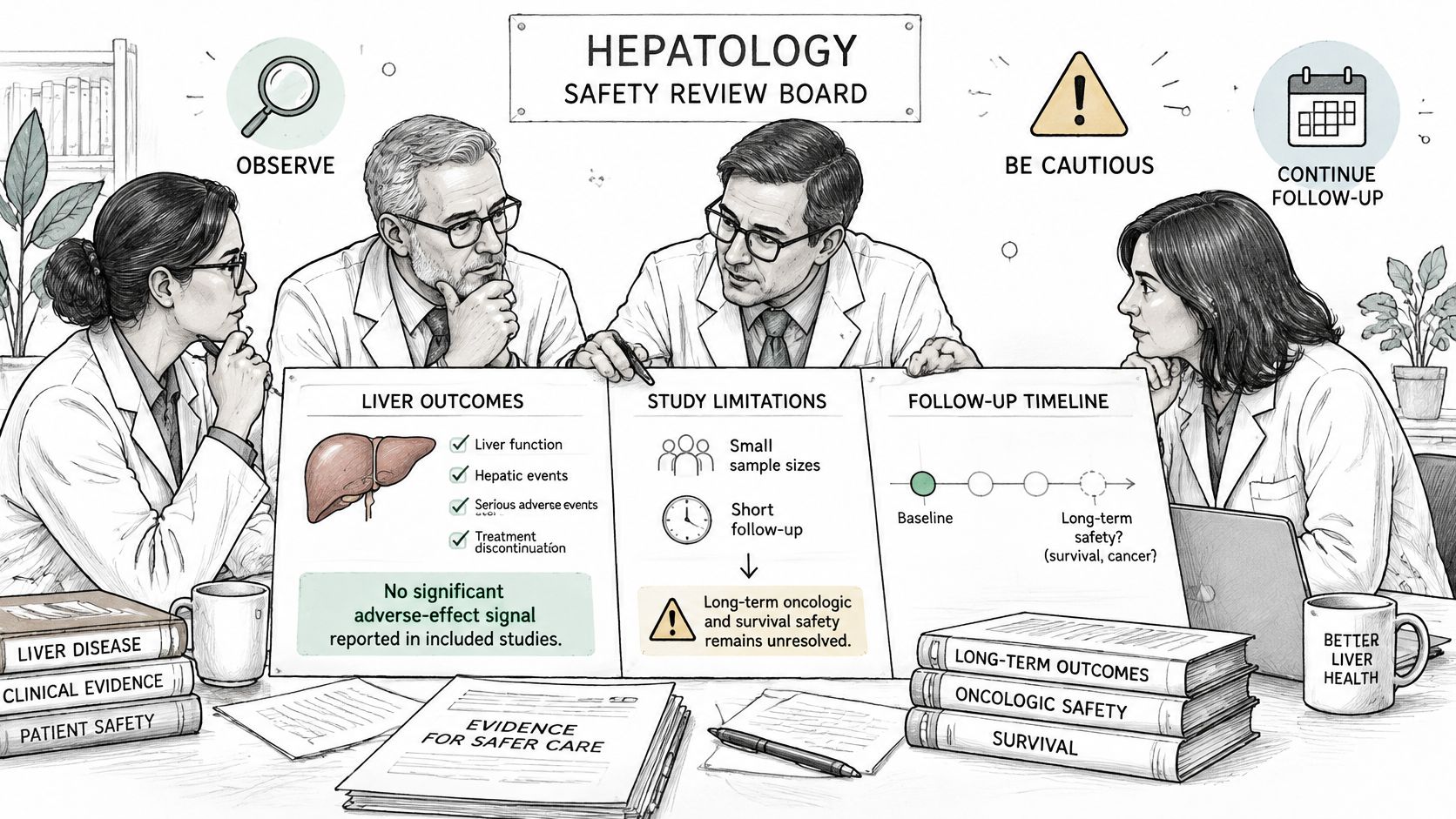
A systematic review of MSC therapy for cirrhosis reported no significant adverse-effect signal in its included studies, but small samples and short follow-up couldn't establish long-term cancer or survival safety. Not detecting harm isn't equivalent to ruling it out. Ask what events investigators actively looked for and how long patients were observed.
Clinical review should consider both the treatment and the limitations of its evidence.
What a monitored protocol should capture
Monitoring should cover infection, thrombosis, pulmonary or infusion reactions, renal deterioration, worsening ascites or encephalopathy, and portal-vein complications. Hepatocellular-carcinoma surveillance should continue under the treating hepatologist's guidance. Ask who records each event and who can act on an abnormal result.
- Manufacturing accountability: Who manufactured the cells, to what standard, and where are the relevant release-test results?
- Event reporting: What adverse events were recorded, how were they assessed, and were they reported through the appropriate process?
- Aftercare responsibility: Who manages complications after international travel, and which records will the home hepatologist receive?
Oversight isn't proof of effectiveness
Our treatments take place in Mexico within the COFEPRIS-regulated framework. That context shouldn't be confused with evidence that a particular cell product is an approved drug for cirrhosis, or that a particular protocol has demonstrated benefit. Ask whether the proposed intervention is a research study and request any applicable COFEPRIS authorization and institutional ethics committee approval.
Our explanation of whether stem cells are legal in Mexico provides clinic context, but it isn't a substitute for protocol-specific documentation. Ask for the documents that apply to the intervention you're considering.
The accompanying video can support a discussion, but cannot replace written consent materials or authorization records.

For financial context, Dream Body Clinic lists stem cell therapy prices between $1,750 and $14,500, depending on the condition treated. That's a clinic-wide range, not a cirrhosis-specific quote or evidence of cost-effectiveness. Ask for an itemized estimate and remember that a documented protocol is a precondition for informed consent, not a guarantee of benefit.
Confirm the Protocol Before You Book a Treatment
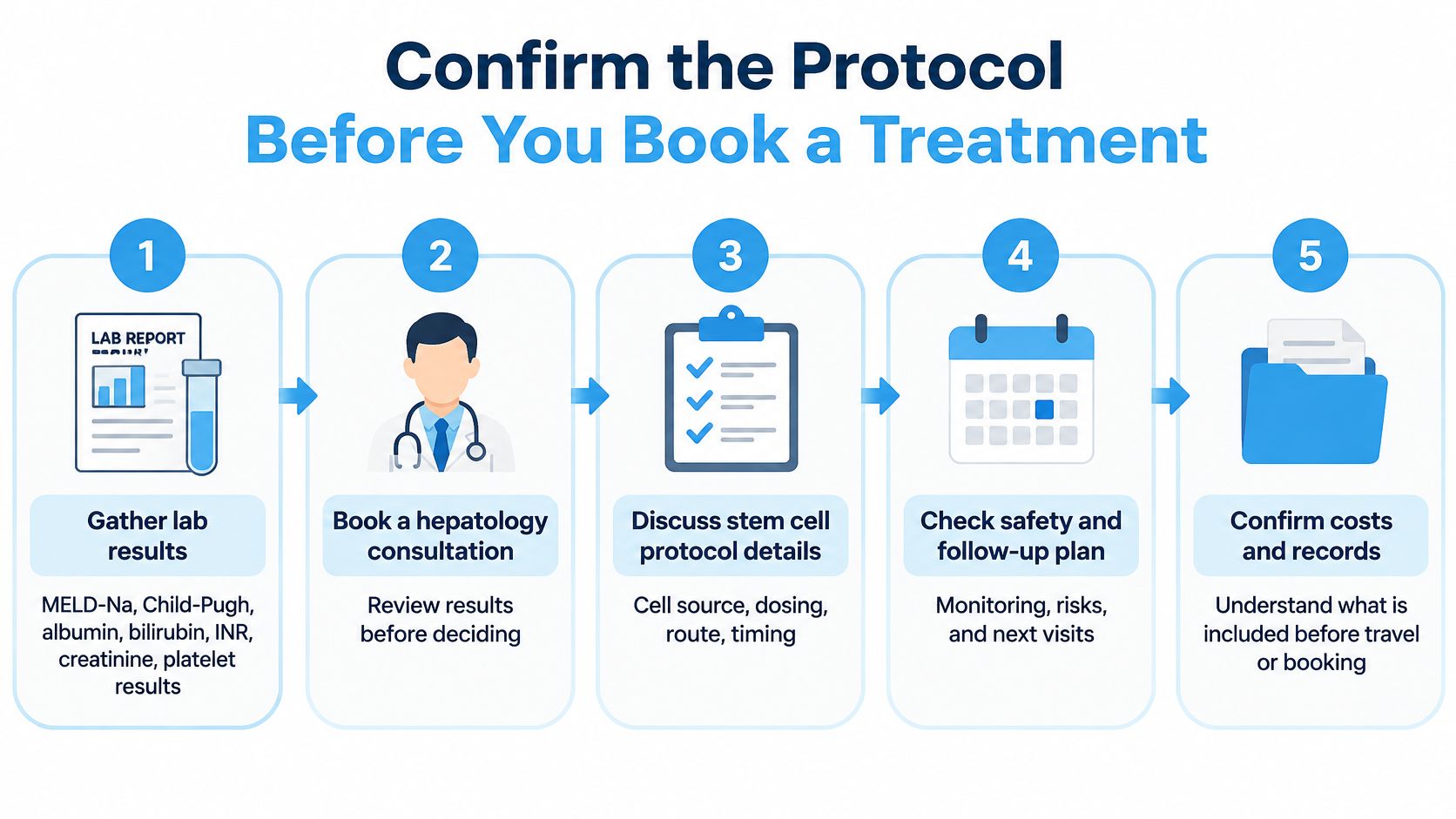
A sensible decision starts with the medical record, not a travel reservation. Use the same verification process for any clinic, whether you found it through advertising, a recommendation or a search result.
Move from records to a documented decision
Gather recent results. Bring MELD-Na and Child-Pugh assessments together with albumin, bilirubin, INR, creatinine and platelet results. Include dates so the hepatologist can distinguish a stable pattern from recent deterioration.
Book a hepatology consultation. Review infection status, kidney function, cancer surveillance and transplant evaluation. The question is whether an elective investigational intervention fits the patient's present priorities.
Obtain the written protocol. Compare cell source, preparation, dose, route, eligibility and outcomes against the trial being used to justify treatment. Leave unsupported comparisons explicitly unresolved.
Confirm exclusions and aftercare. Identify who can postpone treatment, who handles an emergency and who reviews follow-up results. A remote appointment schedule isn't sufficient unless someone has responsibility for responding to deterioration.
Request an itemized written quote. Establish what treatment, laboratory testing, records and follow-up are included, along with what happens financially if treatment is postponed. The available clinical evidence doesn't establish cost-effectiveness.
Decide with the hepatologist. Standard care alone or participation in a documented research protocol may fit different circumstances. Neither choice should interrupt necessary cirrhosis management.
The process should be clear before booking.
Keep preparation separate from eligibility
Our patient preparation checklist for stem cell therapy in Mexico can help organize logistics after medical review. It doesn't establish that treatment is appropriate for a particular person.
We offer no guarantees, and we don't promote stem cell therapy as a cure. Before paying, book the hepatology review and obtain the written protocol.
Dream Body Clinic offers Organ Disease Stem Cell Treatments for liver disease and liver cirrhosis, alongside type 2 diabetes, congestive heart failure or heart attack, kidney disease, ARDS, ulcerative colitis, stroke, peripheral neuropathy and nerve repair. We administer stem cell therapy by intravenous infusion or targeted injection depending on the condition; visit Dream Body Clinic to request information about the proposed cirrhosis protocol for review with your hepatologist before making any payment.