You feel the shoulder pop when you reach overhead, put on a jacket, or push yourself up from a chair. Sometimes it's a clean click that barely hurts. Other times it's a deeper snap with pain that makes you wonder whether something in the joint shifted, rubbed, or tore.
Rotator cuff popping isn't a yes or no question. It's a clue, and the meaning changes with age, pain, weakness, trauma, and how the shoulder moves. That's why the sound itself matters less than the pattern around it.

Table of Contents
- Why Your Shoulder Pops and What This Guide Covers
- How the Rotator Cuff Works and Why It Makes Noise
- The Most Common Causes of Rotator Cuff Popping
- When Shoulder Popping Is Harmless and When It Is a Red Flag
- How a Clinician Diagnoses the Source of the Pop
- Conservative and Injection-Based Treatments Worth Considering
- How Stem Cell Therapy Helps the Rotator Cuff Heal
- Putting It All Together and Choosing Your Next Step
Why Your Shoulder Pops and What This Guide Covers
A shoulder can pop for many reasons, from a tendon gliding normally to tissue under the shoulder blade's bony arch getting irritated. The sound matters less than the pattern around it. A click with no pain may be ordinary shoulder motion, while a pop with weakness, stiffness, or pain deserves more attention. Clinical shoulder evaluation becomes more useful when popping appears alongside other findings, especially in older adults and in people with overhead pain [evidence-based shoulder evaluation review].
Start with the sound, then ask what the shoulder is doing
Rotator cuff popping is best treated as a clue, not a diagnosis. Like a warning light on a car dashboard, it tells you something is happening inside the system, but it does not say which part is involved. A painless click can come from normal motion. A painful pop can point to tendon irritation, bursitis, impingement, instability, or a tear.
This guide follows the shoulder step by step, beginning with the mechanics that create noise and then moving into what a clinician looks for on exam, how imaging is chosen, and why regenerative options sometimes enter the discussion after conservative care. The aim is to help you separate a noisy shoulder from one that needs a closer look.
Practical rule: if the pop comes with pain, weakness, or a new loss of function, treat it as a diagnostic clue.
The stakes are larger than the noise itself. Shoulder pain leads to about 4.5 million office visits and roughly $3 billion in annual healthcare costs in the U.S. A small sound can sit inside a much bigger clinical problem.
How the Rotator Cuff Works and Why It Makes Noise
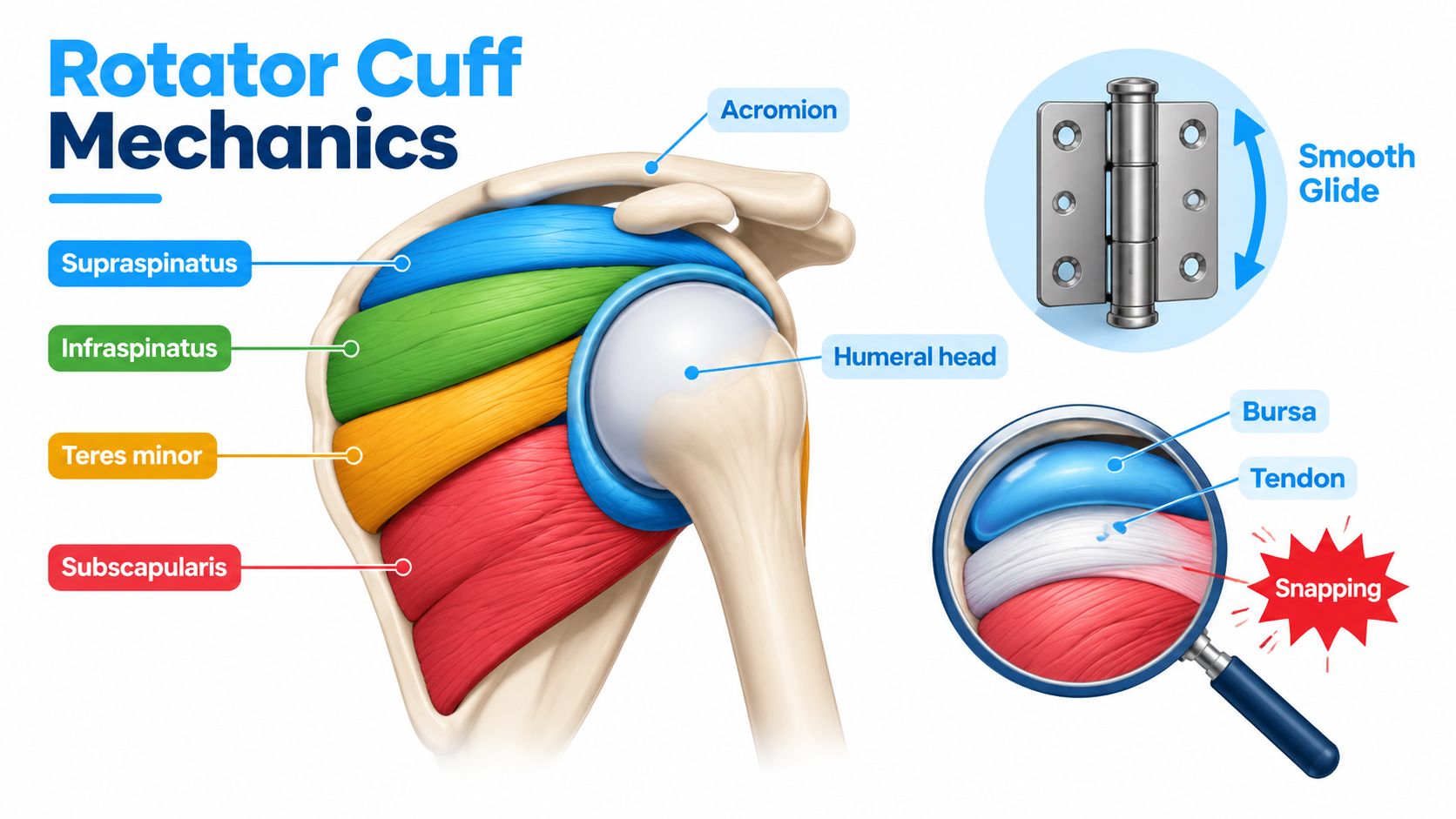
The rotator cuff is the shoulder's active stabilizer. Four muscles and their tendons wrap around the joint like tension cables, keeping the humeral head centered as you lift, rotate, or reach. Those tendons slide beneath the acromion, the bony arch at the top of the shoulder, and they also pass near the subacromial bursa, a small cushion that reduces friction.
That anatomy explains why a shoulder can be quiet one day and noisy the next. The movement is fast, layered, and tightly spaced, so even a small change in glide can create a sound you notice.
Where the sound comes from
Shoulder popping can come from different mechanical events. Sometimes it is gas cavitation, a quick pressure change inside the joint. Sometimes it is a tendon sliding over a bony edge. In cuff-related problems, the noise often comes from subacromial abrasion or bursal irritation rather than a dramatic structural failure [mechanical explanation of shoulder clicking].
That is why clinicians listen for the quality of the sound. A fine grind suggests repeated friction. A single clunk can suggest a movement mismatch or instability. A snapping sensation during overhead motion can point to cuff tissue moving under the acromion.
Why age changes the meaning
The cuff also changes with age. A pooled analysis found rotator cuff abnormality prevalence rising from 9.7% in people aged 20 and younger to 62% in those aged 80 and older [pooled prevalence analysis]. That does not mean every older shoulder pop is a tear. It means age-related wear becomes more likely, so the same sound deserves more context.
Popping is useful because it can be a diagnostic clue. A quiet click may reflect normal motion. A noisy shoulder with pain, weakness, or stiffness deserves a closer look, because the sound is only one part of the story. Clinicians use that clue to decide whether the problem is mainly mechanical irritation, tendon wear, or something deeper that needs treatment aimed at healing signals as well as symptoms.
The clinical takeaway is straightforward. A noisy shoulder is not automatically damaged, but it is rarely meaningless. The anatomy explains why the shoulder can make noise, and the rest of the history helps show whether that noise matters.
The Most Common Causes of Rotator Cuff Popping
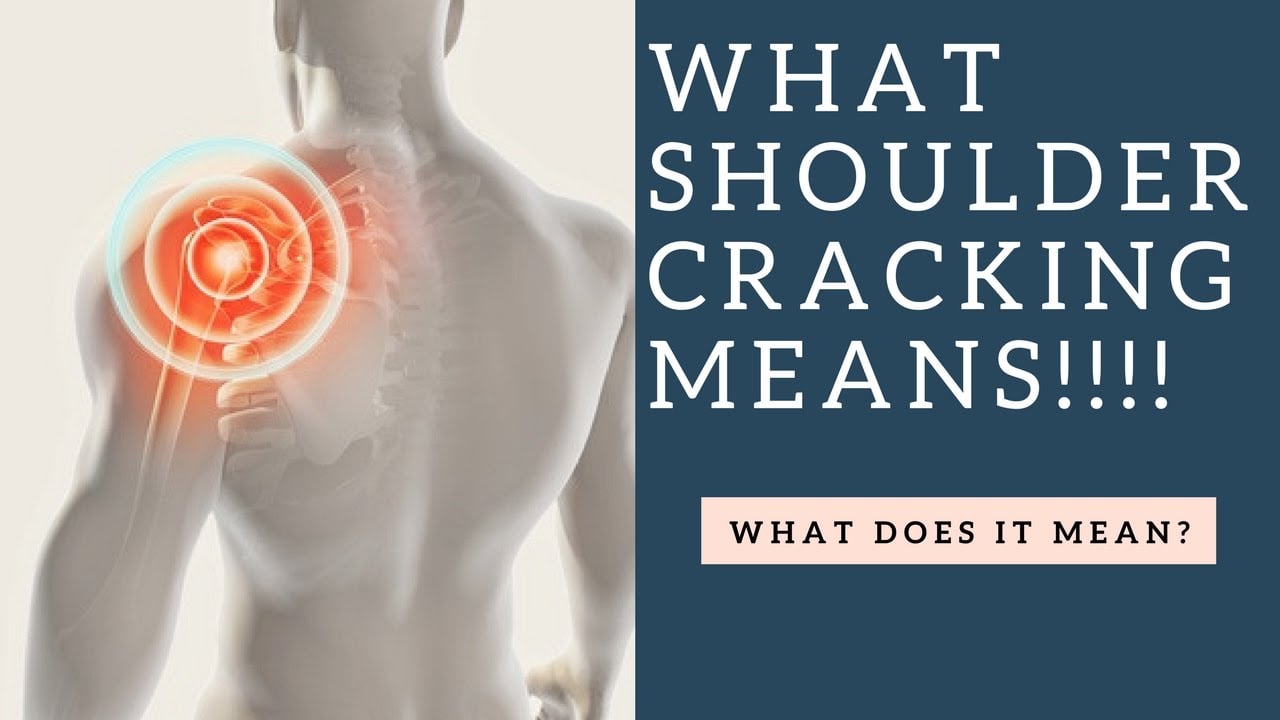
A shoulder pop can come from the rotator cuff, but it can also come from nearby structures that move together with it. Tendon irritation, bursal friction, instability, and labral injury can all create sounds that patients describe the same way, even though the underlying problem is different.
Compare the likely causes
| Condition | Sound or Sensation | Pain Level | Common Trigger |
|---|---|---|---|
| Tendinopathy | Repeated clicking, snapping, or a rough grind | Often mild to moderate | Overhead use, repetitive lifting |
| Bursitis | Soft rubbing, squeak, or catching | Often painful with motion | Reaching up, sleeping on the shoulder |
| Impingement | Pinch plus pop during elevation | Often painful | Arm lift above shoulder level |
| Partial cuff tear | Crepitus, catching, or painful snap | Variable, often activity-related | Lifting, rotation, overhead work |
| Full-thickness tear | Pop with weakness or loss of control | Often more concerning | Sudden load, fall, or chronic wear |
| Instability or labral problem | Clunk, shift, or catching deep in the joint | Often painful or uneasy | Throwing, reaching back, trauma |
The table helps because people often describe several sensations at once. A person may say “it pops,” but after a closer history the description is a grinding crepitus with pain during elevation. That pattern fits irritated cuff tissue better than a clean, isolated click.
Why a tear is not the only answer
A sports-medicine review found that age over 39, self-reported popping or clicking, and a painful arc of motion pointed toward rotator cuff tendinopathy, while age over 50 with weakness signs made a tear more likely [evidence-based shoulder evaluation review]. That is the kind of cluster clinicians use. They are matching the sound to the movement problem, not treating the sound as a diagnosis by itself.
Shoulder crepitus also has measurable diagnostic value. In one study, palpable crepitus showed 67% sensitivity and 80% specificity for all rotator cuff tears, and it performed better for full-thickness or high-grade partial tears with 82% sensitivity and 73% specificity [crepitus diagnostic study]. In plain language, popping can raise suspicion, but it does not settle the question.
A rotator cuff sound can point to tendon wear, bursal irritation, impingement, or a tear. Labral problems often feel deeper and less stable, which is why the history around the pop matters more than trying to name the injury from the noise alone.
When Shoulder Popping Is Harmless and When It Is a Red Flag
A shoulder that clicks during a stretch or a reach behind the back is often just noisy mechanics. Tendons can glide, the joint can shift pressure, and a small pop may appear after a long period of sitting or stiffness. If the sound comes and goes without pain, swelling, weakness, or a clear injury, it may be a harmless finding rather than tissue damage.
The key is to separate noise from irritation.
Use five decision points at home
These questions help sort a harmless click from a shoulder that needs a closer look:
- Pain: A pop with sharp pain is more concerning than a painless click.
- Strength: Trouble lifting the arm, especially if it feels suddenly weak, deserves attention.
- Trauma: If the noise started after a fall, pull, or sudden force, it should not be ignored.
- Duration: A problem that keeps returning or does not settle over time needs evaluation.
- Age: In older adults, popping is more likely to reflect age-related cuff change than a one-off harmless event.
Signs that move the concern level up
The NHS rotator cuff shoulder pain patient information notes that clicking or popping can happen, but the concern rises when symptoms follow trauma, come with power loss, swelling, redness, fever, or fail to improve with exercises after about a month. That framing matters because the sound itself is only one clue.
Red flag: a new pop plus weakness matters more than the pop alone.
A fall, a sudden tearing feeling, or an arm that will not lift the way it used to changes the picture quickly. Night pain that makes it hard to sleep on the shoulder, or visible swelling after the event, also points away from simple harmless clicking. Those findings raise concern for a tear, instability, or another structural injury.
Occasional painless noise can be watched. Painful, weak, traumatic, or persistent popping deserves medical review.
How a Clinician Diagnoses the Source of the Pop
A shoulder that pops during overhead reach, dressing, or lifting rarely gets labeled from sound alone. A clinician starts with the story: when the noise began, whether one position brings it on, and whether pain, weakness, or a sense of catching arrived with it. That history helps sort mechanical irritation from a tendon tear, bursitis, instability, or another problem before any scan is ordered.
The exam then narrows the field. The empty can test checks supraspinatus function. Lift-off and belly-press maneuvers point toward subscapularis involvement. Apprehension and sulcus tests help assess instability. A clinician may also move the arm while feeling around the acromion to see whether the pop can be reproduced as crepitus or tendon movement.
Practical insight: a pop that can be felt in the same spot, and in the same motion, is more likely to come from a moving structure than from random noise.
Imaging is chosen after the exam, not before it. Ultrasound can show a tendon in motion and is useful when a larger tear is suspected. Reviews describe strong performance for full-thickness tears, while detection becomes less reliable for partial-thickness tears [imaging review]. MRI is used when the clinician needs a wider look at tendon, bursa, and labrum together, and MR arthrography can help when a partial-thickness articular-sided supraspinatus tear is suspected [imaging review].
X-ray still matters when bone spurs or arthritis may be creating friction. For people managing symptoms at home while they wait for evaluation, a plain-language guide to heat therapy for rotator cuff can help frame simple comfort measures.
The larger point is that diagnosis comes from putting the pieces together. The sound is a clue, the exam shows which tissue is irritated, and imaging confirms whether the problem is structural or mainly inflammatory.
Conservative and Injection-Based Treatments Worth Considering
A shoulder that pops because irritated tissue keeps rubbing or snapping usually improves when the load problem is addressed first. In clinic, that starts with identifying which motion is provoking the sound, then removing or modifying it so the tissue can settle.
Physical therapy usually sits at the center
Structured rehab is usually the backbone of care. A good program focuses on rotator cuff strengthening, scapular stabilization, and mobility work so the humeral head tracks better under the acromion. The aim is not to force the shoulder to become completely silent. The aim is smoother motion, less pain, and less guarding.
Rehab works best when it matches the tissue problem. Tendinopathy needs graded loading. Irritated bursae need space and less friction. A clinician can adjust exercises so the shoulder is challenged enough to recover without being repeatedly irritated.
If you want a broader overview of the non-surgical path, the non-surgical rotator cuff care summary from Aspen Falls Wellness can help frame the usual progression from rest to rehab.
Where injections fit
Corticosteroid injections can help when subacromial bursitis is driving pain and inflammation. They are usually used for short-term relief, and repeated exposure can be hard on tendon tissue, so they are not a permanent answer. Hyaluronic acid sometimes comes up when glenohumeral arthritis is part of the picture, although the evidence is more modest.
PRP is different. It uses concentrated growth factors from the patient's own blood and is often discussed for tendinopathy more than for a large full-thickness tear. Results vary because the preparation method, the injury pattern, and the patient's baseline tissue quality all differ.
| Treatment | Best For | Evidence Level | Typical Duration |
|---|---|---|---|
| Relative rest and activity modification | Load-related irritation | Practical first step | Short-term |
| Physical therapy | Tendinopathy, movement dysfunction | Strong conservative foundation | Weeks to months |
| Corticosteroid injection | Bursal inflammation, pain flares | Helpful for short-term relief | Temporary |
| Hyaluronic acid | Arthritis-related crepitus | Modest | Variable |
| PRP | Tendinopathy more than large tears | Mixed, condition-dependent | Variable |
If you're comparing these approaches against regenerative care, the internal guide on whether stem cell therapy is safe for orthopedic injuries is a relevant next read because safety questions usually come up early.
The larger point is simple. Popping is a clue, not a diagnosis by itself. Matching treatment to the tissue that is irritated gives the shoulder a better chance to calm down without surgery.
How Stem Cell Therapy Helps the Rotator Cuff Heal
A shoulder that keeps popping after rest, rehab, or a few injections often points to irritated rotator cuff tissue, a tender bursa, or a tear that still needs better load control. Mesenchymal stem cell, or MSC, therapy is usually discussed in that setting. It is different from corticosteroid injections and different from PRP. MSCs are living cells, often taken from bone marrow concentrate or adipose tissue, and they are usually placed by image-guided injection into the tendon region, bursa, or subacromial space.
The mechanism is signaling, not cell replacement
The key idea is the paracrine effect. MSCs do not have to become tendon cells to matter. They release signals, including growth factors, cytokines, and exosomes, that help nearby tissue repair itself, calm inflammation, and remodel the local matrix. That signaling role is the main reason they appear in regenerative orthopedics.
That point is easy to miss online. People often assume stem cells work mainly by turning into new tendon tissue. The literature points in a different direction. One review describes paracrine signaling as the main mechanism for improved wound repair rather than direct replacement of damaged cells [MSC wound repair review]. Another review identified 234 factors directly released by MSCs and noted no clear evidence of in-vivo differentiation into cardiac cells in preclinical or clinical settings [MSC secretions review]. A separate review also notes that implanted cells often do not survive longer than 3 weeks post-injection, which makes direct differentiation an unlikely main source of benefit [MSC survival review].
For a deeper look at whether a torn cuff can heal without surgery, see can stem cell therapy heal a torn rotator cuff without surgery.
What realistic care looks like
This signaling model sets the timeline. MSC therapy is usually not a quick fix, and symptom change is generally discussed over months rather than days. It can make sense when the shoulder keeps popping because the tissue environment is still inflamed, irritated, or overloaded.
Dream Body Clinic offers a shoulder stem cell protocol that uses MSCs with PRP and MRI in a regenerative orthopedic setting, which is one example of how this care can be organized for persistent shoulder problems. The treatment model follows the same biologic logic described above, signaling support rather than cell replacement.
The honest takeaway is simple. MSC therapy is best understood as a biologic signal to the tissue, not a transplant of new tendon.
Putting It All Together and Choosing Your Next Step
A noisy shoulder is a clue, not a diagnosis. With rotator cuff popping, the key question is whether the sound is a harmless mechanical click or part of a bigger pattern that includes pain, weakness, stiffness, or a recent injury. A shoulder that pops once in a while and otherwise works normally can often be watched. A shoulder that pops and also feels weaker, sore, or less mobile deserves a closer look.
A practical decision path
Start with what the shoulder is telling you.
- Observe if the pop is painless, rare, and not changing how the arm works.
- Reduce aggravating load if repeated overhead use seems to bring it on.
- Begin structured rehab when symptoms linger or movement becomes guarded.
- Consider injections when inflammation is keeping the shoulder irritated, especially with bursitis or arthritis patterns.
- Get imaging or specialist review when trauma, night pain, weakness, or ongoing symptoms are part of the story.
Age and activity level change the meaning of the sound. A pop in a younger thrower may point to irritation from load and motion. The same sound in an older shoulder with weakness can fit a different pattern, often with background wear. The diagnosis belongs to the whole clinical picture, not the sound by itself.
Regenerative care should be viewed the same way. The paracrine signaling discussed earlier can support repair pathways, but it works within the limits of mechanics, tissue quality, and how much strain the shoulder keeps seeing. If overload continues, biology alone will not solve the problem.
For people comparing shoulder regenerative options, the orthopedic stem cell treatment prices and info page is a useful place to review how treatment planning and pricing are typically presented. It gives a practical frame for asking what is being offered and why.
Get prompt evaluation if the pop comes with sharp pain, new weakness, swelling or warmth, trauma-related onset, or symptoms that are not improving with time and rehab. Early evaluation helps separate a simple mechanical noise from a shoulder that needs more directed care.
Enhanced by the Outrank tool