Stem cells don’t turn into hair cells, but one controlled study reported a 29% ± 5% increase in hair density after treatment, while the placebo area changed by less than 1%. Their main action is paracrine signaling, meaning they release specialized signals that guide follicle repair and regeneration rather than replacing tissue directly.
That distinction challenges the most popular advice about stem cell hair treatment. Many advertisements describe stem cells as if they are new hair-producing cells placed into bald skin. The biology is more measured. Stem cells communicate with nearby tissue, influence the follicle environment, and may help weakened follicles function more effectively when viable follicular structures remain.
A realistic explanation leads to better decisions. Hair density can improve without the therapy creating an entirely new follicle in every empty area, and visible change generally develops through the hair-growth cycle rather than appearing immediately. The quality of the protocol, the type of hair loss, and the condition of the follicles all affect the result.
Table of Contents
- The Stem Cell Hair Myth vs. How It Actually Works
- Paracrine Signaling and Follicle Regeneration Explained
- Stem Cell Hair Procedures and Adjunct Treatments
- What the Clinical Evidence Shows for Hair Density
- Who Is a Good Candidate for Stem Cell Hair Therapy
- How Stem Cell Hair Treatment Compares to Other Options
- What to Expect and How to Evaluate a Clinic
The Stem Cell Hair Myth vs. How It Actually Works
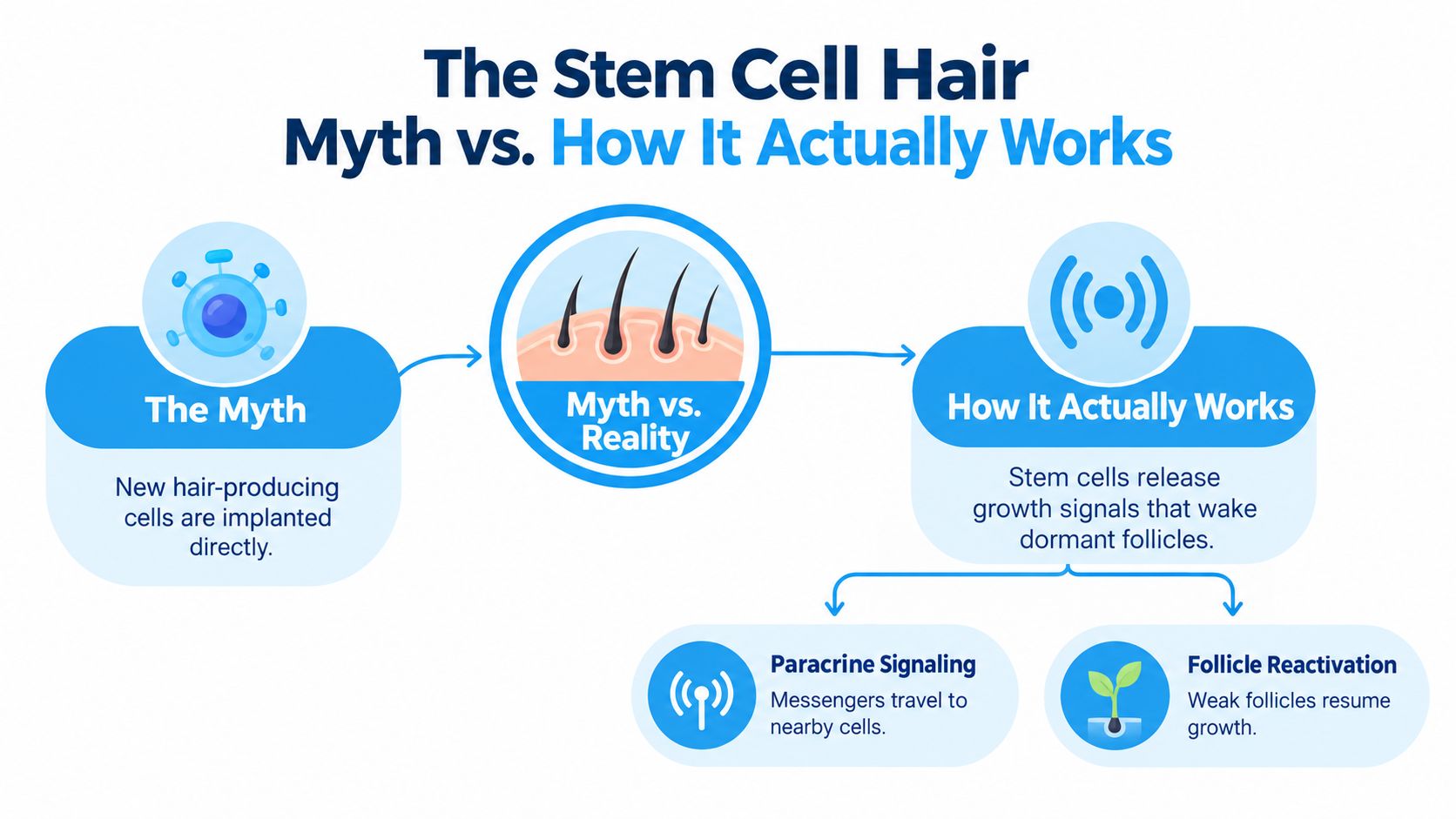
The most common misconception is simple: patients assume stem cell hair treatment inserts replacement hair cells into the scalp. That isn’t what happens. Stem cells used in regenerative hair procedures don’t differentiate into other cells or transform into hair-producing cells. Their therapeutic role is primarily to send biochemical instructions to nearby tissue.
This process is called the paracrine effect. Stem cells release growth factors, cytokines, extracellular vesicles, and other signaling molecules. Those messengers travel through the local tissue and influence cells that are already present, helping guide inflammation control, blood-vessel support, tissue repair, and follicle activity.
The Dream Body Clinic Stem Hair Treatment
The difference between replacement and reactivation
A follicle affected by androgenetic alopecia may become progressively smaller and produce finer hair. It isn’t necessarily equivalent to a completely new follicle being created in empty skin. A signaling-based treatment therefore aims to improve the follicle’s surroundings and support its activity, not to plant a fully formed replacement follicle.
That explains why outcomes can be gradual and why patients with early or moderate thinning may have a more reasonable biological basis for treatment. If a scalp area has long-standing baldness or scarring that has destroyed follicular structures, sending regenerative signals may not provide the same opportunity for visible growth.
A useful explanation of the injection process and the role of regenerative signals is available in this guide to how stem cell injections work. The important point is that an injection delivers a biological intervention to a target area. It doesn’t guarantee that the injected cells will permanently become part of the scalp.
Why the myth creates unrealistic expectations
The phrase “new hair cells” sounds like a direct replacement strategy. Patients may then expect a bald patch to fill in as if a transplant had placed new follicular units there. That expectation confuses two different approaches.
A hair transplant relocates existing follicular units from a donor area. A stem cell-based regenerative procedure attempts to influence the local environment and the function of existing or weakened follicles. The distinction affects how a clinician evaluates the scalp, defines a treatment area, and describes a meaningful result.
Practical rule: Ask whether a proposed treatment is intended to create new follicles, relocate follicles, or stimulate follicles that are still present. Those are different biological goals.
The evidence supports a signal-driven model rather than a cell-replacement story. A review of hair-loss biology estimates that up to 80% of the regenerative properties of transplanted stem cells are thought to come from paracrine factor signaling, not direct tissue replacement, as described in this review of stem cell signaling in hair loss. That is the framework patients should use when assessing claims about stem cell hair treatment.
Paracrine Signaling and Follicle Regeneration Explained
Paracrine signaling is a form of local cellular communication. A cell releases a messenger, and nearby cells receive that message through receptors. In stem cell hair treatment, the stem cells act less like replacement parts and more like temporary biological coordinators that influence the tissue around a weakened follicle.
Mesenchymal stem cells can release growth factors, cytokines, nucleic acids, proteins, and extracellular vesicles. These substances may affect the local follicle environment by supporting communication between the dermal papilla, follicular cells, blood vessels, and surrounding connective tissue. The intended result is better support for follicles that have become miniaturized or entered an unfavorable growth state.
What the signals may influence
Hair growth depends on interaction between multiple cell types. A follicle isn’t an isolated strand factory. It responds to inflammatory signals, nutrients, blood supply, hormones, and the behavior of neighboring cells.
The paracrine signals released by mesenchymal stem cells may help guide several local processes:
- Follicle support: Nearby follicular cells receive signals that may help maintain or improve their function.
- Growth-cycle activity: Signals can encourage follicles to move toward a more active growth phase.
- Tissue repair: The surrounding scalp environment may receive instructions that support healing and structural recovery.
- Inflammation control: Cytokine signaling may influence the inflammatory conditions that can interfere with follicle performance.
- Vascular support: Growth-related signals may help improve the local conditions needed by metabolically active follicles.
A review focused on mesenchymal stem cells explains that their low engraftment efficiency makes paracrine signaling, rather than differentiation, the primary explanation for many therapeutic effects. The same principle applies here. The cells don’t need to turn into hair cells to influence the cells that regulate follicle behavior.
Why conditioned media and secretome research matters
Researchers are also studying the secretome, the collection of substances released by stem cells. Conditioned media contains these secreted factors without necessarily containing the same population of living cells. This has helped researchers separate the effect of cellular signaling from the idea that transplanted cells must permanently integrate into the scalp.
A review of stem-cell secretome research in hair loss describes therapeutic effects as paracrine and trophic, with diffusible growth factors and cytokines activating neighboring cells. Research involving human umbilical cord blood mesenchymal stem cells also identified a secretory protein, IGFBP-1, as a key mediator associated with follicle regeneration and hair growth, as reported in this study of paracrine hair follicle regeneration.
The clinical translation is important but limited. If a follicle has been miniaturized yet remains biologically viable, local signals may improve its performance. If the follicle has been permanently destroyed, signals alone may not recreate the entire structure.
For a more detailed explanation of how follicles may respond to regenerative signaling, see this overview of functional hair follicles that grow from stem cells. The wording should still be interpreted carefully. “Regeneration” can mean improved function, density, or follicle activity. It doesn’t automatically mean unlimited new follicle creation.
Stem Cell Hair Procedures and Adjunct Treatments
The phrase stem cell hair treatment can describe different procedures. A clinic may use autologous mesenchymal stem cells, a cell-containing micrograft preparation, conditioned media, exosome-based products, or a combination with another regenerative treatment. These approaches aren’t interchangeable, so a consultation should identify exactly what is being delivered.
The Dream Body Clinic Stem Hair Treatment
Scalp injections
An injection-based procedure targets areas of thinning with small deposits beneath the scalp. Depending on the protocol, the material may be derived from the patient’s own tissue, processed as a micrograft, or prepared as a biologic product containing secreted factors.
The purpose is local delivery. The clinician maps the affected area, assesses the pattern of loss, and places the preparation where follicular support is needed. Patients should ask about the source of the cells, how the material is processed, whether living cells are delivered, and what quality controls apply.
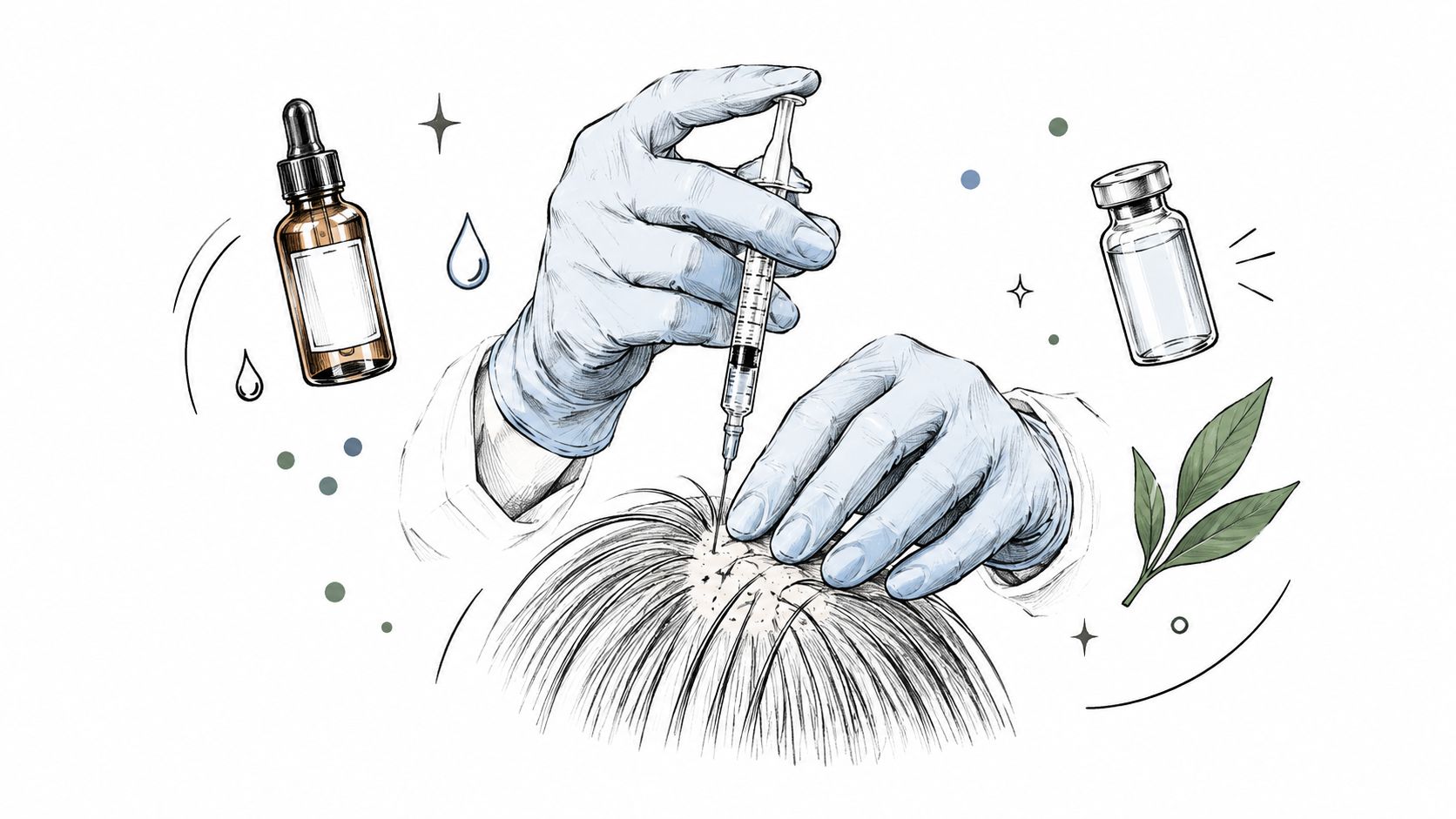
The procedure is minimally invasive, but “minimally invasive” doesn’t mean biologically simple. A medical team should review the diagnosis, medication history, scalp condition, and treatment goals before injection. It should also explain possible tenderness, swelling, bruising, or other procedure-related effects without presenting the treatment as risk-free.
Adjunct topical and regenerative options
Some protocols combine injections with topical products or established hair-loss medications. The logic is to support the local signaling environment while using a separate treatment to address another part of the hair-loss process.
Exosome-conditioned media represents a related but distinct category. It focuses on extracellular signals released by cells rather than presenting the product as a population of stem cells that will become hair tissue. Because products vary widely, patients shouldn’t assume that every item labeled “exosome” has the same composition, manufacturing controls, or evidence.
Variables that change the result
The 2023 systematic review of autologous stem cell treatment for androgenetic alopecia found positive hair-density effects across 15 studies involving 653 patients, but it also noted a lack of standardization in cell preparation, dose, and retreatment interval. Those details matter because two clinics can use similar marketing language while delivering substantially different protocols. The review is available in this analysis of autologous stem cell treatment protocols.
A transparent consultation should clarify:
- Cell source: Whether the material is autologous, allogeneic, micrograft-based, or cell-free.
- Preparation method: How the tissue is processed and what the final product contains.
- Dose and concentration: The amount delivered and how the clinic defines it.
- Treatment area: Which regions are being treated and why.
- Adjuncts: Whether PRP, medication, topical products, or another biologic is included.
- Follow-up: How the clinic measures density, shaft diameter, shedding, and patient response.
A credible protocol doesn’t need to promise a universal outcome. It needs to explain its biological target and give patients a way to evaluate change objectively.
What the Clinical Evidence Shows for Hair Density
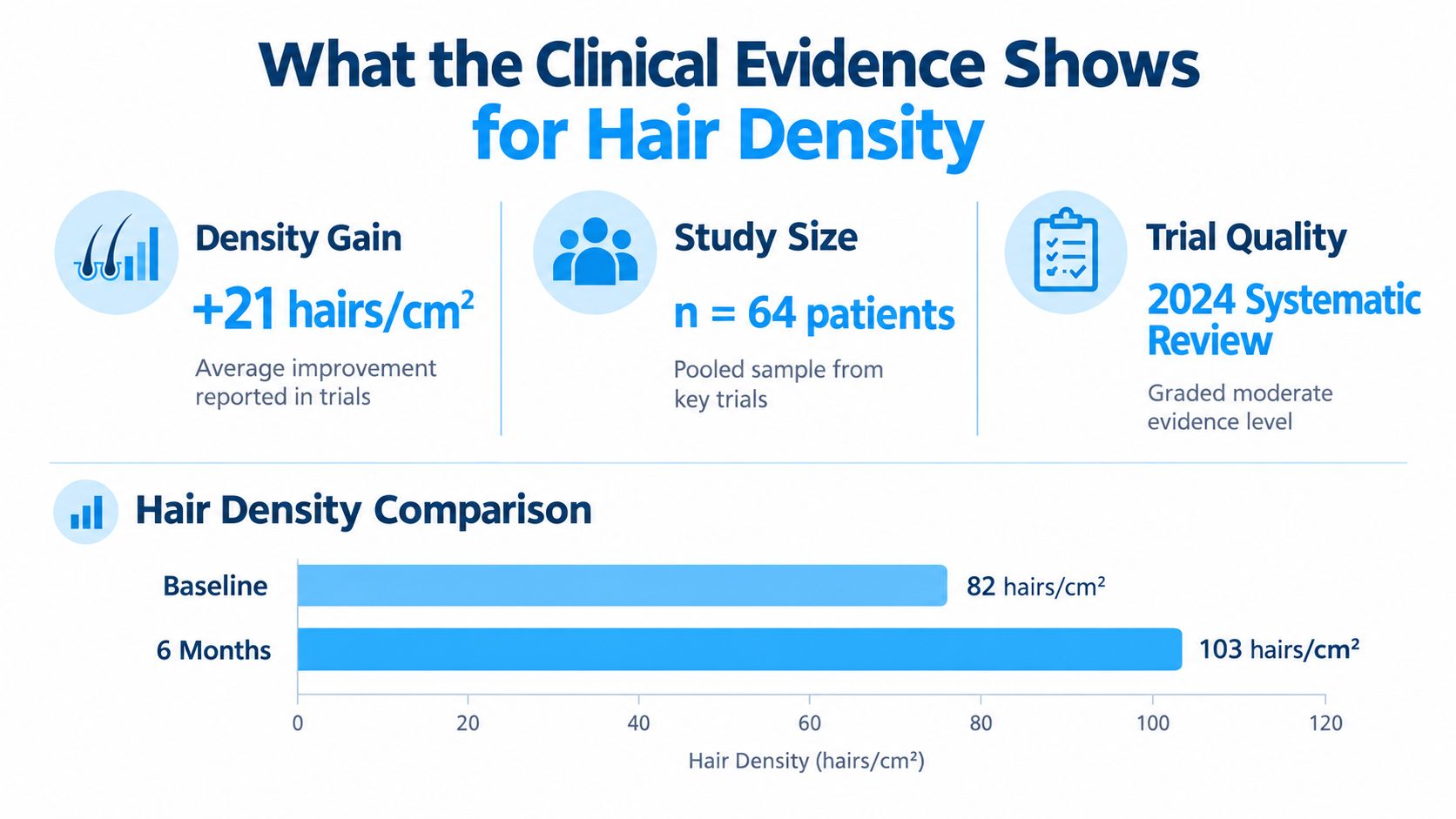
The evidence has moved beyond isolated anecdotes, but it hasn’t reached the point where every stem cell hair treatment protocol can be treated as established standard care. A 2024 review identified 53 relevant articles published from 2013 to 2023, including 12 randomized controlled trials, showing that the field has progressed toward controlled human research while remaining relatively young. The review is summarized in this clinical review of autologous stem cell-derived therapies for androgenetic alopecia.
One of the better-described studies in that review reported a 29% ± 5% increase in hair density in the treated scalp area after two injections spaced 60 days apart. The placebo area changed by less than 1%. This is useful because it shows how a clinical outcome can be measured rather than described only as “thicker-looking hair.”
The Dream Body Clinic Stem Hair Treatment
What broader reviews add
A 2026 systematic review covering 20 clinical studies and 724 patients reported that stem cell and micrograft therapies showed the strongest regenerative signal among the modalities it evaluated, with hair-density improvements of about 30% within two months and histological evidence of follicle regeneration. The same review described the approaches as generally well tolerated with minimal adverse events, while emphasizing that larger randomized trials are still needed to resolve questions about durability, scalability, and cost. Its findings are available in this systematic review of regenerative hair therapies.
A separate phase 2a trial in 2025 enrolled 78 men and women and reported that 31% of treated men with higher-grade hair loss achieved greater than 20% hair-density improvement by week 8. That result comes from a broader regenerative hair-loss therapy study, not proof that every stem cell protocol produces the same response. It does show that modern research is increasingly using defined endpoints rather than relying only on photographs or subjective impressions. The study is discussed in this publication on regenerative hair-loss therapy.
How to interpret the numbers
These results don’t establish a single guaranteed outcome. Protocols differ in cell source, processing, dose, injection technique, treatment interval, patient selection, and measurement method. A reported density increase also doesn’t answer whether the improvement will remain after treatment stops.
The most defensible conclusion is narrower. Stem cell and micrograft approaches show a measurable regenerative signal, particularly in selected patients with androgenetic alopecia, but the field still needs larger randomized trials and longer follow-up. A clinic that presents one study result as a promise for every patient is skipping the uncertainty that makes the data clinically meaningful.
Who Is a Good Candidate for Stem Cell Hair Therapy
The strongest current signal appears to be in early to moderate androgenetic alopecia, where follicles may be miniaturized rather than completely absent. That doesn’t mean every patient in this category will respond. It means the treatment has a more plausible target because viable follicular units may still exist.
A clinician should first establish the type of hair loss. Pattern loss, alopecia areata, diffuse shedding, medication-related shedding, nutritional problems, and scarring alopecias have different biological causes. Treating the wrong cause with a regenerative injection can delay the diagnosis that matters more.
Candidate profiles that deserve a careful discussion
A suitable patient may have:
- Visible thinning with retained follicles: The scalp shows reduced density, but not every affected area is smooth and permanently bare.
- A confirmed pattern of loss: The diagnosis is based on examination and history rather than an assumption that all shedding is androgenetic alopecia.
- Realistic expectations: The patient understands that improved density isn’t the same as a complete restoration of a former hairline.
- A measurable goal: The consultation defines whether success means less visible scalp, thicker shafts, reduced shedding, or another outcome.
- Willingness to compare options: Medication, PRP, observation, and transplantation remain relevant alternatives.
Advanced baldness creates a different decision. If the follicular structures are absent, a signal-based therapy may not produce the coverage a patient wants. A transplant may be more appropriate for replacing hair in an empty area, while regenerative treatment might be considered for surrounding miniaturized follicles.
Conditions that require caution
Scarring alopecia deserves particular care because inflammation can destroy follicular structures. The priority is a correct diagnosis and control of the underlying process, not an assumption that a regenerative injection can reverse established scarring.
Patients should also question broad claims that the therapy works equally well for diffuse thinning, long-standing bald areas, and every type of alopecia. A 2026 review of 20 studies and 724 patients found promising outcomes for stem cell and micrograft approaches but emphasized protocol heterogeneity, the need for larger randomized trials, and limited long-term follow-up, as reported in this review of patient selection and regenerative hair evidence.
The same review context suggests that autologous stem cell approaches remain supported largely by small cohorts and case series, while allogeneic products have limited randomized evidence. Patients shouldn’t interpret “promising” as “proven for everyone.”
How Stem Cell Hair Treatment Compares to Other Options
Stem cell hair treatment belongs in a broader treatment plan, not in a category of its own. Minoxidil supports hair growth through a topical or oral medication approach, while finasteride targets hormonal signaling involved in androgenetic alopecia. PRP uses concentrated platelets and their growth factors. Hair transplantation relocates existing follicular units.
The Dream Body Clinic Stem Hair Treatment
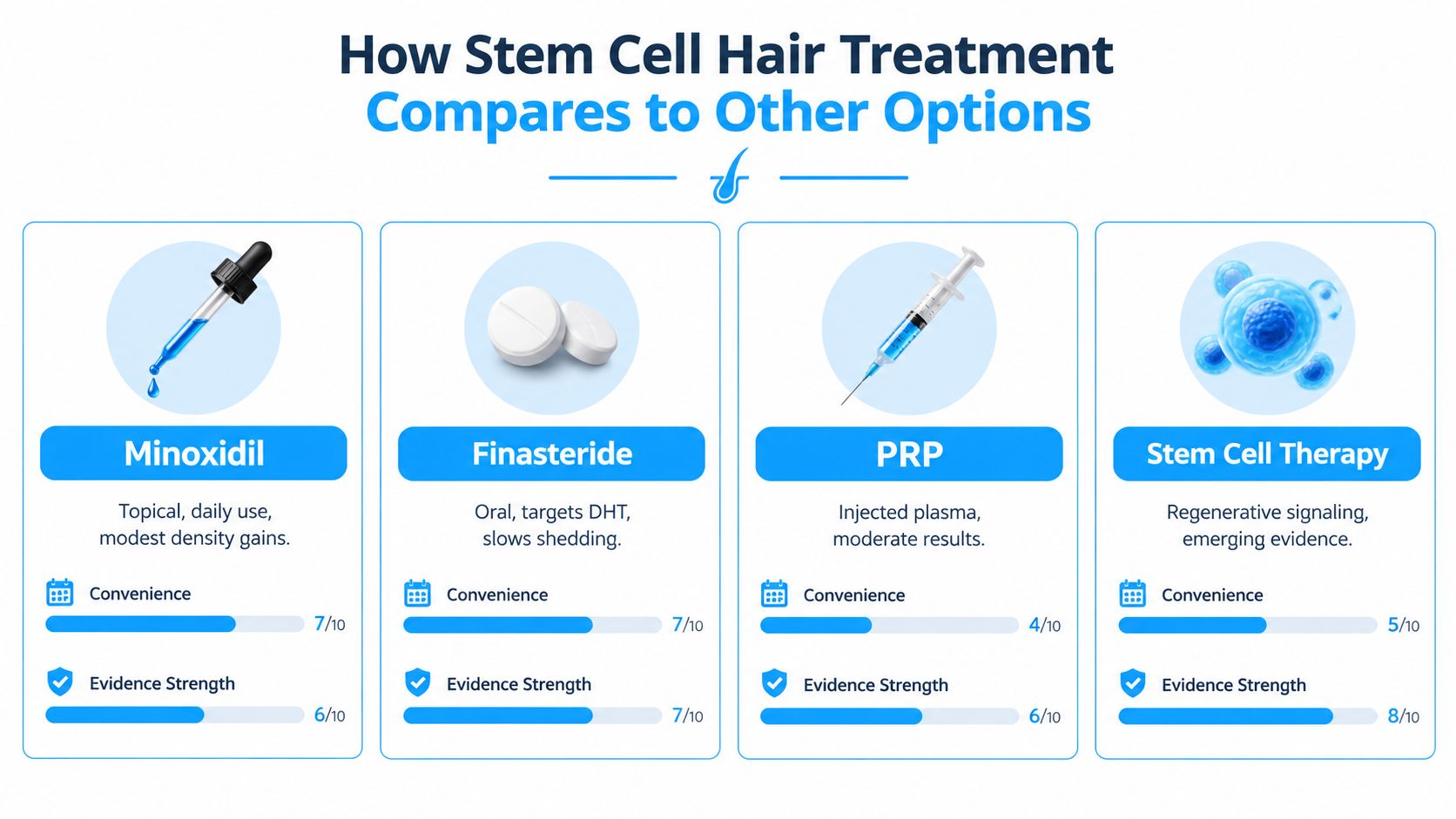
A practical comparison looks like this:
| Option | Main role | Best-fit question |
|---|---|---|
| Minoxidil | Supports follicle activity with ongoing use | Can a medication-based approach help maintain or improve thinning? |
| Finasteride | Addresses a hormonal pathway in appropriate patients | Is reducing androgen-related miniaturization a priority? |
| PRP | Delivers platelet-derived signals through injections | Would a more established autologous biologic option fit the plan? |
| Stem cell therapy | Uses regenerative signaling to influence the local follicle environment | Are viable follicles present, and is an emerging therapy appropriate? |
| Transplantation | Relocates donor follicles into areas needing coverage | Is the main problem missing follicular units rather than weakened ones? |
Medication choices require a clinician’s review of contraindications, side effects, and maintenance expectations. Patients comparing treatment routes may find this resource on prescription hair loss medications useful as background, but it shouldn’t replace an individualized medical assessment.
The Dream Body Clinic Stem Hair Treatment
Questions that expose vague marketing
Before committing, ask the clinic:
- What exactly is injected? Request the biological description, not only a branded name.
- Are the cells living, cell-derived, or cell-free? These terms describe different products.
- What evidence matches this protocol? A study using conditioned media may not validate a live-cell injection.
- How will density be measured? Standardized photographs, dermoscopy, and hair counts are more useful than casual comparisons.
- What happens if the response is limited? A responsible plan includes alternatives rather than pressure to repeat treatment.
- How is the diagnosis confirmed? A regenerative procedure shouldn’t substitute for investigating the cause of hair loss.
The strongest choice depends on the patient’s diagnosis, follicle viability, tolerance for ongoing treatment, and desired degree of coverage. No single option automatically wins across all four factors.
What to Expect and How to Evaluate a Clinic
A transparent consultation explains the cell source, preparation, dose, injection plan, alternatives, risks, and follow-up measurements. Be cautious when a provider promises new follicles in every bald area, guarantees permanent results, or uses before-and-after photos without consistent lighting and assessment. For practical context on timelines and planning, review this hair regrowth expectations guide.
Ask how the clinic prepares patients and documents progress, using a detailed stem cell therapy patient checklist. Research is moving toward exosomes, conditioned media, and other cell-derived biologics, but those developments don’t remove the need for evidence about durability, safety, and reproducibility.
The Dream Body Clinic Stem Hair Treatment
Dream Body Clinic offers mesenchymal stem cell protocols applied to the scalp, with treatment planning focused on the follicle environment and regenerative signaling rather than the claim that stem cells become hair cells. Visit Dream Body Clinic to request a case review, discuss whether your pattern of hair loss is suitable for evaluation, and receive clear information about the proposed protocol and follow-up.
Call us at (888) 704-3977 or on WhatsApp at +52 322 232 1055 for a free consultation