
Maybe you felt a pop while pivoting on the court. Maybe there was no single moment at all, just a knee that slowly started to ache, swell after a long walk, or catch on the stairs. Then the MRI came back with the words “meniscus tear,” and the conversation turned to arthroscopy.
Many people with a meniscus tear start looking for options between “rest and wait” and surgery. Mesenchymal stem cell (MSC) injections are one of the options they find. This guide explains, as plainly and honestly as we can, which kinds of tears matter, what the research does and doesn’t show, exactly what our knee protocol involves and costs, and who may be a reasonable candidate. MSC therapy for meniscus tears is investigational. Some patients report meaningful improvement in pain and function, some notice little change, and no one can promise you a result.
What the Meniscus Does, and Why Tears Differ
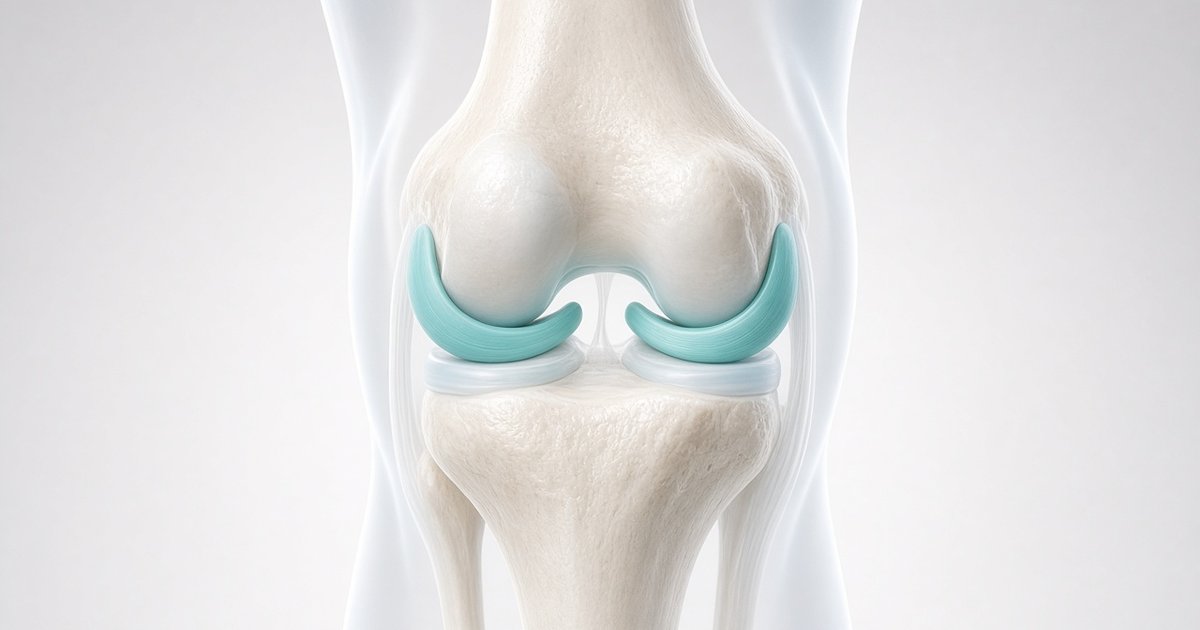
Each knee has two menisci, C-shaped pads of fibrocartilage that sit between the thigh bone and shin bone. They spread load, absorb shock and help keep the joint stable. Only the outer rim has a good blood supply, which is one reason many tears don’t mend well on their own.
Tears generally fall into two groups:
- Acute (traumatic) tears. These usually happen in younger, active people when the knee twists while the foot stays planted. Some are large, and a displaced “bucket-handle” tear can flip into the joint and lock the knee.
- Degenerative tears. These are very common after about age 40. The tissue wears and frays over time, often alongside early osteoarthritis. Many people have one on MRI without any symptoms at all.
The type of tear, where it sits, how big it is, and what the rest of the joint looks like all shape which treatments make sense. That’s why imaging and a physician’s review come first.
What Does Conventional Care Look Like?
For many degenerative tears, guidelines and research favor starting with non-surgical care: activity changes, a structured physical therapy program, weight management and pain control. Two well-known trials in the New England Journal of Medicine shaped this thinking. In 2013, a trial of 351 people aged 45 and older with a meniscus tear and mild-to-moderate arthritis found that physical therapy produced similar improvement in function at six months to arthroscopic partial meniscectomy, although about a third of the therapy group went on to have surgery. Another 2013 trial compared partial meniscectomy with a sham (placebo) procedure in people with degenerative tears and no arthritis, and found no meaningful difference in outcomes.
Surgery still has a clear role. A knee that locks, a large displaced tear, or a repairable tear in a younger patient may be best treated surgically, and we will tell you if we think that’s your situation.
How MSCs Are Thought to Work
Mesenchymal stem cells are best understood as signaling cells. Most of what they appear to do in the body happens through paracrine signaling: they release growth factors and anti-inflammatory molecules that influence the cells already living in the joint. They can turn into cartilage-like cells in a lab dish, but there’s little evidence that injected cells rebuild meniscus tissue directly in people.
The working idea is that calming inflammation in the joint and supporting the knee’s own repair cells may reduce pain and improve function in some patients. Whether that translates into lasting structural change in the meniscus is still an open research question.
What Does the Research Show?
Here is an honest summary of the human evidence:
- The most-cited randomized trial (Vangsness et al., 2014). Fifty-five patients had a partial medial meniscectomy and then received a single knee injection of 50 million donor (allogeneic) bone marrow MSCs, 150 million MSCs, or a hyaluronic acid control. At 12 months, 24% of the 50-million group and 6% of the 150-million group met a predefined threshold for increased meniscal volume on MRI, versus none in the control group. By two years that fell to 18% of the lower-dose group. Patients with arthritis changes who received MSCs reported less pain than controls. No serious safety concerns were found.
- Reviews of the wider literature. A 2023 review found only six clinical studies of cell-based treatments for the meniscus, with cell doses ranging from 16 million to 150 million and no agreement on the best cell source or delivery method. Other reviews describe mostly small studies without control groups and short follow-up, and conclude that larger randomized trials are needed.
- Our own case report. We have published a single-patient case report of a 45-year-old man with a medial meniscus tear and early arthritis treated with our 50-million-cell protocol. His follow-up MRI at about six and a half months was reported as improved, and he described less pain, though a smaller lesion in the other meniscus persisted. One patient without a comparison group can’t tell you what will happen in your knee, and we present it only as an example.
What this means in practice: some patients in studies have shown less pain and better function, and a minority have shown imaging changes. The evidence is early, studies used different cells and doses than ours, and none used Wharton’s jelly and placental MSCs on their own for meniscus tears. MSC therapy should not be described as “healing” or “regrowing” a meniscus.
Our Knee Protocol
At Dream Body Clinic, meniscus tears are treated under our knee protocol:
- Cells: 50 million allogeneic (donor) MSCs from Wharton’s jelly (umbilical cord tissue) and placenta, culture-expanded in our on-site lab in Bucerías.
- Freshness and testing: cells are never frozen. They come out of culture the day before and are given within 24 hours. Batches are tested by COFEPRIS-authorized third-party labs for identity (flow cytometry), mycoplasma and endotoxins. You can read more on our Certified Stem Cells page.
- Delivery: a single ultrasound-guided injection into the knee joint. There’s no bone marrow harvest and no liposuction.
- Imaging first: every patient has an MRI on our open scanner and a blood panel before treatment, and a physician reviews the results with you before anything is injected.
- Follow-up: remote check-ins at 3, 6 and 12 months.
Our facility holds three COFEPRIS licenses covering stem cell production, cryobank storage and regenerative medicine practice. COFEPRIS licenses the facility; it does not approve MSC therapy as an effective treatment for any specific condition.
What Does It Cost?
One knee is $3,500 USD, which includes the consultation, MRI, blood panel, the 50 million cells and the ultrasound-guided injection. Both knees on the same trip are $7,000. If imaging shows you aren’t a candidate, you pay only for the MRI ($500) and blood panel ($300), not the treatment fee. Flights and hotels are separate. Our cost guide explains what’s included and how to budget the trip.
Risks and Side Effects
Knee injections of MSCs have generally been well tolerated in published studies. The most common effects are soreness, tightness or swelling in the joint for a day or two. A small number of patients have had a flare of inflammation in the following week. Any joint injection carries a small risk of infection or bleeding, and long-term safety data for donor MSCs are still limited. Your physician will go over these with you before treatment and will give you specific instructions on pain relief and on which medications to pause or avoid. Please don’t change any medication without talking to your own doctor.
Get medical care right away if your knee becomes hot, red and increasingly swollen, or you develop a fever after any injection.
Who May Be a Candidate?
You may be a reasonable candidate if:
- you have a partial or degenerative meniscus tear confirmed on MRI,
- your knee pain has continued despite physical therapy and other conservative care, and
- you understand the treatment is investigational and results vary.
MSC therapy is generally not a good fit if:
- the tear is complete or displaced, or your knee locks mechanically (these often need a surgical opinion),
- you have large bone spurs or severe structural damage that cells can’t change,
- you’ve had a cortisone injection in the last three months, or
- you’re looking for a guaranteed result. In our experience, about 5% of patients don’t respond at all, and others improve only modestly.
You can email your MRI report to info@dreambodyclinic.net before you travel so a physician can tell you whether you’re likely a candidate. A new MRI is still done on site.
Your 5-Day Trip
A typical knee trip looks like this:
- Day 1: Arrive at Puerto Vallarta International Airport (PVR) and rest.
- Day 2: MRI and bloodwork.
- Day 3: Review your MRI with the physician.
- Day 4: Treatment, which takes a few hours including preparation.
- Day 5: Fly home.
Our team helps with airport transfers and recommends partner hotels in Bucerías and Puerto Vallarta. Our travel guide covers the details.
Recovery and What to Expect
You can walk the same day, and most people return to desk work within two to three days. We ask patients to avoid sport and high-impact exercise for about two weeks, then follow a four-week rehab program we provide. Patients who respond typically report gradual improvement over the following months, with the most change often seen around three to six months. Our recovery timeline guide walks through it week by week.
Questions to Ask Any Clinic
Whoever you choose, ask:
- What kind of tear do I have, and is it one your treatment can realistically help?
- Will you do your own imaging, and will a physician review it before I pay?
- What cells do you use, how many, and how are they tested?
- What happens if I’m not a candidate once I arrive?
- What does follow-up look like after I go home?
Frequently Asked Questions
Can a torn meniscus heal without surgery? Some degenerative tears become less painful with physical therapy and time, even if the tear is still visible on MRI. Large or displaced tears may need surgery. MSC therapy is an investigational option that may reduce pain and improve function for some people with partial or degenerative tears; it isn’t proven to repair the tear itself.
Will stem cells regrow my meniscus? We can’t promise that. In one randomized trial, a minority of patients showed increased meniscal volume on MRI after donor MSC injections, but most did not. Most of the benefit patients describe is in pain and function.
Is this an alternative to arthroscopic surgery? For some people with degenerative tears it can be one option among several, alongside physical therapy. It is not a substitute for surgery when surgery is medically needed, such as a knee that locks.
I’ve already had a meniscectomy. Can I still be treated? Possibly. Ongoing pain after prior knee surgery is something our physicians evaluate. Send your operative report and recent MRI so they can review them.
How soon will I notice a difference? It varies. Patients who respond usually describe gradual change over weeks to months, with the most improvement often around three to six months.
How long do results last? There’s limited long-term data. Some patients report lasting benefit and others find symptoms return over time. We follow up at 3, 6 and 12 months to track how you’re doing.
Can I treat both knees on the same trip? Yes, if both are suitable. Two knees are $7,000 USD.
Thinking About Your Options?
If you’re weighing whether MSC therapy makes sense for your knee, a free consultation is a good place to start. It’s a conversation, not a commitment. A physician will review your MRI report, explain what the evidence does and doesn’t show for your type of tear, and tell you honestly whether we think treatment is a reasonable option.
Schedule your free consultation, call (888) 704-3977, WhatsApp +52 322 232 1055, or email info@dreambodyclinic.net.
Disclaimer: This article is for educational purposes and is not medical advice. Mesenchymal stem cell therapy for meniscus tears is investigational and is not approved by the U.S. FDA. Published evidence is limited, results vary, and some patients see little or no benefit. It is not a substitute for surgery when surgery is medically necessary. Treatment is provided in Mexico at a COFEPRIS-licensed facility. Do not stop or change any medication without your own doctor. Please consult your physician before making treatment decisions.
Related reading: How to Prepare for Stem Cell Therapy for Knee Osteoarthritis; Cell Therapy for Knee Osteoarthritis Shows Early Promise: What a New Phase 2a Trial Means for Stem Cell Knee Treatment.