Elbow pain has a way of showing up in everything. Lifting a coffee cup, shaking hands, turning a screwdriver, a backhand, a golf swing. Maybe you’ve rested it, worn a strap, done months of physical therapy, or had a cortisone shot that helped for a few weeks and then wore off. Now you’re wondering what’s left to try before anyone talks about surgery.
This guide explains what mesenchymal stem cell (MSC) therapy for the elbow involves, what the research does and doesn’t show, how our 50 million MSC elbow protocol in Bucerías works, and how to tell whether you might be a candidate. We’d encourage you to talk it over with your own doctor too.
Common Causes of Chronic Elbow Pain
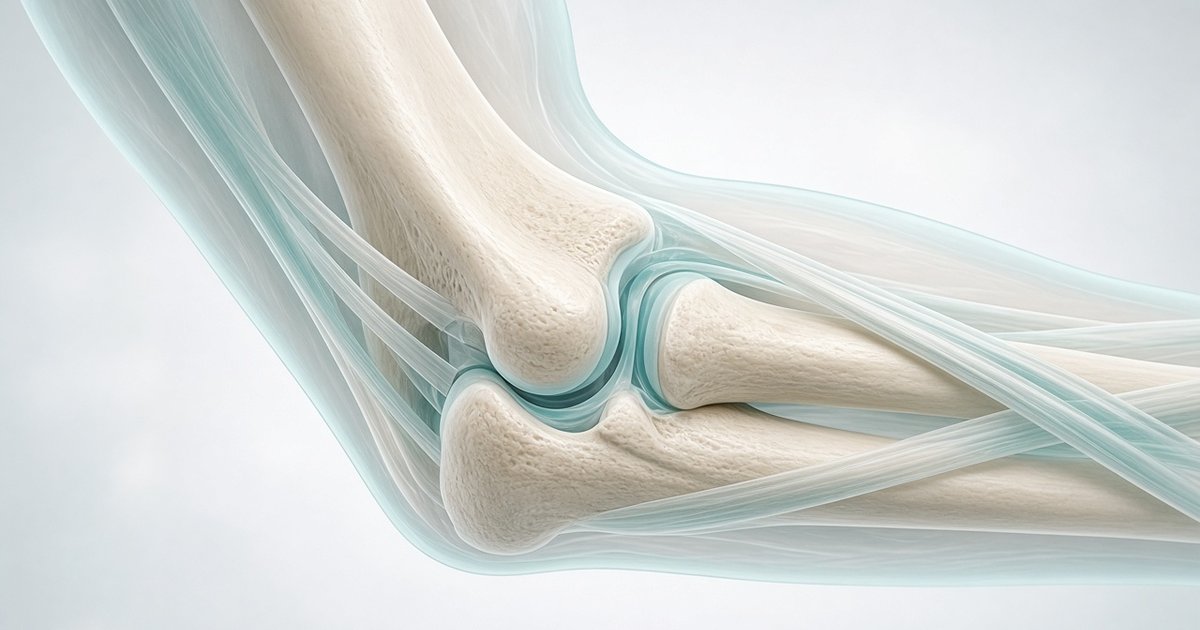
The elbow is a hinge joint where three bones meet, held together by ligaments and moved by tendons that attach the forearm muscles to the bone. The most common sources of long-term elbow pain are:
- Tennis elbow (lateral epicondylitis or epicondylosis): pain on the outside of the elbow where the wrist-extensor tendons attach. Despite the name, most people who get it don’t play tennis. Repetitive gripping and lifting at work or in the gym are common triggers.
- Golfer’s elbow (medial epicondylitis): the same kind of problem on the inside of the elbow, where the wrist-flexor tendons attach.
- Partial tendon or ligament tears, often after a sports injury or years of overuse.
- Elbow osteoarthritis, where cartilage wears down, causing stiffness, aching and loss of motion.
Long-standing tennis and golfer’s elbow are now understood to be mostly degenerative tendon problems rather than ongoing inflammation. That’s why doctors increasingly use the terms “epicondylosis” or “tendinopathy.” It also helps explain why anti-inflammatory approaches often give only short-term relief.
The usual path is rest, activity changes, a brace, physical therapy (especially strengthening exercises), pain medication, and sometimes injections such as cortisone or PRP. Many people improve with time and these conservative steps. Surgery is usually reserved for persistent cases. The people who most often ask us about stem cell therapy are the ones in between: their pain has lasted many months, conservative care hasn’t given lasting relief, and they’d like to explore non-surgical options first.
How Mesenchymal Stem Cells May Help a Painful Elbow
MSCs are studied mainly for how they influence the tissue around them, not for turning into new tendon or cartilage. Researchers believe much of their effect comes from paracrine signaling: releasing growth factors and signaling molecules that may help regulate inflammation and support the body’s own repair processes. In a chronically painful tendon or joint, the aim is to improve that local environment and, for some patients, reduce pain and improve function.
It’s important to be clear about the limits. MSC therapy can’t reattach a fully torn tendon, it doesn’t remove bone spurs, and it can’t rebuild a joint that has lost its cartilage.
What the Research Shows (and Doesn't)
A small, encouraging pilot study in tennis elbow. In a 2015 South Korean pilot study, 12 people with chronic tennis elbow received a single ultrasound-guided injection of allogeneic (donor) adipose-derived MSCs into the damaged tendon. Over one year, average pain scores fell from about 67 to about 15 on a 100-point scale, elbow performance scores improved, ultrasound showed smaller tendon defects, and no significant adverse effects were reported (Lee et al., Stem Cells, 2015). It’s an encouraging signal, but it was a very small study with no control group, so it can’t tell us how much of the improvement was due to the cells.
Reviews of tendon studies are cautious. A 2022 systematic review of 22 cell-therapy studies for tendon problems (658 patients) found the treatment appeared safe, with only a few minor adverse events. It found no controlled studies for elbow tendinopathy, only five case series, and called for large randomized trials before cell therapy can be approved for tendon disease (Mirghaderi et al., J Exp Orthop, 2022). A 2021 meta-analysis of four prospective MSC tendon studies reported improvements in pain and function and stressed the same need for larger trials (Cho et al., Ann Rehabil Med, 2021).
Some experts advise against routine use for now. A 2020 systematic review of eight tendon trials (289 patients) found all were at moderate to high risk of bias and concluded that evidence-based recommendations can’t yet be made (van den Boom et al., Orthop J Sports Med, 2020). We think you should hear that view from us, not discover it later.
How this relates to our protocol. Most elbow studies used cells from fat or bone marrow, often injected directly into the damaged tendon, at doses well below 50 million cells. Our protocol uses allogeneic MSCs from donated Wharton’s jelly and placenta. Those differences matter, and results from one approach can’t be assumed for another. Evidence for elbow osteoarthritis specifically is more limited still.
The fair takeaway: some patients report meaningful improvement in pain and use of their arm, results vary, some see little or no benefit, and research can’t yet reliably predict who will respond.
Our Elbow Protocol: 50 Million MSCs, Guided by MRI
Here’s what our published elbow protocol includes.
Before you travel
It starts with a free consultation. If you’ve had an elbow MRI within the past year, email the written radiology report (just the report, not the images) to info@dreambodyclinic.net, and our doctors will make a preliminary assessment. A new MRI is still part of every elbow treatment, done on our on-site open MRI (an Esaote S-Scan) with a dedicated elbow coil. Our doctors want a current picture of the bones, cartilage, tendons and ligaments before treating. Space in the open scanner is limited, so we’ll check your measurements in advance; if the coil won’t fit your arm, we schedule the scan at a partner lab.
A typical five-day visit
We ask elbow patients to plan to be in town for at least five days:
- Day 1: Arrive and rest.
- Day 2: MRI and bloodwork.
- Day 3: Your physician reviews the MRI with you and confirms whether you’re a candidate. Payment happens only after that review.
- Day 4: Treatment.
- Day 5: Fly home.
Treatment day
The procedure is an injection of 50 million culture-expanded mesenchymal stem cells into the elbow, performed by one of our physicians using ultrasound guidance. There’s no liposuction or bone marrow harvest, because the cells come from our on-site lab, where they’re grown and given fresh rather than frozen, within 24 hours of leaving culture. You can read how the cells are produced and tested in our guide to the science and quality of our MSCs and on our certified stem cells page.
Aftercare
You’ll leave with a four-week physiotherapy protocol and activity guidance. Before treatment, our physicians review everything you take, including anti-inflammatories, steroids and supplements, and give you personal instructions about what to pause and when. We don’t treat within three months of a cortisone or other corticosteroid injection. Never stop or change a prescription medication, especially prednisone, without talking to the doctor who prescribed it.
Recovery and Results Timeline
Every elbow is different, but here’s the general pattern our patients follow:
- First few days: Soreness or tightness around the elbow is common. Light daily use is usually fine.
- Weeks 1–2: Normal daily activity, but no exercise, sport or heavy gripping.
- Weeks 3–6: A four-week guided physiotherapy program.
- After about six weeks: A gradual return to your sport, gym or work tasks, starting light and listening to your body.
- Months 1–3: Many patients report gradual changes in pain and strength.
- Months 3–6: This is when we typically assess the result.
- Follow-up: Our team checks in remotely at 3, 6 and 12 months.
Some patients notice changes within weeks, others later, and some see little or no benefit.
Cost and What's Included
We publish our elbow pricing so you can plan without surprises:
- $3,500 USD per elbow. Includes 50 million MSCs, the on-site open MRI, a full blood panel, physician review, and post-treatment rehab guidance.
- Both elbows, or an elbow plus another joint: can be treated on the same trip; each joint is priced separately.
- If your MRI shows you’re not a candidate: you pay only for the MRI ($500) and the blood panel ($300), not the treatment.
You book your own flights and hotel. Our travel guide covers flights into Puerto Vallarta and where to stay in Bucerías. Most insurance plans don’t cover stem cell therapy.
Who May and May Not Be a Candidate
If our physicians don’t think we can help, we’ll tell you.
People who may be candidates typically have:
- chronic tennis elbow or golfer’s elbow that hasn’t responded to rest, bracing, physical therapy or injections,
- a partial tendon or ligament tear,
- mild to moderate elbow osteoarthritis, or
- ongoing elbow pain after months of conservative care.
People who are usually not candidates include those with:
- a complete tendon or ligament tear, because the cells can’t bridge a full gap, and surgical repair may be the better conversation,
- significant bone spurs (osteophytes), which MSCs can’t remove and which are among the most common reasons we turn patients away,
- cancer within the past five years, a precaution under our clinic policy, or
- a cortisone or other corticosteroid injection within the past three months.
Elbow pain doesn’t always start in the elbow. Nerve problems such as cubital tunnel syndrome, or pain referred from the neck, can feel similar and need a different approach. Your MRI and physician review make the final call, and no clinic can promise a result.
Safety and Side Effects
The tendon reviews above reported few, mostly minor adverse events. Across MSC trials more broadly, these therapies appear generally well tolerated, with temporary fever and injection-site reactions most often reported, though long-term data remain limited (PMC8522073). For an elbow injection specifically:
- Post-injection flare. Some patients feel tightness or soreness the night after treatment or the next day. We provide medication to manage it.
- Infection. Any injection carries a small risk. We use strict sterile technique and skin antisepsis to reduce it.
- No response. Some patients don’t experience meaningful improvement.
Our safety and side effects FAQ covers these questions in more depth, including what the FDA says about unapproved stem cell products.
Frequently Asked Questions
Can stem cells repair a torn elbow tendon?
Current research doesn’t show that reliably. Small studies have reported less pain, better function and, in one pilot study, smaller tendon defects on ultrasound, but there are no controlled trials for the elbow. We describe MSC therapy as a way to help regulate inflammation and support the body’s own repair processes, not as a way to rebuild a tendon. Complete tears usually need a surgical opinion.
Is stem cell therapy better than PRP or cortisone for tennis elbow?
There aren’t head-to-head trials of our protocol against PRP or cortisone for the elbow, so we can’t say it’s better. Many people do well with physical therapy, time and other injections. Our physicians can talk through where MSC therapy might fit for you.
How much does a stem cell elbow injection cost at Dream Body Clinic?
$3,500 USD per elbow, including 50 million MSCs, the open MRI, a full blood panel, physician review and rehab guidance. If the MRI shows you’re not a candidate, you pay only $800 for the MRI and bloodwork.
How soon can I play golf, tennis or pickleball again?
We advise two weeks off exercise and sport, then a four-week physio program. After about six weeks, most patients ease back into their sport gradually. Your physician will tailor this to you.
Can I treat my elbow and another joint on the same trip?
Yes. Your physician will review imaging for each joint, and each is priced separately. See our shoulder guide if you also have shoulder pain.
Is this treatment FDA-approved?
No. MSC injections for elbow conditions These treatments have not been approved by the U.S. Food and Drug Administration (FDA). Dream Body Clinic’s regenerative medicine treatments are provided under COFEPRIS licensing (license 23-TR-18-020-0001). COFEPRIS is Mexico’s equivalent of the FDA, and Mexico is where we operate. If you’re comparing clinics, our guide on how to choose a stem cell clinic lists the questions worth asking anyone, including us.
Wondering If Your Elbow Could Be a Fit?
Start with a free consultation. Send your written elbow MRI report or history, and our physicians will tell you honestly whether our protocol may be appropriate, including when physical therapy, another injection or a surgical opinion would likely serve you better. Our patient journey guide walks through every step.
Call (888) 704-3977, WhatsApp +52 322 232 1055, or email info@dreambodyclinic.net. These treatments have not been approved by the U.S. Food and Drug Administration (FDA). Dream Body Clinic’s regenerative medicine treatments are provided under COFEPRIS licensing (license 23-TR-18-020-0001). COFEPRIS is Mexico’s equivalent of the FDA, and Mexico is where we operate.
Results vary. These treatments are not FDA-approved. Consult your physician.