
The most popular explanation of stem cell therapy for erectile dysfunction is also the one most likely to mislead: that injected cells become new blood vessels, nerves, or penile tissue. That isn't the main mechanism proposed for mesenchymal stem cells. They're thought to work primarily through paracrine signaling, releasing local messages that may guide the body's own repair response. The distinction matters because signaling support isn't the same as replacing damaged structures, and it can't guarantee restored erections.
Stem cell treatment for ED remains investigational, with early human findings that are difficult to generalize. Understanding the proposed biology, who has been studied, and what a clinic should disclose can help you weigh the possibility against established options and make a more informed decision.
Table of Contents
- What Stem Cell Therapy for ED Really Is
- The Paracrine Effect Explained Simply
- How Those Signals Repair Erectile Tissue
- What the Human Trials Actually Show
- Who Is a Real Candidate for This Therapy
- Protocols, Dosing, and Delivery Routes Compared
- Realistic Timelines and Outcomes
- Risks, Red Flags, and Clinic Vetting
What Stem Cell Therapy for ED Really Is
The phrase “stem cell therapy” can suggest that injected cells become replacement nerves, muscle, or blood vessels. For mesenchymal stem cells (MSCs), the leading proposed mechanism is different: they release signals that may influence the tissue around them. The cells are understood as temporary signaling hubs, and their effects depend on how nearby tissue responds.
This communication is called the paracrine effect. Signals may support blood-vessel activity, temper inflammation, and encourage repair in the local environment. These are proposed biological effects; improved erections remain unproven. A review of early human studies describes the approach as promising, while emphasizing that the evidence is very limited and does not establish it as standard treatment.
The practical distinction: A cell's signals may prompt responses in nearby tissue, but they do not guarantee tissue replacement or restored erectile function.
The cause of erectile dysfunction matters when assessing whether this approach might be relevant. Diabetes-related changes to blood vessels or nerves, erectile dysfunction after prostate surgery, medication effects, hormonal issues, and psychological factors involve different circumstances. Evidence and potential responses may vary, so a clinic should explain how it assesses each patient rather than suggest one protocol suits everyone.
Understanding the proposed signaling mechanism can help patients assess what a clinic claims its treatment can do. A plain-language overview of what stem cell therapy is and how it works can clarify terms used to describe cell-based treatments. For broader context on sexual-health concerns and supportive approaches, see this guide to male sexual health. The sections ahead examine the human evidence, candidacy, protocols, expected outcomes, and safety questions, including considerations for international patients comparing clinics.
The Paracrine Effect Explained Simply
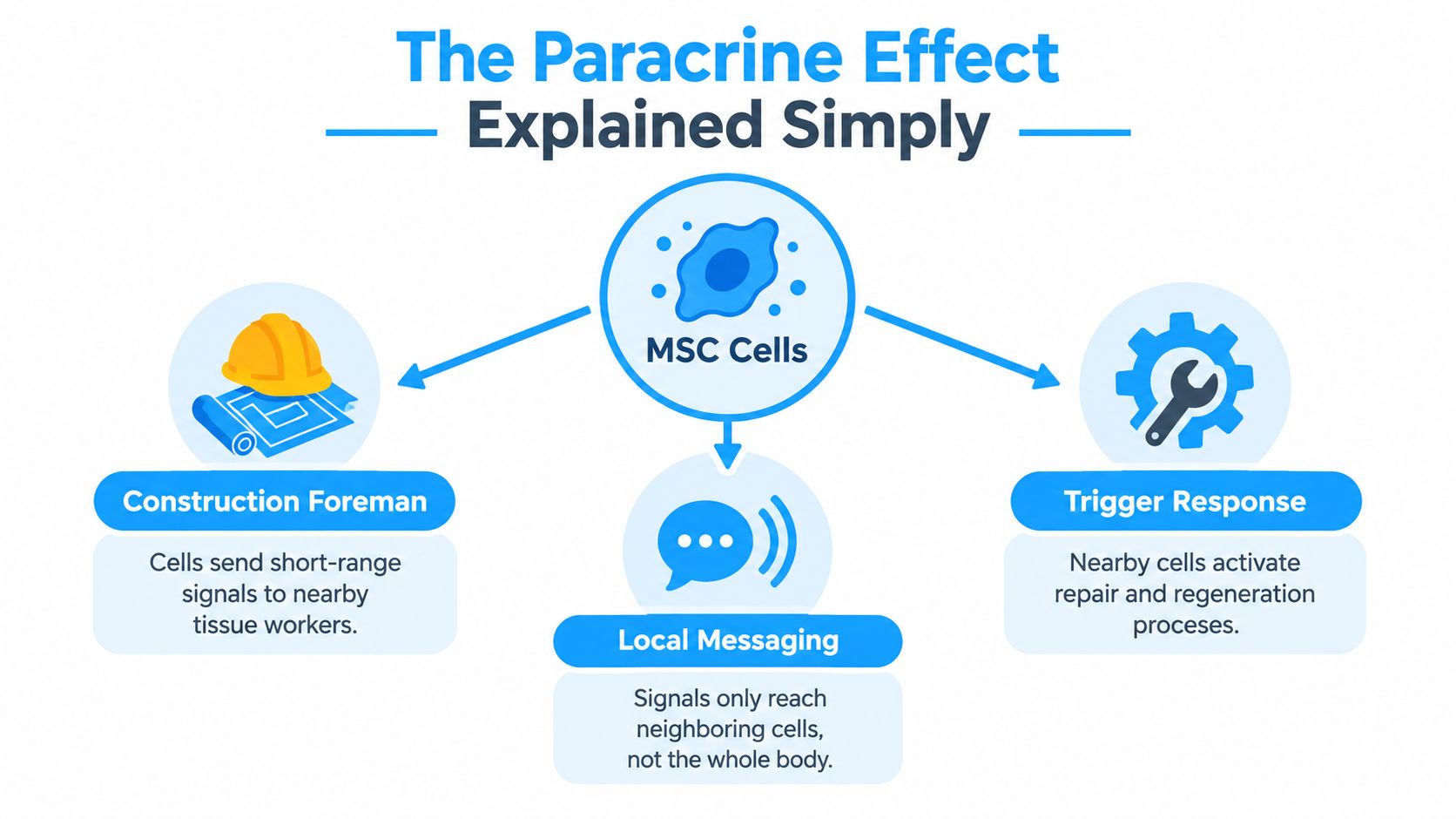
Think of a construction foreman arriving at a damaged building. The foreman doesn't become a brick, window, or worker. Instead, the foreman assesses the situation, gives instructions, and coordinates the people already there. In the proposed paracrine model, MSCs play a similar signaling role: they release messages that may influence nearby cells and the local repair environment.
The cells' collection of released molecules is called the secretome. Researchers have studied signals associated with blood-vessel growth, nerve support, inflammation control, and reduced tissue scarring. The proposed therapeutic action is therefore mainly the cells' communication with surrounding tissue, not their transformation into replacement penile structures.
Stem cells don't differentiate into new penile cells as the primary treatment mechanism. In particular, the proposed effect isn't that injected MSCs routinely become new endothelial cells lining blood vessels, smooth-muscle cells, or nerve cells. Engraftment and differentiation may be discussed as secondary or ancillary possibilities, but they aren't the central explanation for the approach.
That distinction has experimental support, though it shouldn't be mistaken for proof of benefit in people. In a rat model of erectile dysfunction caused by cavernous-nerve injury, researchers reported little evidence that injected MSCs transformed into the specialized cells needed for normal erectile function. Instead, the findings supported a model in which MSCs activate the host tissue's own soluble signals and repair pathways. This is preclinical research, not a human treatment result (animal-model study).
When discussing a protocol with a clinician, useful terms include angiogenic signaling (signals related to blood-vessel growth), neurotrophic support (support for nerve health), anti-fibrotic signaling (help limiting excess scarring), and the body's host-tissue repair response. Ask what evidence supports the proposed action, and whether the clinic is describing a biological hypothesis or a demonstrated clinical outcome.
How Those Signals Repair Erectile Tissue
An erection depends on blood entering penile erectile tissue, the vessels responding appropriately, and nerve signals coordinating the process. Researchers propose that MSC-derived signals could influence several parts of this system, but the steps below describe biological aims, not guaranteed changes a patient will notice.
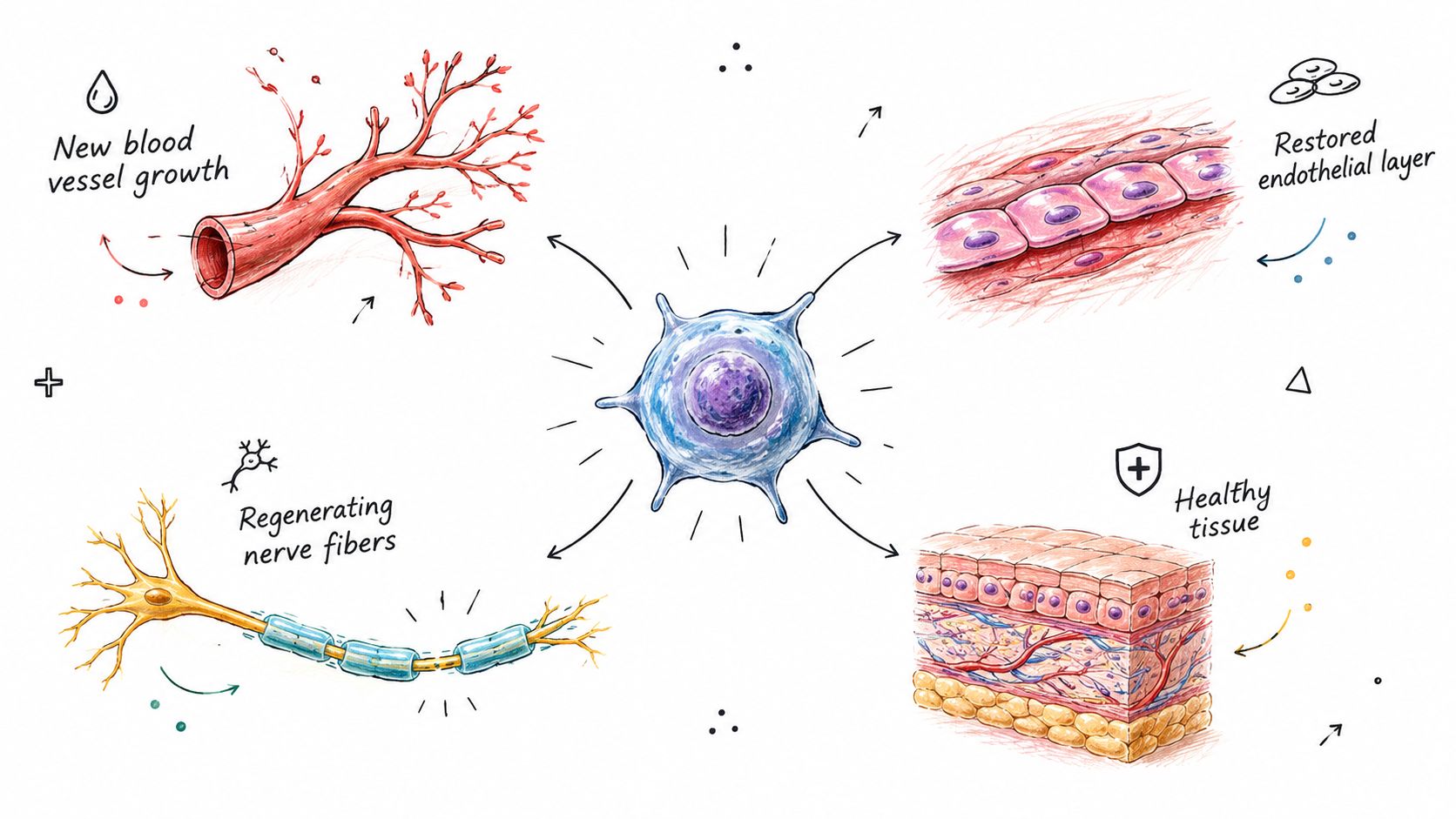
Blood-vessel growth and blood flow: Signals associated with angiogenesis may support the formation or repair of small blood-vessel networks. In animal research, factors such as vascular endothelial growth factor (VEGF) have been studied in relation to this process. If blood flow improves in a person, firmer erections might be one possible functional change, but preclinical findings don't establish that outcome for patients.
Endothelial function: The endothelium is the thin lining inside blood vessels. When it doesn't respond well, vessels may not relax as needed for increased blood flow. MSC-related signals are being investigated for their potential to support endothelial repair, which is one reason vascular causes of ED feature in this research.
Nerve support and local repair: Neurotrophic signals, including those associated with brain-derived neurotrophic factor, have been studied for their role in nerve health. In theory, better support for nerve signaling could affect how the body coordinates an erection. Research also examines anti-inflammatory and anti-fibrotic effects, which may help preserve the local tissue environment.
A meta-analysis of animal studies reported changes in growth factors, including nerve growth factor, VEGF, hepatocyte growth factor, and brain-derived neurotrophic factor, alongside erectile-function findings in rats (preclinical review). Animal results can help explain why researchers are interested in these signals, but they can't tell an individual patient whether treatment will improve arousal, morning erections, or erection firmness.
A human evidence review describes early studies measuring erectile-function scores and penile blood-flow parameters. Such measurements are useful for tracking change, but they don't establish that a proposed mechanism caused an improvement or predict how an individual will respond.
For a patient-friendly animation of the signaling idea, see the video below.

What the Human Trials Actually Show
The human evidence is measurable, but early studies cannot establish how well this treatment works for a broad range of patients. A 2020 systematic review identified five completed clinical trials involving 61 patients, with follow-up periods ranging from 6 to 62 months. Most studies reported improvements in measures such as penile blood flow, IIEF-15 scores, or erection hardness. None reported serious adverse events, but the small groups limit what can be concluded about safety. Only one study included a sham-treatment arm, so it is difficult to distinguish a treatment effect from placebo response, natural fluctuation, or other care.
A 2023 systematic review included 18 studies and 373 men with ED from different underlying conditions. The authors described the approach as promising and generally safe in the reported studies, while noting inconsistent treatment methods and a lack of control groups in many studies. That variation makes comparisons difficult: studies may be testing different cell sources, procedures, and patient groups under the same broad label.
A separate 2024 review and meta-analysis included 17 studies involving 269 patients. Cell sources varied, and studies reported improvements in measures such as IIEF, erection hardness, and penile blood-flow parameters. A pooled improvement across unlike studies does not identify the best cell source, dose, injection schedule, or delivery route.
How to read a headline: Check how many people were studied, whether there was a sham or control group, what caused their ED, how long they were followed, and whether the tested protocol matches the one being promoted.
Reviews can organize results, but they cannot remove the limits of the studies they summarize. Small groups, varied outcome measures, different causes of ED, and non-standardized protocols leave no dependable estimate of benefit for the wider patient population. Larger controlled studies using consistent methods and longer follow-up are needed to establish how the treatment compares with established ED care.
Who Is a Real Candidate for This Therapy
The best-described patient groups in early research include men with diabetes-related ED and men with erectile dysfunction following radical prostatectomy. That doesn't mean either group is guaranteed to benefit. It means their conditions have featured in human studies more often than some other causes.
For medication-related, hormonal, psychogenic, venous-leak, or mixed ED, the evidence is thinner or harder to interpret. A responsible evaluation should first identify likely contributors. Diabetes, nerve injury, endothelial disease, low testosterone, medication effects, and anxiety can overlap, and treatment planning should reflect that.
A clinician can establish a baseline before discussing an experimental intervention. The evaluation may include an IIEF-15 or IIEF-5 questionnaire, an Erection Hardness Scale (EHS) score, penile Doppler ultrasound where appropriate, glucose or HbA1c testing, testosterone assessment, lipid testing, and a medication review. The point is not to create a checklist for its own sake. These findings help clarify the problem being treated and make later comparisons more meaningful.
When to pause and address other health issues
Uncontrolled diabetes, active malignancy, infection, severe vascular disease, or untreated hypogonadism should prompt careful medical assessment before proceeding. A clinic should explain what needs attention first rather than treating cell therapy as a substitute for managing those conditions. It should also discuss conventional options, such as PDE5 inhibitors, vacuum devices, injections, or prosthetic surgery, when clinically appropriate.
Questions about testosterone can benefit from an informed conversation with a qualified clinician. This overview of common TRT questions may help readers understand topics to raise, but it can't replace personal medical advice. Similarly, people comparing supportive approaches may find it useful to review what trials show about this combination, while keeping supplements separate from evidence for stem cell therapy.
The right question isn't, “Am I eligible?” Ask what cause the clinician thinks is driving the ED, what evidence supports treatment for that cause, and how they'll measure a result. If the answer is a universal promise rather than an individualized explanation, seek another opinion.
Protocols, Dosing, and Delivery Routes Compared
A protocol should make clear what cells or cell-derived product are used, how they're prepared, how they're delivered, and how the clinician will assess outcomes. Published studies have used different sources and methods. The available evidence doesn't validate one cell source, dose, schedule, or route as superior.
| Protocol element | What it may involve | Questions to ask |
|---|---|---|
| Cell source | Adipose tissue, bone marrow, or donor-derived preparations have been studied. | Is the product autologous or donor-derived, and how is it identified and tested? |
| Local injection | Intracavernosal or another local penile injection aims to place the product near erectile tissue. | What is the specific injection site, and why is it appropriate for my diagnosis? |
| Intravenous delivery | An IV route delivers cells or a cell-based product systemically rather than directly to penile tissue. | What is the rationale for adding an IV route for my case? |
| PRP adjunct | Platelet-rich plasma may be included alongside a cell-based protocol, depending on the clinic's approach. | Which component is intended to act on which outcome, and how will each be evaluated? |
Some clinics also use names such as P-Shot, a term commonly associated with platelet-rich plasma procedures. The name alone doesn't tell you whether stem cells are included, what the product contains, or whether evidence supports the specific combination. Ask the clinic to explain the actual components and route in plain language.
Before traveling or paying, ask for written details on product identity, viability testing, sterility, donor screening or autologous sourcing, administered cell number, injection technique, adverse-event monitoring, and planned follow-up. A protocol that says only “premium stem cells” without specifying what that means isn't transparent.
If you're also looking into supplements, a guide to vasculogenic ED supplement dosing addresses a different approach; it shouldn't be treated as evidence for a cell-therapy protocol. Keep the questions distinct: what is in the cell product, what is being injected, and what evidence supports each part?
Realistic Timelines and Outcomes
Studies assess change with tools such as the IIEF-5, IIEF-15, and Erection Hardness Scale. The IIEF questionnaires ask about aspects of sexual function, while the EHS focuses on erection firmness. These measures can help clinicians compare a person's baseline with later reports, but a score change doesn't automatically mean that sex is reliably possible or satisfying.
A useful outcome is one that matters in daily life. For one person, that might mean erections firm enough for intercourse; for another, it might mean a better response to an existing medication. A change in a questionnaire is more persuasive when it matches the patient's own goals and is accompanied by consistent improvement, not just a single better result.
There isn't a dependable, universal timeline. Human studies have used different follow-up schedules, and their results don't establish when an individual should expect improvement. A clinic that promises a set week for results is making a claim that the evidence can't reliably support.
A meaningful discussion tracks both: “Did the score change?” and “Did the change improve the sexual activity or function I care about?”
Ask how the clinic will collect baseline scores, when it will repeat them, and whether it will document blood-flow measures when appropriate. Also ask what happens if scores don't improve. Averages from heterogeneous studies can describe a group, but they don't predict a particular patient's response or prove that any change will last.
Risks, Red Flags, and Clinic Vetting
Small published studies haven't reported serious treatment-related adverse events, but that doesn't prove that an experimental intervention is risk-free. Small cohorts and limited follow-up can't reliably identify uncommon events or settle questions about long-term effects. Risks also depend on the product, preparation, harvesting method, injection technique, and the patient's health.
Local swelling or bruising may occur around a harvest or injection site. Some people may experience brief flu-like symptoms after an IV infusion. Infection and procedure-related complications also deserve discussion. Questions about long-term safety, unwanted cell behavior, tumor promotion, and treatment in the setting of active malignancy require caution: limited early studies can't rule out every concern. Tell the clinician about cancer history and current medical conditions, and ask how they screen patients.
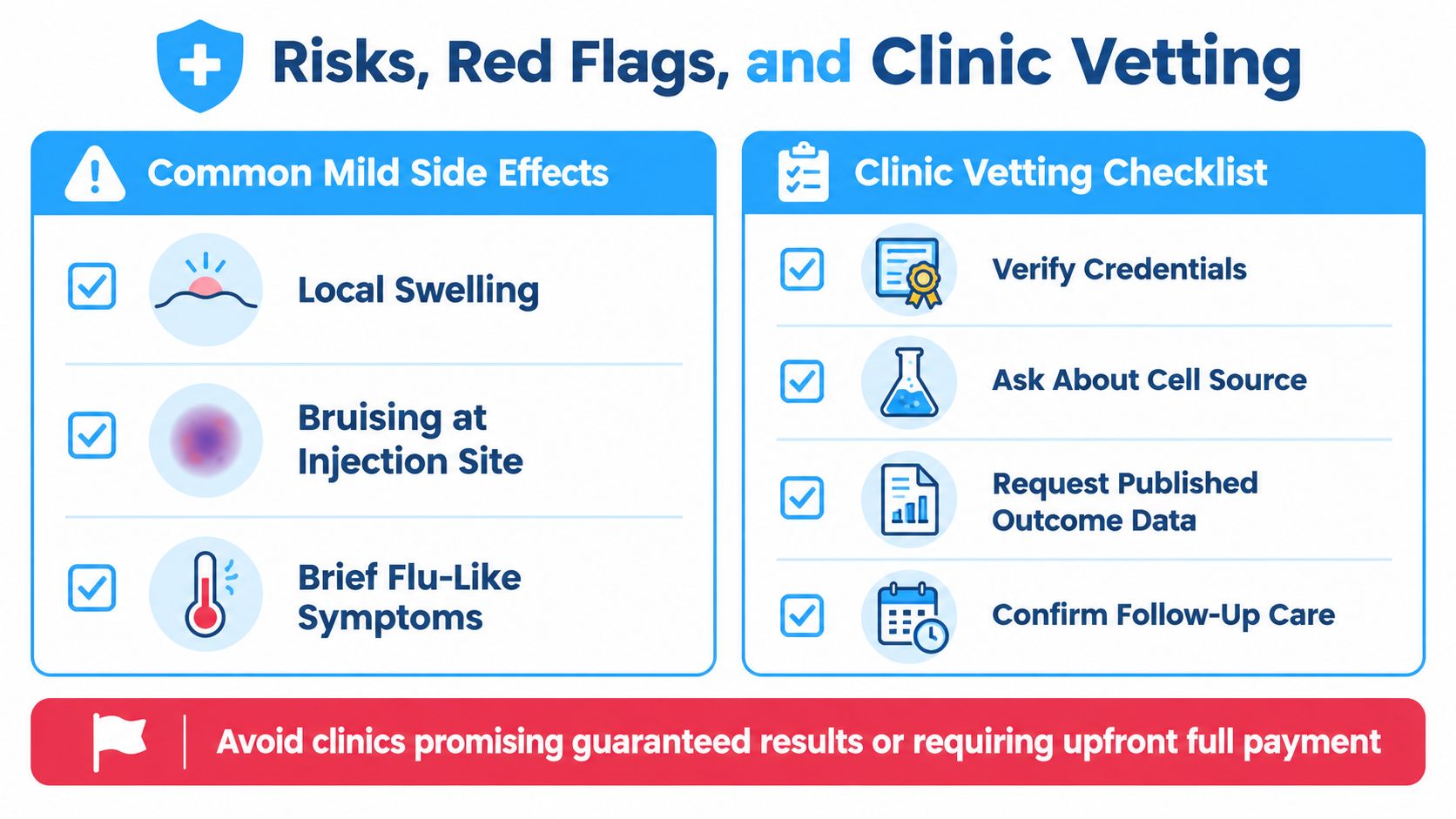
What a careful clinic should be able to explain
Ask for clear answers about the clinician's qualifications, the product's source, quality testing, the procedure, possible complications, and follow-up. The clinic should also explain why it believes the proposed protocol fits your specific ED profile and what evidence supports that view.
Be cautious if a provider:
- Guarantees results: No early evidence can support a promise that treatment will work for every patient.
- Claims one protocol fits everyone: Studies differ, and no single source, dose, or schedule is established as best.
- Skips diagnosis: A clinic should assess causes and baseline function before recommending treatment.
- Withholds product details: Ask about cell identity, viability, sterility, sourcing, and how the clinic handles safety concerns.
- Discourages another opinion: A provider should welcome informed questions and independent medical review.
For international patients, complete the medical review before booking travel. Ask what records the clinician needs, which laboratory or imaging assessments are appropriate, who will handle your care locally, and how remote follow-up works. Dream Body Clinic, based in Bucerias, Nayarit, offers a complimentary case review, clinical assessment, travel coordination, and an in-clinic visit that typically takes 1–3 hours; the clinic says its treatments operate under Mexico's COFEPRIS oversight. Those details describe its service process, not proof that stem cell therapy is effective for ED.
The clinic describes structured remote follow-up at roughly 3, 6, and 12 months. Before proceeding, ask how it will assess outcomes at those points and how you can access care if a concern arises after returning home. You can also review the clinic's information about its certified stem cell services and discuss the specifics with an independent clinician.
A sound decision rests on four things: a clear explanation of your ED's likely cause, realistic expectations, a fully disclosed protocol, and a follow-up plan. The central point remains that MSCs are proposed to work through paracrine signaling, not direct replacement of damaged penile tissue. Choose a clinic that says so plainly and is equally candid about what remains unproven.
Dream Body Clinic offers case review and MSC-based sexual-health protocols, including a Stem Cell P-Shot that combines mesenchymal stem cells with platelet-rich plasma for penile injection. If you're considering this approach, bring your medical history and questions about evidence, product testing, and follow-up to a discussion with Dream Body Clinic.