Stem Cell Therapy: What It Is and How It Works
Stem cell therapy is one of the most talked-about advances in modern medicine, and for good reason. It offers a way to work with the body’s own repair systems to address conditions that have traditionally been difficult to treat. Whether you are exploring options for joint pain, an autoimmune condition, or a neurological disorder, understanding how stem cells work is the first step. This guide covers everything you need to know, from what stem cells actually are to how Dream Body Clinic in Puerto Vallarta delivers these treatments to patients from around the world.
When people say “stem cell therapy,” they are usually talking about mesenchymal stem cells (MSCs). Those are the cells used most often in clinics around the world.
Here is the part most articles skip: MSCs are not really stem cells in the way the name suggests.
Dr. Arnold Caplan characterized them in the early 1990s. In a dish, he could push them to become bone-forming cells (osteoblasts), cartilage cells (chondrocytes), and other specialized cells. That lab trick is why they were named mesenchymal stem cells.
Then researchers started putting them into animals, and later into people. The surprise: after injection, they generally do not turn into new bone, cartilage, or organ tissue. They do not rebuild the body by becoming the missing parts.
They work through the paracrine effect. They release signals that tell your own cells what to do. Think of them as managers on a construction site, not the crew pouring the concrete. They calm harmful inflammation, recruit your repair cells, and help tissue organize the way it did when you were a child and healing was fast and clean.
That signaling job is why MSCs became the workhorse of regenerative medicine. Among the cell types used in treatment today, they have the strongest safety record and the broadest track record of useful clinical effect—not because they are magic stem cells, but because they coach the body instead of trying to replace it.
This guide explains that science in plain language, then shows how Dream Body Clinic in Puerto Vallarta uses MSC protocols with international patients. It is education, not a diagnosis. Results vary. A physician still has to decide whether you are a candidate.
What Are Stem Cells—and Why MSCs Are Different
Classic stem cells can copy themselves and become many other cell types. Embryonic stem cells can become almost anything. That power is also why they are harder to control and rarely used as a routine clinic treatment. They are from aborted fetus and they still want to become a baby so they tend to become teratomas unfortunately.
Adult tissues also hold more limited progenitor cells. Bone marrow transplants, for example, use hematopoietic stem cells to rebuild blood.
MSCs sit in a different category.
Dr. Arnold Caplan isolated them and showed they could differentiate in culture. Years later he argued the name was misleading. In the body, after they are given to a patient, they act as medicinal signaling cells. The letters MSC can stay. The story should change.
| In the lab | In the body after treatment |
|---|---|
| Can be driven into osteoblasts, chondrocytes, fat cells, and others | Rarely persist as those new tissues |
| Look like a “stem cell” toolkit | Act through signals (paracrine and immunomodulatory effects) |
| Useful for research | Useful as a short-term repair manager |
That is not a downgrade. It is the reason they are practical. You do not need a cell to become your new knee cartilage if it can tell your existing biology to reduce inflammation and restart a younger pattern of repair.
Why MSCs Became the World’s Most Used Treatment Cell
Clinics and researchers kept coming back to MSCs for three reasons.
They are widely used. MSC products from bone marrow, fat, umbilical cord tissue (Wharton’s jelly), and placenta are the cells patients are most likely to receive when they seek “stem cell therapy.”
They are the safest common option. They have low immunogenicity compared with many other cells, they do not form tumors the way poorly controlled pluripotent cells can, and decades of transplant and regenerative use have produced a large safety literature when products are screened and given by trained clinicians. No living therapy is risk-free. Infection, flare, lack of benefit, and rare reactions still exist. Relative to embryonic or induced pluripotent approaches in a clinic setting, MSCs are the conservative choice.
They are the most effective *as a class of clinic cells* not because they differentiate on command, but because signaling is what damaged tissue often needs. Joints, autoimmune disease, and many degenerative conditions are inflamed, poorly coordinated repair environments. A manager cell that can reset that environment is more useful than a cell that only looks impressive under a microscope.
Dream Body Clinic is built around that MSC model—not embryonic cells, not speculative iPSC grafts.
Other Cell Types, Briefly
Embryonic stem cells are the most plastic. They are mainly a research tool.
Induced pluripotent stem cells (iPSCs) are adult cells reprogrammed in a lab to act more like embryonic cells. Important science, but not yet ready for widespread use. They hold a lot of promise, but they are complicated to produce and there are no labs offering them as a common treatment yet.
Hematopoietic stem cells rebuild blood and immune systems in formal transplant medicine. That is a different treatment than orthopedic or autoimmune MSC protocols. This is primarily for Leukemia treatment.
Perinatal MSCs (umbilical cord tissue and placenta) are still MSCs. They are a source, not a separate magic category. Dream Body Clinic uses certified human MSCs from perinatal tissue prepared in their licensed lab on site.
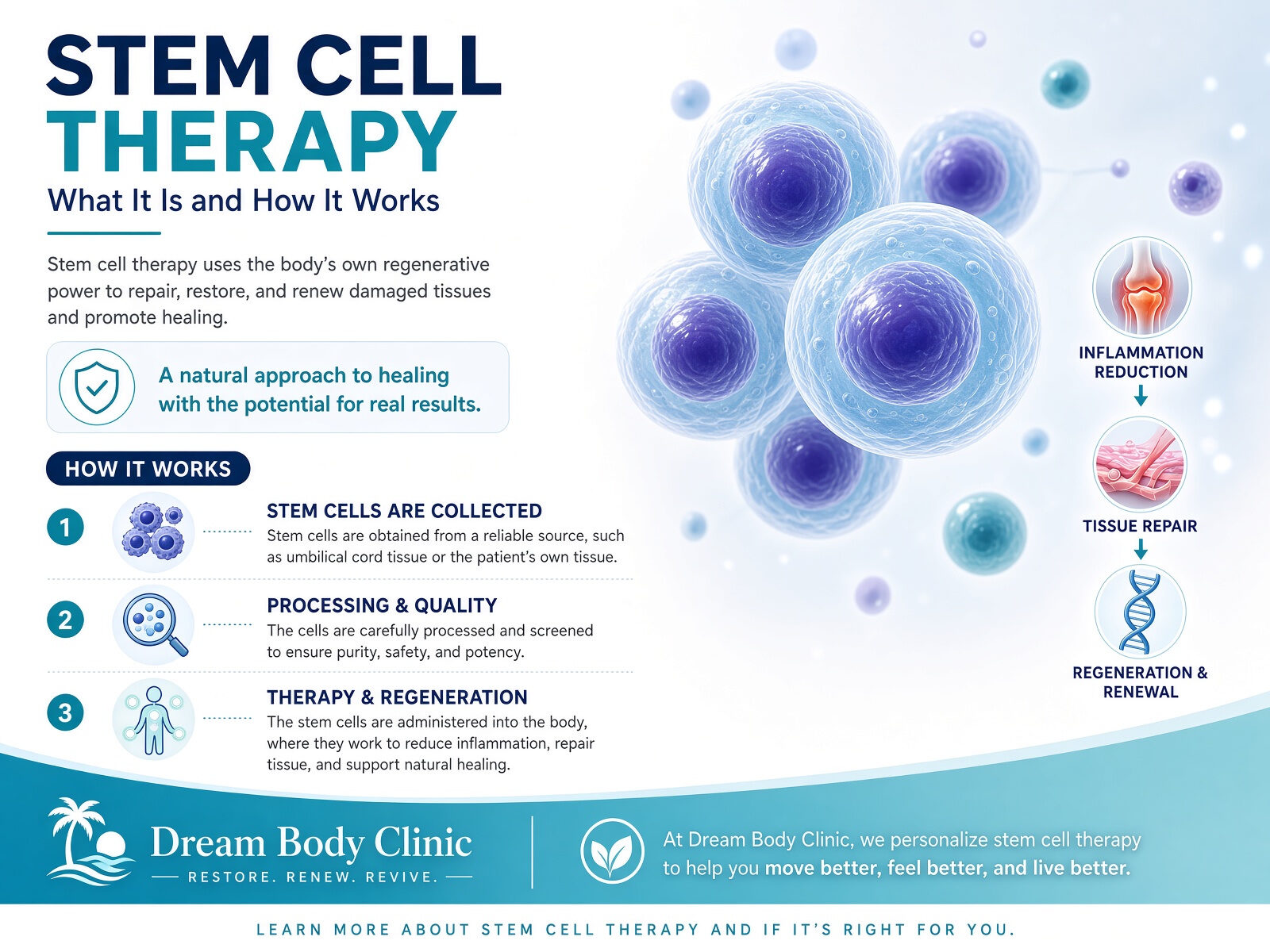
How MSC Therapy Actually Works
- Source and prepare screened MSCs. Allogeneic perinatal MSCs are expanded and tested before use. Quality control—identity, viability, sterility, dose—matters more than a slogan.
- Deliver them where they can signal. IV infusion for more systemic immune and inflammatory goals. Direct injection into a joint or tissue for a local problem. Other routes only when a physician judges them appropriate.
- Let them manage the site. They release growth factors and cytokines, modulate immune cells, and help your own repair program run. Then they are cleared. They do not need to live in you forever to matter.
- Give the body time. Signaling changes biology over weeks to months, the way childhood healing was a process, not a switch.
This is why combining MSCs with a healthier repair environment can matter. Dream Body Clinic sometimes pairs MSC protocols with physician-directed HGH programs. Growth hormone is part of normal tissue repair and metabolism. It is an adjunct when it fits the case, not a requirement for every patient.
What Conditions Are MSCs Used For?
Evidence is not equal for every diagnosis. The shared logic is the same: too much inflammation, too little organized repair.
**Joints and spine:** Cartilage and many tendons heal poorly in adults. MSC injections aim to quiet the joint and support function so surgery is not the only path.
**Autoimmune and inflammatory disease**:MSCs can modulate immune activity without the blunt suppression of some drugs. That is why rheumatoid arthritis, lupus, MS, and related conditions appear in clinic programs.
**Nerves and brain-related protocols:** The honest goal is often less neuroinflammation and better support of remaining tissue—not growing a new nervous system overnight.
Dream Body Clinic works across orthopedic, autoimmune/organ, and neurological protocols. A consult should still start with fit, imaging, and risks, not a menu.
How Dream Body Clinic Uses This Science
The clinic’s position is specific: use the cells the world already uses most, and use them for the job they actually do.
- MSCs, not embryonic or iPSC products
- Perinatal human MSCs processed under licensed lab controls
- Protocols matched to the target (joint injection, IV, or other routes as indicated)
- Optional HGH when it supports the repair environment
- Remote consult, on-site treatment in the Puerto Vallarta / Nuevo Vallarta area, follow-up after you fly home
Puerto Vallarta is reachable through Puerto Vallarta International Airport (PVR). Mexican regulations are not the same as FDA or Health Canada approval. Mexico is very embracing of stem cell therapy.
Safety, Stated Straight
MSCs are the safest widely used “stem cell” product because they signal and leave rather than engraft as a new organ. Proper screening, sterile technique, and honest dosing are what keep that safety profile.
Risks that remain: injection discomfort, infection, temporary flare, no improvement, and uncommon immune or systemic reactions. Travel has its own risks.
A clinic that explains Dr. Caplan’s findings of paracrine signaling, and limits is easier to trust than one that says the cells will become your new cartilage and stay there.
Frequently Asked Questions
If MSCs are not really stem cells, why use that name?
They are stem cells in the lab as they can be differentiated. This makes them considered multipotent stem cels. Dr. Caplan named them for what they could become in a lab. In patients they act as signaling cells. The field kept the acronym.
Why are MSCs used more than other stem cells?
They can be sourced, expanded, screened, and given with a safety record other clinic cell types do not match. Their job—managing repair—fits the diseases people actually bring to a clinic.
Are they the safest and most effective?
Among cell therapies commonly offered for regenerative indications, MSCs have the best combination of safety data and real-world use. “Most effective” still depends on the condition, the product, the dose, and the patient. They are not a cure-all.
Do they turn into bone or cartilage after injection?
They do not become bone or cartilage in people after injection. They seek out inflammation and damage then when they get there they help guide the removal of fibrosis at the cellular level. This exposes the damaged tissues such as cartilage, ligaments, tendons, muscle and bone. They then guide the repair and regeneration via the paracrine effect.
What does Dream Body Clinic use?
Mesenchymal stem cells from perinatal tissue, in protocols designed around signaling and immune modulation—not embryonic cells.
Why add HGH?
To support the same repair environment the MSCs are trying to manage. Think of the MSCs as manager on the construction site and having more HGH is like having more workers. With more workers you can get the job done faster – https://dreambody.clinic/buy-the-pfizer-genotropin-hgh-pen-package/
How long until I notice anything?
Some people feel shifts in weeks. Others need months. Peak results are typically around 3 to 6 months post treatment.
What types of stem cells does Dream Body Clinic use in its treatments?
Dream Body Clinic specializes in mesenchymal stem cells (MSCs), a type of adult stem cell well known for its anti-inflammatory properties and tissue repair capabilities. Depending on the patient’s condition and treatment plan, the clinic may also incorporate perinatal stem cells sourced from umbilical cord tissue or amniotic fluid.
Which conditions can benefit from stem cell therapy at Dream Body Clinic?
The clinic treats patients with orthopedic conditions such as osteoarthritis and joint damage, autoimmune conditions including rheumatoid arthritis, lupus, and multiple sclerosis, and neurological conditions such as Parkinson’s disease and ALS. Each treatment plan is built around the individual patient’s diagnosis and goals.
How is stem cell therapy combined with HGH at Dream Body Clinic?
Human Growth Hormone supports the body’s natural repair and regeneration processes. When combined with stem cell therapy, HGH helps create a more favorable environment for the introduced stem cells to function effectively. Dream Body Clinic uses this combination to support better recovery outcomes, particularly in patients with complex or chronic conditions.
Is stem cell therapy a safe option for international patients traveling to Puerto Vallarta?
Yes, for patients who are properly evaluated and treated by qualified professionals, stem cell therapy has a strong safety profile. Dream Body Clinic follows strict patient screening and certified treatment protocols to minimize risk. The clinic also provides full post-treatment support remotely, so patients can continue to receive guidance and monitoring after returning home.
What makes Dream Body Clinic different from other regenerative medicine providers?
Several things separate Dream Body Clinic from other providers. The clinic combines stem cell therapy with HGH for enhanced results, specializes across three major condition categories, and supports patients throughout a structured care journey from consultation to post-treatment follow-up. The clinic’s founders also authored The Ultimate Guide to Stem Cell Therapy, a published reference that reflects the depth of expertise behind every treatment protocol at the clinic.
What Conditions Can Stem Cell Therapy Help Treat?
Stem cell therapy has shown meaningful clinical potential across three major treatment categories: orthopedic, autoimmune, and neurological conditions. Each area draws on different mechanisms of how stem cells work, but all share the goal of restoring function and reducing disease burden.
For orthopedic conditions, stem cell therapy for joint damage and osteoarthritis is one of the most actively used applications. Cartilage has very limited ability to repair itself naturally, which means that once it degrades, conventional medicine has few options beyond pain management or surgery. Stem cells, particularly MSCs, can be injected directly into affected joints, where they help reduce inflammation, stimulate cartilage regeneration, and improve mobility. Patients with knee, hip, and shoulder conditions have reported significant improvements in pain and function following treatment.
Autoimmune and metabolic conditions present a different challenge. Here, the immune system is often the source of damage, attacking the body’s own tissues. Stem cells, especially MSCs, have shown a natural ability to modulate immune responses, essentially calming an overactive immune system without suppressing it entirely. This makes them relevant to conditions like rheumatoid arthritis, lupus, multiple sclerosis, and type 1 diabetes. Research published in journals such as Stem Cell Research & Therapy has documented immune-regulatory effects in clinical trials, giving this application growing scientific backing.
Neurological conditions, including stroke recovery and traumatic brain injury (TBI), represent some of the most serious and difficult-to-treat disorders in medicine. Stem cell therapy for neurological conditions is an area of active research and treatment, with some patients experiencing stabilization of symptoms and improvements in quality of life. The mechanisms involved include neuroprotection, the replacement of lost neurons, and the reduction of neuroinflammation.
Dream Body Clinic specializes in all three of these categories, which positions it as one of the more complete regenerative medicine providers available to international patients. Rather than focusing on a single condition or treatment type, the clinic’s protocols address the full spectrum of conditions where regenerative medicine has the most to offer.
How Does Dream Body Clinic Approach Stem Cell Therapy?
Dream Body Clinic combines advanced stem cell treatments with Human Growth Hormone (HGH) therapy to create a more complete recovery environment. HGH plays a natural role in tissue repair and cell regeneration, and when used alongside stem cell therapy, it can support the conditions the body needs to make the most of the treatment. This combination approach is a key part of what sets the clinic apart from providers that offer stem cells alone.
The patient journey at Dream Body Clinic is structured, transparent, and built around individual needs. It begins with a thorough initial consultation, during which the clinical team reviews the patient’s medical history, current condition, diagnostic results, and treatment goals. This evaluation shapes the protocol used, ensuring that each patient receives a plan designed for their specific situation rather than a one-size-fits-all approach.
Treatment itself is carried out with strict safety protocols in place. The clinic uses certified procedures, follows established quality standards for cell preparation, and maintains a careful record of each patient’s progress. Patient education is a core part of the process. The team takes time to explain every step of the treatment, what to expect during and after, and how to support recovery at home.
Located in Puerto Vallarta, Mexico, Dream Body Clinic is accessible to international patients from the United States, Canada, Europe, and beyond. Puerto Vallarta is a well-connected coastal city with direct flights from major North American hubs, making logistics manageable even for patients traveling from far away. The clinic’s team is experienced in supporting international visitors and can assist with planning the practical aspects of a medical trip.
Post-treatment follow-up is taken seriously at Dream Body Clinic. Patients receive ongoing monitoring and support after returning home, ensuring that any questions or concerns are addressed and that progress is tracked over time.
Is Stem Cell Therapy Safe?
Safety is one of the first questions patients ask, and it is the right question to ask. The honest answer is that stem cell therapy, when carried out by qualified professionals using verified protocols, has a strong safety record, particularly with adult and perinatal stem cells. That said, not all clinics operate to the same standard, which is why the choice of provider matters enormously.
At Dream Body Clinic, safety begins before treatment even starts. Every patient goes through a comprehensive evaluation to determine whether they are a suitable candidate. This includes reviewing medical history, current medications, immune status, and overall health. Patients with certain conditions or risk factors may need modified protocols or additional preparation.
The cells used in treatment are sourced from trusted, screened suppliers and prepared under controlled conditions. The administration methods are established clinical procedures, not experimental techniques. The clinic’s team is trained in managing any adverse reactions, though these are uncommon when proper screening and protocols are followed.
One of the most common concerns is immune response, particularly when donor cells are used. Dream Body Clinic addresses this by using cell types with low immunogenicity and by carefully matching treatment approaches to each patient’s profile. Ongoing follow-up care after treatment allows the team to catch and respond to any issues early.
For international patients specifically, the question of receiving medical care outside their home country adds another layer of consideration. Dream Body Clinic’s track record, transparent protocols, and commitment to post-treatment support are designed to give patients the confidence they need to move forward with treatment far from home.
What Should You Expect During Your Patient Journey at Dream Body Clinic?
The experience at Dream Body Clinic is designed to be clear and well-supported from start to finish. For many patients, especially those traveling internationally, having a structured process makes a significant difference in how comfortable and confident they feel.
The journey begins with an initial consultation, which can often be conducted remotely before the patient travels. During this stage, the clinical team reviews all relevant medical records and diagnostic information, asks about symptoms and goals, and outlines the treatment options available. This conversation is as much about education as it is about assessment. The team wants patients to understand what the treatment involves, what it can realistically achieve, and what the process will look like.
Once on-site in Puerto Vallarta, patients undergo any additional evaluations needed before treatment begins. The treatment itself is typically administered over a short period, often just a few days depending on the protocol. Patients are monitored throughout and given clear instructions for the post-treatment phase.
After returning home, follow-up support continues. Patients can expect regular check-ins with the clinical team, access to guidance on recovery, and monitoring of their progress over the weeks and months following treatment. This ongoing relationship is central to how Dream Body Clinic measures its success and how patients stay on track with their recovery.
For those concerned about traveling to Mexico for medical care, it helps to know that Puerto Vallarta is a safe, well-developed tourist and medical destination. The city has direct flights from major US and Canadian cities, reliable infrastructure, and a growing reputation as a destination for advanced regenerative medicine treatment. Dream Body Clinic’s team is accustomed to working with international patients and can provide guidance on accommodation, transport, and everything else needed to make the trip as smooth as possible.
The Ultimate Guide to Stem Cell Therapy
One of the clearest signals of genuine expertise in any field is the willingness to share knowledge publicly, and the founders of Dream Body Clinic have done exactly that. They authored The Ultimate Guide to Stem Cell Therapy, available on Amazon, which provides an in-depth look at how mesenchymal stem cells work, what conditions they can address, and how patients can make informed decisions about treatment.
The book draws directly from the clinic’s clinical experience and reflects years of work with patients from across the globe. It covers the science behind stem cell therapy in plain, accessible language, the types of cells involved, how treatments are structured, and what patients should realistically expect. It is both a patient resource and a statement of the team’s depth of knowledge in this field.
For anyone considering stem cell therapy and wanting to understand the science and process before committing to treatment, this book is a practical starting point. It also reinforces what sets Dream Body Clinic apart: the team does not just administer treatments, they understand the research deeply enough to write comprehensively about it. That level of expertise matters when you are choosing a provider for something as significant as regenerative medicine.
Frequently Asked Questions
What are stem cells and why are they important for healing?
Stem cells are the body’s raw repair material. They can renew themselves and transform into specialized cell types, which makes them central to how the body heals after injury or illness. In therapy, they are used to support and accelerate this natural repair process in tissues that struggle to heal on their own.
What types of stem cells does Dream Body Clinic use in its treatments?
Dream Body Clinic specializes in mesenchymal stem cells (MSCs), a type of adult stem cell well known for its anti-inflammatory properties and tissue repair capabilities. Depending on the patient’s condition and treatment plan, the clinic may also incorporate perinatal stem cells sourced from umbilical cord tissue or amniotic fluid.
Which conditions can benefit from stem cell therapy at Dream Body Clinic?
The clinic treats patients with orthopedic conditions such as osteoarthritis and joint damage, autoimmune conditions including rheumatoid arthritis, lupus, and multiple sclerosis, and neurological conditions such as Parkinson’s disease and ALS. Each treatment plan is built around the individual patient’s diagnosis and goals.
How is stem cell therapy combined with HGH at Dream Body Clinic?
Human Growth Hormone supports the body’s natural repair and regeneration processes. When combined with stem cell therapy, HGH helps create a more favorable environment for the introduced stem cells to function effectively. Dream Body Clinic uses this combination to support better recovery outcomes, particularly in patients with complex or chronic conditions.
Is stem cell therapy a safe option for international patients traveling to Puerto Vallarta?
Yes, for patients who are properly evaluated and treated by qualified professionals, stem cell therapy has a strong safety profile. Dream Body Clinic follows strict patient screening and certified treatment protocols to minimize risk. The clinic also provides full post-treatment support remotely, so patients can continue to receive guidance and monitoring after returning home.
How long does recovery take after stem cell therapy?
Recovery timelines vary depending on the condition being treated, the type of cells used, and the individual patient’s health. Some patients notice improvements within a few weeks, while others see the full benefit of treatment over several months. Dream Body Clinic provides patients with realistic expectations and ongoing monitoring to track progress at every stage.
What makes Dream Body Clinic different from other regenerative medicine providers?
Several things separate Dream Body Clinic from other providers. The clinic combines stem cell therapy with HGH for enhanced results, specializes across three major condition categories, and supports patients throughout a structured care journey from consultation to post-treatment follow-up. The clinic’s founders also authored The Ultimate Guide to Stem Cell Therapy