

A Cochrane review found treatment success in 68.3% of patients receiving stem-cell injections, compared with 53.0% receiving placebo, while average pain improved by approximately 1.2 points on a 0-to-10 scale at up to six months. In 2026, the realistic outcome band for an MSC knee injection is measurable pain and function improvement over roughly three to six months in selected patients, through paracrine signaling which lead to cartilage, ligament, tendon and meniscus rebuild and regeneration.
You may be at the point where stairs hurt, jogging has disappeared from your routine, and short breaks, ice, or anti-inflammatory medication no longer control the problem. Knee replacement can feel like too large a step, yet continuing to live around pain has its own cost. Stem cell injections for knee pain sit in that uncertain middle ground, between conservative care and major surgery.
The useful question isn’t whether “stem cells work.” It’s which cells, delivered where, for which knee condition, with what target and follow-up plan. The clearest current evidence concerns symptoms and function in selected, unoperated knee osteoarthritis. A mesenchymal stem cell injection like this Knee Stem Cell Treatment – 50 Million Mesenchymal Stem Cells & and MRI can rebuild cartilage, heal meniscus tears, or repair ligaments in most cases.
Table of Contents
- Why Knee Pain Drives People to Consider Regenerative Options
- What MSCs Actually Are and How They Work in a Knee
- Who Tends to Be a Good Candidate for MSC Knee Injections
- Inside an MSC Knee Protocol
- What the 2026 Evidence Really Shows
- Risks, Safety, and the Question of Repeat Injections
- How MSC Injections Compare to PRP, Steroids, and Surgery
- The Patient Journey, Travel, and Follow-Up at Dream Body Clinic
Why Knee Pain Drives People to Consider Regenerative Options
A painful knee gradually changes ordinary decisions. You take the elevator instead of the stairs, stop walking with friends, or plan errands around places where you can sit. Surgery may be medically reasonable, but many people first want to understand whether a less invasive option could improve daily function or postpone a larger intervention.
That’s where regenerative medicine enters the conversation. MSC injections are intended to influence the joint environment through biological signals. They aren’t an instant replacement for damaged cartilage, and they don’t remove severe mechanical problems such as major malalignment or an unstable knee. Their potential value is more modest and more specific: reducing symptoms and supporting a more favorable local healing response in an appropriate patient.
A careful decision starts with the diagnosis, not the product name. Knee osteoarthritis, a partial meniscus injury, and an isolated ACL or collateral-ligament injury are different clinical problems. Evidence for symptomatic improvement is strongest in non-operated knee osteoarthritis, but also seen in healing partially torn ligaments or menisci.
Practical rule: Treat “regenerative” as a description of the treatment approach.
Patients often search broadly for options aimed at treating joint pain at its source, but a useful consultation should still identify the pain generator, assess severity, and define what improvement would matter. This article follows that biology-first approach, from how MSCs signal to the surrounding tissue through candidate selection, protocol design, safety, alternatives, and international follow-up.
Knee Stem Cell Treatment – 50 Million Mesenchymal Stem Cells & and MRI
What MSCs Actually Are and How They Work in a Knee
Mesenchymal stromal cells, or MSCs, are cells used in regenerative protocols because they can interact with injured or inflamed tissue. Depending on the treatment, they may come from bone marrow, adipose tissue, or umbilical tissue. Those sources aren’t interchangeable, because processing, cell characteristics, dose, and delivery methods can differ. We have tried them all and found that allogeneic MSCs derived from Wharton Jelly (umbilical cord tissue) and placenta work best – Our Lab
A helpful analogy is a temporary specialist team sent to a construction site. The team assesses the environment, communicates with local workers, dampens disruptive activity, and coordinates repairs. It usually doesn’t arrive with a truckload of finished bricks that become a new building.
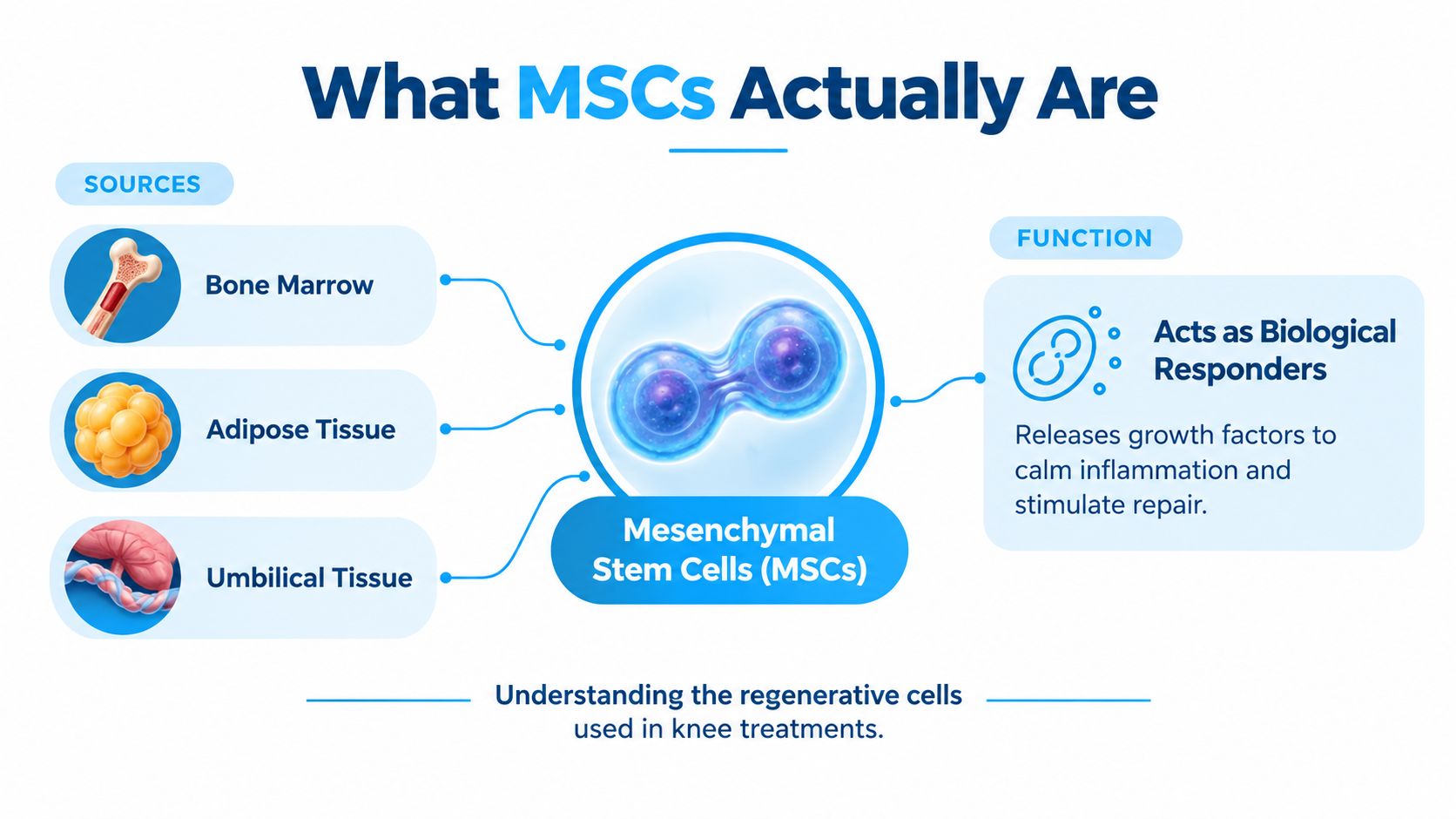
The biological term for that communication is the paracrine effect. MSCs release soluble factors, growth-related signals, and extracellular vesicles that can influence inflammation, immune activity, and local repair processes. In plain language, they send instructions and context to nearby cells.
This distinction matters because MSCs generally don’t heal knee tissue by differentiating into replacement cartilage, bone, or ligament. Their therapeutic activity is increasingly understood as signaling rather than permanent conversion into new knee-tissue cells, as described in this review of MSC paracrine activity and tissue repair. The repair process then leads to tissue regeneration.
The injection, therefore, isn’t equivalent to injecting new cartilage. It is better understood as placing biological responders into a joint environment where their signals may alter inflammation and support repair processes. That may translate into less pain or better function, then regenerated cartilage, ligament, tendon and/or meniscus.
For readers comparing cell sources, the distinction between perinatal umbilical cord tissue, placenta, and bone marrow cells can help clarify why “stem cells” isn’t one standardized product.
A short visual explanation can reinforce the difference between cells and the signals they release:

Who Tends to Be a Good Candidate for MSC Knee Injections
Candidate selection turns the paracrine idea into a clinical decision. A signaling-based treatment has a better chance of helping when the knee still has a treatable biological environment, the main pain source is understood, and the patient can measure meaningful change.
A careful review usually starts with imaging and history:
- MRI findings: MRI can characterize cartilage, menisci, ligaments, bone marrow changes, and inflammation. It can describe structural pathology, but it can’t prove that injected cells will rebuild cartilage.
- Alignment and stability: Varus or valgus malalignment can keep loading the damaged compartment. Instability from ligament insufficiency may require a different treatment strategy.
- Previous care: Prior injections, physical therapy, bracing, activity changes, and medication response provide context for what has already been tried.
- Inflammatory conditions: Untreated inflammatory disease can change the joint environment and may reduce the chance that a local injection addresses the main problem.
- Baseline function: WOMAC, KOOS, a validated pain score, walking tolerance, stair ability, and work limitations give the treatment a measurable starting point.
The strongest evidence applies primarily to unoperated knee osteoarthritis, not automatically to an isolated meniscus, ACL, PCL, or collateral-ligament injury. The science is a bit behind reality though. We have found the most consistent and best results treating partially torn ligaments, tendons and meniscus. Cartilage regenerates well also, but stage 1 and 2 osteoarthritis heal much better than stage 3 or 4.
A responsible consultation should connect your MRI and functional limitations to evidence from comparable trials and set a measurable target. Patient-selection research emphasizes that average trial results cannot predict an individual outcome. Fortunately after 9 years of administering Knee Stem Cell Treatment – 50 Million Mesenchymal Stem Cells & and MRI to countless patients we can usually predict who has the best chance of a full recovery from treatment.
Inside an MSC Knee Protocol
The stem cell knee treatment at Dream Body Clinic is an ultrasound-guided injection of 50 million allogeneic mesenchymal stem cells (MSCs) derived from Wharton Jelly (umbilical cord tissue) and Placenta into the knee joint, offered as a non-surgical option for knee osteoarthritis, meniscus tears, ligament injuries, and cartilage damage. Patients come to our clinic in Bucerías, in the Puerto Vallarta area of Mexico, for an all-inclusive protocol that includes a knee MRI, a full blood panel, and the cell injection, and should plan to be in town for five days. A single-knee package is $3,500 USD; treatment of both knees is $7,000. The aim is to calm joint inflammation and support cartilage repair so patients can reduce pain and delay or avoid knee replacement. Many patients notice early improvement in 2 to 4 weeks, with fuller results developing over 3 to 6 months.
Knee Stem Cell Treatment – 50 Million Mesenchymal Stem Cells & and MRI
An ultrasound-guided intra-articular injection places the product in the joint space. That isn’t the same as an intraosseous procedure, which targets subchondral bone, and patients should ask exactly where the clinician plans to deliver the treatment. The delivery route should match the pathology being treated rather than being chosen because it sounds more advanced.
MRI has a very useful role. It can show cartilage wear, meniscal pathology, ligament status, alignment-related changes, and other structural findings. A later MRI may help compare the knee with the original baseline.
You can also review how clinics describe the knee’s extracellular environment in this overview of knee extracellular matrix and MSC treatment.
What the 2026 Evidence Really Shows
The evidence supports stem cell therapy knee treatment. Randomized trials and systematic reviews report measurable improvements in pain and function, but they don’t establish one universally effective product or prove reliable cartilage regeneration.
A 2025 systematic review of eight randomized controlled trials involving 502 patients found better WOMAC outcomes than control at six months, with a mean difference of 7.44 points, and at twelve months, with a mean difference of 10.31 points. The review also reported improvements in pain scores and KOOS, while noting substantial variation in cell source, processing, dose, injection schedule, and rehabilitation. The full review is useful because it shows both the signal of benefit and the uncertainty around protocol design.
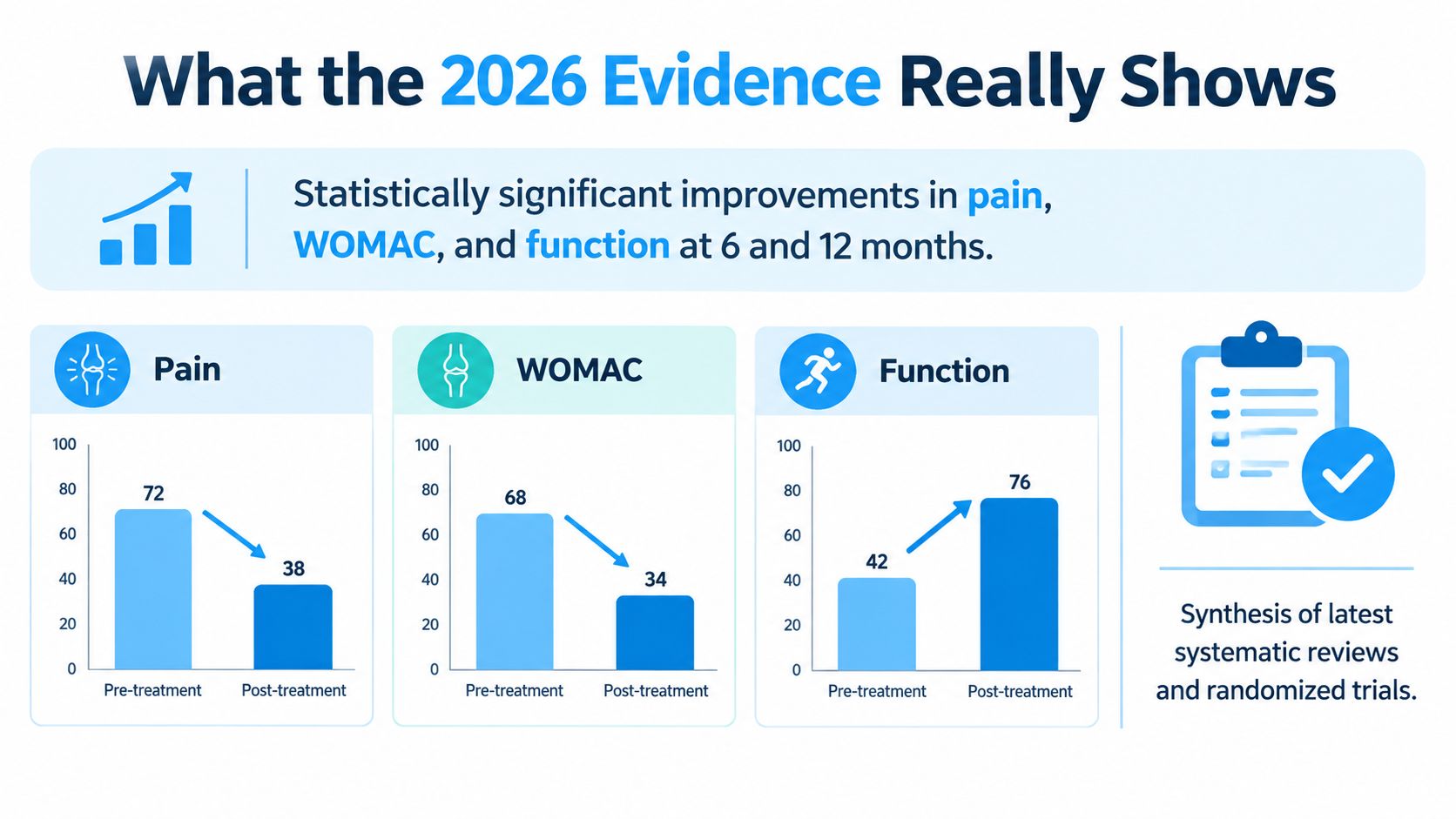
A 2025 Cochrane review synthesized 25 studies involving 1,341 people with knee osteoarthritis. In the most directly relevant pooled analysis, 126 of 180 patients, or 68.3%, receiving stem-cell injections reported treatment success, compared with 89 of 168, or 53.0%, receiving placebo. The pooled risk ratio was 1.29, with a 95% confidence interval of 1.10 to 1.53, across four trials involving 348 participants. The review also found average improvements of approximately 1.2 points on a 0-to-10 pain scale and 14.2 points on a 0-to-100 knee-function scale at up to six months. Cochrane rated the certainty of this evidence as low, partly because protocols differed and possible publication bias was identified.
Those numbers describe pooled groups, not your personal probability of success. Earlier evidence found cartilage-related improvements in some studies, but concluded that the overall evidence for structural repair remained limited and was mainly short term. That distinction is central to interpreting MRI and symptom outcomes.
There are a lot of studies on MSCs for knee repair, but even with all the evidence the hesitate to state that it really works. This is because even with over 100,000 studies done on mesenchymal stem cells (you can verify on google scholar), the FDA system gets in the way of approval. To get mesenchymal stem cells approved for knee repair each type of treatment requires a $2.5 million USD application feel. So knee osteoarthritis would be $2.5 million then meniscus repair would be $2.5 million and so on. That application fee just gets the clinic into the 4 phase FDA trials. Those typically take over 7 years and cost hundreds of millions of dollars to complete. Then at the end you can’t patent a mesenchymal stem cell so you would just be opening the market to your competition. You would spend hundreds of millions of dollars for each different type of treatment and would not be able to recover your costs. It is a flawed system designed to protect big pharmaceutical companies and keep people hooked on pills or resort to surgery.
Risks, Safety, and the Question of Repeat Injections
“Safe” shouldn’t be treated as a binary label. A knee may be sore or swollen after an injection, and a clinical protocol should explain what level of discomfort is expected, how long it may last, and which symptoms require urgent assessment.
Potential complications include infection, hemarthrosis, thrombosis, medication reactions, and problems related to the aspiration or injection procedure. Their likelihood depends on the product, technique, patient health, medications, and setting. International patients also need a clear plan for what to do after returning home.
Before treatment, ask for:
- A written recovery plan: Include activity restrictions, medication instructions, anticoagulant guidance, and the expected progression of soreness.
- An adverse-event pathway: Know which symptoms require a same-day call and which require emergency care.
- A local handoff plan: Confirm how the clinic communicates with your home physician or an emergency department if you develop fever, rapidly increasing swelling, severe pain, shortness of breath, or calf symptoms.
- A repeat-treatment policy: Ask whether another injection would be recommended only after objective review or scheduled in advance.
- A complete cost scenario: Separate the cost of the first treatment, repeat injections, imaging, travel, rehabilitation, and complication management.
Evidence about repeat injections is especially important. A 2025 network meta-analysis reported greater pain and function improvement with repeated MSC injections than with a single injection at six and twelve months, but also more adverse events. Compared with conventional therapy, the pooled adverse-event odds ratio was 5.72, with low-certainty evidence. The analysis and its limitations show why a repeat plan needs individualized risk discussion.
A separate randomized trial of adipose-derived MSCs reported no serious adverse events, but short-term symptoms still occurred. In that study, adverse events occurred in 10 of 12 MSC-treated patients and 7 of 12 controls, while grade-three arthralgia resolved within three days. Those findings support balanced counseling rather than a blanket safety claim.
Clear documentation also matters when patients move between clinics and health systems. Resources on chronic pain ICD-10 documentation can help explain why accurate diagnosis, symptom history, and treatment records are useful for continuity of care.
This is why we provide all information about our stem cells and 3rd party analysis to all patients, as seen on this page Our Lab
How MSC Injections Compare to PRP, Steroids, and Surgery
The right comparison depends on the knee’s severity and the treatment goal. No injection should be evaluated in isolation from physical therapy, weight management where relevant, bracing, activity changes, and surgical assessment.
| Option | Primary Mechanism | Typical Evidence Signal | Best-Fit Profile |
|---|---|---|---|
| MSC injection | Paracrine signaling that may modulate inflammation and local repair | Encouraging pain and function signals, heterogeneous and low-certainty evidence | Selected patients with symptomatic, unoperated knee pain who want a non-surgical option |
| PRP | Concentrated platelet-related signaling from the patient’s blood | Variable symptom improvement, with protocol differences | If done within days of injury it has high success, but if the injury is a week old or older then it can’t get past fibrosis which means it can’t fully heal. |
| Corticosteroid | Strong local anti-inflammatory effect | Often faster relief, with limited durability and concerns about repeated exposure | Short-term control of inflammatory flares. It is highly corrosive if done repeatedly which leads to needing surgery sooner. |
| Hyaluronic acid | Viscosupplementation and joint-environment effects | Mixed results across patients and products | Some patients seeking a non-steroid injection for symptom management. Provides lubrication, but minimal healing. |
| Arthroscopy | Mechanical treatment of selected intra-articular problems | Useful for specific mechanical indications, not a universal arthritis solution | Locking, loose bodies, or another clearly defined surgical problem |
| Partial or total replacement | Replaces damaged joint surfaces | Established option for advanced symptomatic disease | Severe structural disease and functional limitation when non-operative care is insufficient |
PRP and MSC treatment both involve biological signaling, but they aren’t interchangeable. PRP uses platelet-derived factors, while MSC protocols introduce cells whose primary proposed activity is paracrine communication. Corticosteroids may act faster for inflammation, whereas MSC protocols are generally evaluated over a longer follow-up period.
Surgery deserves an honest place in the decision. An injection shouldn’t be sold as a guaranteed way to avoid replacement, particularly when structural disease is advanced or alignment and stability problems dominate. On the other hand, a patient with persistent symptoms who isn’t ready for surgery may reasonably ask whether a carefully selected investigational treatment fits the evidence.
The Patient Journey, Travel, and Follow-Up at Dream Body Clinic
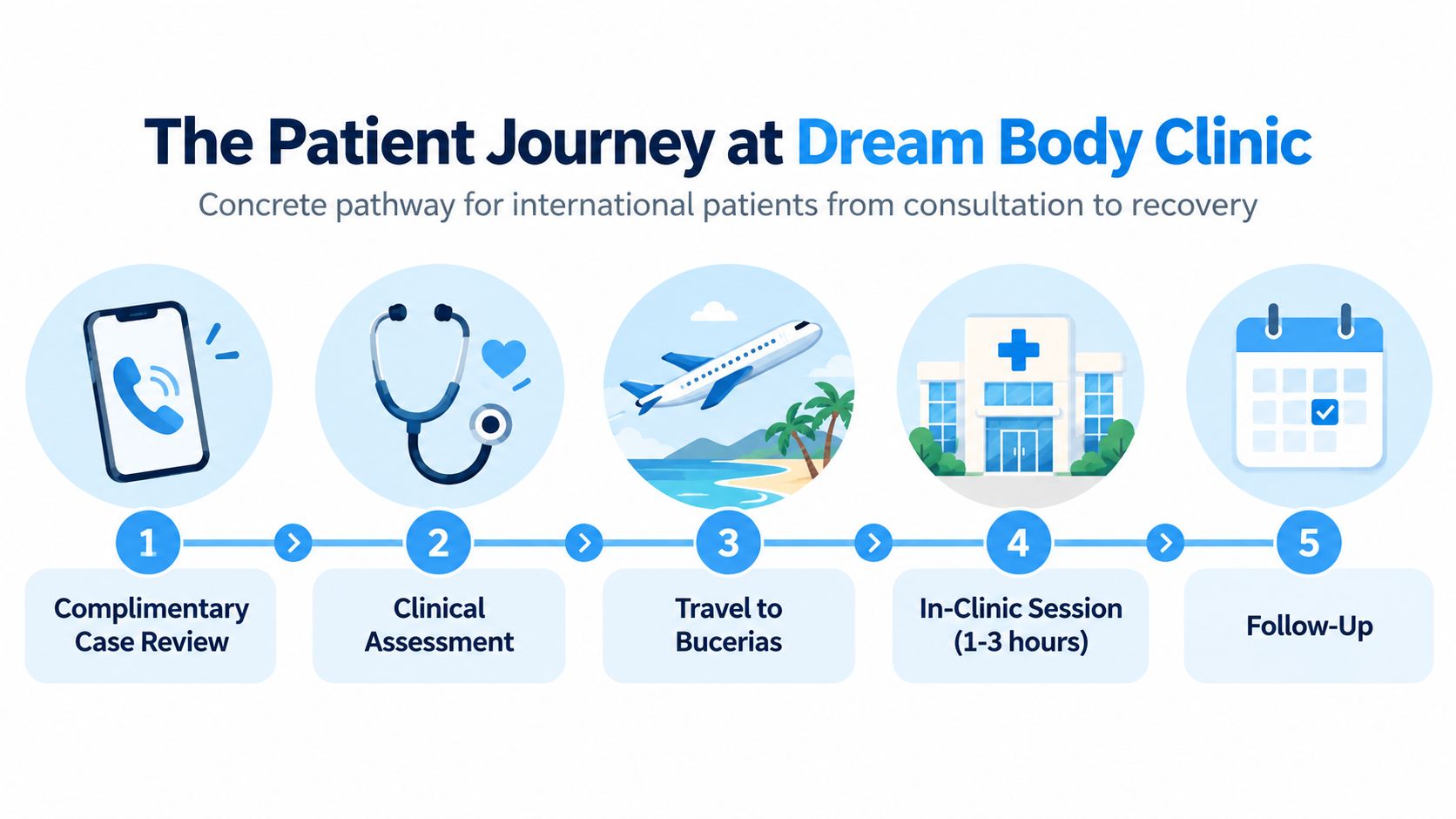
Treatment is at DBC Medical Center, Carmen Serdán 22, Bucerías, Nayarit 63732, Mexico, on the bay across from Puerto Vallarta. Patients fly into Puerto Vallarta International Airport (PVR). We need patients in town for 5 days.
Included in the $3,500:
– Open MRI on the clinic’s Esaote S-Scan, so the joint is not guessed at
– Blood panel
– Physician consultation with doctor.
– 50 million mesenchymal stem cells from the on-site lab
– Ultrasound-guided intra-articular injection
– Post-treatment rehab protocol
– Remote follow-up at 3, 6, and 12 months
The MRI is an open scanner. Confirm the knee fits the coil before travel. If it does not, the clinic schedules a different machine. Most patients stay at least 5 days.. Flights and hotels are up to the patient. Airport and clinic transfers are included if you stay in the clinic hotel zone: https://dreambody.clinic/hotels/
Dream Body Clinic describes a pathway based in Bucerias, Nayarit, Mexico, with MSC-based orthopedic therapies delivered under COFEPRIS oversight.
Knee Stem Cell Treatment – 50 Million Mesenchymal Stem Cells & and MRI
Before you travel
Begin with a case review that includes your diagnosis, symptom history, medication list, prior injections, relevant blood tests, and current MRI or radiographs. Ask whether the clinic needs the original image files rather than screenshots, and ask who will make the final candidate decision.
The assessment should answer four questions:
- What is the dominant pain source? Osteoarthritis, meniscal pathology, ligament instability, inflammatory disease, and referred pain require different reasoning.
- What product and route are proposed? Confirm the cell source, whether the product is autologous or allogeneic, the stated cell count, the injection site, and whether imaging guidance is used.
- What will success mean? Agree on a baseline WOMAC, KOOS, validated pain score, walking tolerance, or daily activity target.
- What happens if the target isn’t met? A credible plan includes reassessment, rehabilitation, additional imaging when appropriate, and alternatives rather than an automatic repeat injection.
The clinic states that the in-clinic treatment session typically takes one to three hours. Travel planning should still allow for consultation, imaging, recovery instructions, and unexpected schedule changes. Ask about mobility after the procedure, airport transfers, medication restrictions, and whether an accompanying person is advisable.
During treatment and recovery
A transparent clinic should explain each step before it happens. That includes blood work or other screening, the imaging review, the injection route, PRP if included, post-procedure observation, and written instructions. “Stem cell treatment” isn’t enough detail for informed consent.
Early symptoms can complicate travel decisions. Confirm what soreness or swelling is expected, how to contact the clinic outside business hours, and which symptoms require local emergency care. Keep copies of your procedure note, product details, imaging reports, medication instructions, and follow-up measurements for your home clinician.
Months after the injection
Remote follow-up is valuable only when it measures more than general satisfaction. Record the same pain and function outcomes used at baseline, note activity tolerance, and report adverse events promptly. A clinic that schedules check-ins at approximately three, six, and twelve months gives patients a framework for longitudinal review, but the quality of those reviews depends on consistent measures and honest interpretation.
For international patients comparing total treatment expenses, the clinic provides information about stem cell knee injection cost. Consider the entire scenario, including imaging, flights, accommodation, local transport, rehabilitation, time away from work, and potential repeat care. A low advertised treatment price may not represent the full medical and travel commitment.
A practical decision filter
Use four filters before committing:
- Define the baseline: Gather imaging, diagnosis, symptom duration, prior treatments, and a validated score.
- Define the target: Choose a functional outcome that matters in daily life, such as walking, stairs, sleep, or work.
- Confirm the profile: Check severity, alignment, meniscus and ligament status, inflammatory conditions, and whether your case resembles the studied population.
- Choose transparency: Require clear details about cell source, processing, dose, injection route, risks, follow-up, total cost, and alternatives.
MSC injections are safe and effective when done properly. Learn more here – Knee Stem Cell Treatment – 50 Million Mesenchymal Stem Cells & and MRI
Dream Body Clinic offers MSC-based knee protocols in Bucerias, Mexico, with published details about cell dosing, PRP pairing, MRI assessment, and remote follow-up for international patients. If you want to explore whether your imaging and functional goals fit that approach, visit Dream Body Clinic and request a focused case review before making travel or treatment decisions.
Call us for a free consultation at (888) 704-3977 or on WhatsApp +52 322 232 1055