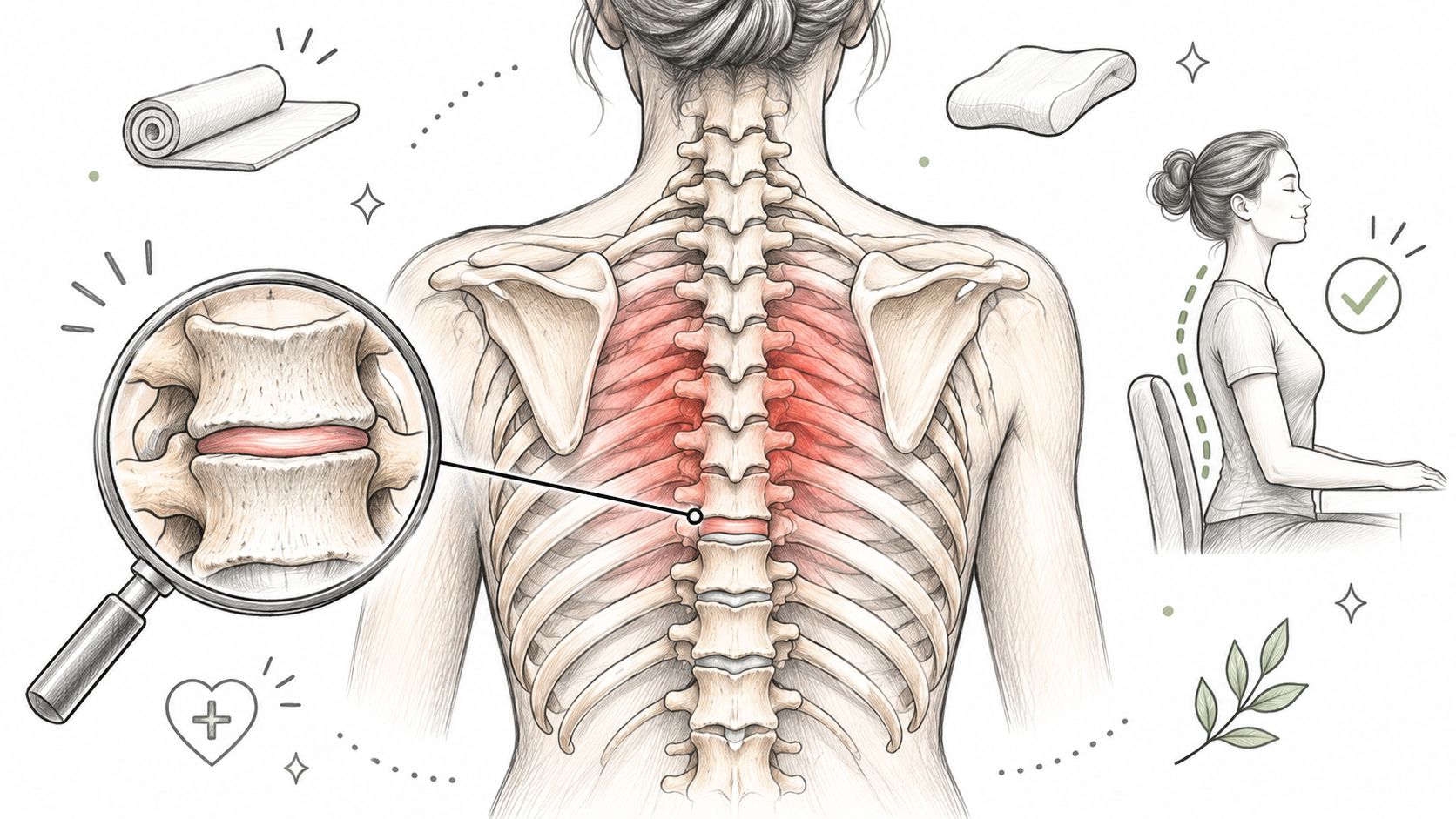
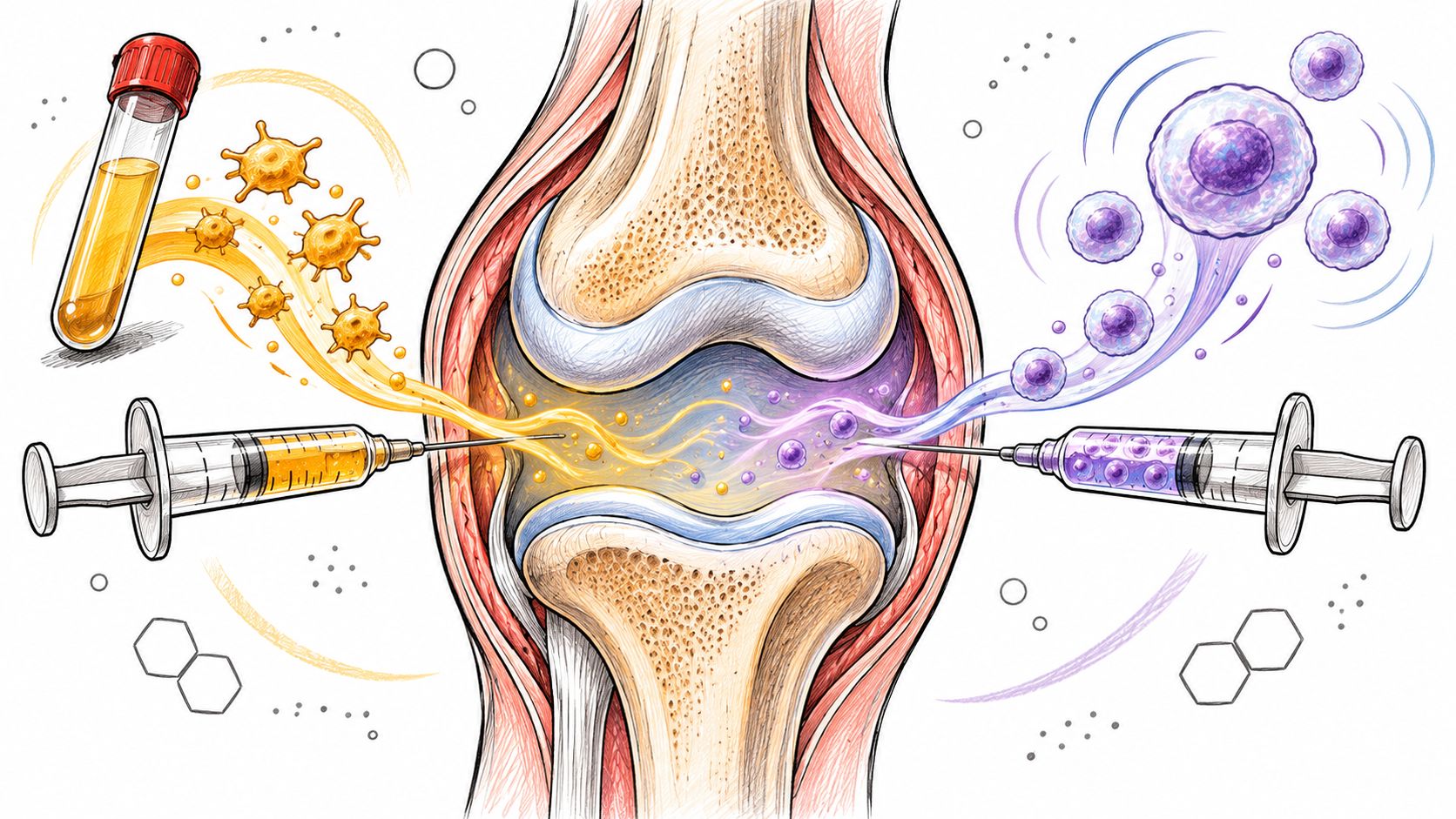
You're looking for relief from a painful knee, an aching shoulder, or symptoms that haven't improved enough with your current care. A clinic offers PRP, stem cells, or both, and the names make them sound like different strengths of the same treatment.
They aren't. PRP and stem cell injections are different biological products, with different preparation methods, dosing questions, and evidence. Understanding what goes into the syringe, and what it can realistically accomplish, makes the consultation much more useful.
Table of Contents
- PRP and Stem Cell Injections Compared Side by Side
- How Stem Cells Heal Through Signals, Not Replacement
- What Studies Report for Joints, Immune Disease and Hair
- Whether PRP and Stem Cells Work Better Together
- Dream Body Clinic Joint Protocols Compared
- Stem Cell Regulation in the US and Mexico
- Risks, Side Effects and Unknowns
- Confirm These Points Before You Book
PRP and Stem Cell Injections Compared Side by Side
PRP starts with your blood. Mesenchymal stem cell treatment starts with tissue-derived cells. Neither label, by itself, tells you whether the treatment matches your diagnosis or whether the clinic's preparation resembles the product used in a successful trial.
PRP vs stem cell injections at a glance
| Feature | PRP injection | Stem cell injection |
|---|---|---|
| What is injected | Concentrated platelets and plasma from your own blood | Mesenchymal stem cells, or MSCs, prepared from tissue |
| Where it comes from | Your blood draw, processed during the visit | Patient or donor tissue, according to the protocol |
| How it is thought to work | Platelets release growth factors at the injection site | Cells release paracrine signals that influence inflammation and repair, rather than acting as replacement tissue |
| Typical uses | Knee and hip osteoarthritis, tendon problems, and hair loss, with different evidence for each | Joint, spine, autoimmune, and organ protocols, with indication-specific evidence |
| How dose is measured | Platelet concentration, injected volume, and preparation characteristics | Number of cells, commonly expressed in millions, alongside viability and product testing |
| Strength of evidence | Most extensively studied for knee osteoarthritis; preparation and study quality affect findings | Encouraging results in selected trials, but many applications still lack large, consistent comparative studies |
| US regulatory status | A preparation device's clearance should not be confused with approval of an injection for a particular disease | No FDA approval for orthopedic conditions; Mexican authorization is a separate question requiring documentation |
The US regulatory distinction matters: authorization of a device, facility, or manufacturing process isn't the same as approval of a treatment for your condition. Dream Body Clinic states that its treatments operate within Mexico's COFEPRIS framework. Patients should request the specific documentation covering the product and intended use rather than assume that a general regulatory statement settles every question.
Different products, not a treatment ladder
For PRP, a clinician draws blood and uses a centrifuge to separate and concentrate its components. The preparation can be completed during an outpatient visit. PRP doesn't have a universal platelet concentration, and platelets themselves are counted, so saying that its dose isn't a cell count mustn't imply that the quantity is unimportant.
MSCs require a different preparation process. Tissue source, donor screening, processing, storage, and viability all matter. A larger advertised cell count doesn't automatically establish a better product.
Practical rule: Start with the diagnosis, not the injection name.
For example, pain when climbing stairs could arise from different problems within or around a knee. A physician should identify the likely source before discussing an injection. Bring the table's evidence and product-quality questions into that conversation, rather than treating stem cells as an automatic upgrade from PRP.
How Stem Cells Heal Through Signals, Not Replacement
The most common misconception is that injected stem cells become new cartilage, nerves, or organ tissue. That isn't the established explanation for clinical benefit from MSC injections. Their proposed therapeutic role centers on the paracrine effect, meaning they send specialized signals that influence surrounding cells and the local healing environment.
Think of a construction-site foreman. The foreman doesn't become a brick or beam. Instead, the foreman communicates with the crews, coordinates their work, and helps organize activity at the site.
This diagram illustrates that signaling-based model.
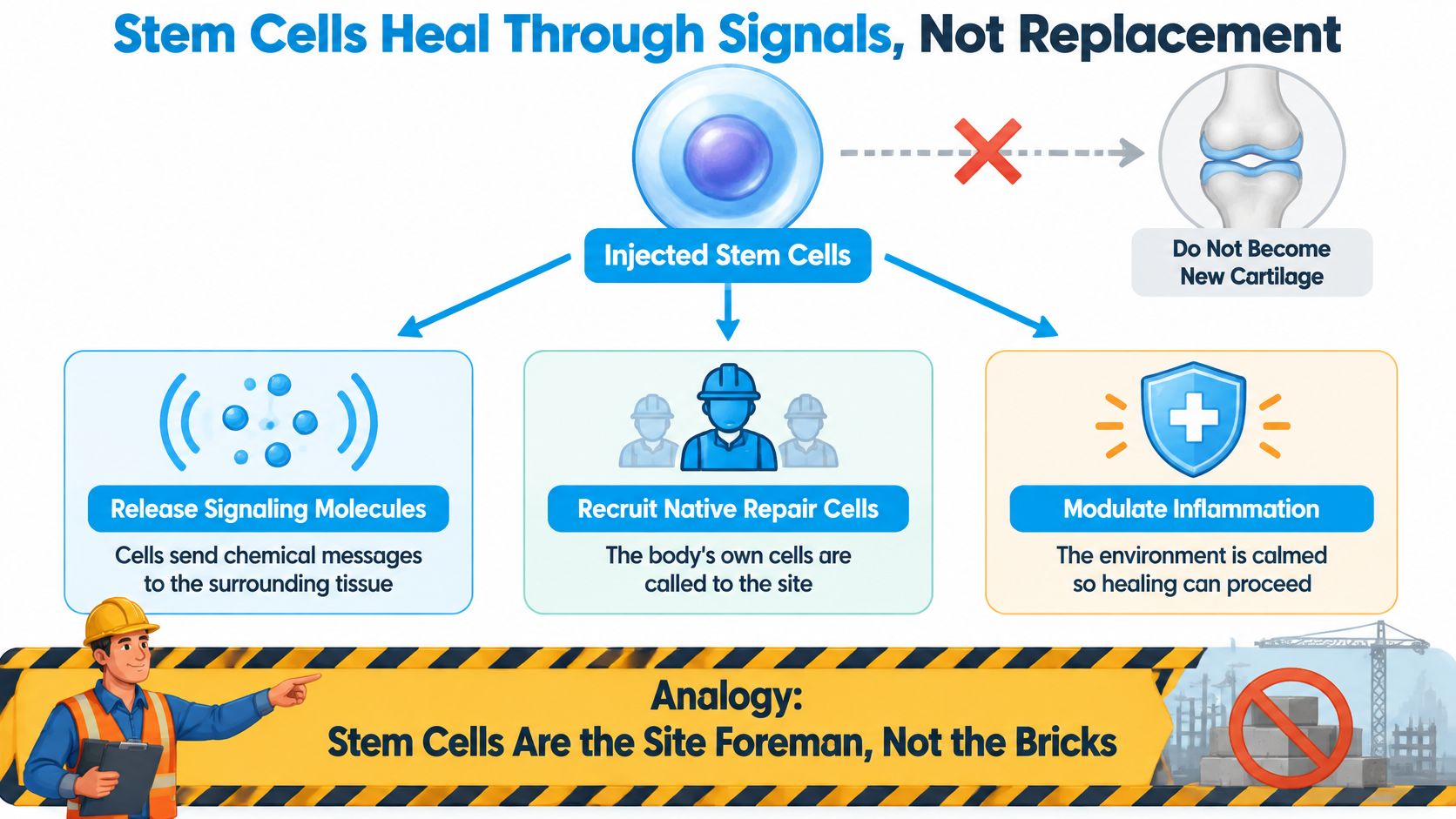
For MSCs, those messages include growth-related proteins and other extracellular factors. They may influence inflammatory activity, support blood-vessel-related processes, and affect how nearby tissue responds to injury. The analogy explains the proposed mechanism, not a guarantee that every damaged structure will heal.
What improvement without cartilage regrowth looks like
A clinical study of adipose-derived MSCs published in 2019 followed knee osteoarthritis patients for 12 months and reported mean NPRS pain scores falling from 6.7 to 2.6 after one injection and 6.5 to 2.3 after two injections; KOOS function scores improved across all subscales and remained improved, while MRI suggested stabilization without clear cartilage regrowth.
The investigators interpreted that combination as consistent with paracrine and local supportive pathways rather than direct conversion into cartilage cells. That's an important distinction: someone can experience less pain and better movement without a scan showing newly rebuilt cartilage.
PRP also delivers local biological signals, but through platelet-derived factors rather than an administered population of MSCs. The products may influence some overlapping processes without being interchangeable.
For a patient, the most useful question isn't whether the cells have transformed into something else. It's whether walking, sleeping, dressing, or another meaningful activity improves, and whether validated measurements confirm that change. Pain relief, improved function, and structural restoration are separate outcomes and should be discussed separately.
What Studies Report for Joints, Immune Disease and Hair
Reported results by condition and treatment
| Condition | Treatment | Reported result | Study type |
|---|---|---|---|
| Knee osteoarthritis | PRP, single injection | Mean pain difference −2.45 versus placebo at 6 months | Systematic review and meta-analysis of randomized trials, 2015 |
| Knee osteoarthritis | PRP, double injection | Mean pain difference −2.07 versus placebo at 6 months, reported in the same review | Systematic review and meta-analysis of randomized trials |
| Knee osteoarthritis | PRP, different preparations | Overall improvement at 12 months, but low-quality evidence; a separate analysis identified clinically meaningful benefit above approximately 1,000,000 platelets/µL | Evidence synthesis discussing a 2025 meta-analysis of 34 randomized trials and preparation-specific findings |
| Knee osteoarthritis | Adipose-derived MSCs, single- and repeat-injection groups | Pain and function improved; MRI suggested stabilization rather than clear cartilage regrowth | Clinical study described above |
| Knee osteoarthritis | Adipose-derived MSCs, high dose | 39% reduction in the primary clinical measure, from 54.2 to 32.8 over six months | Proof-of-concept clinical trial |
| Rheumatoid arthritis | MSCs | In one group, 36% reached ACR20, 28% ACR50, and 12% ACR70, compared with 14% reaching ACR20 in controls | Systematic review and meta-analysis, 2023 |
| Androgenetic alopecia | PRP | Hair count increased approximately 62.4% in the PRP group | Phase I trial enrolling 40 adults, 2025 |
What those numbers mean for a patient
The placebo-controlled PRP findings concern differences between groups, not promises about how much an individual's pain score will fall. The earlier review rated its evidence limited to moderate because many included studies had a high risk of bias. The more recent synthesis also cautioned that improvement didn't consistently exceed a minimal clinically important difference, the threshold intended to reflect a change patients can notice.
Preparation is therefore more than a technical detail. Platelet enrichment, leukocyte content, activation, and injected volume can change what a patient receives under the PRP label.
The adipose-derived MSC proof-of-concept trial offers an encouraging knee result, but its before-and-after improvement shouldn't be read as proof that every MSC product delivers the same effect. Its report of no apparent adverse events during follow-up also doesn't establish long-term safety.
Different conditions require different endpoints
For rheumatoid arthritis, ACR20 means at least a 20% improvement in specified disease measures, with higher ACR thresholds requiring greater improvement. This is an immune-disease outcome, not a cartilage-regrowth measurement. Anyone reviewing rheumatoid arthritis stem cell treatment should discuss it with their rheumatologist alongside existing disease-modifying care.
The hair-loss result comes from a small early-phase study. It supports further investigation, not a guaranteed change in hair density for every patient.
These findings are condition-specific. None establishes reliable cartilage regeneration, and none justifies transferring a successful knee protocol directly to a hip, spinal disc, or organ condition.
Whether PRP and Stem Cells Work Better Together
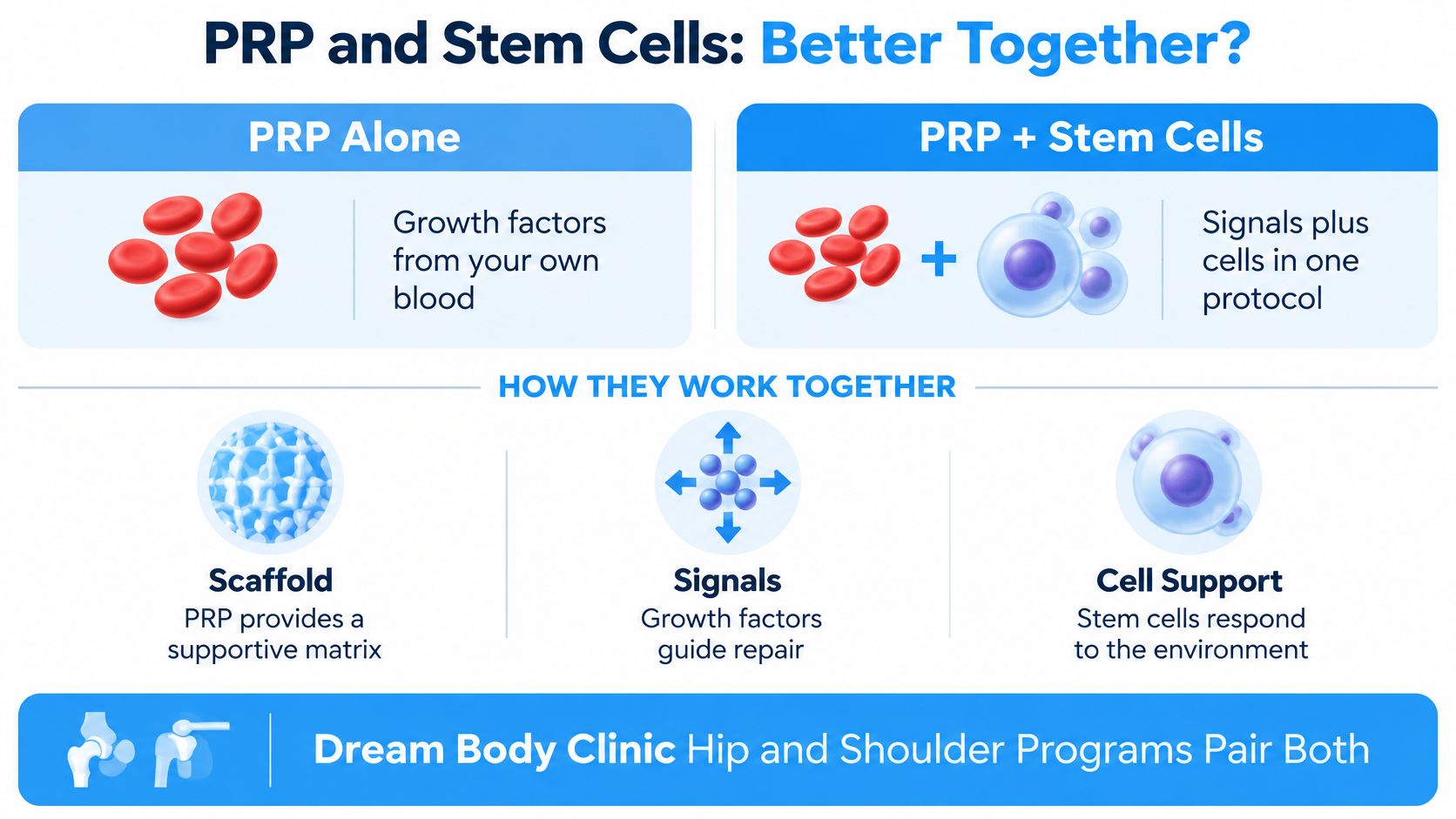
Combining treatments has a biological rationale, but that doesn't establish extra clinical benefit. PRP contributes platelet-derived growth signals. MSCs contribute their own signaling activity, potentially influencing the same local environment through a different product.
The conceptual appeal is easy to understand. A clinician hopes that the components support complementary processes rather than duplicate one another.
The illustration below presents that proposed relationship, not proof that the combination outperforms either treatment alone.
What the direct comparison found
A randomized phase II knee osteoarthritis trial compared platelet-rich growth factor, or PRGF, alone with bone-marrow-derived MSCs plus PRGF: at 12 months, mean WOMAC scores fell from 33.4 to 23.0 in the combined group and from 31.9 to 22.3 in the PRGF-only group.
Both groups improved. The difference between them wasn't statistically significant, although only the combined group met the study's OARSI responder classification.
That distinction deserves careful handling. Meeting a responder definition can indicate a clinically interesting pattern, but it doesn't erase the absence of a statistically significant difference on the group comparison. PRGF is also a particular platelet preparation, so its results shouldn't automatically be attributed to every PRP product.
A promising response pattern is a reason to investigate a combination, not permission to promise superiority.
The accompanying video provides another way to explore the treatment discussion.

The decision that matters
For someone paying for a combined procedure, the key question is practical: Has this combination been compared with PRP alone in patients with my diagnosis?
Cell source, dose, platelet preparation, injection placement, and follow-up can differ substantially between protocols. A favorable result with one combination doesn't validate every other combination.
Ask which validated pain and function scales the clinician will use and what would count as success. An expensive pairing should have a clear clinical justification beyond the idea that more biological ingredients must be better.
Dream Body Clinic Joint Protocols Compared
Dream Body Clinic joint protocols
| Joint protocol | Stem cells per treatment | PRP included | MRI included |
|---|---|---|---|
| Knee | 50 million MSCs, single injection | Confirm in the written treatment plan | Confirm in the written treatment plan |
| Hip | 50 million MSCs | Yes | Yes |
| Shoulder | 50 million MSCs | Yes | Yes |
| Elbow | 50 million MSCs | Confirm in the written treatment plan | Yes |
| Ankle | 50 million MSCs | Confirm in the written treatment plan | Confirm in the written treatment plan |
| Thumb | 25 million MSCs | Confirm in the written treatment plan | Confirm in the written treatment plan |
These are our clinic's stated offerings, not independently verified evidence that a particular dose is optimal. Where inclusion isn't explicitly established, the table directs you to the written plan rather than assuming PRP or imaging is included.
Our hip and shoulder programs pair MSCs with PRP and include MRI. The elbow program also includes MRI. Imaging inclusion should be distinguished from image guidance during the injection, since these serve different purposes.
What happens during the visit
- Review your history and imaging with the physician. Bring previous reports, scan files, medication details, and information about injections or surgery. The physician needs to connect the symptoms with the suspected treatment target.
- Confirm the protocol and route. For joint damage, we deliver the shot directly to the injured area. Stem cell therapy can also be administered intravenously for other conditions, but an infusion isn't interchangeable with a targeted joint injection.
- Receive the injection. Our joint injection procedure uses a very tiny needle and is generally quick. Preparation, assessment, and any associated imaging take place separately from the injection itself.
- Follow the recovery and monitoring plan. Rest as directed, confirm activity guidance, and continue with scheduled remote check-ins. Leave with written instructions rather than relying on memory after the appointment.
Compare the complete protocol
A short injection doesn't make the clinical decision simple. The assessment should identify the problem being treated, explain why that route was selected, and define how improvement will be evaluated.
For symptoms centered in the back or neck, review our lower-back treatment information or neck-pain treatment information with the assessing physician. A spinal condition needs its own diagnostic and procedural discussion, not an assumption that a joint protocol applies.
Across providers, compare product documentation, imaging, placement technique, rehabilitation advice, and follow-up, not cell count alone. Request a complete written quote so you understand which assessments and services are included.
Stem Cell Regulation in the US and Mexico
The FDA's consumer guidance on regenerative medicine states that regenerative-medicine products haven't been approved for orthopedic conditions including osteoarthritis, tendonitis, disc disease, and back, hip, knee, neck, or shoulder pain. Dream Body Clinic states that its stem cell treatments are authorized under Mexico's COFEPRIS framework, a separate regulatory system whose product- and use-specific documentation patients should verify.
COFEPRIS is Mexico's national health regulator and performs a role comparable to the FDA in that country. Its authorization isn't the same as FDA approval for a particular indication. Neither a clinic's location nor the word regenerative establishes what a specific authorization covers.
Separate oversight from treatment claims
The FDA guidance also describes safety concerns involving unapproved stem-cell and exosome products, including a March 2019 warning that certain unapproved umbilical-cord-blood products could contain viruses or microorganisms or have other major quality defects.
Those warnings don't mean all stem cell research is ineffective. They mean that patients need to distinguish encouraging clinical findings from authorized indications, manufacturing controls, and marketing claims.
When reviewing whether stem cells are legal, request documents that identify:
- The product: Its tissue source, manufacturer, and traceable batch information.
- The authorization: The named authority, responsible entity, and scope of permission.
- The intended use: Whether the documentation addresses the proposed product, route, and condition.
- The safety system: Who records adverse events and how patients obtain follow-up care.
Documentation first: A regulatory claim should be specific enough for you and your physician to check.
Ask the clinic to explain any difference between permission to operate, permission to manufacture or handle a product, and authorization for the intended treatment. Those aren't interchangeable categories. If the documentation is unclear, resolve that uncertainty before making travel arrangements or paying for care.
Risks, Side Effects and Unknowns
A treatment can produce encouraging results and still carry meaningful risks. The FDA's patient safety guidance warns that inadequately reviewed regenerative products may cause serious infection, immune or inflammatory reactions, neurological events, unintended tissue growth, tumor formation, or treatment failure.
That warning isn't an estimate of how often each complication occurs with a particular MSC protocol. It identifies hazards that product screening, manufacturing controls, and clinical oversight must address.
Turn safety concerns into checkable questions
- Contamination: Request documentation of sterility and infectious-disease testing.
- Product consistency: Confirm the cell identity, handling process, and viability at administration.
- Placement: Ask whether the proposed injection requires image guidance and how the clinician confirms the target.
- Continuity of care: Establish who will respond after you return home and which local service should handle urgent complications.
A review of lumbar-disc treatments described generally favorable short-term safety profiles for PRP and MSC approaches, yet concluded that intradiscal PRP or bone-marrow-cell injections shouldn't be routinely offered because randomized trials hadn't shown clear pain benefit.
Short-term tolerability and proven effectiveness are different questions. Similarly, the absence of apparent adverse events in a small knee study can't rule out rare or delayed complications.
Report worsening pain, fever, spreading redness, or new numbness or weakness promptly. New or progressive neurological symptoms, severe illness, or rapidly worsening symptoms warrant urgent local assessment rather than waiting for a remote appointment. Agree on that response plan before treatment, especially when traveling internationally.
Confirm These Points Before You Book
Get the essential answers in writing before scheduling treatment or travel. A clear plan should explain both the proposed biological product and how the clinician will decide whether it helped.
- Product source: Is it your own tissue, described as autologous, or donor-derived tissue? What donor screening and batch traceability apply?
- Cell quality: What is the administered count, and what proportion of cells are viable when given?
- Laboratory testing: Which identity, potency, sterility, and endotoxin tests were completed?
- PRP composition: What are the platelet concentration, leukocyte classification, activation method, injected volume, and planned injection schedule?
- Placement and assessment: What is injected, where does it go, and which imaging or guidance methods are used?
- Success and follow-up: Which pain scales, functional tests, and imaging assessments will be recorded? Who manages worsening symptoms after you return home?
The checklist below condenses those questions into a practical consultation aid.

Judge the protocol, not just the advertised dose
A clinical review of MSC protocol quality emphasizes that cell dose alone isn't a validated predictor of outcome. Tissue source, processing, viability, manufacturing controls, delivery route, and objective follow-up all affect how a protocol should be evaluated.
Be equally careful with mechanism claims. Specialized signals, including neurotrophic factors, may support nerve-related repair pathways, but that biological rationale doesn't establish neurological recovery in a particular patient. Likewise, a stem cell label doesn't demonstrate disc healing or rebuilt cartilage.
Use the same standards when choosing a stem cell clinic: specific documentation is more informative than testimonials or an impressive cell count.
Prepare for a useful clinical assessment
Bring prior imaging, operative reports, medication lists, and a brief account of what you've tried. Identify the activities you want to improve, such as walking comfortably, lifting your arm, or sleeping without repeated pain-related waking.
A consultation should also address alternatives and what happens if treatment doesn't help. Your own physician should review the proposed plan alongside your existing care, particularly if you have autoimmune disease, neurological symptoms, or significant organ disease. Don't stop prescribed treatment or delay necessary surgery on the assumption that an injection will replace it.
Dream Body Clinic offers a complimentary case review, targeted joint protocols, and intravenous MSC options of 100 million, 200 million, or 300 million cells for systemic care. Visit Dream Body Clinic to submit your records and discuss whether PRP, a stem cell protocol, or another approach fits your diagnosis, then review the written recommendation with your own physician before booking.