Rheumatoid arthritis (RA) is a long-term autoimmune condition in which persistent inflammation can cause joint swelling, stiffness, pain and tissue damage. Dream Body Clinic’s rheumatoid arthritis stem cell treatment in Bucerías, near Puerto Vallarta, is a high-dose intravenous infusion of 300 million allogeneic mesenchymal stem cells (MSCs) from Wharton’s jelly (umbilical cord tissue) and placenta, followed by a NAD+ and high-dose vitamin C IV. It aims to help calm the overactive immune response behind chronic joint inflammation.
The key questions are separate: can the cells calm immune signaling, does that change how your arthritis feels, and does any benefit last? Rheumatoid Arthritis Stem Cell Treatment
Table of Contents
- What Stem Cell Therapy Means for Rheumatoid Arthritis
- How MSCs Calm the Immune System Without Becoming Joint Cells
- Protocol Options by Cell Source, Route and Dose
- How Strong the Clinical Evidence Really Is
- Symptom Relief Versus Lasting Joint Protection
- Who Is a Realistic Candidate and Who Should Wait
- Risks and Limits Beside Standard RA Care
- Verify the Clinic and Plan Before You Commit
What Stem Cell Therapy Means for Rheumatoid Arthritis
At Dream Body Clinic, rheumatoid arthritis stem cell treatment uses allogeneic MSCs, meaning cells from healthy donors, derived from Wharton’s jelly and placenta from live, healthy births. They are isolated and cultivated in the clinic’s own on-site lab, which is ISO rated and COFEPRIS certified. The cells are given by intravenous infusion, so they act on the immune system throughout the body rather than in one joint.
The clinic describes the aim as reducing joint swelling and stiffness, improving mobility and supporting longer-term immune balance, with many patients noticing progressive benefits over the following 3 to 6 months. That is a clinic-reported pattern, and results vary.
Rheumatoid arthritis stem cell therapy at a glance
| Question | Short answer | Confidence |
|---|---|---|
| What is it? | Infusion of mesenchymal stem cells intended to calm immune activity | Established description |
| Where do the Stem Cells come from? | Wharton’s jelly and placenta from live, healthy births, cultivated in the clinic’s on-site lab | High |
| How do they work? | Mainly by immunomodulation: releasing anti-inflammatory factors and regulating immune cells | High |
| Does it rebuild joint tissue directly? | No. The main proposed effect is immune signaling | High |
| When are results typically seen? | Progressive benefit over 3 to 6 months, with peak results typically at 3 to 6 months | High |
Dream Body Clinic explains that MSCs work through immunomodulation rather than by becoming new joint tissue. When given, they are described as homing to sites of inflammation and releasing anti-inflammatory molecules such as cytokines and growth factors, which can help reduce the swelling, pain and joint damage caused by the immune response. In RA, the clinic says this involves both direct and indirect effects on the immune system and local tissue repair processes.
From signals to immune changes
The clinic describes MSCs as influencing four types of immune cell involved in RA:
- T cells: suppressing their activation and proliferation, and promoting regulatory T cells that help restrain the immune response
- B cells: inhibiting their proliferation, which may reduce the production of autoantibodies
- Dendritic cells: inhibiting their maturation and activation, which reduces their ability to switch on T cells
- NK cells: suppressing the activity of natural killer cells that contribute to inflammation and tissue damage
These are the mechanisms the clinic is targeting. They are not a promise that every patient’s immune system will respond the same way.
From immune changes to possible joint effects
If immune activity calms, the cells that drive inflammation may produce fewer inflammatory messengers such as TNF-alpha and IL-17, which the clinic notes contribute to joint inflammation and damage in RA. That is the path to less swelling and stiffness. Changing an immune signal isn’t the same as stopping joint damage, and the clinic doesn’t claim to rebuild a joint that is already damaged.
Protocol Options by Cell Source, Route and Dose
Different clinics use different cell sources, routes and doses, so it’s worth comparing like with like. Here is Dream Body Clinic’s published protocol:
How MSCs Calm the Immune System Without Becoming Joint Cells
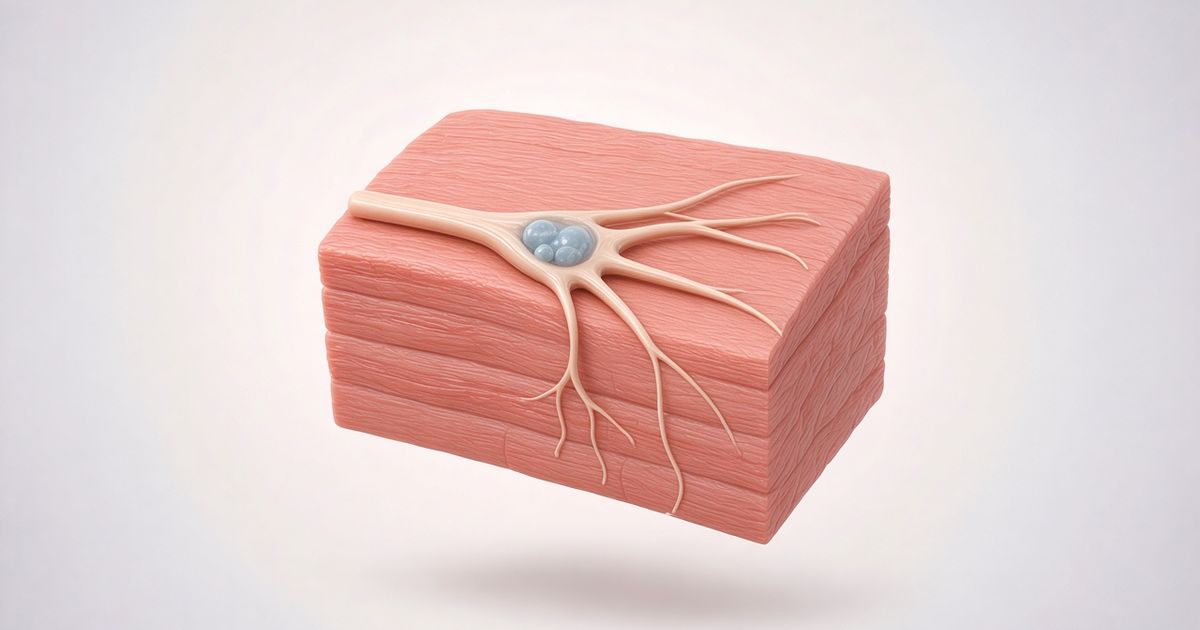
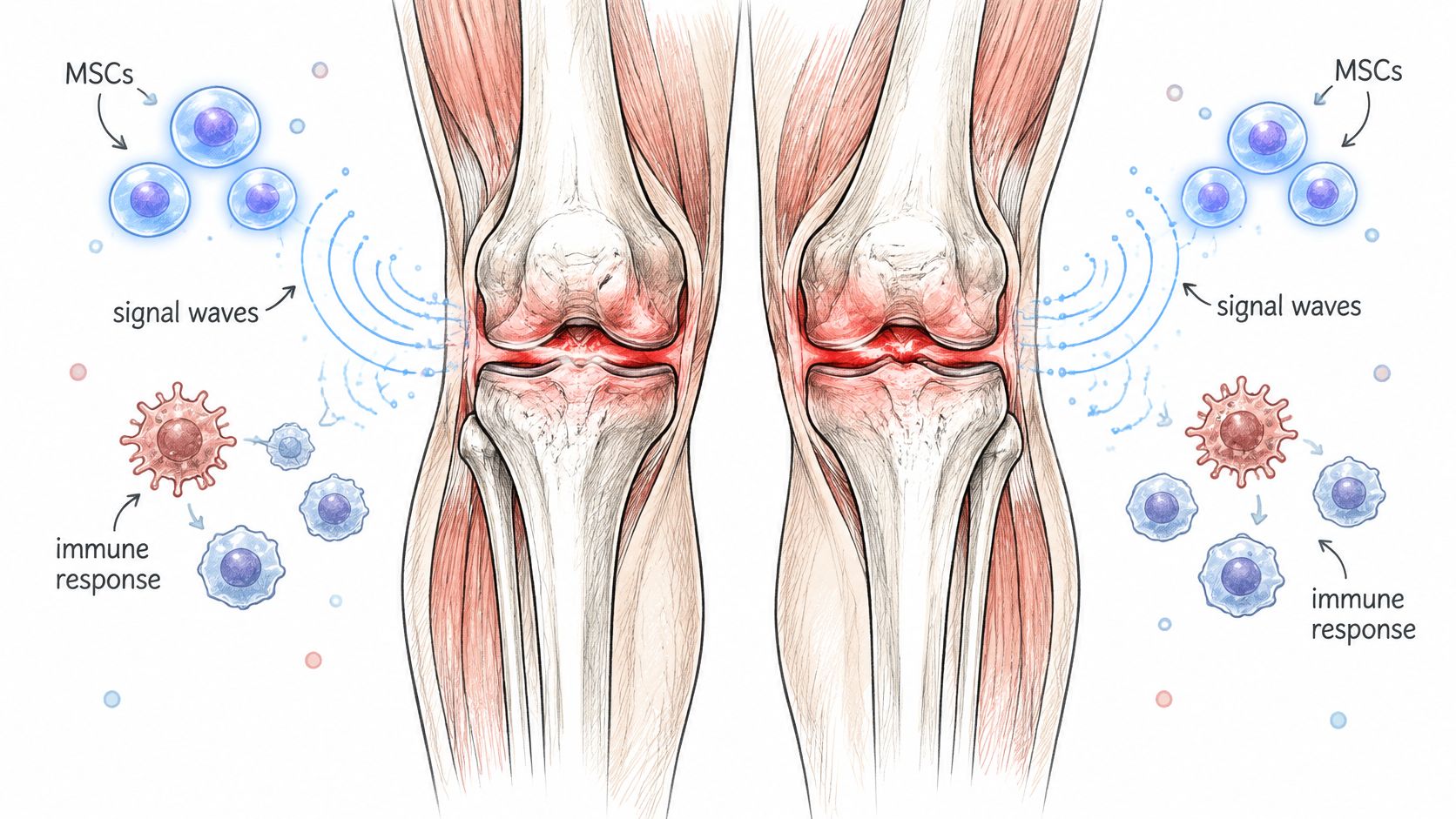
MSCs don’t differentiate into new joint cells as the treatment mechanism for RA. They work mainly through the paracrine effect, meaning they send out specialized signals that influence surrounding cells and may guide the healing process. This is a proposed biological mechanism, not a guarantee that damaged joints will heal.
Think of a site foreman who sends instructions to a crew rather than laying the bricks personally. In this analogy, MSCs provide instructions, while immune cells and tissue cells respond. Whether those instructions produce a clinically useful result depends on the inflammatory environment and the patient’s disease.
This illustration shows the signaling concept, not a demonstration of proven cartilage regeneration.
From signals to immune changes
A systematic review of MSC mechanisms and human RA trials describes suppression of natural-killer-cell activation, dendritic-cell maturation, and pathogenic T- and B-cell proliferation, alongside promotion of regulatory T cells and a shift toward anti-inflammatory macrophage activity. It identified four eligible human trials, with modest clinical improvements and low-to-moderate response rates.
In plain language, researchers are investigating several connected actions:
- Reducing immune activation: Some signals may discourage immune cells from maintaining an inflammatory response.
- Strengthening regulatory activity: Regulatory T cells help restrain inappropriate immune reactions.
- Changing macrophage behavior: These immune cells can adopt different functional states, including states associated with less inflammation.
Researchers also study interferon-gamma-dependent indoleamine 2,3-dioxygenase, often shortened to IDO, and nitric oxide signaling. These are biochemical pathways through which the surrounding inflammatory conditions can influence MSC activity. Their complexity matters because MSCs aren’t a simple, identical anti-inflammatory switch in every patient.
From immune changes to possible joint effects
Suppose a patient has swollen finger joints and increased inflammatory markers. If MSC-related signaling reduces activated immune-cell activity, those cells may produce fewer inflammatory cytokines, the chemical messengers that help sustain inflammation.
That could potentially reduce the processes associated with pannus, the abnormal inflammatory tissue involved in cartilage and bone damage. But every step requires evidence: changing a signal isn’t the same as stopping erosion, and stopping erosion isn’t the same as rebuilding an already damaged joint.
For more terminology, our explanation of the immunosuppressive potential of mesenchymal stem cells discusses the biological rationale. The clinical distinction remains essential: a laboratory marker can show an immune response without proving lasting structural repair or remission. We recommend that patients who still have joint pain from cartilage loss come back for direct injections into those joints to rebuild the cartilage that was worn out by RA.
Protocol Options by Cell Source, Route and Dose
At Dream Body Clinic we use a 300 Million IV of allogeneic mesenchymal stem cells derived from live healthy births using Wharton Jelly (umbilical cord tissue) and placenta. Rheumatoid Arthritis Stem Cell Treatment
Our Lab page explains all about the cells and certifications.
Registered MSC study designs for rheumatoid arthritis
The ClinicalTrials.gov record for NCT01985464 illustrates the range of registered designs: one study planned 20 participants, used weight-based doses of 2, 4, or 6 million MSCs per kilogram, and included follow-up extending to one year.
| Cell source | Route and dose | Trial reference | Design and follow-up |
|---|---|---|---|
| Expanded allogeneic adipose-derived MSCs | Intravenous | NCT01663116 | Phase Ib/IIa, refractory RA after at least two biologics |
| Umbilical-cord-tissue MSCs | Intravenous | NCT01985464 | 20 DMARD-resistant patients, one-year safety follow-up |
| Umbilical-cord MSCs, four transplantations | Given with DMARDs | NCT02643823 | 20 participants, 12 months of follow-up |
| Umbilical-cord-derived MSCs, single dose | 2, 4, or 6 million MSCs per kilogram, intravenous | NCT03186417 | Phase I, early RA, placebo-controlled, 20 participants |
These entries describe registered study designs. They do not establish that each study completed enrollment or showed benefit. A planned protocol, published result, and clinic’s treatment offer are separate things.
Registered MSC study designs for rheumatoid arthritis
The clinic’s page lists peer-reviewed publications on MSCs in rheumatoid arthritis and autoimmunity for background reading, including reviews on immune modulation and clinical applications. Dream Body Clinic describes its approach as a clinic protocol, not an FDA-approved U.S. indication. Ask any provider which of the published designs its own protocol resembles.
Match the offered treatment to the tested treatment
Ask any clinic for its cell source, dose, route and the testing it requires, and compare them with what you read. Dream Body Clinic publishes these on its rheumatoid arthritis treatment page: a 300 million cell IV, a NAD+ and vitamin C drip, and a full blood panel, with the price and the stay stated up front.
How Strong the Clinical Evidence Really Is
The clinic says ongoing research suggests MSC therapy could be a viable option alongside traditional RA management, and that it is not yet widely available. It doesn’t ask you to treat its protocol as settled medicine. Its page states that stem cell therapy offers no guarantees and is not promoted as a cure, and that reviewing your medical history is necessary to determine eligibility.
Trial counts aren’t the same as conclusive results
A long list of studies doesn’t mean a treatment works for you. That is why Dream Body Clinic begins with your medical history, bloodwork and a free consultation, and reviews the results with a physician before treatment, rather than offering one-size-fits-all promises.
Read beyond the headline
Be cautious with any claim that a treatment will “reprogram” your immune system, rebuild cartilage or reverse RA. Ask what outcome is being measured, over what period, and in which patients. Dream Body Clinic’s page frames the aim in terms you can check: less joint swelling and stiffness, improved mobility and longer-term immune balance, judged at 3 to 6 months.
Symptom Relief Versus Lasting Joint Protection
Symptom relief and lasting joint protection are different goals. The clinic’s treatment aims at the immune activity behind the symptoms. Many patients notice progressive benefits over the following 3 to 6 months, and peak results are typically seen then.
Outcome measures and what the evidence supports
Record a baseline before you travel, using your usual measures:
- Morning stiffness (how long it lasts)
- Number of swollen and tender joints
- Grip strength and hand function
- Pain score and sleep
- Fatigue
- The blood markers and disease-activity scores your rheumatologist already tracks
Bring those to the consultation and compare them at 3 and 6 months with your own rheumatologist.
Newer signals don’t settle the durability question
How long a response lasts will vary from person to person. The clinic doesn’t promise a specific duration, and some patients choose a yearly maintenance IV (the anti-aging protocol of 100 million MSCs, sold separately). Ask for the clinic’s honest answer to “what if it doesn’t last?” before booking.
Who Is a Realistic Candidate and Who Should Wait
The clinic requires a review of your medical history to determine eligibility, and it requires bloodwork before treatment. A free consultation is the first step. Call (888) 704-3977 to review candidacy and current availability.
Candidate factors and how they change the decision
- Cancer in the past 5 years: The clinic does not treat these patients, as a precaution.
- Bloodwork: The full blood panel is used to make sure treatment is as safe as possible for you.
- Any IV treatment: The clinic notes a small risk of releasing a clot or plaque from the veins, particularly in people with high cholesterol, which is part of why bloodwork is required.
- Your own medical team: Your rheumatologist should know your plan before you book.
Prepare a usable clinical record
Bring or send to info@dreambodyclinic.net:
- Your diagnosis and the date it was made
- Your current and past RA medications, with doses
- Recent bloodwork and inflammatory markers
- Any imaging of your joints
- Other medical conditions and a medication list
Risks and Limits Beside Standard RA Care
The clinic’s documented risks are limited:
- About 1 in 100 people have a slight fever or headache for a few hours after treatment or the next day.
- Any IV carries a small risk of infection. The clinic reports that no patient has had an infection due to its sterility protocols.
- There is a small risk, with any IV, of releasing a clot or plaque from the veins. If it happened, it would happen immediately. The clinic says this hasn’t been an issue with its patients.
- A very small percentage of patients are non-responders. There is a chance of no change.
- The clinic does not treat patients who have had cancer within the past 5 years.
What belongs in informed consent
Ask for the following in writing:
- The cell source, dose and route
- What testing is required and what would stop treatment
- The risks above
- What results to expect, over what period, and that none are guaranteed
- The total cost and what is included
Keep disease control separate from the experiment
Stem cell therapy at Dream Body Clinic is an addition to your regular care, not a replacement for it. This is a clinic protocol and not an FDA-approved U.S. indication. Don’t stop or change your RA medications without your own rheumatologist’s agreement. Seek urgent care for fever, signs of infection, chest pain, breathing difficulty or sudden swelling of a limb after treatment.
Verify the Clinic and Plan Before You Commit
Dream Body Clinic is at DBC Medical & Health Center, Carmen Serdán 22, Bucerías, Nayarit 63732, Mexico. All cell therapies are conducted in Mexico, where they are regulated by COFEPRIS, Mexico’s health regulator. The clinic’s lab has more than 9 years of experience cultivating MSCs. Ask for the lab’s certification, which the clinic’s page links to.
Put the offer beside the evidence
If you stay longer than 4 days, the days don’t need to be consecutive. Flights and hotels are up to you.
Rheumatoid Arthritis Stem Cell Treatment
Verification steps before travel
- Book a free consultation: call (888) 704-3977 or WhatsApp +52 322 232 1055.
- Send your medical history, medication list and recent bloodwork to info@dreambodyclinic.net.
- Talk to your own rheumatologist about the plan and any medication timing.
- Ask for the protocol, the price and the risks in writing.
- Record your baseline measures before you fly.
To learn more or request a case review, visit dreambody.clinic.
Results vary. This content is for education and is not medical advice. These treatments have not been approved by the U.S. Food and Drug Administration (FDA). Dream Body Clinic’s regenerative medicine treatments are provided under COFEPRIS licensing (license 23-TR-18-020-0001). COFEPRIS is Mexico’s equivalent of the FDA, and Mexico is where we operate.
Dream Body Clinic offers MSC protocols for rheumatoid arthritis intended to modulate immune activity, an approach that is still being studied. Visit Dream Body Clinic to request a case review and written treatment details, then discuss the proposal with your rheumatologist before making travel or medication decisions.
Related reading: Stem Cell Treatments for Rheumatoid Arthritis.