If you live with trigeminal neuralgia, you may plan your day around your face. You chew on one side, avoid cold wind, and brace yourself before brushing your teeth, because one touch can set off a jolt like an electric shock. Carbamazepine may have helped for years, but now the attacks are returning, or the fog and fatigue from higher doses are taking their own toll. If you’ve had surgery, the pain may have come back anyway.
So it makes sense to look at new options, including mesenchymal stem cells (MSCs). This guide covers what happens in trigeminal neuralgia, what standard care can do, what the research shows, what our protocol involves and costs, and who may be a candidate.
The short version: stem cell therapy for trigeminal neuralgia is investigational. The research is early but encouraging. Animal studies are consistently positive and the first human reports are hopeful, but there are no controlled human trials yet. Nothing here replaces your neurologist or the medicines keeping your pain in check.
What Happens in Trigeminal Neuralgia
The trigeminal nerve carries feeling from your face to your brain through three branches: forehead, cheek and upper jaw, and lower jaw. According to the U.S. National Institute of Neurological Disorders and Stroke (NINDS), trigeminal neuralgia causes sudden, severe, shock-like attacks, usually on one side of the face, lasting seconds to two minutes and often repeating through the day. Touch, shaving, eating, talking or wind can trigger them.
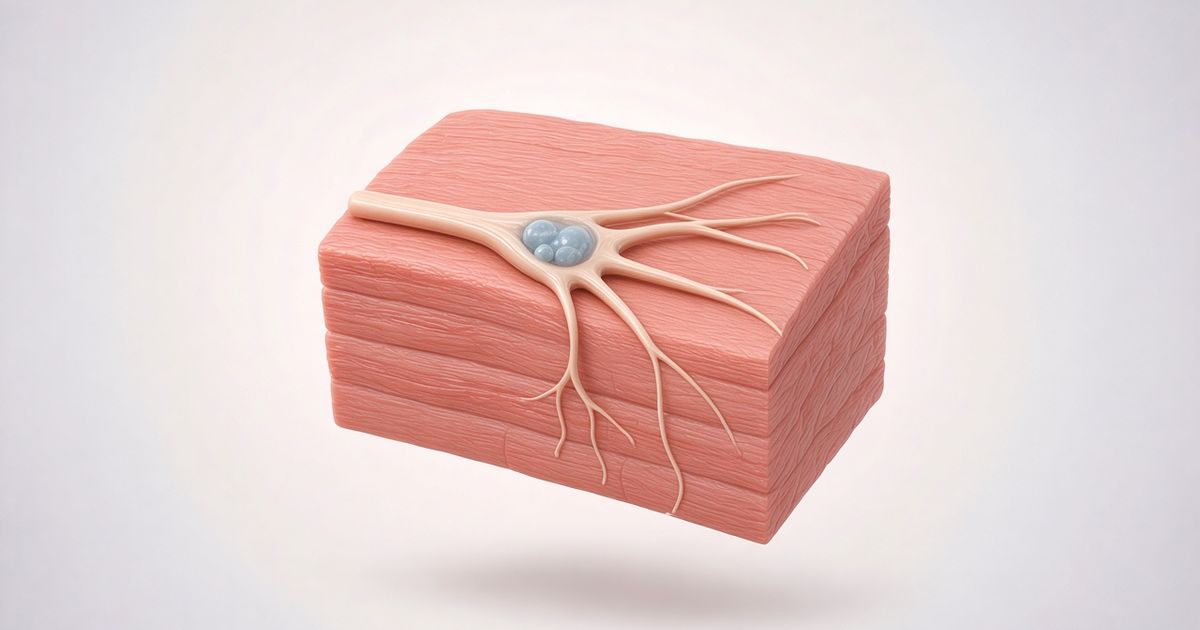
In classic trigeminal neuralgia, the most common form, a blood vessel presses on the nerve root near the brainstem. About 15% of cases are secondary to another condition, such as multiple sclerosis or a tumor. NINDS notes it’s most common after 50, affects more women than men, and can worsen over time as medicines lose effect. Pressure or damage can strip part of the nerve’s insulating myelin coating, leaving the nerve inflamed and overexcitable. That inflammation and overexcitability is what researchers hope cell therapy can calm.
What Standard Care Can Do
NINDS describes a clear treatment ladder:
- Medicines first. Anticonvulsants such as carbamazepine and oxcarbazepine are the usual first choice; gabapentin, pregabalin, lamotrigine, baclofen and Botox are other options. Ordinary painkillers and opioids usually don’t help.
- Microvascular decompression (MVD) moves the blood vessel off the nerve. NINDS calls it the most invasive option and the most effective at preventing pain long term.
- Procedures that deliberately injure the nerve (balloon compression, glycerol injection, radiofrequency lesioning, radiosurgery) can relieve pain for a few years but usually leave some numbness.
These treatments help many people, and if your doctor recommends one, it deserves serious thought. But medicines can cause fog, dizziness and blood problems, surgery has real risks, and pain can return even after a procedure that worked at first. That gap is why researchers are studying cell-based approaches.
How MSCs Are Thought to Help
MSCs release signaling proteins that calm inflammation and support nerve cells. Our cells come from donated Wharton’s jelly (umbilical cord tissue) and placenta from healthy births. (See our plain-language guide to stem cells and donor versus your own cells.) In animal models of trigeminal neuralgia, MSCs appear to lower inflammatory signals such as IL-1β and TNF-α, raise the calming signal IL-10, quiet nerve overexcitability, and support the myelin coating. These mechanisms explain the scientific interest, but they haven’t been proven in people.
What the Research Shows
Animal studies: consistently encouraging
Most evidence comes from rats and mice with a facial nerve injury that mimics trigeminal neuralgia:
- Bone marrow MSCs injected near the trigeminal ganglion reduced pain behavior in rats, and electron microscopy showed repair of damaged myelin. The cells didn’t turn into nerve cells, suggesting they work through signaling (Yan et al., J Pain Res, 2022).
- A single IV dose of MSCs in mice reduced pain behavior and inflammation and restored the nerve’s normal structure. The effect depended on IL-10: in mice lacking it, MSCs didn’t help (Costa et al., Life Sci, 2024).
- Stem cells from baby teeth, given locally or by IV, reduced pain sensitivity in rats for the full eight-week study (Bai et al., Stem Cells Int, 2021).
A 2026 systematic review by a Mayo Clinic neurosurgery team found eight studies, seven in animals and one in a person. Every animal study showed a significant improvement in treated groups, with local or systemic delivery (Navarro-Garcia de Llano et al., Neurosurg Rev, 2026). The authors called cell therapy “promising” and said rigorous clinical studies are needed.
Human evidence: early but hopeful
- First case report of MSCs at the trigeminal nerve (2025). A 48-year-old woman had 22 years of severe trigeminal neuralgia; MVD hadn’t helped and her medicines caused severe mental clouding. Doctors used CT guidance to inject 20 million umbilical cord MSCs where the nerve exits the skull. She had no side effects. At one month her pain was dramatically lower and she stopped her medicine. By 12 months some symptoms had returned, but she needed a lower dose and kept her clearer thinking (Candido et al., Curr Stem Cell Res Ther, 2025).
- Pilot study in trigeminal nerve pain (2014). Ten women with nerve-damage pain in the face (which overlaps with, but isn’t the same as, classic trigeminal neuralgia) had their own fat-derived cells injected into the painful areas. At six months, average pain fell from 7.5 to 4.3 out of 10, and 5 of 9 people reduced both pain and medicine use, with no side effects. There was no comparison group, and some authors worked for the cell manufacturer (Vickers et al., J Pain Res, 2014).
What’s missing
There’s no randomized, placebo-controlled trial yet. When we searched ClinicalTrials.gov on November 21, 2026, we found one registered study: a small phase 1 safety study of intranasal exosomes (cell-derived particles, not whole cells) from umbilical cord or placental MSCs (NCT05152368), still recruiting. A 2026 review of newer treatments for facial nerve pain agreed: strong promise in animals, too few large trials (Liongson et al., Pharmaceuticals, 2026). Trigeminal neuralgia also goes quiet and returns on its own, so without a comparison group it’s hard to know how much improvement came from treatment.
How our protocol compares
No published study has used our exact approach: donor MSCs given by intrathecal injection plus an injection in the cheek over the nerve. The closest human report injected the nerve at the skull base under CT, a more targeted technique. On safety, a 2024 meta-analysis of nine randomized trials (540 patients with various neurological conditions) found intrathecal MSCs caused somewhat more temporary muscle and back aches than controls, with no serious adverse events attributed to the cells (Mesa Bedoya et al., Stem Cell Res Ther, 2024). None of those trials studied trigeminal neuralgia.
Our Trigeminal Neuralgia Protocol
Our trigeminal neuralgia protocol is $5,200 USD and includes:
- 50 million MSCs by intrathecal injection into the fluid around the spinal cord, aimed at the central nervous system
- 25 million MSCs injected into the trigeminal nerve area of the cheek
- A full blood panel, physician review, and travel documentation
Cells are grown in our on-site lab in an ISO 7 cleanroom, tested to ISO 14644-1, given within 24 hours of leaving culture, and checked by third-party labs for identity, mycoplasma and endotoxins. See how our cells are made and our licenses and lab certificates. Dream Body Clinic is licensed by COFEPRIS, Mexico’s equivalent of the FDA; the licenses cover our facility and lab, not an approval of stem cells for trigeminal neuralgia. Flights and hotel are separate; see stem cell therapy costs in Mexico and brain and nerve treatment prices.
Your 5-day stay in Bucerias, Nayarit (Puerto Vallarta Area)
| Day | What happens |
|---|---|
| Day 1 | Arrive and rest |
| Day 2 | Bloodwork, MRI review, then payment |
| Day 3 | Treatment: intrathecal and cheek injections |
| Day 4 | Rest day |
| Day 5 | Fly home |
After you go home, we check in remotely at 3, 6 and 12 months. Our patient journey guide, travel guide and hotel list explain the rest.
Who May Be a Candidate
You may be a candidate if your trigeminal neuralgia is diagnosed by a doctor, with an MRI that rules out a tumor or other cause needing its own treatment; your pain isn’t well controlled by medicine or the side effects are hard to live with; or your pain returned after a procedure, or you’ve decided against surgery after discussing it with your specialist. You should be well enough to fly and to lie still for the intrathecal injection, and understand that this is investigational and results vary.
You may not be a candidate if you’ve had cancer in the past five years, take blood thinners you can’t safely stop, have new or rapidly changing facial pain that hasn’t been evaluated, have an active infection (including skin or dental infection near the injection site), or are pregnant. If your trigeminal neuralgia is linked to MS, see our MS guide; for nerve pain in the feet or hands, see our peripheral neuropathy guide.
Medicines and blood thinners. Don’t stop or lower carbamazepine, oxcarbazepine or any trigeminal neuralgia medicine on your own. Stopping suddenly can bring back severe attacks, and some need a slow taper. The intrathecal injection can’t be done on blood thinners, because your blood must clot normally after the needle enters the spinal fluid sac. Our anesthesiologist asks patients to be off most blood thinners for at least two weeks before and two weeks after treatment, and off aspirin from at least three days before until two weeks after. Never stop a blood thinner without asking the doctor who prescribed it. If stopping isn’t safe for you, the intrathecal injection may not be right for you.
Risks and Side Effects
MSC injections are generally well tolerated in studies, but no procedure is risk-free. Possible effects include mild fever or headache for a few hours after treatment; lower back soreness near the intrathecal site (about 1 in 30 patients) or a migraine-like headache, sometimes with nausea (about 1 in 30), usually lasting hours to a few days; soreness, swelling or bruising in the cheek; and a small risk of infection with any injection. Some patients see little or no change.
Seek urgent care right away if you develop a fever with a stiff neck, a severe headache that doesn’t ease when you lie down, new weakness or numbness, or loss of bladder or bowel control after the intrathecal injection. See our safety and side effects guide, and our guide on how to choose a stem cell clinic for questions to ask any provider.
Frequently Asked Questions
Can stem cells help trigeminal neuralgia?
They may. Animal studies are consistently positive, and early human reports are hopeful, including a woman whose pain dropped dramatically after an MSC nerve injection. There are no controlled trials yet, and results vary.
How soon might I notice a change?
In the published human reports, changes appeared between about one and six months. Some people notice little or no change.
Will I be able to stop my medicine?
Don’t plan on it. One patient in the case report reduced her medicine, but that’s one person. Any change should be made slowly with your prescribing doctor.
Is this an alternative to microvascular decompression?
It’s a different, investigational option, not a replacement. MVD has the strongest long-term evidence, so if a surgeon recommends it, discuss it carefully.
How long might any benefit last?
We don’t know yet. In the case report, some symptoms returned by 12 months, and long-term data don’t exist.
How much does it cost?
Our protocol is $5,200 USD, including both injections and a full blood panel. Travel and hotel are extra.
Thinking About Your Options?
If trigeminal neuralgia is shaping your days and you’d like to explore MSC therapy alongside your current care, a free consultation is a good place to start. It’s a conversation, not a commitment. A physician will review your history, MRI and medicines, explain what the research does and doesn’t show, and tell you honestly whether this may make sense for you.
Schedule your free consultation, call (888) 704-3977, WhatsApp +52 322 232 1055, or email info@dreambodyclinic.net.
Disclaimer: This article is for educational purposes and is not medical advice. Mesenchymal stem cell therapy for trigeminal neuralgia is investigational and is not approved by the U.S. FDA. There are no controlled clinical trials of stem cells for trigeminal neuralgia; the evidence comes from animal studies, a small uncontrolled study and individual case reports. Results vary, and some patients see little or no benefit. Stem cell therapy offers no guarantees and does not replace your neurologist’s care or proven trigeminal neuralgia treatments. Do not stop or change any medication, including carbamazepine, oxcarbazepine or blood thinners, without talking to the doctor who prescribed it. New or changing facial pain needs a medical evaluation. Treatment eligibility is decided only after a review of your medical history. Dream Body Clinic is located in Bucerias, Nayarit (Puerto Vallarta Area), Mexico, and operates under three COFEPRIS sanitary licenses; COFEPRIS is Mexico’s equivalent of the FDA.