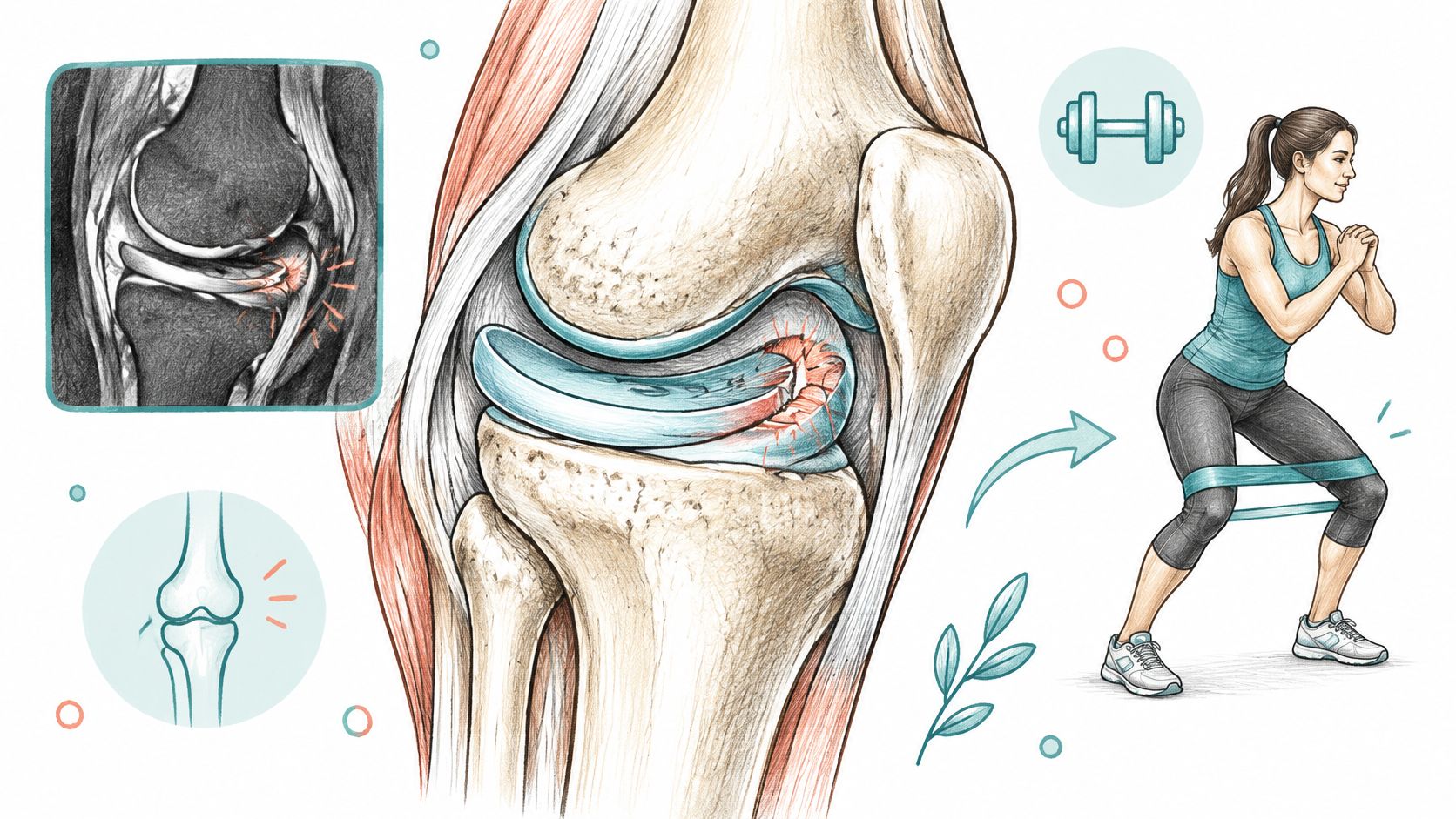
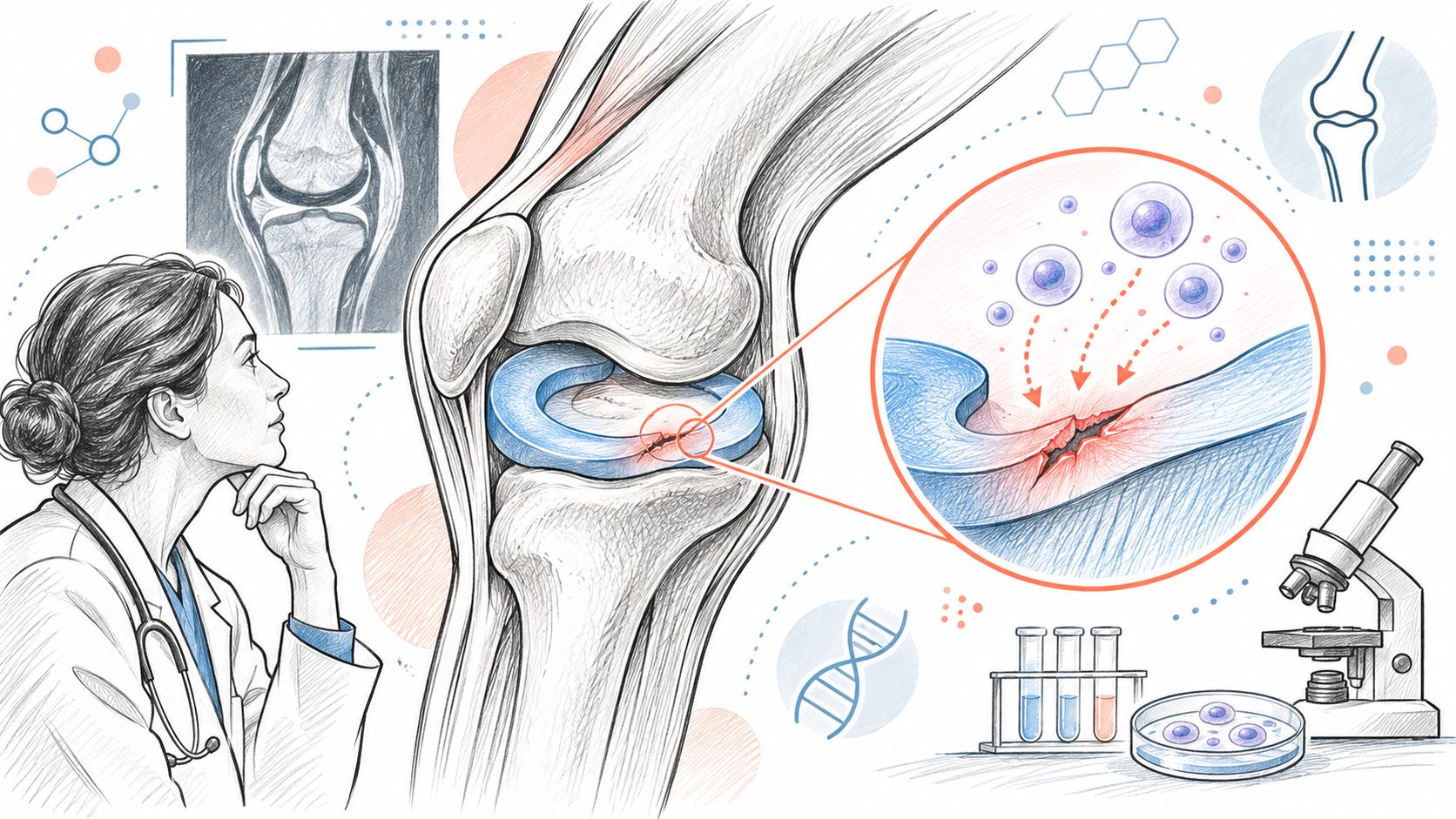
Can one injection regrow a torn meniscus? The honest answer starts with a narrow slice of evidence. In the strongest controlled trial available, summarized in this review of mesenchymal stem cell therapy for meniscus tears, 24% of patients who received 50 million mesenchymal stem cells and 6% of those who received 150 million showed increased meniscal volume on quantitative MRI at 12 months, while no patient in the hyaluronic acid control group did.
Dream Body Clinic delivers its stem cell knee treatment in Mexico, where it operates under COFEPRIS, the country's federal health regulator. The treatment is a single ultrasound-guided injection of 50 million mesenchymal stem cells into the knee joint, and the injection itself typically takes only a few minutes.
So why does most advice online skip the part that decides the outcome? People ask whether stem cells work and stop there. The question that changes the answer is narrower: is this particular tear the kind an injection could plausibly help? A stable tear near the outer rim, a locked bucket-handle fragment and a degenerative tear in an arthritic knee are three different problems wearing one name.
Treatment choice should follow tear pattern, not the other way round. That ordering is what separates a decision you can defend to a surgeon from a decision made on hope and a search engine.
Table of Contents
- Can Stem Cells Actually Heal a Meniscus Tear?
- How a Meniscus Tear Affects Your Knee
- How Stem Cells Signal Repair Instead of Becoming Meniscus Cells
- What the Randomized Meniscus Trial Found
- Three Tear Scenarios and What Each Path Looks Like
- Limits, Regulation and Questions to Ask
- Confirm Your Tear Pattern and Plan Next Steps
Can Stem Cells Actually Heal a Meniscus Tear?
The honest verdict is that stem cell injections have not been shown to reliably heal a torn meniscus. What exists is a small set of early human studies, several of which produced measurable tissue change on imaging in a minority of patients. That's a real signal worth taking seriously. It isn't a guarantee you can lean on before you've had an accurate diagnosis.
The muddle comes from treating "does it work" as one question. Four options sit in front of most patients with meniscal pain, and the evidence behind each is not equally strong.
| Option | Best-supported use | Evidence strength |
|---|---|---|
| Physical therapy | Acute, nondisplaced tears that cannot be repaired | Guideline-supported for symptom and function goals |
| Surgical meniscus repair | Repairable tears, ideally treated within six months of failed conservative care | Guideline-supported and preferred when healing is possible |
| Meniscectomy (tissue removal) | Tears that cannot be repaired and have failed other care | Guideline-supported as a last resort because tissue is removed |
| MSC injection (stem cell) | Adjunct or option discussed after orthopedic assessment | Limited: small early human studies only |
Read the third column as the strength of the evidence, not as a ranking of what you should do. A well-studied operation can still be the wrong choice for a small stable tear that isn't limiting your life, and an option with thin evidence can still be reasonable for the right person in the right circumstances.
Practical rule: the strength of the evidence behind an option and the fit of that option to your knee are two separate questions. Answer the second one first.
Your next step is a diagnostic one. Get an MRI, get a knee examination from an orthopedic clinician, and bring the table above to that visit. Ask where, if anywhere, an injection fits for the specific tear named in the report. That conversation is worth more than any general answer about stem cell for knee meniscus tear you'll find online.
How a Meniscus Tear Affects Your Knee
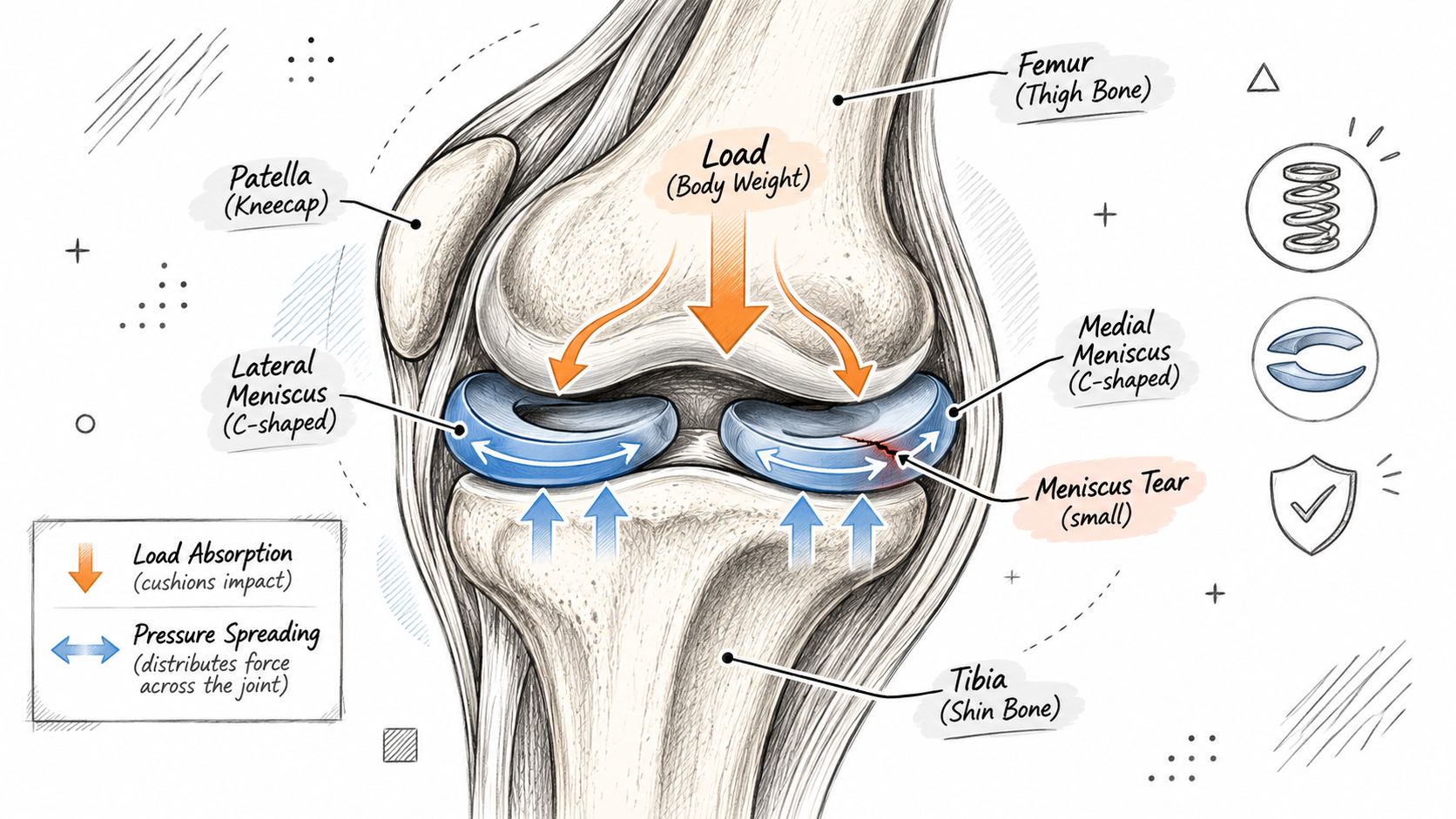
Each knee holds two menisci, C-shaped pads of fibrocartilage that sit between the thigh bone and the shin bone. They spread load across the joint, absorb impact and add stability as the knee twists. Lose that cushion and the articular cartilage on the bone surfaces takes the extra contact stress, which is why meniscus loss and later joint wear so often travel together.
Picture a rubber washer between two hard plates. It compresses, spreads the pressure and keeps the plates from grinding directly on each other. That's the job the meniscus does on every step.
Tear Patterns You'll See Named on a Report
- Radial tears cut across the fibers and can split the load-bearing ring, so the pad stops holding tension.
- Horizontal tears split the pad into layers, common in older knees and often degenerative.
- Bucket-handle tears happen when a long fragment flips into the joint and blocks motion, producing locking or a knee that won't fully straighten.
- Flap tears leave a loose edge that catches, clicks and gives way on twisting.
- Root tears sit at the anchor point where the meniscus attaches to bone, and they let the whole pad extrude out of position.
The Blood Supply Rule That Predicts Healing
Meniscal tissue is fed from the outside in. The outer red zone near the joint capsule has real blood flow, the red-white zone in the middle has some, and the inner white zone has almost none. That gradient is why a tear at the outer rim has genuine healing potential and a tear in the middle rarely does, whatever you inject into the joint.
The 2024 American Academy of Orthopaedic Surgeons guideline identifies MRI as the preferred diagnostic test and separates nondisplaced tears from displaced or displacing tears that restrict motion. It states that meniscus-preserving repair is preferred over tissue-removing meniscectomy when healing is possible, and that large tears and root tears rarely heal on their own, which means they usually need repair rather than an injection-focused strategy.
What to Take From the Radiology Report
Ask for the location, the pattern, the size in millimeters, whether any fragment is displaced, and whether cartilage changes or extrusion are noted. Those five details decide which options are realistic. Without them, any discussion of treatment is guesswork dressed as expertise.
How Stem Cells Signal Repair Instead of Becoming Meniscus Cells
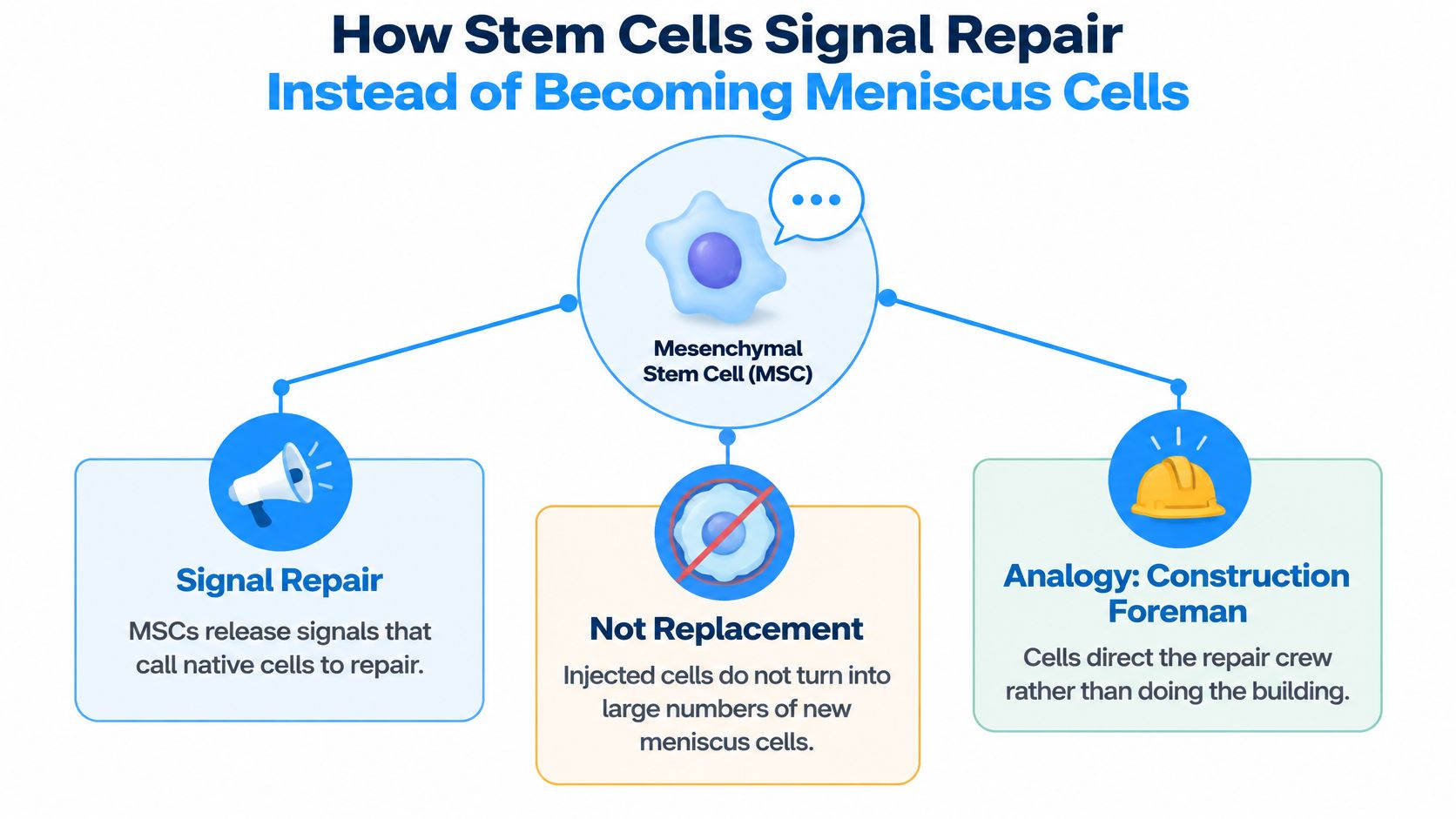
Injected mesenchymal stem cells don't turn into your meniscus. That belief sits behind a lot of bad marketing, and it's worth retiring early: the proposed benefit comes from signaling, not from replacement tissue built cell by cell.
The best analogy is a construction foreman. A foreman doesn't lay every brick. He reads the site, tells the crew where to work, calls in the right trades and keeps the job from stalling. Mesenchymal stem cells behave the same way after they sense injury signals in a knee.
The Secretome Carries the Message
Once in the joint, MSCs respond to injury-related cues by releasing a secretome, the mix of growth factors, cytokines, extracellular vesicles, extracellular-matrix components and other bioactive molecules described in a review of MSC mechanisms in tissue repair. None of those molecules is meniscus. Together they change the environment the meniscus is sitting in.
Four Jobs the Signals Do
- Calm the joint lining. Synovial inflammation drops, which is often what drives the swelling and ache more than the tear itself.
- Recruit resident cells. Cells already living in the meniscus and synovium get directional cues rather than working blind.
- Support blood vessel formation. Angiogenic signaling helps where the blood supply allows it, mostly toward the outer rim.
- Coordinate the repair response. The overall sequence of inflammation, cleanup and rebuilding gets organized instead of chaotic.
This is why the clinic's own framing matches the science: how stem cells support joint recovery and regeneration runs through communication, not through the cells becoming cartilage on command.
Mechanics Still Decide the Outcome
Signals only help when the knee lets healing happen. A stable tear, reasonable limb alignment and a rehabilitation plan that protects the tissue for the first weeks all matter more than the injection technique. An unstable fragment that flips into the joint will keep flipping regardless of what's in the syringe. Claims that an injection rebuilds a meniscus like a graft go beyond what the evidence supports; signaling and immune modulation are what the biology describes.
An injection changes the conversation in the joint. It doesn't change the mechanics of a knee that needs a fragment put back where it belongs.
What the Randomized Meniscus Trial Found
The most credible early human evidence for MSCs in meniscus treatment is a randomized, double-blind controlled study summarized in a peer-reviewed 2019 review of the meniscus literature. Randomized means patients were assigned to groups by chance. Double-blind means neither the patients nor the assessors knew which treatment each person received, which matters enormously when the outcome is a symptom someone reports.
The trial enrolled 55 patients, all of whom had already undergone partial medial meniscectomy. In plain terms, part of the meniscus had been removed surgically, so these were postoperative defects rather than fresh untreated traumatic tears. Patients were split into three groups: intra-articular allogeneic MSC injections of 50 million cells, injections of 150 million cells, and a control group that received hyaluronic acid.
At 12 months, quantitative MRI measured actual tissue volume rather than asking people how they felt.
| Group | Increased meniscal volume at 12 months |
|---|---|
| 50 million MSCs | 24% |
| 150 million MSCs | 6% |
| Hyaluronic acid control | 0% |
Why the Controlled Design Matters
The design is the story here. Before this trial, most support for meniscus injections came from pain scores and patient testimonials, both of which are easy to influence and hard to verify. Quantitative MRI gave the field something it had lacked: a measurement taken by someone who didn't know which group the patient was in. The result showed that an MSC injection could be associated with measurable meniscal tissue growth after surgery, and that the control group showed none.
That's a genuine milestone. It's also a modest one in absolute terms, because the majority of treated patients in both dose groups did not show increased volume.
What the Lower Dose Result Actually Says
The 50 million group outperformed the 150 million group, and that inversion is the most interesting finding in the trial. A simple "more cells, more healing" model doesn't survive it. Dose response in cell therapy depends on viability, delivery, and how much of an inflammatory response the cell load itself provokes. Anyone quoting this trial as proof that higher doses work better has read it backwards.
Three Questions to Ask of Any Study
- Which tear? Postoperative meniscal defects from a partial meniscectomy are not the same as an acute traumatic tear in a young athlete.
- Which cells? Allogeneic MSCs from a donor are a different product from your own bone marrow or fat-derived cells, with different handling and different regulatory treatment.
- Compared with what? A control group receiving hyaluronic acid is a real comparison. A single-arm case series with no control is a sales story with a graph.
The review notes that this was the only randomized double-blind controlled study available at the time it was written, which tells you how thin the clinical base really is.
Three Tear Scenarios and What Each Path Looks Like
Tear pattern drives the decision. Three presentations cover most of what walks into a clinic, and they lead to very different plans.
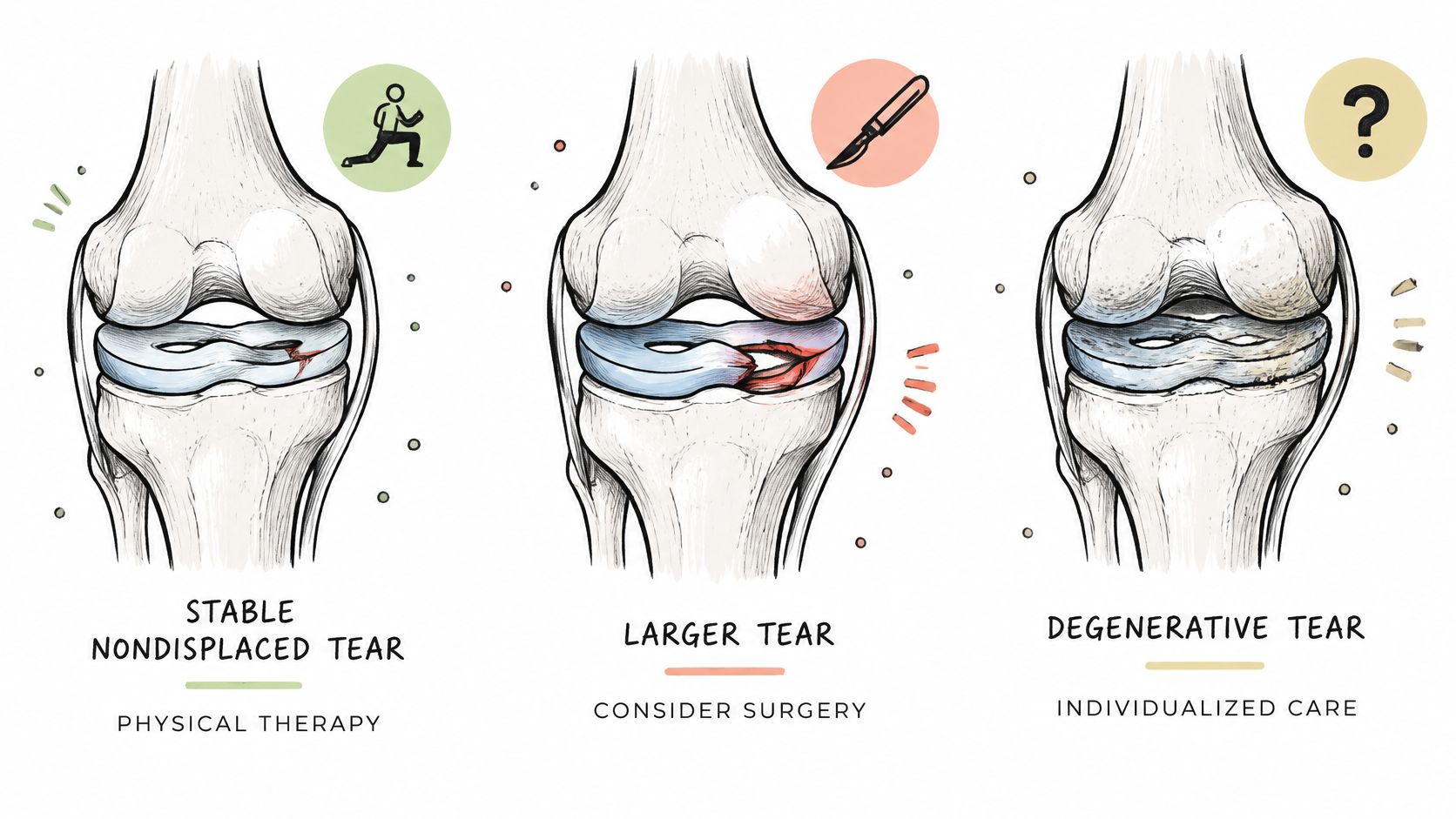
A Stable Nondisplaced Tear Without Locking
Say a recreational tennis player feels a sharp medial ache after a pivot, and the MRI shows a small nondisplaced tear with no fragment and no cartilage damage. Nothing is blocking the knee. Physical therapy is the guideline-supported first move, and it often settles symptoms within weeks. An injection enters the conversation only after an orthopedic assessment confirms the tear is stable and rehabilitation has plateaued.
A Displaced Tear That Locks
Now say the knee catches, won't fully straighten and swells after minor activity. That's a displaced fragment, often a bucket-handle or a meniscus complex tear with more than one pattern involved. This is a same-week orthopedic concern. A biologic injection cannot reliably reduce a flipped fragment, and waiting for one to work risks further cartilage damage.
A Degenerative Tear Alongside Arthritis
An older adult with gradual onset pain, joint-line tenderness and arthritis on imaging needs a different analysis again. Here the clinician weighs alignment, cartilage condition and how much of the pain comes from the tear versus the arthritic joint. Injections get discussed in this group more often, alongside activity modification and strengthening.
What the First-in-Human Study Showed
A 2017 first-in-human study tested the concept directly. Five patients with avascular meniscal cartilage tears received undifferentiated autologous MSCs and were followed for as long as 24 months, as reported in Stem Cells Translational Medicine. Three patients were asymptomatic at 24 months, had no MRI evidence of a recurrent tear, and improved on knee-function measures. Sequential imaging in those three showed reduced signal intensity over time with no displacement of the treated tear, a pattern read as consistent with healing.
Two patients developed pain, swelling and locking at around 15 months and went on to meniscectomy. Three of five, or 60%, demonstrates feasibility, not a dependable success rate; the sample is too small to promise that figure to anyone.
Red Flags That Skip the Queue
Locking, a knee that won't straighten, sudden large swelling, or repeated giving way all warrant prompt assessment rather than a booked injection. Those symptoms point to something mechanical, and mechanical problems need mechanical solutions.
Limits, Regulation and Questions to Ask
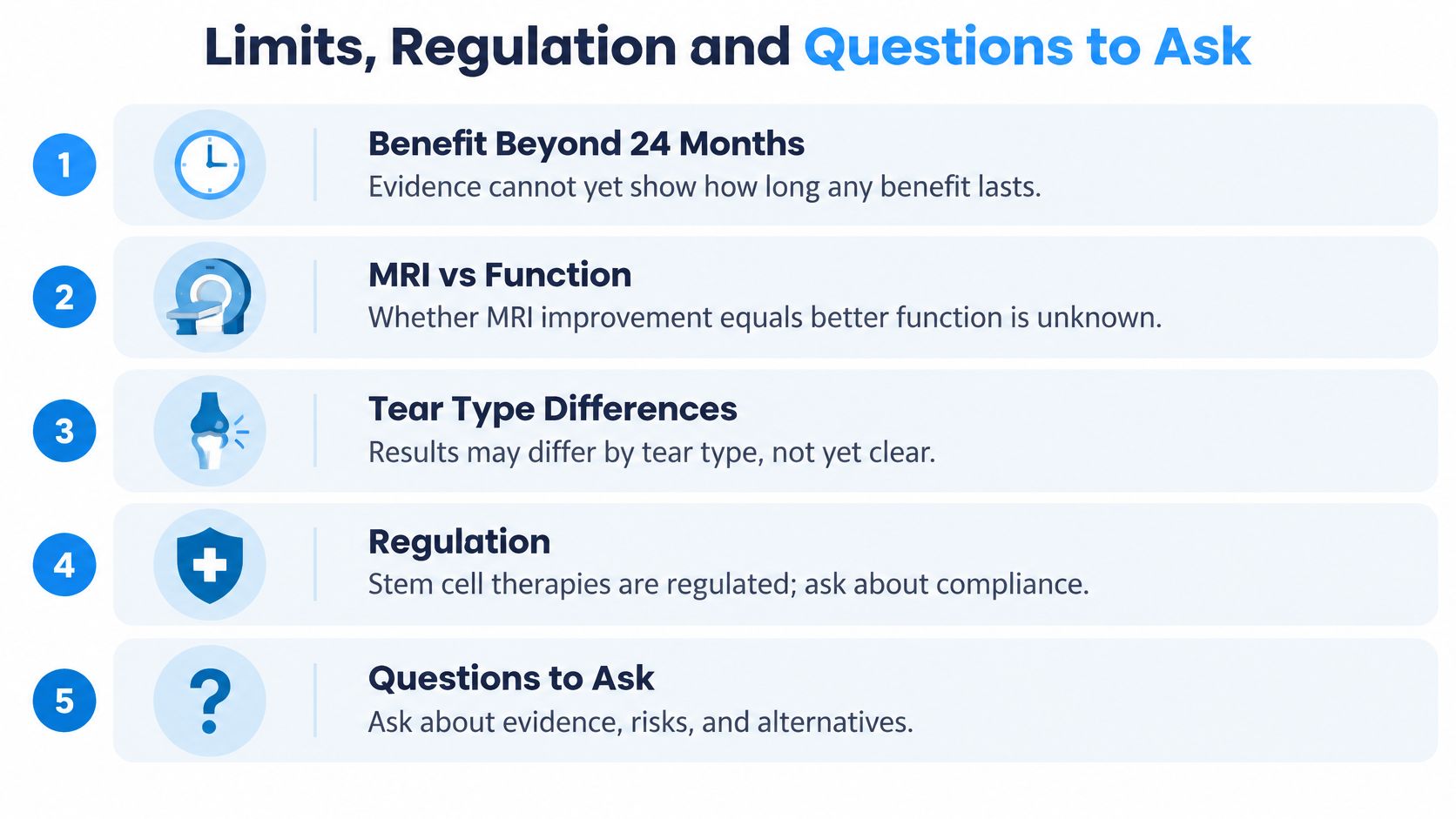
Three questions remain open, and no honest clinic can close them yet. How long any benefit lasts beyond the follow-up windows studied. Whether an MRI improvement translates into better function and less pain for a given person. And how results differ by tear type, since no trial has been powered to answer that.
The Mechanics That Decide the Result
Human clinical studies have not yet demonstrated consistent, durable meniscal reconstruction, and a review of MSC therapy for meniscal injury points to the reason. Outcomes depend heavily on tear stability, extrusion, root involvement, limb alignment, cartilage degeneration and whether rehabilitation can protect the repair. A biologic injection cannot correct an unstable displaced fragment, a major root tear or advanced compartment overload. Those need a surgeon or a different plan, and no cell product changes that.
The Regulatory Picture in Plain Terms
In the United States, the FDA states that no regenerative medicine product is approved for orthopedic conditions such as knee pain or osteoarthritis. That's why transparency about what's known and what isn't belongs in the consent conversation.
Dream Body Clinic performs its procedures in Mexico under COFEPRIS, the country's federal health regulator, which is the FDA equivalent for treatments delivered on Mexican soil. That oversight describes the regulatory setting the clinic works within. It isn't evidence that the treatment is proven, and it isn't FDA approval.
Five Questions Worth Asking
- Which tear do I have, and is it stable? Get the pattern, location and displacement named out loud.
- What would an injection do that therapy or repair would not? If the answer is vague, that's your answer.
- What imaging and rehabilitation follow-up is planned? Pain relief alone doesn't prove the meniscus changed.
- What happens if it doesn't work? Ask about the plan B before you need one.
- Who manages my care before and after? You want a named clinician on both ends, not a coordinator only.
If safety and screening are on your mind, the clinic's guidance on whether stem cell therapy is safe for orthopedic injuries covers how candidates are assessed. Ask for the cell source, the dose, the delivery method, the follow-up schedule and the alternatives in writing. Any clinic unwilling to put those in writing is telling you something.
Confirm Your Tear Pattern and Plan Next Steps
Three actions this week will put you ahead of many people who search this topic for months.
- Get an MRI and an orthopedic evaluation. Ask the clinician to name the tear pattern, its location, whether a fragment is displaced and whether the knee is stable.
- Bring the options table and the five questions with you. Read the evidence column carefully, including the part that says MSC injection rests on small early studies.
- Decide which path fits, then decide who delivers it. Surgery, therapy or an adjunct discussion come first. Provider selection comes after.
Dream Body Clinic in Bucerías, Nayarit, Mexico is one clinic to compare against that orthopedic advice, not a substitute for it. The clinic offers stem cell treatment for knee problems, and its Stem Cell Knee Treatment page lists a partially torn meniscus among the conditions it addresses. The protocol is a single ultrasound-guided injection of 50 million mesenchymal stem cells, and the process includes a medical evaluation, treatment planning, and post-procedure care and recovery guidelines. Before treatment, patients are encouraged to consult the medical team for a thorough knee examination and a discussion of medical history and expectations.
Ask how the 50 million dose was chosen, since the controlled trial found the smaller dose outperformed the larger one on a small sample. Ask about total cost, number of visits, recovery time, and how progress will be measured at three, six and twelve months. Send the MRI report for review and put the clinic's recommendation next to your surgeon's.
A consultation is a step toward an informed choice. It isn't a promise of healing, and any clinic that frames it that way is worth walking away from.
If you've had your tear pattern confirmed and want a clinical opinion on whether a regenerative approach fits your knee, Dream Body Clinic reviews MRI reports and treats partial meniscus tears with a single ultrasound-guided injection of 50 million mesenchymal stem cells, alongside a full evaluation and a structured follow-up plan. The team works in Bucerías, Nayarit, under COFEPRIS oversight, and reviews cases from international patients before any travel is booked. Visit Dream Body Clinic to send your imaging for review and compare that plan with your orthopedic surgeon's advice.