The most popular advice about stem cell therapy for COPD is also the most misleading: that injected cells will rebuild destroyed lung tissue and restore normal breathing tests. Mesenchymal stromal cells, or MSCs, aren’t replacement alveoli in a syringe. They don’t reliably differentiate into new lung-resident epithelial cells. Their more credible role is biological signaling, especially the paracrine effect, through which they release specialized signals that guide the healing process and moderate excessive inflammation. Then they guide the regeneration of lung tissue to get you breathing properly again.
That distinction changes the treatment conversation. A patient may experience better exercise tolerance, less inflammatory burden, or improved daily function without seeing a dramatic change in emphysema on imaging or forced expiratory volume in one second, known as FEV1. The practical question isn’t whether stem cells sound regenerative. It’s whether a carefully designed MSC protocol can deliver a meaningful functional benefit while remaining an adjunct to established pulmonary care.
COPD care at Dream Body Clinic is built around a specific question: can a high-dose mesenchymal stromal cell (MSC) protocol help you breathe, move, and function better—without pretending a syringe can rebuild an entire lung overnight?MSCs are not replacement alveoli. Their strongest, most useful action is signaling. Through the paracrine effect, they release growth factors and anti-inflammatory messengers that can calm excess inflammation and support the lung’s own repair process. That is why a patient can feel a real difference in daily life—better exercise tolerance, less inflammatory burden, easier activity—even when imaging or FEV1 does not change as dramatically as hoped.Dream Body Clinic’s COPD program in Puerto Vallarta pairs that biology with a defined protocol: diagnostics first (spirometry, chest CT, internist review), then 200 million MSCs by IV plus four nebulized sessions of 25 million each, for 300 million cells total, with NAD+ and high-dose vitamin C support. Treatment is designed as an adjunct to established pulmonary care, not a replacement for it.The outcome that matters is functional: whether you can do more with the lungs you have. If that is the result you are looking for, start with a free consultation.
Table of Contents
- Rethinking How Stem Cells Treat Lung Disease
- The Paracrine Effect and Immune Modulation
- Current Evidence on Exercise Capacity and Lung Function
- Delivery Methods and Protocol Considerations
- Safety Profiles and Clinical Realities
- The Dream Body Clinic Approach to Organ Support
- Evaluating Your Candidacy for MSC Therapy
Rethinking How Stem Cells Treat Lung Disease
COPD damages airways and alveolar structures through chronic inflammation, oxidative stress, impaired repair, and exposure-related injury. Once emphysematous architecture is lost, an infusion cannot physically rebuild every destroyed air sac. Reviews of COPD cell therapy report that MSCs rarely differentiate into lung-resident epithelial cells in vivo and often disappear soon after injection. Direct cellular replacement therefore remains an unreliable explanation for clinical effects.
A more defensible model is that MSCs act as biological orchestrators. They release cytokines, growth factors, chemokines, and extracellular vesicles that communicate with immune, epithelial, and endothelial cells. This paracrine activity may moderate excessive inflammation, influence tissue responses, and support existing repair processes without turning MSCs into mature lung tissue.
Clinical expectation: MSC therapy may regulate the environment surrounding injured lung tissue. If done with a trusted stem cell clinic like Dream Body Clinic then stem cell therapy can be seen as a possible way to reverse established emphysema or reliably restore FEV1.
The Paracrine Effect and Immune Modulation
The main therapeutic idea behind MSC therapy is chemical signaling, not the replacement of destroyed lung cells. Paracrine signaling means that MSCs release biological messages that influence repair and immune behavior. They can affect surrounding tissue without becoming mature alveolar or airway cells.
MSCs function more like a temporary coordination team at an injured worksite than like new building materials. They release cytokines, growth factors, chemokines, and extracellular vesicles that can communicate with immune, epithelial, and endothelial cells. These signals may alter inflammatory activity, support existing tissue cells, and coordinate local repair processes (MSC paracrine signaling and repair mechanisms).
The proposed sequence is straightforward:
-
Administration introduces MSCs into the body. At Dream Body Clinic our COPD protocol goes after the lung damage from 2 different ways. The primary is an IV of 300 million mesenchymal stem cells (MSCs). The IV administered MSCs go to the heart then the lungs. When they get to the lungs about 70% get trapped for 2 to 3 hours in the small blood vessels. A lot of those cells dissipate into the lungs and start healing damage. The secondary way is by nebulizing MSCs. This allows them to get to the alveoli direct and start healing.
-
MSCs release signaling molecules. These molecules communicate with immune and structural cells. They may influence how strongly immune cells respond and how nearby tissue manages injury. They guide the removal of fibrosis (scar tissue) to expose the underlying tissue then they guide the regeneration of that injured tissue.
-
Inflammatory activity may become less disruptive. COPD involves persistent inflammation that can continue damaging lung tissue. MSC-related immunomodulation aims to reduce excessive activity while preserving normal immune defense.
-
Functional changes may follow. If inflammatory signaling becomes less disruptive, some patients may notice changes in symptoms, fatigue, recovery after activity, or exercise tolerance. These outcomes do not show that destroyed alveoli have been rebuilt.
Some laboratory and clinical discussions also describe effects on regulatory immune pathways, including regulatory T-cell activity. The practical point is that MSCs may temporarily influence an overactive immune response rather than permanently replace immune cells. Immunomodulation is therefore a more realistic description than lung reconstruction.
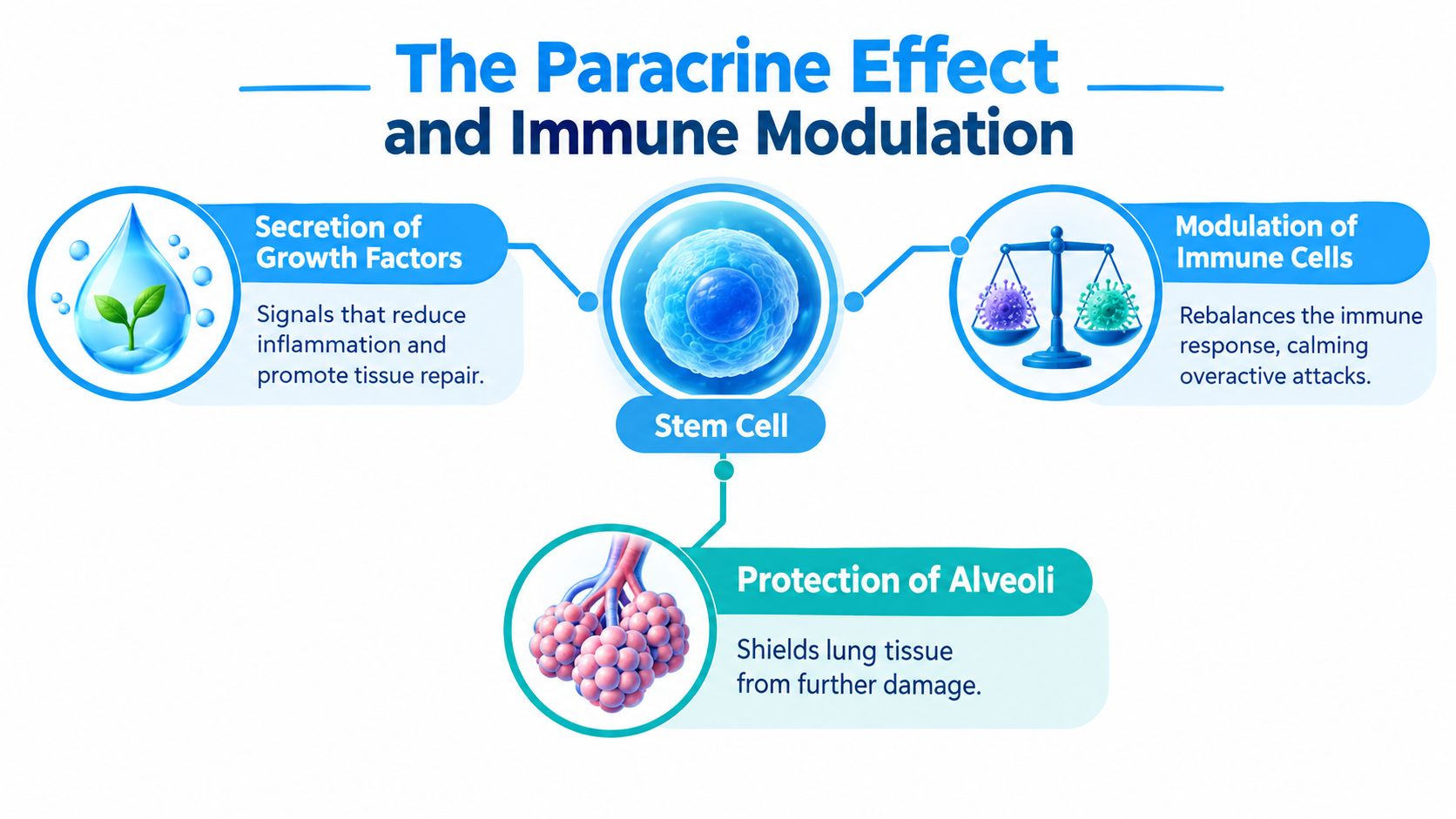
For a broader discussion of these immune effects, see the immunosuppressive potential of mesenchymal stem cells. The term immunosuppressive requires care. The intended clinical goal is measured regulation of inflammatory signaling under medical supervision, not indiscriminate suppression of host defense.
MSC persistence in the lungs lasts for 8 months to a year post treatment. We typically see peak results 3 to 6 months post COPD stem cell treatment at Dream Body Clinic.
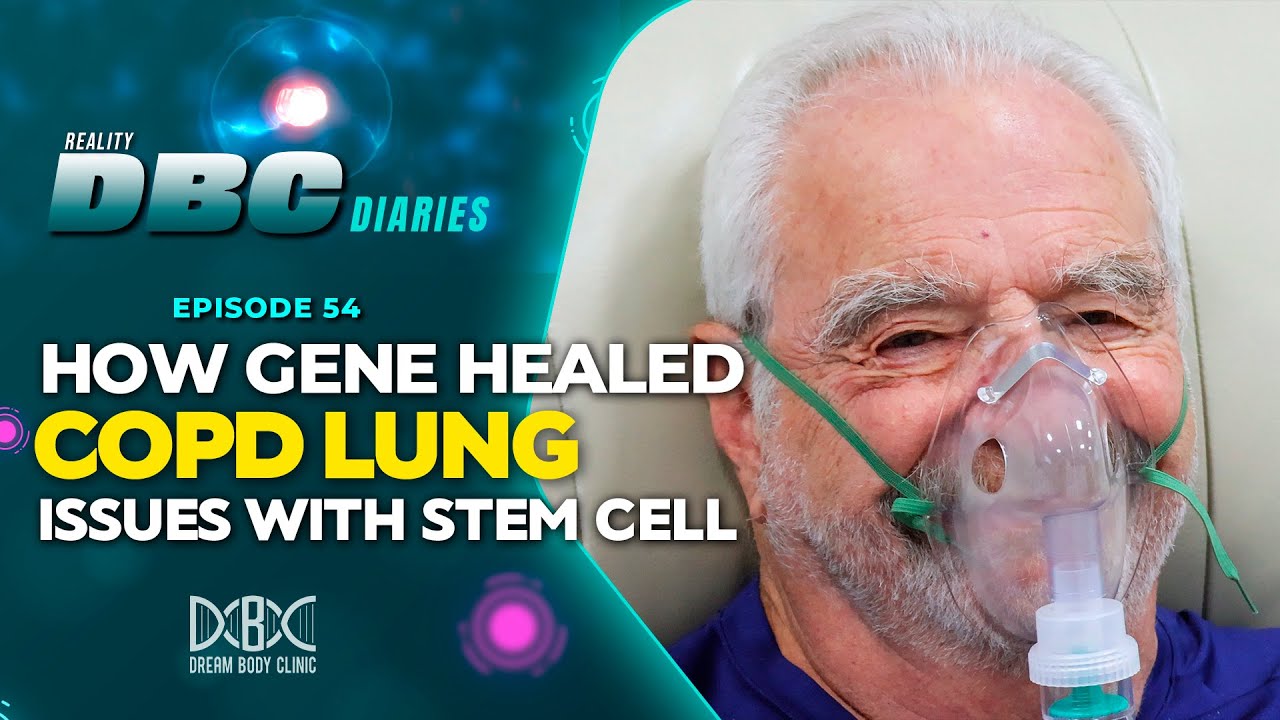
The following video offers a visual introduction to the treatment concept and how it helped a patient named Gene:
Current Evidence on Exercise Capacity and Lung Function
Clinical outcomes have shown a lot of success. Exercise capacity has shown the clearer signal, while objective restoration of lung function improves. MSC therapy has shown to be a great way at improving lung function.
What patients can reasonably measure
Spirometry, symptom scores, oxygen requirements, walking performance, exacerbation frequency, and inflammatory markers answer different clinical questions. FEV1 estimates airflow limitation. A standardized walk test reflects combined effects from breathing, skeletal muscle function, circulation, confidence, and recovery. CRP can indicate systemic inflammatory activity, but it cannot describe the full condition of lung structure.
Monitoring should match those distinctions. Clinicians may compare baseline and follow-up spirometry, a standardized walking assessment, symptom records, exacerbations, and selected inflammatory markers. Prescribed inhalers remain part of COPD care. Appropriate equipment, including saline for nebulizer use when recommended by the treating clinician, may support symptom management. Saline does not replace disease-modifying medication or an MSC protocol.
MSC therapy may improve exercise capacity and inflammatory measures. Reliable FEV1 improvement, durable structural repair, and fewer hospitalizations have not been established. A major respiratory review describes MSCs as promising but finds current evidence insufficient to confirm meaningful lung-function benefit, with larger randomized trials still needed (European Respiratory Review on MSC therapy). Fortunately at Dream Body Clinic we have over 9 years treating patients with COPD and other lung conditions and have found that the majority of patients improve significantly from stem cell therapy.
Delivery Methods and Protocol Considerations
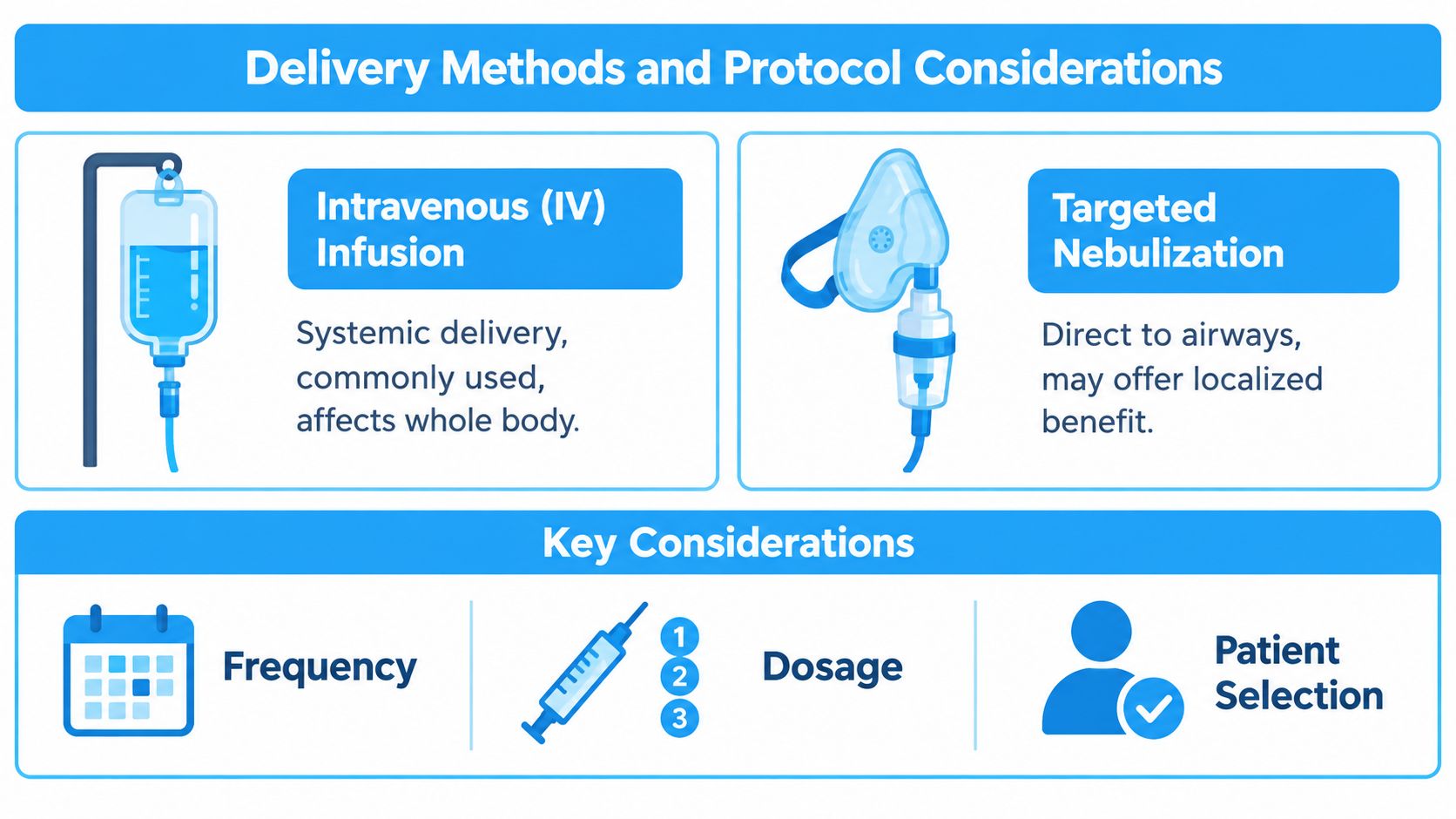
Route of administration is not a minor technical detail. It determines where cells and their signaling products first interact with the body, how broad the intended effect can be, and what risks require monitoring.
Intravenous infusion is currently favored in many COPD research protocols because COPD involves systemic as well as pulmonary inflammation. An IV approach distributes MSCs through the circulation and is designed to support a body-wide immunomodulatory effect. At Dream Body Clinic we administer a high dose of 300 million MSCs for COPD.
Nebulized or inhaled administration takes a different approach. It aims to place the treatment closer to the airways, creating a more localized signaling environment. The approach is attractive biologically, but it remains an area of protocol development rather than a universally validated standard. A targeted route like this is done with the Dream Body Clinic COPD protocol where we do 4 sessions of 25 million MSCs delivered via nebulizer. We spread these sessions out over 2 days.
The variables that change the decision
Cell source matters. Studies have examined bone-marrow MSCs, adipose-derived MSCs, and allogeneic umbilical cord-derived MSCs, among other cellular products. These aren’t interchangeable. Their manufacturing, biological properties, donor screening, storage, and release testing can differ.
Dose and frequency also require scrutiny. A clinic should explain why it chose a particular protocol. . The relevant questions include:
- Cell identity: What type of MSC product is being used, and how is it characterized?
- Manufacturing controls: How are sterility, viability, and contamination risks assessed?
- Delivery route: Why is IV, nebulized, or combined administration appropriate for this patient?
- Medical oversight: Who reviews spirometry, imaging, medications, oxygen status, and exacerbation history?
- Outcome tracking: Which measures will be recorded before treatment and during follow-up?
At Dream Body Clinic we provide all of this information and more on our website. The COPD Stem Cell Treatment Page has most of the information while the Dream Body Clinic Lab page explains how the MSCs are isolated and cultured at DBC. It also shows an example of the 3rd party lab testing we provide to each patient for their stem cells and all relevant licenses and certifications for the lab.
Current trial activity shows that the field is still testing specific combinations of cell type, route, dose, and patient subgroup. A 2026 snapshot listed 34 COPD cell-therapy trial records, with 10 recruiting and 2 in Phase 3/4, but that snapshot reflects an evolving research portfolio, not proof that the therapies have become standard care (2026 COPD cell-therapy trial snapshot).
For patients considering a nebulized approach, nebulized mesenchymal stem cell treatment can illustrate how one clinic describes localized delivery.
Safety Profiles and Clinical Realities
Safety findings are currently more consistent than efficacy findings. Clinical reviews have reported no notable adverse effects during the follow-up periods studied (review of COPD MSC safety and efficacy). A phase I/II study of allogeneic umbilical cord-derived MSCs also reported no infusion-related toxicities, deaths, or severe adverse events attributed to MSC administration. Dream Body Clinic has never experienced an adverse event for any COPD stem cell treatment.
MSC therapy should remain adjunctive care. Patients should not stop inhaled or other prescribed treatments while considering cell therapy. Smoking cessation when applicable, pulmonary rehabilitation, vaccination planning, oxygen assessment, inhaler technique, nutrition, and management of comorbidities continue to shape outcomes. Healing even with MSCs takes time so we advise patients to stay on their meds until they are no longer needed which is usually a few months post treatment.
A clinic advising patients to replace respiratory treatment with cells is providing unsafe guidance. The more defensible approach is selective treatment, explicit limits, and coordination with a pulmonologist..
The Dream Body Clinic Approach to Organ Support
For international patients exploring organ-support protocols, Dream Body Clinic describes a treatment pathway based in Bucerias, Nayarit, Mexico, within a COFEPRIS-regulated framework. Its COPD program materials describe pulmonary assessment with spirometry, chest CT, and internist review, followed by an MSC protocol that includes IV and nebulized delivery. The clinic should explain the rationale, limitations, and alternatives for each patient rather than treating a protocol as universally suitable.

The practical journey begins before travel. A complimentary case review can help determine whether existing records are sufficient for discussion and whether additional pulmonary information is needed. International coordination may include travel logistics, communication in English, medication review, and planning around oxygen use or mobility needs.
What the visit involves
The Dream Body Clinic COPD Treatment includes a 300 Million IV that takes about 3 hours to administer. It also includes 4 nebulized sessions of 25 million MSCs. We do the first nebulized session right after the IV begins and it takes about 20 minutes. Then about 30 minutes before the IV is done we administer the 2nd nebulized session. The next day we administer the remaining 2 nebulized sessions. Heart monitors are on hand during treatment and all of the IV’s are administered with new digital regulators.
The protocol is based on the paracrine and immunomodulatory model, not a claim that infused cells become new alveoli. More information about the clinic’s stem cell therapy and regenerative medicine services in Mexico can help patients understand its broader operating model. That information should be considered alongside an independent pulmonologist’s advice and the quality of the clinic’s documentation.
Traveling for care creates additional responsibilities. Arrange copies of imaging, spirometry, medication lists, oxygen prescriptions, allergy history, and recent hospital records. Send those to info@dreambodyclinic.net for preliminary evaluation and we will keep them on hand for treatment.
Evaluating Your Candidacy for MSC Therapy
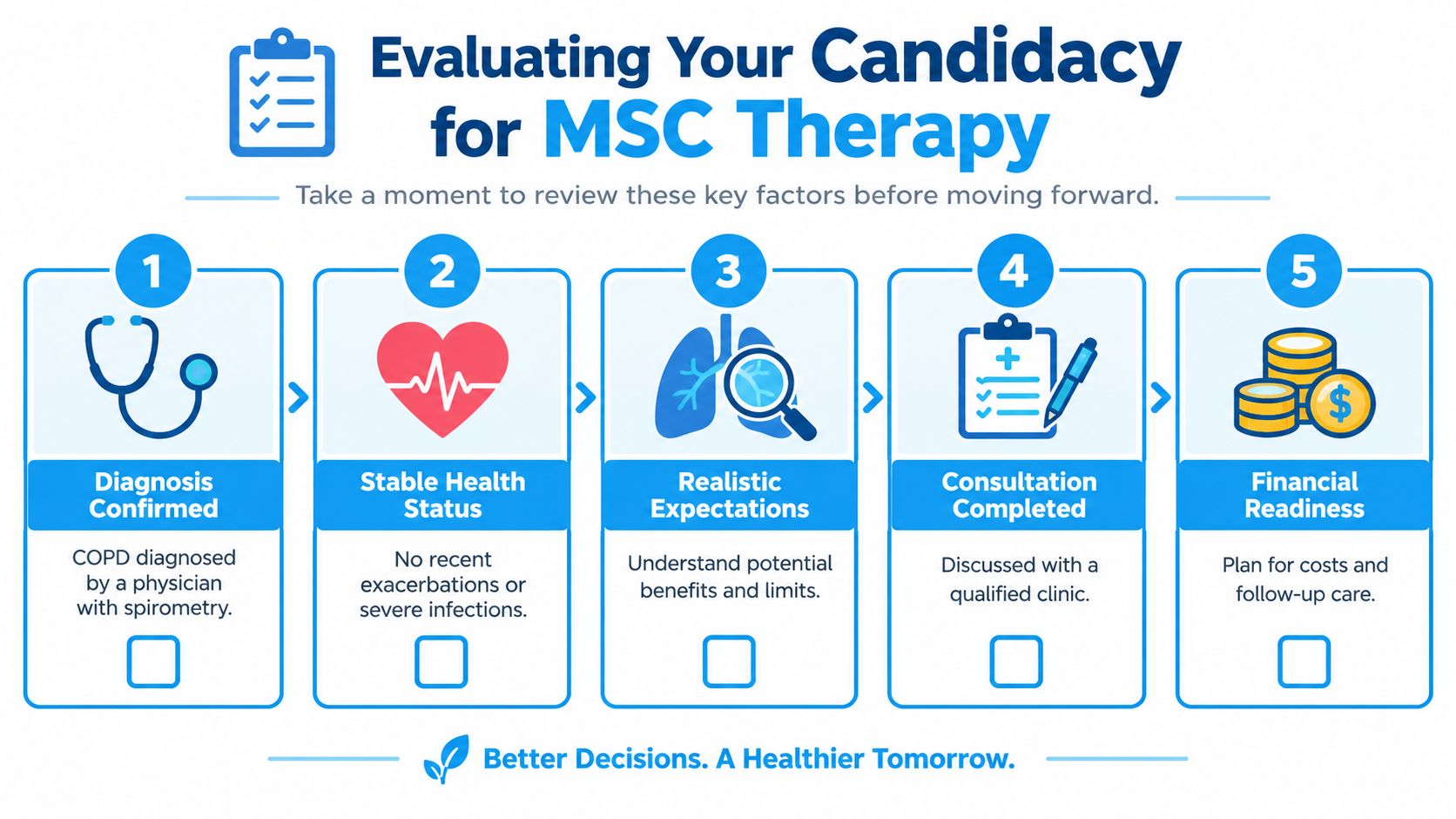
The strongest candidate isn’t necessarily the person with the most severe symptoms or the highest expectation of regeneration. A more suitable candidate is someone with a confirmed COPD diagnosis who understands that MSC therapy may target inflammation, exercise tolerance, and daily function. People with COPD that require daily oxygen supplementation are usually not good candidates..
Use a practical decision screen:
- Diagnosis confirmed: Review spirometry and the underlying diagnosis with a pulmonologist.
- Health status considered: Discuss recent exacerbations, infection history, oxygen use, cardiovascular conditions, and current medications.
- Outcome defined: Choose measurable goals such as walking tolerance, recovery after activity, symptom burden, or inflammatory monitoring.
- Protocol explained: Ask about cell source, manufacturing, route, dose, monitoring, and follow-up.
A clinic should be able to explain why its chosen route fits the patient’s biology. It should also acknowledge that stem cell therapy is no guarantee of success. The majority of patients see major improvement, but a small percentage see some improvement, but will probably need a follow up treatment within a year for major improvement. About 5% of patients are non-responders. This is medicine not magic. If a provider promises a guaranteed result then that is a major warning sign.
Dream Body Clinic offers case review, pulmonary assessment, IV and nebulized MSC protocols, and structured follow-up for international patients exploring adjunct support for COPD. Visit Dream Body Clinic to request an assessment, review your records, and discuss whether the proposed approach fits your medical goals and current pulmonary care.