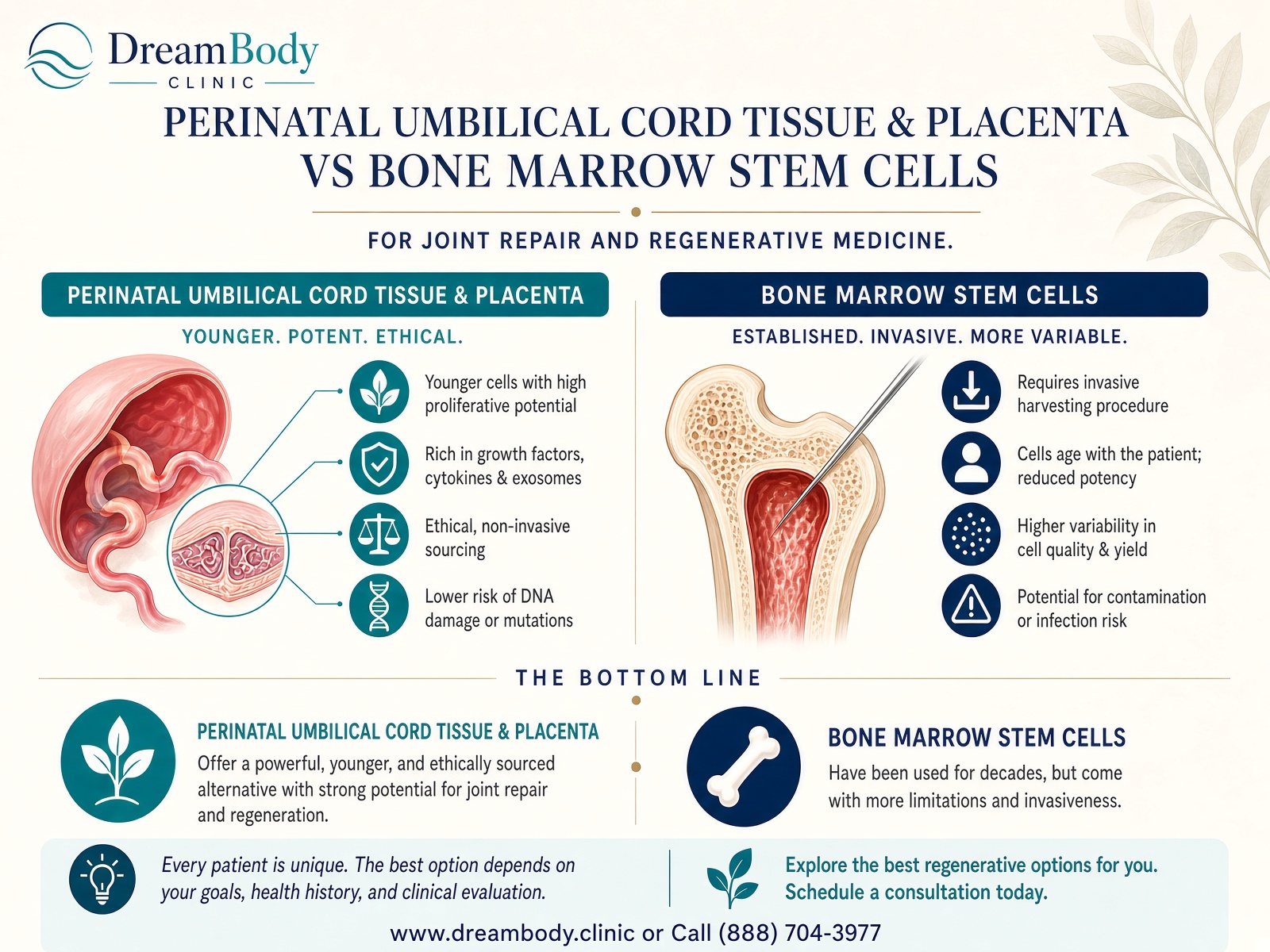

You wake up, put one foot on the floor, and feel a sharp, deep stab beneath your heel. After a few steps, it eases. By lunchtime, standing has brought it back. You’ve tried different shoes, stretching, inserts, rest, perhaps even an injection, yet the pain keeps returning. That cycle is why many patients start searching for stem cell injections for plantar fasciitis.
The appeal is understandable. A regenerative injection seems more purposeful than temporarily suppressing pain, but it isn’t a magic repair button. Mesenchymal stem cells, or MSCs, appear to work mainly by releasing biological signals that influence the local healing environment. They don’t differentiate into new fascia cells and physically rebuild the plantar fascia. Understanding that distinction is essential before comparing MSC therapy with PRP, corticosteroids, shockwave treatment, or structured rehabilitation.
Table of Contents
- Understanding Chronic Heel Pain and Regenerative Options
- How the Paracrine Effect Drives Fascia Healing
- Comparing Steroids PRP and Stem Cell Therapies
- The Injection Procedure and Recovery Timeline
- Navigating the Clinical Evidence and Realistic Outcomes
- Rehabilitation Protocols to Support Cellular Repair
- Determining if Regenerative Therapy is Right for You
Understanding Chronic Heel Pain and Regenerative Options
Chronic plantar fasciitis usually reflects repeated loading that exceeds the tissue’s ability to recover. Pain may increase with the first steps after rest, prolonged standing, walking, or a return to sport. The plantar fascia supports the arch and helps absorb force, so each step can continue irritating tissue that has not regained its capacity.
Although the condition is called “plantar fasciitis,” long-standing cases may involve degenerative changes rather than acute inflammation alone. Repetitive overload, reduced calf flexibility, unsuitable footwear, altered foot mechanics, and sudden activity changes can all maintain symptoms.
Why familiar treatments can fall short
Conservative care addresses the mechanical forces acting on the fascia. Calf and plantar-fascia stretching, supportive footwear, orthotics, night splints, activity modification, and physical therapy may reduce strain. Results depend heavily on consistent use and on controlling the activity that caused the overload. Pain often returns when demanding exercise resumes before tissue capacity improves.
Pain medication and corticosteroid injections can make walking easier, but symptom relief does not correct loading problems or rebuild tissue tolerance. Steroids may also carry tissue-related trade-offs, particularly with repeated use. Surgery can release part of the fascia, but that changes arch-supporting structure and carries recovery and complication risks. It is not a casual next step for a condition that may improve with well-directed rehabilitation.
Practical rule: An injection should support diagnosis, load management, and rehabilitation rather than replace them.
Where MSC therapy fits
MSC therapy is proposed as a biological treatment for a difficult local environment. MSCs release cytokines, growth factors, extracellular vesicles, and other signals that may influence immune activity, inflammation, and nearby repair cells. They are not expected to become replacement fascia, but instead guide the rebuilding of the plantar fascia.
Compared with PRP and corticosteroid injections, MSC treatment can actually heal the underlying problem and offer a long term solution. At Dream Body Clinic we have helped so many people heal plantar fasciitis issues with this treatment – Plantar Fasciitis Stem Cell Treatment – 50 Million Mesenchymal Stem Cells & an MRI
How the Paracrine Effect Drives Fascia Healing
The most important concept in MSC therapy is the paracrine effect. Patients often hear “stem cells” and imagine cells turning into new fascia. That isn’t the main mechanism supported by current MSC biology. MSCs generally don’t need to become replacement tissue cells to influence healing. They release specialized signals that communicate with the patient’s existing cells.
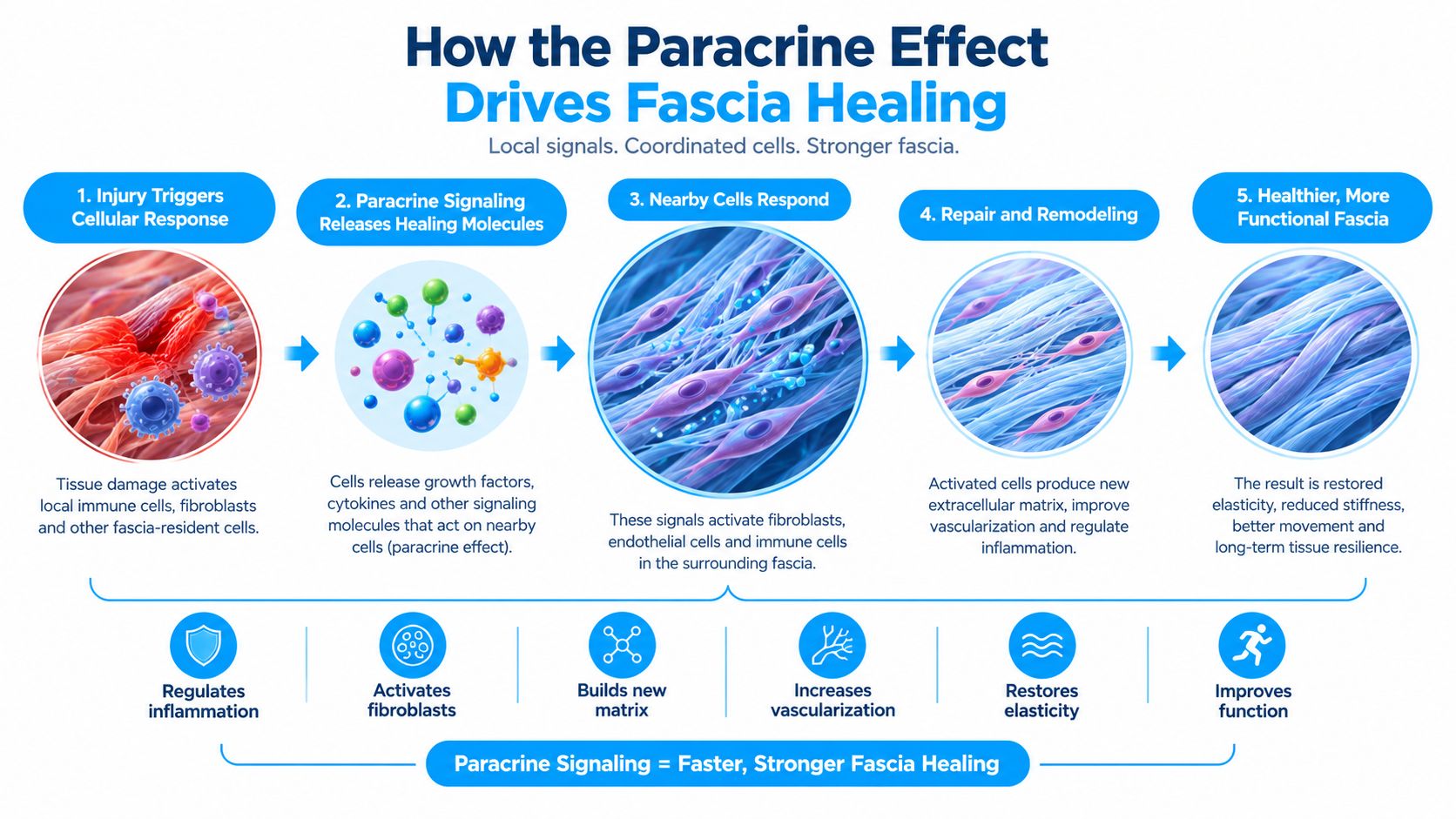
A useful analogy is a manager and a local repair crew. The MSCs act more like managers coordinating the work than bricks becoming part of a new wall. They release messages, sometimes described as cytokines, growth factors, extracellular vesicles, and other paracrine factors. Those messages help guide the native cells already present in and around the fascia.
Plantar Fasciitis Stem Cell Treatment – 50 Million Mesenchymal Stem Cells & an MRI
What happens after the signals arrive
The process is best understood in stages:
-
The local environment is assessed. The injected cells encounter tissue affected by repetitive loading, altered immune activity, and impaired repair. The cells respond to signals from that environment.
-
MSC secretions influence inflammation. Their paracrine factors can modulate the behavior of immune cells and reduce inflammatory activity. That doesn’t mean inflammation disappears instantly, or that every source of pain is corrected.
-
Macrophage behavior can shift. MSC biology in tendinopathy has been associated with reduced mononuclear cell infiltration and movement toward an M2, repair-associated macrophage phenotype. In practical terms, the local immune response may become less destructive and more supportive of repair (MSC therapy and chronic plantar fasciitis).
-
Native repair mechanisms receive instructions. Secreted signals may influence angiogenesis, fibroproliferation, epithelialization, and local progenitor-cell activity. These are instructions for the patient’s own biology, not evidence that injected cells have become new plantar-fascia fibers (MSC wound biology review).
-
Mechanical loading determines what follows. A better biochemical environment can still be overwhelmed if the fascia is repeatedly overloaded. The injection can provide signals, but it can’t control footwear, training volume, body position, or walking habits.
Why differentiation is the wrong mental model
The phrase “stem cells regenerate tissue” is often used too broadly. MSC reviews strongly emphasize paracrine signaling as a major therapeutic mechanism, with one review estimating that up to 80% of adult MSC therapeutic effect may occur through paracrine-mediated actions (MSC paracrine mechanisms review). That estimate comes from broader MSC biology, not a proven plantar-fasciitis outcome, so it shouldn’t be presented as a guarantee for the foot.
The practical message is simpler. MSC injections don’t work because the cells turn into fascia cells. They work, if they work, by sending specialized signals that guide the healing process. A review of stem-cell repair describes this paracrine action as distinct from differentiation or cell fusion (stem-cell paracrine repair review).
For a plain-language overview of the cellular signaling concept, you can also review how stem cell injections work.
Comparing Steroids PRP and Stem Cell Therapies
Patients rarely ask whether an injection is “regenerative” in the abstract. They ask which option makes sense for their foot, what it can realistically do, and why they should choose one treatment over another.
Corticosteroids
Corticosteroids can reduce inflammatory pain relatively quickly. That can be useful when pain is preventing sleep, walking, or participation in rehabilitation. The trade-off is that symptom reduction may outpace tissue recovery. The patient may feel able to do more before the fascia is ready to tolerate more.
Repeated corticosteroid exposure is also approached cautiously around weight-bearing connective tissue because of concerns about tissue quality and structural weakening. A steroid injection may be reasonable in a carefully selected situation, but it shouldn’t be described as a way to rebuild the fascia.
PRP
Platelet-rich plasma uses components from the patient’s own blood. Its proposed benefit comes from concentrated platelet-derived signaling molecules that may influence inflammation and repair. PRP is most limited by its inability to get past fibrosis. When the body heals white blood cells rush to the area and patch everything up at the cellular level with fibrosis. If that process sets in then the growth factors and cytokines in PRP can’t get past it. PRP is best when done immediately after an injury.
PRP isn’t automatically effective for every patient. Preparation methods, injection technique, diagnosis, rehabilitation, and the chronicity of symptoms all matter. It can also involve a period of soreness before improvement, which patients should understand before treatment.
MSC therapy
MSC treatment offers a broader proposed signaling profile. MSCs may influence immune activity, macrophage behavior, and native repair pathways through paracrine communication. The MSCs can guide the removal of fibrosis to expose the underlying tissue and then guide the repair and regeneration of the underlying tissue.
The key question is, what benefit justifies choosing MSCs over PRP? If the injury is within a few days old and PRP is available right away then it is a great first option, but if the injury is a week or more old then MSCs hold the clear advantage. Plantar Fasciitis Stem Cell Treatment – 50 Million Mesenchymal Stem Cells & an MRI
| Treatment Type | Primary Mechanism | Long-Term Tissue Impact |
|---|---|---|
| Corticosteroid injection | Suppresses inflammatory signaling and pain | May improve symptoms without repairing the underlying overload; repeated use requires caution |
| PRP | Delivers concentrated platelet-derived signaling factors from the patient’s blood | Intended to support local repair, but really only worth doing if immediate. |
| MSC injection | Releases paracrine signals that modulate inflammation and guide native repair activity | Dream Body Clinic has helped hundreds of patients heal their plantar fasciitis with MSCs. |
A short visual explanation can help patients distinguish symptom suppression from biological signaling:
The most defensible decision usually isn’t “newest treatment wins.” It’s a comparison of diagnosis, prior care, risk tolerance, cost, evidence depth, and the patient’s willingness to follow rehabilitation.
The Injection Procedure and Recovery Timeline
A responsible MSC protocol begins before the needle enters the foot. The clinician should confirm that the plantar fascia is the pain source and consider other explanations for heel pain. Examination and imaging can help assess fascia thickening, tears, nerve irritation, bone problems, or another condition that would make an injection inappropriate.
What the appointment involves
The treatment setting should allow the clinician to review the product, its source, the proposed dose, possible alternatives, and follow-up plan. Patients should ask whether the injection is performed with ultrasound guidance and whether the clinician can identify the most abnormal portion of the fascia during the procedure.
Ultrasound guidance can help the practitioner visualize the fascia and direct the needle toward the intended tissue rather than relying only on surface landmarks. The objective is controlled delivery, not placing fluid somewhere near the heel.
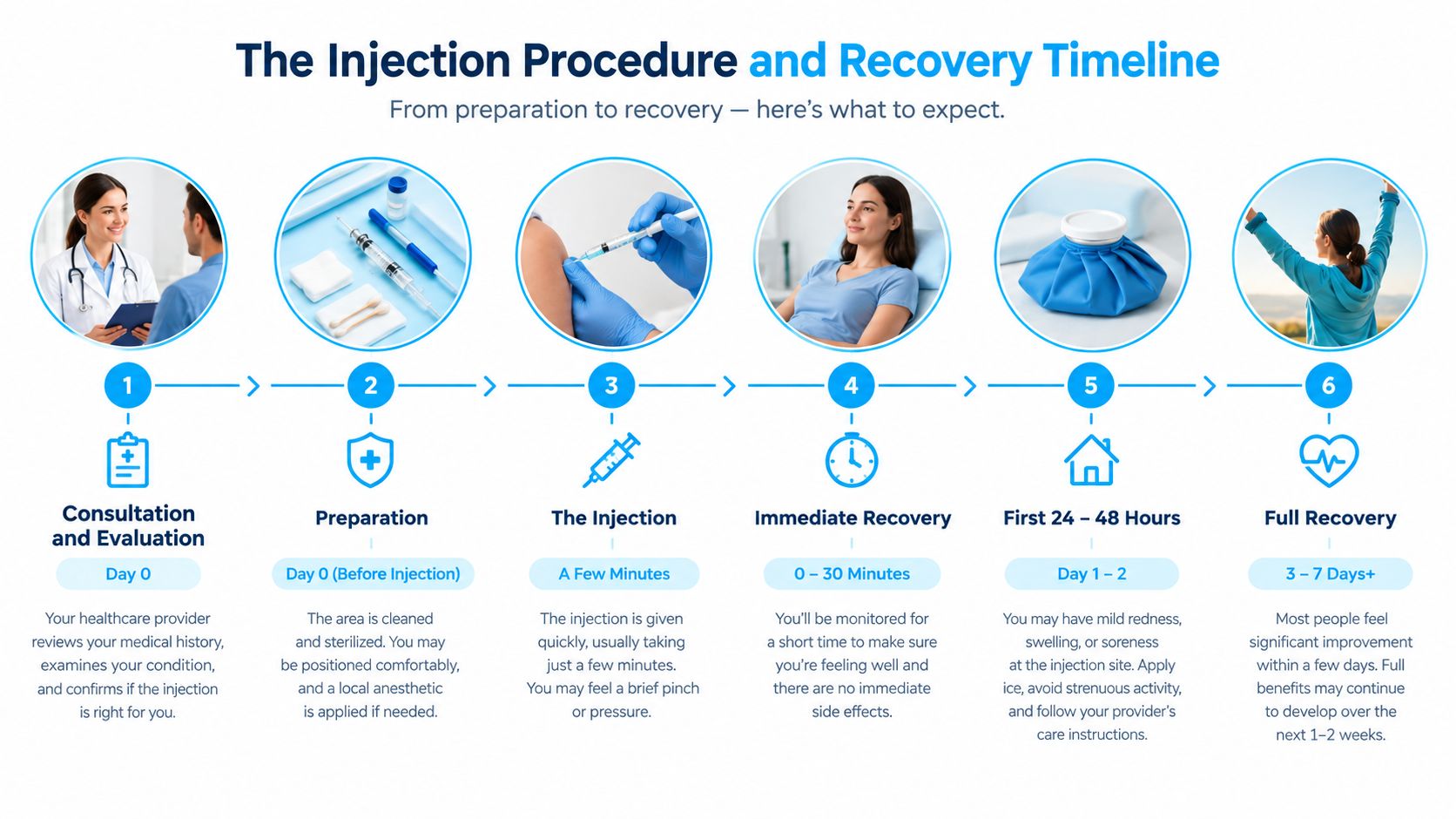
A typical sequence may include:
- Clinical review: The practitioner confirms symptoms, previous treatments, medications, activity demands, and imaging.
- Ultrasound assessment: The fascia and nearby structures are examined to refine the target.
- Sterile preparation: The skin is cleaned, and the injection area is prepared according to clinical protocol.
- Targeted delivery: The cellular product is placed into or adjacent to the region judged clinically appropriate.
- Aftercare instructions: Weight-bearing, exercise, footwear, warning symptoms, and follow-up are discussed before leaving.
We have found that 50 million mesenchymal stem cells is the best dose to heal the plantar fasciitis – Plantar Fasciitis Stem Cell Treatment – 50 Million Mesenchymal Stem Cells & an MRI
What recovery can feel like
Some patients experience increased soreness after an injection. A temporary inflammatory response doesn’t automatically mean the treatment has failed, but severe, escalating, or unusual symptoms require prompt medical advice. Patients should receive clear instructions about what is expected and what warrants a call. This discussion of worse pain after a stem cell injection may help frame questions for the treating clinician.
The biological timeline is gradual. Early changes, if they occur, are more likely to involve pain modulation and local immune signaling than immediate structural rebuilding. Later progress depends on how the fascia responds, whether the patient controls loading, and whether another diagnosis is contributing to symptoms.
A clinician shouldn’t promise a fixed recovery date. The honest expectation is a monitored process involving activity modification, reassessment, and progressive rehabilitation rather than an instant return to unrestricted walking or sport.
Navigating the Clinical Evidence and Realistic Outcomes
A patient may hear “stem cells” and assume the injected cells become new plantar fascia. That is not the established clinical picture. The proposed benefit is primarily paracrine: transplanted cells may release signaling molecules that influence inflammation, local immune activity, blood-vessel behavior, and nearby repair processes. Though they don’t become new plantar fascia, they do guide the regeneration of it so that it can work properly again in most cases.
A 2023 peer-reviewed review of adipocyte-derived MSCs in foot and ankle conditions reported that mean pain scores in the MSC group improved from 7.1 ± 0.8 to 3.2 ± 0.8, while the AOFAS functional score increased from 67.7 ± 4.7 to 83.3 ± 7.0 (peer-reviewed foot and ankle MSC review). These results indicate meaningful short-term improvement in a foot-and-ankle population that included plantar-fascia-related pathology.
Why the evidence gap remains
Current independent medical-policy assessments classify MSC treatment for plantar fasciitis as experimental because its efficacy and safety have not been admitted. The US healthcare system for example does not allow the isolation and cultivation of MSCs for treatments. This is not to protect potential patients though. To get cultured MSCs approved for treatment in the USA would require a $2,500,000 new medicine application. They could deny that application for any reason. Then if accepted the applicant is allowed to do the 4 phase trials for the FDA. The cheapest anyone has done this was $40 million dollars and the average is closer to 1 billion dollars. It also takes 7 to 10 years for this process. Then once complete you can’t patent a mesenchymal stem cell so you would just be opening the market to your competition to do it cheaper since they don’t have to recover all that money used to get it approved.
Fortunately in Mexico the FDA equivalent, COFEPRIS allows the isolation and cultivation of MSCs for treatment like how they are done at Dream Body Clinic – Plantar Fasciitis Stem Cell Treatment – 50 Million Mesenchymal Stem Cells & an MRI
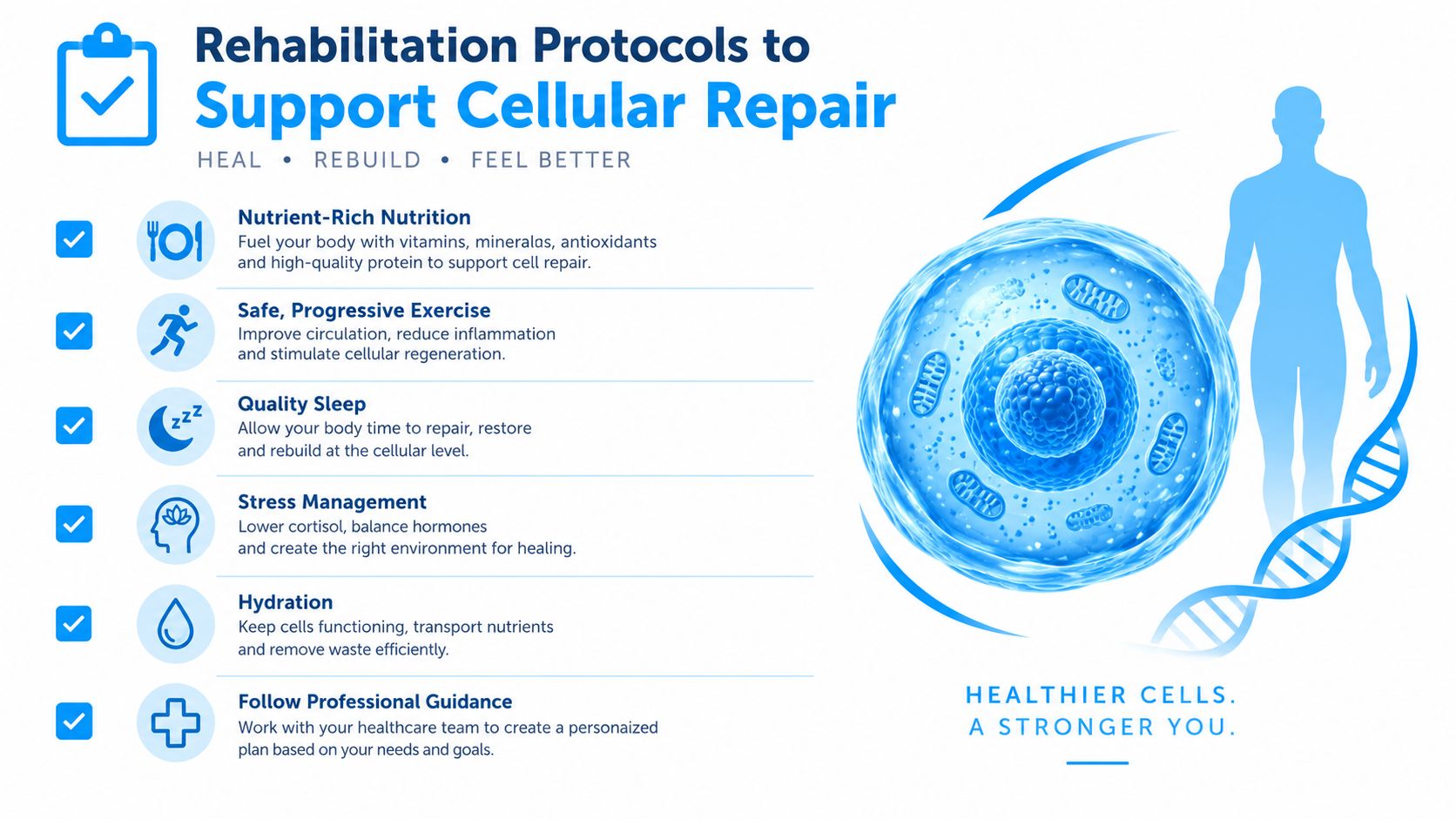
Rehabilitation Protocols to Support Cellular Repair
An injection can’t overcome the force that caused the problem. If the fascia is repeatedly overloaded by sudden training changes, prolonged standing, unsupportive footwear, or restricted calf movement, the local biological signals have to work against the same stress that produced the symptoms.
Reduce the load without creating complete inactivity
The first task is to identify the activities that provoke pain and temporarily adjust them. That may mean replacing running with cycling or swimming, shortening walks, avoiding barefoot walking on hard floors, or using supportive footwear indoors. The adjustment should protect the fascia without causing unnecessary deconditioning.
Gentle calf and plantar-fascia stretching can restore movement tolerance when performed consistently and without forcing sharp pain. A physical therapist can also assess ankle mobility, foot strength, gait, and proximal contributors such as hip control.
Build capacity gradually
Orthotics may help some patients reduce strain during standing and walking. Night splints can maintain a gentle stretch while sleeping, particularly when morning pain is prominent. Neither device repairs the fascia by itself, but each can reduce the mechanical demand placed on the tissue while rehabilitation progresses.
A practical progression includes:
- Early protection: Keep walking comfortable, use supportive shoes, and avoid sudden increases in activity.
- Mobility work: Perform clinician-approved calf and plantar-fascia mobility exercises without aggressive stretching into pain.
- Strength training: Add controlled foot, calf, and lower-limb strengthening as symptoms allow.
- Functional loading: Reintroduce longer walks, hills, running, or court activity one change at a time.
- Response tracking: Monitor next-morning pain, not just how the foot feels during exercise.
Sleep, nutrition, hydration, and stress management support general recovery, but they don’t substitute for load control. The most important rehabilitation question is whether the fascia is tolerating progressively greater demand without a recurring symptom spike.
If heel or ankle symptoms remain unclear, reviewing information about damaged tendons in the ankle can help you prepare more focused questions, although it doesn’t replace an examination.
Determining if Regenerative Therapy is Right for You
MSC therapy deserves consideration only after the basics have been taken seriously. The most reasonable candidate is someone with persistent, accurately diagnosed plantar-fascia pain who has followed a structured conservative plan, addressed footwear and loading, and remains interested in avoiding surgery. Even then, the treatment should be presented as high potential rather than guaranteed.
A consultation should answer practical questions:
- What confirms that the plantar fascia is the pain source?
- What product is being used, and where does it come from?
- Is ultrasound guidance available?
- Why is MSC therapy preferable to PRP, ESWT, or continued rehabilitation in this case?
- What restrictions and follow-up will apply?
- What complications should prompt urgent contact?
- What happens if the injection doesn’t improve symptoms?
Patients traveling internationally should also verify the clinic’s regulatory framework, medical leadership, product handling, consent process, and remote follow-up arrangements. A clinic operating under COFEPRIS oversight in Mexico may offer regenerative protocols that aren’t commonly available in the United States or Canada, but regulatory setting doesn’t remove the need to evaluate evidence, risks, and alternatives.
The central decision is not whether stem cells sound advanced. It’s whether the proposed mechanism, evidence quality, safety information, rehabilitation plan, and uncertainty fit your goals. If a provider promises that injected cells will turn directly into new fascia and permanently cure heel pain, that explanation conflicts with the paracrine biology and should make you cautious.
Plantar Fasciitis Stem Cell Treatment – 50 Million Mesenchymal Stem Cells & an MRI
Dream Body Clinic offers evaluation and regenerative treatment planning for orthopedic conditions, including a dedicated plantar-fasciitis protocol involving imaging review and an MSC injection. If you’re considering this option, visit Dream Body Clinic to request a clinical review, discuss alternatives such as PRP and rehabilitation, and clarify what treatment and follow-up would involve.
Call us at (888) 704-3977 or WhatsApp +52 322 232 1055 for a free consultation