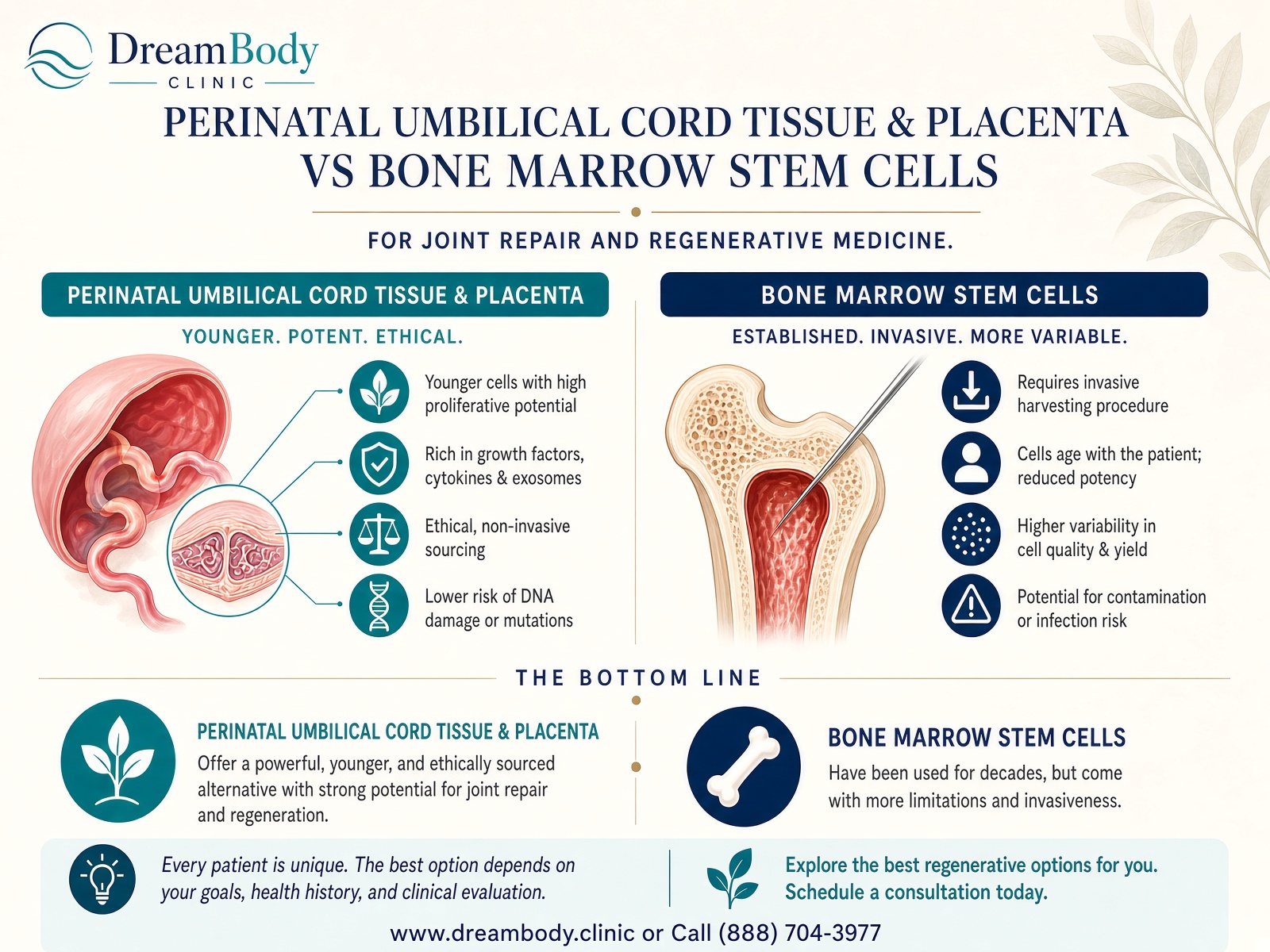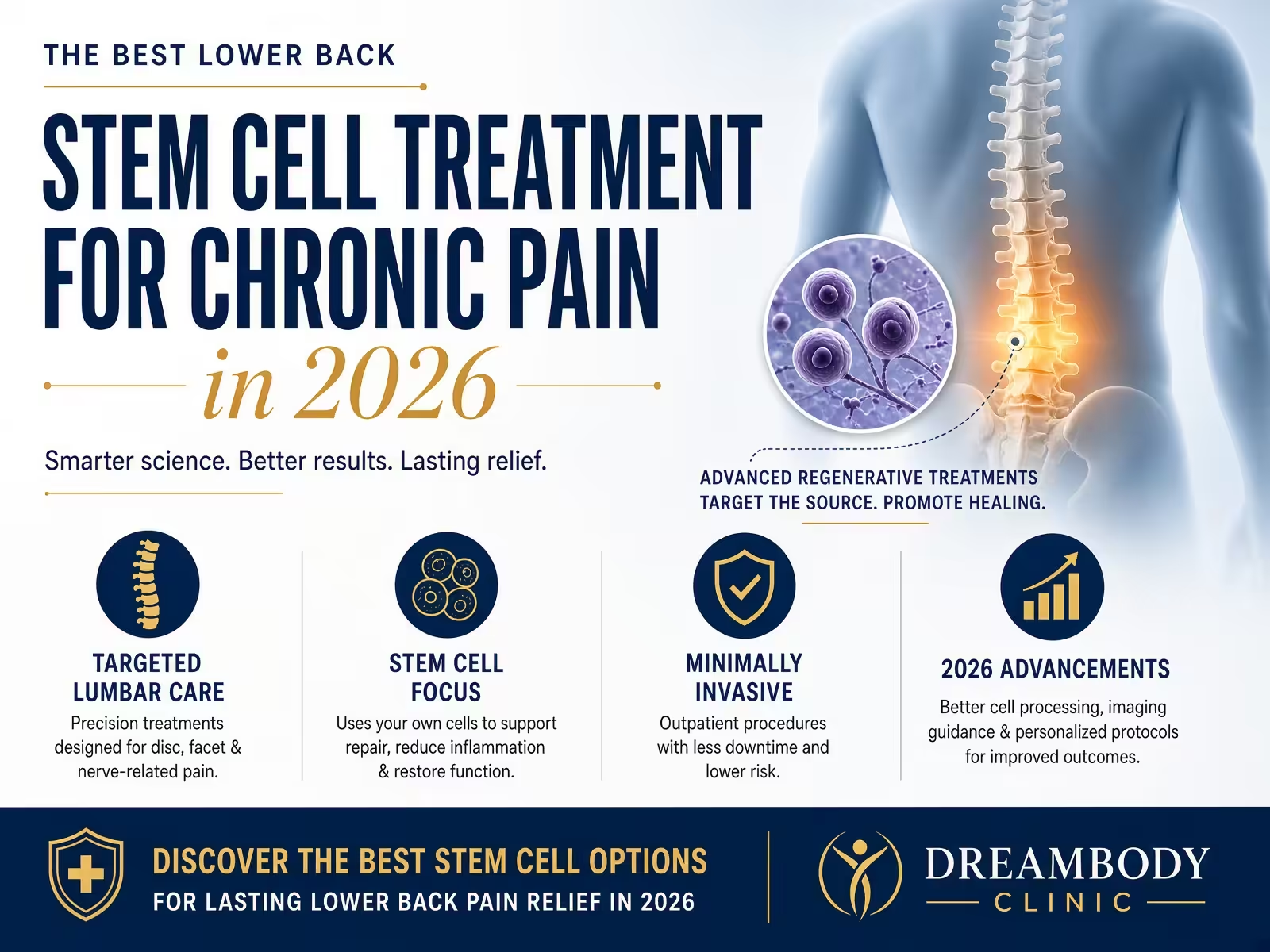

What if the most important question about stem cell injections for neck pain isn't whether the cells can “grow a new disc,” but whether they can influence the specific pain generator causing your symptoms?
That distinction changes the conversation. Mesenchymal stem cells, or MSCs, do not become replacement discs, nerves, or cartilage. Their proposed role is mainly paracrine signaling, meaning they release biological messages that influence inflammation, immune activity, and the behavior of nearby cells. The treatment may be worth discussing for some carefully selected patients, but the evidence remains uneven, cervical applications are still investigational, and diagnosis matters more than marketing language.
Table of Contents
- How Stem Cells Actually Heal Your Neck
- Matching Treatment to Your Neck Pain Diagnosis
- Delivery Routes and Procedure Details
- What the Clinical Evidence Shows
- Recovery Timeline and Imaging Expectations
- Navigating Skepticism and Regulatory Realities
- Next Steps for Your Cervical Care Journey
How Stem Cells Actually Heal Your Neck
Most patients understandably picture stem cells as microscopic construction workers. The idea seems simple: inject them into a damaged cervical disc, and they transform into new disc tissue. That isn't the main mechanism supported by current MSC research.
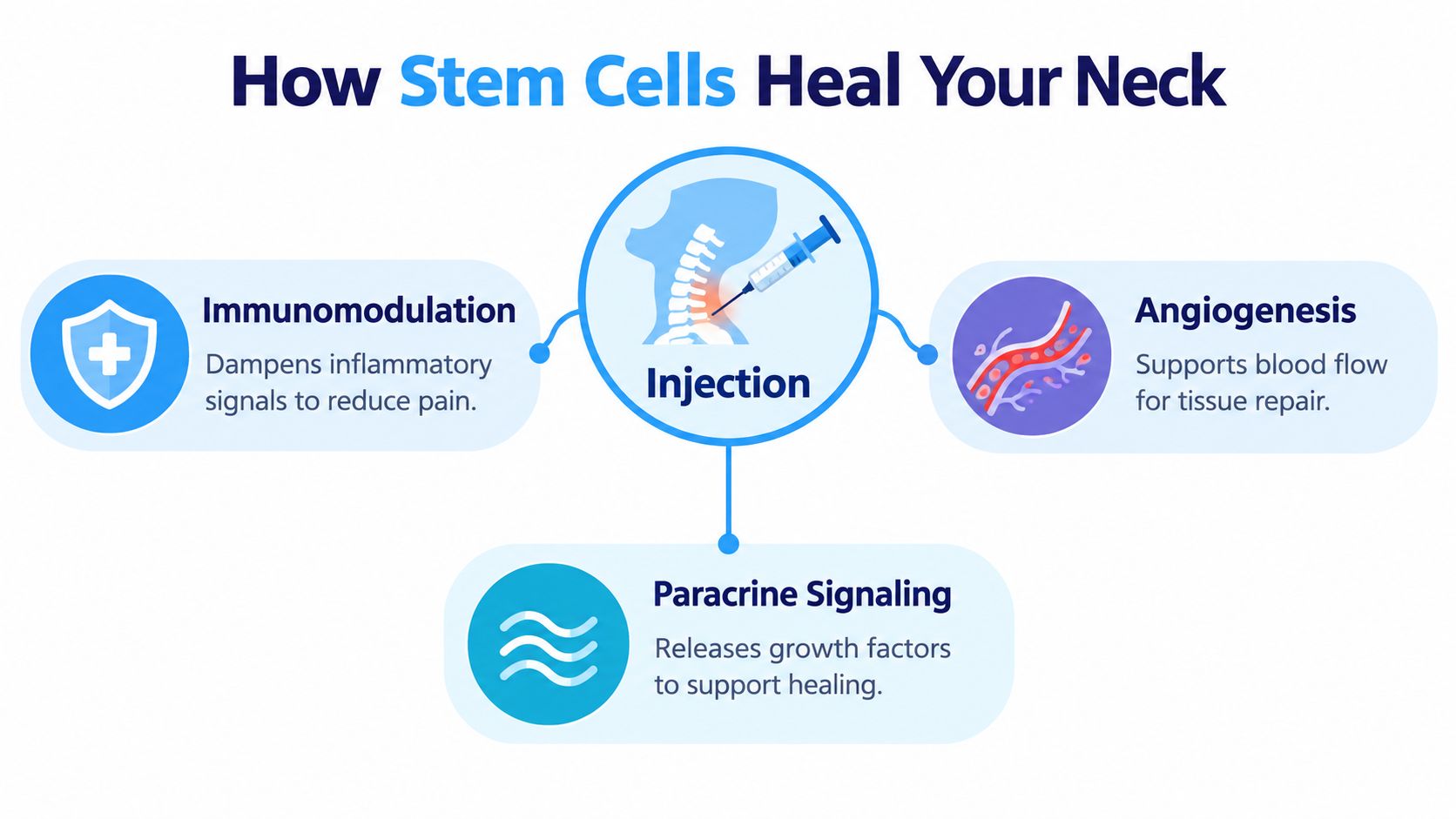
MSCs generally don't differentiate into replacement cells inside the neck. Instead, they act more like biological signalers. After administration, they release a complex mixture of cytokines, chemokines, growth factors, and extracellular vesicles that can influence the surrounding tissue and guide the body's existing repair responses. A foundational review hosted by the National Institutes of Health explains the signaling-based mechanism and notes that most therapeutic effects are likely related to soluble factors released by MSCs.
The paracrine effect in plain language
Paracrine signaling means that one cell releases messages that affect nearby cells. Those messages may help moderate inflammatory activity, support cell survival, encourage local repair processes, and alter the tissue environment around an irritated joint, disc, or nerve.
A review of MSC biology describes this as a shift toward paracrine signaling as the primary explanation for therapeutic efficacy. Another systematic review identified 234 individual paracrine factors released by MSCs, including signals associated with reduced apoptosis, angiogenesis, cell proliferation, and cell viability. Those figures come from the review of MSC paracrine factors, not from clinical outcomes in neck-pain patients.
The distinction matters because signaling isn't the same as rebuilding. An injection might help create a less inflammatory environment, but that doesn't prove it will close an annular tear, restore normal disc height, or remove pressure from a compressed nerve. Patients should understand the biological rationale without mistaking it for confirmed structural regeneration.
For a more detailed explanation of the cellular process, see this guide to how stem cell injections work. The practical takeaway is simple: MSC therapy aims to guide healing through signals, not to replace damaged neck structures cell by cell.
Matching Treatment to Your Neck Pain Diagnosis
Neck pain isn't one diagnosis, and stem cell injections aren't one universal treatment. A patient with discogenic pain may need a different evaluation from someone whose symptoms originate in the facet joints or a compressed nerve root.
Disc-related pain
A cervical disc contains a soft inner portion surrounded by a tougher outer ring. A herniation occurs when inner disc material pushes through a damaged area and may irritate nearby tissues or nerves. Degenerative disc disease can also produce pain through inflammation and changes in the disc environment, even when there isn't a large herniation.
For discogenic symptoms, clinicians must determine whether the disc is the likely pain generator rather than assuming that an MRI finding explains every symptom. Independent evidence for direct cervical intradiscal repair remains particularly limited. One NIH evidence review identified no cervical intervertebral-disc repair studies, so claims that an injection will reliably rebuild a neck disc should be treated cautiously.
Facet-mediated pain
Facet joints sit at the back of the cervical spine and help guide movement. Arthropathy in these joints can produce localized neck pain, stiffness, and pain with extension or rotation. A targeted facet evaluation may make more sense than an intradiscal approach when the clinical pattern points toward these small joints.
The cervical facet joint treatment overview can help patients understand the anatomy, but an online description can't establish that facets are the source of an individual's pain. Diagnostic examination and, where appropriate, targeted diagnostic injections remain important.
Radicular pain
Radiculopathy occurs when a cervical nerve root becomes irritated or compressed. Symptoms may travel from the neck into the shoulder, arm, or hand and can include numbness, tingling, or weakness. This pattern changes the risk assessment because significant neurological compression may require timely surgical evaluation rather than an attempt to biologically modulate inflammation.
A recent guideline emphasizes exercise, education, and conservative care for much nonspecific neck pain, while a recent spine review describes cervical stem-cell applications as experimental and generally limited to specialized centers or trials. The German neck-pain guideline supports a diagnosis-first approach. The right question isn't “Do stem cells treat neck pain?” It's “Which structure is generating my pain, and does this route have evidence for that structure?”
Delivery Routes and Procedure Details
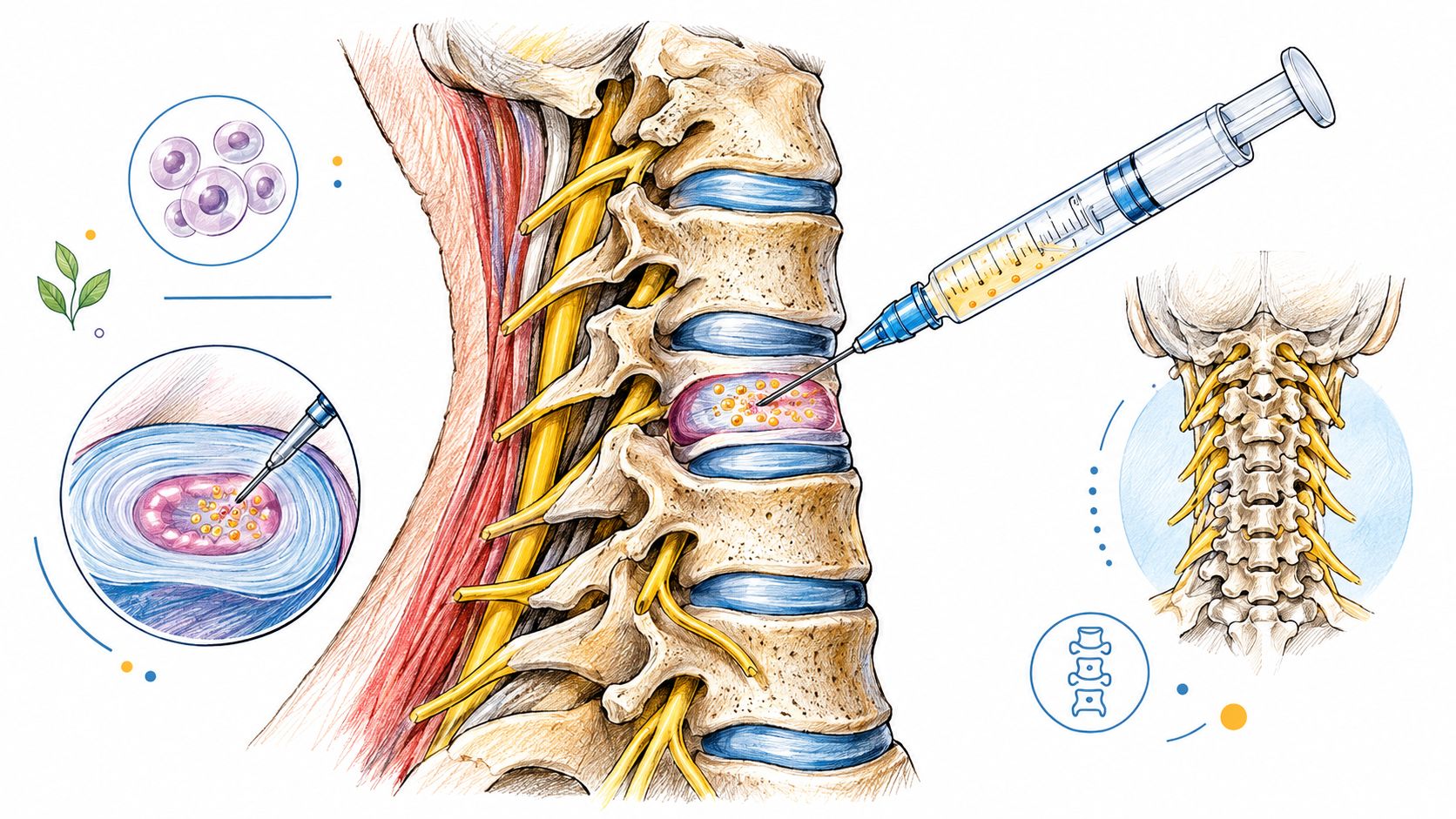
The injection route should follow the diagnosis, not the other way around. A clinician normally reviews the history, neurological findings, prior treatment, and imaging before deciding whether the target is a facet joint, epidural space, nerve-root region, or disc.
Common routes and their purpose
Transforaminal epidural delivery: This approach places medication or biologic material near a specific nerve-root exit zone. It may be considered when the clinical picture is radicular, although cervical procedures require careful image guidance and risk assessment.
Posterior or interlaminar epidural delivery: A posterior epidural route can provide access to the epidural space without targeting one individual nerve root. Its relevance depends on whether symptoms suggest broader inflammatory or disc-related involvement.
Facet joint injection: This route targets the small joints at the back of the cervical spine. It may fit facet-mediated pain better than a disc injection, but the clinical diagnosis should come first.
Intradiscal delivery: This places the injectate into the disc itself. It is the route most closely associated with claims about disc regeneration, yet cervical intradiscal evidence is much less mature than promotional language often implies.
The overview of stem cell treatment for degenerative disc describes the disc-focused rationale, but patients should ask exactly what evidence supports the proposed route for their own cervical condition. A technically precise injection can still be the wrong treatment if the pain generator was misidentified.
A clinician should also explain sterile technique, imaging guidance, the cell source, preparation method, expected discomfort, and the plan if symptoms worsen. The 2025 phase I report described translaminar epidural and facet delivery for chronic back and neck pain, which illustrates why outcomes can't automatically be transferred from one route or diagnosis to another.
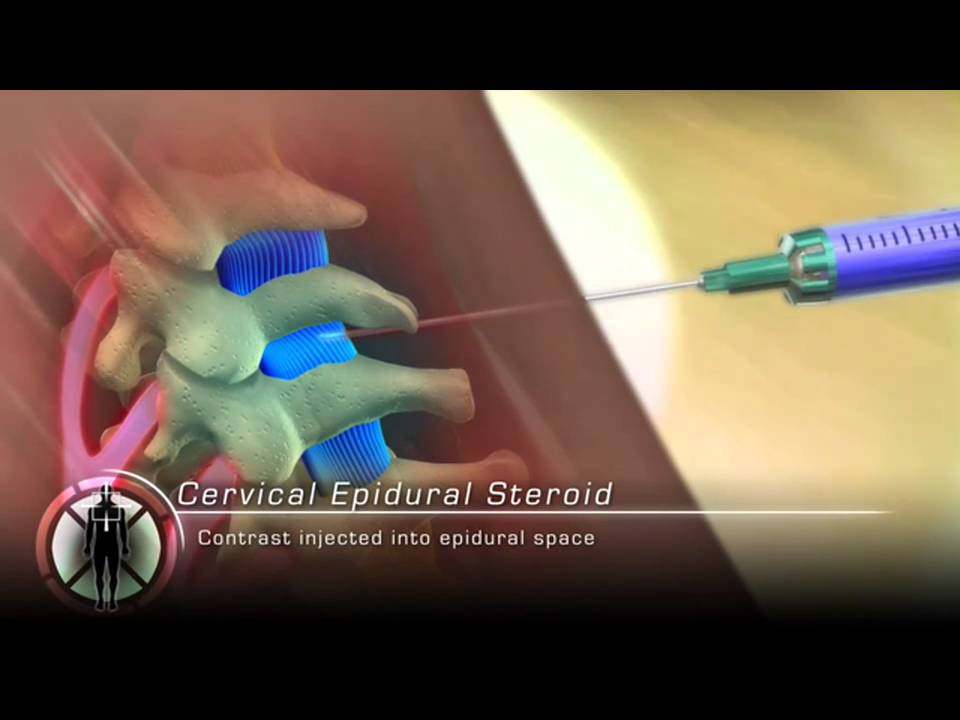
The key safety principle is route-dependent care. Facet and epidural delivery may be more logically aligned with inflammatory facet or radicular patterns, while direct cervical disc claims require a higher level of scrutiny.
What the Clinical Evidence Shows
The most responsible reading of the evidence is neither “stem cells don't work” nor “stem cells regenerate your neck.” The data show encouraging signals in some cell-based cohorts, but cervical-specific evidence remains small, heterogeneous, and insufficient to establish a reliable standard treatment.
A 2024 systematic evidence-based review screened 7,623 papers and included 80 articles covering 68 studies and at least 1,974 treated patients. Among cell-based cohorts, average pain reduction was 3.5 points at 6 months, 3.6 points at 12 months, and 4.6 points at 24 months, with an overall average reduction of 3.2 points and a 27.0-point improvement on the Oswestry Disability Index at 1 year. The 2024 systematic review of cell and PRP injections for spinal pain also emphasized heterogeneity and concluded that neck-pain-related therapies may produce clinically meaningful relief, while the evidence is not definitive.
Those findings are relevant, but they don't mean every patient with cervical pain should expect the same response. Much of the broader literature concerns spinal pain rather than isolated cervical diagnoses, and different studies use different cell sources, preparations, injection routes, outcome measures, and patient-selection criteria.
Cervical regenerative therapy evidence overview
| Source / Guideline | Key Finding | Evidence Grade |
|---|---|---|
| 2024 systematic review | Cell-based cohorts reported meaningful average pain and disability improvements, but neck-specific evidence remained heterogeneous. | Promising, not definitive |
| U.S. Department of Veterans Affairs guidance | There is “little research support” for regenerative injection therapies, including stem cell injections, in people with neck pain. | Limited |
| 2025 spinal pain systematic review | Only 2 studies evaluated stem cell treatments among 10 included studies, showing how narrow the evidence base remains. | Early-stage |
| 2024 cervical regenerative therapy review | Only one cervical facet randomized trial appeared among the randomized evidence summarized. | Very limited |
| 2025 phase I report | Among neck-pain patients receiving mesenchymal stem cell translaminar epidural and facet injections, 88%, 86%, and 75% reported good pain relief at 3, 6, and 12 months, respectively, with no serious complications in that small cohort. | Preliminary safety and efficacy signal |
The U.S. Department of Veterans Affairs neck-pain guidance is particularly important because it counters the assumption that growing commercial interest equals established clinical evidence. The 2025 report is encouraging, but a small phase I cohort can't answer whether the treatment consistently outperforms physical therapy, steroid injections, radiofrequency ablation, or surgery for specific cervical diagnoses.
Recovery Timeline and Imaging Expectations
Recovery shouldn't be judged by the first few days alone. A patient may experience temporary soreness from the procedure, fluctuating symptoms, or no immediate change while the treated area settles. The expected trajectory depends on the injection route, the underlying diagnosis, baseline inflammation, and the rehabilitation plan.
Before treatment, a clinician should confirm that the imaging findings match the examination. An MRI can show degeneration that isn't causing symptoms, so the scan is most useful when it supports a coherent clinical diagnosis. The provider should also document neurological status and identify warning signs that would make regenerative treatment inappropriate.
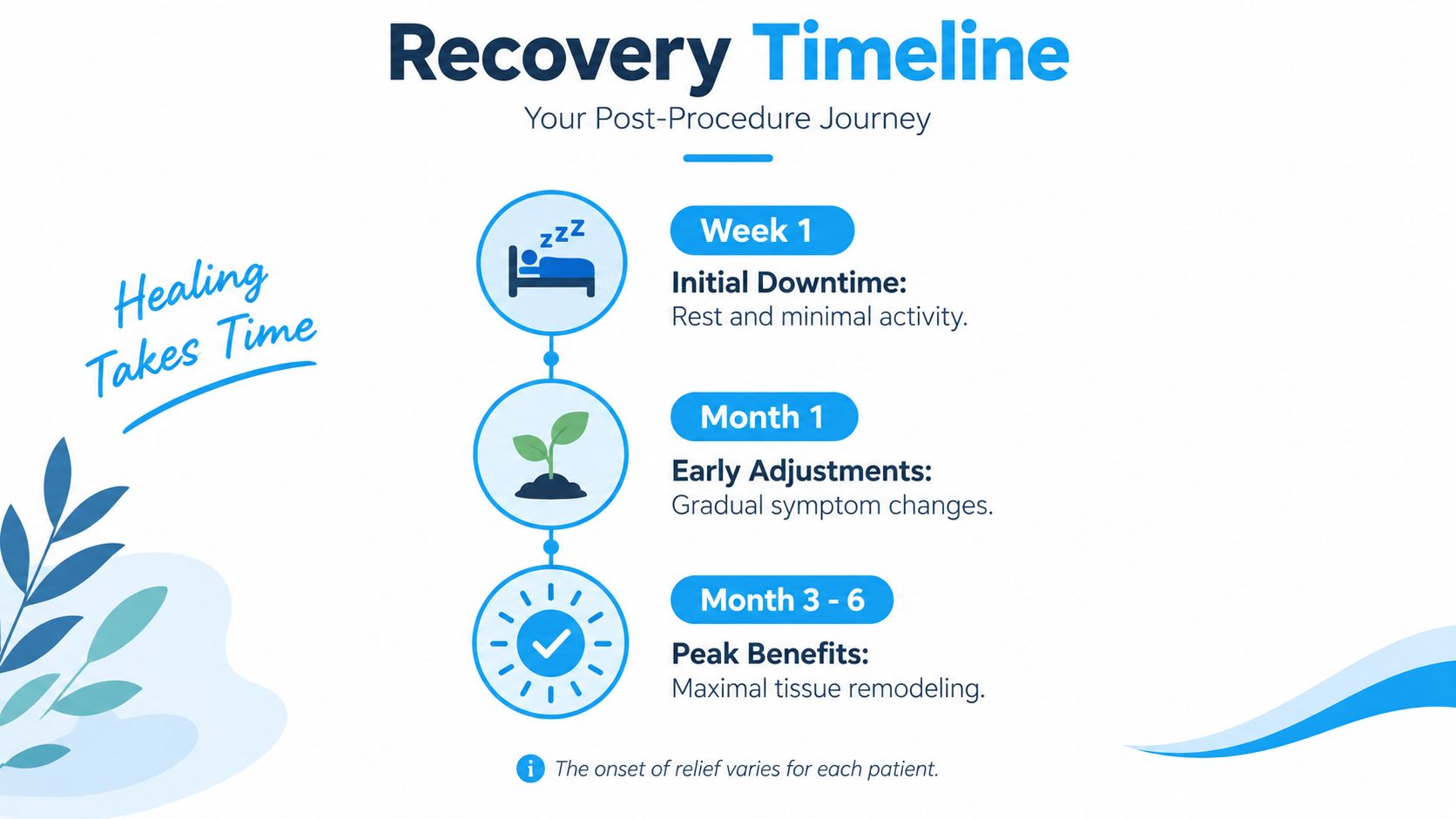
A practical recovery pattern
Early period: Follow the clinic's activity restrictions and avoid testing the neck with heavy lifting, aggressive stretching, or high-impact exercise. Pain after an injection doesn't automatically mean the treatment has failed.
Intermediate period: Rehabilitation usually focuses on controlled movement, posture, and gradual strengthening rather than forcing the neck through pain. Relief may develop unevenly, especially when inflammation and muscle guarding are part of the problem.
Later assessment: Follow-up should examine pain, function, range of motion, neurological symptoms, and activity tolerance. MRI may be used to evaluate structural or inflammatory changes, but symptom improvement and imaging changes don't always occur together.
The visual timeline describes week one as initial downtime, month one as a period of gradual symptom adjustment, and months three through six as a possible period of peak benefit. Those are planning markers, not promises. Relief onset varies, and current reviews leave uncertainty about durability beyond 1 to 2 years, as documented in the review of regenerative spinal therapies and longer-term limitations.
Ask before treatment what follow-up imaging is intended to measure. A responsible plan won't promise that an MRI will prove a new disc has grown. It will define which findings matter, when reassessment occurs, and what happens if pain persists or neurological symptoms progress.
Navigating Skepticism and Regulatory Realities
Skepticism is reasonable. The phrase “investigational” doesn't mean a therapy has no biological rationale, but it does mean the treatment hasn't reached the level of evidence, standardization, or regulatory acceptance associated with established care for a specific indication.
Public-health guidance remains cautious because the cervical evidence base is limited. Reviews describe cervical cell therapies as heterogeneous, and the U.S. Department of Veterans Affairs reports little research support for regenerative injection therapies in neck pain. That position doesn't invalidate early clinical findings. It places them in the correct category: signals worth studying, not guarantees for routine care.
Questions about regulation
Patients should separate three issues:
What is being injected? Ask whether the product is autologous or allogeneic, how it was processed, and whether the clinic can document its identity and handling.
What indication is being treated? A product or procedure may be available within a local regulatory framework without having full regulatory approval for cervical disc repair in the United States or Europe.
What happens if it fails? Find out whether the clinic provides follow-up, repeat examination, imaging review, rehabilitation guidance, and referral for conventional care when needed.
A 2026 review states that autologous approaches lack strong support, allogeneic products remain experimental, and no cervical spine stem-cell therapy has full regulatory approval in the U.S. or Europe. Patients considering care abroad should ask which country's rules govern the procedure, what documentation they receive, and how follow-up will work after returning home.
Practical rule: If a provider promises guaranteed disc regrowth, dismisses surgery as unnecessary for every patient, or can't explain the treatment's regulatory status, pause before paying for care.
Next Steps for Your Cervical Care Journey
Start with the pain generator, not the cell count. Your evaluation should connect the symptom pattern, physical examination, imaging, and response to previous treatment. A disc abnormality on an MRI doesn't automatically prove that the disc is responsible, and an injection can't correct a diagnosis that was never established.
Bring these questions to a regenerative medicine consultation:
- Diagnosis: Which structure is most likely causing my pain, the disc, facet joint, nerve root, or another source?
- Evidence: What clinical evidence applies specifically to my diagnosis and proposed delivery route?
- Cell preparation: What cell source and preparation will be used, and how is the product characterized?
- Treatment target: Why is the proposed route better suited to my symptoms than a facet, epidural, intradiscal, or noninvasive approach?
- Alternatives: Have I adequately considered physical therapy, medication, diagnostic injections, radiofrequency ablation, epidural steroid treatment, or surgical evaluation?
- Safety: What complications require urgent attention, and who manages them?
- Follow-up: When will function and neurological symptoms be reassessed, and what imaging plan is clinically justified?
- Failure pathway: What happens if the pain doesn't improve, returns, or is accompanied by weakness?
The central expectation should remain realistic. MSCs primarily send signals through the paracrine effect, the evidence varies by diagnosis and route, and improvement can't be guaranteed. A careful provider will discuss uncertainty without using it to avoid answering practical questions.
If you're exploring care outside your home country, request written details about the proposed protocol, clinical assessment, follow-up process, and local regulatory setting before traveling. Compare that plan with established conservative and surgical options, especially if you have progressive weakness, spinal cord symptoms, instability, or severe nerve compression.
Dream Body Clinic offers cervical regenerative medicine evaluations and mesenchymal stem cell protocols for international patients at its clinic in Bucerias, Mexico, within its stated COFEPRIS-regulated operating framework. To discuss whether your diagnosis and treatment history fit a neck-pain protocol, visit Dream Body Clinic.