
You've been taking lupus treatment seriously, yet the disease still finds ways to interfere. Perhaps your joints hurt despite medication, your laboratory results remain unsettled, or lupus nephritis keeps protein in your urine even when you feel relatively well. A clinic may then offer “stem cell therapy,” leaving you with an important question: does that phrase describe a carefully studied immune treatment, a high-risk transplant, or something else entirely?
The answer depends on the cell type, the treatment protocol, your organ involvement, and how clinicians measure success. Mesenchymal stromal cell, or MSC, infusion is not the same intervention as hematopoietic stem-cell transplantation, or HSCT. Their mechanisms, risks, evidence, and appropriate patient populations differ substantially.
Table of Contents
- What Lupus Patients Are Really Looking For
- How MSC Therapy Works Through the Paracrine Effect
- What the Clinical Evidence Shows
- MSC Therapy Versus HSCT and Standard Treatments
- Who Is a Candidate and Who Should Look Elsewhere
- What the Treatment Day and Patient Journey Look Like
- Evaluating Clinics, Safety, and Regulatory Context
- Making a Clear, Honest Decision About MSC Therapy
What Lupus Patients Are Really Looking For
Consider a familiar situation. You've had systemic lupus erythematosus for years, and standard treatment has helped but hasn't delivered stable control. Your rheumatologist may already have used corticosteroids, conventional immunosuppressants, or a biologic. You're not necessarily looking for a miracle. You want fewer flares, less steroid exposure, protection for your kidneys or nervous system, and a way to know whether a proposed treatment is doing anything meaningful.
That hope explains why cell-based approaches attract attention even though established lupus therapies and biologics already exist. Lupus is not one uniform illness. A person with skin and joint symptoms has a different clinical problem from someone with active nephritis, neuropsychiatric disease, or severe blood-cell involvement. A treatment that changes fatigue without improving urine protein or kidney function may feel useful, but it hasn't necessarily controlled the most dangerous part of the disease.
The phrase stem cell therapy for lupus hides two very different strategies:
- MSC infusion, usually investigated as an immune-modulating treatment without immune-system ablation.
- HSCT, an intensive procedure that uses conditioning treatment to remove much of the existing immune system before attempting immune reconstitution.
Early MSC studies have produced encouraging signals, but they haven't established a universal success rate or a replacement for guideline-directed care. HSCT has a different evidence base and a substantially heavier risk profile. Patients should never compare a clinic-based MSC infusion with HSCT as though both were interchangeable versions of “resetting” immunity.
Practical rule: Before discussing success, ask which cells are being used, what route is planned, what the treatment is intended to change, and which laboratory outcomes will determine whether it worked.
A responsible decision also begins with your disease pattern. The right question isn't just, “Do stem cells sound promising?” It's, “Is this protocol appropriate for my lupus subtype, organ involvement, prior treatment history, infection risk, kidney status, and pregnancy plans?”
How MSC Therapy Works Through the Paracrine Effect
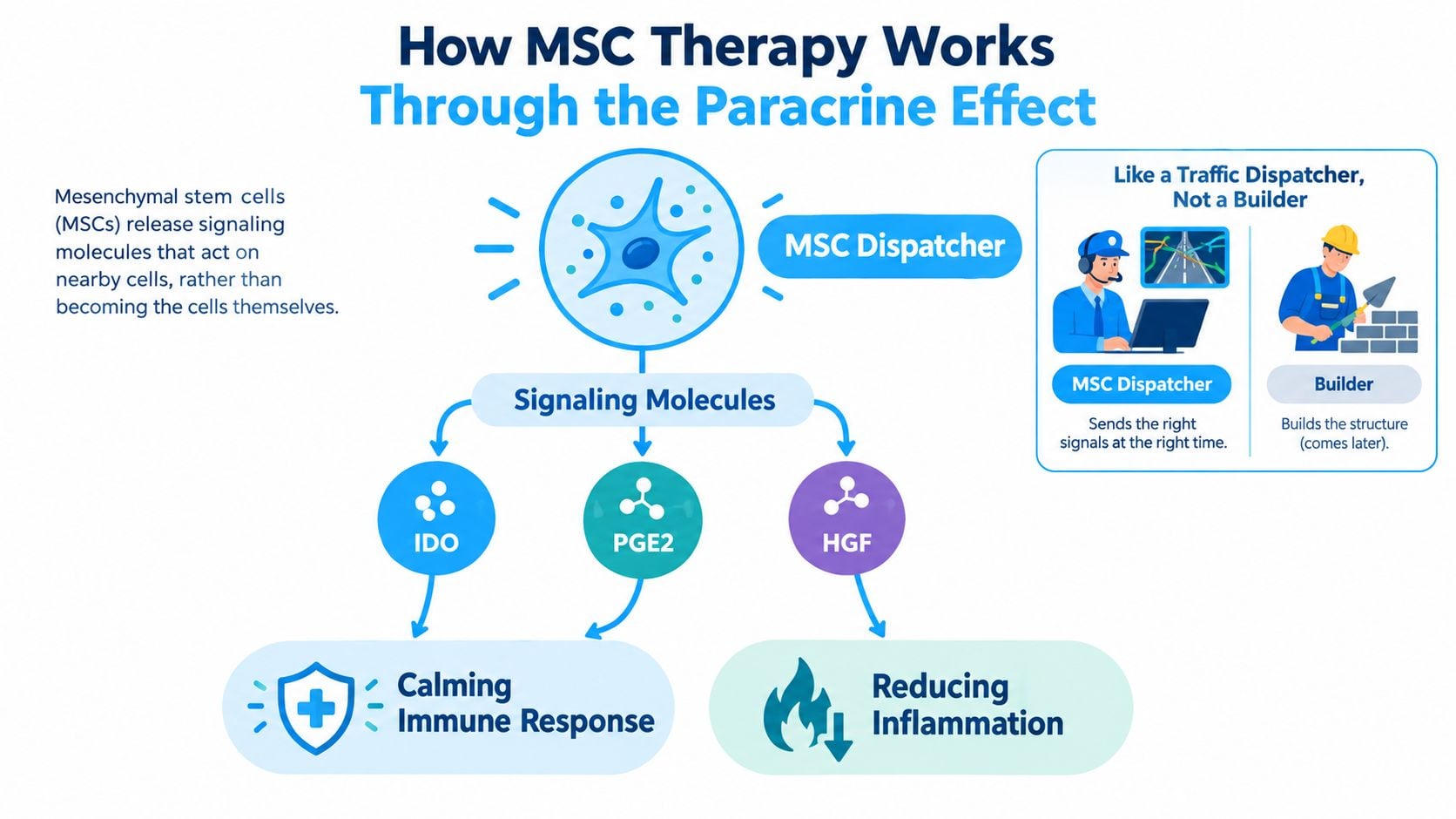
The easiest way to understand MSCs is to think of them as dispatchers, not builders. A dispatcher sends instructions to the people already working at a site. A builder becomes part of the structure. In lupus research, MSCs are not intended to become replacement kidney cells, nerve cells, or immune cells.
The proposed action is the paracrine effect. MSCs release biological signals into their surroundings, and those signals influence nearby and circulating immune cells. The cells communicate through soluble factors, extracellular vesicles, and, secondarily, direct cell contact. This is why the treatment is better described as immune regulation than tissue replacement.
What the signals may do
The signaling molecules discussed in lupus research include indoleamine 2,3-dioxygenase, prostaglandin E2, TGF-β, IL-10, nitric oxide, soluble HLA-G, and IL-1-receptor antagonists. Each molecule participates in a wider network, so it would be misleading to assign one simple job to each. Together, they may alter how immune cells communicate and respond.
- IL-10 and TGF-β can support a less inflammatory immune environment and may help expand Foxp3-positive regulatory T cells.
- Prostaglandin E2 can influence inflammatory signaling and immune-cell behavior.
- Indoleamine 2,3-dioxygenase can suppress excessive T-cell activity by changing the local metabolic environment.
- Nitric oxide can affect immune-cell communication and inflammatory responses.
- Signals involving dendritic cells and macrophages may reduce the tendency to present or amplify autoimmune targets.
- Changes in T-cell regulation can also influence autoreactive B-cell activity, which matters because B cells help produce disease-associated antibodies.
These are proposed biological effects, not a guarantee that an infusion will switch lupus off. The response may vary with cell source, manufacturing, dose, route, disease activity, concurrent immunosuppression, and the condition of the patient's immune system. The scientific discussion of MSC paracrine signaling is summarized in this review of MSC mechanisms in regenerative medicine, while patient-facing information about immune effects is available in this overview of the immunosuppressive potential of mesenchymal stem cells.
Why HSCT is different
HSCT follows a different logic. Conditioning treatment suppresses or ablates much of the existing immune system, and blood-forming stem cells are then returned to support immune reconstitution. The purpose is closer to rebuilding the immune system than sending regulatory signals to the immune system that is already present.
That distinction changes everything, including screening, hospital support, infection prevention, fertility and pregnancy discussions, consent, and follow-up. MSC infusion generally doesn't involve the same conditioning regimen, but its lower apparent intensity doesn't turn preliminary evidence into proof of efficacy.
What the Clinical Evidence Shows
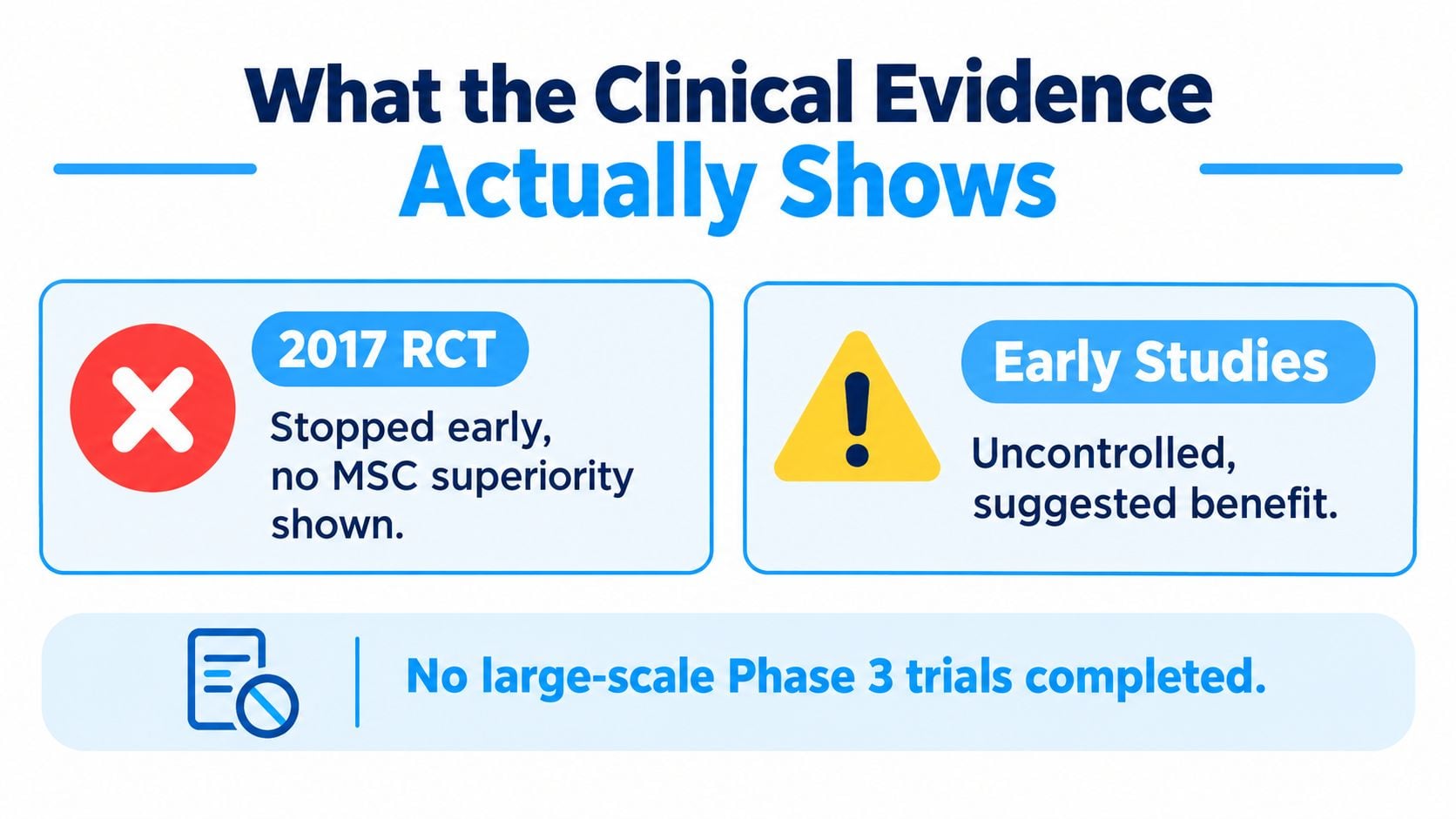
The evidence for MSC therapy in lupus includes promising signals and important limitations. Early uncontrolled studies reported lower disease activity, less proteinuria, or improved immune markers in some patients with severe or refractory disease. Without a control group, those changes may also reflect background immunosuppression, patient selection, natural disease fluctuation, or regression toward the mean. Improvement after an infusion does not prove that the cells caused it.
A key benchmark was a 2017 randomized, double-blind, placebo-controlled trial of allogeneic human umbilical-cord-derived MSCs for lupus nephritis. The study enrolled 18 patients, with 12 receiving hUC-MSCs and 6 receiving placebo, alongside standard immunosuppressive treatment. Renal remission occurred in 9 of 12 patients, or 75%, in the MSC group, compared with 5 of 6 patients, or 83%, in the placebo group. The trial stopped early because an additional treatment effect appeared unlikely. Investigators concluded that hUC-MSCs showed no apparent benefit beyond standard immunosuppression in that setting. The report also described serious clinical events, including infection-related complications and one death from severe pneumonia in an MSC-treated patient, as detailed in the randomized lupus-nephritis trial report.
This result does not show that every MSC protocol is ineffective. It shows why uncontrolled improvement cannot establish efficacy. A small early study can identify a possible signal, but it cannot reliably compare MSCs with placebo, standard care, or another active treatment.
The signals researchers continue to investigate
A meta-analysis of eight studies involving 213 patients found significant reductions in SLEDAI and 24-hour proteinuria, together with an increase in complement C3. Reported infusion-associated events included fever, diarrhea, and headache. The analysis also stated that larger, high-quality randomized trials are needed, as described in this meta-analysis of MSC therapy in lupus.
A separate phase I trial of umbilical-cord-derived MSCs enrolled six patients with treatment-refractory SLE. Five participants, or 83.3%, reached the protocol-defined SLE Responder Index-4 endpoint, with a reported 95% confidence interval of 35.9% to 99.6%. This supports further research, but the sample is too small to represent a general success rate. It is early-phase evidence, not confirmation that MSC therapy benefits everyone with lupus, as reported in the phase I SLE trial.
As of December 2024, 20 MSC trials for systemic lupus were registered in the NIH database, including 13 focused on lupus nephritis, while 6 were still recruiting. The field remains active and unfinished. A commercial protocol may differ from a registered study in its cell product, dose, route, patient selection, or follow-up. A clinical-trial review of MSCs in lupus also describes inconsistent effects across proteinuria, albumin, complement, SLEDAI, and renal function. For a clinic-side summary, see this review of therapeutic applications of mesenchymal stem cells for systemic lupus erythematosus.

MSC Therapy Versus HSCT and Standard Treatments
Patients often hear that HSCT can “reset” the immune system and then assume MSCs offer a gentler version of the same process. They don't. MSCs mainly send regulatory signals through the paracrine effect. HSCT uses intensive conditioning and immune reconstitution, which can produce deeper immune disruption and greater procedural risk.
Standard immunosuppression and biologics occupy a different position again. Their dosing, indications, safety monitoring, and regulatory pathways have been studied through broader treatment programs than most MSC protocols. A patient may still have a reason to consider an investigational option, but that decision should follow a clear discussion with a rheumatologist rather than a decision to stop established treatment independently.
| Option | Intent | Evidence Strength | Typical Population | Key Risk |
|---|---|---|---|---|
| MSC infusion | Modulate immune activity through paracrine signaling | Preliminary and heterogeneous | Selected patients with refractory disease in investigational or specialized protocols | Infection, infusion events, uncertain durability, and product variability |
| HSCT | Reconstitute the immune system after intensive conditioning | Stronger long-term signal in selected severe cases, but procedure-intensive | Severe, refractory, organ-threatening lupus | Conditioning toxicity, serious infection, transplant complications, and treatment-related mortality |
| Biologic therapy | Target defined immune pathways | More established regulatory and clinical pathways | Patients whose disease pattern fits an approved or guideline-supported indication | Infection risk, infusion or injection reactions, and treatment-specific adverse effects |
| Conventional immunosuppression | Reduce active inflammation and prevent organ damage | Established role in lupus care | Broad lupus populations, adjusted to organ involvement and severity | Infection, laboratory abnormalities, and cumulative medication toxicity |
A 2025 review reported that HSCT in experienced centers produced approximately 68% to 86% progression-free survival at ten years, while allogeneic MSC infusion achieved complete or partial remission in roughly half of refractory cases. Those figures describe different interventions, patient groups, endpoints, and evidence bases, so they must not be combined into one treatment success rate, as explained in this review of cell therapies in systemic lupus.
The practical difference for consent
A patient considering HSCT should expect discussion of conditioning, hospital care, fertility, vaccination, infection prevention, organ reserve, and transplant-specific complications. A patient considering MSC infusion should expect a different conversation, focused on cell source, manufacturing, route, dose, immune status, organ monitoring, and the limits of efficacy evidence.
Neither option should be judged by a single percentage. Ask whether the endpoint means symptom improvement, clinical remission, laboratory response, steroid-free remission, or durable organ protection. These are not interchangeable outcomes.
Who Is a Candidate and Who Should Look Elsewhere
Eligibility begins with the lupus pattern, not with a clinic's treatment menu. A careful assessment should identify whether you have systemic disease, predominantly cutaneous disease, lupus nephritis, neuropsychiatric involvement, hematologic disease, or another diagnosis that may mimic lupus. The clinician should also establish how active the disease is and which organs are currently at risk.
Questions that belong in a pre-treatment review
A serious evaluation should examine:
- Disease activity: Record SLEDAI or another validated activity measure, current symptoms, flare history, complement C3 and C4, anti-dsDNA, blood counts, and inflammatory findings.
- Kidney status: Review urinalysis, urine protein-to-creatinine ratio or 24-hour proteinuria, serum creatinine, estimated glomerular filtration rate, blood pressure, and any biopsy information.
- Treatment history: List previous immunosuppressants, biologics, corticosteroid exposure, response, intolerance, and the reason each treatment was stopped.
- Safety profile: Screen for active infection, assess vaccination status, review organ reserve, and discuss recent malignancy or other conditions that could make immune-modulating treatment unsafe.
- Life plans: Pregnancy plans, contraception, fertility concerns, travel capacity, and access to local medical follow-up should be addressed before an international procedure.
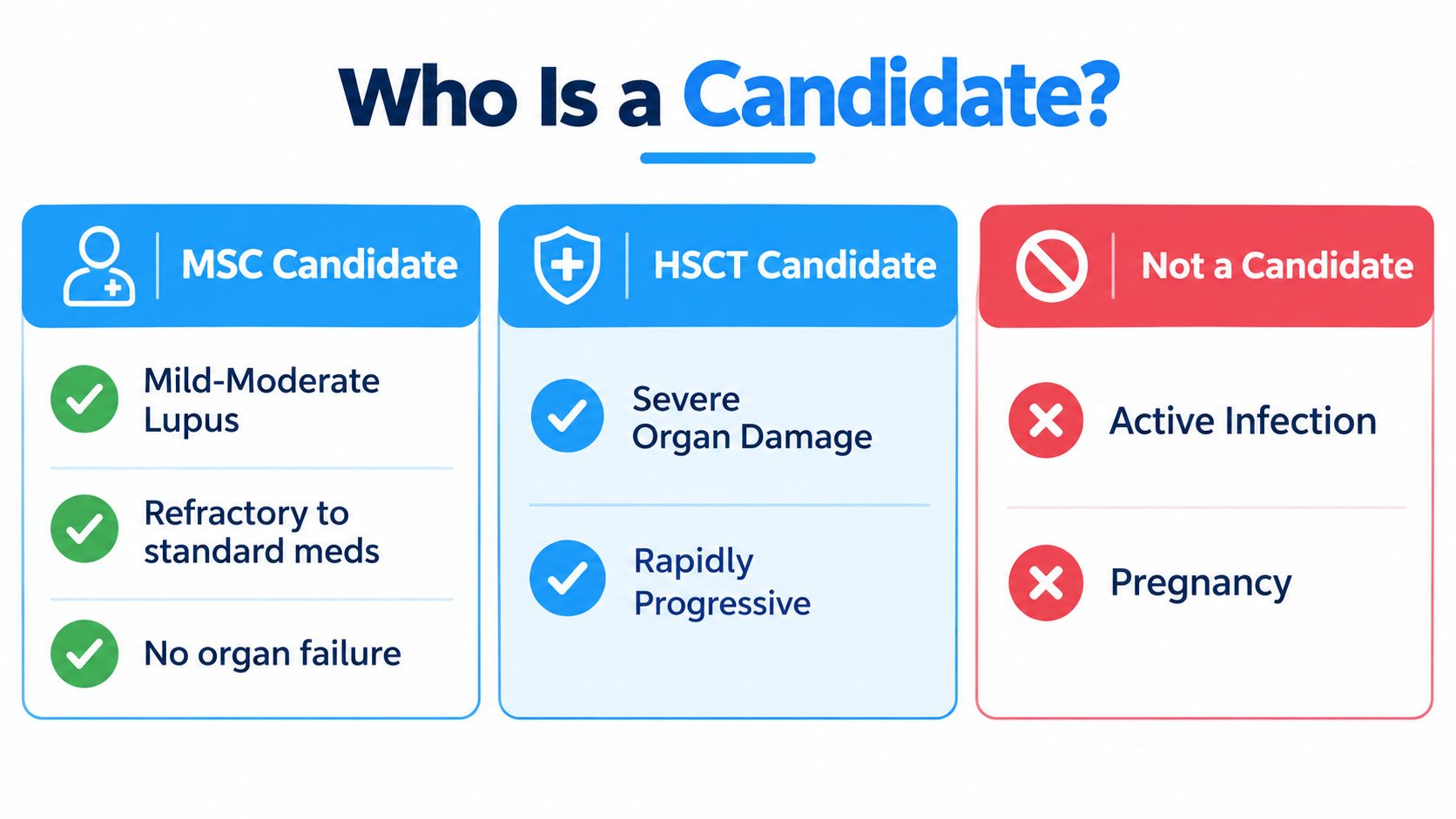
An MSC protocol might be considered for a carefully selected person with persistent, refractory disease who doesn't have uncontrolled organ failure and can continue structured follow-up. HSCT belongs to a much narrower group with severe, organ-threatening, treatment-resistant disease, and it should be evaluated through an experienced transplant program rather than treated as a routine outpatient infusion.
The image URL above must be exact, but the provided asset address contains a discrepancy in its path. The required asset is: https://cdnimg.co/a881848d-6734-4aeb-9256-e071ef208a1e/546a12f8-5b29-43b6-987e-e37785d1c1a1/stem-cell-therapy-for-lupus-patient-eligibility.jpg
Active severe infection, recent malignancy, uncontrolled organ failure, or an unsafe pregnancy context should stop an elective travel-based infusion until an appropriate specialist evaluates the situation. A patient shouldn't travel abroad because a clinic promises that MSCs are harmless.
A 2025 review covering 23 studies and 609 patients with immune-mediated diseases, including lupus, reported mostly mild adverse events. Moderate-to-severe adverse events occurred in 2.6% of lupus cases, and 15 deaths occurred among lupus participants, although the review didn't establish that MSCs caused those deaths. Those findings reinforce the need for transparent adverse-event reporting and careful selection, as detailed in this review of safety outcomes in MSC studies. Patients seeking a kidney-focused discussion can also review this overview of MSC therapy for lupus nephritis.
What the Treatment Day and Patient Journey Look Like
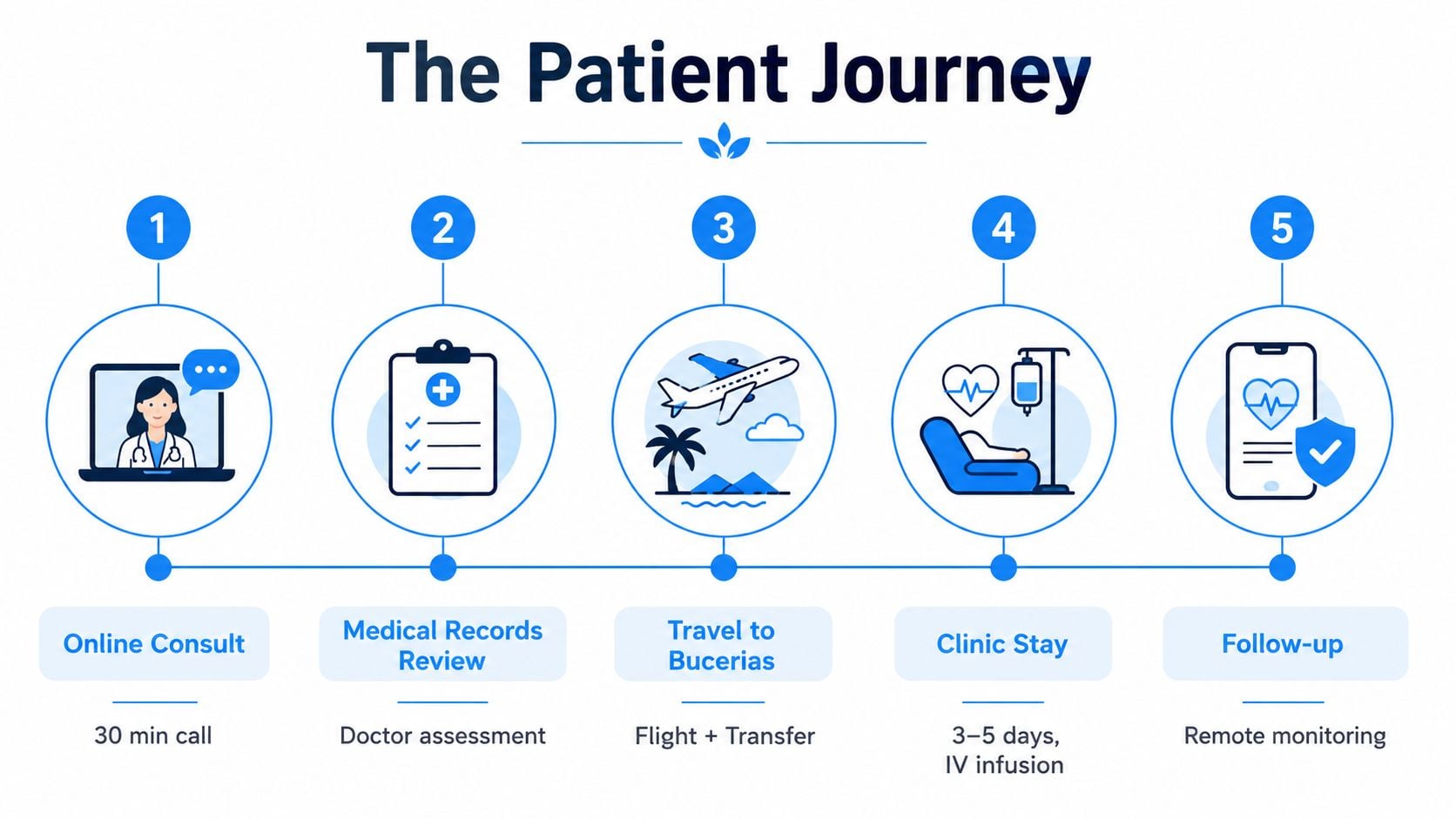
A realistic pathway starts before travel. You submit records, medication lists, laboratory results, imaging, biopsy reports when available, and a description of your current symptoms. The reviewing clinician should decide whether the proposed treatment matches the disease problem and whether local follow-up with your rheumatologist can continue safely.
The in-clinic visit may be brief, but the medical decision shouldn't be rushed. A clinic such as Dream Body Clinic in Bucerias, Nayarit, may organize a case review, clinical assessment, travel logistics, treatment, and remote follow-up. The actual visit is commonly described as lasting one to three hours, but the overall patient journey includes record review, travel, observation, and later monitoring.
What happens around the infusion
MSC administration is commonly intravenous. Some programs may discuss intrathecal delivery when neurological features dominate, but route selection should be based on a documented clinical rationale, not on the assumption that a more invasive route is automatically more effective.
Dosing varies across protocols because cell source, manufacturing, indication, route, disease severity, and concurrent treatment differ. Be cautious if a clinic presents one dose as universally correct or refuses to explain the product's identity, testing, storage, release criteria, and planned follow-up.
A 12-patient study of refractory SLE reported that mean SLEDAI declined from 12.2 ± 3.3 at baseline to 3.2 ± 2.8 at 12 months, while 24-hour proteinuria decreased from 2,505 ± 1,324 mg to 858 ± 801 mg. The findings are preliminary because the study was small, and they don't predict an individual result, as reported in this study of allogeneic MSCs in refractory SLE.
Follow-up should test more than symptoms
A sensible monitoring schedule includes assessments at approximately 3, 6, and 12 months, adjusted for the patient's disease and treatment plan. At each point, the team should compare results with the pre-treatment baseline:
- urine protein-to-creatinine ratio or 24-hour proteinuria
- urinalysis and serum creatinine or eGFR
- complement C3 and C4
- anti-dsDNA
- blood pressure and blood counts
- steroid dose and other medication exposure
- validated disease-activity and damage indices
- predefined flare and relapse criteria
Feeling more energetic matters, but it can't substitute for kidney testing when nephritis is the concern. A lower SLEDAI score also doesn't automatically prove durable protection from future organ damage.
Evaluating Clinics, Safety, and Regulatory Context
A clinic should answer practical questions before requesting a deposit. Ask where the tissue comes from, whether the cells are autologous or allogeneic, how the product is manufactured and tested, what dose and route are planned, which adverse events are possible, and who will manage complications after you return home.
Certain promises should stop the conversation:
- Guaranteed cure: Lupus activity varies, and an investigational cell infusion cannot responsibly be presented as a permanent cure.
- Medication pressure: Do not stop immunosuppressive or biologic treatment without coordination with your treating specialist.
- Missing product details: If a clinic will not identify the cell source, route, dose, or testing process, you cannot give informed consent.
- Symptom-only promises: Ask for organ-specific outcomes rather than a general promise that you will “feel better.”
- No follow-up plan: International patients need scheduled communication, laboratory review, and a clear route for urgent problems.
COFEPRIS oversight in Mexico offers a regulatory context for treatment delivered there. It does not establish that MSC therapy is an approved cure for lupus or equivalent to an FDA-approved indication. Ask which activity the oversight covers, which facility performs the procedure, and how adverse events are reported and managed. Also ask the clinic for its COFEPRIS registration number, then confirm which specific procedure authorization covers the lupus protocol being offered. Oversight categories can differ between tissue handling and clinical application.
Dream Body Clinic is a regenerative medicine clinic in Bucerias, Nayarit, Mexico. It specializes in mesenchymal stem cell therapies and adjunct regenerative medications under Mexico's COFEPRIS oversight. Its lupus-related materials describe immune-modulating MSC protocols, structured case review, and follow-up. Evaluate those materials alongside independent rheumatology advice, transparent product information, and objective monitoring.
Making a Clear, Honest Decision About MSC Therapy
Start by naming the problem you want to solve. Is the priority renal protection, fewer systemic flares, lower steroid exposure, neuropsychiatric symptoms, or improved daily function? Then define the measurements that will show progress, because subjective improvement alone can't establish control of lupus nephritis or prevention of organ damage.
MSC therapy remains investigational for lupus. The most responsible approach is to pair it with established lupus care, not substitute for it. Don't taper steroids, immunosuppressants, or biologics unless your treating rheumatologist agrees and the plan includes objective laboratory and clinical monitoring.
Before committing, compare the clinic's credentials, cell-product information, consent process, emergency planning, and follow-up structure. If your case resembles the patient scenario at the beginning of this article, a structured case review can help determine whether an MSC discussion is medically appropriate rather than merely appealing.
Dream Body Clinic offers case review, clinical assessment, mesenchymal stem cell protocols for autoimmune conditions, and remote follow-up for international patients considering care in Bucerias, Mexico. Visit Dream Body Clinic to submit your records and discuss whether a lupus-focused evaluation is appropriate for your situation.