Shoulder pain from a rotator cuff problem can make reaching, lifting and sleeping difficult, and many people want an option between ongoing pain and surgery. Dream Body Clinic’s stem cell shoulder treatment is built for that gap. It is an ultrasound-guided injection of 50 million allogeneic mesenchymal stem cells (MSCs) into the shoulder joint, offered as a non-surgical option for partial rotator cuff tears, shoulder osteoarthritis, partial labrum tears, partial ligament injuries and tendinopathy.
The key questions are the same ones the clinic asks every patient: what kind of tear do you have, is it partial or complete, and what outcome matters most to you? Stem cells aren’t a guaranteed fix, they don’t bridge a complete tear, and they don’t turn into new tendon. Results vary, and about 5% of patients are non-responders, 80% get the results they want from this protocol –
Shoulder Stem Cell Treatment in Mexico
Table of Contents
- Pain Function and Re-Tear Results Side by Side
- Why These Cells Signal Healing Instead of Becoming Tendon
- Local Injection Surgical Adjunct or PRP
- Tear Patterns That Fit and Patterns That Do Not
- What Real Rotator Cuff Studies Actually Changed
- Safety Limits and Checks Before You Travel
- Review Your MRI Before You Book Treatment
Pain Function and Re-Tear Results Side by Side
A scan can look better without a person reporting less pain or easier movement. In a 2025 systematic review of five studies involving 228 people, both the repair-alone and MSC-augmented groups improved in patient-reported outcomes, range of motion, and strength. The review didn’t find that MSC treatment produced clearly superior clinical or functional results. Its more promising signal was a lower risk of re-tear, although the authors described the evidence as preliminary and limited in certainty. The 2025 review reported a relative risk of 0.52 at mid-term follow-up (95% CI 0.27–0.98) and 0.24 at long-term follow-up (95% CI 0.11–0.53).
Those numbers describe structural outcomes, not a guarantee of less pain or restored strength. A randomized comparison of bone-marrow-aspirate concentrate with a control group also found no significant difference in ASES scores at 12 months, despite MRI signs of better tendon quality. For a patient, the practical lesson is to ask separately about pain, everyday arm use, what the image shows, and the chance of a future re-tear.
What the study comparisons show
| Comparison | Structural result | Pain and function |
|---|---|---|
| 2017 adipose-derived cells with arthroscopic repair | Re-tear was 14.3% versus 28.5%; complete MRI healing was 85.7% versus 71.4% at about 21 months | Better pain or strength than repair alone wasn’t established |
| 10-year bone-marrow case-control | Tendon integrity was maintained in 39 of 45 patients (87%) versus 20 of 45 (44%) | Long-term structure, not proof of better symptoms |
| 2025 review of five studies and 228 people | Re-tear relative risk was 0.52 at mid-term and 0.24 at long-term follow-up | Both groups improved; MSC treatment wasn’t clearly better on scores, motion, or strength |
| Randomized bone-marrow concentrate versus control | MRI suggested better tendon quality | No significant difference in 12-month ASES scores |
The 2017 matched-cohort study and 10-year case-control study reported these structural findings, but neither proves that every patient will avoid another tear or feel better after treatment. The clinical evidence review also describes substantial differences among studies in cell sources, doses, surgical techniques, and follow-up periods, making direct comparisons difficult.
Keep four scorecards: pain, daily arm use, MRI healing, and future re-tear risk. A change in one doesn’t automatically mean a change in the others.
Most human studies evaluate MSCs as an addition to surgical repair, not as a stand-alone injection that closes every kind of tear. Tear depth, whether the injury followed trauma, tendon retraction, muscle changes, smoking, diabetes, and the rehabilitation plan all matter when weighing the options. The relevant question isn’t whether stem cells “work,” but whether a particular approach is likely to add enough benefit for your tear and your goals.
Why These Cells Signal Healing Instead of Becoming Tendon
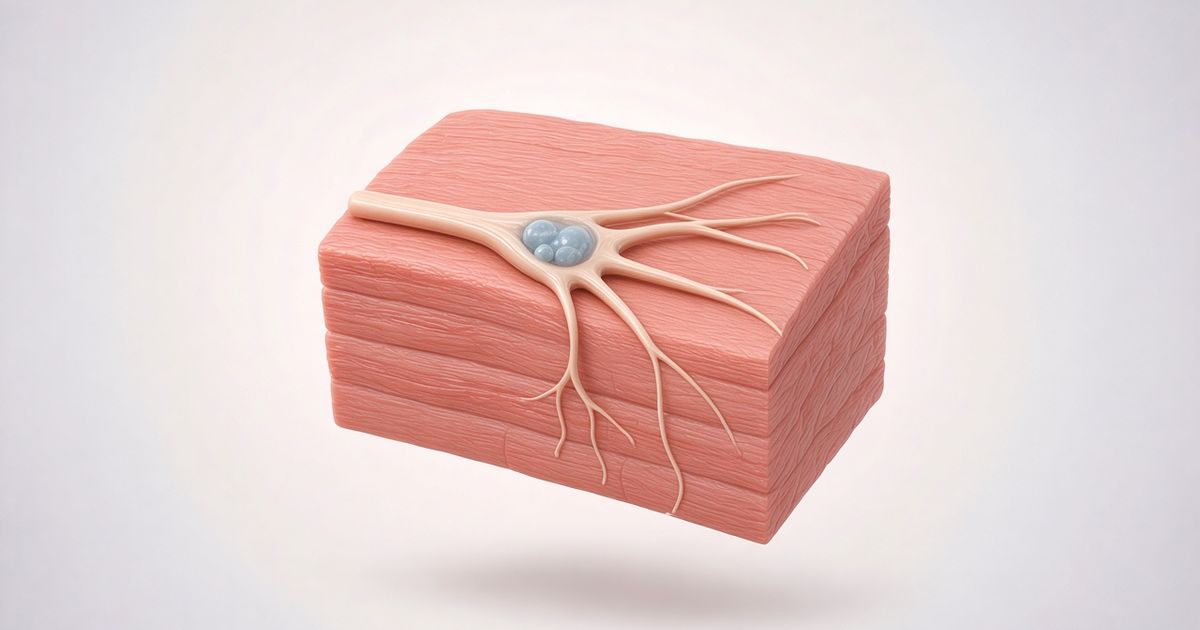
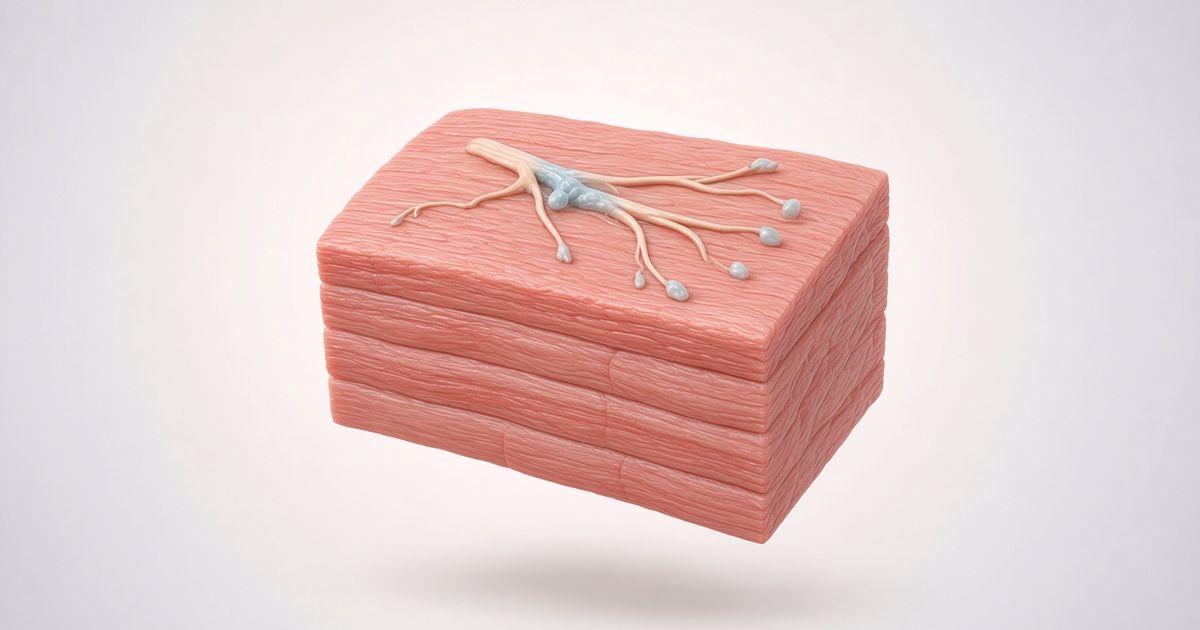
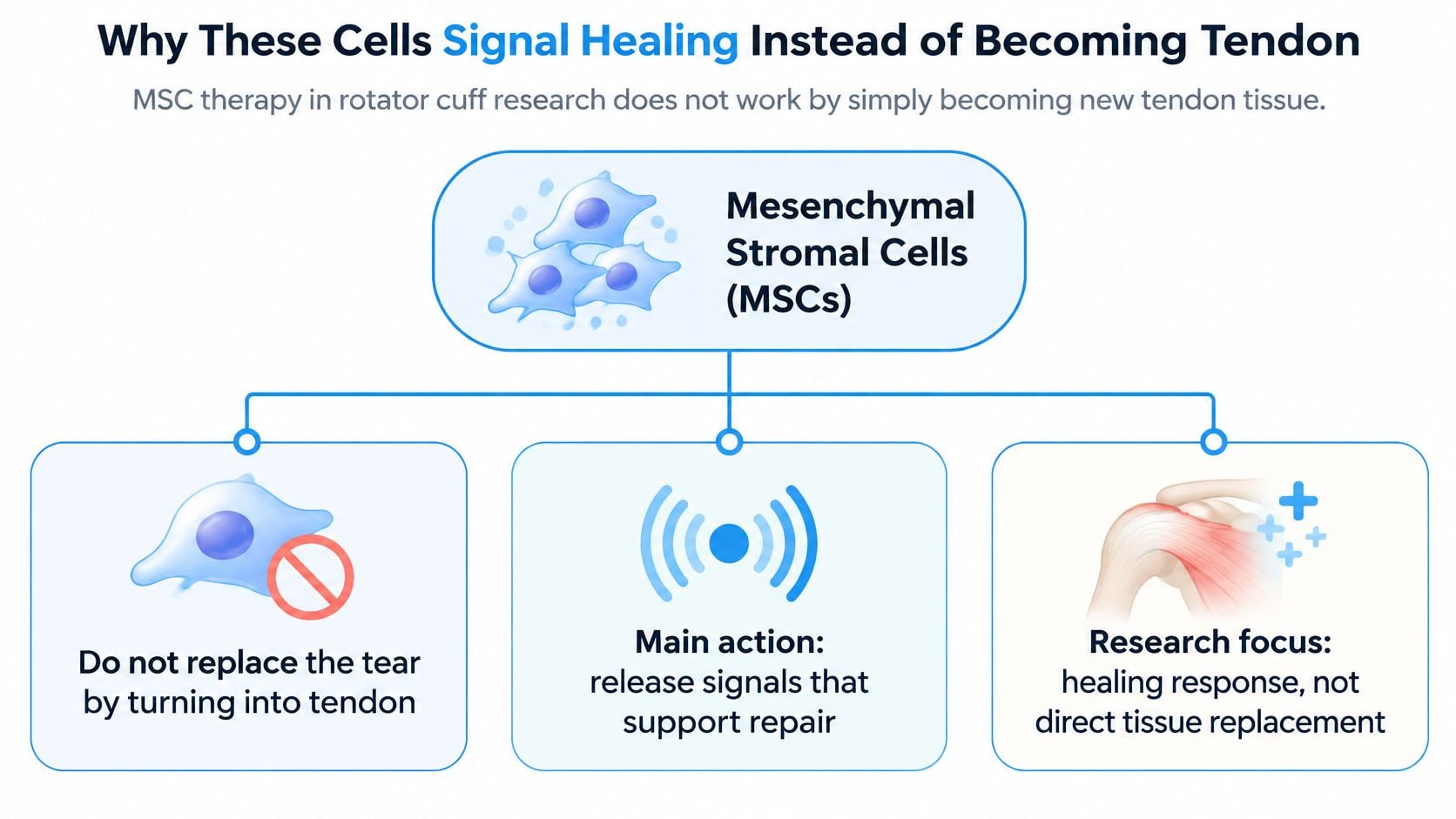
Think of a construction site with a foreman who can’t lay bricks. The foreman coordinates the crew, points out the work that needs doing, and helps the team respond to problems. In rotator cuff research, mesenchymal stromal cells, or MSCs, are better understood as that kind of messenger than as replacement tendon builders.
MSCs don’t differentiate into other cells to become new tendon and fill a tear. Their main proposed action is the paracrine effect: they send out specialized signals, including exosomes, growth factors, chemokines, and cytokines. Those messages may influence inflammation, blood-vessel formation, cell survival, and tissue remodeling, guiding the patient’s own repair processes around the tendon-to-bone attachment. A review of MSC signaling in rotator-cuff repair describes this as support for the body’s repair response, not permanent replacement of the torn tendon by transplanted cells.
What signaling looks like in research
Animal experiments help illustrate the messenger idea, but they don’t establish what an injection will do for a person. In a rat reconstruction model, MSC-derived exosomes, small packets carrying RNA and proteins, stimulated new blood-vessel formation at the tendon-to-bone junction and improved healing there. The reported effect came from the messages, not from the exosomes becoming tendon.
In a sheep model of chronic cuff injury, researchers gave bone-marrow-derived MSC microtissues after tendon repair. The treatment halted the progression of fatty atrophy in a chronically retracted muscle, with the proposed effect linked to a paracrine shift involving ground substance and tissue water. That finding doesn’t show that the cells became muscle or tendon.
The intended role is to support the patient’s repair process, not to permanently replace the torn tendon.
A marketed cell count alone can’t show that the signals reached the right part of the cuff, changed the tendon-to-bone environment, or improved how the arm works. If you want a broader explanation of how regenerative approaches are discussed alongside other healing strategies, Peak Performance’s injury healing masterclass offers related context.
Think of a construction site with a foreman who doesn’t lay bricks. The foreman coordinates the crew and points out the work that needs doing. Dream Body Clinic describes its cells the same way: injected MSCs do most of their work by signaling, not by turning into a new shoulder.
In the joint, the clinic says MSCs:
- Release anti-inflammatory cytokines that calm joint swelling
- Signal chondrocytes, the cells that maintain cartilage
- Support new extracellular matrix, including collagen and proteoglycans
- Guide tenocytes and fibroblasts in partial tendon, labrum and ligament injuries and support collagen repair
- Produce enzymes that help remodel scar tissue
- Promote small-vessel growth so injured tissue gets blood supply
- Modulate the local immune response so inflammation doesn’t stay switched on
What signaling looks like in research
The cells move toward inflammation and interact with local immune and repair cells. The clinic says the injected MSCs remain in the body for about 8 to 12 months. After that window the remaining donor cells are cleared, and the clinic reports that this has not produced a systemic reaction in its shoulder series.
That is also why the clinic asks patients to avoid NSAIDs for a week before and at least two weeks after, and to avoid cortisone for 3 months before treatment. Those drugs mask the inflammatory signal the cells use to find damaged tissue. The intended role of the cells is to support your own repair process, not to permanently replace the torn tendon.
Local Injection Surgical Adjunct or PRP
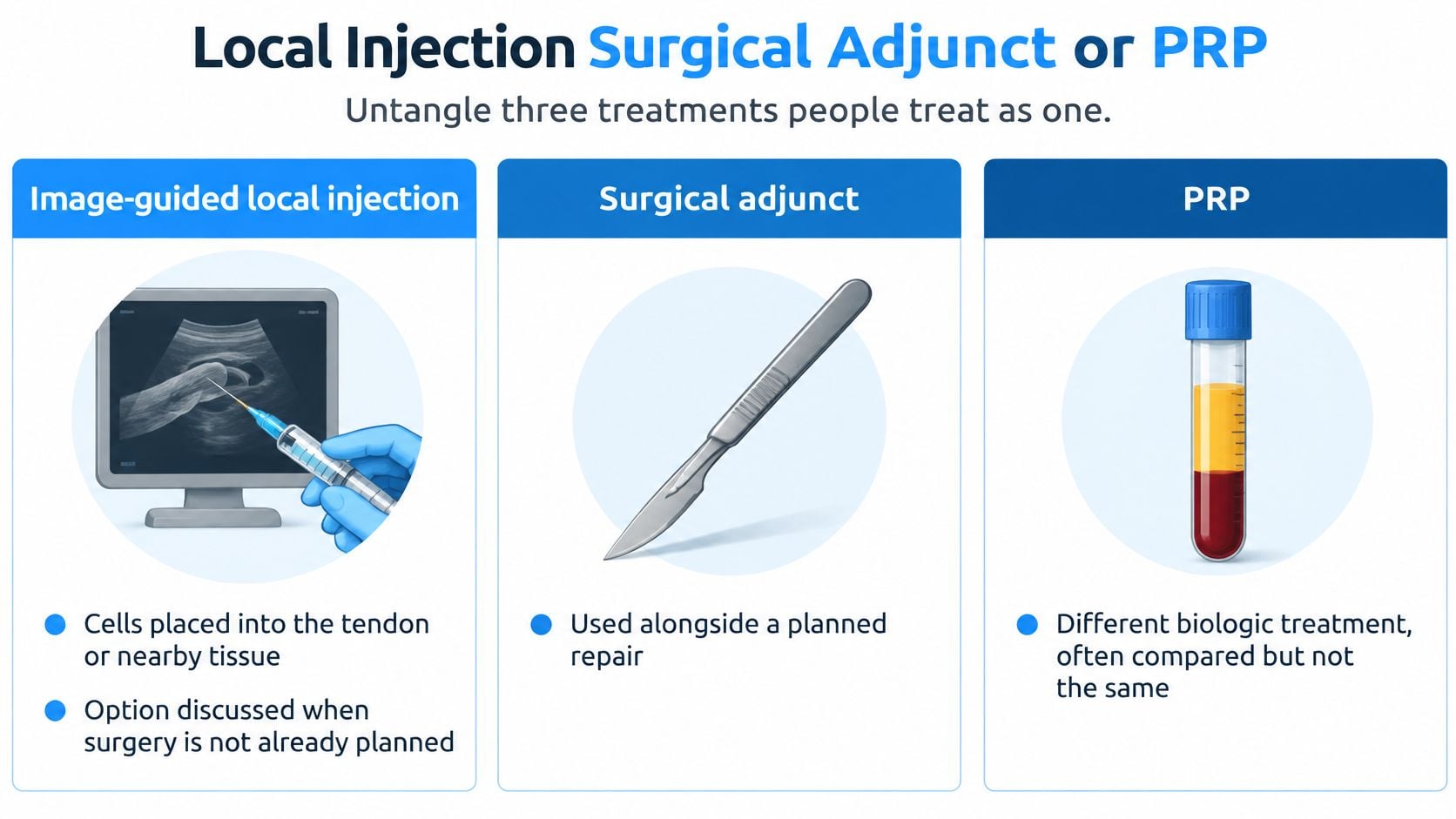
“Stem cell treatment” can refer to different procedures. Dream Body Clinic’s shoulder protocol is a local, ultrasound-guided injection of expanded MSCs. It is not a same-day bone marrow or fat draw, with no liposuction and no bone marrow harvest. It is not an add-on placed during an operation, and it is not PRP, which comes from your own blood and is a different product.
The cells are allogeneic, from Wharton’s jelly and placenta of screened live births. They are expanded in Dream Body Clinic’s ISO-rated, COFEPRIS-licensed lab on the same property, and they are not frozen for storage or shipped in from another city. The clinic has been open since 2012 and has administered stem cells for 9 years. The injection is performed by one of three treating physicians: Dr. Arick Barba, Dr. Lizbeth Aguirre or Dr. Jaqueline Vega.
Match the option to the situation
| Option | When it is discussed | Evidence position | Hard limit |
|---|---|---|---|
| Image-guided MSC injection | Partial-thickness tear, or when surgery isn’t planned | Dream Body Clinic has over 9 years healing Rotator Cuff injuries | Can’t heal a full thickness tear |
| MSCs added during arthroscopic repair | Repair is already planned and durability matters | Strongest human signal; structural failure was 13% versus 56% at 10 years in one comparison | Pain and function may still be similar to repair alone |
| MSC paired with PRP | A local treatment protocol combines biologic approaches | Many clinical tendon studies have examined PRP rather than stem cells | PRP isn’t an expanded or characterized MSC product |
| Repair without cells | A tear is retracted, atrophied, or judged surgical | Established mechanical treatment | Doesn’t add a cell signal |
The process begins with MRI review to define the tear. A clinician can then consider whether cells are the right choice like this – Shoulder Stem Cell Treatment in Mexico
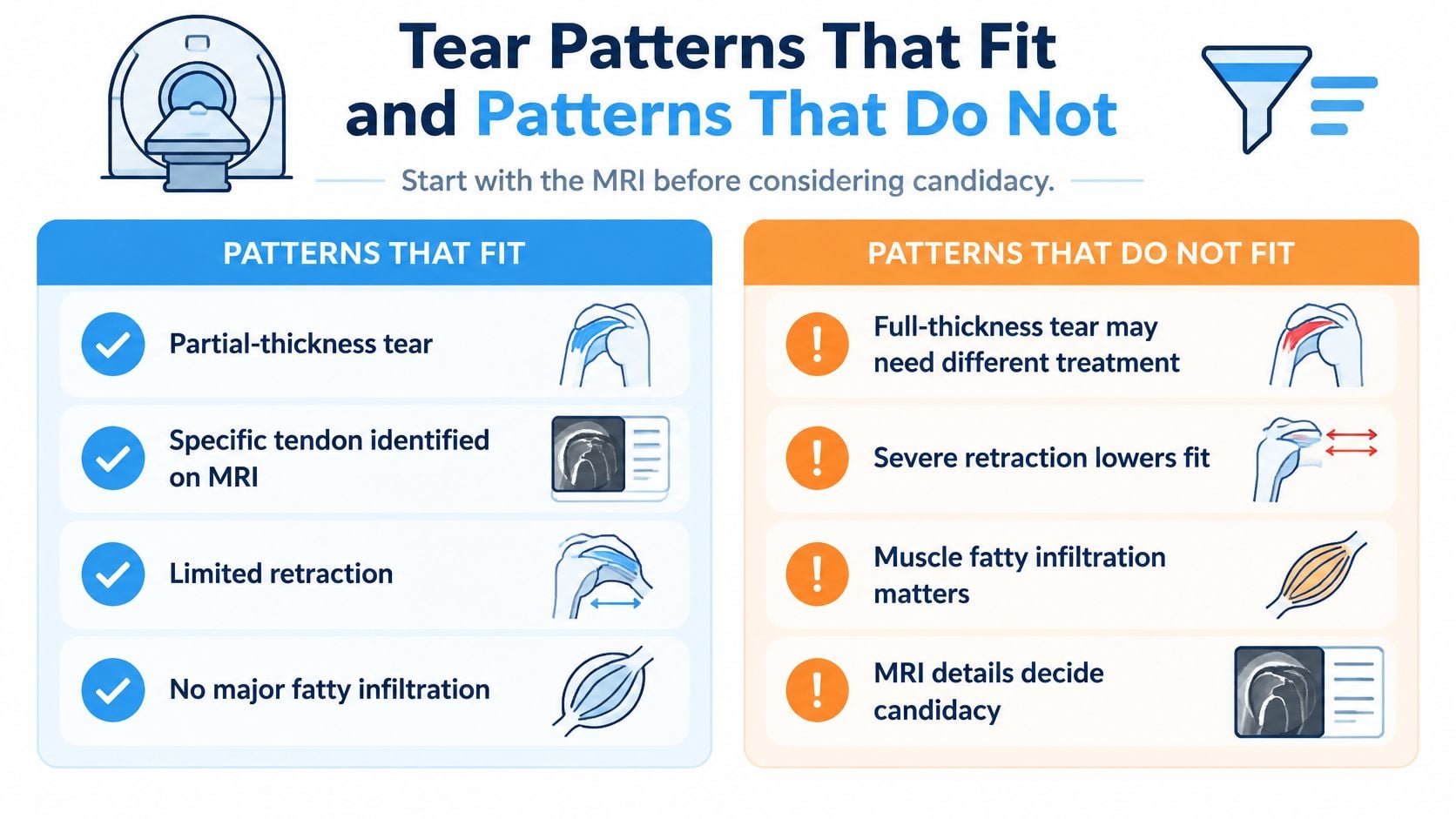
Tear Patterns That Fit and Patterns That Do Not
Start with the MRI, not a treatment label. The scan should show whether the tear is partial or complete, which tendon is involved and what else is going on in the joint. Dream Body Clinic requires its own open MRI at its facility, even if you have a recent one, because the doctors have received too many inaccurate reports over the years and want accurate data for patient safety.
Use the scan to frame the conversation
Fits the protocol:
- Partial rotator cuff tears (supraspinatus and others)
- Partial labrum tears, including SLAP tears
- Partial ligament injuries
- Shoulder osteoarthritis, with better expectations in milder grades
- Focal cartilage lesions and chondromalacia
- Shoulder tendinopathy and chronic tendinitis
- Chronic shoulder pain after failed conservative care
- Incomplete healing after prior surgery
- Sports injuries that are partial, not complete ruptures
Does not fit:
- Complete rotator cuff, labrum or ligament tears. Stem cells do not bridge a full-thickness gap.
- Large osteophytes (bone spurs). Stem cells do not remove bone, and spurs can block healing.
- Cancer in the past 5 years. The clinic does not treat these patients as a precaution.
- A cortisone injection in the last 3 months.
- Anyone expecting a guaranteed result.
Severe bone-on-bone arthritis may still be treated, with lower expectations.
Consider two different cases
Case one: a recreational golfer with a partial supraspinatus tear and months of pain despite physiotherapy. The MRI shows a partial tear with no large spurs. This is the kind of patient the protocol is designed for, and the clinic would review the MRI, confirm candidacy and plan the injection.
Case two: a patient with a complete, retracted tear and weakness lifting the arm. The MRI shows a full-thickness gap. The clinic would say the injection is not the right tool and would recommend a surgical consultation instead. In that case the patient pays only the $500 MRI and $300 blood panel.
What Real Rotator Cuff Studies Actually Changed
Research on MSCs in the shoulder is still developing, and Dream Body Clinic describes its approach as a clinic protocol, not an FDA-approved U.S. indication. The clinic states that stem cell therapy offers no guarantees and is not promoted as a cure. What the clinic can show you is its own process, from MRI review to follow-up surveys at 3, 6 and 12 months.
Four study situations, four lessons
Ask any clinic for its protocol in writing: cell source, dose, route and what outcomes it measures. Dream Body Clinic publishes these details, along with its price, on its shoulder treatment page.
Safety Limits and Checks Before You Travel
The documented issues in the clinic’s shoulder protocol are limited:
- Infection: Risk exists with any injection. The clinic uses iodine and Microdacyn and reports no shoulder-injection infections in 9 years of stem cell use.
- Temporary flare: A small number of patients have temporary increased inflammation or tightness shortly after treatment, and medication is available if a flare occurs.
- Non-response: Some patients do not respond, and no clinic can promise a result.
- Overall: The clinic reports adverse events under 2%, mostly temporary soreness at the injection site.
- Exclusions: The clinic does not treat patients with cancer in the past 5 years.
Treatment is performed in Bucerías, Nayarit, under COFEPRIS oversight, using cells from the clinic’s own lab. That is a Mexican regulatory framework, and the rules in your home country may differ, so ask any provider to explain what applies to you.
Questions to settle before you travel
- What is my tear? Email your written MRI, CT or ultrasound report to info@dreambodyclinic.net. If the written report is enough, a physician can tell you whether you are likely a candidate before you fly. A new MRI is still done on site.
- Will my shoulder fit the MRI? The open MRI (Esaote S-Scan) has a coil, so confirm your shoulder fits before travel. If it doesn’t, the clinic schedules a different machine.
- What exactly is included? Open MRI, blood panel, physician consultation, 50 million MSCs, the ultrasound-guided injection, a post-treatment rehab protocol, and remote follow-up at 3, 6 and 12 months.
- What should I stop? NSAIDs at least 1 week before and 2 weeks after (preferably 6). Prednisone at least 1 week before and 2 weeks after. No cortisone in the last 3 months. Hold anti-inflammatory supplements such as turmeric and ginkgo for at least 2 weeks after.
- How long will I be there? At least five days: Day 1 arrive and rest, Day 2 MRI and bloodwork, Day 3 MRI review, then payment, Day 4 treatment, Day 5 fly home.
- What is recovery like? Most patients leave the same day and return to desk work in 2 to 3 days. The clinic asks for about two weeks of easy activity, then a 4-week rehab plan within a 6-week engraftment window. Moderate activity is useful from months 2 to 3, and the typical peak is at months 3 to 6.
Always check with your own doctor before stopping any prescribed medication.
Review Your MRI Before You Book Treatment
Your MRI decides whether you are treated. Dream Body Clinic reviews it with you on Day 3 of your stay, before you pay and before any injection. If the imaging shows you are not a candidate, you pay only $500 for the MRI and $300 for the blood panel, and you are not charged the treatment fee.
What it costs: One shoulder is $3,500 USD, and both shoulders on the same trip are $7,000 USD. The price includes the MRI, blood panel, consultation, 50 million MSCs and the injection. Flights and hotels are up to you, and airport and clinic transfers are included if you stay in the clinic hotel zone.
Where: DBC Medical & Health Center, Carmen Serdán 22, Bucerías, Nayarit 63732, Mexico, on the bay across from Puerto Vallarta. Patients fly into Puerto Vallarta International Airport (PVR).
Next step: Call (888) 704-3977 or book a free video consult, which runs 30 to 45 minutes. Have your history, medication list, pain limits and goals ready. You can also reach the clinic on WhatsApp at +52 322 232 1055 or at info@dreambodyclinic.net, or learn more at dreambody.clinic.
Results vary. These treatments have not been approved by the U.S. Food and Drug Administration (FDA). Dream Body Clinic’s regenerative medicine treatments are provided under COFEPRIS licensing (license 23-TR-18-020-0001). COFEPRIS is Mexico’s equivalent of the FDA, and Mexico is where we operate.
Dream Body Clinic offers a shoulder treatment review that includes MRI consideration and discussion of its MSC-plus-PRP option. If you’re weighing an injection against repair, contact Dream Body Clinic to request a case review and discuss whether the approach fits your situation.