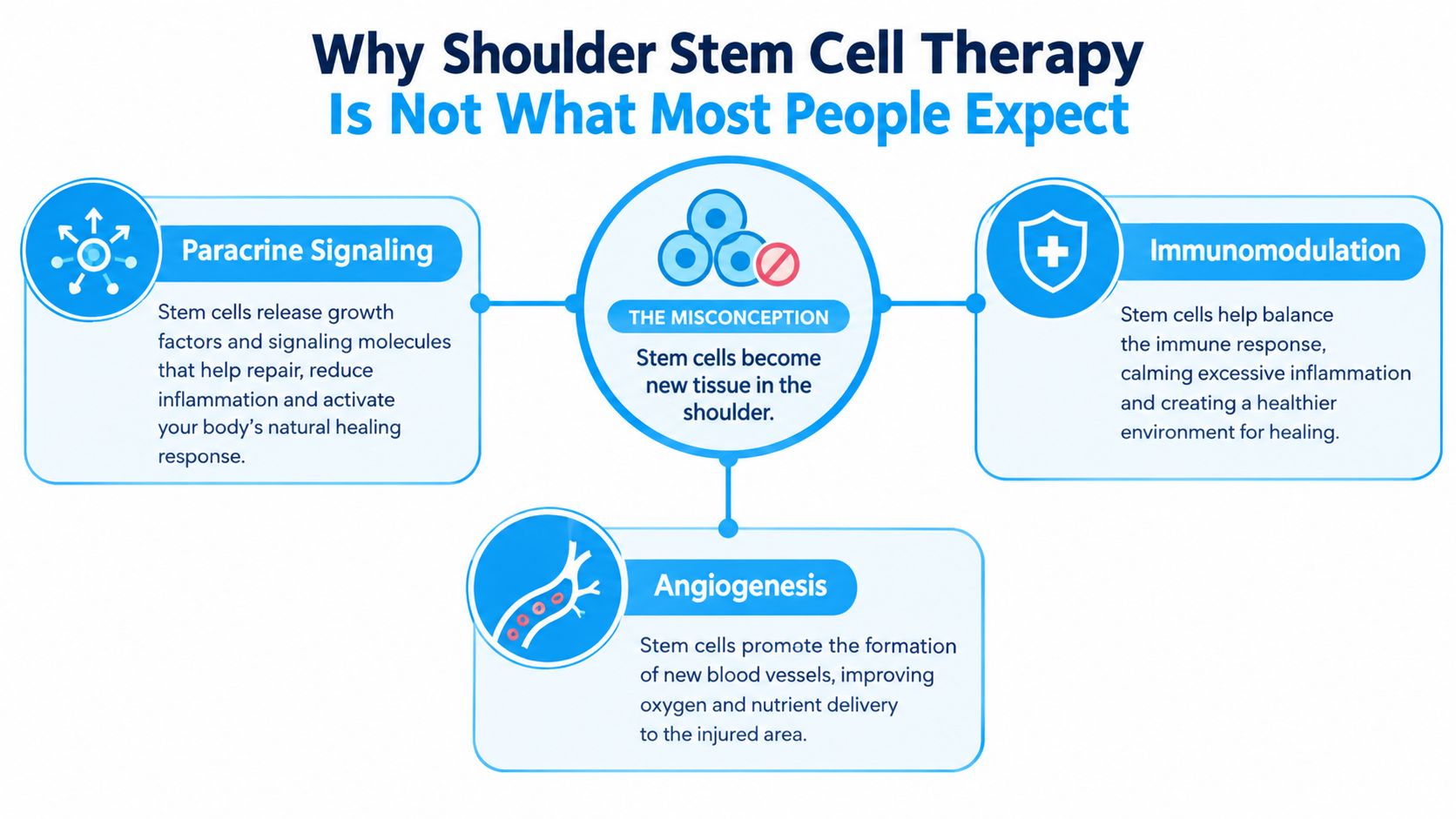
The most popular advice about shoulder stem cell therapy is also the most misleading: “The cells will become new tendon, cartilage, or muscle.” That picture makes treatment sound like a biological replacement part. Mesenchymal stem cells, or MSCs, don’t walk into a damaged shoulder, recognize the missing tissue, and turn into a new rotator cuff.
Their proposed role is more subtle. MSCs release specialized signals that can influence inflammation, blood-vessel formation, nearby repair cells, and tissue remodeling. Think of the MSCs as the manager on the construction site, guiding the rebuilding process. They can regenerate cartilage, labrum, ligaments, tendons and muscle via the paracrine effect which means it is the signals they send out that guide the process.
The right starting point isn’t a clinic’s promise or a cell-count headline. It’s a clear answer to two questions: What exactly is wrong with the shoulder, and would improvement in pain prove that the tissue healed?
stem-cell-shoulder-treatment
Table of Contents
- Why Shoulder Stem Cell Therapy Is Not What Most People Expect
- How MSCs Actually Influence a Healing Shoulder
- Shoulder Conditions That Bring Patients to MSC Therapy
- Delivery Routes, Cell Doses, and What the Numbers Actually Mean
- What a Shoulder MSC Procedure Actually Looks Like
- A Realistic Timeline From Injection to Meaningful Improvement
- Rehab Integration and Recovery Milestones After a Shoulder Injection
- Safety, Regulation, and What to Ask Before Committing
Why Shoulder Stem Cell Therapy Is Not What Most People Expect
A shoulder isn’t one structure with one disease. A partial rotator-cuff tear, a full-thickness tear, glenohumeral osteoarthritis, adhesive capsulitis, and a labral injury create different mechanical and biological problems. Some can be healed with MSCs and some can’t. At Dream Body Clinic we are always straight with patients about what MSCs can and cannot heal. That is why we start with an MRI so we know what is going on. We can heal:
- partial labrum tears
- partial ligament tears
- partial tendon tears
- osteoarthritis
- rotator cuff injuries
stem-cell-shoulder-treatment
Investigational means uncertainty
The U.S. Food and Drug Administration states that no stem-cell products are approved for treating orthopedic conditions, including shoulder pain, osteoarthritis, or tendonitis, and warns that products marketed outside authorized research may not have demonstrated safety and effectiveness. While in Mexico the FDA equivalent, COFEPRIS has made MSC treatments available to help the wide range of issues they can treat.
The FDA system is the big problem. To get MSCs approved it requires selecting only one treatment at a time and then paying a $2.5 million dollar application fee that if approved only allows the approval process for that one treatment and no others. If approved that simply means you can enter the 4 stage FDA trial process. This process usually takes 7 to 10 years and the cheapest anyone has ever done it was $40 million dollars with the average costing hundreds of millions of dollars. Then when done if approved as a new medication the company that paid all this money has a huge problem in that they can’t patent the MSCs as they are naturally occurring so they will have to compete with other companies that didn’t spend hundreds of millions of dollars to get to this point and will be undercut on price. No sane company is going to take this responsibility on and it exposes how messed up the system is.
How MSCs Actually Influence a Healing Shoulder
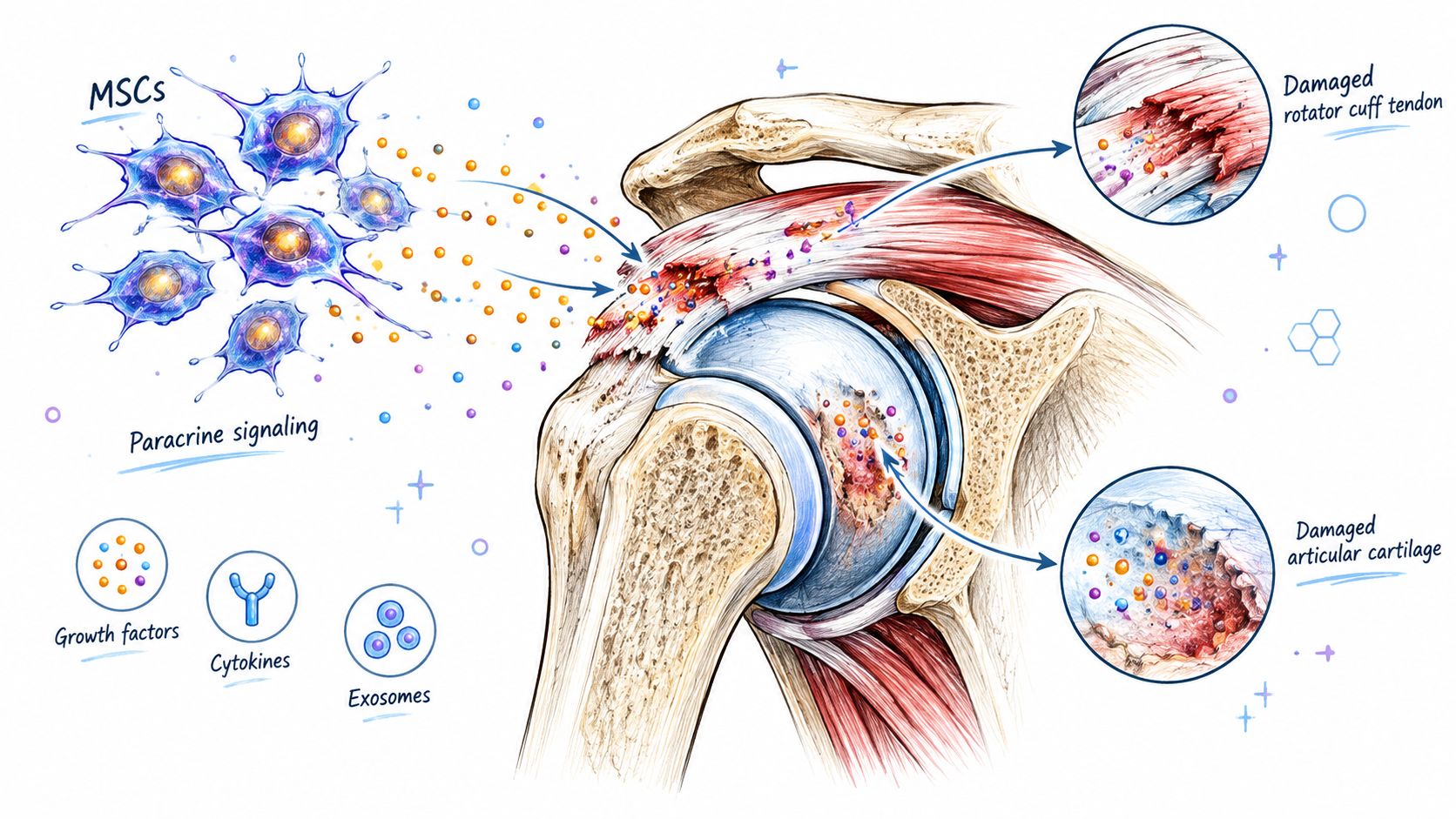
MSCs are often described as if their value depends on physically replacing damaged cells. The more useful clinical explanation is that they release a collection of bioactive signals into the local environment. Those signals can alter how nearby cells behave during inflammation and repair.
In shoulder research, the proposed signaling network includes transforming growth factor-beta, or TGF-β, vascular endothelial growth factor, or VEGF, insulin-like growth factor 1, or IGF-1, interleukins, and extracellular vesicles. These substances don’t perform identical jobs, and their effects depend on the tissue environment, the cell preparation, the delivery site, and the patient’s underlying condition.
stem-cell-shoulder-treatment
A signaling process, not a cell transplant into new tissue
A simplified sequence looks like this:
- MSCs encounter the local injury environment. The shoulder may contain inflammatory signals, damaged tendon fibers, altered cartilage, or a surgical repair site.
- The cells release paracrine factors. These include growth factors, cytokines, and extracellular vesicles that communicate with surrounding cells.
- The local response may be moderated. Interactions with interleukins and other mediators can help suppress excessive inflammation rather than eliminate every inflammatory process.
- Repair behavior may change. VEGF is associated with angiogenesis, while other signals can influence tenocyte migration, matrix organization, and remodeling.
- Rehabilitation supplies mechanical direction. The tissue still needs appropriately progressed loading. Signals alone don’t provide the strength, alignment, or function required for a shoulder that lifts, reaches, or throws.
The explanation of how stem cell injections work can help patients compare the signaling model with the replacement-tissue model. The distinction is clinically important because a person may feel better without having a fully healed tear.
A first-in-human shoulder report recognized two possible mechanisms, direct differentiation and paracrine signaling, but didn’t establish that injected MSCs became tendon cells. The medically cautious interpretation is therefore straightforward: MSCs can guide repair through signals, while direct conversion into replacement shoulder tissue is the final outcome.
Shoulder Conditions That Bring Patients to MSC Therapy
At Dream Body Clinic we most commonly treat rotator cuff injuries, partial tendon tears, partial ligament tears and osteoarthritis.
Rotator-cuff disease
This is the shoulder application with the clearest human research signal, although the evidence remains early. A literature review presented in 2022 identified 3 human studies involving MSCs for rotator-cuff tears, with 106 patients assessed. All reported positive findings, but the review emphasized early-stage evidence and variable statistical significance. A separate review reported that, as of November 2019, ClinicalTrials.gov listed 6 completed and 3 ongoing trials evaluating MSCs for rotator-cuff injuries. These findings support continued investigation, not a definitive claim that injection therapy heals every tear.
A surgical-adjunct study compared 35 patients receiving arthroscopic repair plus adipose-derived stem cells with 35 patients receiving repair alone. The stem-cell group had significantly better structural re-tear results, but the groups didn’t differ clinically after 28 months.
Glenohumeral osteoarthritis
Evidence from knee osteoarthritis is more extensive, but it cannot be transferred directly to the shoulder. The same 2022 review identified 17 human MSC studies involving 399 patients for osteoarthritis, but those studies treated knees rather than shoulders. Knee findings may support biological interest in MSCs, but shoulder arthritis has different mechanics, anatomy, and loading demands.
For patients this is our protocol – stem cell injections for the shoulder
Adhesive capsulitis and labral injury
Evidence for adhesive capsulitis and labral injuries is thinner. The biological idea may be plausible, but plausibility isn’t the same as a demonstrated clinical effect. A stiff capsule may need a carefully designed mobility program, while a labral injury may involve mechanical instability that an injection can’t correct.
| Shoulder Condition | Human Studies | Total Patients | Evidence Maturity |
|---|---|---|---|
| Rotator-cuff tears | 3 studies identified in a 2022 review | 106 | Early, favorable signals with variable significance |
| Osteoarthritis treated with MSCs | 17 studies, all involving knees | 399 | More developed outside the shoulder, not directly transferable |
| Adhesive capsulitis | No specific total provided | No specific total provided | Limited shoulder-specific evidence |
| Labral injury | No specific total provided | No specific total provided | Limited shoulder-specific evidence |
Before treatment, document the MRI findings, tear pattern, tendon retraction, muscle quality, arthritis severity, range of motion, and response to conservative care. The diagnosis determines what “success” should mean.
Delivery Routes, Cell Doses, and What the Numbers Actually Mean
A protocol sheet should tell you more than “regenerative cells injected into the shoulder.” The delivery route determines the intended target, while the cell preparation determines what was administered.
Common approaches include:
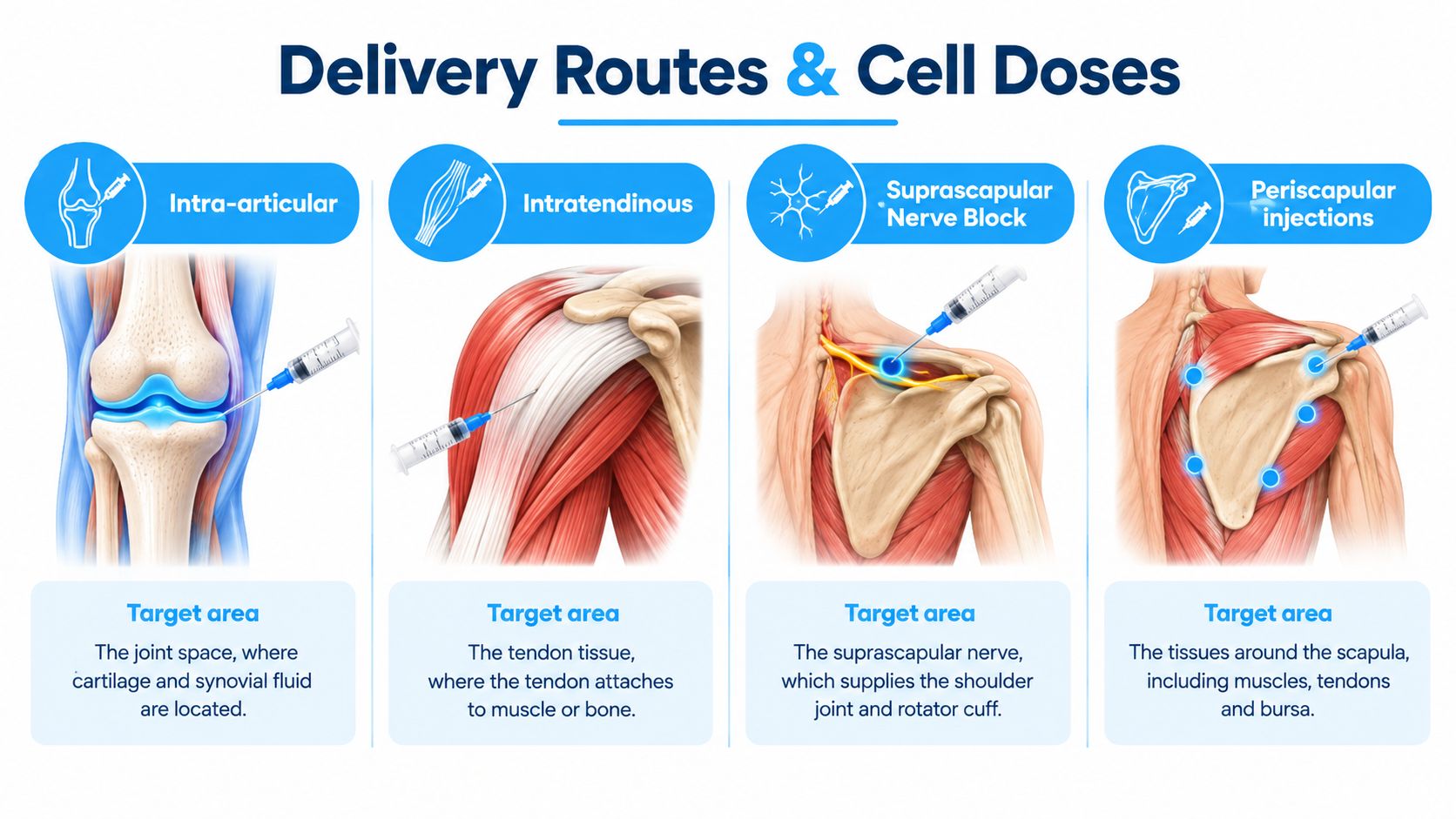
- Intra-articular injection: The clinician places the product inside the glenohumeral joint when the target is joint-related disease such as arthritis.
- Intratendinous injection: An ultrasound-guided needle targets abnormal rotator-cuff tendon tissue.
- Intravenous administration: IV delivery is systemic and isn't equivalent to placing cells directly into a tear or joint. It should not be presented as a substitute for targeted shoulder treatment without a clear rationale.
- Surgical adjunct: Cells or cell-containing material may be used alongside arthroscopic repair. Evidence for this approach shouldn't be treated as evidence for a standalone injection.
Reading cell-dose claims
A prospective rotator-cuff study summarized in a systematic review used ultrasound-guided intratendinous adipose-derived MSC injections in 3 mL of saline, with doses of 10 million, 50 million, or 100 million cells. The review found a statistically significant dose-response association for pain relief, but the pooled evidence included only 52 participants and just one randomized controlled trial. The numbers are useful for understanding what has been studied, not for selecting a guaranteed dose.
| Published dose | Delivery detail | What it can and can't tell you |
|---|---|---|
| 10 million cells | Intratendinous, in 3 mL of saline | A studied dose, not a proven minimum |
| 50 million cells | Intratendinous, in 3 mL of saline | A studied middle range, not a universal standard |
| 100 million cells | Intratendinous, in 3 mL of saline | A higher studied dose that doesn't guarantee a better result |
The evidence doesn't justify assuming that more cells produce superior shoulder outcomes. A serious protocol should document the tissue source, cell characterization, viability, sterility, processing method, injection volume, anatomical target, ultrasound guidance, rehabilitation plan, and adverse-event surveillance. Without those details, a cell count lacks useful context.
What a Shoulder MSC Procedure Actually Looks Like
A responsible visit starts before the injection. The clinician should review your symptoms, examination findings, prior treatment, medical history, and imaging rather than accepting “shoulder pain” as a sufficient diagnosis.
Before the procedure
A pre-procedure MRI can document the baseline shoulder status. It may help distinguish a partial or full-thickness rotator-cuff tear from tendinopathy, arthritis, muscle atrophy, tendon retraction, adhesive capsulitis, or another source of symptoms. The scan doesn't decide treatment by itself, but it gives the team something concrete to compare later.
Many autologous protocols use adipose-derived MSCs, although bone-marrow-derived approaches are also studied. Ask how the tissue is collected, processed, characterized, tested, and labeled. “Autologous” means the material comes from you, but it doesn't by itself describe cell quality or prove effectiveness.
During and after injection
The clinic should explain the intended target and the planned dose before treatment. Ultrasound guidance can help the clinician visualize the anatomy and place the needle at the intended tendon or joint location.
The on-site visit may take one to three hours, depending on intake, preparation, harvesting, processing, injection, and observation. The exact sequence varies by protocol, so a clinic should provide written details rather than relying on a generic description.
Afterward, expect instructions about activity, pain management, warning signs, and rehabilitation. Follow-up should include more than a casual message asking whether you feel better. A structured program may use remote check-ins around 3, 6, and 12 months, with pain scales, shoulder function measures, strength, range of motion, adverse-event review, and repeat imaging when clinically appropriate.
Ask for the baseline plan in writing: the target, source, processing, dose, guidance method, restrictions, rehabilitation, and outcome measures should all be clear before you travel or consent.
A Realistic Timeline From Injection to Meaningful Improvement
Consider a representative patient with a partial-thickness rotator-cuff tear and moderate glenohumeral pain. The MRI shows tendon damage, but not every symptom necessarily comes from the tear. The patient has already tried structured care and is now discussing an ultrasound-guided autologous adipose-derived MSC injection.
The first stage is preparation, not instant healing. The patient reviews the diagnosis, confirms the treatment target, discusses the cell source and dose, and receives a rehabilitation plan. After injection, soreness or a temporary flare can occur, and the patient shouldn't interpret the first few days as proof of success or failure.
The six-month checkpoint
An early first-in-human study reported that, at 6 months, SPADI scores improved by 80% in the mid-dose group and 77% in the high-dose group compared with baseline. The high-dose group also had a 71% reduction in shoulder pain, and investigators reported no treatment-associated adverse events in that study. These were changes within treatment groups, not proof that MSCs outperformed placebo, physical therapy, or surgery. The study was also small, so those percentages aren't a personal forecast.
A reasonable patient might notice changes in pain, sleep, reaching, or dressing before imaging shows a meaningful structural difference. Another patient might report little benefit. The treatment's comparative effectiveness remains unsettled, particularly for nonsurgical injection.
Pain relief answers one question. MRI and functional testing answer others. Feeling better doesn't prove that a tendon tear has closed.
At follow-up, compare the same measures used at baseline. Ask whether the shoulder is less painful, whether motion and strength improved, whether work or sport became easier, and whether imaging shows a structural change. Keep those outcomes separate. A patient can have meaningful symptom relief without confirmed tendon regeneration, or improved imaging without a clear clinical advantage.
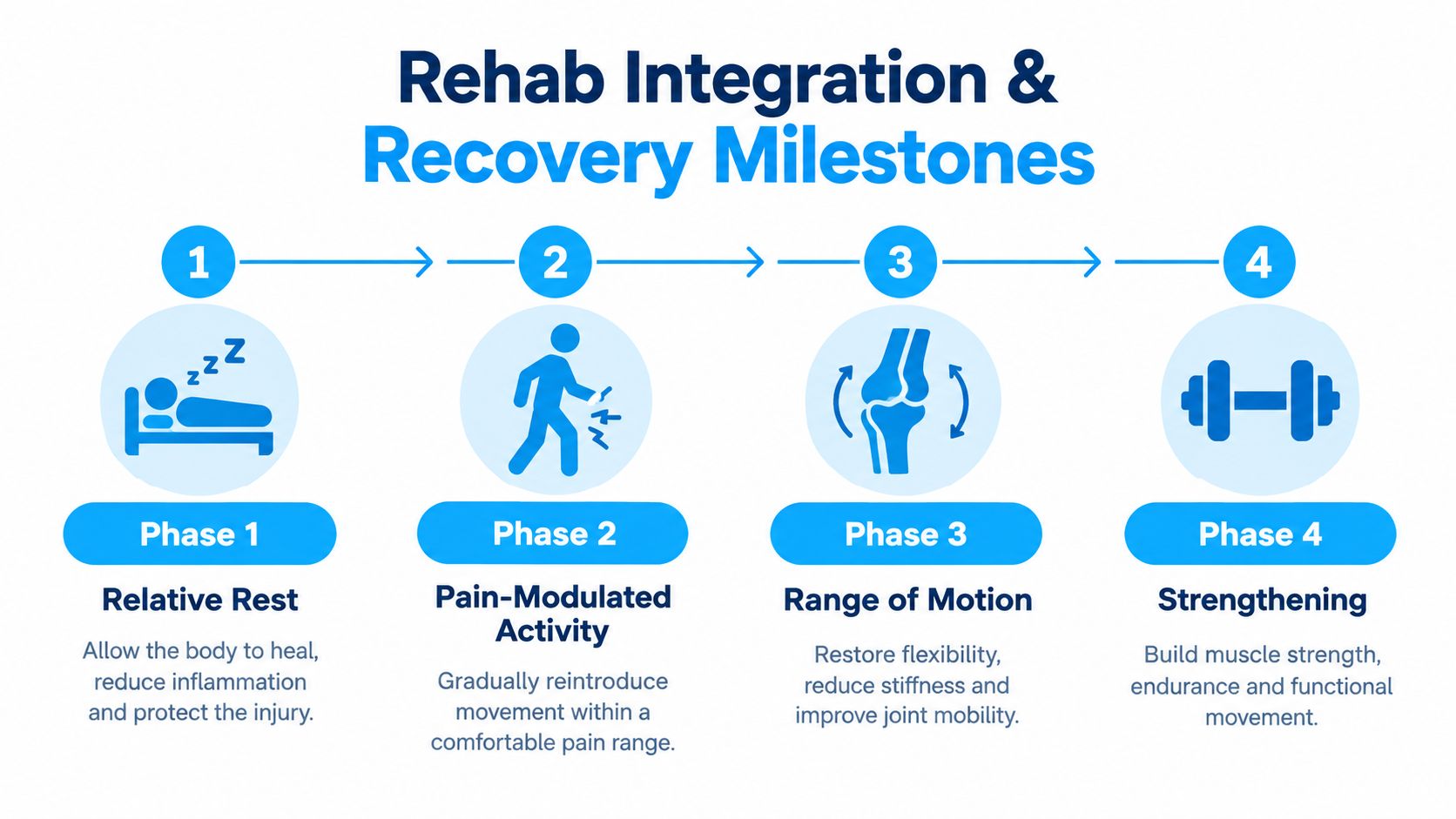
Rehab Integration and Recovery Milestones After a Shoulder Injection
An injection doesn't replace rehabilitation. The shoulder still needs controlled movement, progressive loading, and time for the nervous system and surrounding muscles to restore useful function.
Four practical phases
Phase one, relative rest: During the first week, avoid heavy lifting, forceful overhead work, and movements that sharply increase pain. Relative rest protects the treated area while the immediate post-injection response settles.
Phase two, pain-modulated activity: In the second through fourth weeks, activity should remain guided by symptoms rather than a rigid promise of complete inactivity. Gentle daily movement can help prevent unnecessary stiffness, but the treating clinician should define what is appropriate for a tendon injection, joint injection, or surgical adjunct.
Phase three, range of motion: As irritability permits, gentle range-of-motion work can restore reaching and rotation. The aim is controlled movement without provoking a sustained pain increase. Adhesive capsulitis needs particular attention because prolonged protection can worsen stiffness.
Phase four, strengthening: During the second and third months, progressive isometric and isotonic loading can rebuild capacity. The fourth through sixth months may allow heavier activity when strength, motion, control, and symptoms support it.
The paracrine signals under investigation may influence inflammation and remodeling, but they don't provide mechanical strength on their own. Progressive loading gives the repaired or recovering tissue a functional stimulus. That progression must be individualized, especially when a tear, arthritis, or surgical repair changes the shoulder's mechanical limits.
Functional milestones matter more than the calendar
A cautious return to lifting or sport should require:
- Pain control: Daily activity and the planned exercise load don't produce a persistent flare.
- Motion: The patient can reach and rotate through the required range without compensation.
- Strength: The affected side performs repeated controlled work without marked weakness or loss of form.
- Task tolerance: Sport-specific or job-specific movements can be introduced gradually.
- Clinical review: New weakness, worsening night pain, increasing swelling, fever, neurological symptoms, or a sudden loss of function warrants reassessment.
Calendar time can guide a plan, but it can't prove readiness. The injection and rehabilitation method determine the restrictions.
Safety, Regulation, and What to Ask Before Committing
A polished clinic website isn't evidence that a shoulder MSC protocol is approved or effective. The U.S. Food and Drug Administration states that no stem-cell products are approved for treating orthopedic conditions, including shoulder pain, osteoarthritis, or tendonitis, and warns that products marketed outside authorized research may not have demonstrated safety and effectiveness. Treatment in Mexico or another country may follow a different regulatory framework, but a different jurisdiction doesn't remove the need for product, clinician, and follow-up questions.
Questions for an international program
Ask for direct, written answers:
- Cell identity: Are the cells described as MSCs, adipose tissue, bone-marrow concentrate, or something else? How are they characterized?
- Preparation quality: What sterility, identity, viability, and contamination controls are used?
- Treatment target: Is the product injected intra-articularly, intratendinously, around a nerve, or used during surgery?
- Dose and volume: What exact cell count and injection volume are planned?
- Guidance: Will ultrasound or another imaging method guide needle placement?
- Clinician credentials: Who evaluates the shoulder and performs the procedure?
- Outcome tracking: Which pain, function, strength, motion, adverse-event, and imaging measures will be collected?
- Contingency planning: Who handles complications, worsening pain, infection concerns, or a result that doesn't meet expectations?
Patients also need to separate products that are often grouped together under “regenerative medicine.” PRP contains concentrated blood components and growth factors, not a living MSC product. Exosomes are extracellular vesicles, not the same thing as MSCs. Micro-fragmented adipose tissue is a tissue preparation, while a bioinductive implant is a surgical material used to support repair. The evidence for one shouldn't be borrowed to promote another.
A registered randomized trial in Denmark is comparing micro-fragmented adipose tissue with conventional surgery in 30 patients, using Oxford Shoulder Score as the primary 12-month outcome. Recruitment began in 2024, and the study was prospective rather than completed evidence. Likewise, the 2025 AAOS rotator-cuff update strongly recommends bioinductive implants during repair in selected surgical contexts, which is not the same as recommending injected MSC therapy.
For broader questions about assessing medical programs, this guide to how evaluate programs offers a useful framework for reviewing credentials, transparency, evidence, and follow-up. If pain is worse after an injection, seek clinical advice rather than assuming that a painful recovery proves the cells are working. A patient-facing discussion of worse pain after stem cell injection can help identify questions to raise with the treating team.
The decision is clearest when the diagnosis, alternatives, and success criteria are written down:
- Confirm the problem: Match symptoms to examination and imaging.
- Separate outcomes: Define whether the goal is pain reduction, functional improvement, structural healing, or a combination.
- Compare alternatives: Include continued physiotherapy, activity modification, medication options, injection alternatives, and surgery when indicated.
- Check the protocol: Verify source, characterization, sterility, dose, target, guidance, rehabilitation, and follow-up.
- Treat uncertainty: Promising signals justify careful investigation, not guaranteed regeneration.
Dream Body Clinic offers international patients a shoulder-focused MSC evaluation in Bucerias, Mexico, with published protocols that include MRI review, blood testing, targeted delivery, and structured remote follow-up. If you're considering stem cell therapy for a shoulder problem, visit Dream Body Clinic to discuss your diagnosis, treatment goals, and whether an investigational regenerative option fits your situation.