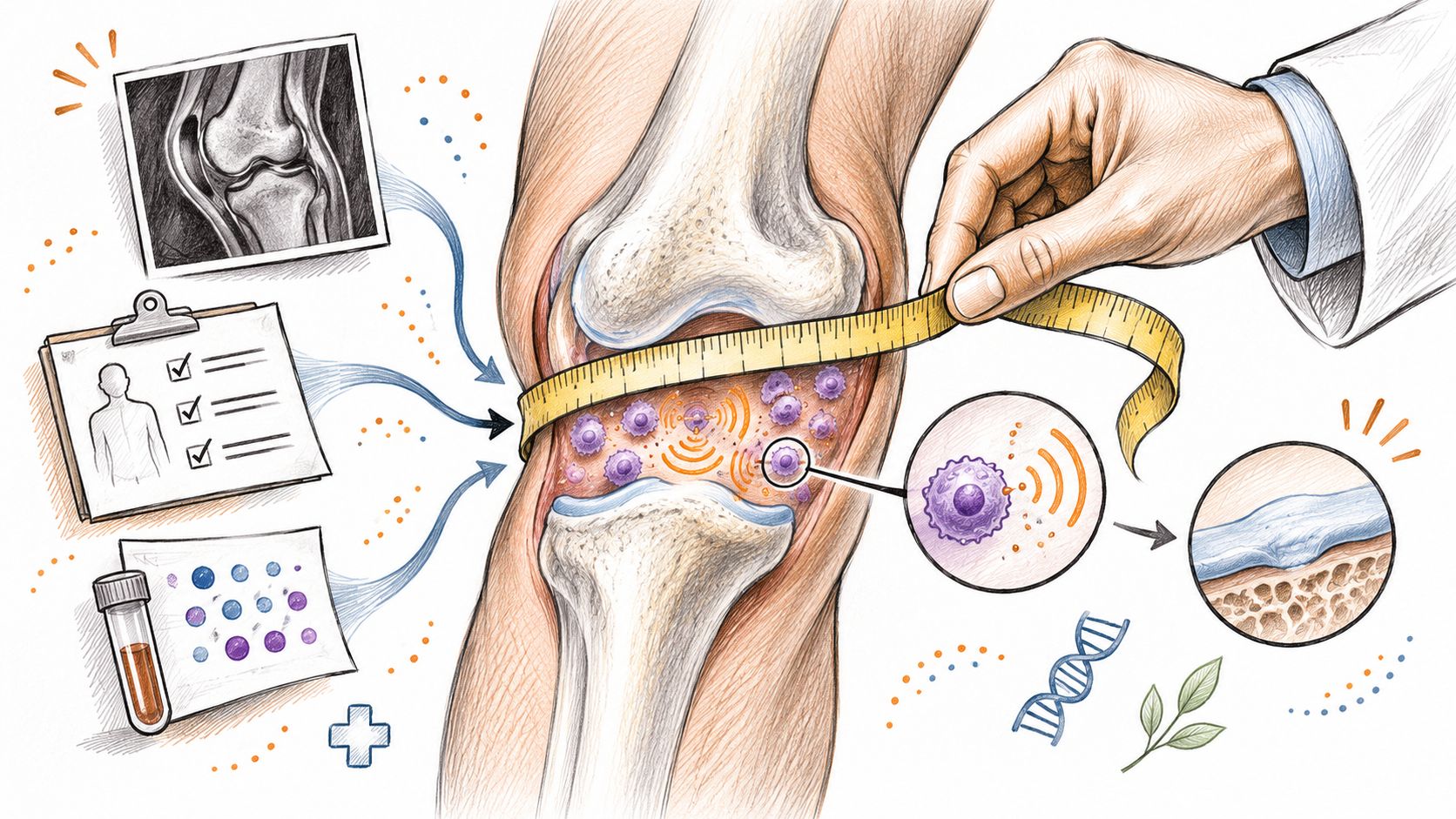

Most insurers don't pay for mesenchymal stem cell injections used for orthopedic, spine, autoimmune, anti-aging, or sexual health purposes. The main covered category is established hematopoietic stem cell transplantation for accepted blood disorders.
If you've already accepted that you'll pay out of pocket for a procedure abroad, here's the question most patients miss: who pays if a complication sends you to a hospital back home or requires an emergency medical flight? People asking does insurance cover stem cell treatments usually focus on the clinic invoice alone. That narrow view leaves out the biggest financial exposure in medical travel.
Cross-border care splits financial responsibility across your clinic, your primary health insurer, your travel insurer, and any home hospital that treats you later. A clear budget accounts for the procedure fee, normal follow-up, and worst-case downstream care before you ever book a flight. Knowing how payers draw the line between covered transplants and self-pay regenerative protocols helps you protect your savings from the start.
Table of Contents
- Coverage at a Glance by Treatment Type
- What Stem Cells Actually Do in Your Body
- Regulatory Status and Insurer Medical-Necessity Rules
- Costs That Can Fall Outside Your Policy Abroad
- How to Verify Coverage Before You Travel
- Confirm Your Coverage Before You Book Treatment
Coverage at a Glance by Treatment Type
Most commercial health plans and public programs decline to reimburse mesenchymal stem cell (MSC) injections, while established hematopoietic stem cell transplants for recognized blood cancers and bone marrow failure remain the primary category that qualifies for payment.
That distinction trips up a lot of patients because the phrase "stem cell therapy" covers very different medical procedures. A hospital-based blood transplant and an outpatient joint injection share a broad label, yet insurers evaluate them under completely separate policy rules. Calling a procedure "usually not covered" reflects how payers classify reimbursement, not whether a protocol is safe or clinically helpful.
| Treatment or use | Typical coverage | Key check |
|---|---|---|
| Hematopoietic stem cell transplant for leukemia, aplastic anemia, or myelodysplastic syndromes | Often covered when medical-necessity criteria are met | Written preauthorization and an accepted hospital |
| MSC injection for knee, hip, or shoulder osteoarthritis, or labral and meniscus injury | Usually not covered | Written confirmation of the exact diagnosis and procedure |
| MSC injection for disc disease, sciatica, or neck pain | Usually not covered | Same written confirmation, plus imaging benefits |
| MSC therapy for multiple sclerosis or other autoimmune disease | Usually not covered | Confirm in writing whether any part is treated as covered care |
| Anti-aging, facial, hair, or sexual health protocols | Not covered | Plan for self-pay unless the insurer confirms otherwise in writing |
| Consultation, MRI, and lab tests around the procedure | Sometimes covered | Confirm which benefits apply, separately from the cell procedure |
How Payers Sort Each Row
Conventional blood and marrow transplants sit at the top of the table for a clear reason. According to the Medicare National Coverage Determination for Stem Cell Transplantation, covered hematopoietic transplantation is handled as an integrated hospital course covering mobilization, cell collection, conditioning chemotherapy or radiotherapy, and the transplant itself for defined hematologic conditions like leukemia, aplastic anemia, and qualifying myelodysplastic syndromes.
Joint and spine protocols fall into a different bucket. Even when imaging clearly shows knee osteoarthritis, a meniscus tear, a hip labral injury, herniated discs, or sciatica, payers rarely reimburse the MSC injection itself. Autoimmune protocols for conditions such as multiple sclerosis, rheumatoid arthritis, or lupus face the same policy hurdle, while anti-aging, facial, hair, and sexual health treatments are excluded across standard health plans.
Ancillary medical services are the one row where partial benefits often survive. Your health plan may still cover an initial specialist consultation, a diagnostic MRI, routine blood work, or standard follow-up visits back home even when it won't reimburse the cell procedure. Checking those line items separately prevents you from paying cash for scans or lab panels your domestic plan already covers.
Three Checks That Move a Claim Closer to Coverage
When a policy leaves room for review, three documented pieces decide whether any part of your care gets reimbursed:
- Recognized Diagnosis Code: Your medical records must tie the procedure to a specific condition listed in your insurer's clinical policy, not a broad symptom like general joint stiffness.
- Written Preauthorization: A formal predetermination letter confirms how the payer classifies the billing codes before you incur charges, replacing guesswork with a paper trail.
- Accepted Facility and Provider: Even covered services get denied if the clinic or hospital sits outside the insurer's network or geographic coverage area without an approved exception.
What Stem Cells Actually Do in Your Body
Before diving into policy rules, it helps to clear up a widespread myth about how regenerative cell therapy works. Imagine a damaged bridge that needs structural repair. Many assume injected stem cells act like fresh bricks stacked directly into the cracks to become new cartilage, nerve fibers, or organ tissue.
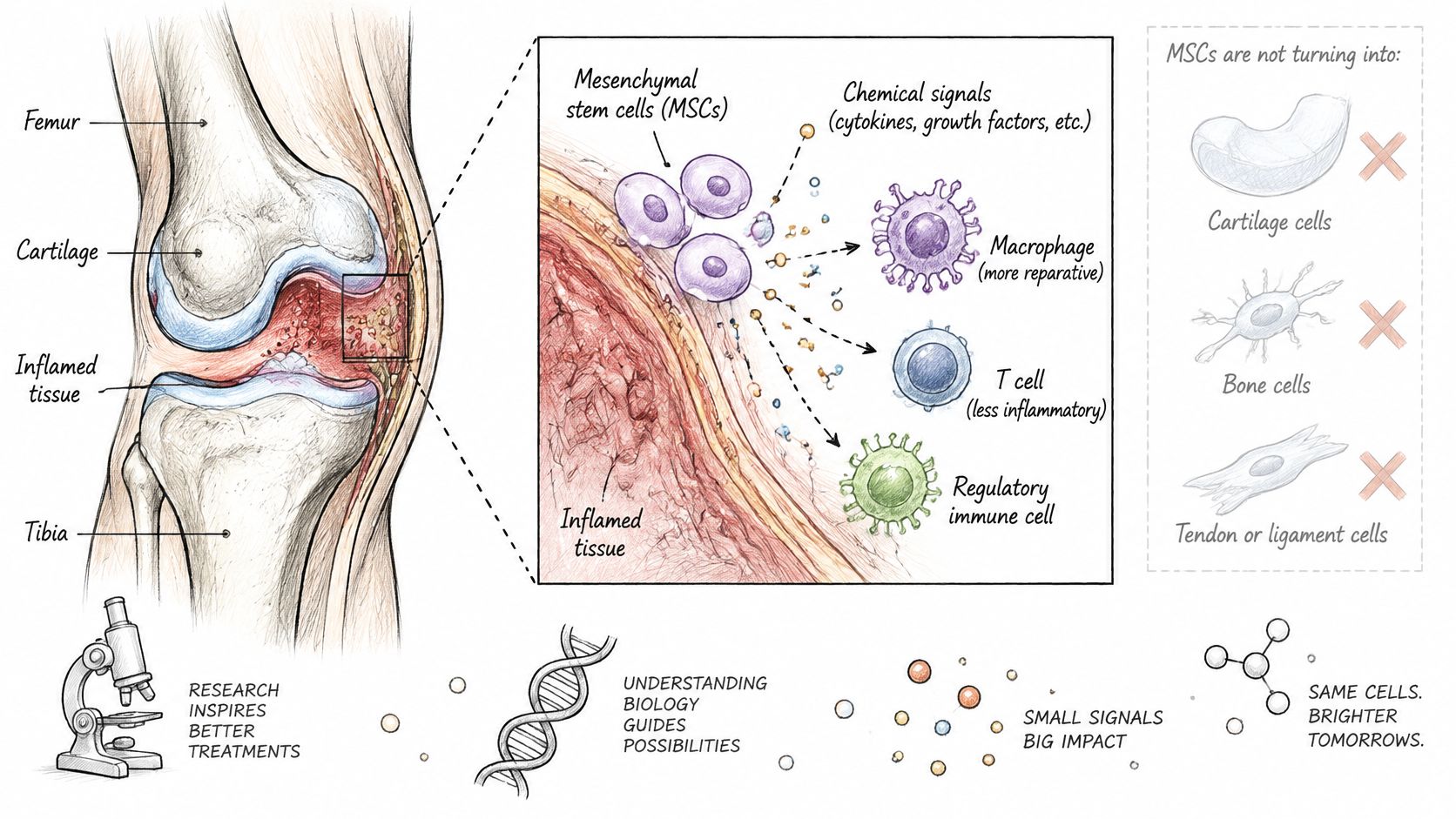
In reality, mesenchymal stem cells act much more like a site foreman arriving on a stalled construction job. They don't differentiate into other cells to permanently replace your damaged tissue. Instead, they work via the paracrine effect, releasing specialized biological signals and soluble factors that direct your body's own repair crew to calm down and get back to work.
How Paracrine Signaling Guides Healing
When chronic inflammation locks a joint or spine segment into a cycle of pain and breakdown, local tissue struggles to recover on its own. Research published in Regenerative Medicine on MSC mechanisms in knee osteoarthritis describes mesenchymal stem cell activity as anti-inflammatory, anti-catabolic, and trophic, altering the local joint environment rather than turning directly into new chondrocytes.
In practical terms, those paracrine signals do three useful jobs inside injured tissue:
- Quieting Inflammatory Activity: Secreted proteins dial back overactive immune signaling that drives swelling and persistent joint pain.
- Slowing Tissue Breakdown: Anti-catabolic signals help limit the enzymes that continue eroding cartilage or disc structure.
- Supporting Local Remodeling: Trophic factors encourage healthy extracellular-matrix turnover and new micro-vessel formation so surrounding cells receive better support.
Because MSCs guide healing through chemical communication rather than permanent cell replacement, their biological role fits conditions marked by persistent inflammation and degeneration, including knee arthritis, meniscus and ligament injuries, degenerative disc disease, and facet-joint arthritis.
What Clinical Evidence Shows and What It Doesn't
Patients often ask why insurers still refuse payment if published clinical studies report meaningful relief. A concrete orthopedic example makes the gap clear. In a phase II multicenter randomized clinical trial published in PMC, researchers evaluated autologous bone-marrow MSCs paired with platelet-rich growth-factor (PRGF) treatment for knee osteoarthritis.
Patients receiving the combined MSC and PRGF therapy saw their mean pain score on the visual analogue scale fall from 5.3 at baseline to 3.5 at 12 months, a statistically significant drop (P = 0.01), with no adverse effects reported during administration or follow-up. Those findings reinforce why orthopedic protocols often pair mesenchymal stem cells with platelet-based adjuncts for knee osteoarthritis.
Positive trial results show clinical promise, yet they don't guarantee identical pain relief for every patient, promise surgery avoidance in every case, or prove that MSCs rebuild every torn meniscus or ligament.
Even strong biological rationale and encouraging randomized trial data don't automatically trigger insurance coverage. Health plans base payment on formal regulatory pathways and internal medical-necessity thresholds, which operate on a much slower clock than emerging regenerative medicine.
Regulatory Status and Insurer Medical-Necessity Rules
Payers don't approve claims based on whether a clinic offers a promising procedure. They check two distinct rulebooks: national regulatory approval in your home country and their own written medical-necessity definitions. Mixing up those two standards is the main reason patients get blindsided by claim denials.
US FDA Approval Compared With Mexico COFEPRIS Oversight
In the United States, the FDA consumer alert on regenerative medicine products states that the only stem-cell products currently approved for routine use are blood-forming hematopoietic progenitor cells derived from umbilical cord blood. Their approved scope is restricted to disorders affecting blood production, and FDA approval doesn't extend to orthopedic, neurological, autoimmune, anti-aging, or sexual-health applications.
When people hear that mesenchymal stem cell therapies aren't FDA approved in the United States, they often assume those treatments lack medical oversight everywhere. That's not the case in Mexico. Stem cell therapy at Dream Body Clinic is approved by COFEPRIS, the FDA equivalent in Mexico, which authorizes and oversees biological and cell-based clinical activities at our facility in Bucerias, Nayarit.
As detailed in the AABB overview of Mexico's cellular therapy regulator, COFEPRIS serves as the competent national health authority governing relevant biological and cell-based protocols. You can review how these national frameworks differ in our guide on whether stem cells are legal. Still, COFEPRIS oversight answers a clinical authorization question in Mexico rather than an insurance reimbursement question in the United States or Canada. A US or Canadian health plan generally treats overseas MSC protocols as investigational or not medically necessary, regardless of Mexican regulatory approval.
Medicare as the National Coverage Benchmark
Private commercial insurers frequently mirror how federal Medicare draws its coverage lines. Under the CMS National Coverage Determination 110.23, Medicare covers hematopoietic stem-cell transplantation only for strictly defined clinical scenarios. Effective March 6, 2024, CMS expanded coverage to include allogeneic hematopoietic transplantation using bone marrow, peripheral blood, or umbilical-cord-blood products for beneficiaries with myelodysplastic syndromes who meet specified prognostic-risk criteria, alongside nationally covered contexts like leukemia and aplastic anemia.
Notice how tightly written those criteria are. Coverage applies to proven blood and marrow disorders under strict eligibility rules, not as a blanket benefit for cellular medicine. Even within established advanced therapies, reimbursement friction is widespread: in 2025, 81% of respondents to Cardinal Health's advanced-therapies survey reported encountering medical-policy coverage challenges frequently or occasionally, and 82% said those challenges had a moderate-to-severe effect on their ability to provide cell and gene therapies, according to the IPD Analytics summary of the Cardinal Health report.
Exact Details Payers Match Before Paying a Claim
Saying a policy "covers stem cells" means almost nothing on its own. Claims reviewers evaluate a strict bundle of clinical and administrative details before approving a single dollar:
- Diagnosis Code: The documented ICD code showing the exact medical condition being treated.
- Cell Source and Processing Method: Whether cells come from umbilical cord blood, bone marrow, donor tissue, or another regulated source, and how they're processed.
- Route of Administration: Whether cells are delivered via joint injection, intravenous infusion, intrathecal route, or bone marrow transplant.
- Provider, Facility, and Billing Code: Who performs the service, where the facility is located, and whether the exact CPT or procedure code appears on the plan's covered list.
Practical rule: A written preauthorization tied to your exact diagnosis and procedure code is worth ten times more than a customer-service representative saying your plan "covers stem cell therapy."
If you hold a private or international policy outside US Medicare, pull out the actual benefits contract and read three sections: the medical-necessity definition, the exclusions for out-of-country or non-standard biologic care, and the prior-authorization rules. Policy wording, not regulatory status across a border, decides whether your insurer cuts a check.
Costs That Can Fall Outside Your Policy Abroad
Most patients researching medical travel assume the clinic fee is the biggest number they need to budget for. That assumption can backfire fast. Even when you plan from day one to self-pay for your stem cell procedure abroad, the largest potential expense is often downstream care if an unexpected complication arises during travel or after you return home.

The American Academy of Orthopaedic Surgeons guide on medical tourism warns that domestic health insurance may not cover complications stemming from treatment received abroad, and recommends checking your plan for emergency and follow-up care rules before leaving home. Some primary insurers invoke policy exclusions when the original procedure was elective, investigational, or performed outside their network, leaving the patient holding the bill for hospitalization, revision treatment, diagnostic imaging, or rehabilitation.
How One Medical Complication Splits Across Four Payers
Think of cross-border risk as a single worst-case bill divided among four separate parties: your treating clinic abroad, your supplemental travel insurer, your primary health insurer at home, and the home hospital that admits you if something goes wrong. Each party only answers for the narrow slice listed in its own contract.
Gaps open right where those contracts fail to overlap. Supplemental travel insurance may pay for emergency medical evacuation or certain post-procedure needs, yet only when those benefits are explicitly written into the policy without an exclusion for elective medical travel. Understanding real air-transport exposure, such as helicopter versus fixed-wing evacuation pricing, shows why assuming a standard credit-card travel perk will cover a medical flight is risky.
Building a Three-Part Budget With Scale Context
A realistic cross-border budget has three distinct buckets: the itemized clinic invoice, expected routine follow-up at home (such as physical therapy or repeat imaging), and a worst-case complication reserve covering emergency care, evacuation, and revision treatment.
Published US patient-funded figures give a rough sense of market scale, though they aren't Dream Body Clinic prices. In 2024, MedPage Today reported that a typical patient-funded stem-cell treatment at a profiled clinic cost $8,900, while a 12-treatment option reached $41,500, with the clinic not accepting insurance. That same $41,500 price for a 12-treatment option appeared in 2024 California court documents cited by CalMatters, which noted patients paid tens of thousands of dollars themselves without insurance coverage.
| Example | Source type | Reported price |
|---|---|---|
| Typical patient-funded stem-cell treatment | 2024 reporting | $8,900 |
| 12-treatment stem-cell option | 2024 court documents and reporting | $41,500 |
Because quotes differ widely by protocol and cell count, review our detailed breakdown of stem cell therapy cost and request an itemized written estimate specific to your diagnosis before mapping out your total budget.
Written Questions to Ask Your Insurer About Downstream Care
Never rely on a quick phone chat to gauge your exposure. Send these exact questions to your primary insurer and travel insurer in writing, then keep printed copies to bring with you and share with your home hospital if needed:
- Foreign-Provider Exclusions: Does my policy exclude any coverage because the initial procedure takes place outside my home country or network?
- Complications of Noncovered Care: If I develop an infection, reaction, or other complication after a self-pay elective procedure abroad, will my plan pay for emergency hospitalization, surgery, or revision care back home?
- Ambulance and Medical Evacuation: Does my primary plan or supplemental travel policy cover ground ambulance transport and air medical evacuation back to my home country, and what are the exact dollar caps?
- Diagnostic Imaging and Rehabilitation: Will my insurer cover follow-up MRIs, lab tests, or physical therapy ordered by my local doctor after I return?
- Prior Authorization Triggers: Do any post-travel follow-up services require prior authorization before I schedule them?
How to Verify Coverage Before You Travel
Coverage verification works like pre-boarding a flight. Every document you check in advance is one less surprise at the gate, and the gate here is your own money. Start this checklist about two weeks before travel so claims representatives and travel underwriters have time to reply in writing while you can still adjust dates or funding.
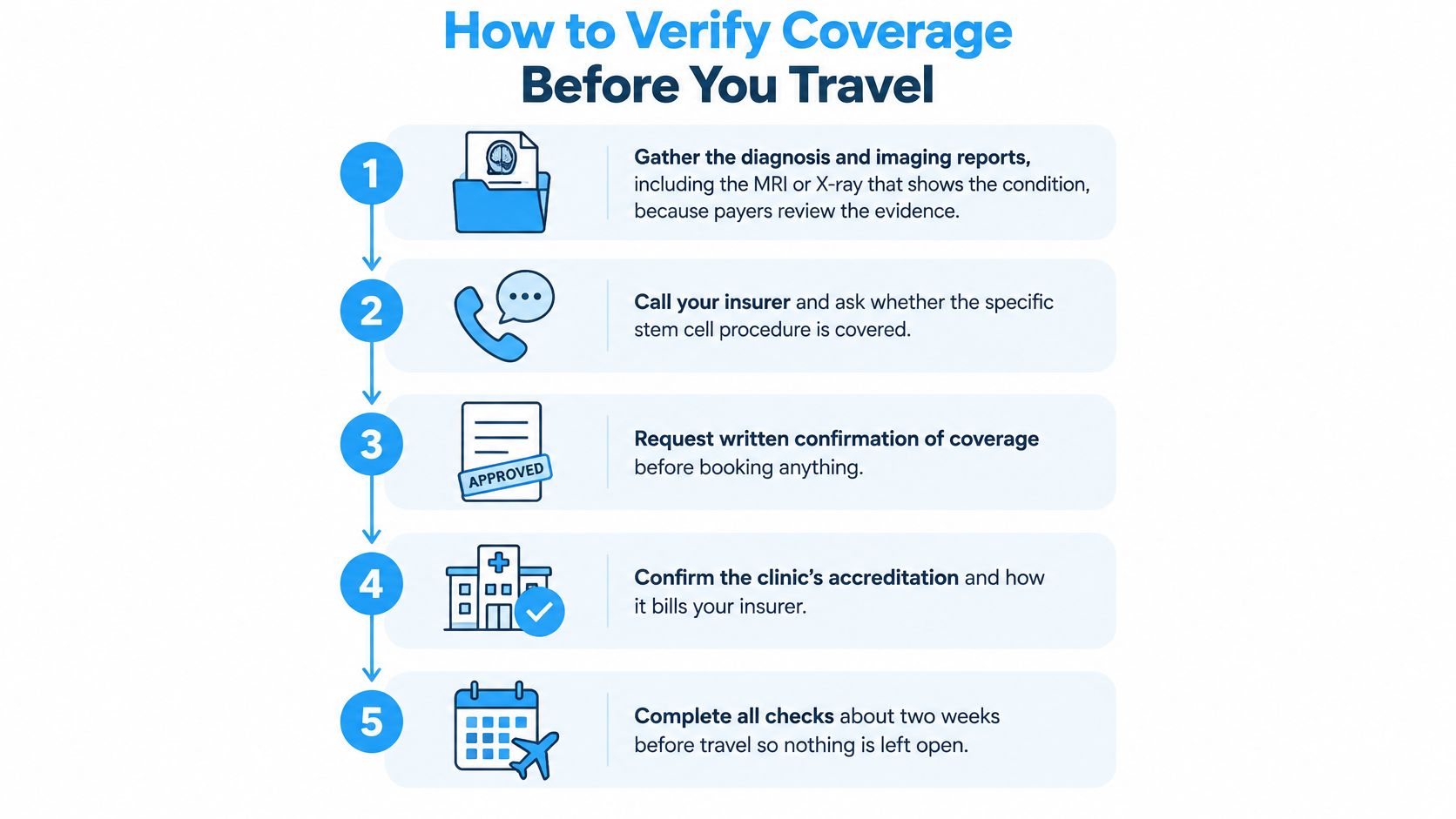
- Pull together your documented diagnosis and recent imaging. Gather your radiologist reports, MRI or X-ray files, and physician notes before calling anyone. Insurers never evaluate coverage in the abstract; they match benefits against documented clinical findings, so a file with dates, findings, and physician signatures moves your request out of the hypothetical pile.
- Request a line-by-line written estimate from the clinic. Ask for a document separating the consultation, the cell procedure (including exact cell count and delivery route), imaging, laboratory work, any platelet-rich plasma (PRP), and scheduled follow-up. At Dream Body Clinic, we also provide detailed invoices you can submit to your HSA or FSA administrator to check eligibility under your account rules.
- Submit the diagnosis and itemized estimate for written predetermination. Send both documents through your insurer's secure portal and ask for a formal written preauthorization or predetermination letter. That single step confirms whether any line item qualifies for partial benefits instead of relying on verbal guesses.
- Put your downstream complication questions in writing. Ask specifically about emergency care, hospitalization, imaging, rehabilitation, and exclusions tied to noncovered or out-of-country procedures, then save every PDF reply in one dedicated folder. Actual exposure often hides in those details. A clinic invoice is a fixed number you can plan for, while an evacuation flight or a week of home hospital care after a complication is an open-ended bill, so the written answers here matter more than the answer about the procedure itself.
- Audit your supplemental travel medical policy and stay reachable abroad. Read the fine print for medical evacuation caps, complication coverage, hospitalization limits, and pre-existing condition exclusions, because each cap defines a worst-case ceiling you would pay out of pocket. Then arrange reliable local phone and data access in Mexico so you can reach your insurer's assistance desk or your home physician the same day a question comes up. Resources offering help choosing an eSIM plan walk you through keeping that connection active without roaming interruptions, which matters when a claims representative or doctor needs to reach you quickly.
- Confirm post-treatment records and follow-up coordination with your clinic. Ask exactly which discharge summaries, imaging copies, and protocol records you'll take home, and how the medical team checks on your recovery afterward. Our team schedules remote follow-up check-ins at about 3, 6, and 12 months, and you can review every credential and clinical safeguard worth vetting in our guide on how to choose a stem cell clinic.
- Log every interaction like an audit trail. Record the date, representative's full name, direct department, and reference number for every call or portal message so an insurer can't backtrack on an earlier written answer.
- Request written denial reasons and appeal rules when a claim is refused. If your insurer denies coverage for ancillary scans, labs, or part of your care, ask for the formal denial notice explaining the exact policy clause, your appeal deadline, and whether any clinical exception pathway exists. A denial letter is a starting point for an appeal, not a final answer.
- Weigh your expected cash total against your worst-case scenario before booking. Line up the itemized clinic quote, travel expenses, expected home rehab, and potential complication reserve side by side so you know the true ceiling before buying nonrefundable tickets. The worst-case column, not the best-case one, is what your savings need to absorb.
If your insurer won't confirm a benefit in writing before you travel, treat that line item as 100% self-pay in your budget.
Confirm Your Coverage Before You Book Treatment
The final step before booking works like checking both the price tag and the warranty before a major purchase. You already know most insurers will not pay for mesenchymal stem cell injections themselves. What catches medical travelers off guard is the money at risk around the procedure: a complication that needs hospital care abroad, an emergency evacuation flight, or months of follow-up treatment once you are home. Those downstream costs can dwarf the clinic invoice, so your coverage check should price the worst case alongside the best case.
Work through the decision in a clear order. Get your insurer's answers in writing. Budget every unconfirmed expense as self-pay. Then decide whether regenerative treatment fits your health goals and your finances.
How Dream Body Clinic Organizes Its Treatment Protocols
At Dream Body Clinic, licensed medical professionals with advanced stem cell training deliver COFEPRIS-regulated protocols grouped into four core clinical areas: Orthopedic Stem Cell Treatments, Autoimmune Disease Stem Cell Treatments, Organ Disease Stem Cell Treatments, and Brain and Nerve Stem Cell Treatment. Across these categories, stem cell therapy at the clinic ranges from $1,750 to $14,500 depending on the condition treated, with dedicated pages on the website detailing protocols, dosing, and supporting research.
The protocols target orthopedic, spine, autoimmune, organ, and neurological issues, including:
- Knee Stem Cell Treatment: Uses 50 million mesenchymal stem cells and includes an MRI, targeting knee osteoarthritis alongside partially torn meniscus, ACL, PCL, and MCL injuries.
- Stem Cell Hip Treatment: Combines 50 million mesenchymal stem cells plus PRP and includes an MRI to address hip joint degeneration and soft-tissue damage.
- Lower Back and Neck Spine Protocols: Designed to target herniated discs, degenerative disc disease, facet joint arthritis, sciatica, and related nerve pain or numbness.
Weighing Written Insurance Answers Against Your Estimate
Before booking flights to Bucerias, request a complimentary case review so the medical team can evaluate your MRI, diagnosis, and health history. Ask for an itemized written estimate with a clear breakdown of what is included, such as pre-treatment imaging and structured remote follow-up check-ins at roughly 3, 6, and 12 months.
Then run the comparison that protects your money. Place the clinic estimate next to your insurer's written predetermination and your travel policy's evacuation terms, and add a separate line for recovery at home: physical therapy, repeat imaging, and any complication care your domestic plan would cover only inside its network. That total, not the clinic invoice alone, is your true financial ceiling.
One number deserves special attention. Ask your travel insurer for the maximum evacuation payout in writing, because an air ambulance repatriation is the single largest surprise expense medical travelers face. If the cap is low or the answer is vague, treat evacuation as a self-pay risk and price it into your reserve.
Be realistic about clinical outcomes as well as finances. Stem cell therapy offers no guarantees and is not promoted as a cure. How well your body responds depends on your specific diagnosis, imaging findings, overall health, and individual healing factors, so results vary from patient to patient. A clinic that states this plainly is giving you the honest frame for your decision: you are paying out of pocket for a treatment with variable results, and your insurance planning exists to protect you from everything that could happen around it.
Dream Body Clinic provides COFEPRIS-regulated mesenchymal stem cell protocols for orthopedic, spine, autoimmune, organ, and neurological conditions, with itemized estimates and detailed invoices you can submit for HSA or FSA review. If you are ready to match your imaging and diagnosis against a clear self-pay plan before traveling, request a complimentary case review through Dream Body Clinic.