Maybe it started with one pill and a reassuring “this is very common.” Years later you take two or three, you check your numbers at the pharmacy machine, and they still creep up. Perhaps one medicine made your ankles swell, another gave you a dry cough, and you’re wondering whether this is simply your life now.
It’s natural to look at newer options, including mesenchymal stem cells (MSCs). This guide explains what high blood pressure does to your blood vessels, what standard care offers, what the research on MSCs shows, what our protocol involves and costs, and who may be a candidate.
The short version: stem cell therapy for high blood pressure is investigational. The research is early but encouraging. Animal studies are promising, and small human trials in a related condition (narrowed kidney arteries) saw modest drops in blood pressure. There are no controlled trials in everyday (primary) hypertension yet, and nothing here replaces your blood pressure medicines or the doctor who prescribes them.
What High Blood Pressure Does to Your Body
Blood pressure is the force of blood pushing against your artery walls. According to the CDC, nearly half of U.S. adults (48.1%) have high blood pressure, and only about 1 in 4 of them has it under control. It’s a major risk factor for heart disease and stroke, which are leading causes of death in the United States.
Under the 2025 American Heart Association/American College of Cardiology guideline, normal blood pressure is below 120/80, and the overall treatment goal for most adults is below 130/80 (Jones et al., Hypertension, 2025).
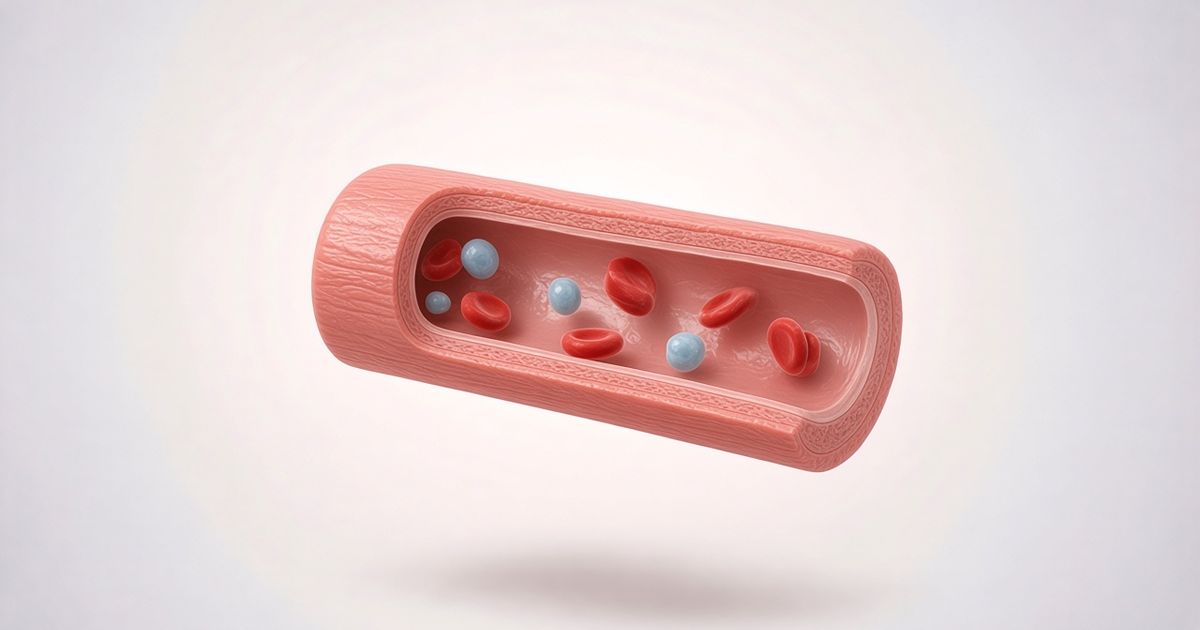
Most people have primary (essential) hypertension, which builds up over years from a mix of genes, age, weight, salt, alcohol, sleep and stress. Some have secondary hypertension, caused by something specific such as a narrowed kidney artery, a hormone problem or a medicine. Over time, high pressure stiffens arteries, strains the heart and damages small blood vessels in the kidneys, brain and eyes. Researchers have also linked hypertension to low-grade inflammation and to the inner lining of the blood vessels (the endothelium) not relaxing as it should. That inflammation and stiffness are what scientists hope cell therapy might calm.
What Standard Care Can Do
Standard care for hypertension works, and it’s well proven. The National Heart, Lung, and Blood Institute describes two pillars:
- Lifestyle changes. The DASH eating plan with less salt can lower blood pressure about as much as some medicines. Regular activity, limiting alcohol, weight loss (even 3–5%), quitting smoking, managing stress and 7–9 hours of good sleep all help.
- Medicines. ACE inhibitors, angiotensin receptor blockers, calcium channel blockers and thiazide-type diuretics are the mainstays. Many people need two or more to reach their goal.
For resistant hypertension (blood pressure still high on several medicines at good doses), the 2025 guideline recommends checking carefully for secondary causes and interfering medicines, and says a procedure called renal denervation may be reasonable for carefully selected patients after review by a specialist team.
If your numbers aren’t where they should be, the first step is usually a conversation with your own doctor about dose, combination, home readings and possible secondary causes. Cell therapy is being studied as a possible addition to that care, not a replacement for it.
How MSCs Are Thought to Help
MSCs are signaling cells. Rather than becoming new blood vessel tissue, they’re thought to release proteins and tiny particles that calm inflammation and support the cells lining blood vessels. Our cells come from donated Wharton’s jelly (umbilical cord tissue) and placenta from healthy births. (See our plain-language guide to stem cells and donor versus your own cells.)
In animal studies, MSCs and the particles they release appear to lower inflammatory signals, help blood vessels relax, reduce scarring in the kidney and calm the overactive “fight or flight” nerve signals that push blood pressure up. These mechanisms explain the scientific interest, but they haven’t been proven to lower blood pressure in people with primary hypertension.
What the Research Shows
Animal studies: encouraging
Most evidence comes from rats and pigs:
- Kidney-artery hypertension in rats. Weekly IV MSCs stopped blood pressure from climbing further, reduced protein in the urine and kidney scarring, and calmed overactive nerve signals (Oliveira-Sales et al., PLoS One, 2013).
- Genetically hypertensive rats. MSCs made from stem cells significantly lowered blood pressure and inflammation in the heart and kidneys, apparently by acting through nerves in the spleen (Zhang et al., Sci China Life Sci, 2025). In an earlier study, specially primed MSCs lowered blood pressure for about 10 days and improved blood vessel relaxation (de Oliveira et al., Stem Cells Int, 2015).
- Aging-related stiffness in mice. Particles released by MSCs reduced arterial stiffness and age-related blood pressure rise in older mice (Feng et al., J Extracell Vesicles, 2020).
A 2026 systematic review was more cautious: it found the animal evidence on one proposed pathway (gut bacteria) biologically plausible, but said it doesn’t yet establish a blood-pressure-lowering effect (Kumereshwaran et al., Mol Biol Rep, 2026).
Human evidence: early but hopeful
The best human data come from Mayo Clinic trials in atherosclerotic renovascular disease, where a narrowed kidney artery drives blood pressure up and damages the kidney:
- First-in-human study (2017). Fourteen patients received a single infusion of their own fat-derived MSCs directly into the kidney artery, compared with 14 matched patients on medicines alone. The infusions were well tolerated. After three months, blood flow and oxygen in the treated kidney improved, and kidney filtration held steady while it fell in the comparison group (Saad et al., J Am Soc Nephrol, 2017).
- Dose-escalation trial (2020). In 21 treated patients, average systolic blood pressure fell from 144 to 136 mmHg three months after infusion, kidney blood flow and filtration rose modestly, and inflammation markers dropped. The changes were largest at the highest dose, and no such changes were seen in 18 patients on medicines alone (Abumoawad et al., Kidney Int, 2020).
These results are genuinely encouraging, but they have limits. Patients weren’t randomized, the groups were small, and the cells were each patient’s own, delivered straight into the kidney artery.
What’s missing
There’s no randomized, placebo-controlled trial of MSCs for primary hypertension yet. When we searched ClinicalTrials.gov on November 22, 2026, the MSC studies linked to high blood pressure were the two completed Mayo kidney-artery studies (NCT01840540, NCT02266394) and one recruiting placebo-controlled trial of IV MSC-derived exosomes for blood vessel function in women after preeclampsia (NCT07183384). None tests MSCs for everyday hypertension. Pulmonary hypertension (high pressure in the lung arteries) is a different disease with its own separate research.
How our protocol compares
No published study has used our approach: donor MSCs given by IV for hypertension. The human trials above used patients’ own cells delivered into the kidney artery, for a different type of hypertension. On safety, a 2020 meta-analysis of 55 randomized trials of MSCs given into the bloodstream (more than 2,600 patients with various conditions) linked them to more short-lived fever, but not to more infections, blood clots, cancer or deaths (Thompson et al., eClinicalMedicine, 2020). None of those trials studied hypertension.
Our High Blood Pressure Protocol
Our high blood pressure protocol is $11,500 USD and includes:
- 300 million MSCs by IV infusion
- An NAD+ and high-dose vitamin C IV drip after the stem cells
- Bloodwork and physician review before treatment
Cells are grown in our on-site lab in an ISO 7 cleanroom, tested to ISO 14644-1, given within 24 hours of leaving culture, and checked by third-party labs for identity, sterility, mycoplasma and endotoxins. See how our cells are made and our licenses and lab certificates. Dream Body Clinic is licensed by COFEPRIS, Mexico’s equivalent of the FDA; the licenses cover our facility and lab, not an approval of stem cells for high blood pressure. Flights and hotel are separate; see stem cell therapy costs in Mexico and organ disease treatment prices.
Your 4-day stay in Bucerias, Nayarit (Puerto Vallarta Area)
| Day | What happens |
|---|---|
| Day 1 | Arrive and rest |
| Day 2 | Bloodwork, then payment |
| Day 3 | Treatment: stem cell IV, then NAD+ and vitamin C drip |
| Day 4 | Fly home |
After you go home, we check in remotely at 3, 6 and 12 months. Our patient journey guide, travel guide and hotel list explain the rest.
Who May Be a Candidate
You may be a candidate if your hypertension has been diagnosed and is being managed by your own doctor; your blood pressure is reasonably stable on your current medicines but you’d like to explore an additional, investigational option; and any possible secondary cause (such as a kidney artery or hormone problem) has been looked at. You should be well enough to fly and understand that this is investigational and results vary.
You may not be a candidate if you’ve had cancer in the past five years, your blood pressure is very high or poorly controlled right now, you’ve had a recent heart attack or stroke, you have severe heart or kidney failure that makes an IV drip risky, you have an active infection, or you’re pregnant. People living with related conditions may also find our guides on type 2 diabetes, chronic kidney disease, heart failure and stroke recovery helpful.
Keep taking your blood pressure medicines. Don’t stop or lower any medicine on your own, before or after treatment. Stopping some medicines suddenly, such as beta blockers or clonidine, can make blood pressure spike. Your regular heart and blood pressure medicines usually continue during treatment; tell our physician about everything you take, including aspirin or blood thinners. Keep checking your blood pressure at home afterward and share the readings with your doctor. If your numbers change, any dose adjustment should come from them.
Risks and Side Effects
MSC infusions are generally well tolerated in studies, but no treatment is risk-free. Possible effects include a mild fever or headache for a few hours after treatment or the next day, tiredness, and bruising or soreness at the IV site. Any IV carries a small risk of infection, vein irritation or a blood clot, which is one reason we do bloodwork first. Some people feel flushing or chest tightness during an NAD+ drip, which usually eases when the drip is slowed. Some patients see little or no change in their blood pressure.
Seek urgent care right away for chest pain, shortness of breath, a severe headache with confusion or vision changes, sudden weakness or numbness, or a blood pressure reading of 180/120 or higher with symptoms. See our safety and side effects guide, and our guide on how to choose a stem cell clinic for questions to ask any provider.
Frequently Asked Questions
Can stem cells lower blood pressure? They may. Animal studies are encouraging, and in small human trials in kidney-artery hypertension, average systolic pressure fell modestly after MSC infusion. There are no controlled trials in primary hypertension yet, and results vary.
Will I be able to stop my blood pressure medicine? Don’t plan on it. No study has shown that MSCs let people stop their medicines. Any change should be made by your own doctor, based on your home readings.
How soon might I notice a change? In the human trials, changes were measured at three months. Some people notice little or no change, so keep tracking your numbers.
Is this the same as renal denervation? No. Renal denervation is a procedure on the nerves around the kidney arteries, backed by randomized trials and included in the 2025 guideline for selected patients with resistant hypertension. MSC therapy is a separate, investigational approach.
How long might any benefit last? We don’t know yet. The published human trials followed patients for about three months, and long-term data don’t exist.
How much does it cost? Our protocol is $11,500 USD, including the 300 million cell IV, the NAD+ and vitamin C drip, and bloodwork. Travel and hotel are extra.
Thinking About Your Options?
If you’re doing everything your doctor asks and still worry about your blood pressure, a free consultation is a good place to start. It’s a conversation, not a commitment. A physician will review your history, medicines and recent readings, explain what the research does and doesn’t show, and tell you honestly whether this may make sense for you.
Schedule your free consultation, call (888) 704-3977, WhatsApp +52 322 232 1055, or email info@dreambodyclinic.net.
Disclaimer: This article is for educational purposes and is not medical advice. Mesenchymal stem cell therapy for high blood pressure is investigational and is not approved by the U.S. FDA. There are no controlled clinical trials of stem cells for primary hypertension; the evidence comes from animal studies and small non-randomized trials in kidney-artery (renovascular) disease that used a different cell type and delivery route. Results vary, and some patients see little or no benefit. Stem cell therapy offers no guarantees and does not replace lifestyle changes, blood pressure medicines or your own doctor’s care. Do not stop or change any medication without talking to the doctor who prescribed it. Treatment eligibility is decided only after a review of your medical history. Dream Body Clinic is located in Bucerias, Nayarit (Puerto Vallarta Area), Mexico, and operates under three COFEPRIS sanitary licenses; COFEPRIS is Mexico’s equivalent of the FDA.