Many people ask what is stem cell therapy used for and hear a simple answer, new tissue replacement. That’s the popular story, but it’s not the whole truth, especially for mesenchymal stem cells (MSCs). In most clinical settings, MSCs don’t behave like spare parts, they act more like biological coordinators that send repair signals, calm inflammation, and help the body’s own cells do the work.
That shift in understanding changes how you should read every promise attached to stem cells. If the therapy is mainly about paracrine signaling, then the question isn’t, “What can these cells turn into?” It’s, “What kinds of healing signals can they send, and in which conditions does that matter enough to justify treatment?”
If you want a quick primer that sits closer to consumer language, the How do Stem Cell Injections Work and What to Expect is a useful starting point for seeing how clinics explain the topic to patients.
Table of Contents
- The Misconception That Frames Everything
- What Mesenchymal Stem Cells Actually Are
- The Paracrine Effect in Plain Language
- Orthopedic and Spine Applications
- Autoimmune and Organ-Support Indications
- Neurological Anti-Aging and Sexual Health Uses
- Safety Evidence and Choosing a Clinic
The Misconception That Frames Everything
Why the “replacement tissue” idea keeps hanging on
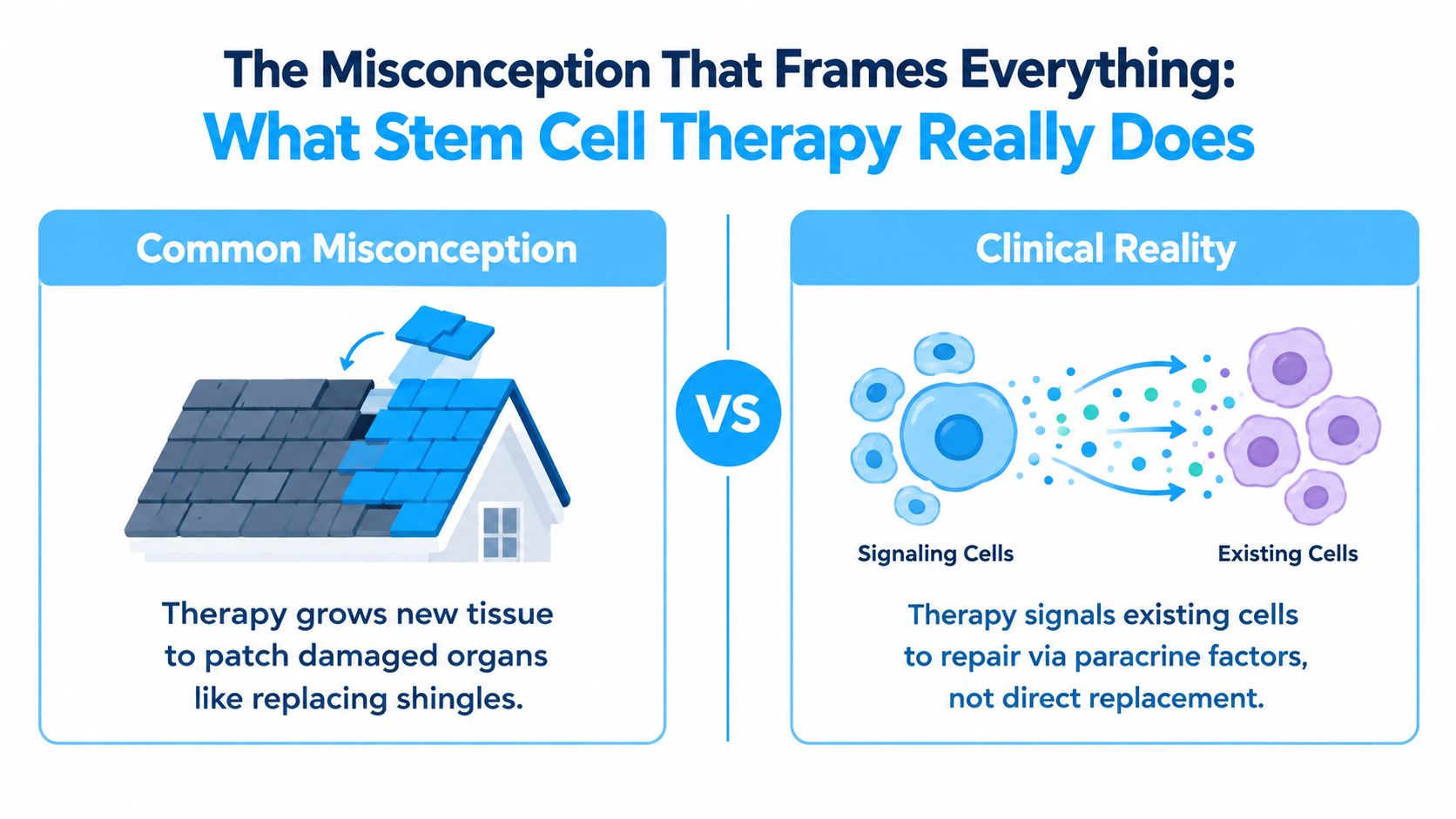
The roof-repair analogy sounds convincing because it matches how people picture medicine. Damaged cartilage, injured discs, or failing organs seem like places where a fresh cell injection should build new parts. But MSCs guide the repair and regeneration, they don’t become other cells or tissues, and the field has moved toward understanding them as signaling cells rather than construction workers.
That matters because many patients arrive expecting injected MSCs to become cartilage, neurons, or heart muscle. The evidence base behind established stem cell use doesn’t support that clean storyline. In real practice, the strongest clinical uses remain tied to blood and immune system repair, while regenerative uses outside that lane depend far more on how cells influence the local environment than on how long they survive there.
A good way to think about it is this. A misdirected repair crew shows up, carries lumber, and leaves without finishing the job. A good dispatcher shows up, calls the right trades, and keeps the site moving. MSCs are much closer to the dispatcher.
Practical rule: if a clinic talks only about “growing new tissue,” it’s skipping the part that matters most, the signaling effect.
The historical record reflects that divide too. Hematopoietic stem cell transplantation has been used clinically since the 1950s, with the first allogeneic transplant by Dr. E. Donnall Thomas in 1957 and the first successful aplastic anemia cases reported in 1972 (source). That’s a very different foundation from the more experimental regenerative claims people see online. Then Dr. Arnold I. Caplan coined the name “mesenchymal stem cells” (MSCs) and published the defining paper in 1991. We were fortunate enough to get to work with Dr. Caplan before he passed.
What Mesenchymal Stem Cells Actually Are
The cell type most people mean when they say stem cell therapy
Mesenchymal stem cells are the workhorse of most modern regenerative clinics. They’re commonly sourced from bone marrow, adipose tissue, and umbilical cord tissue, and they’re valued less for becoming replacement tissue and more for their immunomodulatory and trophic effects. Compared with hematopoietic stem cells, which rebuild blood and immune lineages, MSCs sit lower on the potency ladder, but they’re easier to use in many non-blood conditions.
That’s why it helps to separate three categories. Hematopoietic stem cells rebuild blood. Embryonic and induced pluripotent stem cells can form many tissue types. MSCs are more restrained in what they become, but more useful in many protocols because they deliver repair signals without needing to fully replace the tissue themselves.
Hematopoietic stem cells are found in bone marrow and primarily used for treating Leukemia.
Embryonic stem cells are the controversial stem cells. They can theoretically turn into any cell type and are what most people think of when they imagine a stem cell. The problem is that they are sourced from aborted fetus’ which many find unethical and they don’t turn into the cell types you want. The state of California spent nearly a billion dollars researching them and couldn’t make them work. They tend to turn into teratoma’s and they believe it is because they are from aborted fetus’, they are trying to turn into a baby, but instead form tumors. So these are not a good option.
Induced Pluripotent Stem Cells (ISPCs) require gene editing, but they can turn things like skin cells into beta cells. These have tremendous promise, but the safety and efficacy is untested. Many studies are going on with these, but real world applications are not available in the way people would want yet.
The commonly cited laboratory criteria are straightforward. MSCs are plastic-adherent, they express CD73, CD90, and CD105, they lack CD34 and CD45, and they can differentiate into bone, cartilage, and fat. Those markers matter because they help clinicians and regulators identify what sort of cells are being handled, not just what a clinic says it injected. At Dream Body Clinic we provide 3rd party analysis of our Mesenchymal stem cells (MSCs) for every patient that shows the CD markers from flow cytometry analysis. See an example here – Our Lab
| MSC Source Comparison | Yield per sample | Donor age effect | Expansion potential | Typical clinical use |
|---|---|---|---|---|
| Bone marrow | Varies by sample | Can be affected by donor age | Not legal to expand and administer in the USA, UK, Australia or EU | Orthopedic, autoimmune, organ-support protocols |
| Adipose tissue | Varies by sample | Can be affected by donor age | Not legal to expand and administer in the USA, UK, Australia or EU | Joint, soft-tissue, and systemic protocols |
| Umbilical cord tissue | Varies by source | Not tied to adult donor age in the same way | Often expanded in culture | Orthopedic, autoimmune, organ-support protocols |
A mobile workshop is the right analogy here. MSCs don’t usually rebuild the house themselves. They arrive with tools, parts, and instructions, then nudge the local crew to finish the repair. For a plain-language explainer on how these cells are usually described in practice, see this overview of what stem cells are and how stem cells work.
The Paracrine Effect in Plain Language
The secretome is the real engine
Paracrine signaling means one cell releases chemical mediators into its immediate surroundings and changes the behavior of nearby cells. In stem cell therapy, that usually means MSCs release growth factors, cytokines, and extracellular vesicles that shape healing rather than directly replacing tissue. A major review describes reparative effects as occurring “in large part” through molecules released in this way, and another review says the main mechanism in MSC-based therapy is the paracrine capacity rather than direct differentiation alone (source).
That secreted package is often called the secretome. It includes growth factors such as VEGF, bFGF, and HGF, plus cytokines and vesicles carrying mRNA, microRNA, and proteins. Together, they can influence inflammation, blood vessel formation, cell survival, and scarring.
Clinical shortcut: if MSCs are the messenger, the message is the therapy.
A typical infusion or joint injection doesn’t work like a magic switch. Damaged tissue sends recruitment cues, MSCs respond, and then the surrounding environment changes. In plain terms, the local repair scene gets quieter, better supplied with blood, and more ready for the patient’s own cells to take over the rebuilding.
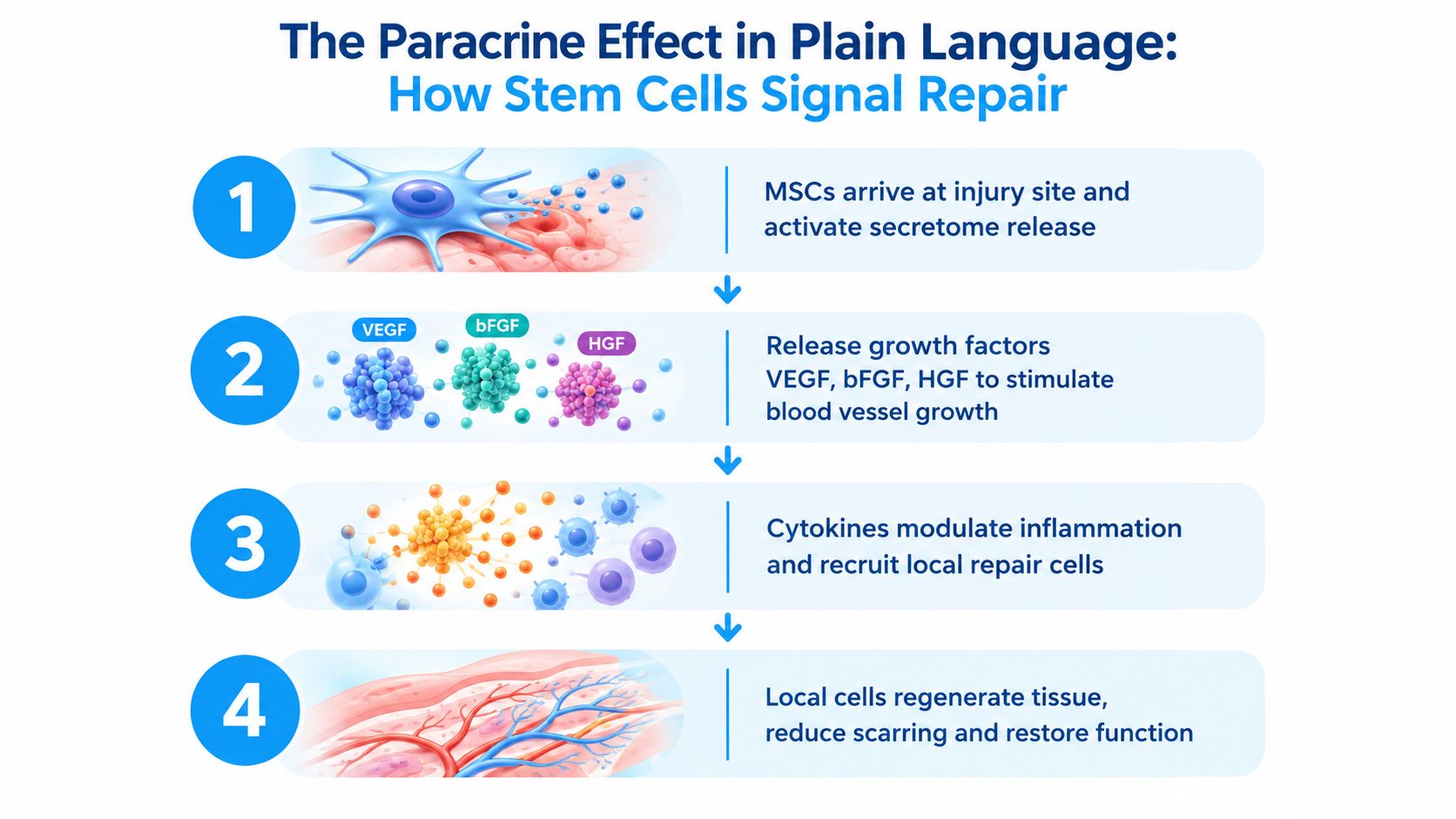
The mechanism matters because every condition discussed below uses the same basic playbook in a different setting. Whether the target is a knee, an immune system gone awry, or a stressed organ, the therapeutic logic is still signaling, not simple replacement. For a practical explainer on injection mechanics, this guide on how stem cell injections work is useful background.
Orthopedic and Spine Applications
Why joints and discs are where many patients start
Joints and spinal tissues are common entry points because they’re often low in blood supply and high in mechanical stress. That makes them useful targets for a signaling-based therapy, since the local environment can sometimes respond to reduced inflammation and better repair cues. Osteoarthritis, tendon injury, meniscal damage, and degenerative disc problems are the conditions most often referenced when discussing musculoskeletal stem cell treatment.
In practice, the evidence is strongest for knee osteoarthritis. Hip osteoarthritis, partial rotator cuff or meniscal tears, and chronic tendinopathy such as Achilles or tennis elbow are also treated in clinic settings, but the evidence is more uneven. Spine work, including degenerative disc disease and facet joint pain are also addressed.
Here Is a list of the many orthopedic stem cell procedures that Dream Body Clinic has over 9 years administering:
| Orthopedic MSC Therapy: Indications, Delivery and Evidence | |||
|---|---|---|---|
| Indication | Typical Dose | Delivery Route | Evidence Level |
| Knee osteoarthritis | Clinic protocols vary | Intra-articular | More developed, with better-controlled trials. Many testimonials on DBC Youtube |
| Hip osteoarthritis | Clinic protocols vary | Intra-articular | Moderate, still less mature than knee data. Many testimonials on DBC Youtube |
| Partial tendon or meniscal injury | Clinic protocols vary | Intra-articular | Mixed, often smaller studies. Many testimonials on DBC Youtube |
| Degenerative disc disease | Clinic protocols vary | Intramuscular injection | Smaller series, more investigational. Many testimonials on DBC Youtube |
Recovery usually unfolds over weeks to months, not overnight. Patients are typically tracking pain, walking tolerance, sleep, and return to load-bearing activity, then pairing the procedure with rehab and careful activity modification. For a clinic-specific example of this kind of use case, see lower back stem cell treatment.
Realistic expectation: spine injections are often about reducing pain and improving function, not restoring a pristine disc on imaging.
Autoimmune and Organ-Support Indications
The same signaling logic, different target tissues
Autoimmune disease is where MSC therapy’s immune-balancing role matters most. In conditions such as rheumatoid arthritis, systemic lupus erythematosus, multiple sclerosis, and Crohn’s disease, the aim is to quiet an overactive immune response rather than replace damaged tissue. MSCs can reduce T-cell and B-cell activity and shift macrophages toward a less inflammatory state, so these protocols are grouped under immune modulation.
That signaling role is easier to grasp if you picture immune cells as a crowd that has become too loud. MSCs do not rebuild the room. They release messages that calm the crowd and lower the inflammatory volume. They send out specialized cytokines that reprogram the immune cells back to original factory settings. This way they protect instead of attack.
Why the crowd-and-volume analogy works
Overactive immune cells in damaged or inflamed tissue behave like a crowd that has gotten too loud: they produce high levels of pro-inflammatory cytokines (TNF-α, IFN-γ, IL-1β, IL-17 and others) that can damage tissue if they stay elevated. MSCs act as sensors of that environment. They express receptors that detect those same inflammatory signals and then switch into an immunosuppressive mode.
They do not need to stay in the tissue long-term or differentiate into the missing cell types to have this effect. Retention of transplanted MSCs is usually low; many of the benefits persist after the cells themselves have left or died. The work is done by the messages they leave behind.
The messages they release
MSCs secrete a mix of soluble factors, including:
- prostaglandins such as PGE2
- IDO (indoleamine 2,3-dioxygenase)
- TGF-β
- IL-10
- TSG-6
- HGF
- HLA-G
- nitric oxide (in rodents) and other metabolites
These factors, plus extracellular vesicles, reduce the “volume” of inflammation. They inhibit T-cell proliferation (especially Th1 and Th17 subsets), limit dendritic-cell maturation, dampen NK-cell cytotoxicity, and shift macrophages from a pro-inflammatory M1 state toward an anti-inflammatory M2 state. They also help expand regulatory T cells (Tregs). The net result is that immune cells stop attacking and start supporting resolution and repair.
“Reprogram back to original factory settings” is a metaphor, but it maps onto real biology: the cells are polarized or licensed toward regulatory, homeostatic phenotypes rather than remaining locked in an activated, tissue-damaging program.
Protect instead of attack
This captures the functional outcome. In a high-inflammation setting, licensed MSCs create a local curtain of immunosuppressive molecules that limits further immune-cell recruitment and activation while also releasing trophic (growth-supporting) factors that help resident cells survive and repair. They can even produce antimicrobial peptides if bacteria are present. The overall shift is from destructive inflammation toward a more balanced, protective microenvironment.
Important caveats so the analogy stays honest
The response is context-dependent. MSCs need to be “licensed” by sufficient inflammatory cytokines; in a very quiet environment they may not suppress and can even recruit immune cells. Cell-to-cell contact and extracellular vesicles also contribute, not only soluble cytokines. Direct differentiation and engraftment can occur in some experimental settings, but they are not the dominant mechanism in most current therapeutic uses of cultured MSCs. Clinical results still vary by disease, cell source, dose, and manufacturing method.
Solid-organ support follows the same logic. In chronic kidney disease, liver cirrhosis, and chronic lung problems such as COPD or post-COVID pulmonary fibrosis, the goal is to protect stressed cells, ease inflammatory signaling, and support tissue that is still functioning. This is trophic support, not organ replacement.
The delivery route matters. Many autoimmune and systemic protocols use intravenous infusion, while some organ-focused approaches are more targeted depending on the organ, the clinic, and the risk profile. The evidence base also varies. Randomized data are stronger in some autoimmune settings, while other uses rest on registry-style reports or early-stage studies.
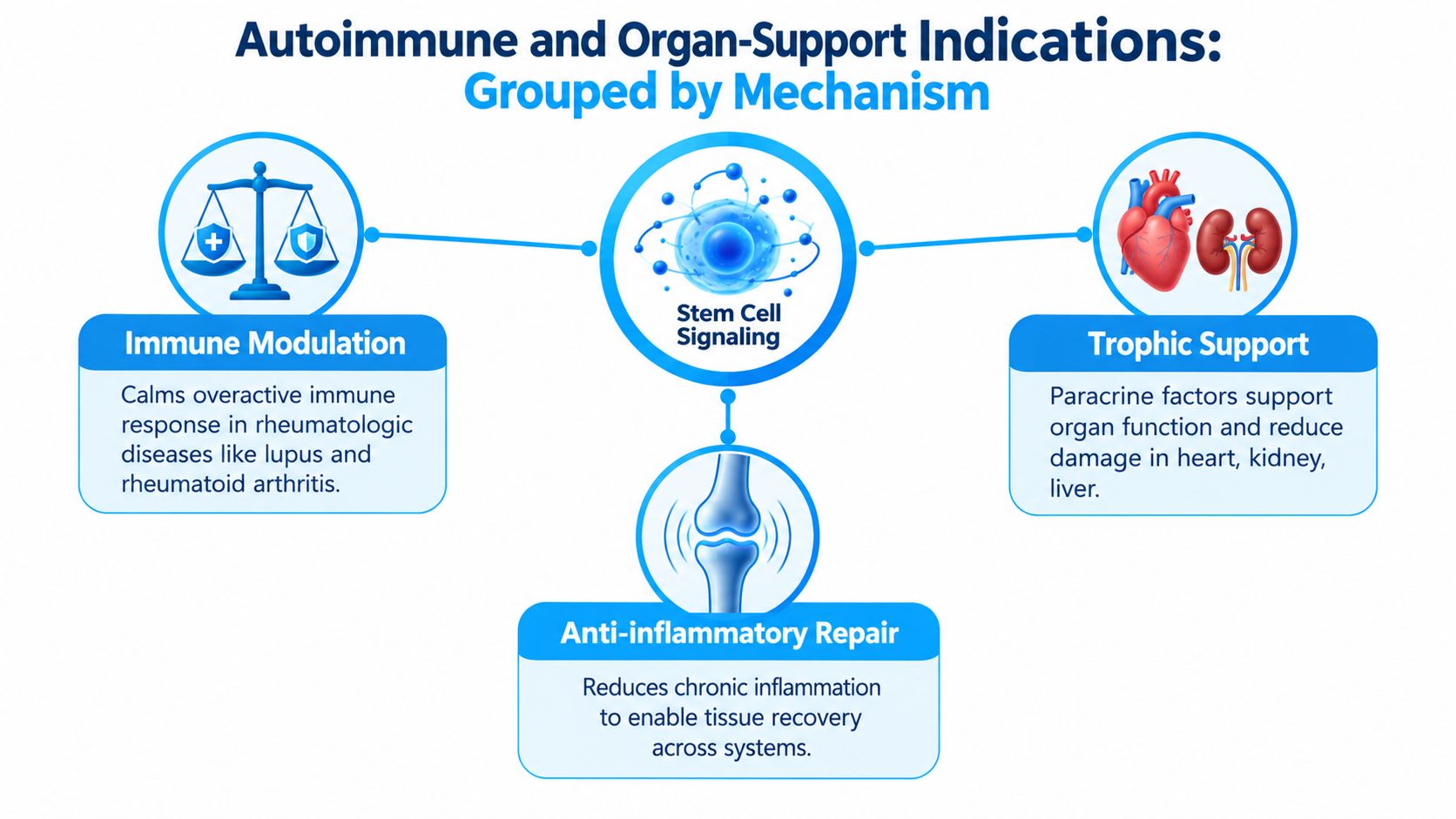
The practical distinction is simple. If the target is the immune system, MSCs are used to quiet the attack. If the target is a failing organ, they are used to support the tissue that can still respond. That is why route and dosing are chosen by immune target, not by organ name alone.
Neurological Anti-Aging and Sexual Health Uses
The frontier where enthusiasm reigns
Neurological use is usually discussed in the context of stroke recovery, Early Onset Dementia, and traumatic brain injury. Clinics may use intravenous, intrathecal, or intra-arterial routes depending on the target and the risk tolerance of the protocol. The goal is to influence neuroinflammation and support recovery pathways, not to promise that a lost neural network will reappear.
Anti-aging programs are different in tone but similar in mechanism. They’re often marketed around systemic IV infusions meant to address broad inflammatory burden, tissue quality, or age-related decline. Patients usually care about symptoms and functional markers, such as energy, recovery, and day-to-day resilience, because those are the changes they can notice.
Sexual health protocols sit in a more targeted category. Clinics may use local injections for erectile dysfunction, Peyronie disease, or vaginal tissue concerns such as atrophy or lichen sclerosus. These are practical interventions aimed at vascular support, tissue quality, and symptom improvement, not cosmetic hype.
Safety Evidence and Choosing a Clinic
What the long-term record says and what you should verify
Safety has to be read through the lens of cell type and source. Autologous cells come from the patient, while allogeneic cells come from a donor, and those two paths raise different questions about immune reaction, contamination, and handling. Current patient guidance still notes that proven stem-cell-based treatments are limited mainly to blood and immune disorders, which helps separate established care from regenerative marketing (source).
For MSC therapy, the safety story is more encouraging than the efficacy story. A 2026 systematic review of MSC therapy for ischemic stroke, with follow-up of 6 to 12 months, reported no significant increase in serious adverse events versus controls, while efficacy remained variable (source). That does not make every protocol equivalent. It means the main question is less “can cells be given at all?” and more “how are they prepared, tested, and overseen?”
A practical clinic check should focus on the parts you can verify:
- ISO lab certification, so the processing environment is documented.
- Third-party viability and characterization assays, so the product is measured rather than described loosely.
- Transparent pricing, including what is included and what is not.
- Outcome tracking, so follow-up is built into the process.
At Dream Body Clinic we provide all this data on our ISO rated lab – Our Lab
That distinction matters because a cell product can look similar on paper while still being prepared under very different standards.
Dream Body Clinic is one option for patients exploring MSC-based care in orthopedic, autoimmune, neurological, organ-support, anti-aging, and sexual health contexts under a structured clinical process. Review the evidence, ask how the cells are prepared, and then visit Dream Body Clinic to see how a consultation is organized.
Call us anytime for a free consultation at (888) 704-3977